
Your customer’s motor stops unexpectedly. The bearing has failed. This means downtime, repair costs, and damage to your reputation as a supplier. Each failure holds a lesson about what to look for—and what to avoid—in your next purchase order.
Motor bearing failures often stem from incorrect specifications, not just poor quality. Key lessons include selecting the correct internal clearance (C3), ensuring proper grease type and quantity, verifying vibration levels (Z2/Z3 grade), and confirming precision class (P6) to handle electrical currents and axial magnetic forces common in motors.
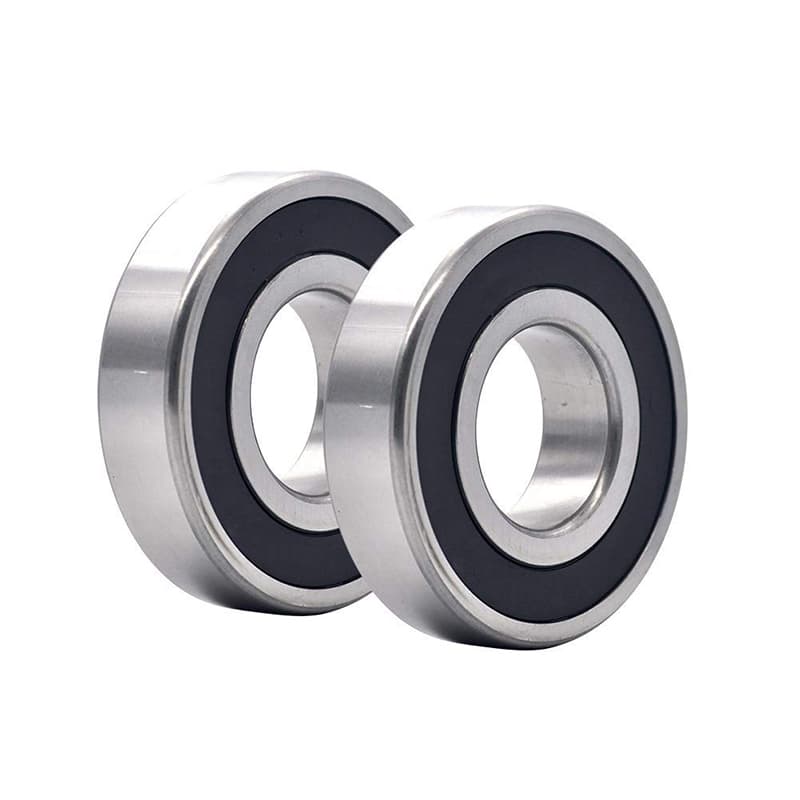
A failed bearing is like a crash scene. It shows you what went wrong. By understanding these failure patterns, you can turn your purchasing criteria into a checklist that prevents problems. Let’s examine the critical factors through the lens of common questions.
What is a deep groove in a ball bearing?
When a motor bearing fails, the damage often starts in the groove—the raceway. A poorly made groove accelerates wear, generates heat, and creates noise long before total failure. Understanding this part is understanding the bearing’s heart.
The deep groove is the curved, continuous channel machined into both rings of a deep groove ball bearing1. It guides the balls and allows the bearing to support radial loads and moderate axial loads from both directions, which is essential for handling the magnetic pull inside electric motors.
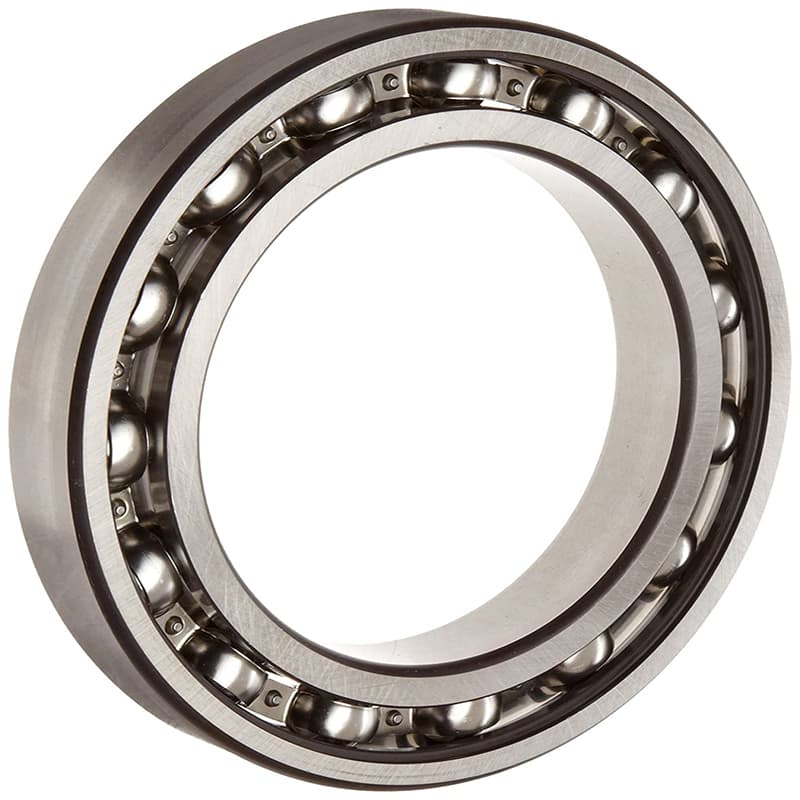
The groove’s quality dictates performance. In motors, a substandard groove leads to specific failure modes you must learn to recognize.
How Groove Quality Directly Causes Motor Bearing Failures
The groove is the load path. Imperfections here create stress points that grow under the unique conditions inside a motor: heat, electromagnetic forces, and constant rotation.
1. Common Groove-Related Failure Signs:
- Fluting (Frosted Appearance): This looks like washboard marks or corrugations across the raceway. It is often caused by electrical pitting2 from stray currents in the motor. A high-quality groove with smooth finish may still show this if electrical insulation is missing, but a rough groove accelerates the damage.
- Spalling (Flaking): Small pieces of the raceway material break away. This starts as micro-cracks below the surface, often from fatigue. Causes include overloading, but also poor groove geometry that concentrates stress. A groove with improper curvature or grinding burns weakens the material.
- Smearing (Groove Surface Damage): This looks like the metal has been smeared or torn. It happens during skidding, where balls slide instead of roll, often during rapid acceleration or with too little load. A groove that is too smooth (improperly finished) or lubricated with wrong grease can contribute.
2. Your Purchasing Checklist for the Groove (Raceway):
Based on failure analysis, here is what to specify and check:
| Failure Mode Seen | Likely Groove-Related Cause | Your Corrective Purchasing Specification |
|---|---|---|
| Excessive Noise/Vibration | Rough surface finish, out-of-round raceway, waviness. | Specify surface roughness3 (Ra) ≤ 0.2 μm. Request runout tolerance data per P6 precision class. |
| Premature Flaking/Spalling | Sub-surface imperfections from poor steel or grinding burns; stress concentration from sharp groove edges. | Require material certificates (GCr15/52100). Specify smooth transition radii at groove shoulders. Ask about grinding process control. |
| Electrical Pitting (Fluting) | While not caused by groove quality4, damage manifests here. A smooth finish slows progression. | For motors, consider insulated bearings (coated outer ring) as an option. Ensure standard bearings have high-quality, consistent grease fill to help break minor currents. |
My insight: We worked with a pump manufacturer in Indonesia. They had recurring bearing failures in their 50Hz motors. The bearings showed unusual wear patterns on one side of the groove. We discovered the motor design had a significant axial magnetic pull. The standard CN clearance bearing was getting preloaded axially. The groove was not damaged from quality, but from misapplication. The lesson was to specify C3 clearance bearings5 for their motors. The extra internal space allowed the bearing to accommodate the axial shift without creating excessive pressure on one side of the groove. The groove itself must be well-made, but it must also be in a bearing with the right internal setup for the motor’s forces.
What does DDU1 mean on a bearing?
In motor applications, you often see sealed bearings2. A customer might say, "The sealed bearing failed, grease leaked out." The seal type, indicated by codes like DDU1, is a critical but often overlooked specification. The wrong seal guarantees an early failure.
"DDU1" indicates a deep groove ball bearing sealed on both sides with Contact Rubber Seals. In motor contexts, it ensures the factory-applied grease stays in and contaminants stay out for the life of the motor, which is often considered "maintenance-free." The "U" often denotes a nitrile rubber seal that contacts the inner ring.
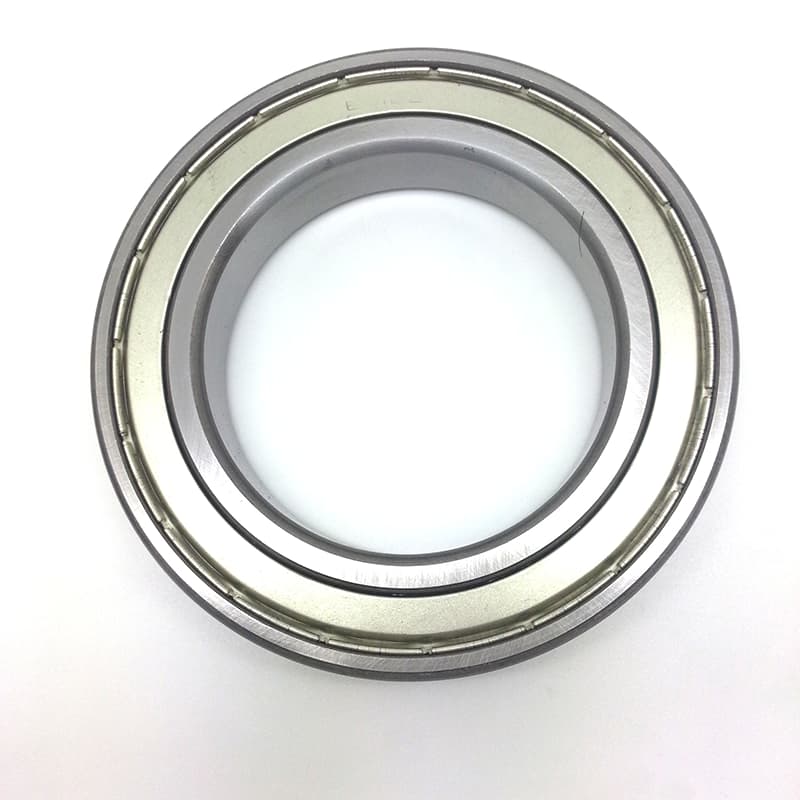
Choosing between ZZ (shield) and DDU (seal) is a major decision for motor bearings. Each has trade-offs that directly impact failure rates.
Seal Selection: A Key Lesson in Preventing Contamination and Grease Loss
Motor bearings fail because of contamination or lubrication breakdown. The seal is the primary defense.
1. DDU1 vs. ZZ for Electric Motors: The Practical Trade-off
- DDU1 (Rubber Contact Seal):
- Advantage: Excellent protection against dust and moisture. Better grease retention3. Ideal for dirty, humid, or washdown environments (e.g., food processing, agricultural motors).
- Disadvantage: Higher starting and running torque due to lip contact. Generates more heat from friction. Has a maximum speed limit lower than ZZ bearings.
- ZZ (Non-Contact Metal Shield):
- Advantage: Very low friction, suitable for higher speeds. Lower heat generation.
- Disadvantage: Only protects against large particles. Grease can slowly migrate out, and fine dust/humidity can seep in through the gap.
| 2. Failure Analysis Linked to Seal Choice: | Observed Failure | Likely Seal Issue | Purchasing Lesson |
|---|---|---|---|
| Bearing dry, brown/black hardened grease | Grease leaked out (ZZ shield) or broke down from overheating (DDU1 in high-speed app). Contaminants entered. | Match seal to motor speed (RPM). For standard industrial motors, DDU1 is often safest. For high-speed spindle motors, ZZ or non-contact labyrinth seals (LLU) may be needed. | |
| Seal torn or melted | Poor seal material quality, or motor overheating beyond seal’s temperature rating (standard nitrile ~120°C). | Specify high-temperature nitrile or FKM (Viton) seals for motors that run hot. Verify seal material with supplier. | |
| Noise after short run | Too much grease packed with a DDU1 seal causes churning and overheating. | Specify appropriate grease fill quantity (typically 25-35% of free space). A good factory controls this. |
My insight: A distributor in South Africa supplied bearings for farm irrigation pump motors. They used ZZ bearings because they were cheaper. In the dusty field environment, fine silt entered the bearings and mixed with the grease, creating an abrasive paste. Bearings failed every few months. The cost of replacements and downtime far outweighed the bearing price. We advised a switch to DDU1 bearings. The initial cost was higher, but the motor life extended dramatically. The lesson: The cheapest bearing (ZZ) can be the most expensive choice when the application demands a seal (DDU1). Always specify the protection level based on the operating environment, not just the initial price.
What is a deep groove1?
This repeats the term but from a manufacturing perspective. When you hear "deep groove1," think "precision machining." Failures often trace back to inconsistencies in this machining process—variations that a simple size check won’t catch.
In manufacturing, "deep groove1" refers to the process of creating the deep, precise raceway in the bearing ring. For reliable motor bearings, this requires high-precision grinding2 and honing to achieve the correct geometry, smoothness (low Ra value), and consistency that minimizes vibration and wear.
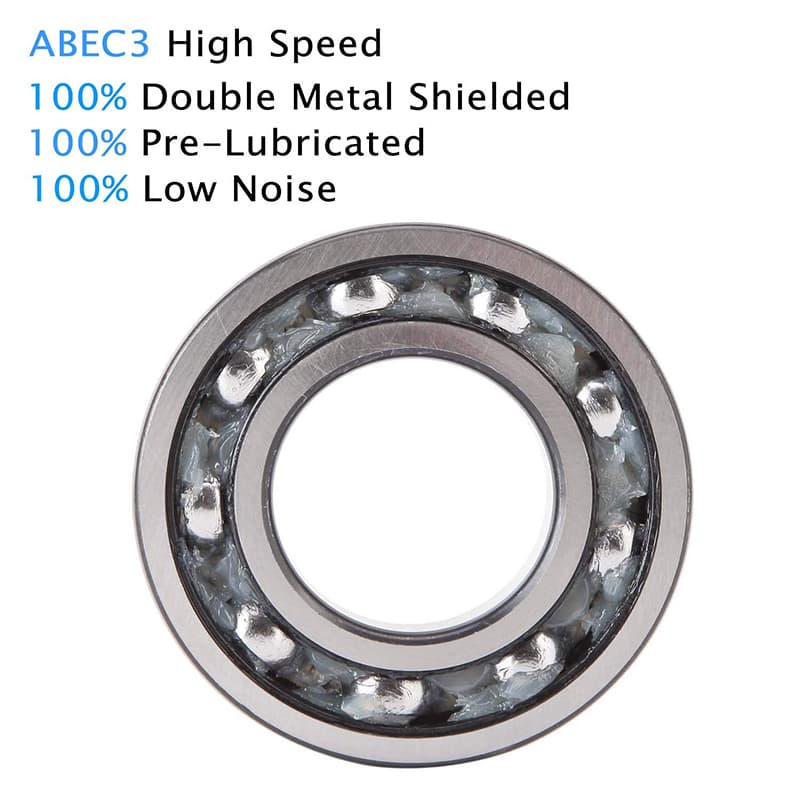
A motor is sensitive to vibration. A bearing with geometric errors in its grooves transmits that vibration directly to the stator and rotor, causing noise and accelerating wear.
The Link Between Machining Tolerances and Motor Performance
Motor bearings require running accuracy. This is not just about the bore and OD size; it’s about the shape and position of the grooves.
1. Critical Groove Tolerances for Motors:
- Radial Runout: This is how much the groove "wobbles" relative to the bearing’s bore. High runout causes vibration at the frequency of shaft rotation (1x RPM). This is a primary source of motor hum and vibration.
- Groove Waviness: This is a finer imperfection than runout. Think of it as ripples on the raceway surface. It causes vibration at higher frequencies (often linked to the number of balls), leading to a high-pitched whine or buzz.
- Groove Profile (Curvature): An inconsistent or incorrect curvature leads to uneven stress distribution on the balls. Some balls carry more load, leading to localized fatigue and early spalling.
2. Your Purchasing Defense: Specify Precision Grades
The easiest way to control these machining tolerances is to specify the bearing’s precision class.
- P0 (Normal): Standard tolerance. May be acceptable for cheap, low-performance motors.
- P6 (ABEC3): This is the standard recommendation for most industrial and appliance motors. It tightens runout and dimensional tolerances, reducing vibration and improving life.
- P5 (ABEC5): For high-efficiency, low-noise, or higher-speed motors.
Demand Test Data: A professional bearing factory measures these parameters. When sourcing, ask for a test certificate for the batch3 showing values for:
- Bore diameter variation
- Outer diameter variation
- Radial runout of inner/outer rings
- Vibration level (e.g., Z2, Z3 group)
My insight: A fan motor assembler in Vietnam was struggling with a 5% noise rejection rate at their final test. They used P0 bearings. We suggested a trial with P6 bearings4. The rejection rate dropped to under 1%. The cost per bearing increased slightly, but the total cost of rework, scrap, and customer returns decreased massively. The "deep groove1" machining quality, quantified by the P6 precision grade, was the root cause. The lesson is clear: For motors, never settle for the default P0 precision. Specify P6 as your minimum standard. This single requirement filters out low-tier manufacturers and aligns your purchase with motor performance needs.
What is the use of UCF bearing1?
You might think UCF housed units are not for motors. But they are used in motor-driven systems like conveyors, pumps, and fans. A UCF failure can stop a whole production line, and the root cause is often in the bearing insert2—the same deep groove ball bearing3 we’ve been discussing.
A UCF bearing1 is a pillow block housed unit with a bearing insert2 (often a deep groove ball bearing3 with set screw locking). Its use is to provide easy mounting and alignment for motors and driven equipment on frames. Failures here often mirror motor bearing issues: grease breakdown, contamination, or incorrect bearing selection within the housing.
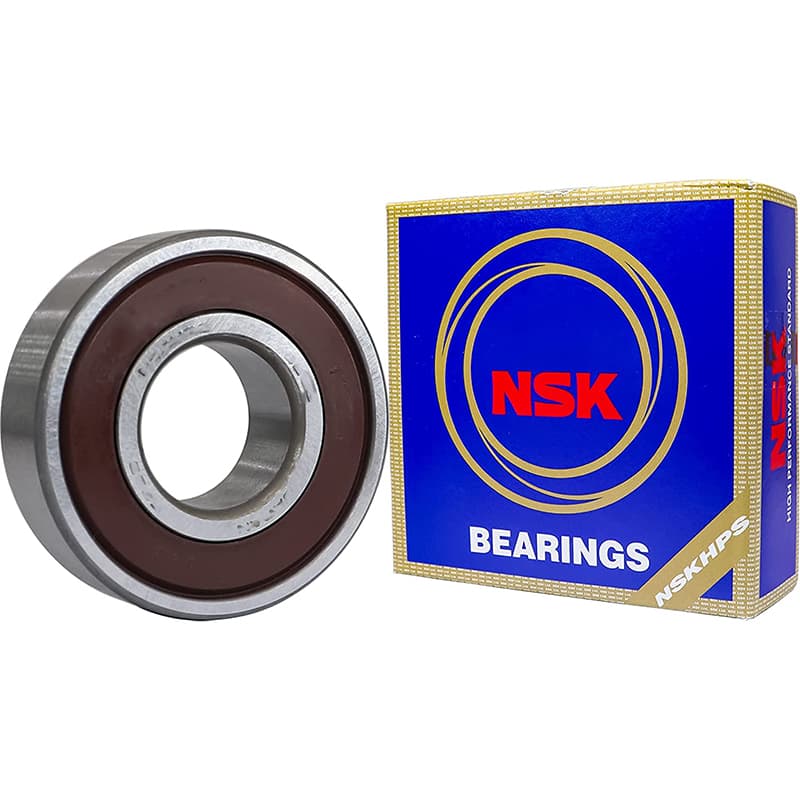
When a UCF unit fails, people blame the housing. Often, the problem is the insert bearing specification or quality. Your purchasing must cover both the housing integrity and the bearing insert2‘s suitability.
Selecting UCF Units to Prevent System Failures
A UCF is a system. Your specification must cover all its parts to ensure reliability in motor-driven applications.
1. Critical Components and Their Failure Points:
| UCF Component | Common Failure Mode | Your Purchasing Specification Focus |
|---|---|---|
| Housing (Cast Iron) | Cracking under load or impact; poor machining causing misalignment. | Specify grade of cast iron (e.g., GG25). Require machined base surface for flatness. |
| Bearing Insert | All standard bearing failures: spalling, contamination, grease failure, electrical pitting. | This is key. Specify the insert as you would a motor bearing: C3 clearance4, P6 precision, correct seal (e.g., 2RS), proper grease. Do not accept a generic insert. |
| Sealing (Overall Unit) | Dirt and water ingress past the housing seals, contaminating the insert. | Check the external sealing design5 (labyrinth, rubber lip). For harsh environments, specify enhanced sealing. |
| Locking Mechanism | Set screws loosen, causing inner ring creep and wear on the shaft. | Ensure hardened set screws and, for high-vibration applications, consider units with eccentric locking collars6 as an alternative. |
2. The Integrated Lesson:
The bearing inside a UCF unit operates under similar conditions to a motor bearing: it is driven by a motor, often at similar speeds, and faces environmental challenges. Therefore, all the previous lessons apply:
- The insert needs the right clearance (C3) to handle heat from the adjacent motor and from its own operation.
- It needs good sealing (2RS/DDU) to match the environment.
- It needs quality grease suitable for the temperature and speed.
- It benefits from P6 precision for smooth running.
My insight: A food processing plant in Egypt had frequent failures of UCF units on their washdown conveyor. The inserts were standard, open-type deep groove bearings. The housing seals were okay, but during high-pressure cleaning, water was forced into the housing and trapped, rusting the bearings from the inside. We supplied UCF units with stainless steel (440C) bearing insert2s and food-grade grease, along with improved lip seals on the housing. The failures stopped. The lesson is that the "use" of a UCF bearing1 is to provide a reliable mounting point. Achieving that requires specifying the housed unit as a complete, application-matched system, with particular attention to the insert bearing’s specification, which is the core of the assembly.
Conclusion
Preventing motor bearing failures requires informed purchasing: specify C3 clearance, P6 precision, correct sealing (DDU/ZZ), and verify grease and material quality. Apply these lessons to both standalone bearings and housed units like UCF.
-
Explore this link to understand the significance and applications of UCF bearings in various systems. ↩ ↩ ↩ ↩ ↩ ↩ ↩ ↩ ↩ ↩ ↩ ↩ ↩ ↩ ↩ ↩ ↩ ↩
-
Discover the function and importance of bearing inserts in ensuring machinery reliability. ↩ ↩ ↩ ↩ ↩ ↩ ↩
-
Learn about deep groove ball bearings and their critical role in machinery and equipment. ↩ ↩ ↩ ↩ ↩
-
Understand the significance of C3 clearance in bearings for optimal performance and heat management. ↩ ↩ ↩
-
Find out about effective sealing designs to protect bearings from contamination and extend their lifespan. ↩ ↩
-
Explore the advantages of using eccentric locking collars in high-vibration applications for better stability. ↩
