
A bearing fails inside a customer’s industrial oven, halting production for days. The problem is not load; it’s heat. Standard bearings are not built for this environment. You need a solution engineered for sustained high temperatures.
High-temperature deep groove ball bearings for dryers and ovens use special heat-resistant steel (like AISI 440C or M50), high-temperature synthetic grease or solid lubricants, and often a C4 clearance to prevent seizure. They are designed to operate reliably at continuous temperatures from 150°C up to 350°C, depending on the material and lubrication system.
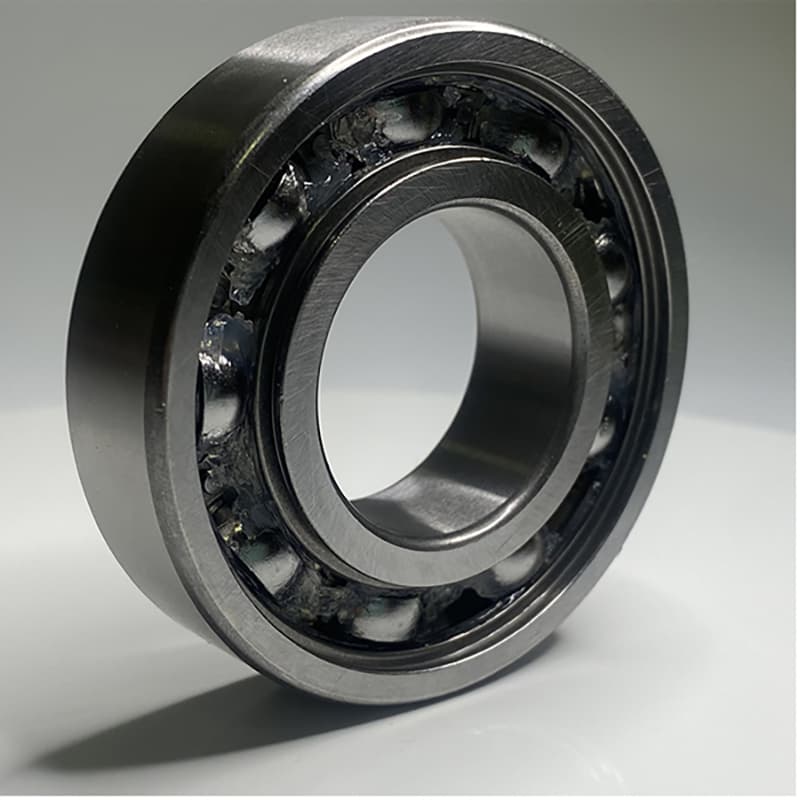
Heat changes everything about a bearing. The material softens, the grease burns, and parts expand. Selecting the right high-temperature bearing requires understanding these changes and the available solutions. Let’s explore the critical specifications.
What is the temperature range1 for deep groove ball bearings2?
This is the first question every importer asks. The answer is not a single number. It depends on what parts of the bearing we are talking about. The standard bearing has a low limit; the high-temperature version pushes it much higher.
Standard deep groove ball bearings2 with common carbon chrome steel and standard grease have a maximum operating temperature3 of about 120°C. High-temperature versions, using special steels and lubricants, can operate continuously from 150°C to over 300°C, with specific models for dryers and ovens falling in the 150°C to 250°C range.
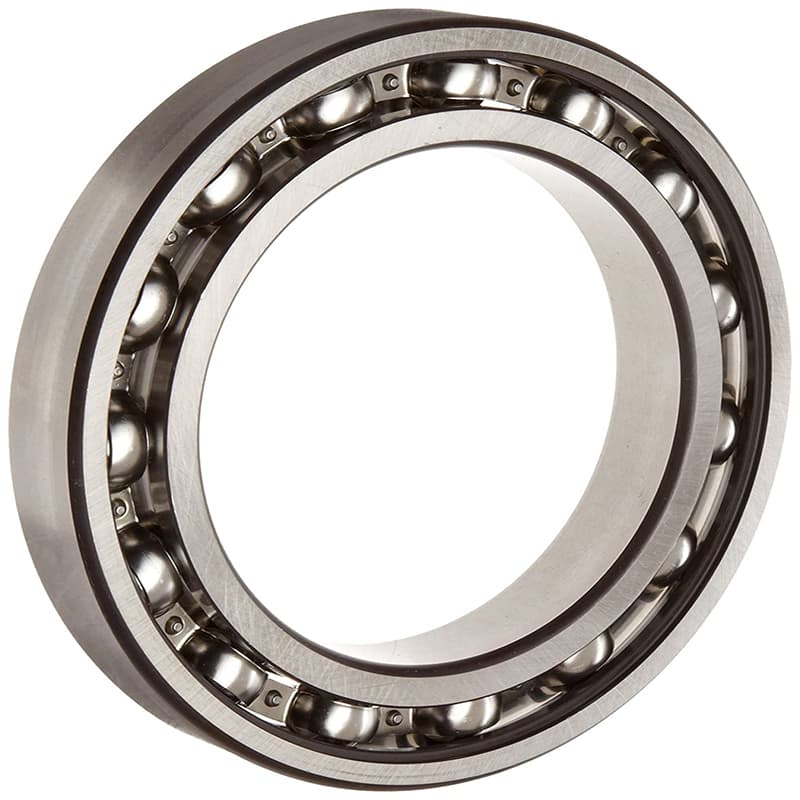
The "temperature range" is a system limit, defined by the weakest link. We need to examine each component’s thermal behavior.
Breaking Down the Temperature Limits by Component
A bearing is a system of rings, balls, cage, and lubricant. Heat affects each part differently. The overall range is the lowest maximum temperature any one component can tolerate.
1. Material: The Foundation
- Standard Steel (GCr15/52100): This is the most common bearing steel. Its hardness and wear resistance come from a specific heat treatment. If the operating temperature exceeds 120-150°C, this steel begins to "temper back." This means it loses its hardness. A soft bearing wears out quickly.
- High-Temperature Steels: These are alloys designed to retain hardness at high temperatures.
- AISI 440C (Stainless): Good for temperatures up to 250-300°C. It also offers good corrosion resistance.
- M50 Tool Steel: Used for very high-speed and high-temperature applications, effective up to 315°C.
- High-Temperature Case Hardened Steels: Special alloys that can work up to 350°C.
2. Lubrication: The Critical Limiter
Grease is often the first component to fail from heat.
- Standard Lithium Grease: Breaks down above 80-120°C. It oxidizes, turns hard or runs out.
- Synthetic High-Temperature Grease: (e.g., Polyurea, PFPE-based) can work from -40°C to 180°C or even 220°C continuously.
- Solid Lubricants: For temperatures above 250°C, grease is not possible. Bearings may use coatings like graphite, silver, or PTFE on the raceways, or use cages made of special materials that provide lubrication.
3. Cage: The Guide
- Steel Cage: Standard for most bearings. Good for high speeds and temperatures within the material limit.
- Polyamide (Nylon) Cage: Very common in standard bearings. Its maximum continuous temperature is only about 120°C. It will deform or melt in a high-temp oven.
- High-Temperature Polymer Cage: (e.g., Polyimide4, PEEK) Can withstand 250°C to over 300°C.
- Bronze or Brass Cage: Excellent for high temperatures (over 300°C) and provide some self-lubricating property.
Your Sourcing Checklist:
When a supplier claims a temperature range1, ask for specifics on each component:
| Component | Standard Bearing (Max ~120°C) | High-Temp Bearing for Ovens (e.g., 150-250°C) |
|---|---|---|
| Ring & Ball Material | GCr15 / 52100 Carbon Chrome Steel | AISI 440C Stainless Steel or equivalent |
| Lubrication | Standard Lithium Grease | High-Temp Synthetic Grease (e.g., Polyurea) |
| Cage Material | Steel or Polyamide (Nylon) | Steel, Bronze, or High-Temp Polymer (PEEK) |
| Clearance Group | CN or C3 (standard) | C4 or larger (to account for high differential expansion) |
My insight: A food processing equipment manufacturer in Egypt needed bearings for their new biscuit oven conveyor. Their initial supplier provided standard 6204 bearings with steel cages. The bearings seized within a week. The ambient temperature near the bearing was around 180°C. The steel was okay, but the standard grease had carbonized into a hard block, and the cage (which was actually polyamide) had deformed. We provided a bearing with 440C stainless steel, a steel cage, C4 clearance5, and a special polyurea high-temperature grease. The bearings lasted for over a year. The "temperature range1" must be a complete package spec, not just a claim about the steel.
What bearings are suitable for high temperature?
Not all bearings are equal in the heat. The bearing type, its internal design, and its materials together determine suitability. For dryers and ovens, deep groove ball bearings1 are common, but sometimes other types are better.
For high-temperature applications like dryers and ovens, deep groove ball bearings1 made from heat-resistant steel (440C, M50) with appropriate cages and lubrication are suitable. For very high loads at temperature, cylindrical or spherical roller bearings2 in high-temperature configurations3 may be used, but deep groove balls are preferred for their simplicity and speed capability.
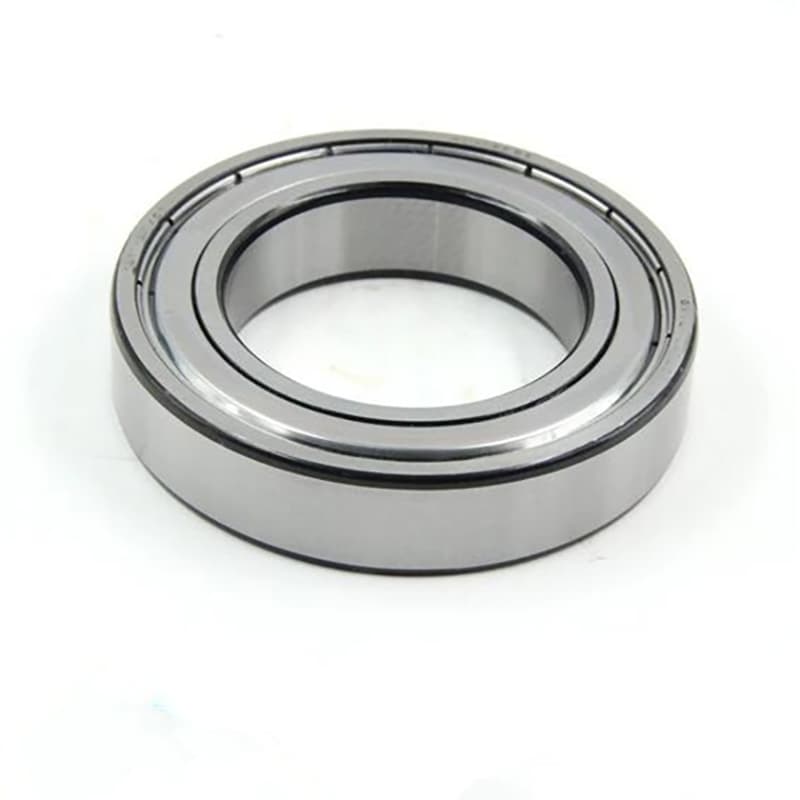
"Suitable" means the bearing can perform its basic functions—support load and rotate smoothly—without rapid degradation. We must compare options.
Comparing Bearing Types for High-Temperature Suitability
Each bearing type has pros and cons in a hot environment. The choice depends on the primary load and speed.
| Bearing Type | Advantages for High Temp | Disadvantages for High Temp | Typical High-Temp Max (with correct materials) | Best For in Dryers/Ovens |
|---|---|---|---|---|
| Deep Groove Ball Bearing | Simple design, low friction (good for high-speed fans in ovens), available in high-temp versions, cost-effective. | Moderate load capacity. Axial load capacity reduces as temperature affects clearance. | 150°C – 350°C (depends on material/lube). | Conveyor rollers, fan shafts, motor supports where loads are not extreme. |
| Cylindrical Roller Bearing | Very high radial load capacity. All-steel construction adapts well to high-temp materials. Can allow shaft expansion. | Cannot take axial loads. More complex, typically higher cost. | 200°C – 300°C+. | Heavy roller supports for wide conveyor belts in industrial dryers. |
| Spherical Roller Bearing | Excellent for very high radial loads and misalignment. Robust design. | Higher friction than ball bearings. Complex internal geometry can make lubrication distribution harder at high temps. | 200°C – 300°C. | Large, heavy-duty drying drums where alignment is imperfect. |
| Angular Contact Ball Bearing | Excellent for high axial loads at high speeds. Used in pairs. | Typically more expensive, requires precise setup. | 150°C – 250°C. | Specialized applications with high axial thrust, less common in standard ovens. |
Key Design Adaptations for High Temperature:
- Internal Clearance: High-temperature bearings always use a larger than normal internal clearance4 (C4, C5). This is because the inner ring, mounted on a shaft, gets hotter and expands more than the outer ring in a housing. Without extra initial clearance, the bearing develops preload and seizes.
- Stabilized Dimensions: Some high-temperature bearings undergo a special "stabilizing" heat treatment (tempering) at a temperature higher than their operating range. This prevents further dimensional change during use.
- Lubrication Access: For very high temperatures, bearings may be designed for periodic re-lubrication to flush out broken-down grease and add fresh lubricant, extending life.
My insight: A client in Pakistan manufacturing textile dryers used spherical roller bearings2 for the main drum. They failed often. The issue was not the bearing type choice—it was correct for the load. The issue was that they were using standard spherical rollers. At 180°C, the brass cage degraded and the standard grease failed. We sourced a high-temperature variant of the same spherical roller bearing size, with a steel cage and high-temperature grease. The problem was solved. The bearing type was suitable, but the specification within that type was wrong. "Suitable" means the right type, built with the right materials for the job.
What is the SKF 6204 high temperature bearing1?
Many buyers use brand names like "SKF 6204" as a generic reference. When they ask for a high-temperature version, they are often looking for an equivalent product that meets the same size and performance under heat. It’s a benchmark.
The "SKF 6204 high temperature bearing1" typically refers to an SKF bearing from their HT series, such as the 6204-2RSH/HT. The "H" or "HT" suffix indicates special high-temperature components, often including a steel cage2, special grease, and sometimes a larger C4 clearance3, designed for continuous operation up to 150°C or higher.
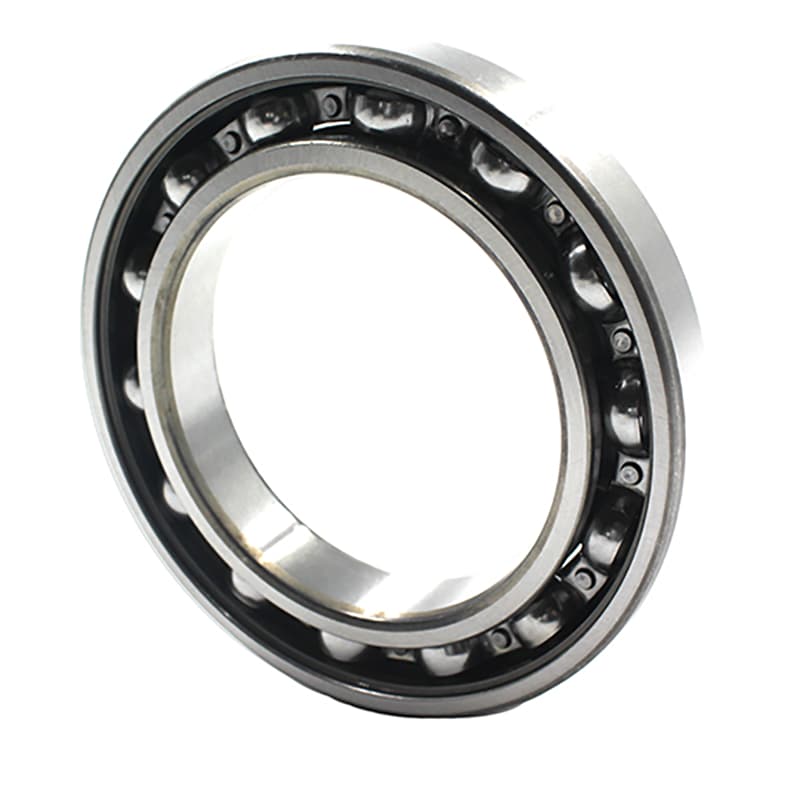
Understanding what the suffix codes mean on a branded bearing helps you source or manufacture a proper equivalent. It decodes the specification.
Decoding the Specification and Sourcing Equivalents
For an importer like Rajesh, you may not always buy the branded part. But you need to know what its specs are so you can provide a correct alternative from your factory.
Breaking Down the SKF 6204-2RSH/HT Example:
- 6204: The basic bearing number. 6 = Deep Groove Ball Bearing. 2 = Light Duty Series. 04 = Bore diameter code (04 means 20mm bore).
- -2RS: Suffix for two rubber contact seals.
- -H: This is a key suffix. In SKF’s system, -H often indicates the bearing is filled with a special high-temperature grease4. The cage is also typically changed to a steel cage2.
- /HT: This may indicate the entire bearing (rings, balls) is made from heat-stabilized steel5 for higher temperature operation, perhaps up to 150°C or more.
What This Means for Your Sourcing:
When a customer asks for a "high-temp 6204 like SKF," they are likely asking for this package:
- Size: 20mm bore, 47mm OD, 14mm width.
- Seals: Two rubber contact seals (RS type).
- Cage: Steel cage, not plastic.
- Lubrication: High-temperature synthetic grease (good for at least 150°C).
- Internal Clearance: Most likely C3 or C4 group.
- Material: Possibly standard GCr15 with stabilizing treatment, or 440C stainless steel for higher grades.
Your Action as an Importer:
You should be able to offer this exact configuration. Your factory should produce a 6204-2RS/C4 bearing with a steel cage2 and high-temperature grease4. You must verify the grease specification with your supplier. Ask: "What is the temperature rating of the grease you pack? Can you provide the technical data sheet6?" This is a common and valuable product for the aftermarket.
My insight: We frequently get requests from distributors in the Middle East and India for "6204 HT" bearings as replacements for dryer motors. They have a failed SKF or FAG bearing in hand. By understanding the suffix codes, we can quickly confirm they need a steel-caged, C4 clearance3, high-temp greased 6204 with two seals. We don’t just send a standard 6204-2RS. We send the correct equivalent. This builds trust. The customer gets a bearing that works, and we avoid a return. Knowing how to read the benchmark brand’s codes is essential for competing in the replacement market.
What is the maximum temperature for a ball bearing?
This question seeks the absolute limit. The answer pushes into the realm of specialized engineering. The maximum temperature is not about normal operation; it’s about survival under extreme, often short-term, conditions.
The maximum short-term survival temperature1 for a ball bearing can exceed 500°C for ceramic bearings2 or specially coated steel bearings used in aerospace. For standard industrial high-temperature steel3 bearings (like 440C), the practical continuous maximum is around 300-350°C, limited by material softening and lubrication breakdown.
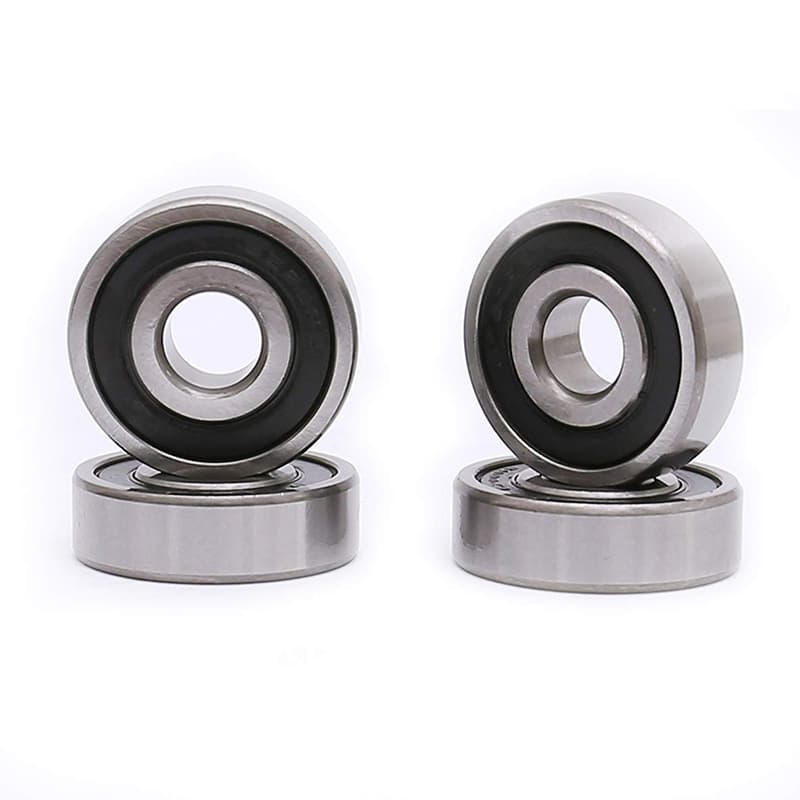
"Maximum" depends heavily on duration, load, and the definition of failure. A bearing can be at a high temperature for a few minutes but not for thousands of hours.
Factors That Define the Absolute Maximum
Reaching the maximum temperature involves pushing every component to its breaking point.
1. Material Limits – The Ultimate Ceiling:
- Standard Bearing Steel (GCr15): Loses hardness rapidly above 150°C. The maximum for any functional life is about 175°C.
- High-Temperature Steel (AISI 440C): Can retain sufficient hardness up to about 300-350°C for continuous operation.
- Tool Steels (M50, M2): Can go to 400-450°C for short durations.
- Ceramics (Silicon Nitride, Si3N4): This is where limits jump. Full ceramic bearings2 (rings and balls) can operate continuously at 800°C to 1000°C in inert atmospheres. They don’t rely on steel’s metallurgical properties. However, they are very expensive and brittle.
2. The Lubrication Wall:
This is the most common limiting factor. Above 250-300°C, all organic and most synthetic greases and oils decompose.
- Solid Film Lubricants: Coatings like graphite, molybdenum disulfide, or silver can work up to 450°C in air, but their lifetime is limited by wear.
- Self-Lubricating Cages: Cages made of special bronze or composites can provide lubrication at very high temperatures.
- Dry Running: Some bearings are designed to run without lubrication for short periods at high temperatures, but wear is accelerated.
3. Clearance and Fits:
At extreme temperatures, thermal expansion calculations4 are critical. The difference in expansion between the steel shaft, bearing inner ring, and housing can cause catastrophic clamping or excessive clearance. Special mounting designs are needed.
Practical Maximums for Importers:
For your business supplying to dryers, ovens, and general industry, here is a realistic guide:
| Bearing Class | Realistic Continuous Max Temp | Key Components | Likely Applications |
|---|---|---|---|
| Standard with HT Grease | 120°C – 150°C | GCr15 Steel, Steel Cage, HT Grease. | Low-heat zones, fan bearings near ovens. |
| True High-Temp Bearing | 150°C – 250°C | 440C Steel or Stabilized Steel, Steel/Bronze Cage, HT Grease/Solid Lubricant, C4 Clearance. | Core market: Industrial dryers, ovens, furnaces, paint curing lines. |
| Special High-Temp | 250°C – 350°C | Special high-temp steel, Solid Lubricants, Special Clearance. | High-temperature furnaces, certain chemical processing equipment. |
| Ceramic (Niche) | 350°C+ | Silicon Nitride components. | Extreme applications outside typical industrial distribution. |
My insight: A metal heat treatment company in South Africa needed bearings for a quenching conveyor that saw brief exposure to over 400°C. A standard high-temp bearing failed quickly. They thought they needed ceramics, which were prohibitively expensive. We analyzed the cycle: the bearing was at peak heat for only 1-2 minutes before cooling. We proposed a bearing made from a special high-speed tool steel5 (M50) with a graphite-based solid lubricant coating and a large internal clearance. This solution handled the thermal shock and brief high temperature at a fraction of the ceramic cost. The "maximum temperature" must be considered with time. For most oven and dryer applications, the 150-250°C range with 440C steel and proper lubrication is the reliable and cost-effective sweet spot.
Conclusion
Selecting high-temperature bearings for dryers and ovens requires a system approach: matching heat-resistant steel, appropriate lubrication, enlarged clearance, and suitable cage material to the specific operating conditions.
-
Understanding the limits of ball bearings can help in selecting the right materials for extreme conditions. ↩ ↩ ↩ ↩ ↩ ↩ ↩ ↩
-
Explore the benefits of ceramic bearings, which can withstand extreme temperatures, making them ideal for specialized applications. ↩ ↩ ↩ ↩ ↩ ↩ ↩ ↩ ↩
-
Learn about high-temperature steel and its critical role in industries requiring durable and heat-resistant materials. ↩ ↩ ↩ ↩ ↩
-
Understanding thermal expansion is crucial for ensuring the longevity and reliability of bearings in extreme conditions. ↩ ↩ ↩ ↩ ↩
-
Explore the properties of special high-speed tool steel, which can be a cost-effective solution for high-temperature applications. ↩ ↩ ↩
-
A technical data sheet provides essential information about bearings, helping you make informed choices for your projects. ↩
