
You need bearings for tough jobs. Bearings that fail under load cause costly downtime. This is a common problem I hear from many of my customers, like Rajesh from India. Finding the right bearing supplier is critical.
High-load tapered roller bearings that last longer are engineered for durability and precise manufacturing. The best options come from manufacturers with strict quality control and expertise in material science, often offering P5/P6 precision grades to handle substantial radial and axial loads in demanding applications. This is not just about picking a bearing; it’s about choosing a reliable partner for your machinery’s backbone.
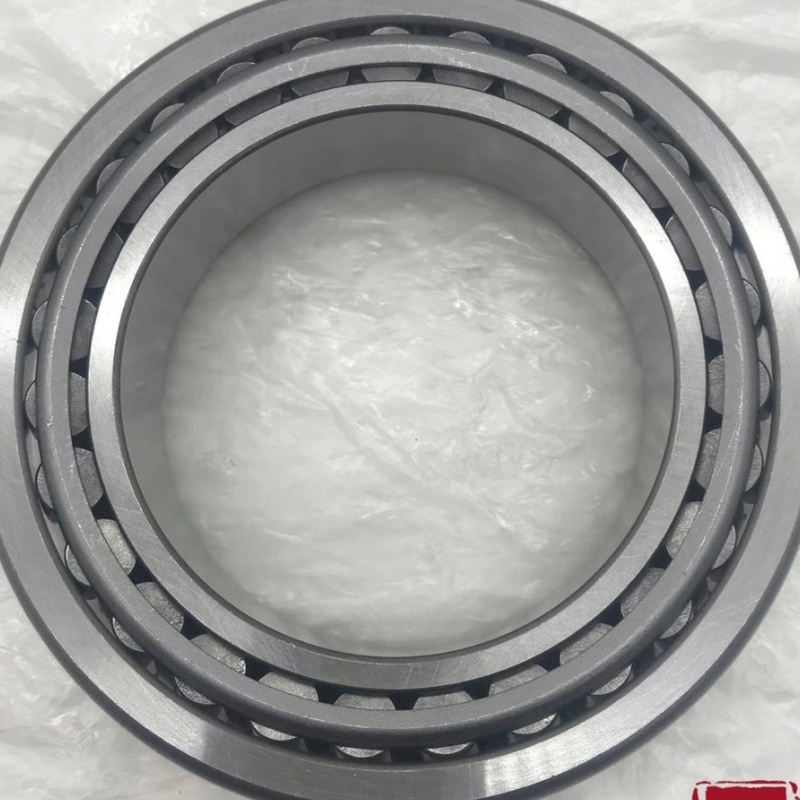
Choosing the right bearing can feel overwhelming with so many brands and claims. But the real difference lies in the details of manufacturing and material selection. I’ve seen how the right bearing transforms equipment performance for distributors across the globe. Let’s break down the key questions to help you make an informed decision for your heavy-duty applications.
Who makes the best tapered roller bearings1?
Many buyers search for a single "best" brand. But the best tapered roller bearing for your project depends on your specific needs. A global brand might be good, but a specialized factory with focused expertise often provides better value and customization. You need a balance of proven performance and direct access.
The "best" manufacturers are not just big names; they are those with integrated production, rigorous testing like FYTZ Bearing2, and the flexibility to offer OEM/ODM solutions3. For B2B wholesalers, a reliable factory partner that ensures consistent quality, proper load ratings, and technical support often outweighs brand recognition alone.
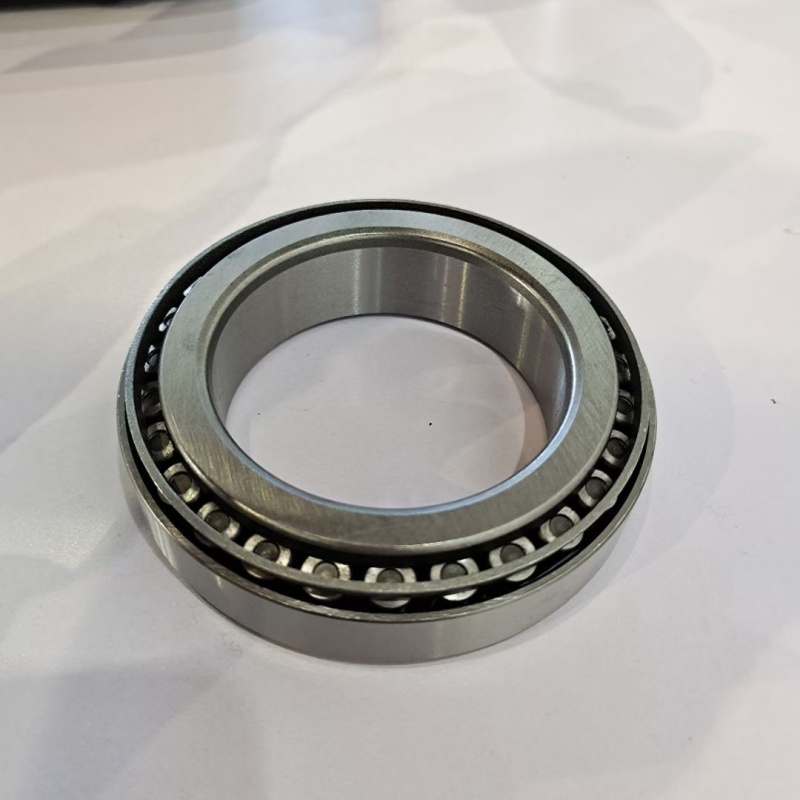
The quest for the best manufacturer requires looking beyond the catalog. You must consider several layers of what "best" means for a business like yours.
Evaluating a "Best" Bearing Manufacturer
A top-tier manufacturer does more than just produce parts. They solve problems. For an importer like Rajesh, "best" translates to reliability, consistency, and support. Let’s compare common sourcing options:
| Consideration | Large Global Brand | Specialized Bearing Factory (e.g., FYTZ) | Low-Cost Generic Supplier |
|---|---|---|---|
| Primary Advantage | Strong brand recognition, extensive R&D | Direct communication, cost-control, OEM/ODM flexibility | Lowest initial price |
| Quality Consistency | Generally high, but can vary by region | High, controlled through integrated production line | Often inconsistent, high risk of defects |
| Customization | Limited, standard products only | High, can adjust specs, seals, grease, packaging | Very limited or none |
| Technical Support | Can be slow, through distributors | Direct and responsive from factory engineers | Minimal to none |
| Total Value for B2B | Good for brand-sensitive projects | Excellent for building a reliable, profitable supply line | Poor, high risk of failure and customer complaints |
My insight: I have worked with clients from Turkey to Indonesia. They often start by wanting famous brands. But after facing long lead times or high prices, they look for alternatives. The manufacturers that stand out are those who act as partners. They understand that a bearing is a critical component. For example, we had a distributor in Brazil who needed a special sealing solution for a sugarcane crusher application. A standard bearing would fail quickly. Because we control our production and inspection lines, we could develop a prototype with a reinforced seal and specific grease within weeks. This solved his problem and built long-term trust. The best maker is the one that makes your business run smoother and your customers happier. It’s about a partnership that ensures the bearings you sell perform reliably, protecting your reputation.
What bearings are best for heavy loads?
Seeing a bearing collapse under pressure is frustrating. It halts production and hurts your reputation as a supplier. You need bearings built for the real forces inside heavy machinery. The answer isn’t always the most expensive one, but the most appropriately engineered one.
For combined heavy radial and axial loads, tapered roller bearings1 are typically the best choice. Their conical design allows them to handle large forces from both directions effectively. For very high radial loads alone, cylindrical or spherical roller bearing2s may be superior, but tapered rollers offer excellent versatility for most industrial applications.
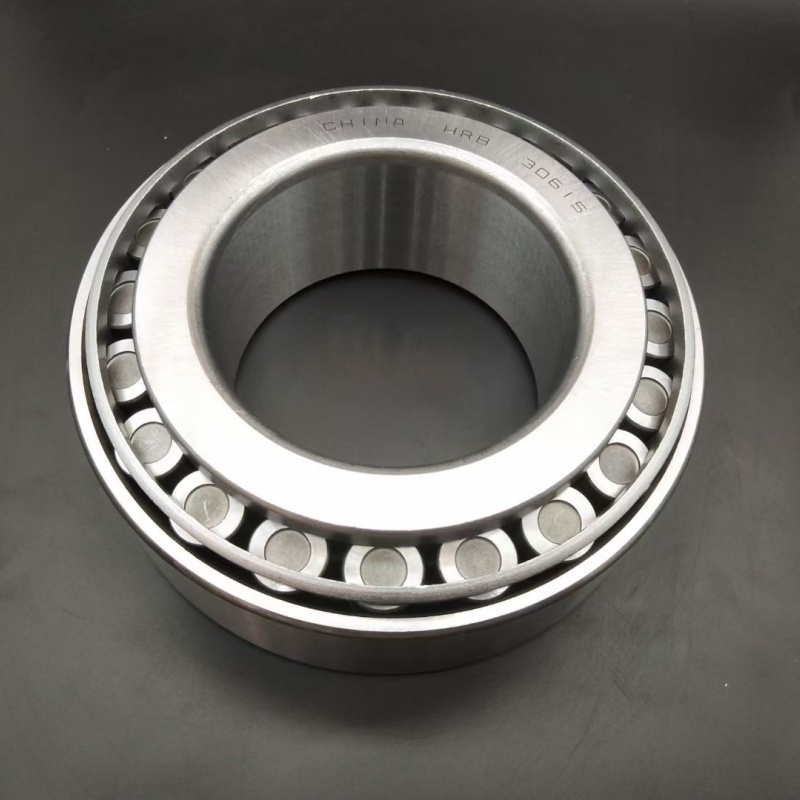
"Best for heavy loads" is a broad statement. To choose correctly, you must understand the type of load and the application’s specific demands.
Matching Bearing Type to Load and Application
Heavy loads come in different forms. A bearing perfect for one job might fail in another. The key is to match the bearing’s inherent strengths to the forces it will face. Here is a breakdown of common heavy-duty bearing types3:
| Bearing Type | Optimal Load Type | Typial Applications | Key Advantages | Considerations |
|---|---|---|---|---|
| Tapered Roller Bearing | Combined radial and axial loads | Gearboxes, wheel hubs, rolling mills | High load capacity, adjustable clearance, robust design | Requires precise mounting and adjustment |
| Spherical Roller Bearing | Very high radial loads, moderate axial, misalignment | Mining equipment, vibrating screens, paper mills | Self-aligning, exceptional radial load capacity, tolerates shaft deflection | Generally higher friction than tapered rollers |
| Cylindrical Roller Bearing | Very high radial loads only | Electric motors, machine tool spindles, large pumps | Highest radial capacity, allows axial shaft movement | Cannot handle axial loads (unless specially designed) |
| Tapered Roller Thrust Bearing4 | Very high axial loads in one direction | Screw down systems in mills, crane hooks | Specifically engineered for extreme axial thrust | For axial loads only, must be combined with radial bearings |
My insight: From my experience supplying to the mining sector in South Africa and agriculture in India, the "best" bearing is a system solution. For instance, in a conveyor system with heavy weight and some misalignment, a spherical roller bearing2 might be the primary choice. But in the connected gearbox experiencing both radial and axial forces, a paired set of tapered roller bearings1 is unbeatable. I recall a client in Vietnam running a brick-making machine. He kept using standard deep groove ball bearings for a high-shock load application, and they failed monthly. We recommended a customized tapered roller bearing with a tougher cage material. The failure rate dropped dramatically. The "best" bearing is the one that solves the specific load problem in your customer’s machine, maximizing uptime. Don’t just sell a part; sell the correct engineering solution.
Which type of bearing is designed for the heaviest loads and can last for years?
Equipment downtime is a major cost. When your client’s machine stops, they lose money, and you get an urgent call. You need bearings designed from the ground up to endure the most punishing conditions for years, not months. This demands a focus on extreme-duty engineering.
For the absolute heaviest loads, spherical roller bearings1 are often the top choice due to their exceptional radial load rating and ability to handle misalignment. Paired with robust tapered roller bearings2 for applications with combined loads, these types, when manufactured to high precision grades like P5, are engineered for multi-year service in severe environments.

Achieving long life under the heaviest loads is a result of multiple factors working together: design, material, and precision.
The Pillars of Longevity for Extreme-Duty Bearings
A bearing lasting for years under heaviest loads is not an accident. It is the result of deliberate choices in its design and creation. Let’s look at the essential pillars:
1. Inherent Design Strength: Spherical roller bearings, with their two rows of barrel-shaped rollers and a common spherical raceway, distribute load over a large area. This design gives them a naturally high radial load rating. Tapered roller bearings, with their line contact and conical geometry, efficiently manage heavy combined loads. The design itself is the first defense.
2. Material and Heat Treatment: The bearing steel’s quality is non-negotiable. High-grade, clean steel with uniform carbide distribution is essential. Advanced heat treatment processes, like carburizing or induction hardening, create a hard, wear-resistant surface while maintaining a tough, shock-absorbing core. This prevents flaking and cracking under repeated stress.
3. Precision Manufacturing (P5/P6 Class): Precision is not a luxury for heavy loads; it is a requirement. Bearings manufactured to P5 or P6 tolerance classes have extremely tight controls on dimensions and running accuracy. This ensures the load is distributed perfectly evenly among all rolling elements. An imprecise bearing will have one roller carrying most of the load, leading to rapid premature failure.
4. Advanced Sealing and Lubrication: Contaminants like dust and moisture are the enemies of bearing life. For long service, seals must be robust, often triple-lip or labyrinth designs. The grease must be high-quality, suitable for the temperature range, and packed adequately during assembly. In some cases, we design bearing units with re-lubrication ports for maintenance.
My insight: We supply to cement plants in Egypt where equipment runs 24/7 under massive loads and dust. The bearings that survive there are a combination of all these factors. One client was replacing a critical spherical roller bearing on a kiln every 18 months. We analyzed the failure and found it was a combination of minor misalignment and standard-grade precision. We provided a P5 class bearing with a special stabilizing heat treatment and recommended a mounting procedure. That bearing is now approaching its 4th year of service. The bearing designed for the heaviest loads is a system: the right type, made from the right material, with the right precision, and protected correctly. Selling this complete package is what builds a distributor’s reputation for reliability.
How long do roller bearings last?
" What’s the lifespan?" This is one of the most common questions from distributors like Rajesh. He needs to manage inventory and set customer expectations. Giving a single number is misleading because bearing life is not a fixed expiration date; it’s a probability under specific conditions.
Roller bearing service life is statistically predicted by the L10 life rating, which is the number of hours at which 90% of a group of identical bearings will still be operating. Actual lifespan varies widely from a few thousand to over 100,000 hours, depending entirely on load, speed, lubrication, installation, and environmental conditions.
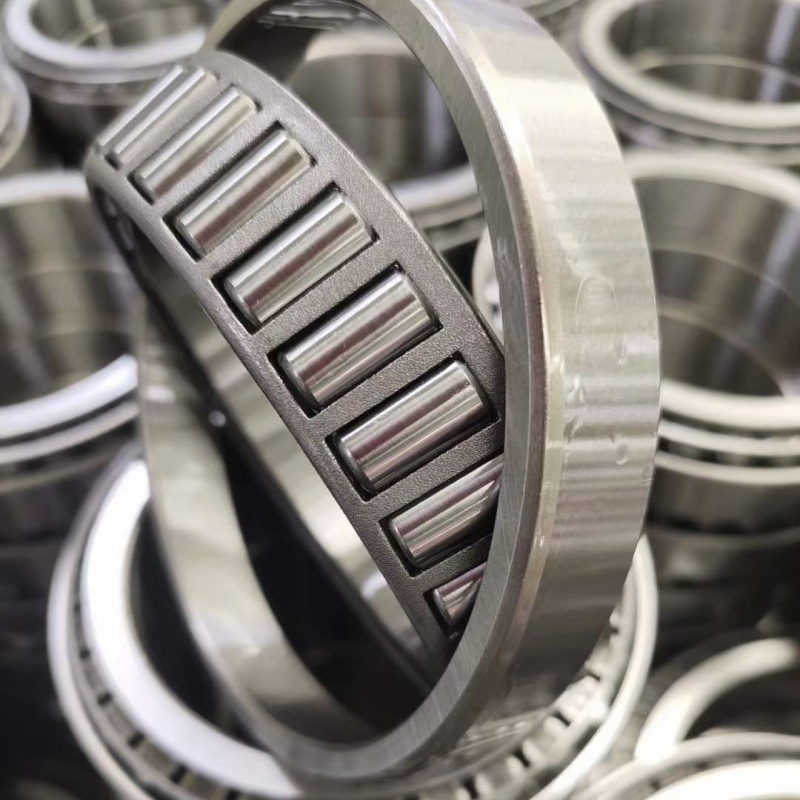
Understanding bearing lifespan requires moving beyond a simple promise to understanding the science of fatigue and the practical factors you can control.
The Factors That Truly Determine Bearing Lifespan1
The theoretical L10 life calculated by engineers is a starting point. In the real world, the actual life is decided by how the bearing is used and cared for. As a supplier, educating your clients on these factors adds tremendous value and reduces costly comebacks.
1. The Fundamental Rule: Load and Life The relationship is mathematical and dramatic. The basic rating life formula is L10 = (C/P)^p. ‘C’ is the bearing’s basic dynamic load rating (its strength), and ‘P’ is the actual equivalent load applied. The exponent ‘p’ is 10/3 for roller bearings. This means if the actual load doubles, the bearing’s theoretical life is reduced by a factor of about ten times. This is the most critical factor. Oversizing a bearing slightly can yield a massively longer life.
2. The Importance of Proper Installation2: A significant percentage of premature failures stem from improper installation. This includes:
- Incorrect Fits: Too tight an inner ring fit on the shaft creates excessive preload and heat. Too loose causes fretting and wear.
- Mounting Damage: Using a hammer directly on the bearing rings, applying force through the wrong ring (always press fit the ring with the interference fit), or misaligning during press-fitting can immediately create brinelling (indentations) or cage damage.
- Misalignment: If the bearing seats on the shaft and housing are not aligned, it induces extra internal forces, drastically shortening life.
3. The Role of Lubrication3: Lubrication3 has three jobs: reduce friction, prevent wear, and protect against corrosion. The wrong grease type, too much grease (causing churning and heat), or too little grease (allowing metal-to-metal contact) will lead to early failure. For long-life applications, the grease must be compatible with the speed and temperature and be kept clean.
4. Environmental Conditions4: Contaminants are abrasive. Dust, dirt, and water particles act like grinding paste inside a bearing. Effective sealing is paramount. Similarly, exposure to corrosive chemicals or even just a humid atmosphere without protection will lead to pitting and surface degradation.
My insight: I had a distributor in Russia selling bearings for agricultural machinery. He complained about inconsistent lifespan from the same bearing batch. We discovered his customers were often installing the bearings in dusty fields without proper cleaning of the housing. The lifespan wasn’t a bearing quality issue; it was a contamination issue. We started shipping our tapered roller bearings with an extra layer of protective wax and included simple installation guides in the local language. The complaint rate dropped. The lifespan of a roller bearing is a shared responsibility between the manufacturer’s quality and the end-user’s practices. Your role as a knowledgeable distributor is to bridge that gap, providing not just the product but the guidance for its long life.
Conclusion
Choosing the right high-load tapered roller bearing is about matching robust design, precision manufacturing, and real-world application knowledge. Partnering with a focused factory ensures you get the durability and support your business needs.
-
Explore this link to understand the critical factors influencing bearing lifespan and how to optimize it. ↩ ↩ ↩ ↩ ↩
-
Discover essential installation techniques to prevent premature bearing failures and ensure longevity. ↩ ↩ ↩ ↩ ↩
-
Find out how proper lubrication can significantly extend bearing life and prevent costly failures. ↩ ↩ ↩ ↩
-
Understand the impact of environmental factors on bearing performance and how to mitigate risks. ↩ ↩