
Your new motor is noisier than the old one. A freshly installed pump bearing overheats in minutes. The bearing is a genuine part, but something is wrong. The hidden culprit is often not the bearing itself, but how it fits with the machine.
Bearing fits and tolerances critically affect deep groove ball bearing performance by controlling internal clearance, managing heat expansion, ensuring proper load distribution, and minimizing vibration. Incorrect fits lead to premature failure through overheating, noise, brinelling, or excessive wear, directly impacting machine reliability and lifespan.
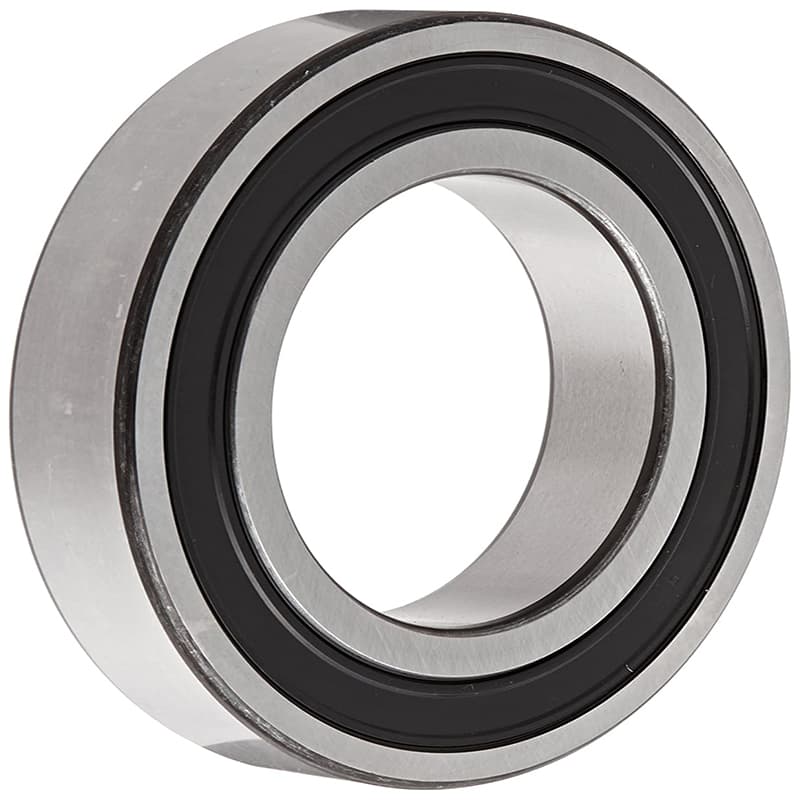
Many maintenance teams focus only on the bearing number. They ignore the shaft and housing. This is a critical mistake I see in our global trade. A perfect bearing in an imperfect fit will fail quickly. Understanding tolerances is not about complex theory. It is about practical, cost-saving knowledge. Let me guide you through the purpose of tolerances, the limits of misalignment, the key performance factors, and how to verify the crucial clearance.
What is the purpose of bearing tolerances1?
You measure a shaft. It seems fine to the eye. You install a bearing, and it feels tight. After running, it seizes. The problem is invisible: the shaft diameter was a few micrometers too large. Tolerances exist to control these invisible variations.
The purpose of bearing tolerances1 is to define the allowable limits of dimensional variation in a bearing’s inner ring, outer ring, and width. These standardized limits ensure interchangeability2, predictable performance, and correct fit with shafts and housings, which is essential for proper internal clearance, load distribution, and overall bearing life.
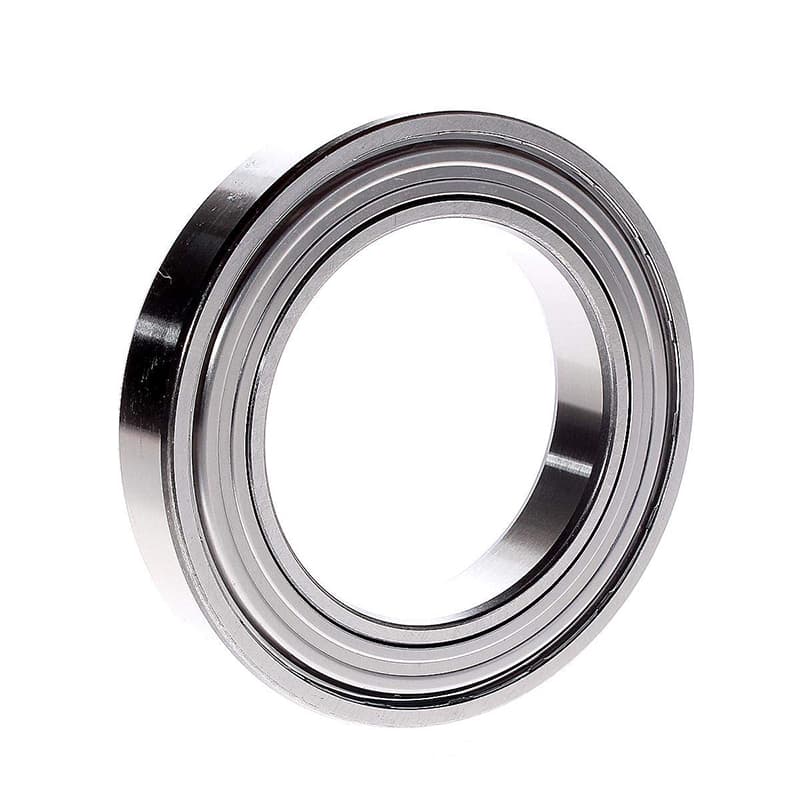
Tolerances are a language of precision. They tell manufacturers how to make the part and tell users what to expect from it.
How Tolerances Translate from Paper to Machine Performance
Tolerances are not arbitrary numbers. They are a system that connects manufacturing, assembly, and operation.
1. The System: ISO and ABEC Grades3
Bearings are made to international standards. The most common are ISO tolerance classes4 (like Normal, P6, P5) and the older ABEC grades (1, 3, 5, 7, 9). A higher number means tighter tolerances.
- Normal Class (P0): Standard for most general applications. Cost-effective.
- P6, P5 Classes: Tighter tolerances on bore, outside diameter, and running accuracy5. Used for applications requiring higher speed, lower vibration, and greater precision (e.g., electric motors, machine tools).
2. The Dual Role of Tolerances:
Tolerances serve two interconnected purposes:
| Purpose | What It Controls | Consequence of Being Out of Tolerance | My Insight from Factory Inspection |
|---|---|---|---|
| Interchangeability | The physical dimensions (bore, OD, width). | A bearing from one brand would not fit where another brand’s same-number bearing should. This causes supply chain chaos. | In our production, every batch is sampled against tolerance gauges. For P6 class bearings, our inspection is even stricter. This ensures a client in Egypt gets the same fit as a client in Vietnam for the same order. |
| Performance Prediction | The running accuracy5 (radial runout, axial runout). | A bearing with poor running accuracy5 will cause vibration, noise, and uneven load on the balls, shortening life. | When clients like Rajesh order bearings for fan motors in India, they specify P6 class. The tighter running tolerance ensures smooth, quiet operation, which is a selling point for their customers. |
3. The Critical Link to Fits:
Bearing tolerances are only half the story. The other half is the tolerance of the shaft and housing. The interaction creates the "fit."
- Clearance Fit: The shaft is smaller than the bearing bore. The inner ring can rotate or creep on the shaft. This is usually bad, causing fretting wear.
- Interference Fit: The shaft is slightly larger than the bearing bore. The inner ring is pressed on, creating a tight grip. This is common for rotating inner rings.
- The "Tolerance Zone" Concept: Engineers don’t specify exact sizes. They specify a zone. A shaft might be 40mm +0.015/-0.000. A bearing bore might be 40mm 0.000/-0.012. The overlap determines the fit.
My Practical Insight for Buyers and Specifiers:
You do not need to memorize tolerance tables. You need to understand the consequence. Choosing a tolerance class is choosing a performance level. For a simple conveyor idler, Normal class is fine. For a critical high-speed spindle in a CNC machine, P5 or higher is necessary. The purpose of the tighter tolerance is to guarantee smoother rotation and longer life under demanding conditions. When a client asks me why our P6 bearing costs more than a standard one, I explain it is not just the material. It is the extra manufacturing steps, the slower production rate, and the rigorous 100% inspection that ensures every bearing meets those tighter tolerance bands. That precision is what delivers reliable performance in their applications.
What is the tolerance for ball bearing misalignment1?
Your machine frame is slightly warped. The bearing seats are not perfectly aligned. The bearing runs hot and noisy. You assume the bearing is faulty. But the real fault lies in the angular error2 the bearing is forced to accept.
Deep groove ball bearings have a very limited tolerance for misalignment1, typically between 0.002 to 0.004 inches per inch of bearing bore (or 2 to 4 arc-minutes). Exceeding this small angular error2 causes uneven load on the balls, increased friction and heat, excessive stress on the cage, and leads to rapid, noisy failure.
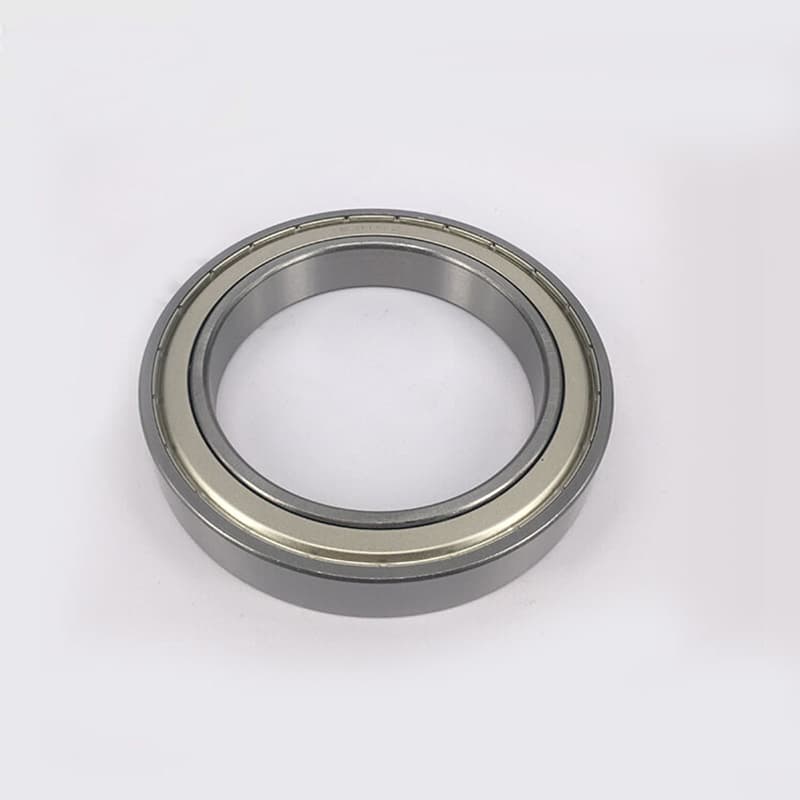
This is a key weakness of deep groove ball bearings3. They are designed for precise alignment. Ignoring this fact is a common and expensive maintenance error.
Understanding and Managing the Misalignment Limit
Misalignment is not about big, obvious bends. It is about tiny angular error2s that have big consequences.
1. What Causes Misalignment?
- Machining Errors: The shaft shoulder and housing shoulder are not perfectly square to the axis.
- Assembly Errors: The shaft is forced into place, bending it slightly.
- Shaft Deflection: The shaft bends under load during operation.
- Thermal Expansion: Different parts of the machine expand at different rates when heated, distorting alignment.
- Foundation Settling: For large equipment, the base can settle unevenly.
2. The Physics of Failure:
When misaligned, the inner and outer ring raceways are no longer parallel. The balls must then roll in a twisted path. They are squeezed at an angle.
- Increased Contact Stress: The ball contacts the raceway at an edge, not its center. This dramatically increases stress, leading to early fatigue (spalling).
- Cage Damage: The balls push unevenly against the cage, causing it to flex, wear, and potentially break.
- Heat Generation: The abnormal contact creates much more friction.
3. How to Work Within the Tolerance:
Since you cannot eliminate misalignment1 completely, you must manage it.
| Strategy | Method | Application Example |
|---|---|---|
| Precision Machining & Assembly | Ensure shaft and housing shoulders are machined with tight perpendicularity tolerances. Use dial indicators to align shafts during coupling. | Critical applications like spindles, high-speed motors. |
| Using Flexible Couplings | A flexible coupling between driver and driven shafts absorbs minor misalignment1, protecting the bearings. | Pumps, fans, compressors. |
| Choosing a Different Bearing Type | If misalignment1 is unavoidable, use a bearing designed for it: a Spherical Roller Bearing4 or a Self-Aligning Ball Bearing. | Vibrating screens, agricultural machinery, applications with long shafts. |
| Correct Mounting Practice | Never use the bearing to pull the shaft into alignment. Always ensure components are aligned before pressing the bearing home. | All installations. |
4. Quantifying the Problem: A Real-World Perspective
For a standard 50mm bore bearing, a 0.15mm (0.006 inches) misalignment1 across a 100mm distance might seem small. But this is already at or beyond the bearing’s limit. This misalignment1 could be caused by a tiny burr on a housing face or a speck of dirt.
My Insight from Failure Analysis Reports:
We receive failed bearings from clients for analysis. A recurring pattern on deep groove ball bearings3 is "one-sided wear" or "cage fracture on one side." This is the classic fingerprint of misalignment1. When I discuss this with the client, we do not talk about bearing quality. We talk about their machine’s alignment procedure. For our distributor clients, this knowledge is power. They can advise their repair shop customers: "Before you blame the bearing, check the alignment of the housing seats with a precision level." This service builds their reputation and reduces unnecessary warranty claims. The tolerance for misalignment1 is not a suggestion. It is a strict boundary. Respecting it is one of the most effective ways to extend bearing life5 and cut maintenance costs.
What affects bearing performance?
A bearing’s life is a race against many enemies. Load, speed, and contamination are obvious. But hidden factors like internal clearance1, lubrication condition2, and even the electrical environment play decisive roles. Ignoring any one can end the race early.
Many factors affect deep groove ball bearing performance3. The primary ones are: the applied load (magnitude and direction), operational speed4, internal clearance1, lubrication (type, quantity, and condition), contamination level5 (dust, dirt, water), installation quality6 (fits and alignment), and operating temperature7. Each factor interacts with the others to determine actual service life.
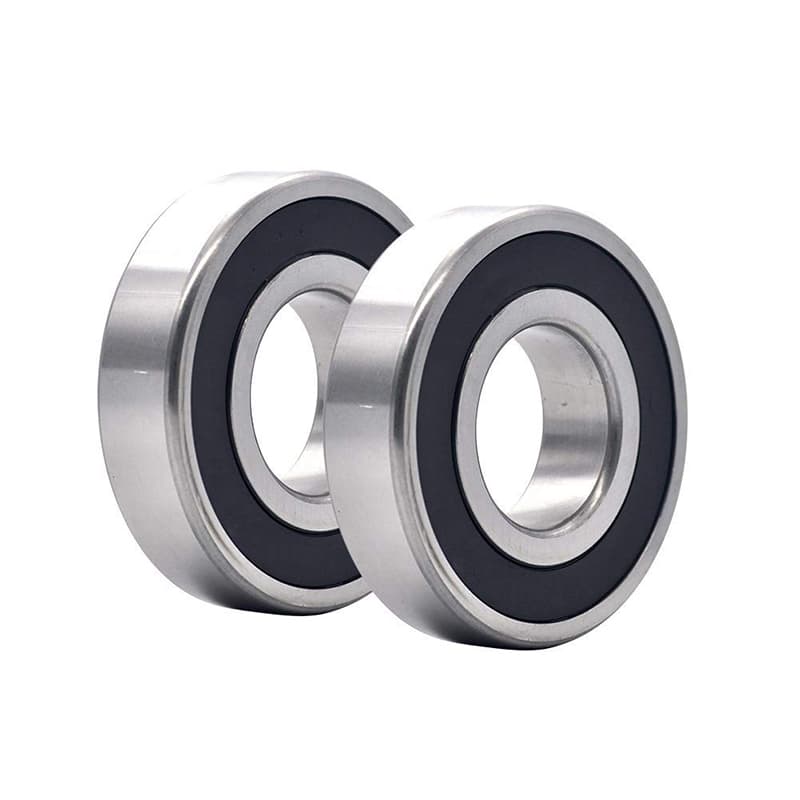
Performance is not a single number from a catalog. It is the real-world outcome of a complex system. Let’s break down this system into manageable parts.
A Holistic View of the Bearing Performance Ecosystem
Think of the bearing as the heart of a mechanical system. Its health depends on the entire body’s condition.
1. The Core Mechanical Factors:
These are the inputs from the machine design.
| Factor | How It Affects Performance | Critical Consideration |
|---|---|---|
| Load | Determines contact stress on raceways. Higher load = shorter fatigue life. Dynamic load rating (C) in the catalog is based on a standard life calculation. | Direction matters. Deep groove ball bearings handle radial and some axial load. A pure axial load on a radial-only bearing will fail quickly. |
| Speed | Affects heat generation, centrifugal forces on balls, and lubrication method. High speed requires high-precision bearings and special lubrication. | dn value: Bore (mm) * Speed (RPM). A high dn value requires oil lubrication or special greases. |
| Internal Clearance | This is the space inside the bearing before mounting. It must be correct to account for interference fits and thermal expansion. | Too little clearance after mounting causes preload and overheating. Too much causes noise and vibration. The fit on shaft/housing directly changes the internal clearance1. |
2. The Environmental and Maintenance Factors:
These are often the true causes of premature failure.
- Lubrication: This is arguably the most important factor after load. Lubrication has three jobs: separate metal surfaces (prevent wear), carry away heat, and protect against corrosion. The wrong grease, too much grease, or too little grease will destroy a bearing.
- Contamination: Hard particles (dust, grit) are abrasive. They cause wear and indentations (brinelling). Water causes rust and breaks down grease. Good seals are essential. The cleanliness of the work area during installation is vital.
- Installation Quality: This encompasses fits, alignment, and handling. Poor installation can introduce damage that no bearing can survive.
- Temperature: High temperature degrades lubricants, softens bearing steel, and can alter clearances. It can be a cause (from friction) or an effect (from external heat).
3. The Interaction and the Weakest Link:
These factors do not act alone. They combine. For example:
- High Load + Poor Lubrication = Very rapid surface damage and overheating.
- High Speed + Misalignment = Extreme cage stress and heat generation.
- Correct Clearance + Contamination = Abrasive wear that destroys the clearance geometry.
My Business Perspective on Performance Factors:
In our conversations with machinery manufacturers (OEMs) in countries like Turkey and Brazil, we go deep into these factors. They are designing for a 10,000-hour life. We help them model it: What is the load spectrum8? What is the ambient temperature? What lubrication system will they use? Based on this, we might recommend a P6 class bearing with C3 clearance and a specific high-temperature grease. For our aftermarket distributors like Rajesh, the conversation is different. Their customers often have a failed bearing. We help them play detective. We ask: What did the failed bearing look like? Was it noisy? Was it hot? Was there grease around it? The answers point to the dominant performance factor that caused the failure. This allows Rajesh to sell not just a replacement bearing, but a solution—maybe a better seal, a different grease, or advice on checking alignment. Understanding these factors turns a parts supplier into a performance partner.
How to check deep groove ball bearing clearance1?
You have a new bearing and a machined shaft. How do you know if the fit is right? Guessing can lead to failure. You need a reliable, practical method to check the most critical parameter: internal clearance2.
Checking deep groove ball bearing clearance1 typically involves indirect measurement. You cannot measure the internal space directly on a sealed unit. The most common practical method is the "axial shake" test: hold the outer ring fixed and measure the axial movement of the inner ring with a dial indicator3. This axial play is proportional to the radial internal clearance2 and indicates if the clearance is within an acceptable range.
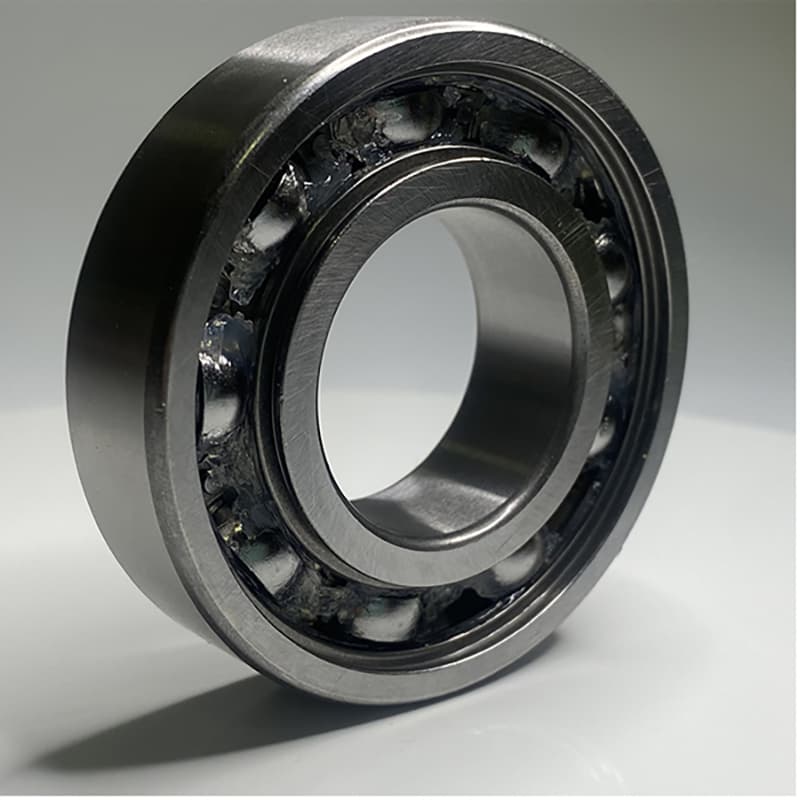
This check is a vital step before installation. It confirms the bearing’s condition and helps predict how the fit will affect final operating clearance.
A Step-by-Step Guide to Clearance Verification
Let’s move from theory to the workshop bench. Here is how to perform the check and interpret the results.
Method 1: The Axial Shake Test (Most Common for Maintenance)
This method is for unmounted, open bearings.
- Tools Needed: A dial indicator3 (with a magnetic base), a flat surface (surface plate), and V-blocks or a fixture to hold the outer ring.
- Setup: Place the bearing on the V-blocks so the outer ring is supported and cannot move. Position the dial indicator3 tip vertically on the face of the inner ring.
- Measurement: With one hand, gently lift and lower the inner ring in the axial direction. Observe the total movement on the dial indicator3. This is the axial end-play.
- Interpretation: Compare the measured value to the bearing’s specification sheet or standard charts. A value of zero or near-zero might indicate a preloaded bearing (for special applications) or a damaged bearing. A value within the listed axial play range is normal. Excessive play might indicate a worn bearing or one from a larger clearance group (like C3).
Method 2: Measuring for Fit Calculations (For OEMs and Precision Work)
This is more about ensuring the correct fit to achieve the desired operating clearance.
- Measure the Bearing: Use an internal micrometer to measure the bore diameter at several points. Use an external micrometer to measure the outside diameter.
- Measure the Shaft and Housing: Use micrometers to measure the shaft diameter where the bearing sits and the housing bore diameter. Take multiple measurements to check for roundness and taper.
- Calculate the Fit: Compare the measurements.
- Shaft Fit: Shaft diameter minus Bearing bore diameter. A positive number is an interference fit4.
- Housing Fit: Housing bore diameter minus Bearing OD. A positive number is a clearance fit (common for stationary outer rings).
- Predict Operating Clearance: The interference fit4 on the shaft will stretch the inner ring, reducing the bearing’s internal clearance2. You must account for this. Bearing catalogs provide guidance on how much clearance reduction to expect per unit of interference.
Clearance Groups and Their Meaning:
Bearings come in standard internal clearance2e groups](https://sdycbearing.com/2026/01/16/how-incorrect-clearance-shortens-deep-groove-ball-bearing-life-in-real-projects/)[^5]: C2 (smaller than normal), CN (normal), C3 (larger than normal), C4, C5 (even larger).
- CN: Used for most applications.
- C3: Used when the inner ring is expected to get much hotter than the outer ring (e.g., electric motors). The extra space prevents thermal seizure.
Practical Clearance Check Table for Maintenance:
| Scenario | Action & Check | What the Result Tells You |
|---|---|---|
| Before installing a new bearing | Perform the axial shake test6. Record the value. | Confirms the bearing is not damaged and has some initial clearance. Establishes a baseline. |
| Suspecting a bearing is worn | Compare its axial play to a new, identical bearing. | Significant increase in play indicates wear and loss of clearance. The bearing likely needs replacement. |
| After pressing a bearing onto a shaft | Try the axial shake test6 again (if possible). | The play should be less than before mounting due to the interference fit4. If it feels completely solid (zero play), the fit may be too tight. |
| Selecting a bearing for a hot application | Order a C3 clearance bearing7 from your supplier. Verify by checking the marking on the bearing or its package. | Ensures you have the correct component for the job, preventing thermally-induced failure. |
My Insight on the Importance of This Simple Check:
In our factory, we measure internal clearance2 on sample bearings from every production batch. It is a key quality checkpoint. But I tell our distributors: this check is even more valuable in the field. A mechanic spending two minutes with a dial indicator3 can avoid a four-hour machine teardown later. For example, a client in South Africa had repeated motor failures. They checked the new bearings before installation and found they had almost no axial play. The problem was not the motor; it was a batch of incorrect bearings they had received from another source. This simple check saved them weeks of downtime. Teaching your customers how to do this builds their confidence and their trust in your products. Checking clearance is the final verification that links bearing tolerances, shaft fits, and expected performance into a single, confident decision to install.
Conclusion
Bearing performance hinges on the precise interplay of fits, tolerances, and clearance. Mastering these concepts prevents noise, heat, and early failure. Careful selection, proper installation, and simple checks ensure your deep groove ball bearings deliver their full potential lifespan.
-
Understanding this concept is crucial for ensuring proper fit and function in machinery. ↩ ↩ ↩ ↩ ↩ ↩ ↩ ↩ ↩ ↩ ↩ ↩ ↩ ↩ ↩ ↩
-
Internal clearance affects bearing performance; knowing how to measure it can save time and costs. ↩ ↩ ↩ ↩ ↩ ↩ ↩ ↩ ↩ ↩
-
A dial indicator is a key tool for precise measurements, ensuring accurate bearing fit. ↩ ↩ ↩ ↩ ↩ ↩ ↩ ↩ ↩
-
Understanding interference fit is vital for ensuring proper assembly and function of bearings. ↩ ↩ ↩ ↩ ↩ ↩
-
Different clearance groups affect performance; knowing them aids in proper bearing selection. ↩ ↩ ↩ ↩ ↩
-
This method is essential for checking bearing condition before installation, preventing future failures. ↩ ↩ ↩
-
C3 bearings are crucial for high-temperature applications; knowing when to use them prevents failures. ↩ ↩
-
Understand how load spectrum influences bearing selection and performance, vital for machinery longevity. ↩