
A conveyor stops. Your production line halts. You find the problem: a failed idler roller bearing. The downtime costs you money. Choosing the right bearing for these rollers is not a minor detail. It is a critical decision for continuous operation.
Deep groove ball bearings are commonly used in roller and conveyor idlers for light to medium-duty applications. They offer smooth rotation, handle both radial and some axial loads, are cost-effective, and are easy to install, making them a standard choice for many conveyor systems.
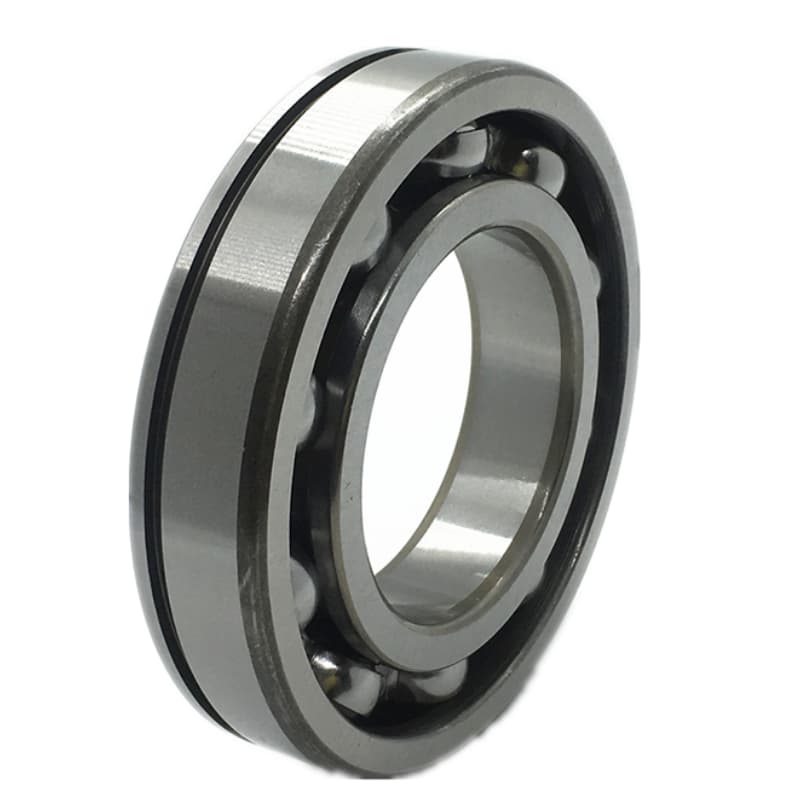
At FYTZ Bearing, we supply thousands of these bearings to conveyor manufacturers and maintenance companies. The choice is not always simple. For distributors like Rajesh in India, knowing when to recommend a deep groove bearing and when to suggest something else is key to his business. Let’s explore the role of these bearings in detail.
What are deep groove ball bearings1 used for?
You have a machine part that needs to spin smoothly. It needs to handle pushes from the side and maybe a little from the ends. You need something reliable, common, and affordable. This is the problem a deep groove ball bearing solves every day.
Deep groove ball bearings are versatile bearings used to support rotating shafts while managing radial loads and some axial loads. They are found in electric motors, gearboxes, household appliances, automotive components, and importantly, in the idler rollers and pulleys of conveyor systems.
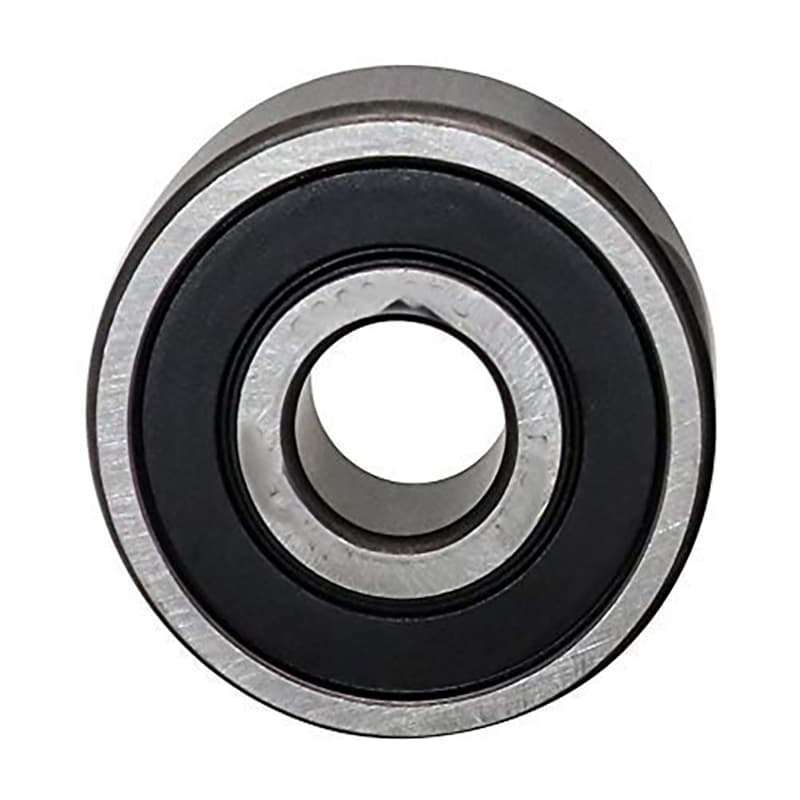
The Workhorse of Industry: Where and Why Deep Groove Ball Bearings Shine
They are called "deep groove" because the raceways on the inner and outer rings are deep and continuous. This design gives them their unique abilities.
Core Strengths and Typical Applications:
Their design makes them suitable for a very wide range of situations.
- High-Speed Capability: They have very low friction. This makes them perfect for applications where the shaft spins fast. Think of the spindle in an electric motor (like a conveyor drive motor) or a cooling fan.
- Combined Load Handling: The deep grooves allow them to manage not just weight pushing down (radial load) but also some pushing along the shaft (axial load). This is useful in situations where belts might pull slightly sideways on a roller.
- Low Noise and Vibration: When made with good precision, they run very quietly. This is important for machinery in factories where noise is a concern.
- Easy to Install and Maintain: They are simple in design. They can be installed in either direction. Sealed versions are lubricated for life, requiring no maintenance.
Specific Uses in Conveyor and Material Handling:
This is where our clients like Rajesh focus. Here is how they are typically employed:
| Conveyor Component | Bearing Function | Why Deep Groove Ball Bearing is Often Used |
|---|---|---|
| Idler Rollers (Return & Carrying) | Supports the roller tube, allowing it to spin freely under the weight of the belt and material. | It is cost-effective, handles the moderate radial load of a loaded belt, and its sealed versions protect against dust. |
| Snub Pulleys / Bend Pulleys | Guides the belt, changing its direction. Experiences mostly radial load. | Simple and reliable for standard tension applications. |
| Take-Up Pulleys | Adjusts belt tension. Loads can vary. | Good for lighter-duty take-up systems. For very heavy tension, other bearings might be better. |
| Motor and Reducer Shafts | Inside the drive unit that powers the conveyor. | This is a classic application. High speed and combined loads make deep groove bearings the standard choice here. |
Limitations to Understand:
They are not perfect for everything. My insight from dealing with failures is clear: they are not good for very heavy loads, shock loads, or severe misalignment.
- If an idler roller is under a massive, concentrated load (like a large rock falling), a deep groove bearing can brinell (get dented).
- If the conveyor frame is bent and the shaft is misaligned, it will cause uneven wear and early failure.
- For the main, heavily loaded head or tail pulleys on a large conveyor, spherical roller bearings in pillow blocks are almost always a stronger choice.
So, for conveyor idlers, deep groove ball bearings1 are excellent for the majority of standard-duty applications. They are the default choice for a reason. But knowing their limits helps you avoid problems.
What type of bearing will you recommend for use in the conveyor belt roller?
A client asks for a bearing for a conveyor roller. My first question back is always: "What is the environment and load?" Recommending the wrong type leads to premature failure, unhappy customers, and damage to your reputation as a supplier.
For most standard conveyor belt rollers, I recommend deep groove ball bearings1 with rubber seals (2RS). For very heavy-duty, high-load, or misaligned rollers, I recommend spherical roller bearings2. The choice depends on the load capacity3, speed, and environmental conditions.
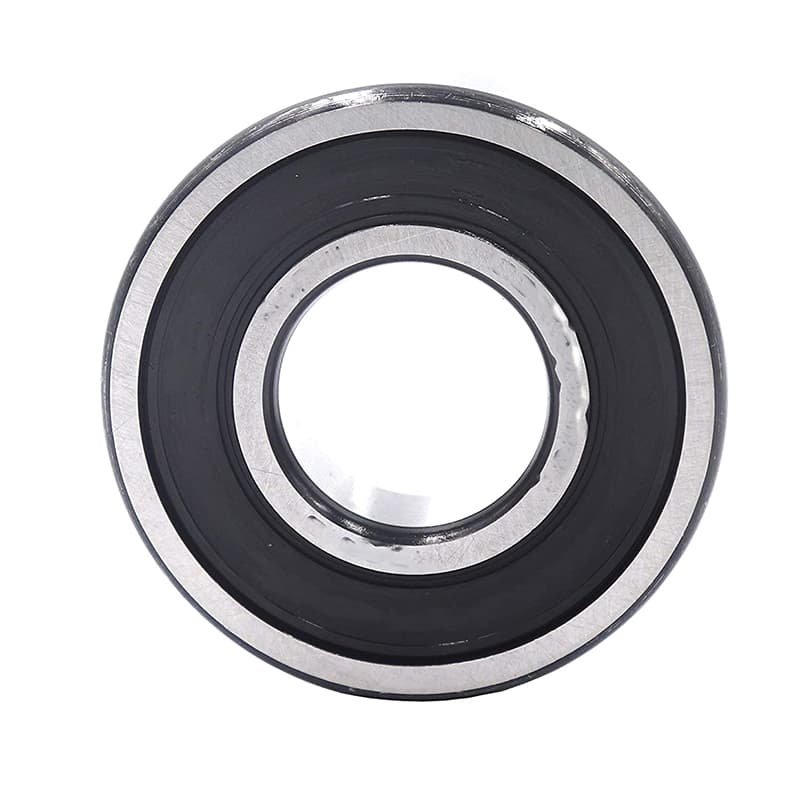
Making the Right Recommendation: A Structured Decision Guide
This is not a guess. It’s a process. I use a simple framework with our clients to determine the best bearing type.
Key Factors for Selection:
- Load: How much weight is on the roller? Is it a return idler (light) or a carrying idler under a pile of ore (very heavy)?
- Speed: How fast is the belt moving? Most idlers rotate at low to medium speeds.
- Environment: Is it dusty, wet, or corrosive? A fertilizer plant is different from a food factory.
- Misalignment: Is the conveyor frame perfectly straight? Long conveyors often have some frame deflection.
- Cost and Availability: The bearing must make economic sense and be easy to source for maintenance4.
Detailed Comparison for Conveyor Rollers:
Let’s put the two main candidates side by side. This table helps explain the recommendation to a customer.
| Feature | Deep Groove Ball Bearing (e.g., 6204-2RS) | Spherical Roller Bearing (in a housing) |
|---|---|---|
| Best For | Light to medium-duty rollers. Standard bulk handling, packaging lines, warehouse conveyors. | Heavy-duty and bulk material rollers. Mining, quarrying, ports, high-tonnage applications. |
| Load Capacity | Good for moderate radial loads. Limited for shock loads. | Excellent for very high radial loads and shock loads. |
| Misalignment Tolerance | Very low. Requires good shaft alignment. | High. Can tolerate 2-3 degrees of misalignment, common in long conveyor frames. |
| Speed Capability | High. Suitable for any conveyor speed. | Moderate. More than enough for typical conveyor speeds. |
| Sealing | Good with rubber seals (2RS). Effective against dust and some moisture. | Often uses labyrinth seals in a pillow block, which can be very effective but bulkier. |
| Typical Mounting | Pressed directly into the roller end cap. Simple and compact. | Mounted inside a pillow block housing, which is then bolted to the conveyor frame. More robust. |
| Cost | Lower cost per bearing. The roller design is simpler. | Higher initial cost for bearing and housing. |
| Maintenance | Often "sealed for life." No re-lubrication. | Usually requires periodic re-greasing through a nipple on the housing. |
My Step-by-Step Recommendation Process:
When Rajesh gets an inquiry, he can use this logic:
- Ask about the material: Is it moving boxes, grains, or large rocks? Rocks mean heavy duty.
- Ask about the belt width and speed: A wider, faster belt often means heavier loads.
- Ask about the history: Are they replacing a failed bearing? What did the old one look like? If it’s crushed, they need an upgrade.
- Make the call:
- Recommend Deep Groove (2RS): For general factory conveyors, warehouses, agriculture (grain), and light industry. It’s the safe, economical choice for 70% of applications.
- Recommend Spherical Roller Pillow Block: For mining, cement, steel plants, or any place where the conveyor moves heavy, abrasive materials or operates 24/7. It’s the choice for reliability under stress.
My personal insight is this: Do not try to save money by putting a deep groove ball bearing where a spherical roller is needed. The bearing will fail quickly. The cost of downtime and replacement labor will be many times higher than the price difference of the correct bearing from the start. For a distributor, selling the right solution builds long-term trust.
What is a 6203 bearing1 used for?
In the world of bearings, the 6203 is like a standard screw or nut. It’s everywhere. When a maintenance mechanic says "I need a 6203," he usually knows it will fit a motor or a small roller. But its uses are very specific.
The 6203 bearing1 is a specific deep groove ball bearing2 with a 17mm bore, 40mm outer diameter, and 12mm width. It is most commonly used inside small to medium electric motors3, fans, light-duty conveyor rollers4, and gearboxes5 where space is limited and loads are moderate.
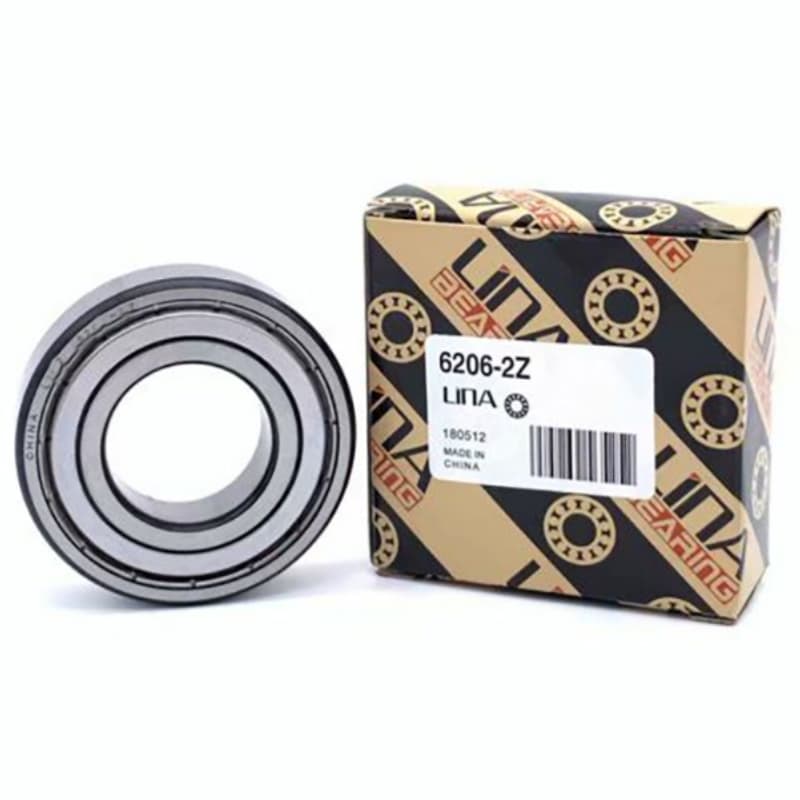
The 6203: Pinpointing Its Role in Conveyor Systems
The number "6203" is a code. "6" means deep groove ball. "2" is the width series. "03" means a 17mm bore. Knowing its exact dimensions tells us where it fits.
Common Applications in Detail:
- Electric Motors (0.25kW – 2.2kW range): This is its home. Nearly every standard industrial AC motor in this power range will use 6203 bearing1s on its shaft. These motors drive pumps, fans, and smaller conveyor drives. So, indirectly, the 6203 is critical to the entire conveyor’s power source.
- Light-Duty Idler Rollers: For narrow belt conveyors in packaging, light assembly, or electronics manufacturing, the rollers are small. The 6203 is a perfect fit for the end caps of these rollers. It handles the light weight of the belt and product.
- Gearmotors and Reducers: The small gearboxes5 that reduce motor speed for conveyors often use 6203 bearing1s on the intermediate shafts.
- Pumps and Blowers: Support systems in a plant, like cooling pumps or dust collection blowers, frequently use this bearing size.
Why the 6203 is So Popular with Distributors:
For someone like Rajesh, the 6203 is a staple stock item.
- High Demand: Because it’s in so many motors, failure rates create consistent demand.
- Cross-Compatibility: Many motor brands use this standard size, so one bearing fits many models.
- Cost-Effective: It is produced in massive quantities globally, keeping prices competitive.
Specification Variants for Different Needs:
Not all 6203s are the same. The base number is just the size. The suffix letters specify important features for conveyor environments.
| 6203 Variant | Key Feature | Best Use in Conveyor Context |
|---|---|---|
| 6203-ZZ | Has metal shields on both sides. | For internal motor parts where grease must stay in but the environment is clean. Not ideal for dusty rollers. |
| 6203-2RS6 | Has rubber contact seals on both sides. | My top recommendation for idler rollers. Keeps conveyor dust out and grease in. The best all-around choice. |
| 6203-C3 | Has larger internal clearance (looser fit). | For applications where the bearing might get hot, like in a motor mounted near a hot process. |
| 6203 P6 | Higher precision grade (ABEC 3). | For very smooth, quiet operation in precision equipment, not typically needed for standard conveyors. |
My insight on the 6203 is practical. It is a reliable workhorse. However, I always tell clients to check the old bearing’s markings. If it says "2RS," replace it with a 2RS. If you replace a sealed bearing with an open or shielded one in a dusty conveyor area, it will fail much faster. For roller applications, the seal type is more important than ever.
What is a 6307 bearing1 used for?
You move from a small motor to a larger pump or a heavier roller. The shaft is thicker. You need a bigger bearing. The 6203’s bigger brother, the 6307, steps in. It follows the same design logic but for more powerful equipment.
The 6307 bearing1 is a larger deep groove ball bearing2 with a 35mm bore, 80mm outer diameter, and 21mm width. It is used in larger electric motors (5.5kW-15kW), heavier-duty gearboxes, industrial fans, and the rollers of medium-duty conveyor systems where shaft sizes and loads are greater.
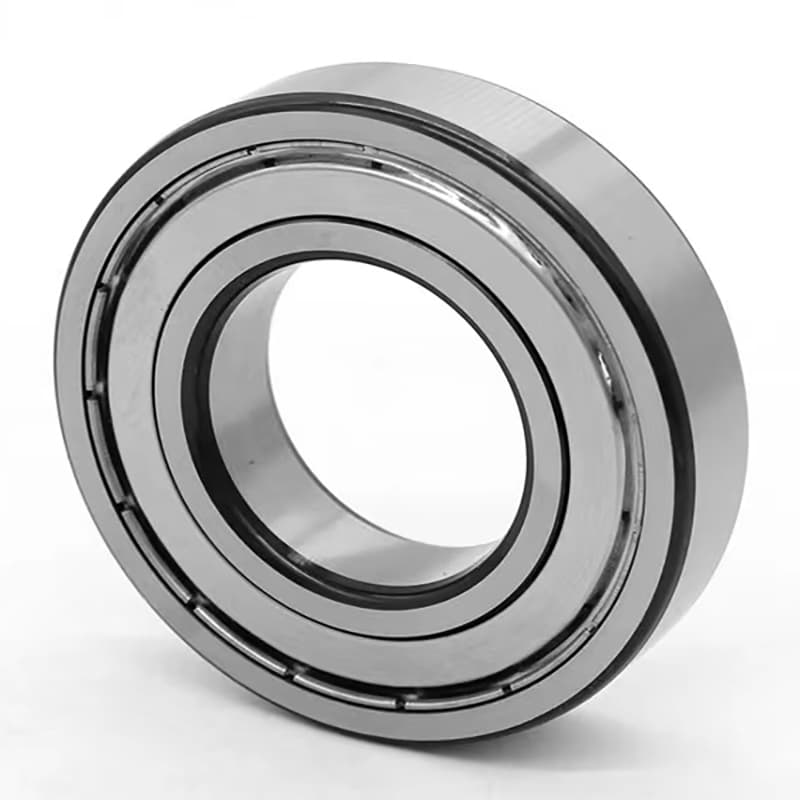
The 6307: Powering Medium-Duty Conveyor Components
The "6307" tells us: "6" for deep groove, "3" for the medium width series, "07" for a 35mm bore. This size jump represents a significant increase in load capacity.
Typical Applications in Material Handling:
- Larger Drive Motors and Gearboxes: The primary motors driving the main conveyor belt are more powerful. These motors have larger shafts, requiring bearings like the 6307. The gear reducers that connect these motors to the drive pulley also use bearings of this size.
- Heavier Idler Rollers: On wider belt conveyors in mining, aggregate, or bulk grain handling, the rollers are larger and carry more weight. The shaft diameter increases to maybe 30mm or 35mm. A 6307 bearing1 pressed into a robust roller end cap is a common design for these medium-duty applications.
- Pulley Bearings: For non-drive, medium-sized bend pulleys or snub pulleys, deep groove bearings like the 6307 can be a suitable and cost-effective choice, often mounted in simple plummer blocks.
- Vibratory Equipment Bearings: Feeders or screens associated with conveyor systems sometimes use this size bearing for their eccentric shafts, where deep groove bearings handle the combined loads.
Load Capacity Comparison:
This is where the difference matters. Let’s look at the numbers (approximate values from standard catalogs):
| Bearing | Bore (mm) | Dynamic Load Rating (Cr) | Static Load Rating (Cor) |
|---|---|---|---|
| 6203 | 17 | ~9.6 kN | ~4.8 kN |
| 6307 | 35 | ~33.4 kN | ~19.2 kN |
The 6307 can handle about 3.5 times the radial load of the 6203 over the same life. This shows why it’s used for heavier components.
Selection and Maintenance Advice:
For a conveyor OEM or maintenance team, choosing a 6307 involves more than just size.
- Sealing is Critical: In dusty or wet environments, the
6307-2RS(rubber sealed) is again the best choice. The larger seal has a bigger job protecting a more expensive bearing. - Clearance Considerations: For outdoor conveyors or rollers exposed to sun, consider
6307-2RS C3to account for thermal expansion of the larger metal components. - Installation: Pressing a 6307 into a roller requires more force than a 6203. Using the correct tools and pressing on the correct ring (always press on the ring with the tight fit, never through the balls) is essential to avoid damage.
My insight from supplying to heavy equipment workshops is that the 6307 is often at the upper boundary for deep groove bearings in conveyor rollers. When loads get very high, or shock loads are present, even the 6307 may not be enough. This is the decision point where we start talking to clients about switching to a spherical roller bearing3 (like a 22207 series) for that application. Knowing this boundary helps Rajesh advise his customers correctly: use the 6307 for robust medium-duty work, but don’t push it into extreme service where it will fail.
Conclusion
Deep groove ball bearings, from the common 6203 to the robust 6307, are excellent for many conveyor idler applications. The key is matching their strengths to the load, speed, and environment of your specific system.
-
Explore this link to understand the specific applications and advantages of the 6307 bearing in various industrial settings. ↩ ↩ ↩ ↩ ↩ ↩ ↩ ↩ ↩ ↩
-
Learn about deep groove ball bearings and their significance in machinery, enhancing your knowledge of bearing types. ↩ ↩ ↩
-
Explore the advantages of spherical roller bearings for heavy loads, providing insights into when to switch from deep groove bearings. ↩ ↩ ↩
-
Find out how light-duty conveyor rollers function and where they are used, highlighting the importance of the 6203 bearing. ↩ ↩
-
Explore the various types of gearboxes and their functions, including how bearings like the 6203 fit into their design. ↩ ↩
-
Understand the specific features of the 6203-2RS bearing and why it’s recommended for certain applications. ↩
