
You send a request for quote (RFQ) to a bearing supplier. You get back confusing prices, unclear specs, or questions you can’t answer. This wastes time and risks buying the wrong bearings for your project or customers.
To build an accurate RFQ list for deep groove ball bearings, you must include the exact bearing number, dimensions (inner/outer diameter, width), clearance code, seal/shield type, precision grade, material, and quantity. Clear specifications prevent misunderstandings and ensure you get comparable, correct quotes.
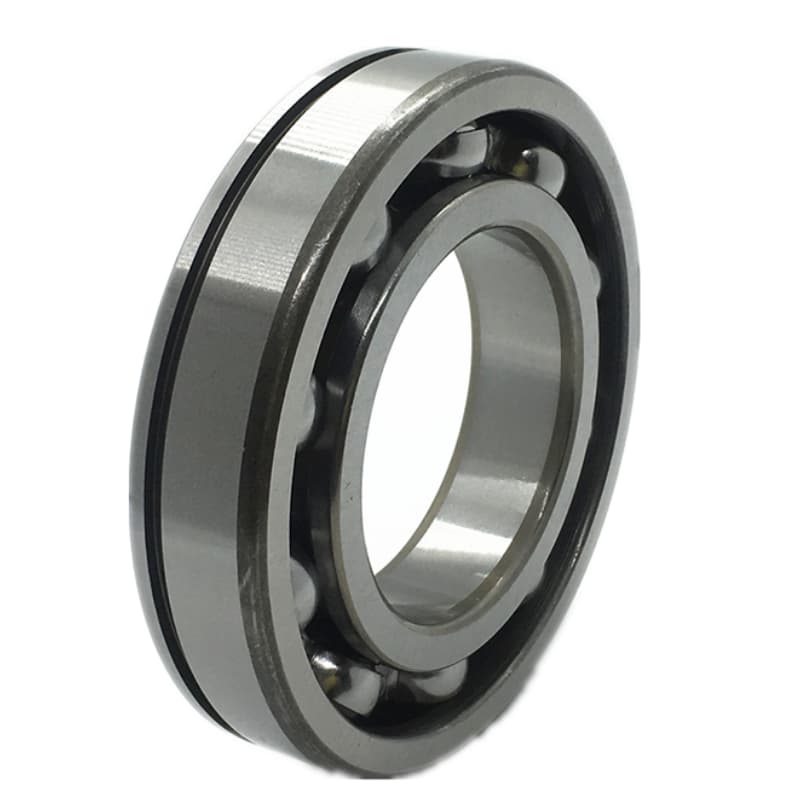
At FYTZ Bearing, we receive hundreds of RFQs every month. The clear lists get fast, accurate quotes. The vague ones lead to long email chains and delays. For importers like Rajesh, a good list is his tool for getting the best price and quality. Let’s break down the essential data you need to include.
What are the specifications of a deep groove ball bearing1?
Imagine ordering a pizza by just saying "pizza." You might get anything. Ordering a bearing just by its inner diameter is the same. You need the full recipe to get exactly what you need for your machinery.
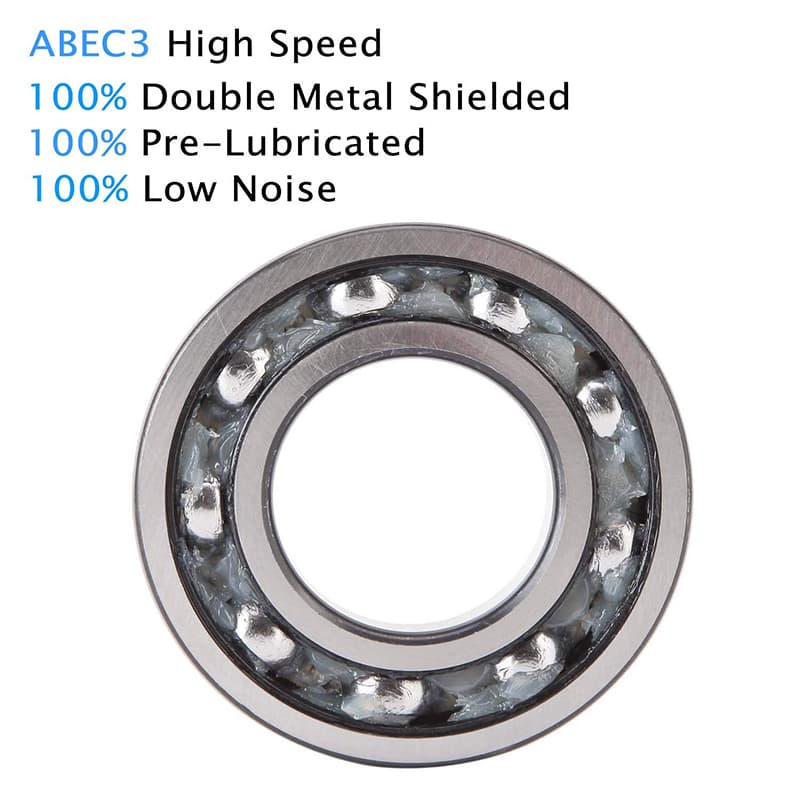
The key specifications of a deep groove ball bearing1 are its boundary dimensions (bore d, outer diameter D, width B/C), load ratings (dynamic Cr, static Cor), speed limits, internal clearance (C code), precision grade (P code), seal/shield type (ZZ, 2RS, etc.), and material. These define its performance and fit.
The Complete Specification Breakdown: Your RFQ Checklist
A specification is a language. When you speak it clearly, suppliers understand you perfectly. Let’s translate each spec into simple terms for your purchase list.
1. Core Dimensions (Non-Negotiable for Fit):
These three numbers ensure the bearing fits the shaft and the housing.
- Bore Diameter (d): The hole size. It must match your shaft. It’s often in the bearing number (e.g., in 6203, ’03’ means 17mm bore).
- Outer Diameter (D): The overall width of the bearing. It must fit into your housing or machine frame.
- Width (B or C): The thickness of the bearing. It affects the space it occupies along the shaft.
2. Performance Specs (Define Capability):
These numbers tell you what the bearing can do.
- Dynamic Load Rating (Cr)2: This is the load the bearing can carry for 1 million rotations. A higher number means it can handle heavier loads for a longer life in a rotating application.
- Static Load Rating (Cor)3: This is the maximum load the bearing can handle when it’s not rotating (or rotates very slowly) without permanent damage.
- Speed Limits: Grease lubrication and oil lubrication have different maximum speeds. Exceeding them causes overheating.
3. Configuration Specs (Define Suitability):
These choices adapt the bearing to your environment.
- Seals/Shields4: This is critical.
ZZmeans metal shields (for high speed, keep out large dirt).2RSmeans rubber seals on both sides (for keeping out water and fine dust, lower speed). - Internal Clearance5:
CNis normal.C3is larger for hot applications. We covered this in detail before. - Precision Grade6:
P0is standard.P6orP5are more precise, for applications requiring minimal vibration and runout (e.g., machine tool spindles). - Material: Most are
GCr15Chrome Steel. For corrosive environments, specifyStainless Steel (440C or 304).
How to Present This in Your RFQ List:
Don’t just write text. Use a table. This is what we love to see from professional buyers.
| Item No. | Bearing Number | Qty (Pcs) | d (mm) | D (mm) | B (mm) | Clearance | Seal Type | Precision | Material | Notes |
|---|---|---|---|---|---|---|---|---|---|---|
| 1 | 6203-2RS | 500 | 17 | 40 | 12 | C3 | 2RS (Rubber) | P0 | GCr15 | For electric motors |
| 2 | 6305-ZZ | 300 | 25 | 62 | 17 | CN | ZZ (Metal Shield) | P6 | GCr15 | For high-speed spindle |
| 3 | 6004-2Z | 200 | 20 | 42 | 12 | C3 | ZZ | P0 | Stainless AISI 440C | Washdown environment |
My Personal Insight:
The most common mistake is omitting the seal type and clearance. I get lists that just say "6203, 1000pcs." We have to ask: "2RS or ZZ? CN or C3?" This adds days to the process. If you are replacing a bearing, look at the old one. The markings are often on it. If it’s for a new design, think about the environment. Will it get wet? Specify 2RS. Will it run hot? Specify C3. Adding these details upfront makes you look professional and gets you the right quote faster.
How to check deep groove ball bearing clearance1?
You have a box of bearings labeled C3. How can you be sure before you install them? Or, a machine is noisy and you suspect the clearance is wrong. You need a reliable way to check. Guessing is not an option.
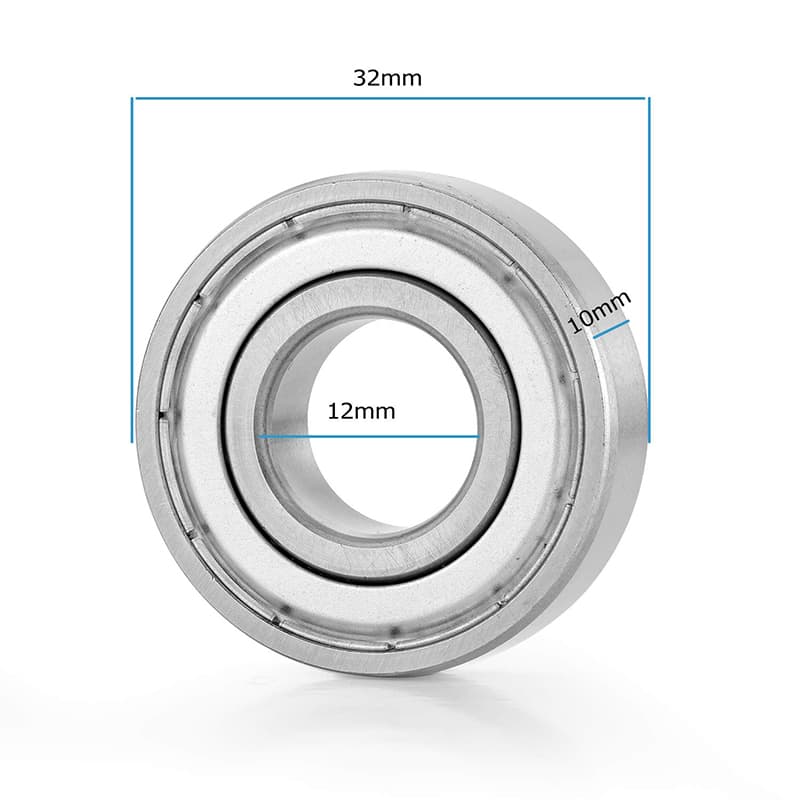
You check deep groove ball bearing clearance1 by measuring the internal radial play. This is done by fixing the outer ring and measuring how much the inner ring can move radially, typically using a dial indicator. This measured value is compared to standard tables to verify the C code (CN, C3, etc.).
Methods for Checking Clearance: From Workshop to Factory Floor
Knowing how to verify clearance builds confidence. It helps you inspect incoming goods and diagnose problems. Here are the main methods.
1. The Dial Indicator Method (Most Accurate):
This is the standard method in factories and quality labs.
- Step 1: Place the bearing on a flat V-block or fixture to hold the outer ring steady.
- Step 2: Position a dial indicator’s tip against the inner ring’s side.
- Step 3: Hold the inner ring and push it side to side (radially) while keeping the outer ring fixed. Do not lift it.
- Step 4: The total movement shown on the dial indicator is the radial internal clearance.
- Step 5: Compare this measurement to the standard range for your bearing’s size and C code.
2. The Manual Feel Method (For Experienced Hands):
This is a quick check in the workshop, not for final judgment.
- Hold the bearing outer ring in one hand.
- Try to move the inner ring side-to-side with your other hand.
- A C3 bearing2 will have a noticeable, small "rock." A CN bearing will have a very slight movement. A C1/C2 will feel almost solid.
- Warning: This method is subjective. It depends on your feel. It is only good for spotting a major problem, like a C3 bearing2 that feels like it has no play at all.
3. The Axial Play Estimation Method (Indirect Check):
Sometimes, you can feel the axial play (movement along the shaft direction) as an indicator.
- Hold the outer ring.
- Try to push and pull the inner ring along its axis.
- Generally, a bearing with larger radial clearance (C3) will also have slightly more perceptible axial play than one with normal clearance (CN).
Understanding Clearance Tables:
Suppliers like us use standard tables (from ISO or ABMA). The clearance range is different for each bearing size. For example, a small 6203 bearing and a large 6310 bearing will have different micrometer values for C3.
Here is a simplified example of what part of such a table looks like:
| Bearing Bore (mm) | Clearance Group | Min Clearance (µm) | Max Clearance (µm) |
|---|---|---|---|
| 10 – 18 | C2 | 3 | 13 |
| 10 – 18 | CN (Normal) | 10 | 20 |
| 10 – 18 | C3 | 18 | 33 |
| 19 – 30 | CN | 15 | 30 |
| 19 – 30 | C3 | 25 | 45 |
My Insight on Practical Checking:
For a distributor like Rajesh, investing in a simple dial indicator set is very wise. When a new container arrives, he can perform a spot check on bearings from different cartons. This protects him from receiving out-of-spec goods. I have seen cases where a supplier mixed CN and C3 bearing2s in the same labeled box. A quick check caught this. For an end-user, if a machine bearing is noisy after installation, checking the clearance (if possible) can tell you if the wrong C code was installed or if wear has occurred. Remember, clearance is reduced after installation due to the fit on the shaft and in the housing. So, the "operational clearance3" is smaller than the "initial clearance" you measure before mounting.
What are the main parts of a deep groove ball bearing1?
A bearing fails. You need to explain the problem to your supplier. Saying "it’s broken" is not helpful. Knowing the parts helps you identify the failure mode—was it the cage, the raceway, the seal? This leads to better diagnosis and a better replacement choice.
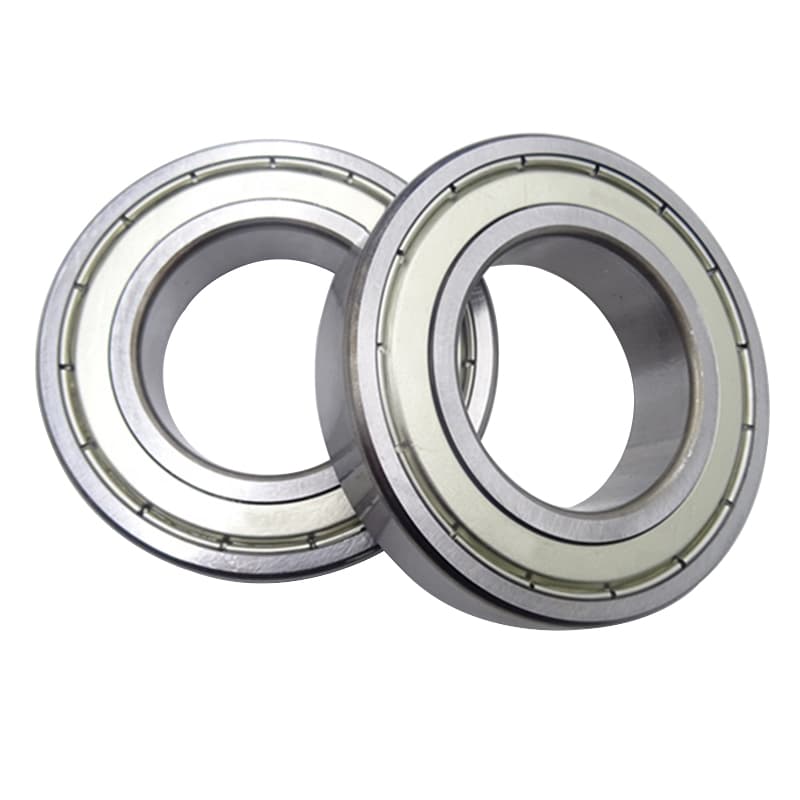
The main parts of a deep groove ball bearing1 are the inner ring2, outer ring, rolling elements3 (balls), and cage (retainer)4. Optional parts include seals or shields5 and a snap ring. The rings have raceways6 for the balls to roll on, and the cage keeps the balls evenly spaced.
The Role of Each Component: Why the Sum of Parts Matters
Each part has a specific job. The quality of each part determines the overall bearing performance and life. Let’s examine them one by one.
1. Inner Ring and Outer Ring
- Material: Usually high-carbon chromium steel (GCr15). This is hardened to about 60-64 HRC for high wear resistance. The precision grinding of the raceways6 is what creates a smooth, quiet run.
- Function: They provide the smooth, hard tracks (raceways6) for the balls. They also transfer the load from the shaft (via inner ring2) to the housing (via outer ring).
- My Insight: The hardness and micro-structure of the steel are critical. Cheap bearings may use lower-grade steel or improper heat treatment. This leads to premature wear (brinelling) or flaking (spalling) on the raceways6. Always ask for material certification7 for critical applications.
2. Rolling Elements (Balls)
- Material: Same high-grade steel as the rings. They must be perfectly spherical and matched in size.
- Function: They roll between the raceways6, converting sliding friction into much lower rolling friction. They carry the load.
- My Insight: The ball grade is a key precision factor. Grade 10 or Grade 16 balls are common. Higher grades (like Grade 5) are for very precise, quiet bearings. The number and size of the balls directly affect the load rating. More or larger balls mean higher capacity.
3. Cage (Retainer)
- Material: Steel stamping, brass, or polyamide (nylon).
- Steel Stampings: Common, strong, and cheap.
- Brass: Better for high speeds and temperatures, provides good lubrication.
- Polyamide (PA66): Lightweight, quiet, and allows for better lubrication flow. But it has a temperature limit (usually around 120°C).
- Function: It separates the balls, preventing them from rubbing against each other. It also guides the balls and keeps them evenly distributed around the raceway.
- My Insight: The cage is often the first part to fail in a misaligned or poorly lubricated bearing. A broken or deformed cage will cause noise and then catastrophic failure. For high-speed applications, specifying a brass or polyamide cage is often worth the extra cost for reliability.
4. Seals/Shields (ZZ, 2RS, etc.)
- These are not just "caps." They are precision components.
- Shields (Z, ZZ): Thin metal plates. They keep large debris out but do not seal tightly.
- Seals (RS, 2RS): Rubber (NBR, FKM) lips that contact the inner ring2. They keep grease in and contaminants (water, dust) out.
- My Insight: The seal is the guardian of the internal environment. For Rajesh’s customers in dusty India or humid coastal areas, specifying 2RS is almost always better than ZZ. The small increase in friction is a good trade for much longer bearing life.
Component Failure Analysis Table:
Knowing the parts helps you diagnose from a failed sample.
| Failed Part | Possible Cause | What to Specify Next Time |
|---|---|---|
| Raceway Spalling | Fatigue from overloading, poor material, or contamination. | Higher dynamic load rating (Cr), cleaner material (vacuum degassed steel), better sealing. |
| Cage Broken | Severe vibration, misalignment, or improper installation. | A more robust cage material (brass over stamped steel), ensure proper shaft alignment. |
| Seal Hardened/Cracked | High temperature, ozone, or chemical attack. | High-temperature rubber (FKM/Viton) seals. |
| Balls Brinelled | Heavy shock load while stationary, or false brinelling from vibration. | Higher static load rating (Cor), use different bearing type for shock loads. |
What is the commodity code 8482109090?
You are preparing shipping documents1 for a container of bearings. The customs broker asks for the HS code. You are not sure. Using the wrong code can cause customs delays, extra fees, or even legal issues. This code is the universal language for international trade.
Commodity code 8482109090 is a Harmonized System (HS) code2 used for classifying "Ball bearings, other than tapered roller bearings" for customs declaration and international trade. It helps determine import duties3, taxes, and trade statistics for shipments of deep groove ball bearings and similar types.
Navigating the World of HS Codes for Bearings
This 10-digit number is not random. It is part of a global system. Understanding it helps you in logistics, costing, and market research4.
Breakdown of the Code 8482109090:
The HS code is structured like a tree, from general to specific.
- 84: Section – "Nuclear reactors, boilers, machinery and mechanical appliances; parts thereof." This is the broad category for machinery parts.
- 84.82: Chapter – "Ball or roller bearings." This narrows it down to our product family.
- 8482.10: Heading – "Ball bearings." This specifies the type as ball bearings.
- 8482.1090: Sub-heading – Often used to specify "Other than tapered roller bearings" or further distinctions. The ’90’ here often signifies a residual "other" category for the specific country’s tariff schedule.
- 8482109090: The full 10-digit code as used by a specific country (like China for export, or India for import). The last digits provide the most detailed classification.
Why This Code Matters for You:
- Calculating Total Landed Cost: The import duty rate is tied to this code. When Rajesh imports to India, the Indian customs will apply a duty percentage based on code 8482.10.90 (India’s version). Knowing this rate upfront is essential for calculating his final cost and setting his selling price.
- Smooth Customs Clearance: Providing the correct code on commercial invoices, packing lists, and the bill of lading prevents delays at the port. A wrong code can lead to inspections, re-classification, and storage demurrage charges.
- Market Research: You can use this code to look up trade data. How many bearings are imported into Vietnam each year? What is the average price? This data can be found using the HS code.
- Rules of Origin5: For free trade agreements, the correct HS code is needed to determine if the goods qualify for preferential (lower) duty rates.
Common Related Codes You Might See:
- 8482.20.00: Tapered roller bearings (a different product line we also make).
- 8482.30.00: Spherical roller bearings.
- 8482.50.00: Cylindrical roller bearings.
- 8482.80.00: Other roller bearings (like needle bearings).
- 8482.91.00 / 8482.99.00: Parts of bearings (like rings, balls, cages).
My Practical Advice:
Always confirm the exact HS code with your supplier and your freight forwarder or customs broker in the destination country. While 8482109090 is common for Chinese export of generic ball bearings, the importing country’s last 2-4 digits might be slightly different. For example:
- For export from China: We, as the factory, will declare
8482109090. - For import into India: Rajesh’s broker will likely use
84821090. - For import into USA: The code might be
8482100000.
Providing us with your country’s required HS code ensures we put the correct information on all export documents. This small detail is a mark of a professional, experienced trader and avoids countless headaches. For a distributor, getting this right builds trust with your own customers because your shipments arrive on time.
Conclusion
A precise RFQ list, built on clear specifications, part knowledge, and even correct trade codes, is your key to efficient sourcing, accurate pricing, and getting the exact deep groove ball bearings you need.
-
Ensure your shipping documents are complete to avoid customs issues and delays. ↩ ↩ ↩ ↩ ↩ ↩ ↩
-
Understanding HS codes is crucial for smooth customs processes and accurate duty calculations. ↩ ↩ ↩ ↩ ↩ ↩ ↩ ↩
-
Learn how import duties are determined to avoid unexpected costs during shipping. ↩ ↩ ↩ ↩
-
Discover how HS codes can provide valuable trade data for better business decisions. ↩ ↩ ↩
-
Understanding these rules can help you qualify for lower duty rates under trade agreements. ↩ ↩ ↩
-
Raceways are critical for smooth operation; learn how their design impacts overall bearing efficiency. ↩ ↩ ↩ ↩ ↩ ↩
-
Material certification ensures quality and reliability, especially in critical applications; find out more. ↩