
A micrometer that wobbles. A coordinate measuring machine (CMM) that drifts. A medical scanner with blurry images. Often, the culprit is not the software or the lens, but the humble bearing that guides the motion. Precision demands perfection in rotation, and not all bearings can deliver it.
Deep groove ball bearings are used in precision instruments and measuring devices for their low friction, high running accuracy, quiet operation, and ability to handle both radial and light axial loads. Precision grades (ABEC 5/7/9 or P5/P4/P2) provide the extreme dimensional and rotational tolerances required for micron-level repeatability.
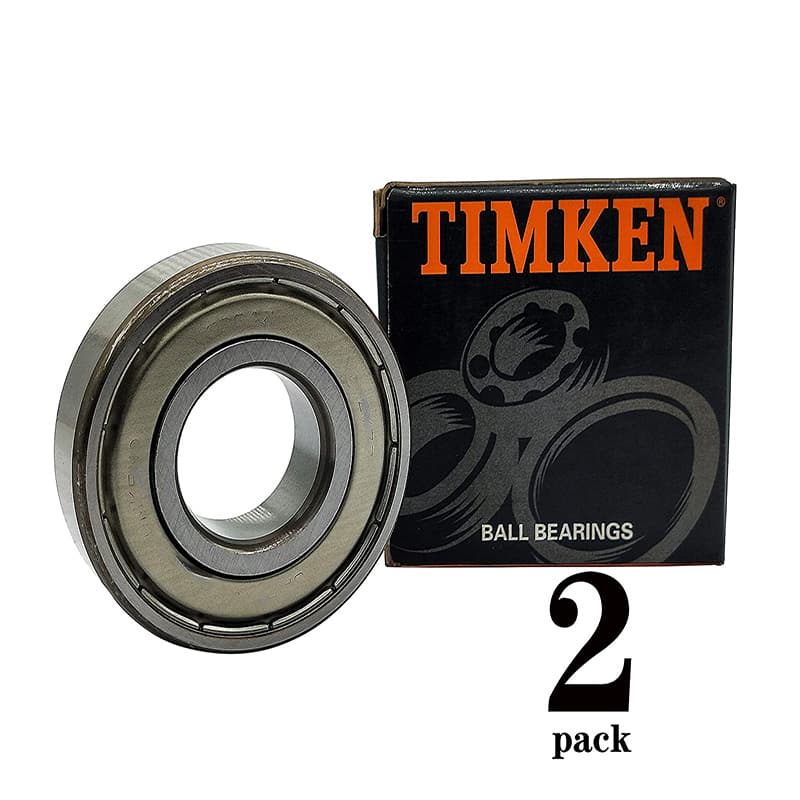
The journey from a standard industrial bearing to a component fit for a precision instrument is significant. To understand this critical application, we need to explore the general uses of deep groove bearings, define what makes a bearing "precision," acknowledge the design’s limitations, and clarify the terminology that separates standard from deep groove types.
What are deep groove ball bearings1 used for?
Deep groove ball bearings are the most common bearing type in the world. Their versatility comes from a simple, effective design. They are the "general-purpose" bearing, but that generality makes them suitable for an astonishingly wide range of applications, from the simplest to the most demanding.
Deep groove ball bearings are used in electric motors2, household appliances, automotive components, industrial gearboxes, pumps, and agricultural machinery. They handle moderate radial and axial loads, offer high-speed capability, and are available in open, shielded, or sealed versions for various environments.
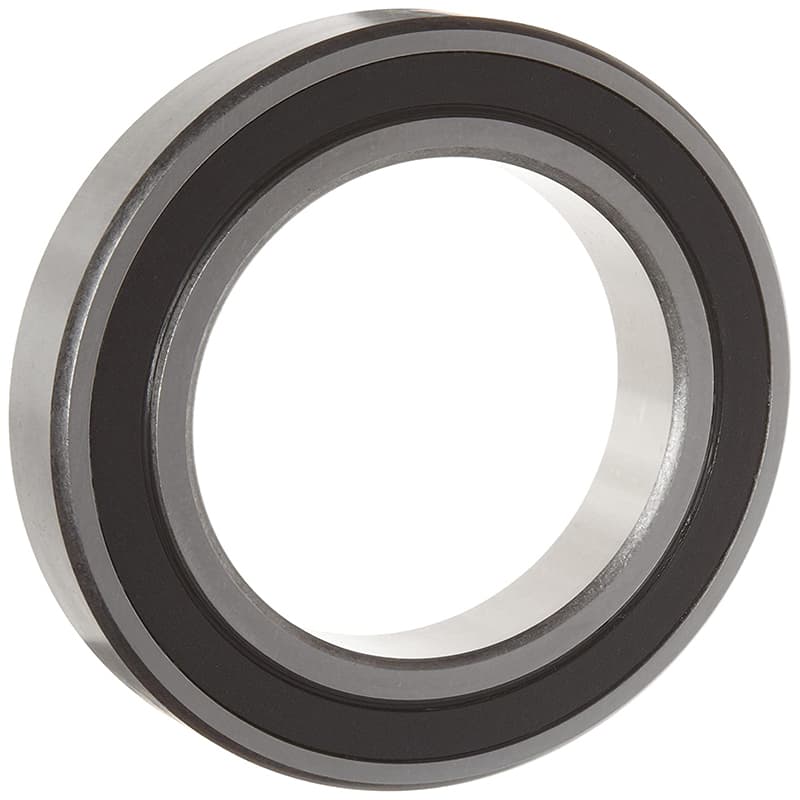
The Workhorse of Industry: Versatility in Action
The deep groove design—characterized by raceways that are deep and continuous—allows it to perform well in many situations. Let’s categorize its primary uses.
1. Electric Motors and Generators (The #1 Application)
Almost every small to medium-sized AC or DC motor uses deep groove ball bearings1 on its shaft ends. They support the radial load of the rotor and handle the small axial forces from magnetic pull or fan thrust. Their low friction contributes to motor efficiency.
2. Automotive Applications
They are found in alternators, water pumps, tensioners, idlers, and wheel hubs (for smaller vehicles). Their ability to handle combined loads and high speeds makes them ideal for these rotating auxiliaries.
3. Industrial Machinery
- Pumps and Compressors: Support the impeller or piston shaft.
- Gearboxes: Used for shafts with primarily radial loads.
- Conveyors: In rollers and pulley ends.
- Machine Tools: In non-spindle applications like feed screws and fans.
4. Consumer and Domestic Appliances
From washing machine drums and dryer fans to power tools, computer fans, and skateboards, their reliability and cost-effectiveness make them the default choice.
5. Precision Instruments (The Focus of This Article)
This is a special, high-end subset. Here, standard "commercial grade" bearings are not used. Instead, precision-grade deep groove ball bearings1 are selected. Their use shifts from just providing rotation to providing ultra-precise, repeatable, and smooth motion with minimal vibration and noise.
- Examples: Spindles of high-speed dental handpieces, rotary tables on CNC machines, axes of coordinate measuring machines (CMM), guidance systems in optical scanners, and turntables in laboratory equipment.
| Application Sector | Specific Examples | Why Deep Groove Ball Bearings Are Used | Typical Precision Class |
|---|---|---|---|
| Electric Motors | Industrial motors, fan motors, appliance motors. | Low friction, high speed, moderate load capacity. | P0 (Normal) or P6 |
| Automotive | Alternators, water pumps, idler pulleys. | Robust, handles combined loads, cost-effective. | P0 (Normal) |
| General Industry | Pump shafts, conveyor rollers, gearbox shafts. | Versatile, reliable, widely available. | P0 or P6 |
| Precision Instruments | CMM arms, optical scanner drums, gyroscopes. | High running accuracy, low vibration, smooth motion. | P5, P4, P2 (ABEC 5,7,9) |
For a distributor like Rajesh, this breadth is important. He knows that a 6205 bearing can be sold to a motor repair shop, an auto parts store, or a small machine shop. But when a customer from a medical device manufacturer asks for a 6205, his next question must be: "What precision class do you need?" The application defines the required grade.
What are precision ball bearings1?
In the world of bearings, "precision" is not a vague term of praise. It is a quantifiable set of manufacturing tolerances2 defined by international standards. A precision ball bearing is made to far tighter specifications than a standard bearing, which directly translates to superior performance in sensitive applications.
Precision ball bearings are bearings manufactured to extremely tight dimensional, geometric, and running accuracy tolerances, as defined by standards like ABEC (Annular Bearing Engineers’ Committee) or ISO P-class. Higher precision grades (e.g., ABEC 7/P4) guarantee lower vibration, less noise, higher speed capability, and greater positional accuracy than standard bearings.
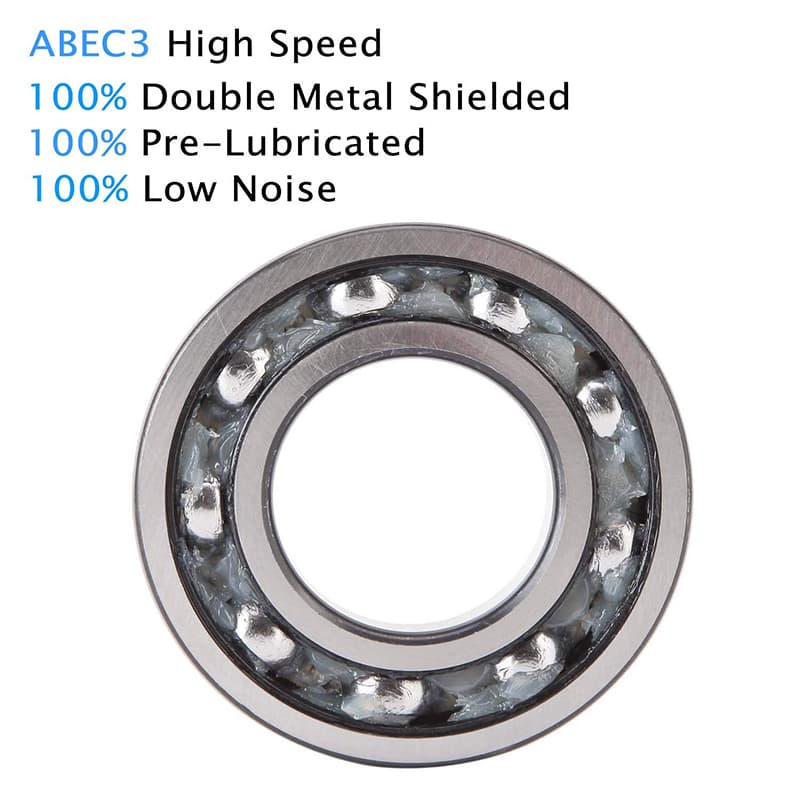
The Anatomy of Precision: Tolerances That Matter
Precision is achieved through superior manufacturing processes, stricter material control, and 100% inspection. The key tolerances are measured in microns (thousandths of a millimeter).
1. Dimensional Tolerance (Width and Bore)
This ensures the bearing has the exact specified width and bore diameter. A standard bearing might have a bore tolerance of ±0.008mm. A P5 precision bearing might have a tolerance of ±0.0025mm. This precise size ensures perfect fit with shafts and housings, eliminating play that causes runout.
2. Running Accuracy (The Most Critical for Instruments)
This measures how "true" the bearing rotates. It has two main components:
- Radial Runout: When the inner ring rotates, how much does the outer surface of the inner ring wobble radially? High runout causes vibration and poor concentricity.
- Face Runout (Axial Runout): When the inner ring rotates, how much does the side face wobble axially? This affects axial positioning accuracy.
Precision bearings have runout values that are a fraction of those in standard bearings.
3. Vibration and Noise (Not Always in the Standard, but Measured)
Precision bearings are often graded by their vibration levels3 (Z, V1, V2, V3, V4). Lower vibration (V1, V2) indicates smoother surfaces and better geometry, leading to quieter operation—a must for medical and audio equipment.
Precision Grade Systems:
- ISO Standard4 (Common globally): P0 (Normal), P6, P5, P4, P2. P0 is standard industrial. P2 is the highest commercial precision.
- ABEC5 Standard (Common in US): ABEC5 1, 3, 5, 7, 9. ABEC5 1 is similar to P6. ABEC5 9 is similar to P2.
- JIS Standard (Japan): JIS Class 0, 6, 5, 4, 2. (Similar to ISO).
| Precision Grade (ISO / ABEC5) | Typical Radial Runout | Application Context | Key Benefit for Instruments |
|---|---|---|---|
| P0 / ABEC5 1 | ~8-10 µm | General industrial, motors, appliances. | Not suitable for precision instruments. |
| P6 / ABEC5 3 | ~5-7 µm | Better industrial motors, general machinery. | Marginal for low-end instruments. |
| P5 / ABEC5 5 | ~2.5-4 µm | Machine tool feeds, robotics, mid-range spindles. | Good accuracy for many measuring devices. |
| P4 / ABEC5 7 | ~1.5-2.5 µm | High-speed spindles, precision grinders, CMMs. | High accuracy for most precision instruments. |
| P2 / ABEC5 9 | <1.5 µm | Ultra-high-precision spindles, aerospace gyros. | Exceptional accuracy for the most demanding applications. |
For an engineer designing a new optical encoder, selecting a P4 (ABEC5 7) bearing over a P0 bearing is not an "upgrade"; it’s a fundamental requirement. The P0 bearing’s runout would introduce measurement errors larger than the device’s intended resolution. The precision grade is a specification, not an option.
What are the disadvantages of deep groove ball bearings?
Deep groove ball bearings are excellent generalists, but they are not specialists. For precision instruments1, their inherent limitations must be recognized and either designed around or accepted as a trade-off for their other benefits.
The main disadvantages of deep groove ball bearings are their limited axial (thrust) load capacity compared to specialized thrust bearings, sensitivity to misalignment, lower rigidity than roller bearings, and for standard grades, higher noise and vibration levels which are unacceptable in precision applications.
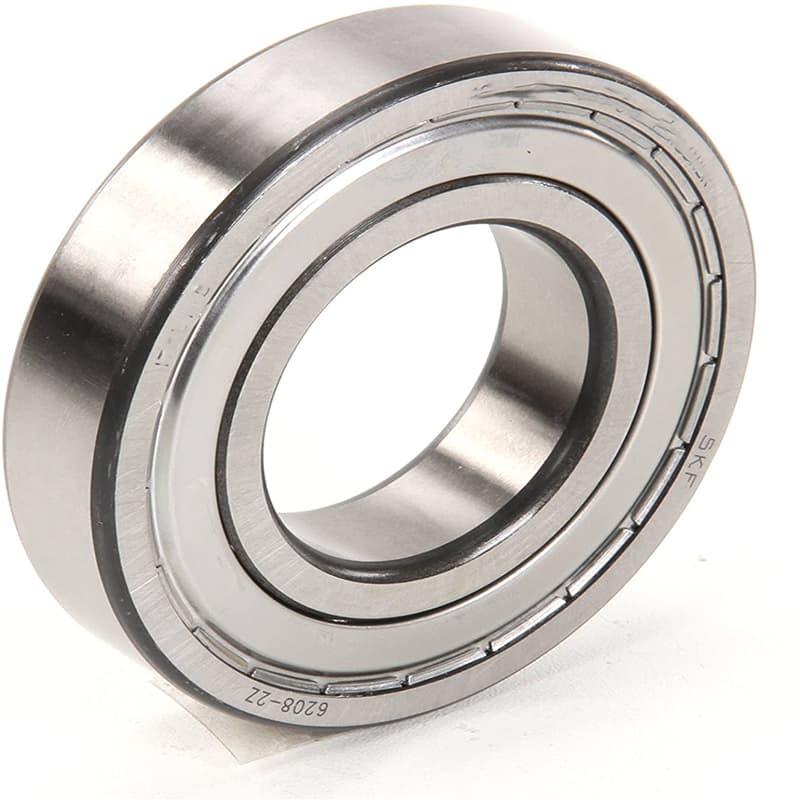
Understanding the Limits in a Precision Context
In a rough industrial setting, these disadvantages might be manageable. In a precision instrument, they can be show-stoppers if not addressed.
1. Limited Axial Load Capacity2
The deep groove can handle some axial load from either direction, but it is not its strength.
- In a Precision Instrument: If the device design imposes a significant axial load (e.g., a vertical spindle with a heavy tool), a deep groove bearing may deform elastically under that load. This deformation changes the preload and the bearing’s stiffness, affecting accuracy. For high axial loads, a pair of angular contact ball bearings3 (designed for thrust) is a better choice.
- Mitigation: Use two deep groove bearings preloaded against each other to increase axial rigidity, or select a bearing with a larger axial load rating for its size.
2. Sensitivity to Misalignment4
Deep groove ball bearings are designed for minimal internal clearance. They are not self-aligning.
- In a Precision Instrument: Any misalignment between the shaft and housing (even a few microns) is forced into the bearing. This causes uneven load distribution on the balls, leading to increased friction, heat, vibration, and premature wear. It directly destroys running accuracy.
- Mitigation: Require extremely precise machining of shafts and housings (tighter tolerances than the bearing’s own precision). Use precision ground surfaces and avoid long spans between bearings that can magnify shaft deflection.
3. Lower Radial Rigidity5 (Stiffness)
Compared to a roller bearing (which has line contact), a ball bearing has point/elliptical contact. This contact area deforms more under the same load.
- In a Precision Instrument: Under cutting forces or measurement probes, a less rigid bearing will allow more shaft deflection. This deflection translates to a loss of positional accuracy. For example, a milling spindle with deep groove bearings may "push off" more than one with angular contact bearings.
- Mitigation: Use larger bearings, or use multiple bearings in a stiff arrangement. Often, the high speed and accuracy benefits of balls outweigh the rigidity penalty for many instruments.
4. Noise and Vibration6 (in Standard Grades)
The manufacturing imperfections in a standard bearing (slight variations in ball size, raceway waviness) create vibration at specific frequencies.
- In a Precision Instrument: This vibration is unacceptable. It causes "noise" in measurement signals and reduces the life of sensitive components.
- Mitigation: This is the primary reason for using precision grades (P5, P4, P2). These grades have vastly superior surface finish and geometry, resulting in extremely low vibration (V1, V2 levels).
| Disadvantage | Impact on General Industry | Impact on Precision Instruments | Design Mitigation for Instruments |
|---|---|---|---|
| Limited Axial Load | Manageable for most apps. | Can cause elastic deformation, affecting accuracy. | Use angular contact bearings for high thrust; preload deep groove pairs. |
| Misalignment Sensitivity | Causes early wear, noise. | Catastrophic to running accuracy and smoothness. | Extreme precision in shaft/housing machining; avoid cantilevered loads. |
| Lower Rigidity | May allow more shaft deflection. | Reduces positional accuracy under load. | Use larger bearings, optimized preload, or consider roller bearings for pure radial loads. |
| Noise/Vibration | Often acceptable. | Unacceptable. Creates measurement error and shortens life. | Use high-precision (P4/P2)7 and low-vibration grade bearings. |
For the instrument designer, these disadvantages are design constraints. They don’t rule out deep groove ball bearings; they define how they must be used: in precision grades, with perfect alignment, and for applications where their high-speed, low-friction advantages are more critical than extreme rigidity or massive thrust capacity.
What is the difference between standard and deep groove ball bearings?
This question contains a widespread terminology error. "Standard" is a quality or tolerance classification1. "Deep Groove" is a bearing type or design. Comparing them is like comparing "sedan" to "luxury car." All deep groove ball bearings have a standard design; they can be made to standard or precision tolerance classes.
There is no difference between "standard" and "deep groove" ball bearings; this is a misnomer. "Deep Groove" describes the bearing’s design with deep, continuous raceways. "Standard" refers to its tolerance class (like ISO P0 or ABEC 1). A deep groove ball bearing can be standard (P0) or precision (P5, P4, etc.). The correct comparison is between deep groove and other designs like angular contact or self-aligning ball bearings.
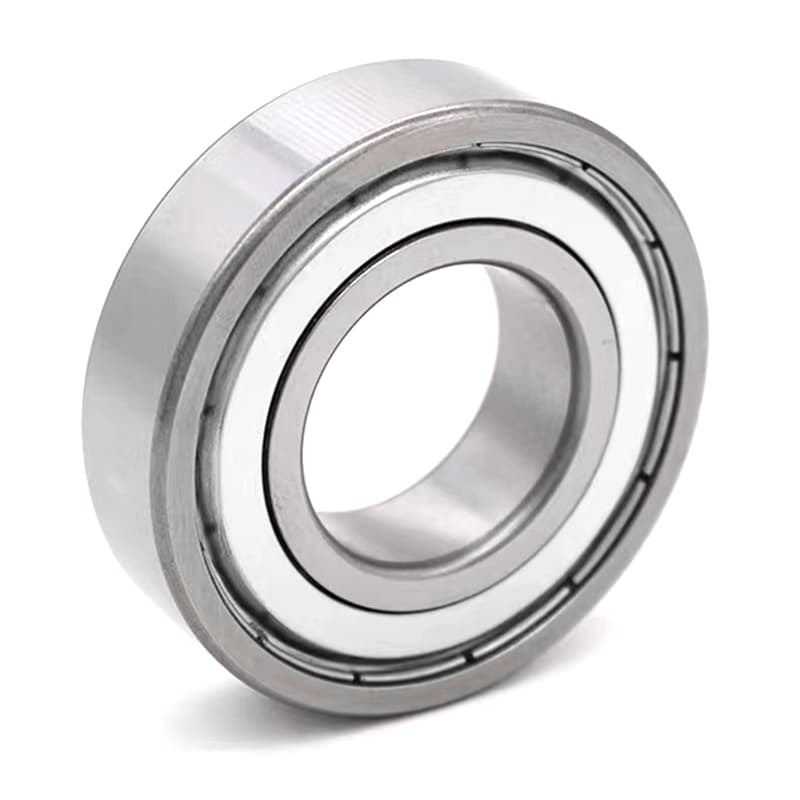
Correcting the Terminology: Design vs. Tolerance
To specify bearings correctly, especially for precision applications, you must separate these two concepts.
1. Deep Groove Ball Bearing2: A Design Family
This is a specific bearing type, numbered typically in the 60-series (e.g., 6000, 6200, 6300). Its key design feature is deep, uninterrupted raceways in both inner and outer rings. This design allows it to handle moderate radial and axial loads in both directions. It is the most common and versatile rolling bearing design.
2. "Standard" Bearing: A Tolerance Classification
In the bearing industry, "standard" almost always refers to the lowest (normal) precision tolerance3 class. In the ISO system, this is P0. In the ABEC system, it’s roughly ABEC 14. These bearings are produced to commercial tolerances suitable for most industrial applications where extreme accuracy is not required. They are the most cost-effective.
The Correct Comparisons:
- Deep Groove Ball Bearing2 vs. Angular Contact Ball Bearing5: The latter is designed for high thrust loads in one direction and is often used in pairs preloaded for high rigidity. Deep groove handles two-way thrust but with lower capacity.
- Deep Groove Ball Bearing2 vs. Cylindrical Roller Bearing6: The latter has much higher radial load capacity but handles almost no axial load.
- Standard Tolerance (P0) vs. Precision Tolerance (P5/P4): This compares the manufacturing quality of bearings, which can be of the same design (e.g., deep groove).
Why This Distinction Matters for Precision Instruments:
When you need a bearing for a high-speed spindle in a measuring machine, you are looking for two things:
- The right design for the loads: Likely a deep groove or angular contact ball bearing.
- The right precision tolerance3 for the accuracy: Likely P4 or P2 (ABEC 7 or 9).
You would specify: "Angular contact ball bearing, 25mm bore, P4 precision" or "Deep groove ball bearing, 10mm bore, ABEC 7".
| Concept | What It Means | Example | For Instrument Design |
|---|---|---|---|
| Bearing Type/Design | The physical geometry and load capability. | Deep Groove, Angular Contact, Cylindrical Roller. | Choose based on load direction (radial vs. axial) and rigidity needs. |
| Tolerance Class/Precision Grade | The manufacturing accuracy and running smoothness. | ISO P07 (Standard), P6, P5, P4, P2. | Choose P5 or higher for precision instruments. Defines accuracy and vibration. |
| Common Misstatement | "We need a standard bearing." | Implies a low-precision, general-purpose bearing. | Avoid this. Always specify type AND required precision grade. |
| Correct Specification | "We need a deep groove ball bearing, 15mm bore, P4 grade." | Clearly defines both design and quality. | This is the professional way to ensure you get the correct component. |
For a procurement manager like Rajesh, educating his customers on this distinction is a value-added service. When a small instrument maker asks for a "standard 608 bearing," Rajesh can ask: "Is this for a high-speed application? Do you need low noise? We have the standard P0 grade, but also P5 and P6 precision grades available." This helps the customer avoid buying an unsuitable bearing and builds Rajesh’s reputation as a technical expert.
Conclusion
For precision instruments, deep groove ball bearings are chosen not as generic components, but as precision-grade elements (P5/P4/P2) that provide low-friction, high-accuracy motion. Success requires understanding their general utility, their precision definitions, their inherent limitations, and the crucial difference between bearing design and tolerance class.
-
Understanding tolerance classifications is crucial for selecting the right bearing for your application. ↩ ↩ ↩ ↩ ↩ ↩
-
Explore the benefits of deep groove ball bearings for various applications, including their versatility and load handling capabilities. ↩ ↩ ↩ ↩ ↩ ↩
-
Discover the importance of precision tolerance in ensuring the accuracy and performance of bearings. ↩ ↩ ↩ ↩
-
Learn about ABEC 1 standards and how they relate to bearing precision and quality. ↩ ↩ ↩
-
Find out how angular contact ball bearings are designed for high thrust loads and their applications. ↩ ↩ ↩ ↩ ↩ ↩ ↩ ↩ ↩ ↩ ↩ ↩ ↩
-
Explore the unique features of cylindrical roller bearings and their advantages over other types. ↩ ↩
-
Gain insights into ISO P0 tolerance and its implications for bearing performance in industrial applications. ↩ ↩