
Picture a massive paper mill dryer roll. The bearing on the shaft fails. To replace a standard bearing, you must disassemble half the machine—a days-long, costly shutdown. This is the problem a split bearing solves instantly. But it’s not for every application.
Split spherical roller bearings are the best solution when you need to install or replace a bearing on a long, fixed shaft without disassembling connected machinery. Their unique two-piece design saves immense downtime in industries like pulp & paper, printing, and marine propulsion, despite some trade-offs in load capacity and cost.
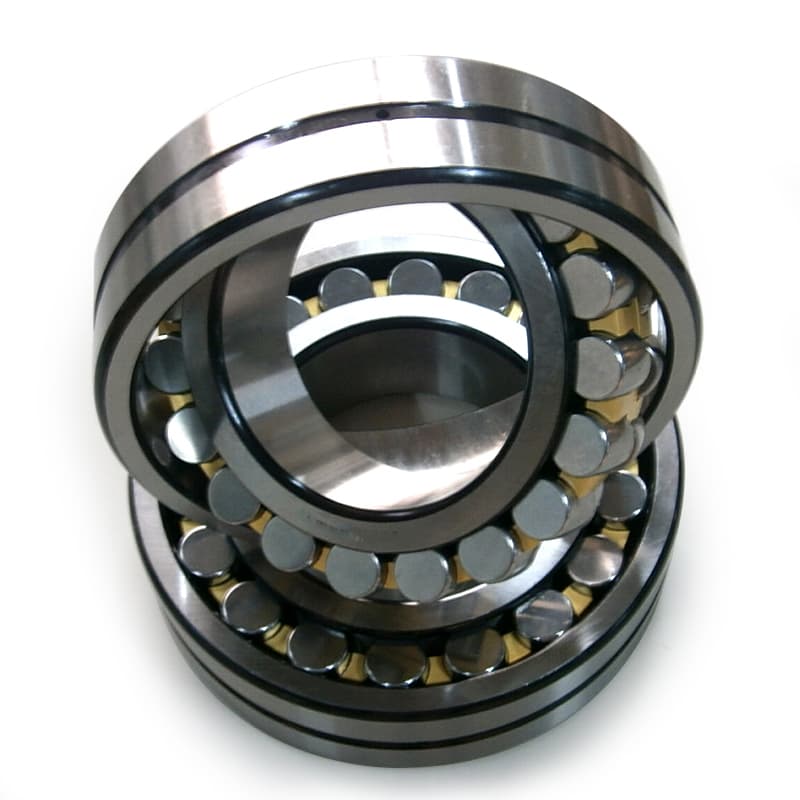
This ingenious design turns a major maintenance headache into a simple procedure. To use them effectively, you must understand their unique advantages, how they compare to solid bearings, ways to optimize their performance, and the terminology used in the industry. Let’s examine these points.
What are the advantages of split bearing1s?
The primary advantage of a split bearing1 is not technical performance. It is operational and economic. It solves a specific logistical problem that costs companies thousands of dollars per hour in downtime. The benefits are tangible and immediate.
The key advantages of split bearing1s are drastically reduced installation and replacement time, elimination of the need to disassemble other components or remove the shaft, and the ability to service bearings in hard-to-reach locations. This leads to massive savings in labor costs and production downtime.
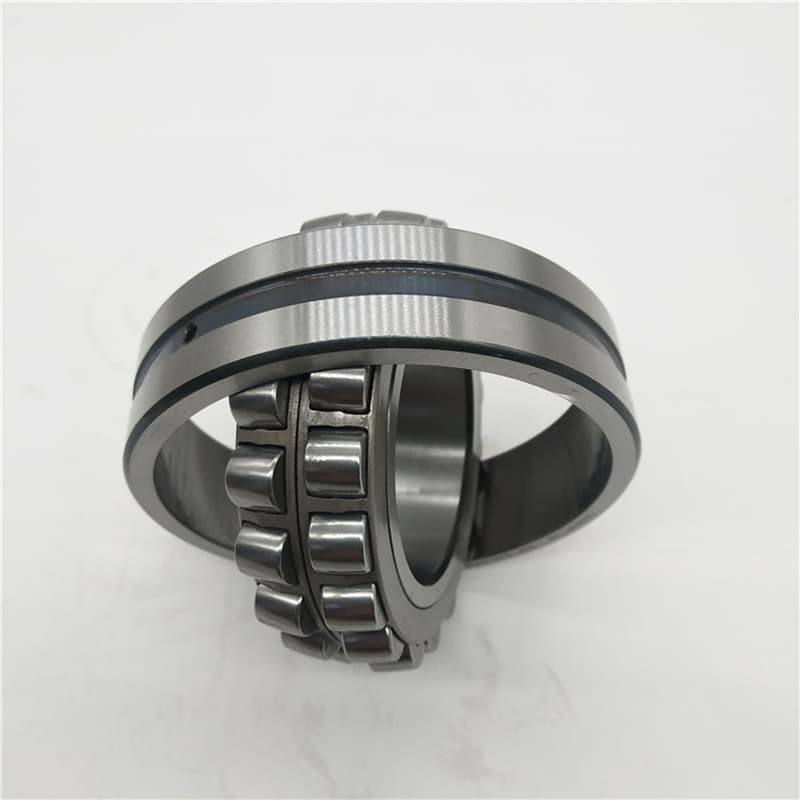
Breaking Down the Operational Payoff
Let’s translate these advantages into real-world scenarios that justify the higher cost and engineering complexity of a split bearing1.
1. Drastic Reduction in Maintenance Downtime
This is the single biggest selling point.
- Standard Bearing Procedure: For a solid bearing on a long shaft between two fixed points (like a ship’s intermediate shaft), you must:
- Disconnect couplings at both ends.
- Remove all components blocking axial access (gears, pulleys).
- Slide the entire shaft out.
- Press off the old bearing and press on the new one.
- Reverse the entire process.
This can take a crew 2-3 days.
- Split Bearing Procedure:
- Remove the bearing housing cap.
- Lift out the top half of the bearing.
- Clean the shaft and housing.
- Place the new lower half in the housing, then the new upper half.
- Replace the cap and tighten bolts.
This can be done in 2-3 hours.
2. Elimination of Heavy Lifting and Special Tools
Removing a long, heavy shaft often requires overhead cranes, rigging, and significant floor space. A split bearing1 replacement often needs only basic hand tools. This makes maintenance safer and possible in confined spaces.
3. Serviceability in "Captive Shaft" Applications
Some shafts are practically impossible to remove. Examples include:
- Marine Stern Tubes: The propeller shaft runs through the hull. Removing it requires dry-docking the vessel—an extremely expensive operation.
- Large Fan Shafts in Ductwork: The shaft may be welded or built into a structure.
- Historic Machinery: Where original design did not allow for shaft removal.
In these cases, a split bearing1 is not just an advantage; it is the only practical solution for bearing replacement.
4. Simplified Inspection and Monitoring
You can easily inspect the bearing rollers and raceways during scheduled stops by simply opening the housing cap. You can check for wear, contamination, or lubrication issues without a full teardown.
| Advantage | Traditional Solid Bearing Challenge | Split Bearing Solution | Economic Impact |
|---|---|---|---|
| Installation/Replacement Time | Multi-day disassembly & reassembly. | Hours, not days. | Saves 1-3 days of production downtime2. Value can be $10,000-$100,000+ per day. |
| Shaft Removal | Required. Needs cranes, space, labor. | Not required. | Eliminates crane rental, reduces labor crew size, improves safety. |
| Captive Shaft Service | Often impossible or prohibitively expensive. | Makes service possible. | Enables repair where none was possible; avoids equipment write-off. |
| Inspection | Requires full disassembly. | Quick visual check by opening housing. | Facilitates predictive maintenance3, prevents unexpected failures. |
For a plant manager Rajesh supplies, the math is simple. If a paper machine earns $50,000 per day, a 2-day bearing replacement shutdown costs $100,000 in lost production. The higher price of a split spherical roller bearing (which may be 2-3x a solid one) is insignificant compared to the downtime savings. The "advantage" is measured directly in recovered profit.
What are the disadvantages of spherical roller bearings1?
Split spherical roller bearings1 inherit all the standard disadvantages of their solid counterparts, and then add a few unique ones due to their divided design. Understanding these limitations is crucial to avoid applying them where a solid bearing would be better.
Standard spherical roller bearing disadvantages include higher friction and heat generation2 than ball bearings, sensitivity to lubrication3, and lower maximum speed limits. Split bearings add the disadvantages of slightly lower load capacity, higher cost4, and more complex sealing requirements due to the parting line.
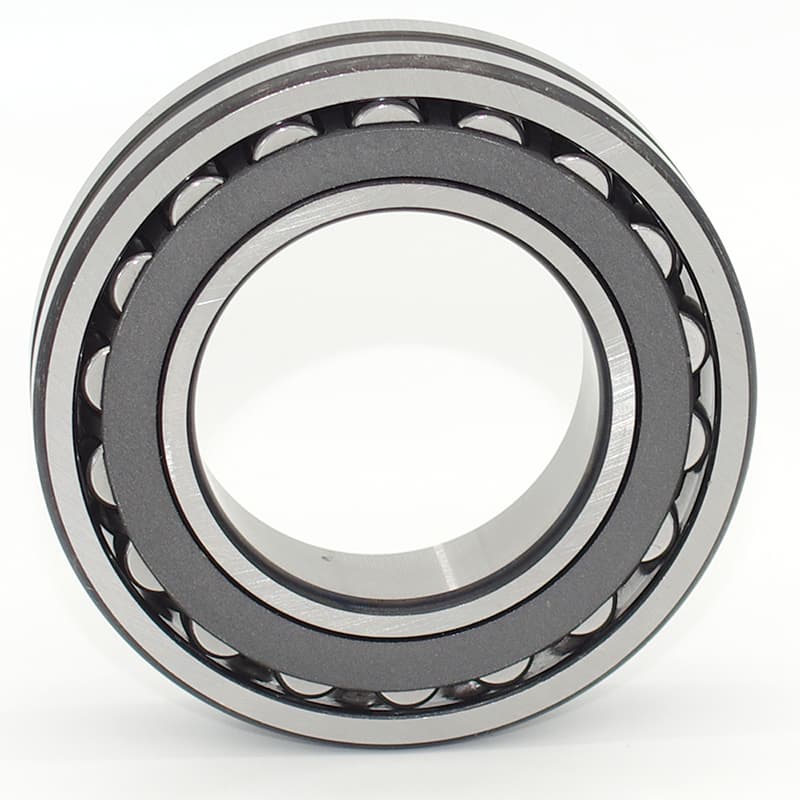
Evaluating the Trade-offs: Inherent and Added Limitations
The split design solves a big problem but introduces new engineering challenges. A successful application requires acknowledging and managing both sets of drawbacks.
Inherited Disadvantages from Solid Spherical Rollers:
- Friction and Heat: The line contact of the barrel rollers creates more internal friction than ball bearings. This generates heat, which must be managed, especially in high-load applications.
- Speed Limitation: This friction limits their maximum rotational speed compared to cylindrical or angular contact ball bearings. They are not suitable for very high-speed spindles.
- Lubrication Sensitivity: The complex internal geometry with two roller rows requires consistent, high-quality lubrication. Poor grease or oil breakdown leads to rapid wear.
Unique Disadvantages Added by the Split Design:
- Reduced Load Capacity: This is the most significant technical trade-off.
- Why: The bearing rings are cut in half. The parting line creates a structural discontinuity. The clamping force of the housing bolts must compensate for this. Even with perfect machining, the load capacity is typically 10-20% lower than an equivalent solid spherical roller bearing.
- Implication: You may need to select a larger size split bearing to achieve the same load rating as a solid bearing. This increases cost and space requirements.
- Higher Cost: Manufacturing a split bearing is more complex. The two halves must be machined to extreme precision so they align perfectly when assembled. The mating surfaces must be flawless. This precision machining increases the unit cost significantly.
- Sealing Challenge: The horizontal parting line runs through the middle of the bearing and housing. Sealing this line against dust and moisture ingress is more difficult than sealing a solid housing. Special seal designs and careful assembly are required.
- Precision and Rigidity: The assembled bearing’s running accuracy depends heavily on the precision of the housing bore and the clamping bolts. Any misalignment in the housing halves can induce internal stresses.
| Disadvantage Category | Specific Disadvantage | Impact on Application | Mitigation Strategy |
|---|---|---|---|
| Inherited (From Solid Design) | Higher Friction & Heat | Limits speed, requires thermal management. | Use correct clearance (C4), ensure good lubrication flow/cooling. |
| Inherited (From Solid Design) | Lubrication Sensitivity | Risk of premature failure if lubricant fails. | Use high-quality, adhesive grease; establish strict regreasing schedule. |
| Unique to Split Design | Lower Load Capacity | May require a larger, more expensive bearing. | Carefully calculate loads with a safety factor; do not directly substitute a solid bearing size. |
| Unique to Split Design | Higher Unit Cost | Higher initial parts investment. | Justify via Total Cost of Ownership (TCO) from massive downtime savings. |
| Unique to Split Design | Complex Sealing | Risk of contamination ingress at parting line. | Use high-quality split housing seals; ensure housing faces are clean and flat during assembly. |
Therefore, a split spherical roller bearing is not a "direct upgrade" to a solid one. It is a specialized tool. You choose it when the operational advantage of split installation outweighs the technical disadvantages of lower capacity and higher cost4. For a slow-moving, heavily loaded dryer roll where downtime is the enemy, it’s perfect. For a high-speed pump where performance is paramount, a solid bearing is likely better.
How to make bearings more efficient?
"Efficiency" in bearings means reducing friction, which directly lowers energy consumption, heat, and wear. For split spherical roller bearings1, improving efficiency is doubly important because their inherent friction is high, and any gains extend service life and reduce the operational cost penalty of their design.
To make spherical roller bearings more efficient, focus on reducing friction through optimized internal geometry (like symmetrical rollers), using low-friction cages (polyamide), selecting the correct lubricant (low churning loss grease), and ensuring perfect alignment during installation to prevent edge loading.
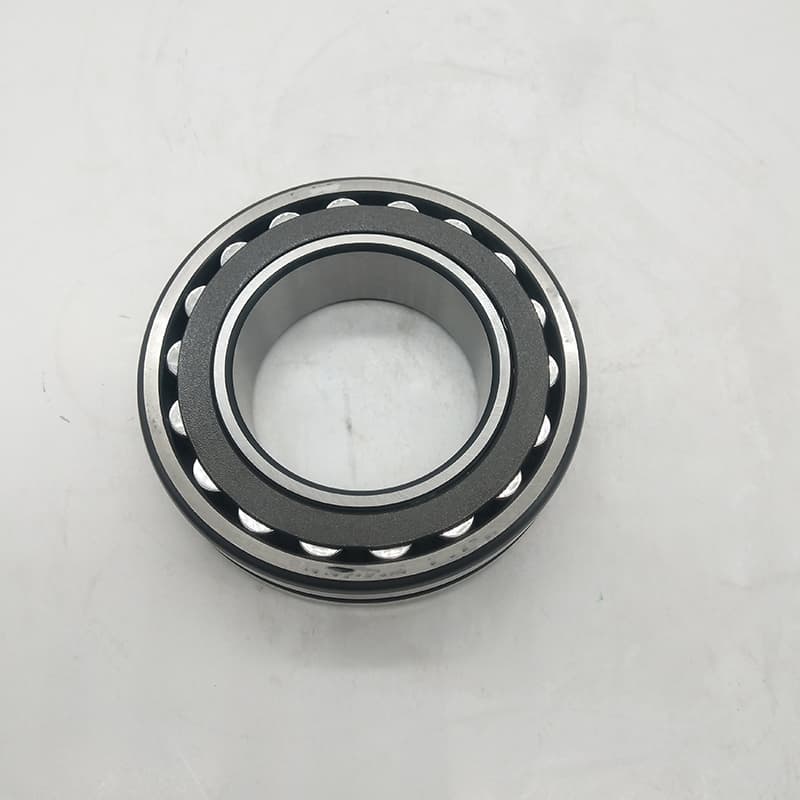
A Multi-Pronged Attack on Friction and Losses
Efficiency improvements come from the bearing itself, its lubrication, and its application. For split bearings, special attention must be paid to installation.
1. Bearing Design and Material Efficiency
- Optimized Roller Profile: Modern "E-type" or similarly optimized spherical rollers use a symmetrical or logarithmic profile. This minimizes edge stresses and sliding friction at the roller-raceway contact, especially under misalignment. When sourcing split bearings, ask if they feature an optimized internal design.
- Cage Material: The cage guides the rollers. A polyamide (PA66) cage with glass fiber reinforcement is lighter than steel and creates less friction. It also allows for better lubricant flow. For split bearings in moderate-temperature applications, a polyamide cage2 can improve efficiency. For very high temperatures, a brass or steel cage is still needed.
- Surface Finish: A super-finished raceway and roller surface (a mirror-like finish) reduces micro-scale friction and wear-in time.
2. Lubrication Efficiency
Lubrication is often the biggest source of "inefficiency" in the form of churning losses.
- Grease Selection: For spherical rollers, you need a grease that balances several needs: Extreme Pressure (EP) additives for load, good adhesion, and low oil bleed. A grease that bleeds oil too quickly becomes stiff and increases churning resistance. A synthetic base oil grease often offers a wider temperature range and lower friction.
- Quantity: Over-greasing is a major cause of inefficiency and overheating. The excess grease gets churned by the rollers, generating heat. Follow the manufacturer’s fill guideline precisely. For split bearings, ensure grease is evenly distributed in both halves during assembly.
- Oil Lubrication: For very large or high-speed split bearings, oil lubrication with a circulating system can be more efficient. It removes heat and provides clean, controlled lubrication with minimal churning loss.
3. Application and Installation Efficiency
- Alignment: This is critical for split bearings. Misalignment causes edge loading, which drastically increases friction and wear. When assembling the two housing halves, ensure the bore is perfectly aligned. Use dowel pins and follow the bolt tightening sequence precisely.
- Internal Clearance: Using the correct clearance (e.g., C3, C4) prevents preload (too tight, high friction) or excessive play (impact loads, vibration). For split bearings, ensure the clamping force does not distort the rings and inadvertently reduce the internal clearance3.
- Sealing: Efficient seals keep contaminants out without creating excessive drag. For split housings, use specially designed split lip seals or labyrinth seals that are effective at the parting line.
| Efficiency Factor | Inefficiency Cause | Improvement Action | Special Consideration for Split Bearings |
|---|---|---|---|
| Internal Design | Sliding friction, edge stressing. | Specify bearings with optimized roller profile4s (if available). | Ensure both bearing halves are from the same matched set. |
| Cage Type | Heavy cage creates centrifugal drag. | Use polyamide (PA66) cages for suitable temperature ranges. | Verify cage is correctly seated in both halves during assembly. |
| Lubrication | Churning loss from grease, high friction. | Use synthetic, low-bleed grease; apply correct quantity. | Lubricate both bearing halves before assembly; avoid grease on parting faces. |
| Installation | Misalignment causes edge loading. | Precision align housing halves; check runout after tightening. | Critical. Poor housing alignment negates all other efficiency gains. |
For a plant engineer, improving the efficiency of their split spherical roller bearings1 means lower electricity bills for drives and fans, cooler running temperatures (extending grease and bearing life), and longer periods between maintenance. The upfront effort in specification and installation pays continuous dividends.
What is a split bearing also known as?
In the industry, you will hear several terms used for split bearings. This can cause confusion when sourcing parts or discussing specifications with suppliers. Knowing the alternative names ensures you get exactly what you need and understand the nuances between different designs.
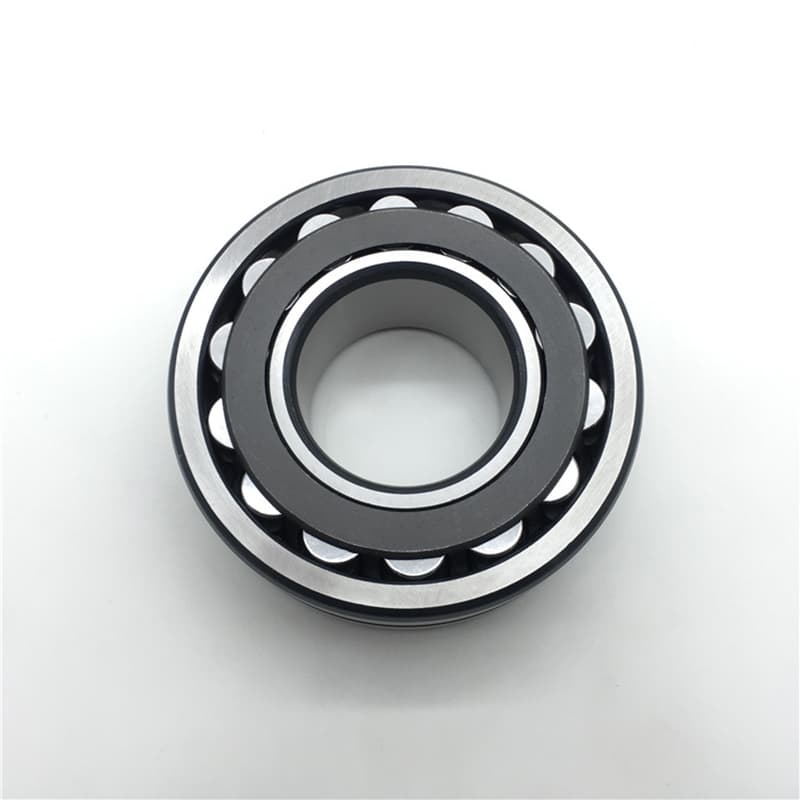
A split bearing is also commonly known as a "split roller bearing," a "two-piece bearing," or a "halved bearing." When referring to the complete assembly including the housing, it is often called a "split pillow block" or "split plummer block." The key identifier is that both the inner ring and outer ring are divided into two halves.
Navigating the Terminology Landscape
The different names often emphasize different aspects of the product. Understanding these can help in technical discussions and procurement.
1. Split (Roller) Bearing
This is the most generic and accurate term. It describes the core component: a rolling element bearing (roller, in this case) that is physically split. It focuses on the bearing itself, independent of its housing. When you say "split spherical roller bearing1," you are being very specific about the type of rolling element and the design.
2. Two-Piece Bearing / Halved Bearing
These are descriptive terms that highlight the construction method. "Two-piece" is clear and commonly used in procurement language. "Halved" is less common but visually descriptive.
3. Split Pillow Block / Split Plummer Block
This refers to the complete mounted unit. A "pillow block" is a housing that supports a bearing. A "split pillow block2" means the entire assembly—the base, the cap, the seals, and the split bearing inside—is designed to be opened along a horizontal centerline.
- This is a crucial distinction. You can buy a split bearing to install in your own custom split housing3. Or, you can buy a complete split pillow block2 as a pre-assembled, ready-to-mount unit from manufacturers like FYTZ or others. The latter is more common for replacement parts.
4. "Y" Type or "SAF" Type Housings
In some industries, especially following older standards, split bearing housings have specific type codes.
- "SN" Series (e.g., SNV, SNF): These are often solid housings.
- "Y" Series or "SAF" Series: These frequently denote split housing3s. For example, a "SAF 225" housing is a split housing3 designed for a spherical roller bearing1. When a customer gives Rajesh a part number like "SAF 225-38," he knows immediately it’s for a split housing3 assembly with a specific bore size.
Important Clarification: "Split Housing" vs. "Split Bearing"
- You can have a solid bearing inside a split housing3. This is common for easier installation of standard bearings. You still need to slide the bearing onto the shaft.
- A true split bearing system has both a split bearing and a split housing3. This is what allows installation without shaft access.
Always confirm: Is just the housing split, or is the bearing itself also split?
| Common Term | What It Emphasizes | Typical Usage Context |
|---|---|---|
| Split Spherical Roller Bearing | The type of rolling element and the split design. | Technical specifications, bearing selection catalogs. |
| Two-Piece Bearing | The construction method (two halves). | General procurement, descriptive discussions. |
| Split Pillow Block / Plummer Block | The complete, ready-to-mount assembly (housing + bearing). | Most common in aftermarket replacement part requests. |
| "SAF" or "Y" Series Housing | A specific housing design standard that is typically split. | Legacy equipment, specific industry jargon (e.g., mining, milling). |
For Rajesh’s distribution business, this terminology is key. When a paper mill calls and says, "We need a bearing for our dryer roll, it’s the split type," his team’s first questions should be: "Do you have a part number for the complete pillow block? Or just the bearing insert4? Is it an SAF housing5?" This ensures they quote and supply the correct component, avoiding costly returns and machine downtime. Knowing that "split bearing" and "split pillow block2" are often used interchangeably in the field, but have technical differences, is part of being a knowledgeable supplier.
Conclusion
Split spherical roller bearings are a niche but powerful solution, trading some load capacity and cost for unparalleled maintenance speed on fixed shafts. Their value is measured in avoided downtime, making them the best choice for specific, high-cost-of-stoppage applications.
-
Explore the characteristics of spherical roller bearings to enhance your understanding of bearing types. ↩ ↩ ↩ ↩ ↩ ↩ ↩ ↩ ↩ ↩ ↩ ↩
-
Discover the features and applications of split pillow blocks, essential for understanding complete bearing assemblies. ↩ ↩ ↩ ↩ ↩ ↩
-
Gain insights into split housings and their role in bearing systems, crucial for installation and maintenance. ↩ ↩ ↩ ↩ ↩ ↩ ↩ ↩ ↩
-
Learn about bearing inserts to improve your knowledge of bearing components and their applications. ↩ ↩ ↩ ↩
-
This link will provide clarity on SAF housing, important for legacy equipment and industry standards. ↩