
You invest in machinery expecting years of reliable service. The last thing you need is a critical bearing failing prematurely and costing you thousands in downtime and repairs.
Our tapered roller bearings are engineered for long-term durability through superior material science, precise manufacturing, and rigorous testing. We focus on extending bearing life under real-world conditions of heavy load, contamination, and misalignment, delivering reliability that protects your investment.
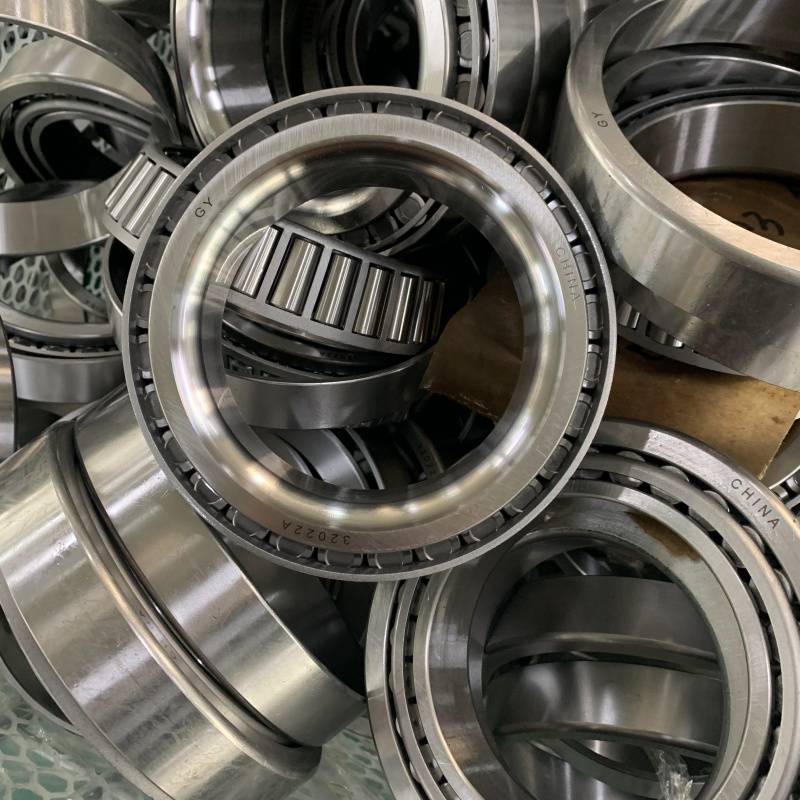
Durability isn’t a marketing claim; it’s a measurable outcome of design and process choices. Let’s look beyond the catalog life rating and explore what truly makes a bearing last.
What are the disadvantages of tapered roller bearings?
Every engineering choice involves trade-offs. Tapered roller bearings have clear strengths, but knowing their limitations is key to using them correctly and achieving that promised durability.
The main disadvantages of tapered roller bearings are their need for precise adjustment1 of clearance/preload during installation, their inability to self-align2 (requiring good shaft/housing alignment), their higher friction and lower speed limits3 compared to ball bearings, and their typically higher cost4 and complexity relative to some simpler bearing types5.
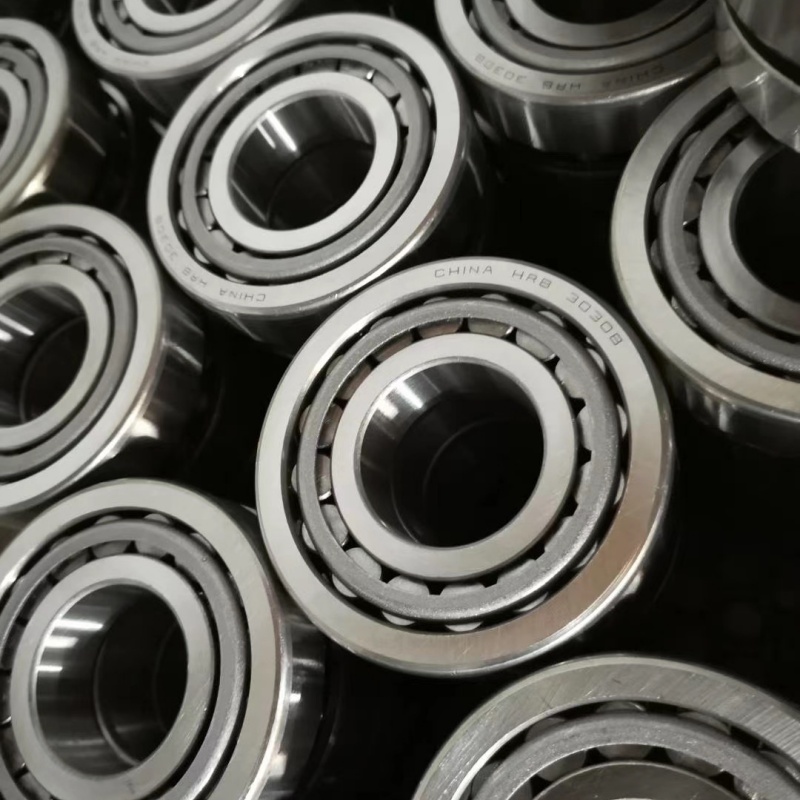
These "disadvantages" are not flaws; they are design consequences. They become problems only if ignored. Understanding them allows you to mitigate their impact and unlock the bearing’s full durable potential.
Mitigating the Trade-offs for Maximum Service Life
At FYTZ, we see these not just as disadvantages, but as design challenges we help our customers overcome. Here’s how each point affects durability and what we do about it.
1. The Precision Installation Requirement
- The Challenge: Incorrect clearance (too loose or too tight) is a top cause of early failure. Too loose causes vibration and impact loads. Too tight causes overheating and rapid fatigue.
- Our Durability Solution: We manufacture our bearings with exceptionally consistent internal geometry6. This means the adjustment process is more predictable and repeatable. We also provide detailed technical support to our distributors, like Rajesh, so they can guide their customers on proper setting techniques. For OEMs, we offer pre-adjusted units or special tolerances to simplify assembly.
2. The Lack of Self-Alignment
- The Challenge: Misalignment concentrates load on the edge of the rollers, creating high stress and leading to premature spalling. This is a major durability killer.
- Our Durability Solution: While we can’t change the fundamental physics, we enhance durability through robust design7. We optimize the roller and raceway profiles to be more tolerant of minor misalignment. More importantly, we ensure our bearings are made to high precision grades (P5, P6), which gives the installer a perfect component to work with. A precisely made bearing, installed in a well-aligned housing, will last exponentially longer.
3. Higher Friction and Speed Limitations
- The Challenge: The line contact of rollers creates more friction than the point contact of balls. This generates more heat at high speeds, limiting maximum RPM and potentially degrading lubricant faster.
- Our Durability Solution: We focus on ultra-smooth surface finishes8 and advanced cage designs. A smoother finish reduces friction and heat generation. Our cages, made from reinforced polymer or machined brass, guide the rollers efficiently with minimal drag. We also develop and recommend specific high-performance greases that can handle the specific thermal demands of tapered bearings in demanding applications.
4. Cost and Complexity
- The Challenge: A tapered bearing set (cone, cup, rollers, cage) is more complex than a single deep groove ball bearing. This can mean a higher initial price.
- Our Durability Solution: We justify the cost through total cost of ownership9. A cheaper, less suitable bearing may fail quickly, causing expensive downtime and repeated replacements. Our durable tapered bearing, correctly applied, runs for years. For distributors, this means fewer warranty claims and happier customers. For end-users, it means predictable maintenance schedules and lower lifetime costs.
Turning Disadvantages into Durability Levers:
| Perceived Disadvantage | Risk to Durability | FYTZ’s Mitigation for Long Life |
|---|---|---|
| Needs adjustment | Wrong setting → rapid failure from play or preload. | Consistent manufacturing allows for accurate, reliable setting. |
| Cannot self-align | Edge loading → concentrated stress → early spalling. | Precision manufacturing and profile optimization reduce sensitivity. |
| Higher friction | More heat → lubricant breakdown → wear. | Superior surface finish and optimized cage design minimize friction. |
| Complex/Costly | May lead to selection of an inadequate, cheaper bearing. | Engineering support ensures correct application, maximizing value over lifespan. |
For an importer like Rajesh, this knowledge is crucial. When a customer balks at the price of a tapered roller bearing, Rajesh can explain the true cost of a failure. He can position our FYTZ bearings not as a commodity, but as a durable, precision component that saves money in the long run by preventing downtime. This shifts the conversation from price to value and reliability.
Can wheel bearings last 300,000 miles1?
This question gets to the heart of durability expectations. In the automotive world, 300,000 miles1 is a benchmark for exceptional longevity. Is it possible? Yes, but it’s not guaranteed by the bearing alone.
Yes, modern wheel bearings, especially unitized hub assemblies with sealed, pre-adjusted tapered roller bearings, can absolutely last 300,000 miles1 or more. However, this extreme longevity depends on perfect installation, high-quality components, ideal operating conditions (good roads, minimal contamination), and regular vehicle maintenance. It represents the upper limit of potential life.
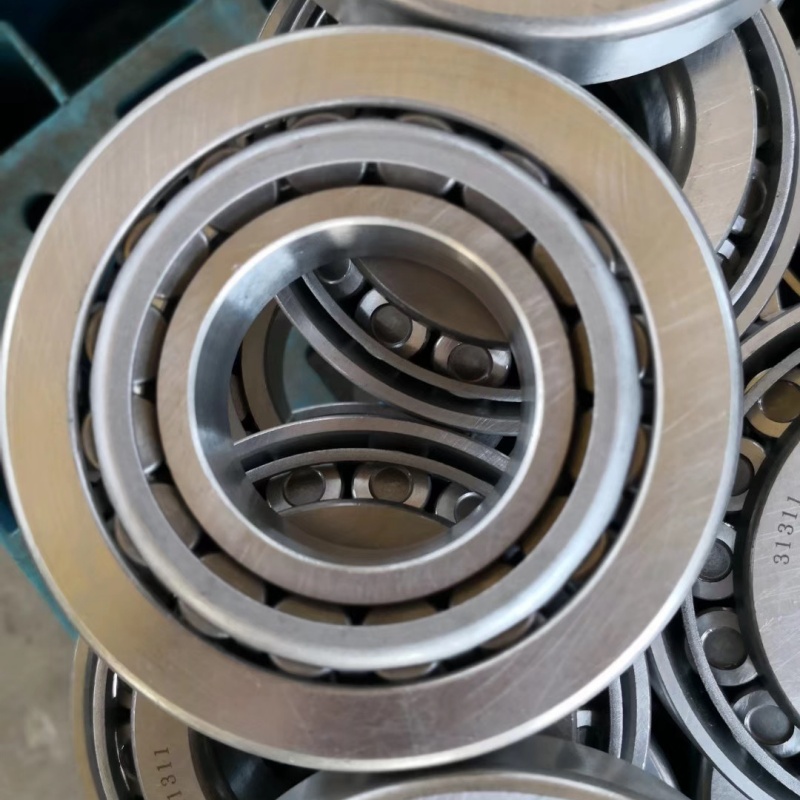
Achieving this milestone is a partnership between the bearing manufacturer, the installer, and the operating environment. Let’s break down what makes this extraordinary lifespan possible and what usually gets in the way.
The Anatomy of a 300,000-Mile Wheel Bearing
Reaching this distance is an exception, not the rule. It requires every factor to be in favor of the bearing. As a manufacturer, we control what we can to make it more achievable.
The Foundation: Bearing Design and Quality
- Sealed & Greased-for-Life2: Modern hub units are sealed at the factory with a precise amount of high-performance, long-life grease. This seal must be impeccable to keep grease in and water/contaminants out for decades. Our seals are tested for durability against water and salt spray.
- Precise Preload: The bearing is set to an optimal preload at the factory. This eliminates the installation error of improper adjustment—the #1 killer of traditional tapered wheel bearings. Our automated setting process ensures this preload is consistent in every unit.
- Premium Materials: We use carburized bearing steel3. This process creates a hard, wear-resistant surface on the rollers and races, while leaving a tough, ductile core that resists shock loads from potholes. This material choice is fundamental to handling millions of stress cycles.
The Critical Role of Installation:
Even a perfect bearing can be destroyed in minutes.
- Correct Torque4: The axle nut must be torqued to the vehicle manufacturer’s exact specification. Over-torquing creates destructive preload. Under-torquing allows play and impact loads. We include torque specs with our units.
- Cleanliness: Any dirt introduced during installation can act as an abrasive, shortening life dramatically.
- No Impact Tools: Pressing or installing with impact tools can damage the bearing races and the integrity of the unit.
The Reality of the Road: Why Most Don’t Reach 300,000 Miles
- Environmental Assault5: Driving through deep water, on heavily salted roads, or in muddy conditions can overwhelm seals and introduce contaminants. This is the most common reason for premature failure.
- Impact Damage6: Hitting potholes or curbs applies shock loads far exceeding design limits, potentially causing Brinell dents in the raceways that lead to noise and early fatigue.
- Vehicle Modifications: Larger, heavier wheels/tires increase loads on the bearing, reducing its effective life.
- Lack of Maintenance: While sealed, a failing CV joint or damaged seal can allow contaminants to enter.
Comparison: What Changes for Longevity?
| Factor | Standard Expectation (e.g., 100k miles) | 300,000+ Mile Scenario |
|---|---|---|
| Bearing Seals | Good quality, standard lip seals. | Advanced multi-lip or low-friction seals with superior exclusion capabilities. |
| Factory Grease | Standard high-temperature wheel bearing grease. | Synthetic, polymer-thickened grease7 with extreme pressure additives and exceptional water resistance. |
| Operating Environment | Mixed city/highway, some exposure to elements. | Primarily clean, dry highway miles; minimal exposure to deep water and road salt. |
| Installation | Competent but may use impact tools. | Meticulous, by-the-book installation8 with calibrated torque wrenches and clean practices. |
For Rajesh’s automotive aftermarket customers, this is a powerful story. He can sell our FYTZ hub assemblies with confidence, knowing they are built with the materials and processes that support extreme longevity. He can also educate installers on the critical role they play. Selling a bearing that can last 300,000 miles1, and teaching how to achieve it, builds a reputation for quality that commands customer loyalty.
What are the most durable bearings?
Durability is relative. The most durable bearing for a high-speed spindle would fail quickly in a slow, heavily contaminated conveyor. The key is matching the bearing’s inherent durability traits to the application’s specific threats.
There is no single "most durable" bearing for all situations. However, tapered roller bearings1 and spherical roller bearings2 are among the most durable for heavy-load industrial applications due to their robust roller construction and high load capacity3. For high-speed precision4, ceramic hybrid bearings offer exceptional durability against wear and heat.
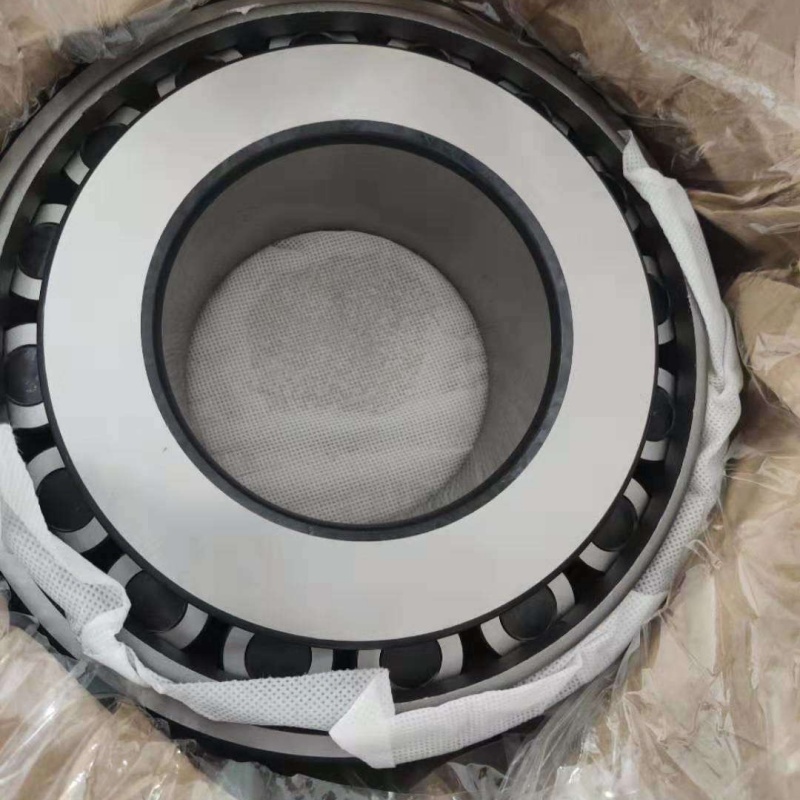
Instead of a ranking, think of a durability "toolbox." Each bearing type has a specialty where it outlasts others. Let’s examine which bearing excels against specific durability challenges.
The Durability Champions by Application Challenge
We produce a range of bearings because different problems need different solutions. Here’s where each type proves most durable.
1. Durability Against Heavy Combined Loads & Shock: Tapered Roller Bearings
- Why they are durable: Their line contact and tapered design distribute heavy radial and axial loads effectively. The carburized steel provides a tough core to absorb impacts without cracking.
- Achilles’ Heel: Misalignment and improper adjustment.
- Best in Class For: Vehicle axles, rolling mills, heavy gearboxes, construction equipment—where loads are high and shocks are common.
2. Durability Against Extreme Radial Loads & Misalignment: Spherical Roller Bearings
- Why they are durable: They have the highest radial load capacity3 for their size. Their self-aligning capability makes them tolerant of installation errors and shaft deflection, preventing the edge-loading that kills other bearings.
- Achilles’ Heel: Moderate axial load capacity3 relative to their size; can be sensitive to contamination.
- Best in Class For: Vibrating screens, large fans, conveyor pulleys, paper mill rolls—where alignment is poor and radial loads are massive.
3. Durability Against Wear, Heat, and Corrosion: Ceramic Hybrid Bearings
- Why they are durable: Silicon nitride ceramic balls are harder than steel, resist wear much better, and generate less heat. They are also electrically insulating and corrosion-resistant.
- Achilles’ Heel: Very high cost, brittle (can crack from improper handling or extreme shock).
- Best in Class For: High-speed machine tool spindles, precision medical equipment, applications in corrosive or electrically sensitive environments.
4. Durability in High-Speed, Precision Applications: Angular Contact Ball Bearings
- Why they are durable: Their point contact creates very low friction, allowing them to run at extremely high speeds without overheating. They can be precision-ground to sub-micron levels for smooth, long-lasting operation.
- Achilles’ Heel: Lower load capacity3 than roller bearings; require precise preload setting.
- Best in Class For: Turbomachinery, CNC spindles, high-speed robotics.
The FYTZ Approach to Building Durable Tapered Roller Bearings:
Within the tapered roller category, we maximize durability through several focused actions:
- Material Mastery: We source and process steel specifically for tapered rollers, ensuring the optimal balance of hardness and toughness.
- Geometric Perfection: Our grinding processes create roller and raceway profiles that promote even stress distribution and optimal lubricant film formation.
- Advanced Heat Treatment: Our controlled atmosphere carburizing furnaces create a deep, consistent case hardening without brittleness.
- Microscopic Cleanliness: Post-grinding cleaning is critical. We remove all abrasive particles from manufacturing to prevent them from becoming initiation points for fatigue.
Durability Decision Matrix:
| Your Primary Durability Threat | Most Durable Bearing Type | Key Reason |
|---|---|---|
| Heavy loads + shock impacts | Tapered Roller Bearing | Robust line contact, tough carburized steel. |
| Very heavy radial load + misalignment | Spherical Roller Bearing | Highest radial capacity + self-alignment. |
| Extreme speed + heat generation | Angular Contact Ball Bearing or Ceramic Hybrid | Low friction, heat-resistant materials. |
| Abrasive contamination | Any bearing with superior sealing. (Durability comes from exclusion) | Prevents abrasive wear, the biggest life reducer. |
For a technical buyer or machinery designer, this framework is essential. When Rajesh consults with a mining equipment manufacturer, he doesn’t just ask what size they need. He asks about the load, the environment, and the alignment challenges5. This allows him to recommend the most durable solution—often our heavy-duty tapered or spherical roller bearings2—that will deliver the longest service life and lowest total operating cost for that specific, punishing application.
What is the life expectancy of a roller bearing?
Asking for a single life expectancy number is like asking how long a person will live. The answer depends on countless factors. The bearing’s catalog "L10 life1" is a theoretical starting point, not a promise.
The life expectancy of a roller bearing is calculated based on its dynamic load rating2s://www.amroll.com/bearing-selection-load-life.html)3 rating and the applied load3, resulting in an L10 life1—the number of revolutions (or hours) that 90% of a group of identical bearings will survive or exceed. However, real-world life is drastically affected by lubrication, contamination, installation, and alignment, often reducing actual life to a fraction of the calculated L10.
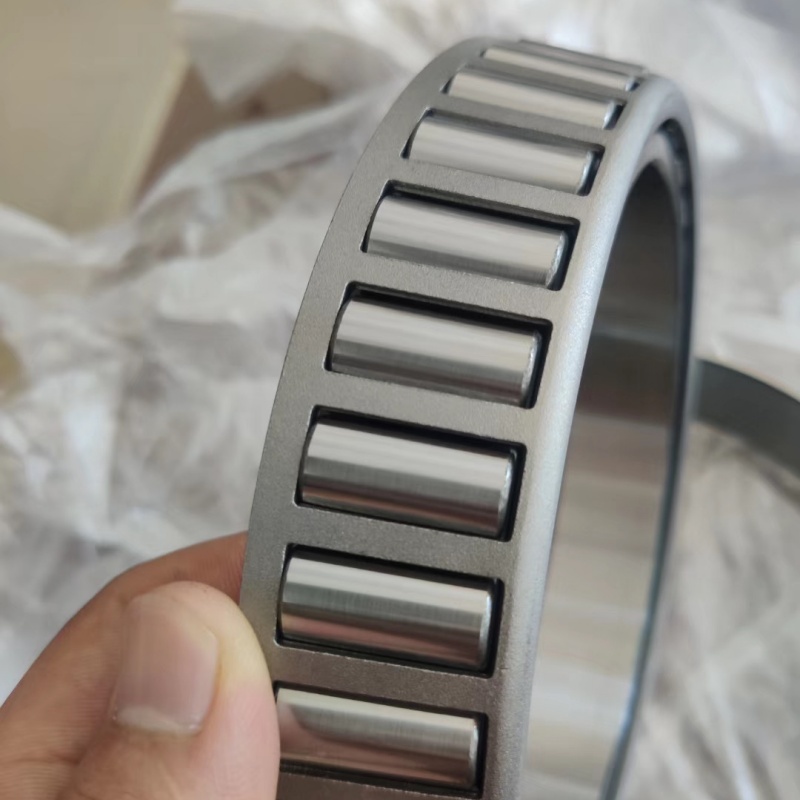
The calculated life is a benchmark under ideal conditions. Your job is to understand the factors that shorten it and take action to preserve as much of that theoretical life as possible. Let’s move from theory to practical life management.
Extending Life from Calculation to Reality
At FYTZ, we think in terms of achievable service life4. We provide the high-quality component, but we also help our partners understand how to protect it.
Understanding the L10 Life Calculation:
The basic formula is: L10 = (C / P)^p
- L10: Basic rating life in millions of revolutions.
- C: Dynamic load3 rating from our catalog (the load3 the bearing can handle for 1 million revs).
- P: Equivalent dynamic load3 on your bearing (radial + axial, adjusted by factors).
- p: Exponent. For roller bearings, p = 10/3 (≈3.33).
Key Insight: Because the exponent is 3.33, life is extremely sensitive to load3. If you double the load3 (P), the life is not halved; it is reduced to roughly 1/10th of its original value. This is why overload3 is so destructive.
The Real-World Life Reduction Factors (The a1 a2 a3 Factors):
Industry standards modify the basic L10 life1 with adjustment factors for reliability, material, and operating conditions. The most critical for you is the a23 factor5 for lubrication6 and contamination7.
- Lubrication (Viscosity Ratio κ): If the lubricant is too thin (low viscosity) at operating temperature, the oil film is too weak to separate the metal surfaces. This leads to metal-to-metal contact and rapid wear. We recommend specific greases for our bearings to ensure a good viscosity ratio.
- Contamination: This is the biggest life reducer in industrial settings. Even trace contamination7 can cut bearing life by 90% or more. The factor depends on the level of filtration and seal effectiveness.
A Practical Example of Life Calculation:
- Theoretical: A bearing with C=50,000 N under P=10,000 N load3 has L10 = (50,000/10,000)^3.33 = 5^3.33 ≈ 200 million revolutions.
- With Real Conditions: Assume good lubrication6 (factor = 0.8) but moderate contamination7 due to a standard seal in a dusty environment (factor = 0.2). The combined a23 factor5 might be 0.8 * 0.2 = 0.16.
- Adjusted Life: 200 million revs * 0.16 = 32 million revolutions. The real life is just 16% of the theoretical calculation due to contamination7 alone.
How FYTZ Designs for Extended Real-World Life:
We aim to maximize both the C (inherent capacity) and the a23 (operating condition) factors.
- Maximizing C (Capacity): Through superior material and heat treatment, we ensure our published C rating is robust and reliable.
- Improving the a23 Factor:
- For Lubrication: We design raceway and roller finishes that promote better oil film formation (higher κ).
- For Contamination: We offer a range of sealing solutions8. For tapered bearings, this includes contact seals, non-contact labyrinth seals, and even integrated flingers for unitized hubs. The right seal choice can change the contamination7 factor from 0.2 (severe) to 0.8 (clean) or better, multiplying the expected life by 4x.
Actionable Steps to Maximize Your Bearing’s Life Expectancy:
| Life-Reducing Factor | What Shortens Life | Action to Extend Life |
|---|---|---|
| Load | Overload3 reduces life exponentially. | Size bearings with a generous safety factor. Avoid shock load3s where possible. |
| Contamination | Abrasive particles cause wear. | Select the best possible seal for the environment. Maintain clean lubrication6 systems. |
| Lubrication | Wrong type, wrong amount, degradation. | Use the recommended grease/oil. Follow correct regreasing intervals9 and quantities. |
| Misalignment | Edge load3ing creates high local stress. | Ensure precise installation alignment10. Use self-aligning types if alignment is uncertain. |
| Installation | Damage during mounting/setting. | Use proper tools and follow installation procedures meticulously. |
For Rajesh and his customers, this transforms bearing selection from a simple size lookup into a strategic decision. He can now have a technical discussion: "For your dusty sawmill application, the standard seal on this bearing might only give you 12 months. For a 20% higher cost, this version with a labyrinth seal could last 4 years." This approach demonstrates deep expertise and focuses the customer on the true goal: maximizing uptime and minimizing total cost, not just minimizing the initial purchase price.
Conclusion
Long-term durability in tapered roller bearings is earned through precision engineering, quality materials, and intelligent application. By understanding and mitigating the factors that shorten life, you can achieve the reliable, long-lasting performance your machinery demands.
-
Understanding L10 life is crucial for predicting bearing performance and longevity, making it essential for effective maintenance. ↩ ↩ ↩ ↩ ↩ ↩ ↩ ↩ ↩
-
Exploring dynamic load rating helps in selecting the right bearings for specific applications, ensuring optimal performance. ↩ ↩ ↩ ↩ ↩
-
Understanding the impact of load on bearing life is essential for selecting the right bearings for your application. ↩ ↩ ↩ ↩ ↩ ↩ ↩ ↩ ↩ ↩ ↩ ↩ ↩ ↩ ↩ ↩ ↩ ↩
-
Learning about achievable service life can guide you in extending the lifespan of your bearings through proper practices. ↩ ↩ ↩ ↩
-
The a23 factor is critical for understanding how lubrication and contamination impact bearing longevity. ↩ ↩ ↩ ↩ ↩
-
Proper lubrication is vital for bearing performance; understanding it can significantly enhance bearing life. ↩ ↩ ↩ ↩ ↩
-
Contamination is a major factor in bearing failure; knowing how to manage it can save costs and downtime. ↩ ↩ ↩ ↩ ↩ ↩ ↩
-
Choosing the right sealing solutions can drastically improve bearing life, making this knowledge invaluable. ↩ ↩ ↩
-
Following correct regreasing intervals is key to maintaining bearing performance and extending their service life. ↩ ↩
-
Proper installation alignment prevents premature wear and failure, ensuring the longevity of your bearings. ↩
