
I’ve seen too many high-quality bearings fail within weeks, not from manufacturing flaws, but from simple installation errors. These mistakes are costly and completely preventable.
The most common pillow block bearing installation mistakes are improper shaft alignment, incorrect shaft fit (too tight or loose), over-greasing, failing to tighten locking devices securely, and misaligning the housing itself. Avoiding these errors ensures the bearing achieves its full design life and performance.
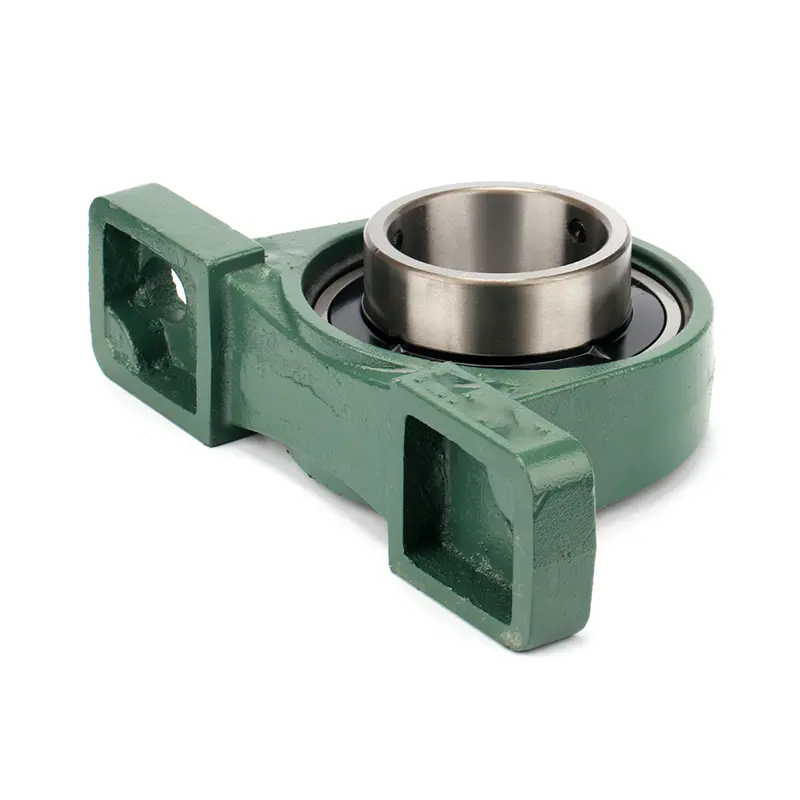
Installation is the final, critical step between a bearing in a box and a reliable machine. Let’s walk through the precise actions that cause failure and the right methods to guarantee success.
What are the common problems with pillow block1s?
A newly installed pillow block1 that fails quickly points directly to a problem during setup. The bearing itself is rarely the culprit if it was selected correctly.
Common installation-related problems with pillow block1s include bearing seizure2 from incorrect press fit, abnormal noise from misalignment3, overheating from over-greasing4, and premature looseness from inadequate tightening of the locking collar5 or set screws. These issues stem from skipping basic installation procedures.
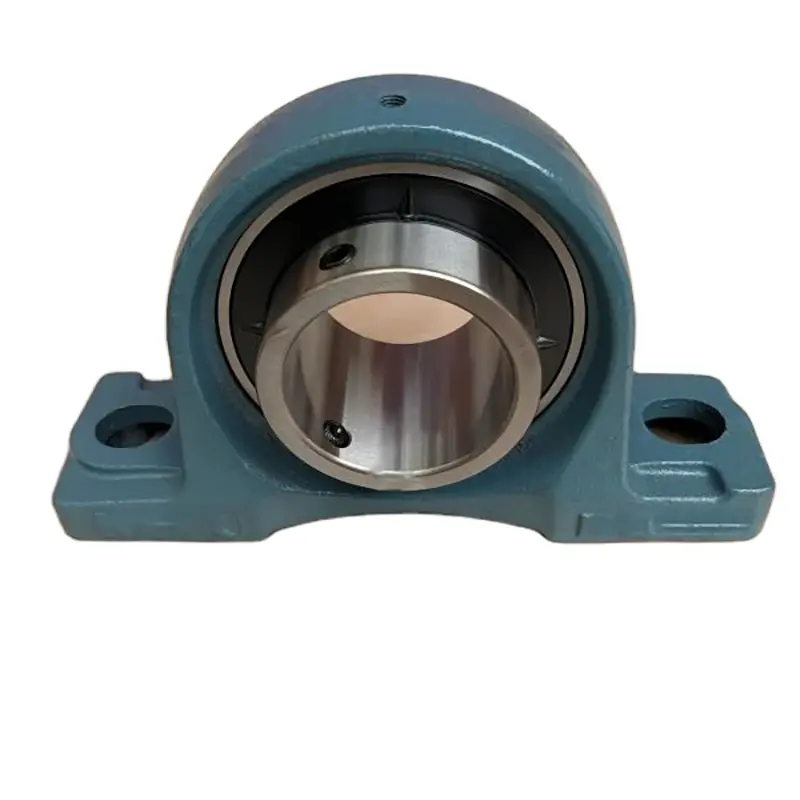
These problems are symptoms. We need to find the root cause in the installation process. Each symptom points to a specific mistake made during assembly.
Root Cause Analysis: Linking Problems to Installation Errors
When a bearing fails early, it’s a detective job. Here is a breakdown of the direct link between what you see and what was done wrong.
Problem 1: Bearing Seizes or Overheats Quickly
- Root Cause A: Incorrect Shaft Fit. This is a major issue. If the shaft is too large (interference fit too tight), it overly compresses the bearing’s inner ring. This compression reduces the internal clearance of the bearing, creating excessive preload. The balls or rollers are squeezed, friction skyrockets, and the bearing overheats and seizes. Using a hammer to force it on can also damage components.
- Root Cause B: Severe Misalignment. If the shaft is not aligned between two pillow block1s, the bearing is forced to run crooked. This creates high stress on one side of the raceway, leading to rapid wear, heat, and noise.
- Root Cause C: Contamination During Installation. Failing to clean the shaft and housing before assembly allows dirt or metal chips to enter the bearing. This acts as an abrasive, causing immediate wear and potential seizure.
Problem 2: Abnormal Noise (Grinding, Squealing)
- Root Cause A: Misalignment (Angular or Parallel). Even slight misalignment3 forces the bearing elements to track improperly, creating a rhythmic scraping or whining sound.
- Root Cause B: Damaged Bearing from Impact. Striking the bearing directly with a hammer during installation can dent the races or crack the rings. This creates a constant grinding or clicking noise.
- Root Cause C: Loose Locking Device. If the set screws or eccentric locking collar5 are not tightened properly, the bearing inner ring can slip or creep slightly on the shaft. This causes a distinct "ticking" or "creaking" sound, especially on start-up or load change.
Problem 3: Grease Leakage or Purge Failure
- Root Cause A: Over-greasing. Filling the housing cavity 100% full leaves no room for the grease to expand when hot or to be churned. The pressure forces grease past the seals, damaging them and creating a mess. It also causes the bearing to overheat.
- Root Cause B: Damaged or Incorrectly Installed Seals. Forcing the bearing onto the shaft without protecting the seal lip can cut or roll it. A damaged seal will leak immediately.
Problem 4: Bearing Becomes Loose on the Shaft
- Root Cause: Improper Locking Device Procedure. This is incredibly common. For set screw types, the set screws must be tightened onto a hardened and ground spot on the shaft, not onto a smooth, round surface. They must be tightened in the correct sequence and to the proper torque. For eccentric locking collar5s, the collar must be rotated and locked in the correct direction against shaft rotation.
Installation Error vs. Outcome Table:
| Installation Error | Immediate Symptom | Long-Term Consequence |
|---|---|---|
| Hammering bearing on | Possible immediate noise, rough rotation. | Cracked rings, dented raceways, premature spalling failure. |
| Shaft too large (tight fit) | Bearing feels stiff, runs hot immediately. | Rapid overheating, grease breakdown, seizure. |
| Shaft too small (loose fit) | Bearing feels loose, ticking noise. | Fretting wear, shaft damage, eventual catastrophic slippage. |
| Misaligned housing | Whining noise, uneven wear pattern on shaft. | High localized stress, reduced load capacity, early fatigue failure. |
| Loose set screws | Ticking/creaking noise, especially under load. | Shaft scoring, bearing inner ring wear, eventual spin and failure. |
| Over-greasing | Grease purges from seals, housing gets very hot. | Seal damage, energy loss from churning, thermal degradation of grease. |
For our distributors, this knowledge is power. When a customer like a repair shop complains about a bearing that failed quickly, Rajesh’s team can ask targeted questions: "Did you heat the bearing? Did you use a torque wrench on the set screws? Did you check alignment?" This turns a complaint into a training opportunity and builds deeper trust.
Can a wheel bearing1 be installed wrong?
The principles are identical. A wheel bearing1 is just a specific application of a bearing. The consequences of a mistake, however, are far more dangerous.
Yes, a wheel bearing1 can absolutely be installed wrong. Common errors include improper torque2 on the axle nut (too tight causes preload and overheating; too loose causes play and impact damage), damaging seals during press-fitting, failing to replace worn components like the hub, and incorrect alignment of tapered roller bearing3 sets.
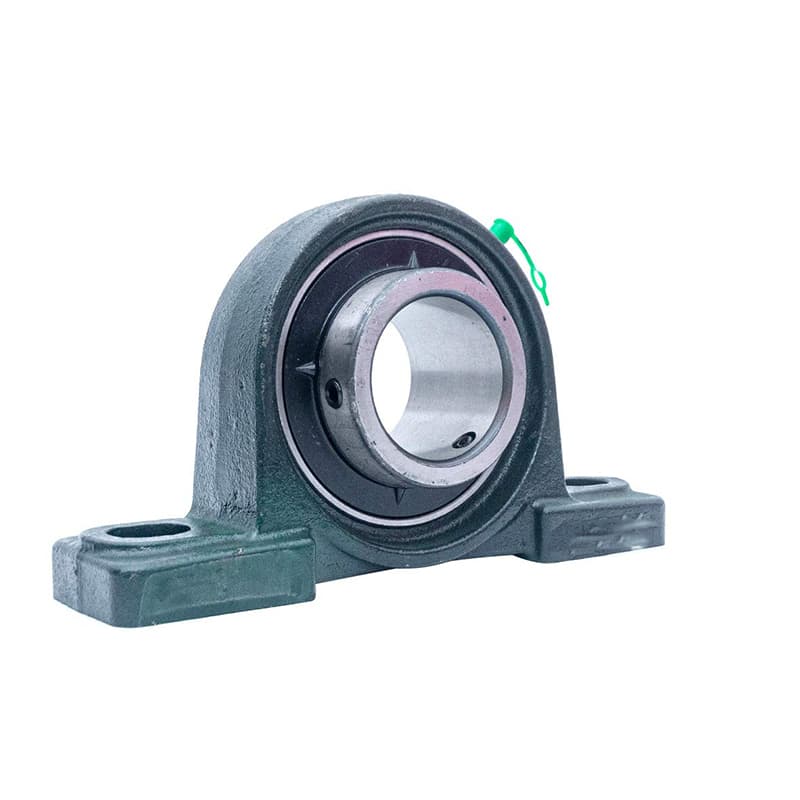
While the form is different, the physics of failure are the same. A wheel bearing faces extreme loads and safety-critical demands, making precision installation non-negotiable.
Parallels Between Pillow Block and Wheel Bearing Installation
The core ideas translate directly. Let’s map the common pillow block mistakes to their wheel bearing equivalents to highlight universal principles.
Mistake 1: Incorrect Fit and Pressing
- Pillow Block: Forcing a bearing onto an oversized shaft.
- Wheel Bearing: Using an improper press tool or hammer to install the bearing, damaging the races or the hub. Pressing on the wrong ring (e.g., pressing on the outer ring to install it into a hub can transmit force through the balls, causing Brinell dents).
Mistake 2: Incorrect Preload/Tightening
- Pillow Block: Not tightening the locking collar or set screws to specification.
- Wheel Bearing: This is the #1 error. The axle nut torque4 is critical. For a tapered roller bearing3 (common in wheels), the nut sets the bearing clearance5/preload.
- Too Tight: The bearing has no clearance. It runs under high preload, generating extreme heat. The bearing can seize, often within miles.
- Too Loose: The bearing has excessive endplay. This allows the wheel to wobble. The bearing components impact each other under load, causing rapid spalling and catastrophic failure. It also creates dangerous vehicle handling.
Mistake 3: Contamination
- Pillow Block: Allowing dirt into the housing during assembly.
- Wheel Bearing: Failing to clean the hub and spindle thoroughly. Getting grease on the brake rotor surface. Not replacing the seal or damaging the new seal during installation.
Mistake 4: Misalignment
- Pillow Block: Misaligning two pillow block housings on a shaft.
- Wheel Bearing: Installing a bent axle or a damaged hub. This creates a situation where the bearing is forced to run out-of-true, causing vibration and premature wear.
The Critical Wheel Bearing Specifics:
- The Torque Sequence is Law: For modern cars with a "hub unit" bearing, the axle nut torque4 is specified by the manufacturer and must be followed with a calibrated torque wrench. For older tapered bearing designs, the proper method is often to torque to a specific value while rotating the hub, then back off, and finally torque to a lower final setting to achieve the correct endplay.
- Never Reuse Old Parts: The axle nut is often a staked or crimped locking design. It must be replaced. The seal must always be replaced. If the hub is worn where the bearing seals ride, it must be replaced.
- Use the Right Grease: Wheel bearing grease is formulated for high temperatures and water resistance. Standard industrial lithium grease may not suffice.
Why This Matters to an Industrial Distributor:
You might think wheel bearing1s are for auto shops, not for B2B bearing suppliers. But many of our distributors, like Rajesh, supply the automotive aftermarket. His customers are local car parts wholesalers and repair shops. When he sells a wheel bearing1 kit, providing a simple installation tip sheet—emphasizing torque and cleanliness—reduces comebacks. It shows he understands their world. The lesson is universal: precise installation is as important as part quality, whether it’s a UCP205 on a conveyor or a wheel bearing1 on a truck.
What causes pillow block bearing failure?
Bearing failure is rarely an act of God. It is the endpoint of a chain of events, and installation is the first and most critical link in that chain.
Pillow block bearing failure1 is primarily caused by improper installation practices2, followed by poor lubrication3, contamination ingress4, and overload5. Installation errors like misalignment and incorrect fit create immediate internal stress that accelerates all other failure modes, leading to premature breakdown.
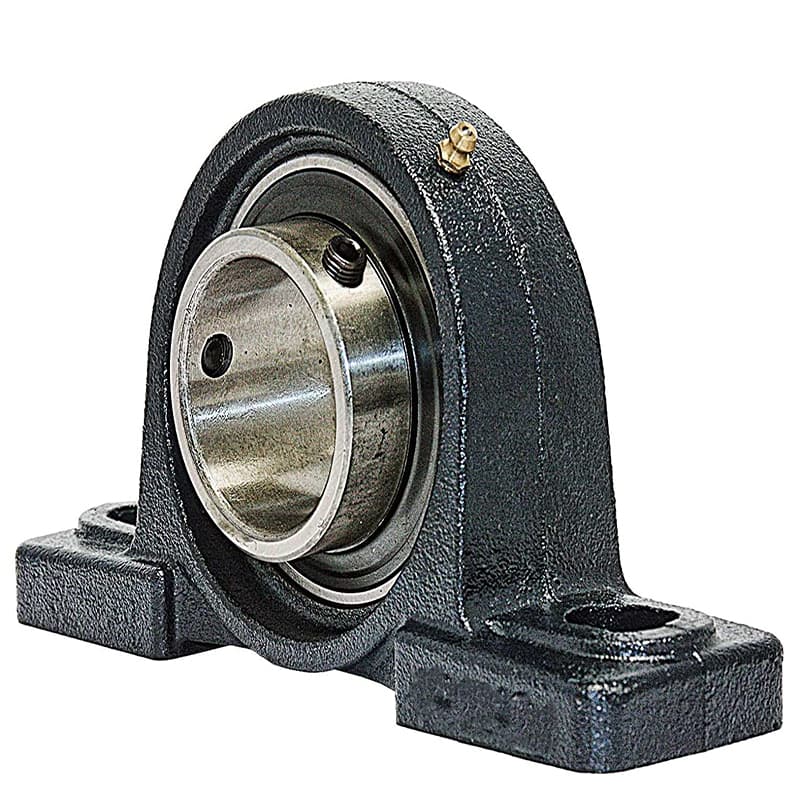
We need to think of failure as a process, not an event. A bad installation starts the clock ticking faster. Let’s trace how an installation mistake leads directly to a specific type of failure.
The Failure Chain: From Installation Error to Breakdown
A bearing is designed to distribute load smoothly. An installation error concentrates stress in one area. This concentrated stress starts a physical degradation process.
The Direct Link from Mistake to Failure Mode:
1. Misalignment -> Fatigue Spalling
- The Process: Angular misalignment forces the rolling elements to load only a small portion of the raceway. The stress in that tiny contact zone is much higher than designed.
- The Result: Subsurface fatigue cracks start early. These cracks propagate to the surface, causing material to flake off. This is called spalling. You will see pitted areas on the raceway, typically on one side. The bearing becomes noisy and vibrates.
2. Incorrect Shaft Fit -> Overheating and Seizure
- The Process: An overly tight fit (excessive interference) compresses the inner ring, reducing the bearing’s internal radial clearance to zero or even creating preload.
- The Result: The balls/rollers are squeezed. Rolling friction increases dramatically. This generates excessive heat. The heat can degrade the grease, expand the metals further, and lead to a thermal runaway6 until the bearing seizes, welding itself to the shaft.
3. Loose Fit -> Fretting Wear & False Brinelling
- The Process: A shaft that is too small allows the bearing inner ring to move microscopically on the shaft, even if it feels hand-tight. This small movement is called "fretting."
- The Result: Fretting wears away material from both the shaft and the bearing bore, creating a reddish-brown oxide dust (cocoa powder). This wear creates clearance, making the fit even looser. Eventually, the bearing can spin on the shaft, destroying both parts. False Brinelling is a related issue from vibration while the bearing is stationary (during transport or off periods), creating wear indentations in the raceway.
4. Contamination During Installation -> Abrasive Wear
- The Process: A single grain of sand or a metal chip gets trapped inside the bearing during assembly.
- The Result: This hard particle is rolled between the raceways and rolling elements. It acts like a cutting tool, scoring grooves into the hardened steel surfaces. This increases clearance, creates noise, and generates more wear debris, accelerating the failure.
5. Over-greasing -> Churning and Thermal Failure
- The Process: The housing is packed completely full of grease. When the shaft rotates, the bearing churns through the thick grease mass.
- The Result: Churning requires significant energy, which converts to heat. The bearing overheats. The excessive heat quickly breaks down the grease’s oil, leaving a dry, hard thickener. The bearing then runs without effective lubrication and fails.
Failure Analysis Checklist:
When you find a failed bearing, you can often diagnose the original installation error:
| What You See on the Failed Bearing | Likely Installation Cause |
|---|---|
| Spalling on one side of raceway | Angular misalignment. |
| Inner ring cracked | Too tight a fit or hammer damage during installation. |
| Shaft scored under inner ring | Loose fit leading to fretting and eventual spinning. |
| Grease is blackened and hardened | Overheating from misalignment, over-greasing, or excessive preload. |
| Raceways have fine, even scratching | Contamination introduced during installation or through failed seals. |
For a factory like FYTZ, we perform root cause analysis7 on any returned bearings. Often, the failure pattern tells a clear story of mishandling, not manufacturing. This information helps us guide our distributors. We can tell Rajesh, "If your customer sees this spalling pattern, have them check the alignment of the two bearing blocks before installing the replacement." This proactive advice prevents the same mistake from happening twice.
How do you align a pillow block bearing?
Misalignment is the silent killer of bearings. You can’t always see it with your eyes, but the bearing feels it instantly. Proper alignment is not a luxury; it’s a requirement for long life.
To align a pillow block bearing, you must align both the shaft centerline height1 (vertical alignment) and the angular position2 (horizontal alignment) between two or more bearing housings3. The best practice is to use a dial indicator4 mounted on the shaft to measure runout at multiple points, adjusting the housing until readings are within tolerance (typically 0.05mm or less).
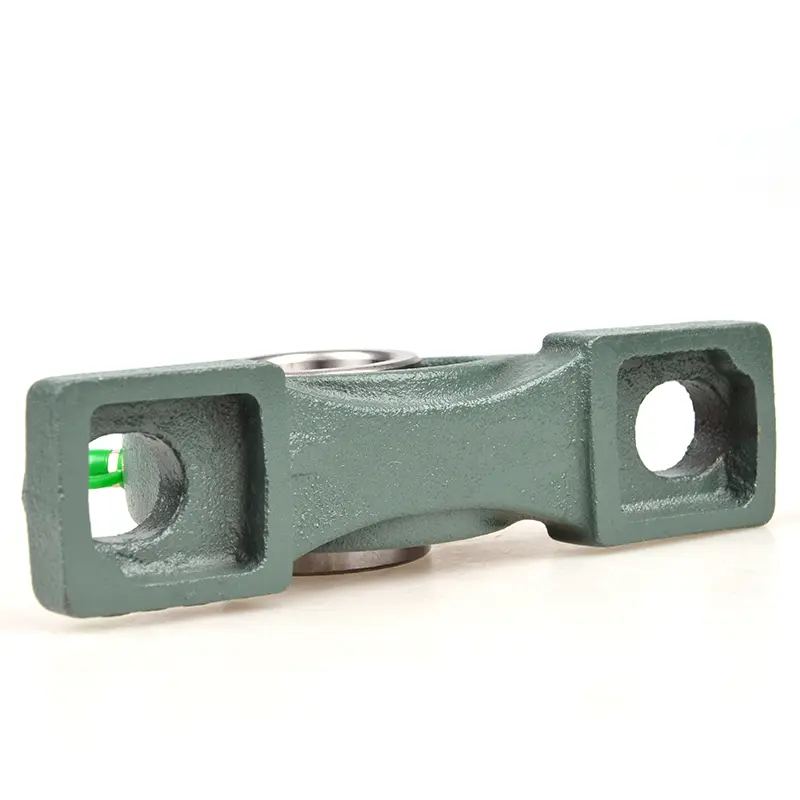
Forget the "straight edge and feeler gauge" method for anything but the roughest installations. For reliable machinery, you need a precise method. Let’s go through the professional alignment process step by step.
A Practical, Step-by-Step Alignment Procedure
Good alignment corrects two things: offset (parallel misalignment) and angularity. We need to fix both. Here is the method we recommend to our OEM clients and advanced repair shops.
Tools You Will Need:
- A dial indicator4 with a magnetic base.
- A clean, straight shaft (or the machine’s own shaft if it’s straight and undamaged).
- Feeler gauges or shims.
- A soft-faced hammer or a pry bar for small adjustments.
Step 1: Rough Alignment (Before Tightening Bolts)
- Place the pillow block housings on the base. Insert the shaft through the bearings.
- Use a straight edge (a precision ground bar is best) placed across the top of the two housing bases. Use feeler gauges to check for gaps. This gives a rough idea of height difference.
- Adjust the housings by adding or removing shims under the base until the straight edge sits flat with minimal gap. Do not fully tighten the mounting bolts yet; keep them snug so the housing can be moved.
Step 2: Precision Alignment with Dial Indicator (The Right Way)
This method, called the reverse dial indicator method5s://www.alignmentknowledge.com/dial-indicator-alignment-basics/)4 method, is very effective for two bearings.
- Mount the dial indicator4 on the shaft near Bearing A. Position the indicator’s tip to touch the side of Bearing B’s housing bore or a fixed point on its base.
- Rotate the shaft slowly one full turn. Note the total indicator reading (TIR). This measures the offset misalignment6 between the two points.
- Now, mount the indicator on the shaft to measure the angular misalignment7. Place the indicator tip to touch the face of Bearing B’s housing. Rotate the shaft and note the TIR. A difference in readings from the top/bottom vs. sides shows angular error.
- The math can get complex, but the principle is simple: you adjust Bearing B’s position (shim under the front or back, move it left/right) until both the offset and angular readings are within the allowed tolerance.
Step 3: Simplified "Shaft Rotation" Method (Good for Most Field Work)
For a simpler approach on a long shaft supported by two bearings:
- Mount the dial indicator4 on a fixed point of the machine frame. Set the indicator tip to touch the top of the shaft, near the center between the two bearings.
- Rotate the shaft and note the runout. This checks shaft straightness first (it must be good).
- Now, move the indicator to touch the shaft right next to Bearing A’s inner ring. Zero the indicator.
- Move the indicator to the shaft right next to Bearing B’s inner ring (without moving the shaft). Rotate the shaft and take a reading.
- If the reading at Bearing B is different from zero, the two bearing centers are offset. Adjust the housing of Bearing B with shims until the reading at both points is nearly identical when the shaft is rotated.
Alignment Tolerance Guidelines:
As a rule of thumb, for general industrial machinery:
- Offset Misalignment: Should be less than 0.05 mm (0.002 inches).
- Angular Misalignment: Should be less than 0.03 mm per 100 mm of shaft span (0.0003 in/in).
Critical Post-Alignment Steps:
- Tighten Bolts Gradually: Once aligned, tighten the housing mounting bolts in a criss-cross pattern to the specified torque. Do not just tighten one side fully first, as this can pull the housing out of alignment.
- Re-check Alignment: After final tightening, take a final set of dial indicator4 readings. It’s common for the alignment to shift slightly as bolts are torqued down.
- Consider Thermal Growth: For machines that run hot (like dryers in textile mills), the frame may expand. Sometimes, bearings are aligned "cold" with a slight intentional offset so they become aligned at operating temperature. This requires expert knowledge.
For maintenance teams, this skill is invaluable. When Rajesh supplies high-precision bearings (P5/P6 class), he always stresses that their benefits are lost without proper alignment. A bearing can be made to ultra-precise tolerances in our factory, but if it’s installed crooked, it will perform worse than a standard bearing installed correctly. Alignment is the final act of quality control.
Conclusion
A perfect bearing can be ruined in minutes by a poor installation. By mastering correct fitting, alignment, greasing, and locking procedures, you transform a purchased component into guaranteed, long-term reliability.
-
Understanding shaft centerline height is crucial for achieving precise bearing alignment, ensuring optimal performance. ↩ ↩ ↩ ↩ ↩ ↩ ↩ ↩ ↩ ↩ ↩ ↩
-
Exploring angular position helps in grasping its impact on alignment accuracy, which is vital for machinery longevity. ↩ ↩ ↩ ↩
-
Learning about bearing housings is vital for understanding their role in supporting and aligning bearings effectively. ↩ ↩ ↩ ↩ ↩ ↩
-
A dial indicator is essential for precise measurements in alignment, making it a must-know tool for technicians. ↩ ↩ ↩ ↩ ↩ ↩ ↩ ↩ ↩ ↩
-
The reverse dial indicator method is a proven technique for achieving accurate bearing alignment, worth exploring. ↩ ↩ ↩ ↩ ↩ ↩
-
Learning about offset misalignment is key to preventing premature bearing failure and ensuring smooth operation. ↩ ↩
-
Understanding how to measure angular misalignment is critical for maintaining machinery efficiency and reliability. ↩ ↩