
Every minute of downtime in a textile mill costs real money. I see how a single failed pillow block can stop an entire production line, creating urgent, costly problems.
Pillow block bearings in textile machinery fail from lint contamination, high speeds, and misalignment. Choosing the right sealed bearing, correctly sized and installed, dramatically reduces unplanned stops and extends machine life. A proactive bearing strategy is key to reliable, continuous production.
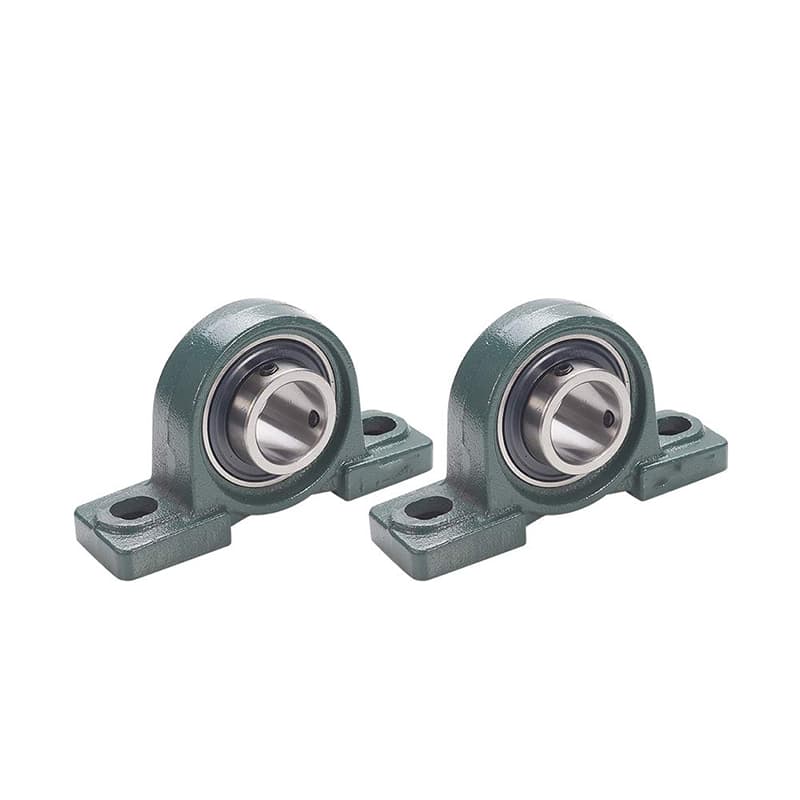
The textile environment is uniquely harsh for bearings. It’s not just about load and speed. Let’s move past basic specs and explore the real-world solutions that keep spindles turning and profits flowing.
What are the common problems with pillow block1s?
A failed pillow block1 in a spinning frame doesn’t just make noise. It creates vibration that ruins yarn quality and risks a costly fire from friction heat. The problems are specific and predictable.
Common pillow block1 problems in textile mills include lint and dust ingress clogging bearings, lubricant washout from humidity, corrosion2 from chemical vapors, and premature failure from high-speed operation3 or shaft misalignment. These issues lead directly to overheating, seizure, and unplanned downtime.
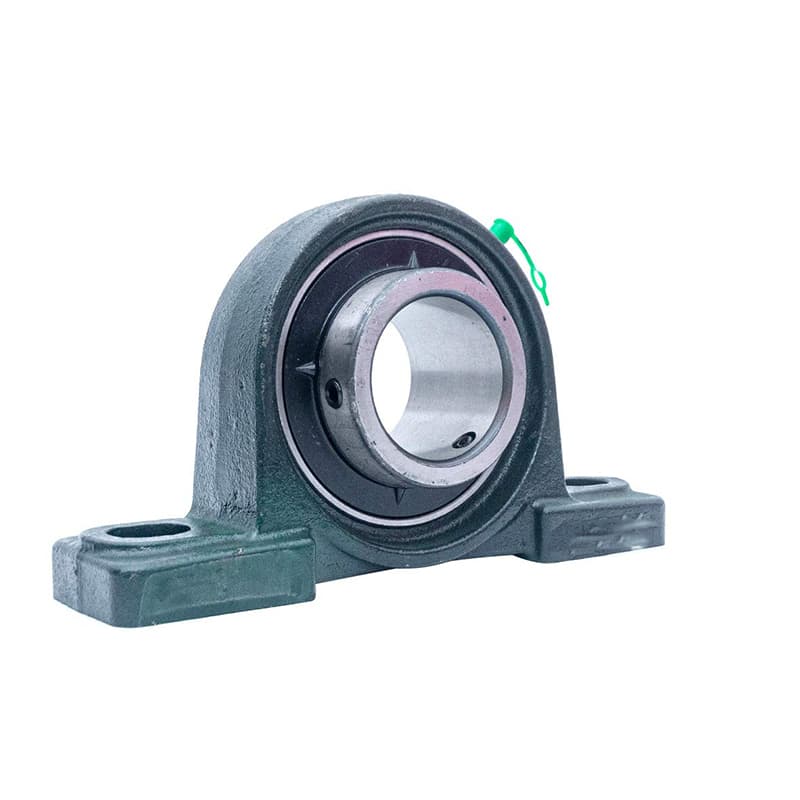
These failures are rarely random. They are the direct result of the operating environment meeting an unsuitable or poorly maintained bearing. Let’s diagnose each major failure mode and its root cause.
Diagnosing and Solving Textile-Specific Bearing Failures
In our work with distributors serving textile hubs like India and Bangladesh, we see consistent patterns. Understanding these patterns is the first step to prevention.
1. Contamination: The #1 Enemy
Textile lint, dust, and fly are abrasive. They are like grinding powder for bearing surfaces.
- The Problem: Standard lip seals (RS) can’t stop fine lint. Lint works its way into the bearing, mixing with grease to form a hard, abrasive paste. This paste increases friction, wear, and heat.
- The Solution: Specify bearings with non-contact labyrinth seals or integrated flinger seals. These create a tortuous path that blocks particles. For severe conditions, fully sealed cartridge units or bearing isolators offer the best protection.
2. Lubrication Failure
- Washout: High humidity in mills can wash grease thickener away. Some processes use water or steam.
- Dry-out: High speeds and temperatures can cause grease to oxidize and harden prematurely.
- The Solution: Use high-quality, synthetic grease4 with excellent water resistance and high-temperature stability. Consider automatic lubrication systems for critical, hard-to-reach spindles to ensure consistent greasing without manual error.
3. Corrosion
- The Problem: Bleaching agents, dyes, and sizing chemicals create corrosive atmospheres. Standard bearing steel will rust, leading to pitting and vibration.
- The Solution: Opt for stainless steel bearings (e.g., AISI 440C) for the insert bearing. For the housing, choose cast iron with a good paint finish or, for extreme cases, stainless steel housings.
4. High-Speed and Misalignment Issues
- The Problem: Spinning spindles run at very high RPMs (often 15,000+). Standard deep groove ball bearings can overheat. Misalignment from installation or frame stress creates uneven load and early failure.
- The Solution:
- For high speeds, use bearings designed for that purpose. Angular contact ball bearings or ceramic hybrid bearings (with ceramic balls) generate less heat at high RPM.
- For misalignment, use self-aligning ball bearings5 (Type SA) or spherical roller bearings inside the pillow block1. These can tolerate small angular misalignments, protecting the bearing.
A Proactive Maintenance Checklist for Textile Pillow Blocks:
| Problem Symptom | Possible Cause | Immediate Action | Long-Term Solution |
|---|---|---|---|
| Overheating | Lint-clogged, dry grease, misalignment | Stop machine, check for blockage, feel housing temperature. | Upgrade seals, switch to synthetic grease4, check alignment. |
| High Vibration | Bearing race damage (brinelling), imbalance, looseness | Inspect for false brinelling (from vibration while stationary), check locking collar tightness. | Use bearings with anti-friction coatings, ensure proper shaft fit, implement storage procedures. |
| Noise (Whining/Grinding) | Lack of lubrication, contamination6, bearing wear | Listen for change in sound. Check grease purge from relief port. | Establish regular greasing schedule with correct grease volume and type. |
| Grease Leakage | Over-greasing, damaged seals, wrong grease type | Clean area, check seal integrity. | Train staff on correct greasing amount (1/3 to 1/2 housing fill). Use compatible grease. |
The goal is not just to react to failure, but to prevent it. For a distributor like Rajesh, selling into the textile sector means moving beyond just supplying a "UCP205." It means offering the right UCP205-2RS with labyrinth seals and high-speed grease as a tailored solution. This approach turns a commodity sale into a value-added partnership that reduces his customers’ downtime.
How much weight can a pillow block bearing hold?
Asking about weight capacity is the right question, but it needs refining. A pillow block doesn’t fail from just static weight; it fails from dynamic loads, shock, and how those forces are applied over time.
A pillow block’s load capacity is not a single number. It depends on the insert bearing type1 inside. For example, a unit with a 6205 ball bearing may handle 7-10 kN, while one with a 22205 spherical roller bearing2 can handle over 30 kN. The housing material and mounting also affect the total supported load.
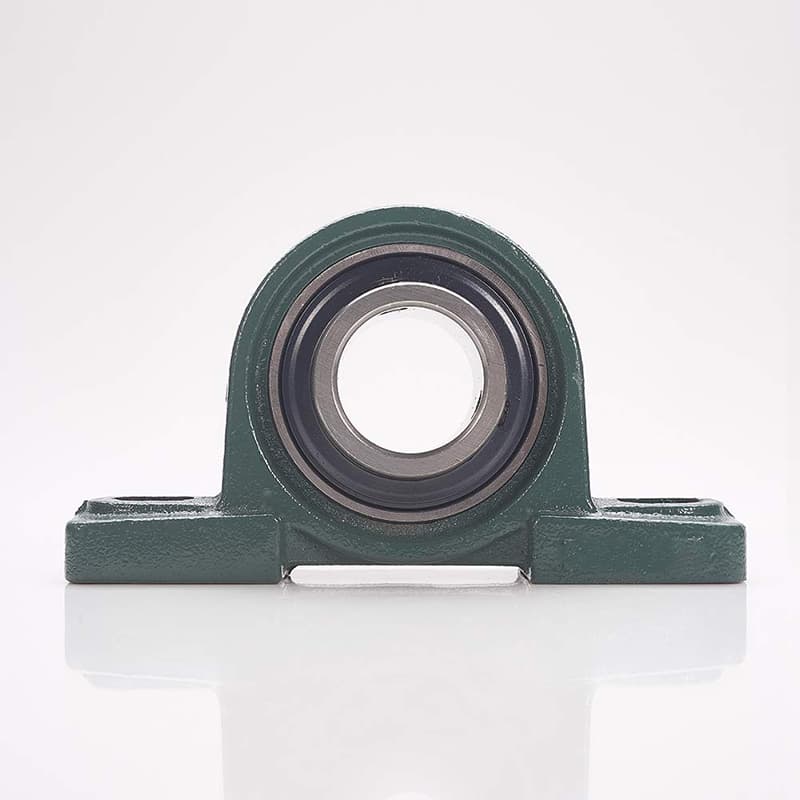
"Load capacity" is a complex spec. You must understand the difference between radial and axial loads, and how bearing type changes everything. Let’s make this practical for textile machine design and repair.
Understanding Dynamic Load Ratings for Machine Reliability
In textile machinery, loads are often a combination of radial (from belt tension, weight of rollers) and axial (from thrust in certain drives). The pillow block must handle both.
Key Load Concepts:
- Radial Load3: This is the primary load. It acts perpendicular to the shaft, pushing the bearing "inward." Think of the weight of a roller or the pull of a belt.
- Axial (Thrust) Load4: This acts parallel to the shaft, trying to push it sideways. Some processes or drive designs create this force.
- Dynamic Load Rating (C)5: This is the most useful number. It is the load a bearing can theoretically handle for 1 million revolutions with a 90% reliability rate. It’s the standard for comparing bearing capacity.
- Static Load Rating (C0)6: This is the maximum load a bearing can handle without rotating without causing permanent deformation. Important for applications with shock loads or seldom movement.
How Bearing Type Drives Capacity:
The insert bearing is the heart. Here is a comparison for a common 25mm bore (205 series) bearing in different pillow block units:
| Pillow Block Type (25mm Bore Example) | Typical Insert Bearing | Best For This Load Type | Approx. Dynamic Load Rating (C)5 | Textile Application Example |
|---|---|---|---|---|
| UCP205 (Standard) | Deep Groove Ball Bearing (6205) | Radial and light axial (both directions). | ~10 kN | Motor shafts, light conveyor rollers, fan shafts. |
| UCF205 (Flange) | Deep Groove Ball Bearing (6205) | Same as above. | ~10 kN | Motor mounts, gearbox connections. |
| UCP205-SA (Self-Aligning) | Self-Aligning Ball Bearing (1205) | Radial and very light axial. Handles misalignment. | ~5 kN | Applications where shaft alignment is difficult to maintain. |
| UCT205 (Pillow Block) | Spherical Roller Bearing (22205) | Very high radial and moderate axial load. Self-aligning. | ~35 kN | Heavy take-up units, large diameter rollers, main drive shafts with high belt tension. |
| UKP205+P (With Adapter) | Tapered Roller Bearing (Set) | High radial and high axial load (in one direction). | ~20 kN (set) | Applications with significant one-direction thrust, like some winding mechanisms. |
Practical Load Calculation Steps (Simplified):
You don’t always need complex math. For repair and replacement, follow this process:
- Identify the Existing Bearing: Find the code on the old pillow block (e.g., UCP205).
- Check the Machine Function: Is the shaft carrying a heavy roller (high radial load)? Is it part of a drive with potential thrust (axial load)?
- Consult a Bearing Catalog: Look up the Dynamic Load Rating (C)5 for that specific bearing number. All reputable manufacturers, including FYTZ, provide this data.
- Apply a Safety Factor: For textile machinery with 24/7 operation, use a conservative safety factor7. If your calculated load is 5 kN, choosing a bearing with a C rating of 15 kN or more provides a good safety margin for unexpected shocks or variations.
- Consider the Housing: A cast iron housing (common) is stronger than a pressed steel housing. Ensure your mounting bolts are tight and the base is flat to support the load properly.
For a textile plant manager, this knowledge prevents under-specification (leading to quick failure) and over-specification (leading to unnecessary cost). When Rajesh supplies bearings, he can now advise his customers: "For that heavy carding drum, the UCT series with a spherical roller bearing2 will last much longer than the standard UCP type." This builds his reputation as a technical expert, not just a parts seller.
What are the different types of pillow block bearings?
Walking through a textile mill, you might see blocks that look similar but have critical differences inside. Choosing the wrong type is a direct path to premature failure.
The main types of pillow block bearings are defined by their insert bearing type1: Ball Bearing Units (UCP/UCF)2 for general loads, Self-Aligning Ball Bearing Units (SA Series)3 for misalignment, Spherical Roller Bearing Units (UCT/UCFT)4 for heavy loads, and Tapered Roller Bearing Units (UKP+Adapter)5 for combined radial and thrust loads. Housing styles like pillow blocks6 (P) and flange blocks (F) cross these categories.
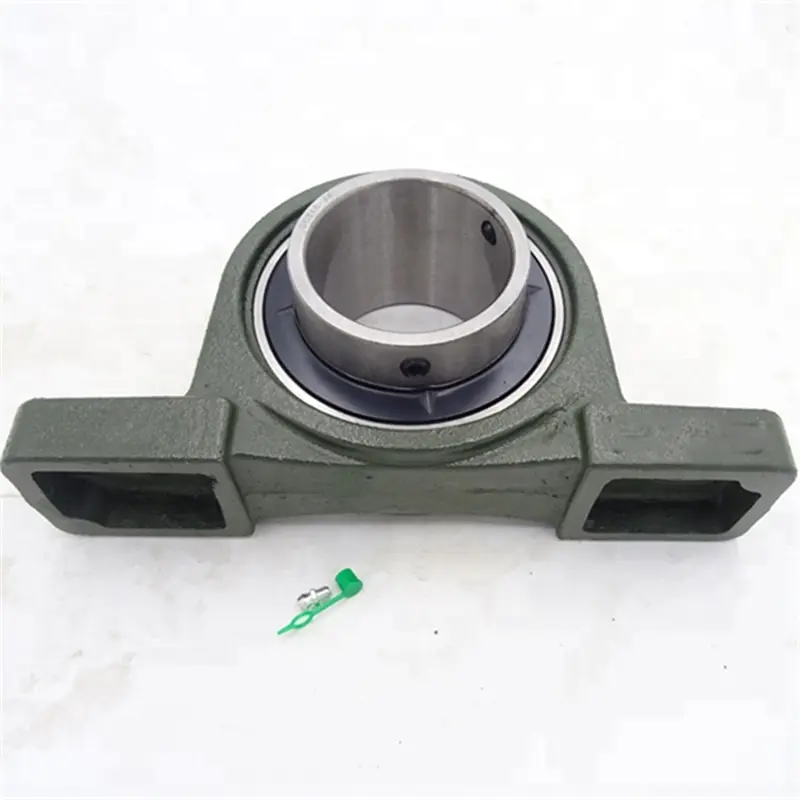
"Pillow block" is a housing style. The performance is determined by the bearing inside it. Matching the internal type to the application is the secret to longevity.
A Guide to Selecting the Right Bearing Type for Your Textile Machine
Let’s break down the four major families. Each has a specific role, and using the correct one solves specific problems.
1. Ball Bearing Pillow Blocks (Standard UCP / UCF Series)
- Core Component: Deep groove ball bearing (e.g., 6205, 6308).
- Load Capability: Good radial load capacity. Can handle moderate axial loads in both directions.
- Speed Capability: High. Suitable for spindle and motor applications.
- Key Limitation: Cannot tolerate shaft misalignment7. Requires precise installation.
- Best Textile Uses: Electric motor shafts, fan shafts, light to medium-duty rollers where alignment is well-controlled. This is the most common "general purpose" type.
2. Self-Aligning Ball Bearing Pillow Blocks (SA / SDAF Series)
- Core Component: Self-aligning ball bearing with a spherical outer ring.
- Load Capability: Moderate radial load. Lower than standard ball bearings of the same size.
- Speed Capability: High.
- Key Advantage: Can compensate for initial shaft misalignment7 (typically up to ±3°). This protects the bearing from edge loading caused by frame deflection or installation error.
- Best Textile Uses: Long shafts where perfect alignment is hard to achieve, applications where the machine frame might flex or warp over time.
3. Spherical Roller Bearing Pillow Blocks (UCT / UCFT Series)
- Core Component: Spherical roller bearing (e.g., 22205, 22308).
- Load Capability: Very high radial load and good axial load capacity in both directions.
- Speed Capability: Moderate to high.
- Key Advantages: Very high load capacity, self-aligning, and robust.
- Best Textile Uses: Heavy-duty applications. Main drive shafts with high power transmission, large diameter fabric rollers, heavy take-up units, and any point experiencing significant shock loads. This is the workhorse for high-stress areas.
4. Tapered Roller Bearing Pillow Blocks (UKP + Adapter Sleeve)
- Core Component: Tapered roller bearing set (usually two bearings).
- Load Capability: High radial load and very high axial (thrust) load in one direction.
- Speed Capability: Moderate.
- Key Advantage: Specifically designed to handle high thrust loads. The adapter sleeve allows for easy mounting and dismounting on the shaft.
- Best Textile Uses: Applications with defined, heavy one-direction thrust. Examples include some types of winding machines or screw conveyors where the material flow creates a strong axial push.
Selection Decision Table:
| Your Primary Challenge | Recommended Pillow Block Type | Key Reason |
|---|---|---|
| High-Speed Spindle | Ball Bearing Unit (UCP/UCF) with precision (P5/P6) grade and high-speed grease. | Low friction, heat generation at high RPM. |
| Suspected Shaft Misalignment | Self-Aligning Ball Bearing Unit (SA Series). | Compensates for angular error, prevents premature wear. |
| Very Heavy Roller or High Load | Spherical Roller Bearing Unit (UCT Series). | Highest radial load capacity in a self-aligning package. |
| High Thrust Load from Drive | Tapered Roller Bearing Unit (UKP + Adapter). | Specifically engineered to handle axial forces. |
| Wet or Corrosive Environment | Any of the above, but with Stainless Steel Insert Bearing and corrosion-resistant housing8 coating. | Prevents rust and chemical attack. |
For a machinery manufacturer or a maintenance engineer, this framework is crucial. You don’t just replace "a pillow block." You replace it with the correct type of pillow block. When FYTZ works with an OEM, we start by understanding the forces and environment on each bearing position. This allows us to recommend and supply the optimal type, whether it’s a standard UCP for a motor or a rugged UCT for the main drum drive. This precision is what transforms a bearing from a wear item into a reliable machine component.
How to size a pillow block bearing?
Guesstimating a bearing size leads to a frantic call when the new part doesn’t fit. Sizing is a systematic process, not a guess. Getting it right the first time keeps production running.
To size a replacement pillow block bearing, you need two key measurements: the shaft diameter1 and the housing bolt hole centers2. First, measure the shaft with a caliper. Then, measure the distance between the centers of the mounting bolt holes on the existing block. Match these to a standard bearing code chart3.
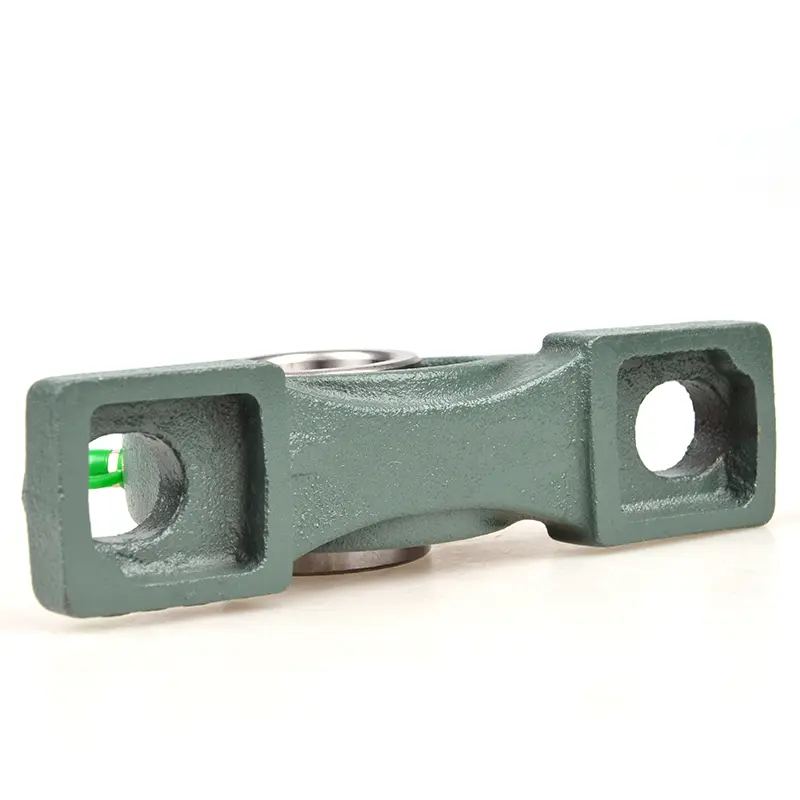
Replacement sizing is often easier than new design sizing. But both follow a clear logic. Let’s cover the step-by-step methods for both scenarios to eliminate uncertainty.
A Step-by-Step Method for Replacement and New Design
There are two main situations: replacing a failed unit (most common for distributors like Rajesh) and selecting a bearing for a new machine design.
Situation 1: Replacing a Failed Pillow Block (The Field Method)
This is the most frequent task for repair shops. Follow these steps:
- Safety First: Ensure the machine is locked out and the shaft is not under load or tension.
- Measure the Shaft Diameter (Bore Size): Use a digital caliper for accuracy. Measure the clean, unworn section of the shaft where the bearing sits. Record the measurement in millimeters (mm).
- Measure the Housing Bolt Center Distance: This is critical for fit.
- For a Pillow Block (UCP)4: Measure the distance between the centers of the two bolt holes on one long side. This is the "A" dimension. Also measure the distance between the centers of the holes on the short side (the "B" dimension).
- For a Flange Block (UCF)5: Measure the bolt circle diameter (PCD). This is the diameter of the circle that passes through the center of all bolt holes.
- Identify the Bearing Code (If Present): Wipe the housing clean. Look for a stamped code like "UCP205-16". If you find it, your job is almost done—just verify the shaft measurement matches.
- Consult a Dimensional Chart: Use the shaft diameter1 and bolt center measurements to look up the corresponding standard bearing code (UCPXXX) in a manufacturer’s catalog. FYTZ provides these charts to all our distributors.
- Note Special Features: Is there a grease fitting? Does it have an eccentric locking collar or set screws? Are the seals rubber or metal?
Situation 2: Sizing for a New Machine Design
This involves calculation and selection from scratch.
- Determine the Loads: Estimate or calculate the radial and axial loads acting on the bearing. This comes from the machine’s mechanics (weight of parts, belt tension, gear forces).
- Determine the Shaft Size: The shaft is usually designed first based on strength and rigidity requirements. The bearing bore must match this shaft diameter1.
- Select the Bearing Type: Based on the loads (see previous section), choose between ball, spherical roller, or tapered roller bearing types.
- Calculate Required Load Capacity: Using the dynamic load (C)6 from your calculations, select a bearing from a catalog where the C rating is greater than your calculated load, with a safety factor7. For 24/7 textile machinery, a large safety factor7 is wise.
- Choose the Housing: Decide if you need a pillow block (P) or flange block (F) based on mounting space.
- Consider the Environment: Choose appropriate seals (2RS for standard, labyrinth for lint), special materials (stainless steel), and grease type.
Critical "Gotchas" and How to Avoid Them:
- Imperial vs. Metric: Shafts can be inches or millimeters. A 1-inch shaft is 25.4mm, which is not a standard metric bore. Standard metric bores are 25mm. You need a 25.4mm bore bearing or a 25mm bore with an adapter sleeve. Always confirm the system.
- Shaft Fit: The bearing inner ring must have the correct fit on the shaft—usually a light press (k5) or push fit (js6). Too loose causes fretting and wear; too tight can distort the bearing.
- Housing "Interchangeability": While a UCP205 from one brand should fit a UCP205 from another, always check the "H" dimension (height from base to shaft centerline). This must match to keep your shaft level.
For Rajesh’s team in Mumbai, when a customer brings in a failed unit without a legible code, they follow the measurement protocol. They measure the shaft (e.g., 40mm) and the bolt centers. They then match it to, say, a UCP208. They also ask about the application. If it’s for a high-speed spindle, they might suggest the P5 precision version. This systematic approach turns a confusing request into a confident sale and a happy, returning customer.
Conclusion
In textile machinery, the right pillow block bearing—correctly selected, sized, and specified for the environment—is not just a spare part. It is a direct investment in reduced downtime and higher quality production.
-
Understanding shaft diameter is crucial for selecting the right bearing, ensuring a perfect fit and optimal performance. ↩ ↩ ↩ ↩ ↩ ↩ ↩ ↩ ↩
-
Measuring housing bolt hole centers accurately is essential for proper installation and functionality of the bearing. ↩ ↩ ↩ ↩ ↩
-
A bearing code chart helps identify the correct bearing size and type, streamlining the replacement process. ↩ ↩ ↩ ↩
-
Exploring UCP specifications will provide insights into their applications and compatibility with various shafts. ↩ ↩ ↩ ↩ ↩
-
Understanding the benefits of UCF bearings can help in selecting the right type for specific machinery needs. ↩ ↩ ↩ ↩ ↩ ↩
-
Calculating dynamic load is vital for ensuring the bearing can handle operational stresses effectively. ↩ ↩ ↩ ↩
-
A safety factor ensures that the bearing can withstand unexpected loads, enhancing reliability and longevity. ↩ ↩ ↩ ↩ ↩
-
Explore the advantages of corrosion-resistant housing to enhance bearing longevity in harsh environments. ↩