
As a bearing supplier, I see daily confusion over pillow block codes. A simple misreading can lead to wrong orders, costly downtime, and frustrated customers.
Pillow block bearing codes like UCP205 and UCFL208 follow a logical system. The prefix (UCP, UCF) indicates the housing and bearing type. The following number (205, 208) specifies the bore size and sometimes the bearing series. Learning this system allows for precise identification and ordering.
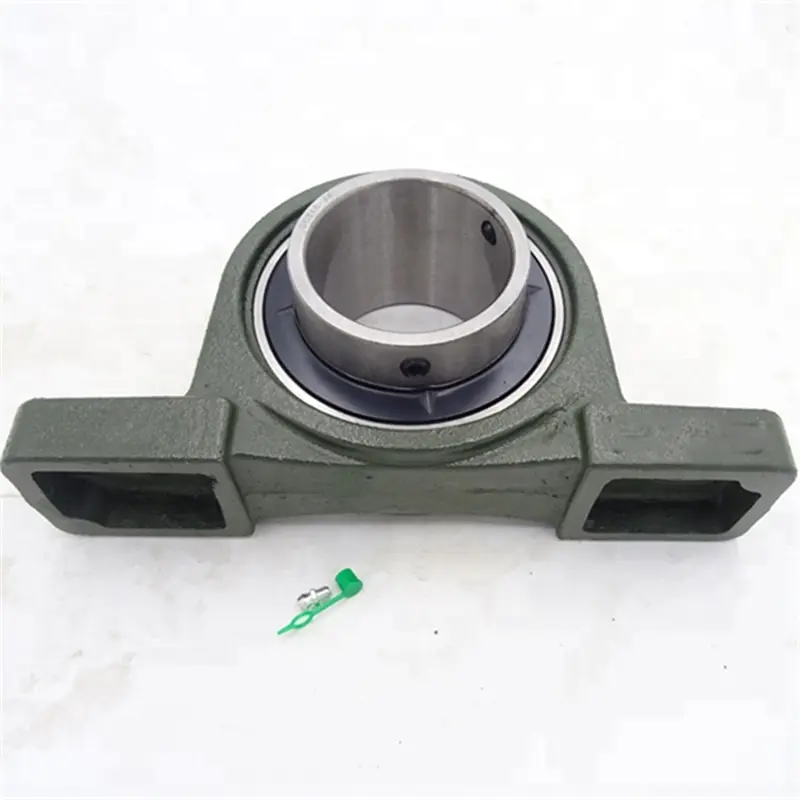
These codes might look like random letters and numbers, but they are a clear language. Once you learn it, you can instantly understand a bearing’s mounting style and size. This knowledge saves time and prevents mistakes. Let me break down this system piece by piece.
What is the difference between UCP1 and UCF2 bearings?
You have a UCP1 and a UCF2 bearing in front of you. They look similar, but using the wrong one will cause a mounting problem. The core difference is in their installation method.
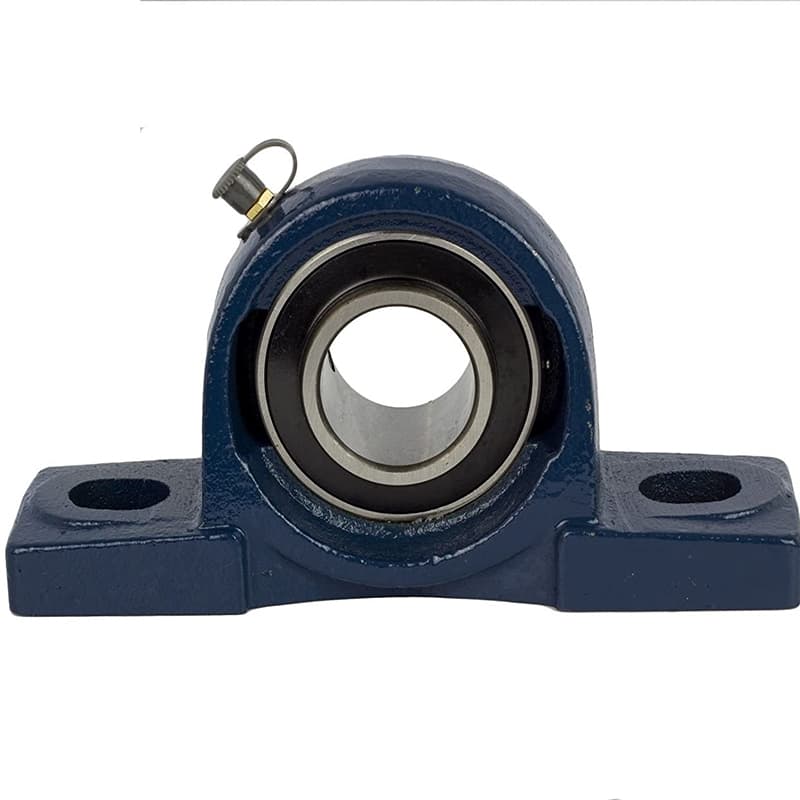
The main difference between UCP and UCF bearings is their mounting style. UCP1 units have a Pillow Block housing with 4 bolt holes3 for a secure base mount. UCF units have a Flange Block housing with 2, 3, or 4 bolt holes on the flange for side mounting onto a vertical surface.
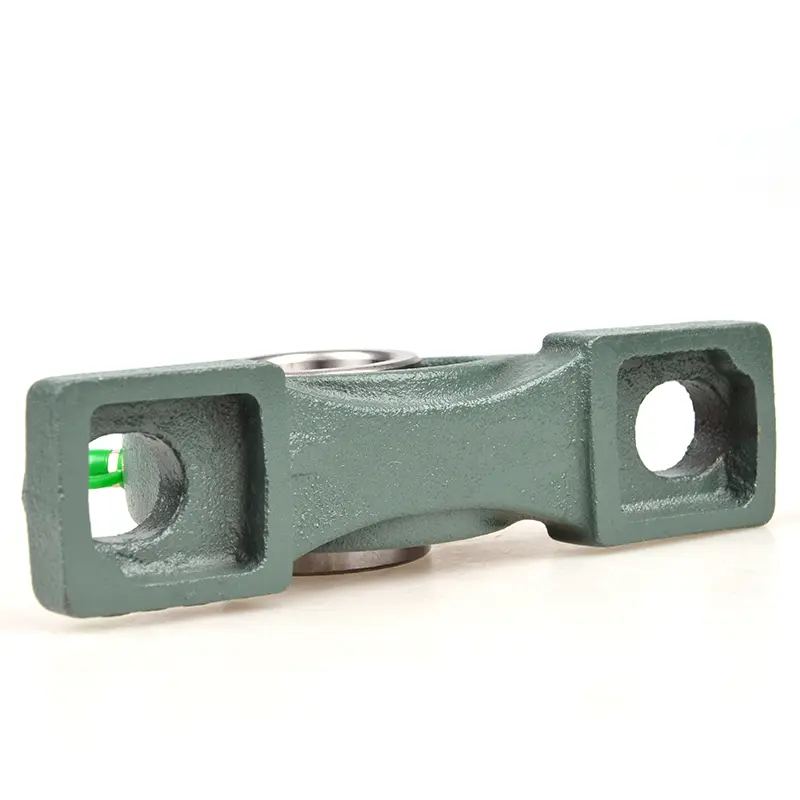
The choice between UCP1 and UCF2 is not about quality. It is about the design of your machine. Choosing the wrong one means you cannot install it at all. Let’s explore the specific applications and variations of each type.
Choosing Between Pillow Block4s and Flange Block5s
This decision is one of the first steps in machine design6 or replacement. The prefix tells you exactly how the bearing unit will be secured. We supply both types in large volumes because different machines need different solutions.
UCP1 – The Standard Pillow Block4
- Housing Design: This is the classic "pillow block" shape. It has a flat, rectangular base with two slots on each side, totaling four bolt holes3.
- Mounting Method: It is bolted down onto a flat, horizontal surface like a machine frame or bed. The slots allow for some adjustment in alignment during installation.
- Typical Applications: This is the most common type for general machinery. You find it on conveyors, fans, agricultural equipment, and many industrial drives. Its stable four-point mounting handles general loads well.
- Key Insight: The "P" stands for "Pillow Block4." Think of "P" for the flat "Platform" it sits on.
UCF2 – The Flange Block5
- Housing Design: This unit has a circular or square flange protruding from the housing. This flange has bolt holes3 (2, 3, or 4) drilled through it.
- Mounting Method: It is bolted onto the side of a vertical surface. The shaft runs parallel to this mounting surface.
- Typical Applications: Used where space is limited on the machine frame or where the mounting surface is vertical. Common in electric motor connections, gearbox mounts, and on the side panels of equipment.
- Key Insight: The "F" stands for "Flange." Think of "F" for mounting on the "Face" of a surface.
But it gets more specific. The "UCF2" code often has additional letters. These letters tell you the flange’s shape and bolt pattern.
| Prefix Code | Flange Shape | Bolt Hole Pattern | Common Use Case |
|---|---|---|---|
| UCF2 | Circular Flange | 4 bolt holes3 | The most standard flange block. Provides good stability. |
| UCF2L | Circular Flange | 3 bolt holes3 (often in a triangular pattern) | Used where space is very tight or for lighter loads. Common in many Asian market designs. |
| UCF2C | Square or Rectangular Flange | 4 bolt holes3 | Provides a larger mounting surface. Can be easier to align on some fabricated structures. |
How to Decide:
- Look at the old bearing. Is it mounted on a flat surface or on a side plate? Copy the prefix.
- Check the machine design6. Do you have a flat base to bolt onto? Use UCP1. Is the only available space on a vertical plate? Use a UCF2 type.
- Count the bolt holes3. A UCP1 will always have 4 holes in its base. A UCF2 flange can have 2, 3, or 4 holes. You must match this to your existing bolt pattern.
For my client Rajesh in India, this is a daily conversation. A repair shop customer brings in an old, dirty unit. Rajesh’s team needs to identify it quickly. Knowing that "UCP1" means a 4-bolt base mount and "UCF2L" means a 3-bolt circular flange allows them to find the correct replacement from our stock list in seconds, avoiding a second trip for the mechanic.
How to decode bearing number?
A code like "UCP205-16" can seem like a secret. But each part has a meaning. Decoding it is like reading a short, technical description of the part itself.
To decode a pillow block bearing number, break it into sections: Prefix (Mounting Type), Basic Number (Bearing Size1), and Suffix (Internal Design2/Bore). For example, in UCP205: "UCP" is the pillow block, "205" means a 25mm bore bearing from the 02 series, and a suffix like "-16" would indicate a specific locking mechanism.
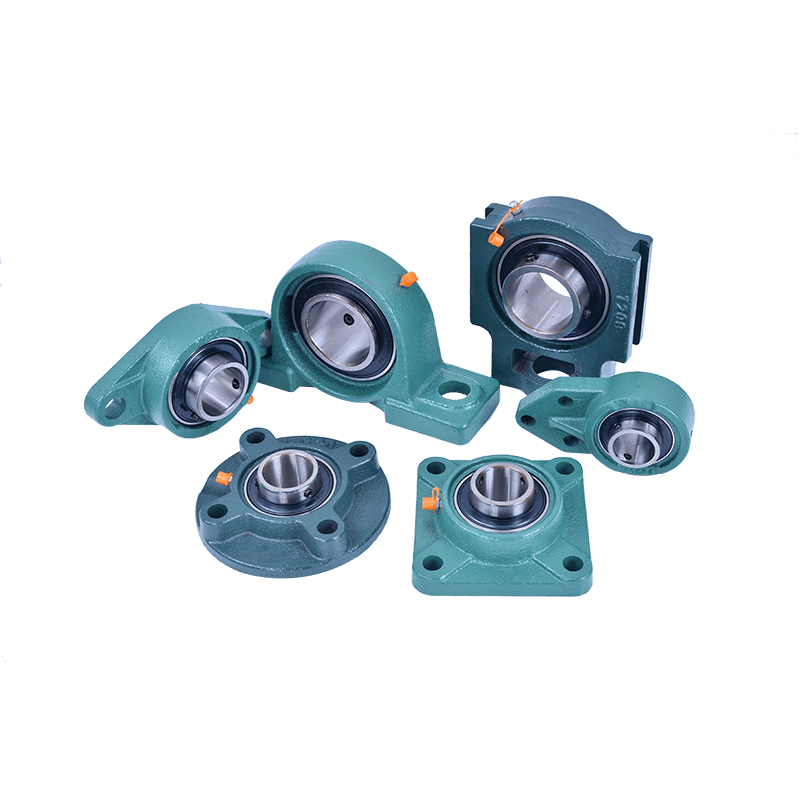
Let’s take the mystery out of it. I will use the most common system, based on the widely used SKF numbering system3, which is an industry standard. Many manufacturers, including FYTZ, follow this logic for compatibility.
A Step-by-Step Decoding Manual
Imagine you have the code UCP205-16. Follow these steps to understand every character.
Step 1: Understand the Prefix (The "U" and the Housing Code)
The prefix is everything before the basic number (205).
- U: This almost always starts the code for a mounted bearing unit. It tells you this is not a loose bearing; it’s a bearing already housed in a block.
- CP or CF/CFL/CFC: This is the housing type we just discussed. C stands for the housing style (a cast housing). P is for Pillow Block. F is for Flange, with L for 3-bolt or C for square.
Step 2: Decode the Basic Number (The "205" – This is the core)
This number primarily refers to the insert bearing inside the housing. It follows standard bearing numbering.
- The Last Two Digits: These are the bore size code. This is the most critical information.
- For numbers 04 and above, multiply by 5 to get the bore diameter in millimeters.
- Example:
205-> Last two digits are05.05 x 5 = 25mm. The bore is 25mm. - Example:
208->08 x 5 = 40mm. The bore is 40mm.
- The Third-to-Last Digit: This is the width/series code. It indicates the bearing’s cross-sectional size or "series."
1= Extra Light,2= Light,3= Medium, etc. For pillow blocks,2(Light series) is extremely common.- Example:
205-> The digit2means it’s a Light series bearing. So, a 25mm bore, Light series bearing.
Step 3: Check for a Suffix (The "-16")
A suffix adds details about the bearing’s internal design or locking mechanism. It comes after a dash.
- Common Suffixes:
- No suffix or -2RS: Often means the insert bearing has two rubber contact seals (RS). Good for keeping grease in and dirt out.
- -16: This is a very common suffix. It means the inner ring has a set screw locking device. Two set screws are used to lock the bearing onto the shaft.
- -A: Can indicate an adapter sleeve mounting system for a tapered bore bearing (more common in UCT types for spherical rollers).
- Other suffixes might indicate cage type, clearance, or special grease.
Practical Decoding Examples:
| Full Code | Breakdown | Meaning |
|---|---|---|
| UCP205 | U + CP + 205 | Unit, Pillow Block, with a 25mm bore Light series ball bearing. |
| UCFL208-16 | U + CFL + 208 + -16 | Unit, 3-bolt Circular Flange Block, with a 40mm bore Light series bearing, locked with set screws. |
| UCF210-2RS | U + CF + 210 + -2RS | Unit, 4-bolt Circular Flange Block, with a 50mm bore Light series bearing, with two rubber seals. |
What if the bore is less than 20mm? The rule changes slightly. For bore sizes 10mm, 12mm, 15mm, and 17mm, the last two digits are the actual bore size.
- Example: UCP201 -> Bore is 12mm? No.
01means 12mm bore (special code). - For these small sizes, you must consult a reference chart. As a rule of thumb, codes ending in 00, 01, 02, 03 correspond to 10, 12, 15, 17mm bores respectively.
This system is not random. It is designed for clarity. When Rajesh receives an inquiry for "UCFL208-16," he immediately knows he needs a 40mm bore, light series, 3-bolt flange block with set screws. He can check our stock or quote for production without asking more questions.
What is UCP 205?
In the world of pillow block bearings, UCP2051 is like the "standard screw." It is a benchmark, a common reference point that everyone in the industry understands.
UCP2051 is a specific pillow block bearing unit. The code means: a Pillow Block housing (UCP) containing a 25mm bore, Light series ball bearing (205). It is one of the most common and widely used sizes across countless types of light to medium-duty machinery.
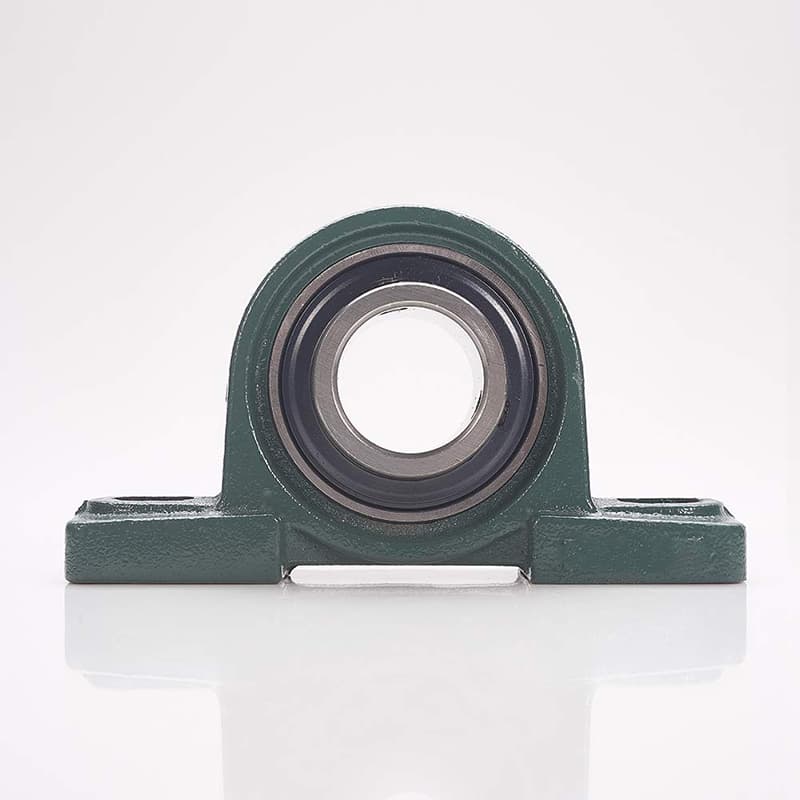
Why is this one code so important? Because it represents a sweet spot in size and load capacity. Its popularity means it is almost always in stock, making it a critical item for distributors and a go-to for many designers.
The Benchmark Bearing: Specifications and Applications
Let’s treat UCP2051 as a case study. Understanding this one unit gives you a template for understanding all others.
Detailed Technical Breakdown of UCP2051:
- Housing: Cast iron (typically), 4-bolt pillow block base. The bolt hole spacing is standardized.
- Insert Bearing: The "205" refers to a 6205 deep groove ball bearing. This is a global standard.
- Bore Diameter: 25 mm
- Outside Diameter: 52 mm
- Width: 15 mm
- Shaft Locking Method: While "UCP2051" alone can be generic, it most commonly comes with a set screw locking collar2 (suffix -16). Some may have an eccentric locking collar (suffix like -A).
- Seals/Shields: It often includes rubber contact seals (2RS) on the bearing to protect it.
- Versatile Size: A 25mm (approximately 1 inch) shaft is extremely common in motors, gearboxes, and light industrial drives. It’s a standard output shaft size for many small motors and reducers.
- Adequate Capacity: The Light series (2) 6205 bearing offers a good balance of load capacity and physical size for its price point.
- Global Standardization3: Almost every bearing manufacturer in the world produces a unit compatible with UCP2051 dimensions. This ensures easy replacement and sourcing.
- Cost-Effectiveness4: Due to high production volumes, it is one of the most cost-effective mounted units available.
Common Applications You Will See UCP2051:
- Electric Motors: On the drive shafts of small to medium AC motors.
- Conveyor Systems: For rollers and drives in light-duty material handling.
- Agricultural Machinery: In fans, augers, and small drive systems.
- Food Processing Equipment: On shafts for mixers, conveyors (often in stainless variants).
- Ventilation Fans: A very typical application for belt-driven fans.
Interchangeability and Sourcing:
When a customer asks for a UCP2051, they are asking for a unit that meets the dimensional standards. As a factory, we ensure our FYTZ UCP2051 has:
- The correct bolt hole centers (mounting dimensions).
- The correct shaft height (distance from base to shaft centerline).
- A 6205-2RS bearing insert with proper clearance.
This guarantees it will fit where an old one was removed. For distributors like Rajesh, stocking UCP2051 is non-negotiable. It’s a fast-moving item that services multiple industries. He might sell dozens of them in a month to various repair shops and small manufacturers. When we produce a container, we always pack a significant quantity of UCP2051 and other common codes like UCP208 because we know the demand is steady.
What is UCF in bearing?
You understand UCP for base mounting. Now, when space is tight or the design calls for it, you will encounter the UCF family1. This is not one bearing, but a whole category of side-mounted solutions.
UCF in bearing codes stands for a Flange-Mounted Bearing Unit. The "U" means it’s a unit, "C" refers to the housing, and "F" specifically means it has a Flange for mounting onto a vertical surface. It is designed for applications where the bearing needs to be fixed to a side plate or machine wall.
Think of UCF as the answer to a different mounting question. While UCP sits on a base, UCF hangs on a wall. This simple change opens up many design possibilities and solves specific space constraints.
The Flange Block Family: Types, Uses, and Selection
The world of UCF bearings is rich with options. The basic "UCF" is just the beginning. You need to know the sub-types to choose correctly. Let’s map out the entire family.
Core Concept of UCF Units:
All UCF units share one principle: the load from the shaft is transferred through the bearing, into the housing, and then directly into a vertical surface via bolts through a flange. This is different from a UCP, where the load goes down into a base.
Breaking Down the UCF Family Tree:
The most common letters you will see are UCF, UCFL, and UCFC2. The letter(s) after the ‘F’ describe the flange.
| Type Code | Flange Description | Key Characteristics | Typical Bolt Pattern | Best For |
|---|---|---|---|---|
| UCF | Circular Flange with 4 Bolt Holes | The standard, most robust flange block. Provides even load distribution3. | 4 holes on a circle (PCD). | General-purpose side mounting where space allows and load is moderate. |
| UCFL | Circular Flange with 3 Bolt Holes | A compact version. Saves space and weight. Very popular in many markets. | 3 holes on a triangle. | Light to medium duty applications, especially where a 4-bolt pattern4 won’t fit. Common in Asian-made machinery. |
| UCFC | Square or Rectangular Flange with 4 Bolt Holes | Provides a larger, flat mounting surface5. Often easier to align on welded frames. | 4 holes on a rectangle. | When mounting onto fabricated steel structures where a square profile is easier to bolt to. |
| UCFA | Circular Flange with Adapter Sleeve | Uses an adapter sleeve to mount the bearing on the shaft, allowing for fine adjustment. | Usually 4 holes. | For easier installation/removal or when using spherical roller bearings for heavier loads. |
How to Select the Right UCF Type:
- Match the Existing Part: This is the easiest way. Look at the old unit. Count the bolt holes and look at the flange shape. Match it exactly.
- Check the Mounting Surface: What are you bolting it to?
- If it’s a drilled motor plate with a 4-hole circle, use UCF.
- If it’s a cramped space with a 3-hole pattern, use UCFL.
- If it’s a simple steel plate where you can drill your own holes, UCFC might be easier to align.
- Consider the Load: For heavier loads, the 4-bolt patterns6](https://www.mdsofmi.com/flange-bearings-sizes-types/?srsltid=AfmBOorfT5n8XQl79LcFNMpK_X3OwJuBisYQM-Hu3tvQxIL8HY9hzROv)[^4]s (UCF, UCFC) provide more stability than the 3-bolt (UCFL).
A Crucial Note on Dimensions:
A UCF208 and a UCFL208 both contain a 40mm bore (208) bearing. However, their flange diameters and bolt circle dimensions are different. You cannot interchange them just because the bore size is the same. You must match the prefix exactly to fit the existing bolt holes.
Common Applications for UCF Bearings:
- Motor Mounts: Connecting a motor to a machine frame via a coupling.
- Gearbox Output Supports: Mounting a bearing next to a gearbox to support an extended output shaft.
- Machine Side Panels: Where the main frame is vertical.
- Take-Up Units: For adjusting belt tension, often mounted on slide rails.
For a distributor like Rajesh, understanding the UCF family1 is business-critical. A customer from a motor repair shop will often ask for a "flange block for a 25mm shaft." Rajesh must ask: "Is it a 4-bolt round flange (UCF205) or a 3-bolt round flange (UCFL205)?" This single question prevents a wrong shipment and builds customer trust. We at FYTZ produce the full range because we know our global clients, from Brazil to Indonesia, encounter all these types in their local markets.
Conclusion
Pillow block codes are a simple language. Learning to read UCP, UCF, and their numbers empowers you to identify, source, and replace bearings accurately, saving time and preventing costly errors.
-
Learn about the UCF family to discover the different types of flange-mounted bearings and their specific uses. ↩ ↩ ↩ ↩ ↩ ↩ ↩ ↩ ↩ ↩ ↩ ↩ ↩ ↩ ↩ ↩ ↩ ↩ ↩ ↩ ↩ ↩ ↩
-
This resource breaks down the differences between these bearing types, helping you choose the right one for your needs. ↩ ↩ ↩ ↩ ↩ ↩ ↩ ↩ ↩ ↩ ↩ ↩ ↩ ↩ ↩
-
Understanding load distribution is key to selecting the right bearing for your application; this resource provides in-depth insights. ↩ ↩ ↩ ↩ ↩ ↩ ↩ ↩ ↩ ↩
-
Explore this link to see how bolt patterns affect the choice of bearing and installation in various applications. ↩ ↩ ↩ ↩ ↩
-
Learn how to select the appropriate mounting surface for your bearings to ensure optimal performance and stability. ↩ ↩ ↩
-
Discover the benefits of using 4-bolt patterns in bearings for enhanced stability and load handling in your applications. ↩ ↩ ↩
