
You place a large order for spherical roller bearings. They arrive, but soon fail in your customer’s machine. The damage is huge: downtime, repair costs, and lost trust. Was it a bad application, or was the bearing itself not up to standard? The right test reports are your first line of defense.
Buyers should request key documents including a Material Certificate (like 3.1 Mill Certificate), a Dimensional Inspection Report, a Radial Internal Clearance (RIC) Report, and a Hardness Test Report. For critical applications, vibration analysis (Z, V, or BV levels) and noise testing reports provide essential quality verification.
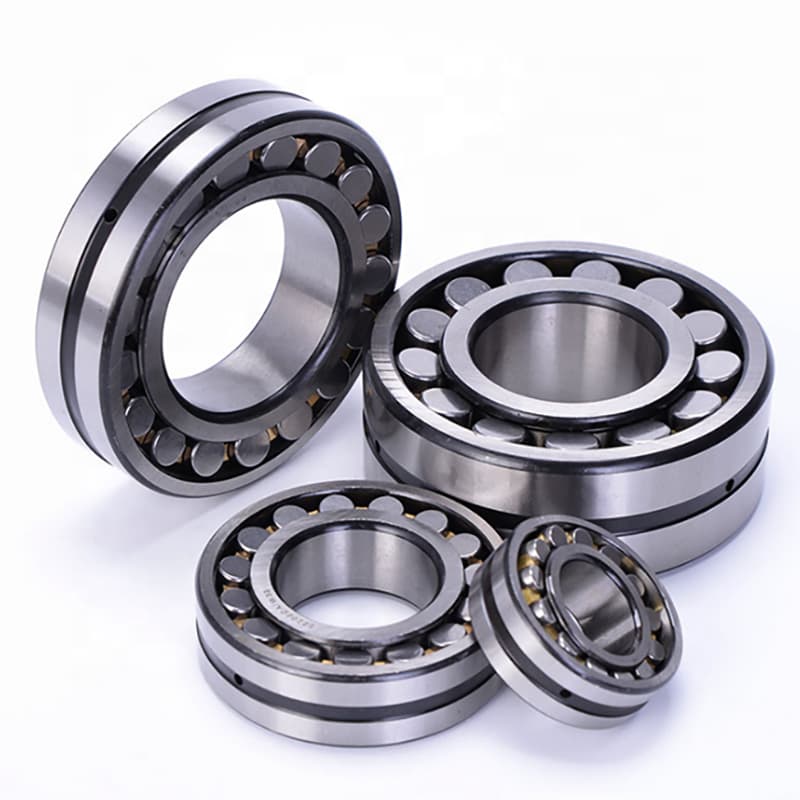
Documents are not just paperwork. They are the proof of quality. Understanding which standards matter, what to look for during an inspection, how to verify critical specifications like clearance, and the full checklist for bearing selection transforms you from a passive buyer into an informed quality controller. Let us examine each of these areas.
What is the ISO standard for spherical roller bearings?
Many suppliers claim their bearings are "ISO Standard." This is a vague term. ISO standards for bearings are a comprehensive library, not a single stamp. Knowing the specific standards separates serious manufacturers from marketing claims. It gives you the language to demand proof.
The core ISO standard for spherical roller bearing dimensions, tolerances, and load ratings is ISO 15:20171. This standard defines boundary dimensions, tolerances for width and bore, and the method for calculating basic load ratings. Compliance with this standard ensures interchangeability with other bearings of the same designation.
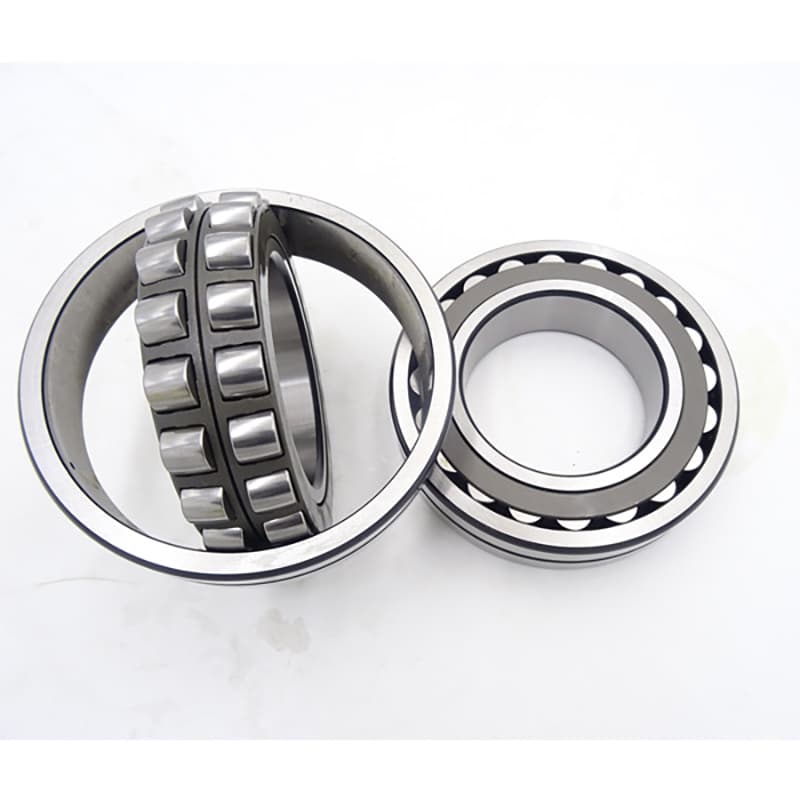
Beyond the Basics: The Full Spectrum of ISO Standards
As a factory that produces to these standards daily, I can tell you that "ISO 15" is just the starting point. A truly compliant bearing meets a suite of standards that cover every aspect of its manufacture and performance.
1. Dimensional & Tolerance Standards (The "Will It Fit?" Check)
- ISO 15:20171: This is the most important one. It tells you the exact outer diameter, inner diameter, and width for a bearing marked, for example, 22308. If a bearing does not meet ISO 15 dimensions, it will not fit properly in a standard housing or on a standard shaft.
- ISO 492:20142: This standard defines the tolerance classes for radial bearings. It covers:
- Dimensional Tolerances: How much the bore, outside diameter, and width can deviate from the nominal size.
- Running Accuracy Tolerances: This includes radial runout and axial runout, which affect how smoothly and precisely the bearing rotates.
2. Internal Clearance Standard (The "How Loose Inside?" Check)
- ISO 5753-1:20093: This is critical for spherical roller bearings. It defines the standard ranges for Radial Internal Clearance (RIC): C2, CN (Normal), C3, C4, C5. The correct clearance group is selected based on fits and operating temperature. The manufacturer’s RIC report should show measurements falling within the chosen ISO 5753 range.
3. Material & Heat Treatment Standards (The "Is It Strong?" Check)
While ISO does not mandate a specific steel grade, reputable manufacturers use steel that meets international material standards. The chemical and mechanical properties should be verified. Common reference standards include:
- ISO 683-174: For through-hardening bearing steel.
- ISO 33255: For carburizing steel (often used for larger spherical rollers).
The Material Test Certificate6 (often an EN 10204 3.1 certificate) is the document that proves the steel meets the required specification.
4. Performance Testing Standards (The "How Well Does It Run?" Check)
- ISO 15242:20157: This series of standards defines methods for measuring vibration and noise. Bearings can be graded (Z, V1, V2, V3, V4 or BV levels) based on their vibration velocity. Lower vibration levels mean smoother operation and often predict longer life.
| ISO Standard | What It Governs | Key Document to Request | Why It Matters to You |
|---|---|---|---|
| ISO 15:20171 | Boundary dimensions & basic load ratings | Dimensional Inspection Report8 | Ensures the bearing will physically fit and has the rated load capacity. |
| ISO 492:20142 | Dimensional & running accuracy tolerances | Dimensional Inspection Report8 (with tolerance class stated) | Ensures precision. Poor running accuracy causes vibration and premature wear. |
| ISO 5753-1:20093 | Radial Internal Clearance (RIC) groups | Radial Internal Clearance (RIC) Test Report | Ensures the bearing has the correct internal fit for your application conditions. |
| ISO 15242:20157 | Vibration & noise measurement methods | Vibration Analysis Report (stating Z/V/BV level) | Predicts smooth operation and longevity, especially for motors and gearboxes. |
| EN 10204 3.1 | Type of material certification | Material Certificate (Mill Certificate) | Provides traceability and proof that the correct grade of steel was used. |
When Rajesh requests a quote for spherical roller bearings, he should ask, "Can you provide inspection reports showing compliance with ISO 15, ISO 492 (P6 or P0 class), and ISO 5753 for C3 clearance?" This question immediately signals to the supplier that he is a knowledgeable buyer who expects verifiable quality. It filters out suppliers who cannot or will not provide this proof.
What are you looking for when inspecting bearings?
A visual and physical inspection is your final quality gate before a bearing goes into stock or a machine. It can catch problems that paperwork misses. A systematic inspection routine takes minutes but can prevent months of headaches. Here is what we check on our own production line before shipment.
When inspecting spherical roller bearings1, you should look for visual defects like rust, scratches, or dents on raceways and rollers. Check for smooth, free rotation without binding or gritty feeling. Verify proper cage condition2 (no cracks, secure rivets) and ensure markings (size, clearance) are clear and correct.
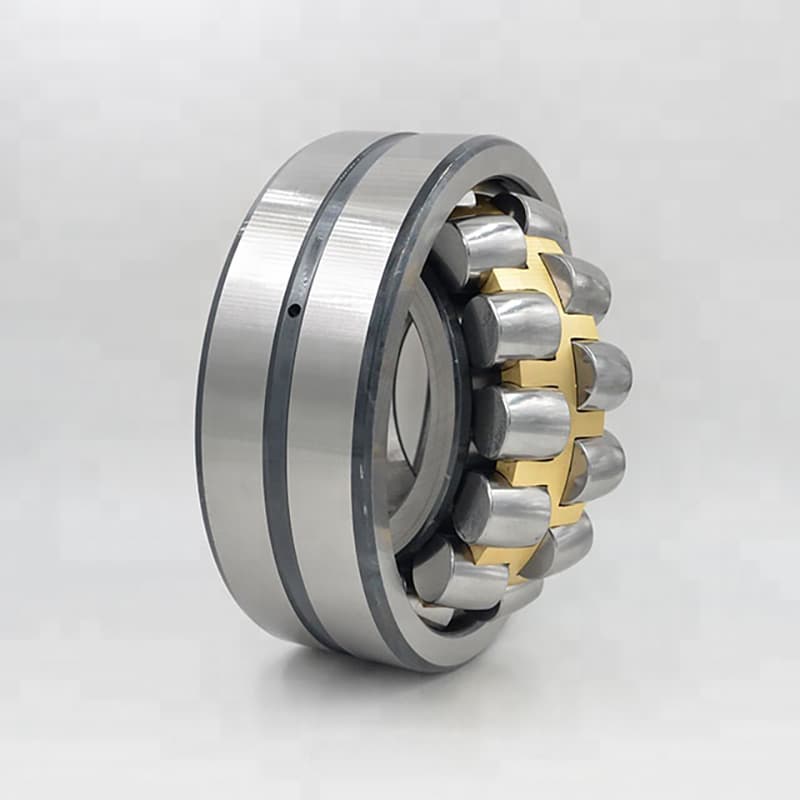
A Step-by-Step Guide to the "Goods-Inward" Inspection
For a distributor like Rajesh, an inspection protocol for incoming shipments is a critical business practice. It protects his company from accepting and reselling defective goods. Let us break down the inspection into clear stages.
Stage 1: Packaging and Documentation Check
- Look at the packaging. Is it clean, dry, and undamaged? Are bearings individually wrapped in anti-rust paper (VCI paper) or oiled? Poor packaging suggests poor handling and a risk of corrosion.
- Match the packing list. Do the bearing designations and quantities match your purchase order? This sounds basic, but mix-ups happen.
Stage 2: Visual Inspection (The Most Important Step)
Use good lighting. Handle bearings with clean gloves.
- Surfaces: Examine all surfaces for rust, corrosion stains, or etching. Look for nicks, scratches, or dents on the rolling surfaces (raceways and rollers). Even a small dent can create a stress point leading to spalling.
- Cage: Inspect the cage (the part that holds the rollers). For pressed steel cages, check for cracks, deformed pockets, or loose rivets. For polymer cages (PA66), check for cracks, warping, or flash (excess material).
- Markings: The bearing should be clearly laser-etched or stamped with its designation (e.g., 22210), the manufacturer’s brand (or your private label), and the clearance code (e.g., C3). Verify these match your order.
- Lubrication: Check for an even, light coating of preservative oil or grease. It should not be sticky, dirty, or absent.
Stage 3: Functional Inspection
- Rotation Feel: Hold the bearing horizontally. Rotate the inner ring slowly by hand. The rotation should be smooth, fluid, and continuous. There should be no binding (sudden tight spots), grittiness (feeling of sand inside), or clicking sounds.
- Note: Large spherical roller bearings1 will have some drag due to their weight and design. The key is consistency throughout the rotation, not absolute free-spinning.
- Axial Play: For spherical roller bearings1, you can feel a small amount of axial movement (shuttle) between the inner and outer rings. This is normal due to their internal design. The absence of any movement might indicate a problem.
Stage 4: Simple Measurement (If Tools Are Available)
- Micrometer Check: Use an outside micrometer to measure the outer diameter (OD) and an inside micrometer or bore gauge for the inner diameter (ID) at several points. Compare to the nominal dimensions. Gross deviations indicate a serious manufacturing flaw.
- Clearance Check (Simplified): This is more advanced but can be done. Mount the bearing in a simple fixture, apply a dial indicator, and push/pull the inner ring radially to measure play. Compare this to the expected range from the RIC report or ISO 5753 tables.
| Inspection Area | What to Look For | Tools Needed | Consequence of a Defect |
|---|---|---|---|
| Visual – Surfaces | Rust, dents, scratches, discoloration | Good light, magnifying glass | Premature fatigue, noise, vibration. |
| Visual – Cage | Cracks, loose rivets, deformation, flash | Good light | Cage failure, roller misalignment, total bearing seizure. |
| Functional – Rotation | Binding, grittiness, roughness, noise | Clean hands/gloves | High friction, overheating, early failure. |
| Documentation | Correct markings, matching paperwork | None | Installation error, wrong bearing used. |
| Packaging | Damage, moisture, lack of rust prevention | None | Corrosion started before use. |
Setting up this inspection process allows Rajesh’s team at IndoMotion Parts to reject a faulty batch before it ever reaches their warehouse shelf. It turns their warehouse into a final quality checkpoint, adding tremendous value for their own customers who trust that a bearing from Rajesh is a good bearing.
How to check spherical roller bearing clearance?
Radial Internal Clearance (RIC)1 is the most critical specification after the bearing size itself. Getting it wrong means the bearing will either run too hot (too little clearance) or too loose and noisy (too much clearance). You cannot rely on the marked "C3" code alone; you need verification.
To check spherical roller bearing radial clearance, use a dial indicator method. Mount the outer ring securely, fix the inner ring, and zero the dial indicator on the inner ring. Apply a consistent radial force to the inner ring in opposite directions and record the total indicator movement, which is the radial internal clearance.
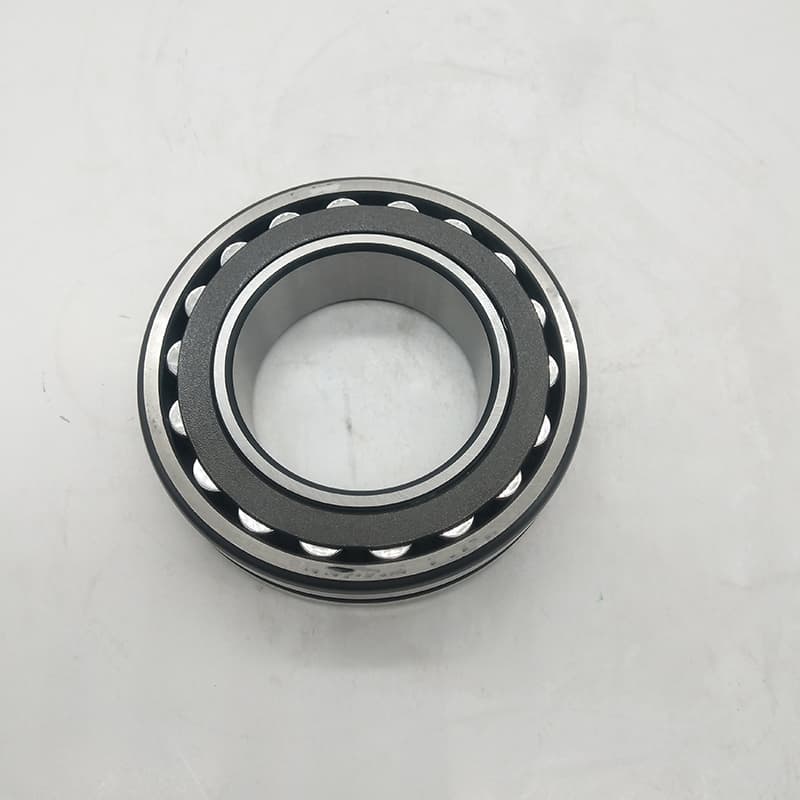
Methods for Verifying Clearance: From Factory Floor to Your Workshop
Clearance is measured in microns (thousandths of a millimeter). Precision is key. Here are the common methods, from the most accurate to simpler verification checks.
Method 1: The Dial Indicator Method2 (Most Common for Verification)
This is the standard method described in ISO standards3 and used in quality labs.
- Setup: Place the bearing outer ring on a flat, stable V-block or a custom fixture that holds it securely without distorting it. The inner ring must be free to move radially.
- Position the Gauge: Mount a dial indicator (with a fine tip) so its plunger touches the inner ring’s bore or a precise location on the inner ring face, perpendicular to the direction of force.
- Zero the Gauge: Gently rotate the inner ring to find the "high spot" and set the dial indicator to zero.
- Apply Force and Measure: Apply a consistent, moderate radial force to the inner ring (opposite the gauge) to seat the rollers. Note the gauge reading. Then, apply force in the exact opposite direction (towards the gauge). Note the new reading.
- Calculate: The difference between the two readings is the total radial internal clearance. This value should fall within the range specified for the bearing’s clearance group (e.g., C3) per ISO 5753-1.
Method 2: Instrumented Clearance Measurement4 (Factory Use)
Advanced factories like ours use automated clearance measuring instruments. The bearing is loaded into a machine. Sensors apply precise forces and directly measure the displacement, digitally recording the RIC value for each bearing. This data is used to generate the RIC reports we provide to buyers.
Method 3: Practical Checks for Distributors & Shops
Most distributors do not have a full lab setup. But you can perform a meaningful functional check:
- The "Rock" Test: Hold the bearing outer ring firmly. Try to move the inner ring radially (push it side-to-side). You should feel a small, but distinct, amount of movement or "rock." Compare this feel to a bearing you know is good (a "master" sample). If there is no movement, the clearance may be too small (risk of preload). If there is excessive movement, the clearance may be too large.
- The "Shuttle" Test: For spherical rollers, you can also feel axial movement (along the shaft direction). This is not the RIC, but it is related. A complete lack of axial shuttle can also indicate insufficient internal clearance.
Important Factors That Affect Measurement:
- Cleanliness5: The bearing must be clean. Dirt or grit between rollers and raceway will give a false reading.
- Temperature6: Clearance changes with temperature. Measurements should be done at a stable, room temperature (around 20°C/68°F).
- Measurement Point: Always measure at the same angular position relative to the bearing’s own marking, as clearance can vary slightly around the circumference.
| Clearance Check Method | Accuracy | Equipment Needed | Best For |
|---|---|---|---|
| Automated Instrument | Very High (±1 µm) | Specialized clearance gauge | Factory quality control, generating RIC reports. |
| Dial Indicator on Fixture | High (±5 µm) | Dial indicator, V-block/fixture, force gauge | Quality labs, advanced workshops, incoming inspection for large orders. |
| Functional "Rock" Test | Low (Qualitative only) | Hands, a known-good sample bearing | Quick field check, basic goods-inward screening for obvious defects. |
For Rajesh’s business, investing in a simple dial indicator setup for his warehouse is a powerful move. When a large shipment of C3 clearance bearings7 arrives, his team can randomly sample 5-10 pieces and actually measure the clearance. If the measurements are consistently outside the C3 range, he has solid, numerical evidence to reject the shipment or request a correction from the supplier. This moves quality control from opinion to fact.
What bearing criteria must be checked when selecting a bearing?
Selecting a bearing is more than picking a size from a catalog. It is a series of deliberate engineering choices. Missing any key criterion can lead to poor performance or failure. A systematic selection checklist prevents these costly oversights.
When selecting a spherical roller bearing, you must check key criteria including: Load (radial and axial)1, Speed (operating RPM)2, Bearing Size & Fit3 (shaft and housing dimensions), Internal Clearance (C2, C3, etc.)4, Precision Class (P0, P6)5, Lubrication Method6, and Environmental Conditions (temperature, contamination)7.

Building Your Bearing Selection Checklist
In my work with engineers and distributors, I see patterns. Successful bearing selection follows a logical sequence. Let us build that checklist from the ground up.
1. Application Analysis: The "What is it doing?" Phase
- Load: This is the starting point. Determine the magnitude and direction of the load. Is it purely radial? Is there axial (thrust) load? Are there shock loads? Use calculations or experience to estimate the forces. This determines the basic dynamic load rating (C) and basic static load rating (C0) you need.
- Speed: What is the maximum and average rotational speed (RPM)? High speeds affect lubrication choice, cage design, and generate heat. This gives you the limiting speed rating.
- Motion: Is the rotation continuous, oscillating, or static under load?
2. Bearing Specification: The "Which one?" Phase
- Type & Size: Based on load and speed, you confirm spherical roller bearings are right (for combined loads/misalignment). Then you select the specific series (e.g., 222 series for heavy duty, 213 series for medium) and the boundary dimensions (e.g., 22210) that meet your calculated load requirements with a safety factor.
- Internal Clearance: Select the Radial Internal Clearance (RIC) group (CN, C3, C4). This choice depends on:
- The interference fit on the shaft and housing (fits reduce clearance).
- The expected operating temperature difference between inner and outer rings (heat expands the inner ring, reducing clearance).
- Precision Class: The ISO 492 tolerance class (P0 (normal), P6, P5). Higher precision (P6, P5) means tighter tolerances on dimensions and running accuracy. This is needed for applications requiring high rigidity and low runout, like machine tool accessories or high-speed gearboxes. Most industrial applications use P0 or P6.
- Cage Type & Material8: Pressed steel cages are common and robust. Polymer cages (PA66-GF25) offer lighter weight, better speed capability, and tolerance to poor lubrication for short periods. Brass cages are used in high-temperature or special lubricant applications.
3. Mounting & Environment9: The "How will it live?" Phase
- Shaft & Housing Fits10: Define the appropriate tolerance for the shaft (e.g., k6 for a rotating inner ring) and housing (e.g., H7 for a stationary outer ring). These fits ensure proper load transfer and affect the final operating clearance.
- Lubrication: Will you use grease or oil? What is the relubrication interval? Choose a bearing with appropriate grease fill or oil bath design. The bearing’s sealing (if any) must be compatible with the lubricant.
- Operating Environment: Consider temperature (affects lubricant and clearance), presence of contaminants (dust, water), and potential for misalignment. This influences the need for seals, special coatings, or specific lubricants.
| Selection Criteria | Key Questions to Ask | Impact of Getting It Wrong | Typical Data Source |
|---|---|---|---|
| Load & Speed | What are the radial/axial forces? What is the max RPM? | Bearing overload (fatigue) or speed-induced overheating. | Machine design calculations, existing equipment specs. |
| Size & Internal Clearance | Does the size have sufficient load rating? What clearance group (C3, etc.) is needed? | Physical fit failure, or incorrect operating clearance leading to heat/noise. | Bearing catalog load tables, ISO 5753 clearance tables. |
| Precision & Fits | Does the application need P6 precision? What are the shaft/housing tolerances? | Excessive vibration, poor machine accuracy, or improper fit causing creep. | Engineering drawings, machine tolerance requirements. |
| Lubrication & Environment | Grease or oil? What temperature? Is it dirty or wet? | Lubricant breakdown, contamination ingress, corrosion. | Maintenance schedule, site condition assessment. |
For Rajesh, this checklist is a tool for his sales team. When a customer from a cement plant asks for a bearing for a conveyor drum, his team shouldn’t just sell a 22216 bearing. They should ask: "What is the shaft size and the load? Is the environment dusty? What is the speed?" Using this checklist, they can recommend the correct bearing (size, C3 clearance, possibly with seals) and the right installation advice (fits, lubrication). This transforms a transaction into a technical consultation, building immense customer loyalty and reducing costly comebacks.
Conclusion
Requesting the right test reports and applying a systematic selection checklist are your strongest tools for ensuring bearing quality and performance. They turn subjective buying into objective verification, protecting your projects and your reputation from costly failures.
-
Understanding load is crucial for selecting the right bearing to prevent failure and ensure optimal performance. ↩ ↩ ↩ ↩ ↩ ↩ ↩ ↩
-
Operating speed influences lubrication and design choices, making it essential for effective bearing performance. ↩ ↩ ↩ ↩ ↩
-
Correct size and fit are vital for load transfer and operational efficiency, impacting the bearing’s lifespan. ↩ ↩ ↩ ↩
-
Internal clearance affects bearing performance and longevity, making it a key factor in selection. ↩ ↩ ↩
-
Precision class determines tolerance and accuracy, crucial for high-performance applications. ↩ ↩ ↩
-
Choosing the right lubrication method is essential for reducing friction and extending bearing life. ↩ ↩ ↩
-
Environmental factors can significantly impact bearing selection, influencing durability and reliability. ↩ ↩ ↩ ↩
-
The cage type and material affect bearing performance, especially under varying loads and speeds. ↩ ↩ ↩
-
Considering mounting and environmental factors is crucial for ensuring the bearing operates effectively in its application. ↩
-
Proper fits ensure effective load transfer and operational efficiency, preventing premature failure. ↩