
Unexpected bearing failure stops your production line. It creates costly delays and unhappy customers. Choosing a reliable bearing is not just about the part; it is about protecting your business from downtime. You need a component you can trust for the long term.
Reliable tapered roller bearings are defined by consistent quality, high load capacity, and long service life under demanding conditions. They are produced by manufacturers who control their entire process, from material sourcing to final inspection, ensuring every bearing meets strict performance standards.
Finding this reliability requires asking the right questions. You need to know who truly makes quality bearings, understand the inherent limits of tapered roller designs, navigate the global manufacturing landscape, and define what "strongest" really means for your specific equipment. Let us answer these questions one by one.
Who makes the best roller bearings1?
Asking for the "best" is natural. But in the bearing world, the answer is never simple. The "best" bearing for a high-speed racing engine is a terrible choice for a slow, heavily loaded conveyor. Your specific needs define the answer.
There is no universal "best" roller bearing manufacturer. For maximum performance and budget-no-object applications, brands like SKF2, Timken, and NSK are leaders. For the best balance of proven reliability and value in industrial applications, quality-focused manufacturers like FYTZ Bearing3 provide optimal solutions.
Finding Your "Best" in a Tiered Market
I speak with distributors like Rajesh every week. Their goal is not to find the absolute top-tier product for every job. Their goal is to find the most reliable product for their customers’ specific jobs at a fair price. The market is divided into clear tiers.
Tier 1: The Premium Technology Leaders
These companies (SKF2, Timken, Schaeffler, NSK) set the global standard.
- Strength: They invest heavily in research. They develop new steels, advanced coatings, and sophisticated simulation software. Their quality control is extremely consistent worldwide.
- Weakness: You pay a significant brand premium. For many standard industrial uses, this premium does not translate into proportional extra service life.
- Best For: Critical applications where failure cost is astronomical (e.g., aerospace, main wind turbine shafts) or where their specific technical support is required.
Tier 2: The High-Value Quality Manufacturers
This is where FYTZ and other reputable export-focused factories operate. Our mission is different.
- Strength: We deliver 90-95% of the core performance (load capacity, life) at 50-70% of the cost. We achieve this through modern manufacturing (CNC grinding, automated lines) and rigorous, but streamlined, quality processes (100% testing for rotation, noise, dimensions).
- Focus: We serve the B2B wholesale market. We understand that for a gearbox rebuilder in Indonesia or a farm equipment shop in South Africa, consistent reliability at a good price is what keeps their business running.
- Agility: We can offer more flexible customization (OEM/ODM) and smaller minimum order quantities than the giant corporations.
Tier 3: The Commodity Market
This sector sells on price alone. Quality is inconsistent. Materials may be sub-standard. These bearings are a major risk. They fail early and cause expensive downtime, destroying the trust between a distributor like Rajesh and his customers.
| Market Tier | Example Brands | Core Value Proposition | Ideal Customer Profile | Risk Profile |
|---|---|---|---|---|
| Premium Technology | SKF2, Timken, FAG | Peak performance, innovation, global support | High-tech OEMs, critical infrastructure | Low (performance), High (cost) |
| High-Value Quality | FYTZ Bearing3, other certified exporters | Optimal reliability/price ratio, customization | Industrial distributors, cost-conscious OEMs, aftermarket | Managed Low (with a good supplier) |
| Commodity Price | Various uncertified workshops | Lowest initial purchase price | Price-only buyers, non-critical uses | Very High (inconsistent quality) |
For Rajesh’s company, IndoMotion Parts, the "best" manufacturer is not the most famous one. It is the one that provides a steady supply of bearings that perform as promised. His customers’ tractors and machines need to work. A bearing that lasts 8,000 hours reliably at a good cost is far better for his business than a bearing that might last 10,000 hours at double the price, or one that fails randomly at 1,000 hours. Reliability in this context means predictable performance and value.
What are the disadvantages of tapered roller bearings?
No engineering component is perfect. Thinking that tapered roller bearings are the solution to every problem is a common and costly mistake. Knowing their weaknesses is not negative thinking; it is essential for selecting the right bearing and avoiding preventable failures.
The key disadvantages of tapered roller bearings are their higher friction and heat generation1 at very high speeds, the requirement for precise axial adjustment2 during installation, sensitivity to misalignment3 between shaft and housing, and generally higher cost and complexity4 compared to deep groove ball bearings.
A Practical Guide to the Limits of Tapered Rollers
In our factory, we build tapered rollers to be as good as possible. But we are always honest with our clients about where they should consider other options. Let us examine these drawbacks in real-world terms.
1. Speed and Friction Limits
The line contact that gives tapered rollers their strength is also their Achilles’ heel for speed.
- The Problem: This contact creates more sliding friction, especially where the roller ends meet the guide ribs. Friction makes heat.
- The Result: In very high-speed applications5 (like a machine tool spindle over 10,000 RPM), this heat can build up faster than it can be dissipated. The bearing overheats, the grease breaks down, and failure follows quickly.
- The Solution: For very high speeds, angular contact ball bearings6 (point contact, less friction) are almost always a better choice.
2. Installation Complexity: The Need for Adjustment
This is the number one cause of field failures we see reported.
- The Issue: Tapered roller bearings must be set with a specific axial clearance or preload. This is not optional.
- Too Loose: The bearing has internal play. This causes vibration, noise, and impact loads on the rollers, leading to brinelling7 (indentations).
- Too Tight: There is no internal clearance. The bearing runs hot from excessive friction. It can seize and fail catastrophically in a short time.
- The Reality: Correct installation requires skill, proper tools (dial indicators, torque wrenches), and time. It is not a simple "press and go" operation like with many deep groove ball bearings.
3. Sensitivity to Misalignment
Tapered roller bearings are not self-aligning. They demand good alignment between the shaft and the housing bore.
- Consequence: If the shaft is misaligned, the load does not distribute evenly along the full length of the roller. The load concentrates on the roller edges. This creates high stress points, leading to early spalling (surface fatigue) and reduced bearing life.
4. Cost and Design Overhead
They are typically more expensive than deep groove ball bearings. Also, because they handle thrust in one direction, they are used in pairs. This requires more axial space and often additional components like lock nuts, washers, and spacer sleeves.
| Disadvantage | What It Means for You | Symptom of Failure | How to Mitigate |
|---|---|---|---|
| High-Speed Friction | Limits top RPM, requires careful thermal management | Overheating, grease leakage/carbonization | Choose angular contact ball bearings6 for very high speeds. |
| Installation Adjustment | Requires skilled labor, longer setup time | Noise, vibration, or rapid overheating after installation | Use detailed mounting guides; consider pre-adjusted bearing units. |
| Misalignment Sensitivity | Demands precise machining of shafts/housings | Premature fatigue failure, uneven wear patterns | Ensure machining tolerances are met; check alignment during assembly. |
| Higher Cost/Complexity | Higher part cost, more complex assembly design | N/A (design-phase issue) | Justify by the need for combined load capacity; cannot be mitigated. |
For a maintenance shop that Rajesh supplies, this knowledge is power. If a customer brings in a failed tapered roller bearing from a high-speed fan, the shop should not just replace it. They should check the alignment and consider if the original bearing type was even correct. Understanding the disadvantages helps them diagnose root causes and provide better, more reliable service.
Who makes tapered roller bearings1?
The supply chain for tapered roller bearings1 is global and complex. From the inventor of the design to modern high-volume factories, knowing who makes them helps you understand quality, price, and where your bearings truly come from. This is key to building a reliable supply chain2.
Tapered roller bearings are manufactured by major international corporations like Timken3 (the pioneer), SKF4, and Schaeffler5, as well as by large-scale, quality-focused production factories in China, Japan, India, and Europe, including FYTZ Bearing6, which specializes in serving the global B2B distribution market.
Navigating the Global Manufacturing Landscape
As a bearing factory owner in China, I have a clear view of this landscape. It is not just about brands; it is about different types of manufacturing entities with different goals.
The Originators and Full-Line Giants
- Timken3 (USA): The name is iconic. They invented the tapered roller bearing and hold fundamental patents. They are the benchmark for the most demanding, large-scale applications.
- SKF4 (Sweden) & Schaeffler5 (Germany – FAG/INA): These are broad-range suppliers. They offer tapered rollers as part of a complete portfolio. Their strength is in providing engineered solutions for large OEMs.
- Japanese Precision7 (NSK, NTN, JTEKT): Renowned for exceptional quality control and consistency, especially in automotive and precision machinery sectors.
The High-Volume Production Centers
Most of the world’s bearings are now made in Asia, with China as the largest producer.
- Large Chinese Conglomerates (e.g., C&U, ZWZ): These are massive companies serving huge domestic markets and large international projects. They are capable but often less agile for smaller B2B orders.
- Export-Oriented Specialists (e.g., FYTZ Bearing6): This is our category. We are factories built to serve the international wholesale and distribution market directly. Our focus is on:
- Meeting International Standards: ISO, JIS, and specific customer requirements.
- Providing Reliability: Through integrated production (forging, turning, heat treatment, grinding, assembly) and 100% inspection.
- Enabling Partnerships: We work directly with distributors, offering OEM/ODM services8 so they can build their own branded, reliable product line.
The Distributor’s Choice: Brand vs. Partnership
A distributor like Rajesh faces a strategic decision:
- Sell Global Brands: This is simpler. The brand does the marketing. However, margins are lower, and you have little control over supply or pricing.
- Develop a Partner Brand: This is more strategic. By partnering directly with a factory like FYTZ, Rajesh can source reliable bearings, have them packaged under his own "IndoMotion" label, and control his pricing and inventory. He builds his brand’s reputation on consistent quality.
| Manufacturer Type | Primary Business Model | Key Strength for a Distributor | Key Challenge for a Distributor |
|---|---|---|---|
| Global Brand (Timken3, SKF4) | Sell branded products globally | Brand recognition, technical resources | Low profit margins, price competition, no customization |
| Large Asian Integrator | Supply large OEMs & projects | High production capacity, wide range | High minimum order quantities, less responsive service |
| Export-Focused Factory (FYTZ) | B2B partnership with distributors | Good margins, customization, reliable supply, direct support | Requires initial quality verification and relationship building |
For someone looking for reliable tapered roller bearings1, the question "Who makes them?" should lead to "Who can be my reliable partner?" For Rajesh, reliability means a steady supply of consistent-quality bearings that he can sell with confidence. A direct factory partnership provides that control and forms the foundation of a reliable supply chain2 for his business.
What is the strongest roller bearing?
"Strongest" is a powerful word, but in engineering, it is meaningless without context. A bearing strong against crushing force may be weak against a sideways push. Choosing a bearing for the wrong type of strength guarantees failure. You must define the force it needs to fight.
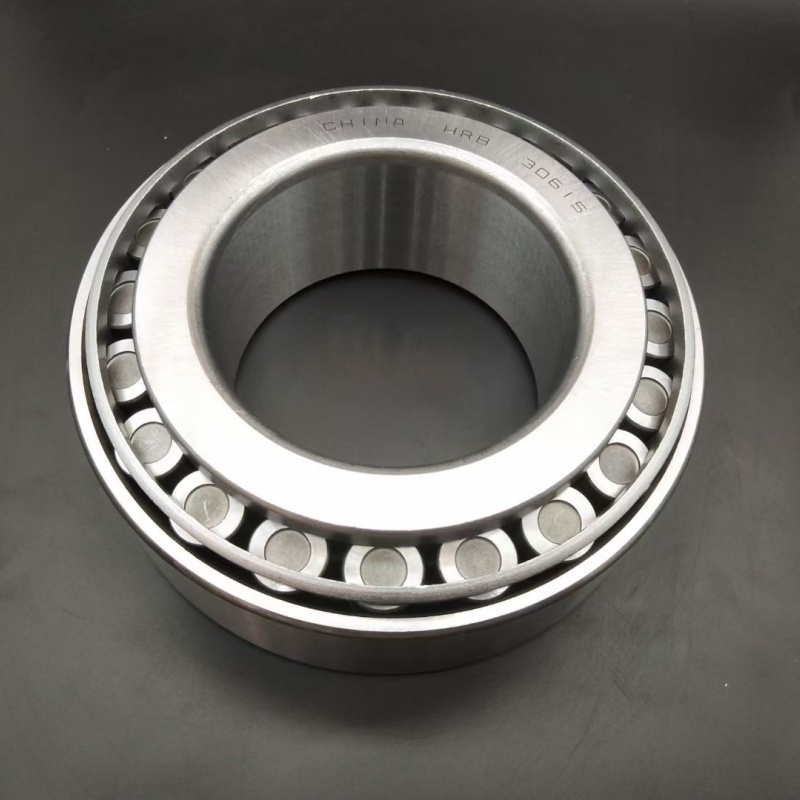
The strongest roller bearing for pure radial (crushing) loads is the cylindrical roller bearing. For handling combined radial and thrust loads together, the tapered roller bearing is typically the strongest. For applications with misalignment under load, the spherical roller bearing offers the greatest strength and adaptability.
Defining "Strength" for Your Application
When a customer asks Rajesh for the "strongest" bearing, it is a teaching moment. The answer lies in analyzing the application. Let us break down strength into its main categories.
1. Radial Load Strength1: Resisting Crushing Force
This is force applied perpendicular to the shaft, like the weight on a conveyor roller.
- Champion: Cylindrical Roller Bearings2. Their rollers have full line contact with the raceways. This spreads the load over the maximum area. They are the undisputed best for massive pure radial loads. However, they generally support almost no axial load.
- Tapered Roller Bearings3: They are also strong radially, but part of their design capacity is allocated to handling thrust. For the same size, a cylindrical bearing will have a higher radial load rating.
2. Combined Load Strength4: Handling Multi-Directional Force
This is the real-world challenge in gearboxes and wheel hubs, where forces come from multiple directions.
- Champion: Tapered Roller Bearings3. This is their core purpose. The angled rollers are designed to resolve radial and axial forces efficiently. A paired set is the standard solution for heavy-duty combined load applications.
- Spherical Roller Bearings5: They are also excellent for combined loads and have a major advantage: they tolerate misalignment. For a perfectly aligned shaft with very high thrust, tapered rollers often have a higher specific capacity.
3. Misalignment and Shock Strength6: Surviving Imperfection
This is strength in harsh, imperfect environments with sudden impacts.
- Champion: Spherical Roller Bearings5. Their self-aligning design allows them to accommodate shaft deflection and mounting errors. Their barrel-shaped rollers are robust and handle shock loads well, making them ideal for vibrating screens, crushers, and agricultural equipment.
- Tapered Roller Bearings3: They have good shock resistance, especially when made from tough carburized steel. But they are unforgiving of misalignment. Shock in a misaligned state can cause immediate damage.
| Strength Type | Definition | "Strongest" Bearing | Why It Wins | Common Misapplication |
|---|---|---|---|---|
| Pure Radial Load | Force pressing down on the shaft | Cylindrical Roller Bearing | Full line contact, maximum load distribution | Using a tapered roller here wastes its thrust capacity. |
| Combined Radial & Axial | Weight + pushing force along the shaft | Tapered Roller Bearing | Angled rollers efficiently manage both forces. | Using a cylindrical bearing; it will fail under thrust. |
| Misalignment & Shock | Off-angle mounting + sudden impacts | Spherical Roller Bearing | Self-aligning, rollers pivot to adjust. | Using a tapered roller in a misaligned housing; it will fail early. |
So, when a mining equipment repair shop in South Africa asks Rajesh for the "strongest" bearing for a vibrating conveyor, the answer is not a tapered roller. The constant vibration and likely misalignment mean a spherical roller bearing is actually the "strongest" (most reliable) choice for that environment. Understanding this ensures the customer gets a bearing that is strong in the right way, leading to reliable, long-lasting performance.
Conclusion
Reliable tapered roller bearings come from informed choices. You must understand the manufacturer landscape, respect the design’s limits, choose the right partner, and select based on the true type of strength your application requires. This knowledge builds equipment reliability from the ground up.
-
Understand the concept of radial load strength and its importance in bearing selection for various applications. ↩ ↩ ↩ ↩ ↩ ↩
-
Explore the benefits of cylindrical roller bearings for pure radial loads, ensuring maximum load distribution. ↩ ↩ ↩ ↩ ↩ ↩ ↩
-
Learn how tapered roller bearings efficiently manage both radial and axial forces in heavy-duty applications. ↩ ↩ ↩ ↩ ↩ ↩ ↩ ↩ ↩
-
Find out how combined load strength affects bearing performance in real-world applications like gearboxes. ↩ ↩ ↩ ↩ ↩
-
Discover why spherical roller bearings excel in harsh environments with misalignment and shock loads. ↩ ↩ ↩ ↩ ↩
-
Learn about the challenges of misalignment and shock strength in bearings and how to choose the right type. ↩ ↩ ↩ ↩ ↩
-
Understand the quality control and consistency that Japanese manufacturers bring to the bearing industry. ↩ ↩
-
Learn how OEM/ODM services can benefit distributors in building their own branded product lines. ↩