
Imagine a high-precision machine that suddenly develops a vibration. The product quality drops. The noise increases. The root cause is often not the motor or the gears, but the heart of the rotation: the bearing. Smooth motion is not a luxury; it is a necessity for quality and efficiency.
Premium tapered roller bearings deliver stable and smooth motion by combining superior geometric accuracy, optimized internal design, and high-grade materials. This minimizes vibration and axial play, ensuring precise shaft positioning and quiet operation in demanding applications like machine tools, automotive differentials, and industrial gearboxes.

Achieving this level of performance is not just about picking any tapered roller bearing. It involves understanding who makes quality products, what specifications like C3 and C4 really mean, the exact applications where these bearings shine, and the global landscape of manufacturers. Let us explore each point to guide your choice.
Who makes the best roller bearings1?
The question of the "best" manufacturer is one I hear often from distributors like Rajesh. The answer is frustratingly simple: it depends. "Best" for a Formula 1 team is different from "best" for a sugarcane harvester in Brazil. Your application and budget define the answer.
There is no single "best" manufacturer for all roller bearings1. Global brands like SKF2, Timken3, and NSK lead in premium technology and consistency. For high-value, cost-competitive quality suitable for most industrial applications4, reputable Chinese manufacturers like FYTZ Bearing5 offer the optimal balance of performance, durability, and price.
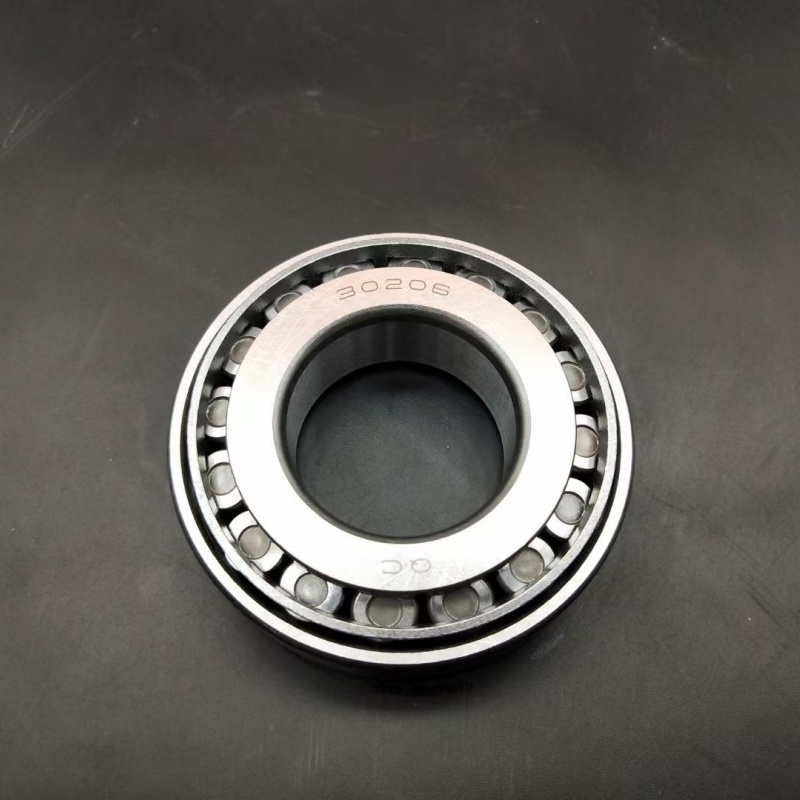
Evaluating "Best" Beyond the Brand Name
As a factory owner, I see the entire spectrum. We supply bearings that meet international standards, and we also understand the market dynamics. Let us break down the concept of "best" into practical layers.
The Premium Tier: Technology Leaders
These are the household names in engineering: SKF2 (Sweden), Schaeffler (INA/FAG, Germany), Timken3 (USA, specializing in tapered rollers), NSK/NTN (Japan). Their strengths are undeniable:
- R&D Investment: They pioneer new materials, coatings, and simulation technologies.
- Consistency: Their global manufacturing standards ensure every bearing, from any plant, is virtually identical.
- Technical Support: They offer deep application engineering resources.
However, this comes at a cost. Their pricing includes a significant brand premium. For a standard gearbox rebuild or a conveyor idler, this premium may not be justifiable.
The Value-Performance Tier: Quality-Focused Manufacturers
This is where companies like FYTZ operate. The goal is not to copy, but to deliver 95% of the performance at 50-70% of the cost. How?
- Modern Manufacturing: We use CNC grinding, automated assembly lines, and spectrometers for material checking—the same core technology.
- Focused Quality Control: We adhere to ISO standards6, offer precision classes like P5 and P6, and perform rigorous noise and rotation tests.
- Agility and Customization: As a factory, we can adjust designs (OEM/ODM7) and produce smaller batches more flexibly than a global giant.
The Commodity Tier: Price-First Producers
This market segment competes solely on price. Quality control is minimal. Materials may be inconsistent. These bearings are a false economy for any serious industrial application. They fail early, causing downtime that costs far more than the saved purchase price.
| Manufacturer Tier | Examples | Key Strength | Typical Cost Premium | Best For Whom? |
|---|---|---|---|---|
| Premium Global Brands | SKF2, Timken3, NSK, FAG | Technology leadership, extreme consistency, full support | 100% (Baseline) | Critical apps (aerospace, high-speed spindles), clients where failure cost is extreme |
| Quality Value Manufacturers | FYTZ Bearing5, other reputable Chinese/Indian factories | Excellent performance/price ratio, good consistency, customization | 50-70% | Most industrial B2B applications (gear boxes, motors, vehicles), cost-conscious OEMs |
| Commodity Producers | Various uncertified small workshops | Lowest initial purchase price | 20-40% | Non-critical, very low-duty applications where failure is acceptable |
For Rajesh’s business in India, selling to repair shops and small manufacturers, the "best" choice is rarely the most expensive one. It is the bearing that provides reliable service life, keeps his customers’ machines running, and protects his reputation. A premium-brand bearing might last 10,000 hours. A high-quality FYTZ bearing will last 8,500 hours at a significantly lower cost. For most of his clients, that is the smarter, more profitable choice. The "best" manufacturer is the one whose product and business model align with your operational and economic reality.
Which bearing is better, C3 or C4?
This is a fundamental question with a dangerous trap. Many people think a bigger clearance number (C4) is always "better" or "stronger." This is wrong. Using the wrong internal clearance is a direct path to premature bearing failure, regardless of the bearing’s quality.
Neither C3 nor C4 clearance1 is universally better. C3 clearance2 (greater than standard) is typically better for most general applications where operating temperatures cause the bearing to expand. C4 clearance1 (greater than C3) is specifically better for applications with very high heat or where shaft and housing fits cause significant internal tightening.
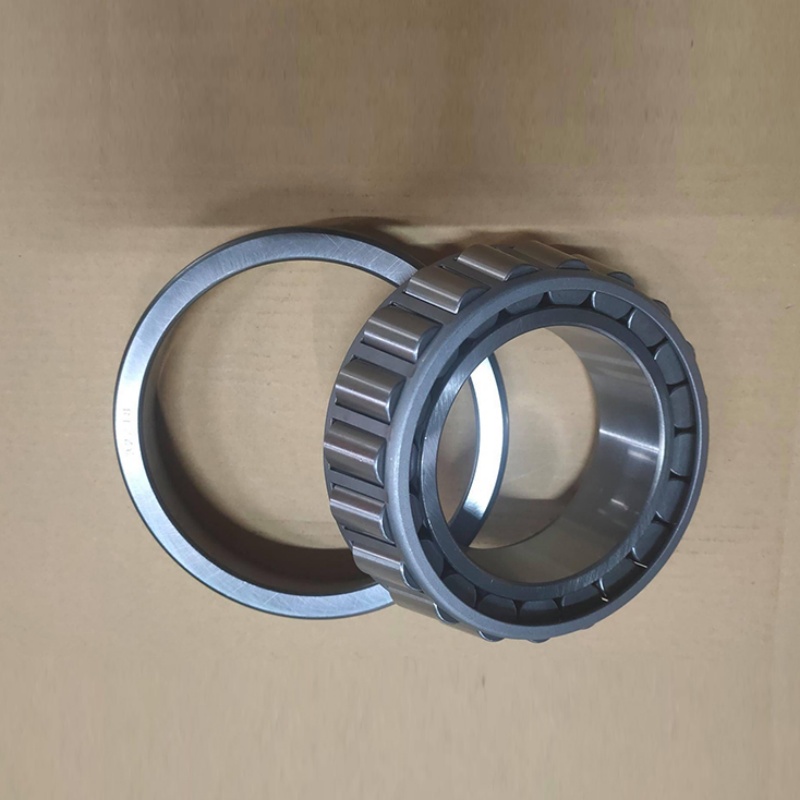
Clearing Up the Confusion on Clearance
Internal radial clearance is the total space between the rolling elements and the raceways before the bearing is mounted. It is not a quality grade; it is a functional specification. Choosing C3 or C4 is about managing the operating clearance3 after installation and under working conditions.
The Goal: Achieve the Correct Operating Clearance
A bearing needs a small, positive operating clearance3 to function optimally. Too little clearance (preload) causes overheating. Too much clearance causes vibration and impact damage. The initial C3/C4 code helps you get to that sweet spot after everything expands or contracts.
Why Choose C3 Clearance?
C3 is the most common selection for industrial tapered roller bearings4. Here is why:
- Thermal Expansion: As a bearing runs, the inner ring gets hotter than the outer ring. It expands more, which naturally reduces the internal clearance. Starting with extra room (C3) compensates for this.
- Standard Fits: With common shaft (k5) and housing (H7) fits, the interference fits slightly reduce clearance. C3 accounts for this.
- Result: For a pump, motor, or gearbox operating under normal industrial conditions, a C3 clearance2 bearing will settle into a near-perfect slight-positive operating clearance3. This ensures smooth, cool running.
When Must You Choose C4 Clearance?
C4 is a special application clearance. Do not use it unless you have a specific reason.
- Extreme Heat Generation: Applications like dryer journals, kiln carriages, or certain high-friction situations where the inner ring temperature is exceptionally high.
- Unusual Housing/Shaft Materials: If the housing is aluminum (which expands a lot) or the shaft is a special alloy with different thermal expansion5 than steel.
- Very Tight Interference Fits: If the design demands extremely tight press fits on both rings, which drastically reduces clearance, start with C4.
- Shaft Misalignment: In cases where some misalignment is unavoidable, a larger initial clearance can provide a bit more tolerance.
| Clearance Code | Meaning (vs. Normal) | Typical Operating Result | Right Application | Wrong Application |
|---|---|---|---|---|
| C3 | Greater than Normal Clearance | Achieves optimal slight clearance after thermal expansion5. | Most industrial motors, gearboxes, general machinery. | High-precision spindles (needs preload, not clearance). |
| C4 | Greater than C3 Clearance | Prevents seizure under extreme heat or tight fits. | Dryers, ovens, high-temp environments, special material housings. | Standard room-temperature applications (will be too loose, cause vibration). |
| CN (Normal) | Standard Clearance | Can become zero or negative (preload) if heated. | Carefully controlled temp apps, some automotive. | General industrial use (risk of thermal preload). |
My advice to Rajesh is strict: for 95% of the replacement tapered roller bearings he stocks for the aftermarket, he should stock C3. If a customer insists on C4 for a standard gearbox without a valid reason, he must warn them. That C4 bearing will likely run with excessive clearance, sound noisy, and wear out faster. "Better" is not about a bigger number; it is about the right number for the working environment.
What are tapered roller bearings1 good for?
Tapered roller bearings are not a universal solution. They are a precision tool designed for specific mechanical challenges. Knowing their ideal uses helps you apply them where they deliver maximum value and avoid forcing them into roles where other bearings would perform better.
Tapered roller bearings are exceptionally good for applications requiring management of combined radial and axial loads2, high rigidity3 for precise shaft location, and durability under heavy load conditions4. Their classic applications include automotive wheel hubs5, gearbox pinions, rolling mill rolls, and construction machinery axles6.
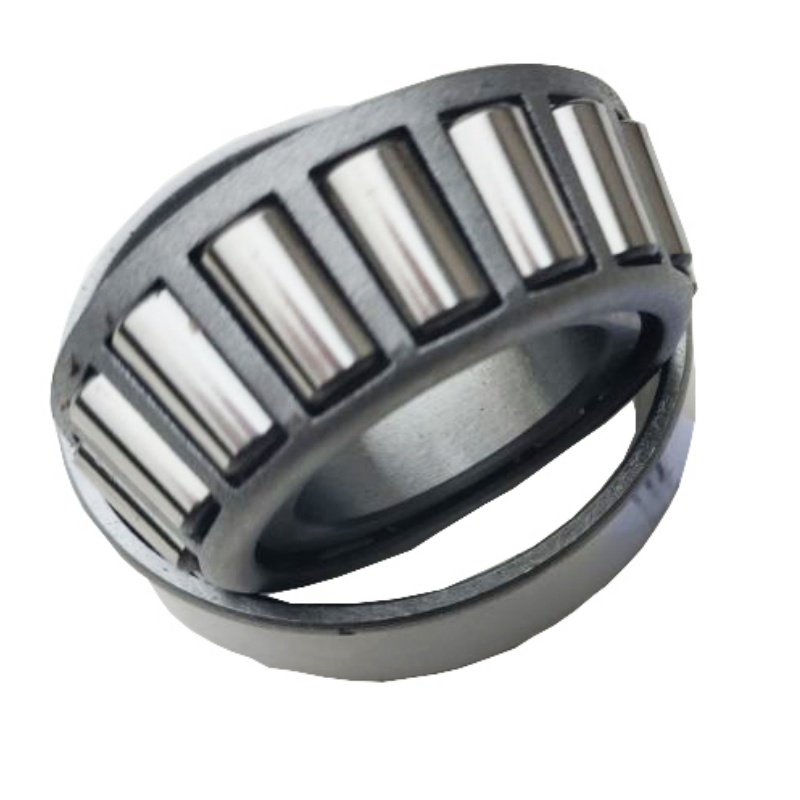
The Sweet Spot: Where Tapered Rollers Excel
From our production line to our clients’ machines across the globe, I see a clear pattern of where tapered roller bearings1 consistently succeed. Let us categorize their strengths.
1. Managing Combined Loads Efficiently
This is their primary and most important function. Many machines generate forces both perpendicular to the shaft (radial) and along the shaft (axial).
- Automotive: Wheel hubs (vehicle weight + cornering/braking forces), differential pinions (gear separation forces).
- Industrial Gearboxes: Supporting gears that create both radial and thrust loads.
- Machine Tool Heads: Where the cutting force has both radial and axial components.
2. Providing High System Rigidity
A pair of tapered roller bearings1, when properly preloaded, creates an extremely rigid support system. This minimizes shaft deflection (bending) under load.
- Machine Tool Spindles (Heavier Duty): While high-speed spindles use angular contact balls, heavier milling and boring spindles often use tapered rollers for their rigidity against cutting forces.
- Large Pump Shafts: To maintain impeller clearance and efficiency.
- Crane Travel Wheels: To prevent wobble under heavy loads.
3. Durability in Harsh, Heavy-Duty Environments
Made from tough, case-hardened steel, they resist wear and impact.
- Construction & Mining Equipment: Excavator idlers, conveyor head pulleys, crusher eccentric shafts.
- Agricultural Machinery: Tractor axles, combine harvester gearboxes.
- Railway Axle Boxes: Historically and in many modern freight designs.
4. Accommodating Thermal Expansion in Shafts
In long shaft applications (like paper machine rolls), the shaft expands significantly when heated. The adjustable nature of tapered roller bearing pairs (typically one "locating" and one "non-locating") allows the shaft to expand axially without building up destructive internal forces.
| Application Category | Specific Example | Why Tapered Rollers Are Good Here | Common FYTZ Client Industry |
|---|---|---|---|
| Automotive & Transport | Truck Wheel Hub, Differential Pinion | Handles heavy combined loads from weight and driving forces. | Auto Aftermarket (Rajesh’s main market) |
| Industrial Power Transmission | Gearbox Input/Output Shafts | Manages gear-induced radial and thrust loads; provides rigidity. | General Machinery, Sugar Mill, Cement Plant |
| Material Handling | Conveyor Drive Pulley, Crane Wheel | High radial capacity + handles occasional thrust/moment loads. | Mining, Port Logistics, Construction |
| Primary Industry | Rolling Mill Work Roll | Extreme radial loads + some thrust; high rigidity3 needed. | Steel Mill (OEM customers) |
| General Heavy Machinery | Large Centrifugal Pump | Handles impeller thrust and radial load; rigid shaft support. | Water Treatment, Oil & Gas |
For a business like IndoMotion Parts, this knowledge is a sales tool. When a customer from an auto repair shop asks for a bearing, Rajesh’s team can explain why a tapered roller is used in a wheel hub. When a small gearbox manufacturer inquires, they can recommend tapered rollers for the output shaft. This positions them as knowledgeable partners, not just order-takers. They are selling the solution, not just the part.
Who makes tapered roller bearings?
The manufacturing landscape for tapered roller bearings is vast and layered. From iconic American brands to highly automated factories in Asia, understanding who makes what helps you navigate quality, price, and supply chain reliability. It is a global industry serving every sector of machinery.
Tapered roller bearings1 are made by major global brands like Timken2 (a pioneer), SKF3, Schaeffler4, and NSK. They are also produced at scale by reputable manufacturing-focused companies in China, Japan, India, and Eastern Europe, such as FYTZ Bearing5, which offer high-quality, cost-effective alternatives for the global B2B market.
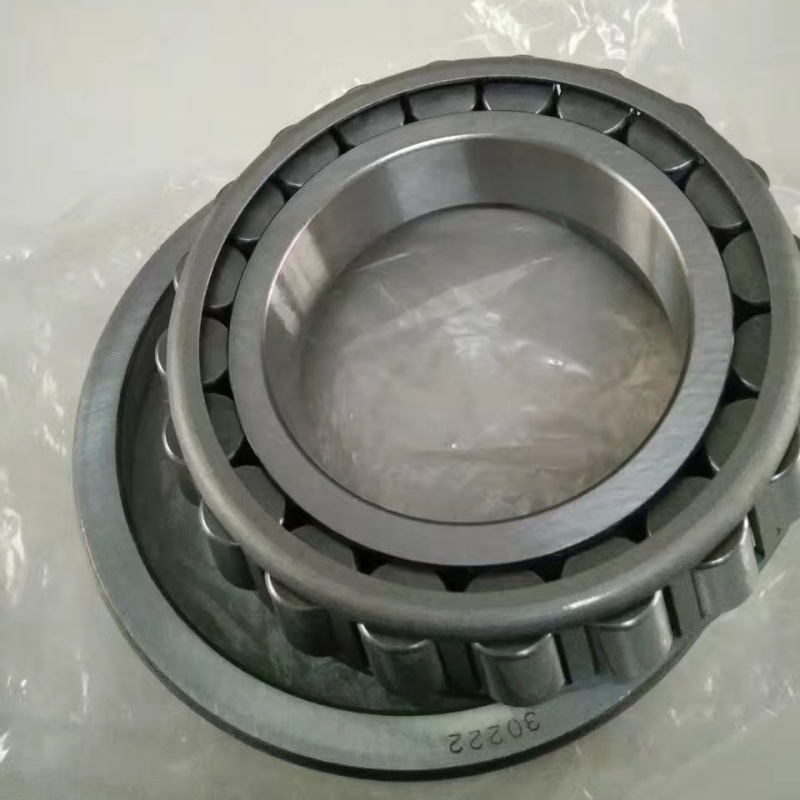
The Global Ecosystem of Tapered Roller Bearing Production
Having visited trade shows from Hanover to Shanghai and supplied bearings worldwide, I see a clear map of production. Each player has a different focus and business model.
The Pioneers and Premium Brands
- The Timken2 Company (USA): They invented the tapered roller bearing. The name is almost synonymous with the product in some markets. They hold key patents and are the technology benchmark, especially for large and special applications.
- SKF3 (Sweden) & Schaeffler4 (Germany): These are broad-line bearing giants. Their tapered roller bearings are part of a complete portfolio. They are known for application engineering and supplying entire systems.
- NSK, NTN, JTEKT (Japan): Japanese manufacturers are renowned for precision and quality consistency. They are strong in automotive and precision industrial sectors.
The High-Volume, Value-Oriented Manufacturers
This is the most dynamic and important segment for global B2B trade. Production is concentrated in Asia.
- China: The world’s largest bearing producer. The range is immense:
- State-Owned Enterprises (e.g., C&U, ZWZ, LYC): Very large, capable, often focused on domestic market and large OEMs.
- Private Export-Focused Factories (e.g., FYTZ Bearing5): Agile, quality-conscious, and tailored to the international wholesale and distribution market. This is our space. We compete on delivering certified, reliable quality at a competitive price with good service.
- India: Companies like NBC Bearings have a strong domestic presence and growing exports, particularly for automotive and industrial sectors.
- Eastern Europe: Factories in Romania, Poland, and Russia supply regional markets.
The Supply Chain Reality for Distributors
A distributor like Rajesh has several sourcing options:
- Direct from Global Brand Distributors: High price, guaranteed quality, good technical support.
- Through Importers of Asian Brands: Lower price, variable quality depending on the specific supplier chosen.
- Direct from Export-Oriented Factories (like FYTZ): This is often the most profitable and controllable model. It removes middlemen, allows for customization (OEM/ODM6), and builds a direct partnership. The distributor gets a consistent product they can brand and trust.
| Manufacturer Type | Examples | Primary Market Focus | Key Value Proposition | For Distributors Like Rajesh… |
|---|---|---|---|---|
| Global Premium Brands | Timken2, SKF3, FAG | OEMs, Critical Apps, Aftermarket (Premium) | Technology, Reliability, Brand Trust | Source for customers who insist on branded parts; high cost, lower margin. |
| Large Asian Integrators | C&U, NBC, NSK | Domestic OEMs, Large Int’l Projects | Scale, Complete Range | Can be a source, but may have high MOQs and less flexibility. |
| Export-Focused Quality Factories | FYTZ Bearing5 | Global B2B Wholesale & Distribution | Optimal Price/Performance, Customization, Direct Partnership | Ideal partner for building a private brand with reliable quality and good margins. |
| Commodity Workshops | Numerous small units | Ultra Low-Cost Replacements | Lowest Price | Avoid. Risk to reputation from inconsistent quality. |
The question "Who makes tapered roller bearings?" is really about finding the right partner for your business model. For Rajesh, who needs to supply reliable parts to shops that cannot afford premium brands, a direct relationship with a factory like ours is strategic. He gets a product he can stand behind, at a price that gives him a healthy margin and his customers a fair deal. In today’s market, knowing how a manufacturer operates is as important as knowing their name.
Conclusion
Premium tapered roller bearings achieve smooth motion through precision, but choosing the right one requires knowledge. Understanding the manufacturer landscape, the meaning of clearance codes, the ideal applications, and your supply chain options empowers you to make confident, cost-effective decisions for stable performance.
-
Explore this link to understand the significance and applications of tapered roller bearings in various industries. ↩ ↩ ↩ ↩ ↩ ↩ ↩ ↩
-
Discover Timken’s pioneering role in bearing technology and their impact on the industry. ↩ ↩ ↩ ↩ ↩ ↩ ↩ ↩ ↩
-
Learn about SKF’s extensive range of bearing products and their engineering expertise. ↩ ↩ ↩ ↩ ↩ ↩ ↩ ↩ ↩ ↩ ↩
-
Find out how Schaeffler contributes to bearing technology and application engineering. ↩ ↩ ↩ ↩ ↩
-
Understand why FYTZ Bearing is a preferred partner for quality and cost-effective solutions. ↩ ↩ ↩ ↩ ↩ ↩ ↩ ↩
-
Get insights into OEM and ODM models and how they affect product customization. ↩ ↩ ↩
-
Learn how OEM and ODM services can provide customized solutions for your specific needs. ↩
