
Every time a bearing in your machinery squeals or overheats, you are losing money. It is a simple fact. As a bearing manufacturer, I see how friction silently drains profits from equipment, causing higher energy bills and more downtime. Today, let us discuss a specific solution.
Low-friction tapered roller bearings significantly enhance efficiency by reducing torque and heat generation in machinery under combined loads. Their optimized internal geometry and premium surface finishes lower rolling resistance, directly translating to energy savings and longer service life.
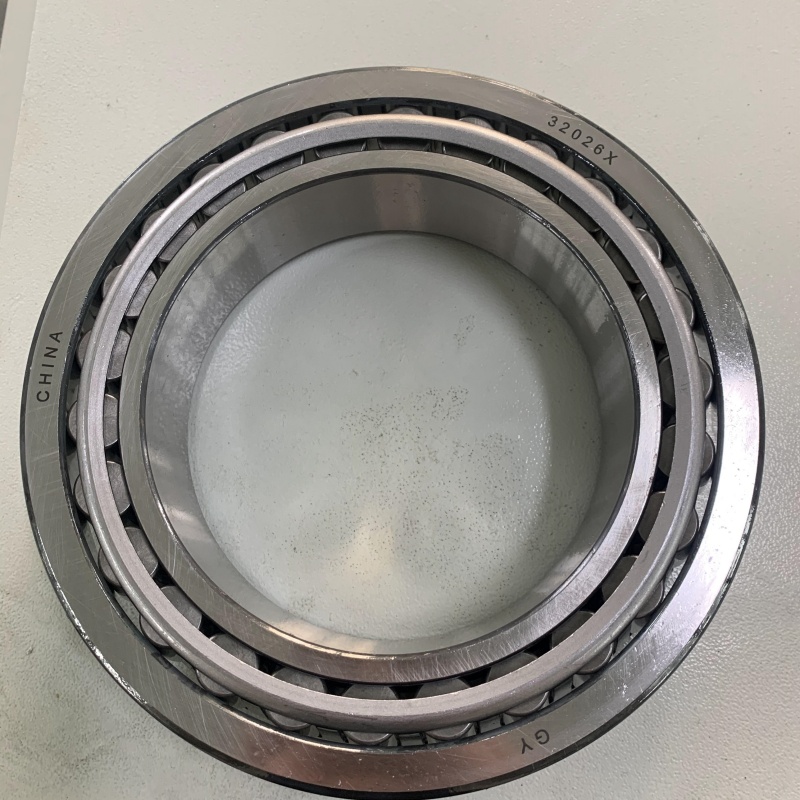
You might think all low-friction bearings are the same, but the application decides the winner. The journey from understanding "frictionless" options to selecting the right tapered bearing for your load is critical. Let us explore this in detail, question by question, to help you make the smartest choice for your business and your clients.
What are the best frictionless bearing1s?
The term "frictionless bearing1" is a goal, not a reality. In our world, we aim for "extremely low friction." For different situations, the "best" choice changes completely. Picking the wrong one can lead to rapid failure or wasted performance potential.
There is no single best frictionless bearing1. The optimal choice depends on the application. For high-speed, pure radial loads, air bearings2 or magnetic bearings3 offer near-zero friction. For most industrial machinery4 with combined loads, advanced low-friction tapered roller or angular contact ball bearings5 provide the best balance of performance, durability, and cost.
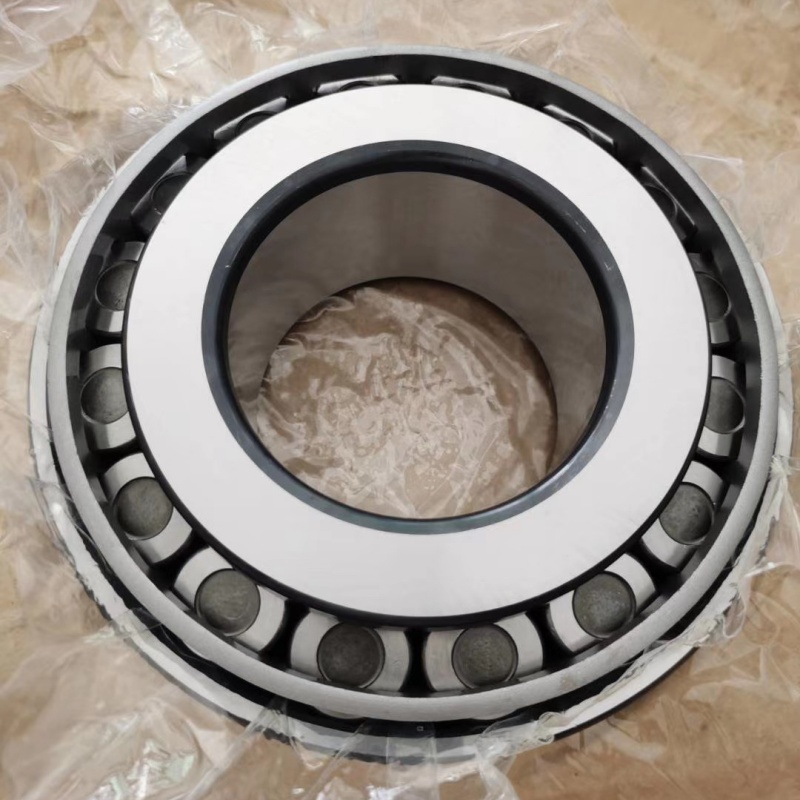
Breaking Down the "Best" for Different Scenarios
As a factory owner supplying bearings globally, I have learned that our clients, like Rajesh in India, need clear guidance. They are not looking for a laboratory experiment; they need reliable, efficient components for real-world machines. Let us break down the so-called "frictionless" options into practical categories.
High-Precision / High-Speed Applications:
Here, "frictionless" often means non-contact. These are specialist solutions.
- Air Bearings: A film of pressurized air separates the surfaces. Friction is virtually zero. They are incredibly precise and used in high-speed spindles for PCB drilling or coordinate measuring machines. However, they are expensive, need a clean, dry air supply, and have limited load capacity.
- Magnetic Bearings: Electromagnets levitate the shaft. There is no physical contact, so there is no wear. They are used in turbo-molecular vacuum pumps and some high-end turbines. The major drawbacks are high cost, complexity, and the need for a backup bearing system in case of power failure.
General Industrial & Automotive Applications:
This is where companies like FYTZ Bearing operate. Here, "best" means an optimal trade-off.
- Ceramic Hybrid Ball Bearings: These use silicon nitride ceramic balls with steel rings. Ceramic is lighter, harder, and runs cooler than steel. They offer lower friction, higher speed capability, and longer life in applications like high-performance machine tool spindles. The downside is their higher cost, making them a premium upgrade.
- Low-Friction Tapered Roller Bearings: This is a core product for us. Through advanced design—like optimized roller profiles, improved cage designs, and superior surface finishes on rollers and raceways—we reduce sliding friction at the roller ends. Paired with advanced, low-drag greases, they deliver excellent efficiency for applications handling both radial and thrust loads simultaneously, such as gearboxes and wheel hubs. They are more cost-effective than ceramic hybrids for heavy-duty use.
- Angular Contact Ball Bearings: Excellent for high-speed applications6 with primarily thrust loads. Their point contact offers lower starting friction than tapered rollers. They are common in machine tool spindles and pumps. However, for very heavy combined loads, tapered rollers often have a higher load capacity.
| Bearing Type | Best For | Key Friction Advantage | Major Drawback | Typical FYTZ Client Use Case |
|---|---|---|---|---|
| Air Bearing | Ultra-high speed, precision positioning | Near-zero friction (air film) | High cost, needs clean air supply | Not typical for wholesale; specialized OEMs |
| Magnetic Bearing | Very high speed, zero contamination | Zero friction (magnetic levitation) | Very high cost and complexity | Not typical for wholesale; specialized OEMs |
| Ceramic Hybrid | High-speed spindles, electric motors | Lower rolling friction, runs cooler | High material cost | Upgraded machine tools for premium clients |
| Low-Friction Tapered Roller | Gearboxes, wheel ends, heavy machinery | Reduced sliding friction under combined loads | Higher friction than ball bearings at very high speed | Rajesh’s customers in auto repair and industrial shops |
| Angular Contact Ball | Machine tool spindles, pumps | Low starting and running friction (point contact) | Lower thrust capacity than tapered rollers | Pumps and compressors for industrial distributors |
For most of our B2B clients in emerging markets, the practical "best" is often a high-quality, low-friction tapered roller or deep groove ball bearing. It delivers 95% of the efficiency gain at a fraction of the cost of exotic solutions, ensuring their machinery runs reliably and profitably.
What are the disadvantages of tapered roller bearings?
Tapered roller bearings are workhorses, but they are not magic. I have seen customers try to use them for everything, only to face premature failure. Knowing the limits is as important as knowing the strengths. It prevents costly mistakes and unhappy end-users.
The main disadvantages of tapered roller bearings include higher friction at very high speeds1 compared to ball bearings, the need for precise adjustment during installation2, and typically higher cost and complexity3 than standard deep groove ball bearings. They also usually must be used in pairs4.
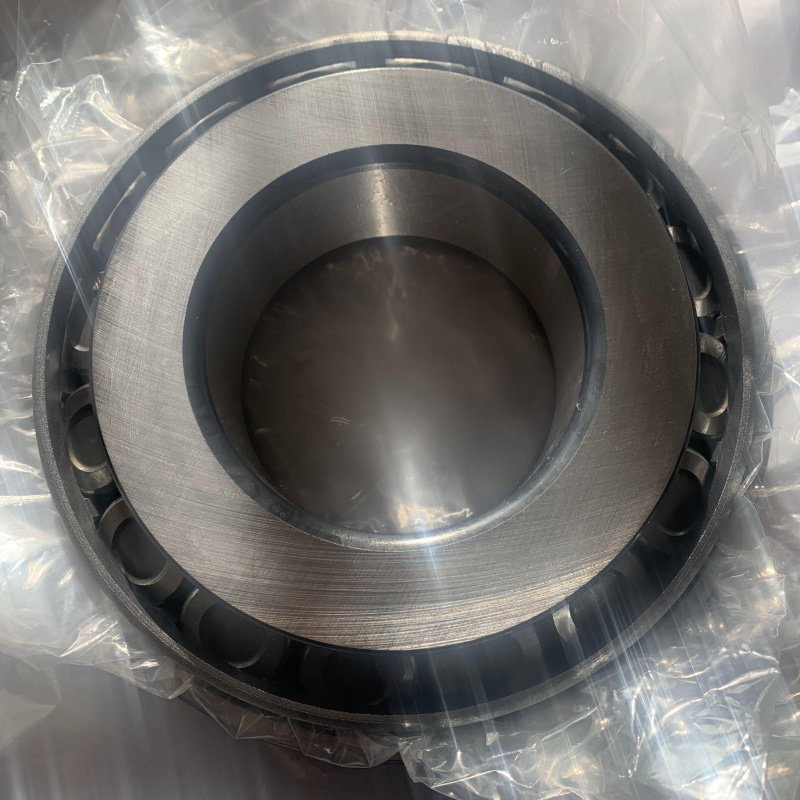
A Candid Look at the Challenges
In my factory, we test these bearings every day. We love them for their strength, but we respect their requirements. Let us be honest about where they might not be the right fit.
1. Friction and Speed Limitations:
Tapered rollers have line contact with the raceways. This gives them high load capacity but also creates more sliding friction at the roller ends, especially under misalignment. While low-friction designs mitigate this, they generally cannot reach the rotational speeds of angular contact ball bearings or cylindrical roller bearings. In a very high-speed spindle, the extra friction generates too much heat.
2. Installation Complexity and Adjustment:
This is the biggest practical headache for mechanics. Unlike a deep groove ball bearing you can just press in, tapered roller bearings require careful adjustment of axial play or preload. This is the internal clearance within the bearing pair.
- Too loose (excessive play5): Causes vibration, noise, and poor shaft positioning.
- Too tight (excessive preload6): Generates extreme heat and friction, leading to rapid failure.
Getting this right needs skill, proper tools (like a dial indicator), and patience. For a busy repair shop Rajesh supplies, this can mean longer service times and training requirements.
3. Cost and Design Complexity:
A tapered roller bearing assembly is often more expensive than an equivalent deep groove ball bearing. Furthermore, because they handle thrust loads in one direction only, they are almost always used in opposed pairs (two bearings facing opposite directions). This requires more space on the shaft, more complex housing design, and often additional components like spacers and adjusting nuts.
4. Sensitivity to Misalignment:
While they can handle some misalignment, they are not as forgiving as spherical roller bearings. Excessive shaft or housing misalignment can cause uneven load distribution on the rollers, leading to edge stressing and early fatigue. Proper mounting alignment is critical.
| Disadvantage | Root Cause | Consequence for the User | FYTZ’s Solution / Advice |
|---|---|---|---|
| Higher High-Speed Friction | Line contact & roller end sliding | Heat buildup, power loss, speed limits | Recommend angular contact ball bearings for very high-speed apps |
| Complex Installation | Need for precise axial adjustment | Requires skilled labor, risk of incorrect setup | Provide detailed mounting guides and pre-adjusted units where possible |
| Higher Cost/Complexity | Paired design, precision components | Higher initial part cost, more complex assembly | Highlight total cost-of-ownership benefits7 (longer life, less downtime) |
| Misalignment Sensitivity | Fixed raceway geometry | Premature failure if mounted incorrectly | Emphasize precision in housing machining and shaft preparation |
Understanding these disadvantages is not a weakness; it is smart engineering. It allows us, and our distributors like IndoMotion Parts, to guide end-customers correctly. Sometimes, the best service is advising against a tapered roller bearing and suggesting a spherical roller or deep groove ball bearing instead. This builds trust and long-term business.
What bearing has the least friction?
Chasing the title of "least friction" can lead you down a costly path. In perfect, lab-controlled conditions, the answer is clear. But on a factory floor in Vietnam or a mining site in South Africa, the "least friction" that matters is the one that works reliably and economically in your specific machine.
Under ideal conditions, non-contact bearings1 like air bearings or magnetic bearings have the absolute least friction. For practical rotating machinery, ceramic hybrid ball bearings2 typically achieve the lowest rolling friction. However, for applications with heavy combined loads, advanced low-friction tapered roller bearings3 offer an excellent balance of minimal friction and high load capacity.

Defining "Least Friction" in the Real World
Let us move past the theoretical champion and focus on practical winners. Friction is not just a number; it is heat, wear, and energy consumption. The goal is to minimize it for your operating conditions.
The Theoretical Champions: Non-Contact Bearings
As mentioned earlier, air and magnetic bearings win in friction tests because there is no physical contact. Their friction coefficient is essentially zero. But their application is narrow. You will not find them in a sugarcane crusher in Brazil or a truck wheel hub in Indonesia. They are for specialized, high-value equipment.
The Practical High-Performance Winner: Ceramic Hybrid Ball Bearings
For most rotating shafts that need a physical bearing, ceramic hybrids lead the pack. Why?
- Lower Density: Ceramic balls are about 40% lighter than steel balls. This reduces centrifugal force at high speeds, lowering friction.
- Higher Hardness: They are smoother and resist surface degradation better, maintaining low friction over time.
- Better Thermal Properties: They expand less than steel when heated, helping maintain optimal internal clearance.
A client in the electric motor industry might choose these for a premium, high-efficiency motor. But for Rajesh’s customer repairing a farm tractor’s differential, the cost is prohibitive.
The Heavy-Duty Efficiency Leader: Low-Friction Tapered Roller Bearings
Where do these fit in? They may not win a pure speed or friction test against a ceramic ball bearing. But in a gearbox supporting a heavy radial load and a constant thrust load, they are incredibly efficient. The "friction" to consider here is total system friction4.
- A standard tapered bearing might have higher friction.
- A low-friction design, with optimized roller profile (like a logarithmic contour) and a low-viscosity, high-performance grease, can reduce torque by 30% or more compared to a standard design.
- This means the gearbox runs cooler, uses less fuel or electricity, and the grease lasts longer.
| Application Context | Bearing with "Least" Practical Friction | Why It’s the Best Fit | Economic Consideration |
|---|---|---|---|
| High-Speed Machine Tool Spindle | Ceramic Hybrid Angular Contact Ball Bearing | Lowest heat generation, maintains precision at high RPM | High initial cost justified by performance premium |
| Industrial Pump (High thrust load) | Angular Contact Ball Bearing (Pair) | Lower friction than tapered rollers at required speeds | Moderate cost, industry standard |
| Truck Wheel Hub | Low-Friction Tapered Roller Bearing (Pair) | Handles heavy vehicle weight (radial) and cornering forces (thrust) with optimized efficiency | Cost-effective for the load; efficiency saves fuel |
| Conveyor Roller (Heavy, slow) | Deep Groove Ball Bearing | More than sufficient for the speed; lowest cost | Very cost-sensitive; friction is less critical |
So, when Rajesh asks me, "What has the least friction for a gearbox rebuild kit5?" I do not suggest a magnetic bearing. I recommend our FYTZ series of low-friction tapered roller bearings3. They provide the operationally relevant least friction for that job, ensuring his customer’s machine runs smoother and longer without an exorbitant price tag.
What load types is a tapered roller bearing suitable for?
This is where the tapered roller bearing truly shines and justifies its place in millions of machines. Its unique design is a direct answer to a very common engineering problem. Choosing it for the right load ensures legendary durability; choosing it for the wrong one invites quick failure.
Tapered roller bearings are uniquely suitable for combined radial and axial (thrust) loads. They are designed to handle heavy loads in both directions simultaneously, especially where the axial load is substantial and continuous. They are also excellent for applications requiring high radial stiffness.
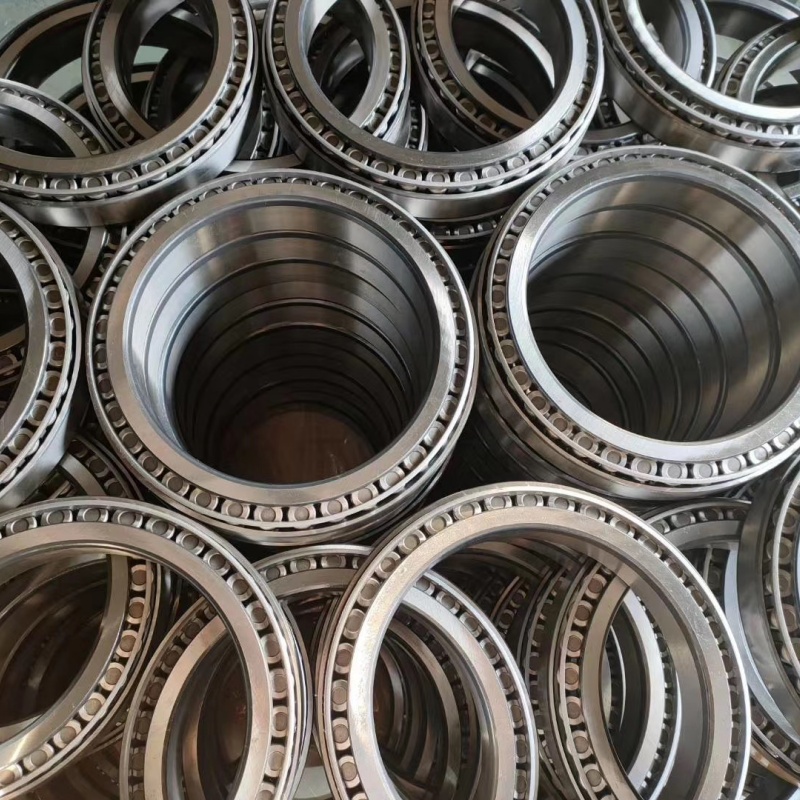
Mastering Load Management with Tapered Rollers
The genius of the tapered design is in its geometry. The rollers, raceways, and cage are angled (tapered) relative to the bearing axis. This angle, called the contact angle1, is the key. It determines the load-sharing ratio between radial and thrust capacity. A steeper angle handles more thrust.
1. Combined Radial and Thrust Loads: The Primary Strength
This is their core purpose. Unlike a deep groove ball bearing that can handle some thrust, a tapered roller bearing is engineered for it.
- How it works: A radial load on the bearing creates an induced thrust load component due to the roller angle. The bearing is therefore almost always used in a pair, opposed to each other, to contain this force and handle thrust from either direction.
- Real-World Example: A car wheel bearing. It supports the weight of the car (radial load) and the forces during cornering and braking (thrust loads). This is why tapered roller bearings2 have been the standard for wheel hubs for decades.
2. Heavy Radial Loads with High Stiffness
While cylindrical roller bearings have the highest pure radial capacity, tapered rollers are also excellent for heavy radial loads3, especially where shaft rigidity4 is critical. The preload applied to a paired set eliminates internal clearance, creating a very stiff system that minimizes shaft deflection under load. This is vital in machine tool gearboxes or heavy-duty power transmission.
3. Thrust (Axial) Loads Primarily
For applications dominated by thrust load, a single tapered roller bearing or a pair can be an efficient choice, often offering higher capacity in a smaller envelope than a thrust ball bearing. However, for very high-speed thrust applications5, angular contact ball bearings might be preferred due to lower friction.
What They Are NOT Ideal For:
- Pure, Very High-Speed Radial Loads: Use cylindrical roller bearings.
- Very High-Speed Thrust Loads: Use angular contact ball bearings.
- Applications with Significant Misalignment: Use spherical roller bearings or self-aligning ball bearings.
- Extremely Light Load, Ultra-Low Friction Apps: Use precision deep groove or ceramic ball bearings.
| Load Scenario | Is a Tapered Roller Bearing Suitable? | Configuration Needed | Competing Bearing Type |
|---|---|---|---|
| Heavy Radial + Heavy One-Direction Thrust | Excellent | Single row, paired with another bearing type | Spherical Roller Thrust Bearing |
| Moderate Radial + Moderate Two-Direction Thrust | Excellent | Two single-row bearings opposed (O arrangement) | Double-Row Angular Contact Ball Bearing |
| Pure, Very High-Speed Radial Load | Poor | Not recommended | Cylindrical Roller Bearing |
| Heavy Shocking/Impact Loads | Good (with proper preload) | Paired set with controlled preload | Spherical Roller Bearing (more forgiving) |
| Application with Shaft Misalignment | Fair (requires precise mounting) | Requires perfect alignment | Spherical Roller Bearing (better choice) |
For our clients, this knowledge is power. When Rajesh’s team recommends a bearing for a sugar mill pinion shaft (huge combined loads), they can confidently specify a tapered roller. When a customer asks for a bearing for a high-speed fan (primarily radial load), they can suggest a more suitable and cost-effective deep groove or cylindrical roller bearing. This expertise turns a distributor from a parts supplier into a trusted technical partner.
Conclusion
Choosing the right bearing for efficiency is about balancing friction, load, speed, and cost. Low-friction tapered roller bearings are a powerful tool for heavy-duty applications where combined loads are the main challenge, offering a smart path to lower energy use and longer machine life.
-
Discover the importance of contact angle in load distribution and bearing efficiency. ↩ ↩ ↩ ↩ ↩ ↩
-
Explore the benefits of tapered roller bearings to understand their unique design and applications in various industries. ↩ ↩ ↩ ↩
-
Find out which bearings are best suited for heavy radial loads and how tapered roller bearings compare. ↩ ↩ ↩ ↩ ↩
-
Explore the role of shaft rigidity in bearing performance and how tapered roller bearings contribute to it. ↩ ↩ ↩ ↩
-
Learn about the best bearing options for high-speed thrust applications and when to choose alternatives. ↩ ↩ ↩ ↩
-
Explore the issues that arise from excessive preload and how to avoid them. ↩ ↩
-
Understanding total cost-of-ownership can help justify the investment in tapered roller bearings. ↩
