
Thinking about buying deep groove ball bearings from China? Many people worry about quality and reliability. I understand your concerns completely. I have faced these same questions in my own business for years. Let me share what I have learned from working directly with factories and customers worldwide.
Sourcing deep groove ball bearings from China offers significant cost benefits and a wide selection, but it comes with risks like inconsistent quality and logistics challenges. The key is to partner with a verified factory that has strict quality control, like FYTZ Bearing, to mitigate these risks and ensure you get durable, high-performance bearings.
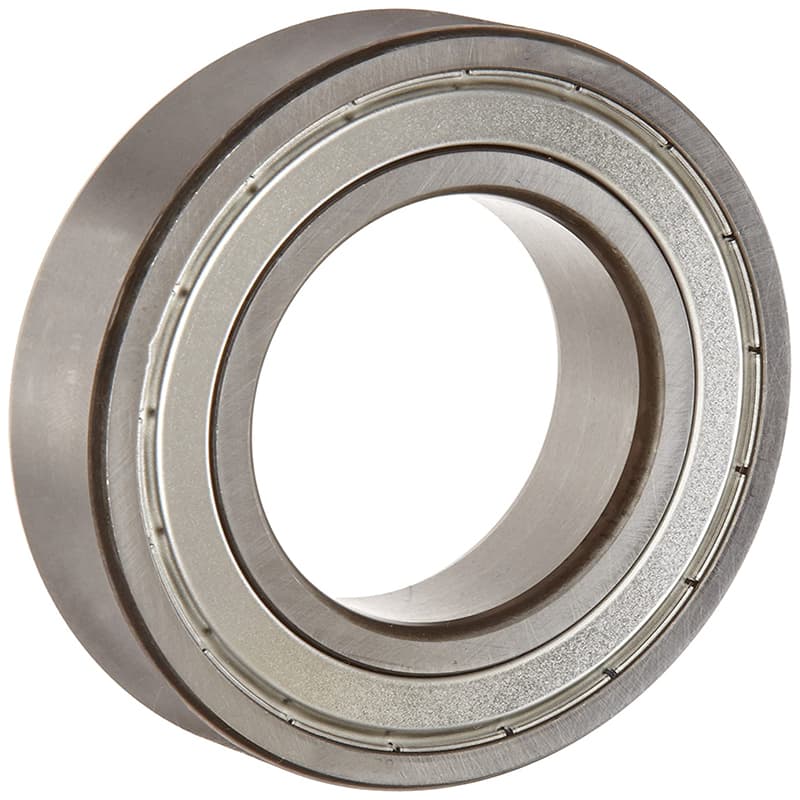
You might be wondering, how do you separate the good suppliers from the bad? What are the real advantages and disadvantages of these bearings? In this article, I will break down the risks, the undeniable benefits, and the practical steps you can take to protect your investment. I will also answer the specific questions that matter most to buyers like you. Keep reading to make an informed decision for your business.
What are the disadvantages of deep groove ball bearings?
No product is perfect, and even the versatile deep groove ball bearing has its limits. Before you place a large order, you should know where these bearings might fall short in your application. Ignoring this can lead to premature failure and costly downtime.
The main disadvantages of deep groove ball bearings are their limited capacity for heavy radial and axial loads1 compared to other bearing types, sensitivity to misalignment and contamination2, and potential for higher noise if not manufactured precisely3. They are not suitable for applications with severe shocks4 or complex load demands.
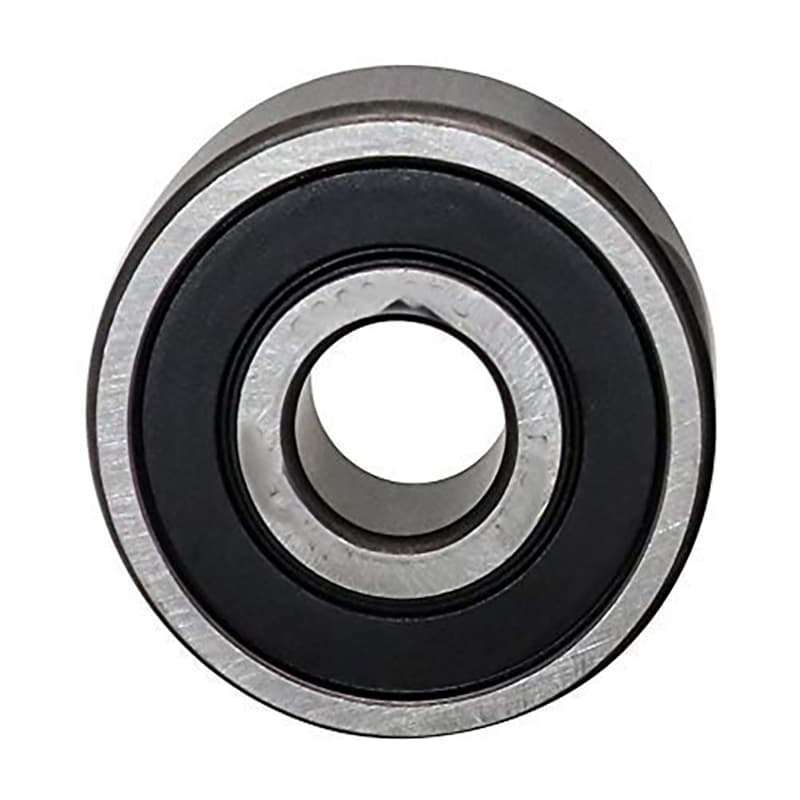
A Closer Look at the Limitations
Understanding these disadvantages is not about dismissing deep groove ball bearings. It is about using them correctly. As a factory, we see many returns that could have been avoided if the bearing was matched to the right job.
First, let’s talk about load capacity. Deep groove ball bearings are champions for moderate radial loads and some axial loads in both directions. But they hit a wall when demands increase.
- Heavy Radial Loads: For very heavy pure radial loads, like in large rolling mills, a cylindrical roller bearing is often a stronger choice.
- Heavy Axial/Combined Loads: Applications with dominant or very heavy axial loads (force parallel to the shaft) combined with radial loads need a different solution. A taper roller bearing is specifically designed to handle this combination much more efficiently.
Second, misalignment sensitivity is a critical factor. The internal geometry of a deep groove ball bearing is designed for precise alignment between the shaft and housing. If the installation is off, or if the shaft deflects under load, stress concentrates on a small area of the raceway and balls. This leads to uneven wear, increased heat, and a much shorter life. We always advise our clients to check machining tolerances carefully.
Third, contamination and sealing. While sealed or shielded variants exist, the fundamental open design of a deep groove ball bearing makes it vulnerable. Dust, dirt, and moisture are its enemies. In very dirty or wet environments—think agricultural machinery or some food processing plants—even the best seals can be challenged. For extremely harsh conditions, other bearing types with different sealing technologies might be more robust.
Finally, consider operating conditions5.
- High Speeds: While good for high speeds, ultra-high-speed applications (like some machine tool spindles) may require bearings specifically optimized for minimal heat generation and superior lubrication.
- Shock Loads: The point contact of the balls makes them less ideal for applications with frequent heavy impacts or shocks. These sudden forces can cause brinelling (indentations) on the raceways.
Here is a simple table to compare deep groove ball bearings with two common alternatives for specific challenging conditions:
| Challenge / Condition | Deep Groove Ball Bearing | Better Alternative (Example) | Reason |
|---|---|---|---|
| Very Heavy Radial Load | Limited capacity, may fail early. | Cylindrical Roller Bearing | Line contact handles much higher radial loads. |
| Heavy Combined Loads | Struggles with dominant axial load. | Taper Roller Bearing | Designed specifically for combined radial and axial loads. |
| Severe Misalignment | High sensitivity, causes premature wear. | Self-Aligning Ball Bearing or Spherical Roller Bearing | Can accommodate shaft misalignment internally. |
| Extreme Contamination | Standard seals may be insufficient. | Bearings with Special Seals or Housings | Enhanced protection from dirt and water ingress. |
The takeaway is simple: deep groove ball bearings are excellent general-purpose components. Their "disadvantages" only appear when they are asked to do a job they were not designed for. Knowing these limits helps you select the right bearing and avoid costly mistakes. If you are unsure about your application, always consult with your supplier’s engineers—we at FYTZ provide this service to ensure our clients get a perfect match.
Does China make good wheel bearings1?
This is perhaps the most common question I get from new clients like Rajesh in India. The short answer is yes, but with a giant asterisk. The quality landscape in China is incredibly varied, from poor copies to world-class manufacturing. The real question is: how do you find the manufacturers who make good bearings?
Yes, China produces excellent quality wheel bearings1 that meet and exceed international standards. The key is sourcing from certified factories2 with integrated production, strict quality control (like ISO 90013), and a focus on material science. Reputable Chinese manufacturers use high-grade steel, advanced heat treatment, and precision grinding to create durable, reliable bearings for global markets.
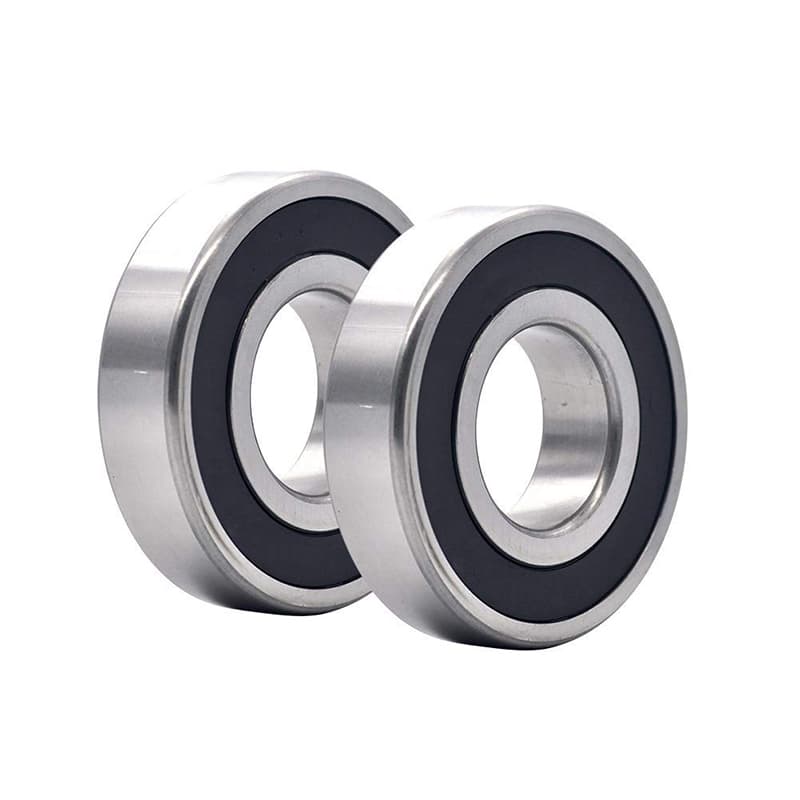
Navigating the Quality Spectrum
Having our own factory, FYTZ Bearing, gives me a clear view of both sides of the market. I have seen what separates a trustworthy supplier from a risky one.
The foundation of a good bearing is material and heat treatment. Low-cost, substandard bearings often use inferior steel that lacks the necessary hardness and purity. This leads to rapid wear and fatigue failure. Reputable factories, however, source chrome steel4 (like GCr15/52100) from certified mills. The heat treatment process—hardening and tempering—is then precisely controlled. This gives the bearing its essential hardness for wear resistance and a tough core to absorb impacts. At our factory, we test material batches and monitor furnace temperatures constantly. This step cannot be rushed or compromised.
Next is manufacturing precision5. A bearing is a precision component where microns matter. The process involves forging, turning, grinding, and superfinishing of the rings, followed by precision grinding of the balls. Low-end producers skip steps or use outdated machinery, resulting in poor roundness, surface finish, and noise. Top-tier Chinese factories invest in CNC grinding machines from brands like Germany’s STUDER or Japan’s OKUMA. This investment ensures the raceways are perfectly smooth and geometry is exact, which minimizes friction, heat, and vibration.
Quality Control (QC)6 is the non-negotiable differentiator. A factory without a proper QC lab is a major red flag. Here is what to look for:
- In-process Checks: Measurements at every stage (dimensions, roughness).
- Final Inspection: 100% inspection for critical dimensions, rotation accuracy, and noise/vibration levels.
- Testing Equipment: The presence of profilometers, contour projectors, and noise testers shows commitment.
- Certifications: While not a guarantee, ISO 90013 certification indicates a managed quality system.
The "Integrated Factory7" Advantage. Many trading companies sell bearings; they do not make them. This adds a layer of opacity. Dealing directly with a manufacturer like FYTZ, which controls the process from raw material to finished packaging, offers huge advantages: traceability, consistent quality, and the ability to customize. When Rajesh orders a batch with a specific clearance or seal, we can adjust our production line to meet his exact needs.
Finally, consider the market proof. China’s top bearing manufacturers are not just selling on price. They are OEM suppliers8 to global automotive and industrial equipment brands. Their products are tested in real-world conditions across continents. The fact that countries with demanding climates and industrial bases—like Russia, Brazil, and South Africa—consistently import Chinese bearings is strong evidence of their capability and durability.
So, does China make good wheel bearings1? Absolutely. But you must do your homework. Look for factories with transparency, modern equipment, stringent QC, and a willingness to provide samples and factory audit reports. The lowest price often tells the whole story—it usually means corners have been cut.
What are the benefits of deep groove ball bearings?
Despite their limitations in extreme scenarios, deep groove ball bearings are the most widely used bearing type in the world for very good reasons. Their design offers a perfect balance of performance, cost, and versatility that is hard to beat. In my years supplying these bearings, I’ve seen them power everything from small electric motors to massive agricultural equipment.
The key benefits of deep groove ball bearings are their versatility in handling both radial and axial loads, low friction leading to high rotational speeds and energy efficiency1, simple design for easy installation and maintenance, quiet operation, and overall cost-effectiveness2. They are a reliable3, all-round solution for countless applications.
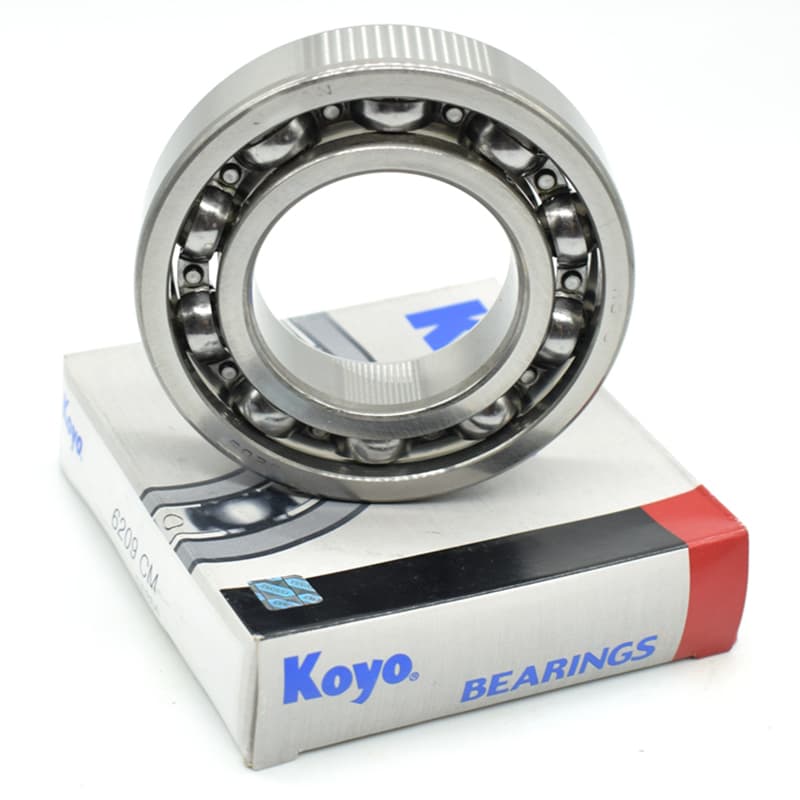
Why They Are the Industry Workhorse
Let’s break down these benefits to understand why this bearing is such a popular choice for engineers and buyers like Rajesh, who needs reliable3 parts for his diverse customer base.
First and foremost is versatility in load handling4. The deep, continuous raceways in both the inner and outer rings allow these bearings to support not just radial loads (the primary force), but also substantial axial loads in both directions. This dual capability means that in many machines, a single deep groove ball bearing can do the job, simplifying the design. You don’t always need a complex set of bearings to manage different force directions.
Second, low friction and high-speed capability5. The point contact between the balls and raceways creates very little rolling resistance when properly lubricated. This has two major advantages:
- High-Speed Operation: They can run at very high speeds without generating excessive heat, making them ideal for electric motors, spindles, and turbochargers.
- Energy Efficiency: Lower friction means less power is wasted overcoming bearing resistance. In applications like fan motors or conveyor systems, this translates directly to lower electricity costs over the bearing’s long life.
Third, the simple and robust design6. There is a beauty in simplicity. The basic design—rings, balls, cage, and often simple seals—makes them:
- Easy to Install: They are typically not sensitive to installation order (unlike taper roller bearings which require precise adjustment).
- Easy to Maintain: Re-lubrication is straightforward for open bearings, and sealed versions are often "maintenance-free" for their entire service life.
- Reliable: Fewer parts and a robust design mean fewer potential points of failure.
Fourth, quiet and smooth operation7. Precision-manufactured deep groove ball bearings, like those we produce to P5/P6 tolerance classes, run exceptionally quietly and smoothly. This is critical in applications where noise is a concern, such as household appliances (washing machines, blenders), office equipment, and medical devices. A noisy bearing is often a sign of poor manufacturing or damage.
Finally, and crucially for business, cost-effectiveness2. The standardized, high-volume production of deep groove ball bearings makes them very economical. You get a high level of performance for a relatively low cost. This excellent price-to-performance ratio is why they are the default choice for so many applications. For a distributor like Rajesh, stocking these bearings means he can offer his customers a reliable3 product at a competitive price, ensuring good margins and repeat business.
In essence, the deep groove ball bearing is the "Swiss Army knife" of the bearing world. It may not be the absolute best tool for every single specialized job, but it performs remarkably well across a vast range of common tasks. Its benefits of versatility, efficiency, simplicity, and value explain its enduring dominance in global industry.
What are the 4 major parts of a deep groove ball bearing1?
Understanding the basic anatomy of a bearing is powerful knowledge for any buyer or engineer. It helps you communicate better with suppliers, understand quality discussions, and even diagnose simple failure modes. When a client like Rajesh asks about a bearing’s construction, I always start with these four core components.
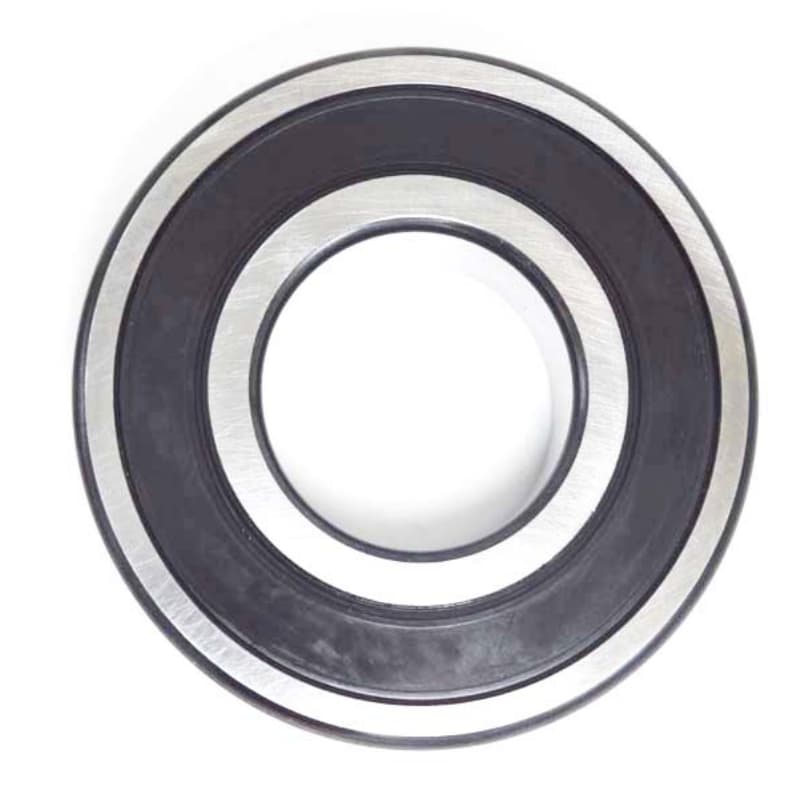
The four major parts of a deep groove ball bearing1 are the inner ring2, the outer ring3, the steel balls4, and the cage (or retainer)5. Each part has a specific role: the rings provide raceways, the balls carry the load through rolling motion, and the cage keeps the balls evenly spaced.
The Role and Importance of Each Component
Each of these four parts must be manufactured to exacting standards and work in perfect harmony. A weakness in any single component will lead to the failure of the whole bearing. Let’s examine each one closely.
1. The Inner Ring
This is the ring that fits tightly onto the rotating shaft. It has a deep, grooved raceway on its outer circumference where the balls roll. The inner ring2‘s inner diameter (the "bore") is machined to very precise tolerances to ensure a proper fit with the shaft, preventing slippage (which causes wear) or excessive tightness (which causes heat). The quality of the raceway’s surface finish and its geometric accuracy are critical for smooth, quiet operation and long life.
2. The Outer Ring
This ring is usually pressed into the stationary housing of the machine. It has a matching deep grooved raceway on its inner circumference. The outer ring3 provides the counter-surface for the balls and helps transfer the load from the balls into the machine’s structure. Its outer diameter is also precision-ground to ensure a proper fit in the housing, which is essential for correct load distribution and heat dissipation.
3. The Steel Balls
These are the heart of the bearing’s rolling motion. They carry the load by rolling between the two raceways, minimizing sliding friction. Their sphericity (perfect roundness), surface smoothness, and size consistency are paramount. Even microscopic deviations can cause vibration, noise, and stress points. High-quality bearings use Grade 10, 16, or 24 balls (the lower the number, the higher the precision). The material, typically chrome steel, must be hardened to resist wear but also tough to withstand impact.
4. The Cage (or Retainer)
This component is often overlooked but is vitally important. The cage does not carry any load. Its job is to separate the balls from each other, keeping them evenly spaced around the raceway. This prevents the balls from colliding and grinding against each other, which would generate excessive heat and wear. Cages can be made from stamped steel (for cost-effectiveness), machined brass (for high speeds and stability), or engineering polymers (for low weight and quiet operation). The choice of cage material depends on the bearing’s speed, temperature, and application requirements.
To see how these parts come together and why their quality matters, look at this comparison:
| Bearing Part | Primary Function | Consequences of Poor Quality |
|---|---|---|
| Inner & Outer Rings | Provide precise, smooth raceways for balls; transfer load. | Rough surface causes high friction and heat. Inaccurate geometry leads to vibration, noise, and premature fatigue. |
| Steel Balls | Carry load through pure rolling motion. | Out-of-round or unevenly sized balls create imbalance, vibration, and localized stress, leading to spalling (pitting). |
| Cage | Space balls evenly to prevent contact. | Weak or misaligned cage can deform or break, allowing balls to cluster and scrape, causing catastrophic failure. |
Beyond these four main parts, many deep groove ball bearing1s include a fifth element: seals or shields6. These are thin metal plates (shields) or rubber-contact seals that are fitted into grooves on the outer ring3 to close off the bearing’s open sides. They protect the interior from dust and dirt and retain the lubricant. The choice between a shield (non-contact, for very high speed) and a seal (contact, for better protection) is an important application-specific decision.
When you evaluate a bearing supplier, ask them about their process for each of these components. At FYTZ, we can explain our material sourcing for rings and balls7, our precision grinding processes8, and our cage selection criteria. This level of detail is what gives you, the buyer, confidence that you are getting a bearing where every part is designed and built to last.
Conclusion
Sourcing deep groove ball bearings from China is a strategic decision that blends significant cost and variety benefits with manageable risks. Success hinges on choosing a partner that prioritizes material integrity, manufacturing precision, and transparent quality control over the lowest possible price.
-
Understanding the mechanics of deep groove ball bearings can enhance your knowledge and help in selecting the right bearing for your needs. ↩ ↩ ↩ ↩ ↩ ↩ ↩ ↩
-
Exploring the role of the inner ring will provide insights into its importance in bearing performance and longevity. ↩ ↩ ↩ ↩ ↩ ↩
-
Learning about the outer ring’s function can help you understand load distribution and heat dissipation in bearings. ↩ ↩ ↩ ↩ ↩ ↩ ↩ ↩ ↩
-
Discovering the significance of steel balls will clarify their role in minimizing friction and ensuring smooth operation. ↩ ↩ ↩ ↩
-
Understanding the cage’s function can help you appreciate its importance in maintaining bearing integrity and performance. ↩ ↩ ↩ ↩
-
Exploring seals and shields will inform you about their protective roles and how they affect bearing maintenance. ↩ ↩ ↩
-
Understanding material sourcing will give you insights into how it impacts the durability and performance of bearings. ↩ ↩ ↩
-
Learning about precision grinding processes can enhance your understanding of quality standards in bearing production. ↩ ↩