
You are preparing a tender for a mining conveyor or a steel mill gearbox. The spherical roller bearings are critical. A vague RFQ leads to incompatible quotes, apples-to-oranges comparisons, and worse—bearing failures on site. Clear specification is your first defense against project risk.
To specify spherical roller bearing requirements, clearly define the ISO series and dimensions, load capacity (dynamic C and static Co), precision grade (P0, P6, P5), internal clearance group (C3, C4), cage and material specifications, lubrication requirements, and any applicable standards (ISO 15, 281). This ensures all suppliers bid on an identical, fit-for-purpose product.
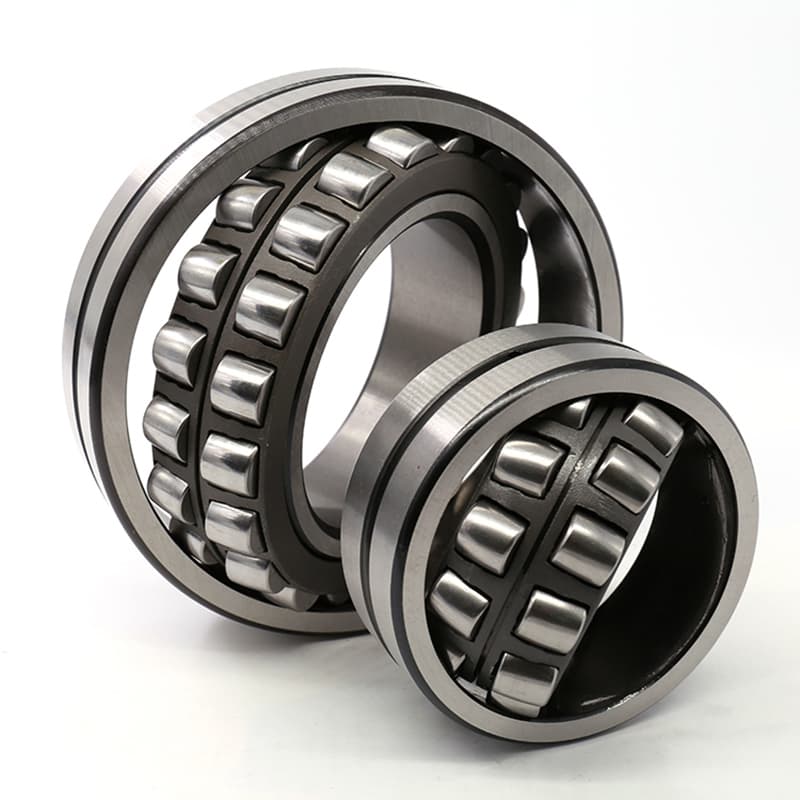
An unclear RFQ invites the cheapest, non-compliant bid. A precise RFQ ensures you compare true equals and receive bearings that will perform. Whether you’re an end-user, an EPC contractor, or a distributor like Rajesh responding to a tender, mastering this language is essential. Let’s break down the key specification elements.
What is the ISO standard for spherical roller bearing1s?
When you write "spherical roller bearing1" in an RFQ, you must be more specific. ISO standards provide the common language. They ensure a bearing from Manufacturer A has the same basic dimensions and performance characteristics as one from Manufacturer B. This is non-negotiable for competitive bidding.
The primary ISO standards for spherical roller bearing1s are ISO 152 (dimensional plan), ISO 763 (static load ratings), ISO 2814 (dynamic load ratings and life calculation), and ISO 4925 (tolerance classes). For spherical rollers, the ISO 122406 series also defines dimensional interchangeability for specific series (e.g., 222, 223, 230, 231, 232).
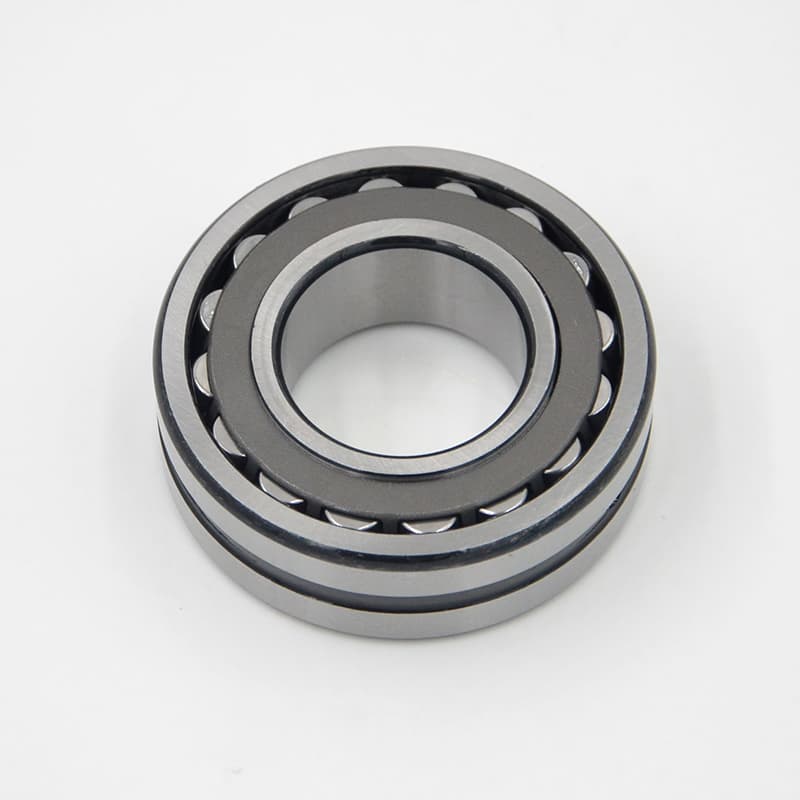
Using ISO Standards to Create an Unambiguous Specification
ISO standards are not just for engineers. They are procurement tools. Referencing them in your RFQ eliminates guesswork and defines the minimum acceptable quality.
1. ISO 152: The Dimensional Blueprint
This standard defines the boundary dimensions: bore diameter (d), outside diameter (D), width (B), and chamfer dimensions (r). It organizes bearings into standard series based on their cross-sectional size relative to bore. For spherical rollers, common series are:
- 222 Series: Light/Medium series.
- 223 Series: Medium series.
- 230, 231, 232 Series: Heavy series.
Your RFQ must state the series and the bore size (e.g., Spherical Roller Bearing, 22320). This uniquely defines the outer dimensions.
2. ISO 2814 & ISO 763: The Performance Guarantee
These standards govern how load ratings are calculated. You should require that the bearing’s Basic Dynamic Load Rating (C) and Basic Static Load Rating (Co) meet or exceed the values specified in the manufacturer’s catalog that is based on these ISO standards. This ensures the bearing has the fundamental strength for your application.
3. ISO 4925: The Quality and Precision Level
This defines tolerance classes: Normal (P0), P6, P5, P4. For most industrial spherical rollers, P0 is standard. For applications requiring higher running accuracy (e.g., in gearboxes for smoother operation), you might specify P6. Stating "Tolerance class per ISO 4925, P6" is clear and enforceable.
4. ISO 122406: The Series-Specific Guarantee
This standard ensures complete interchangeability within a series. It’s the final assurance that a bearing will fit your housing and shaft.
For a buyer or project engineer, incorporating these standards into an RFQ is straightforward. A well-structured requirement line might look like this:
Item: Spherical Roller Bearing.
Quantity: 50 pcs.
Specification: ISO 22320. Dynamic load rating (C) ≥ 710 kN, Static load rating (Co) ≥ 800 kN (per ISO 2814/76). Tolerance class: P0 per ISO 4925. Dimensional interchangeability per ISO 122406-2.
This tells every potential supplier, from SKF to FYTZ, exactly what you need. For a distributor like Rajesh’s company, receiving such a clear RFQ allows them to immediately check their FYTZ catalog and provide a compliant, competitive quote with confidence, knowing there will be no ambiguity about what is being supplied.
What is the HS code for spherical roller bearings1?
In international procurement, especially for tenders involving import, the HS Code2 is critical. It classifies the product for customs, determines the import duty3, and is a mandatory part of shipping documentation. Getting it wrong can delay shipments and incur penalties.
The Harmonized System (HS) code for spherical roller bearings1 is typically 8482.50.00. This falls under Chapter 84, heading 8482 ("Ball or roller bearings"). The full 10-digit code can vary slightly by country, but 8482.50 specifically covers "Spherical roller bearings" at the international 6-digit level.
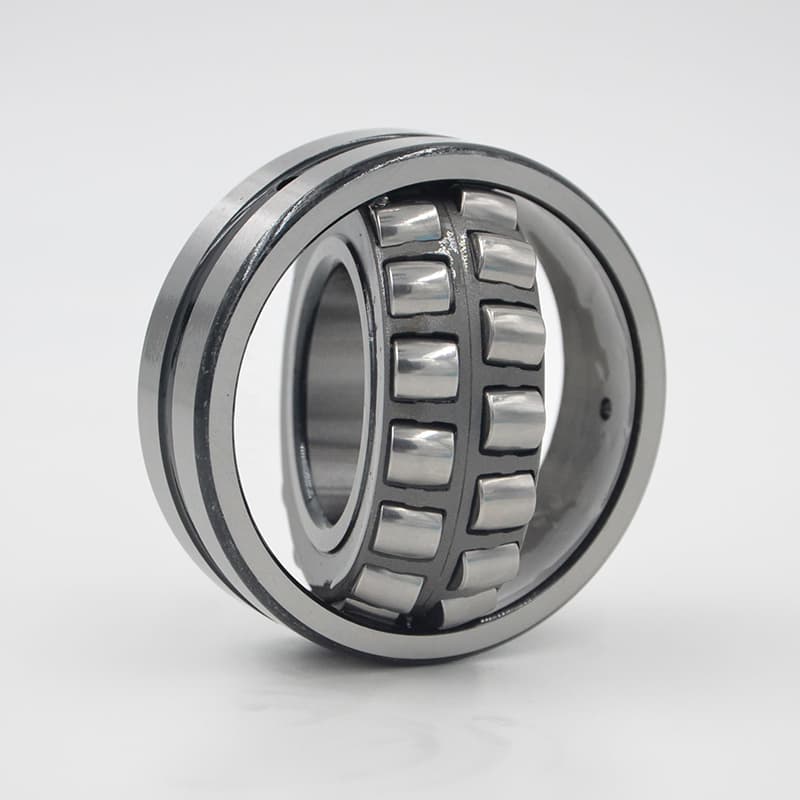
The Practical Importance of the HS Code2 in Tenders and RFQs
The HS Code2 is not just a customs formality. It has direct implications for cost, logistics, and even supplier qualification in a tender process.
1. Duty and Tax Implications
The HS code determines the import duty3 rate. In your project’s total landed cost calculation, you must include this duty. Specifying the correct HS code (8482.50.00) in your RFQ allows suppliers to accurately quote CIF (Cost, Insurance, and Freight) or DDP (Delivered Duty Paid) prices. A supplier quoting under a generic code might give you an incorrect landed cost.
2. Ensuring Regulatory Compliance
Some countries have specific regulations or certifications linked to HS codes. Stating the code in your RFQ ensures the supplier is aware of the correct classification for your destination country (e.g., India, Brazil, South Africa). It shows professional diligence.
3. Logistics and Clearance Efficiency
Providing the correct HS code to your freight forwarder or customs broker speeds up the clearance process. Delays at the port cost money. Including a requirement like "Supplier must provide a commercial invoice with the correct HS Code2 8482.50.00" in your RFQ terms puts the responsibility on the supplier to get it right.
4. A Note on Country-Specific Variations
The first six digits (8482.50) are universal. The next 2-4 digits are country-specific. For example:
- USA: 8482.50.0000
- India: 8482.50.00
- Brazil: 8482.50.90
A professional supplier like FYTZ will know to use the correct extension for the destination port. As a buyer, you should verify the full code with your local customs authority or freight agent.
For a procurement manager like Rajesh, who imports containers of bearings into India, this is daily business. When he responds to a tender, his quote will automatically include the correct Indian HS code and account for applicable duty. If he is the one issuing an RFQ to sub-suppliers in China, he will specify the HS code to ensure smooth import. Including this detail in a tender document signals to bidders that you are a sophisticated buyer, which in turn attracts more serious and reliable suppliers.
What type of load is a spherical roller bearing?
This seems like a simple question, but the answer is nuanced. A clear understanding directly informs your specification. You must tell the supplier what the bearing needs to endure so they can validate their product’s suitability.
Spherical roller bearings are primarily designed for very heavy radial loads1. They can also accommodate moderate axial (thrust) loads2 in either direction. Their key feature is the ability to tolerate static misalignment3 (typically 0.5° to 2°), which makes them ideal for applications where shaft deflection or mounting inaccuracies are expected.
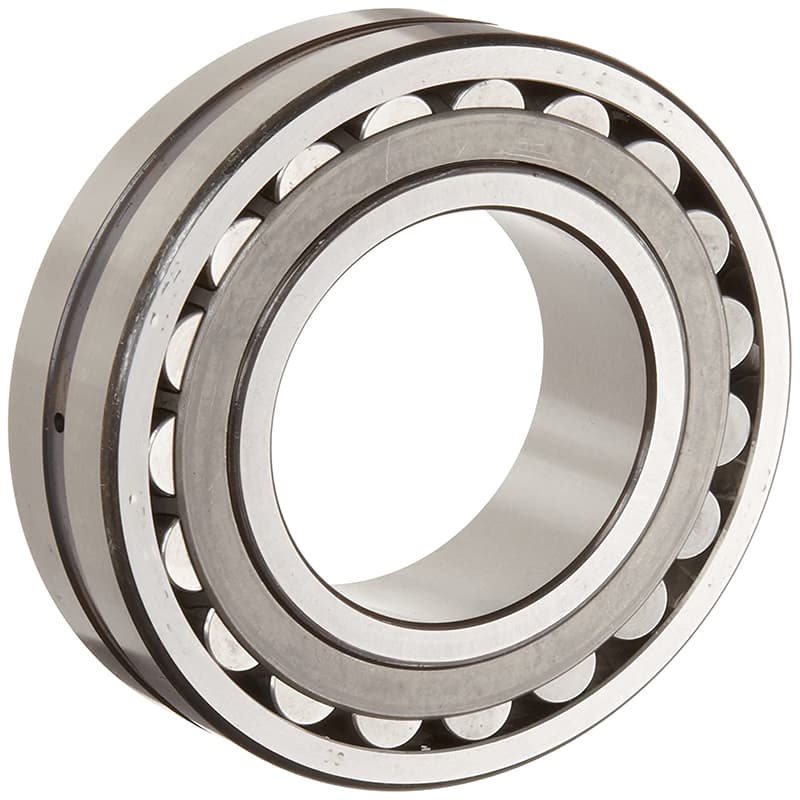
Specifying Load Conditions: From Concept to RFQ Clause
You don’t just say "it’s for a heavy load." You quantify it. This allows the bearing supplier to perform a basic life calculation and ensure the selected bearing is adequate.
1. Radial Load: The Primary Specification
This is the load perpendicular to the shaft. In your RFQ, you should provide:
- Magnitude: The maximum radial force in Newtons (N) or kilonewtons (kN).
- Nature: Is it constant, variable, or shock loading? For shock loads, you might specify a higher safety factor.
This allows the supplier to check that your applied load (P) is appropriately lower than the bearing’s dynamic load rating4 (C) to achieve the required L10 life.
2. Axial Load: The Secondary but Important Consideration
While spherical rollers can handle axial load, their capacity is limited. You must specify:
- Magnitude and Direction: Is it one-directional or reversing?
- Combination with Radial Load: The equivalent dynamic load (P) is calculated from both radial and axial components. Providing both values allows for an accurate life estimate.
3. The Critical Misalignment Allowance
This is a defining characteristic. In your RFQ, you should state:
- Expected Misalignment: e.g., "The application may involve static misalignment3 up to 1.5 degrees due to foundation settling."
- This informs the supplier that you require a true spherical roller bearing and not a different type. It also ensures they don’t recommend a bearing with special constraints that limit misalignment.
How to Structure Load Requirements in an RFQ:
A professional RFQ will include a dedicated "Operating Conditions5" section:
Operating Conditions5 for Bearing Item 22320:
- Maximum Radial Load (Fr): 200 kN
- Maximum Axial Load (Fa): 40 kN (one direction)
- Rotational Speed: 500 rpm
- Expected Static Misalignment: ≤ 1.0 degree
- Required L10h Minimum Life: 30,000 hours
- Application: Gearbox output shaft for conveyor drive.
With this information, a technical supplier like FYTZ can not only quote a price but also provide a technical compliance statement6. They can confirm that bearing 22320 meets the load and life requirements, or they might recommend the next size up (22322) if the life calculation falls short. This turns the bidding process into a collaborative engineering review, minimizing project risk.
What are the requirements for bearing materials?
The material is the foundation of bearing performance. Specifying just "chrome steel" is not enough. You need to define the quality standards for the steel, the heat treatment process, and the cage material. These details separate a bearing that lasts from one that fails prematurely.
Bearing material requirements for spherical rollers include high-carbon chrome steel (e.g., SAE 521001/GCr15) with strict cleanliness standards (oxide/sulfide inclusion control), proper through-hardening or case-hardening to achieve a hardness of 58-64 HRC, and a suitable cage material (e.g., pressed steel, machined brass, or polyamide) based on speed, temperature, and application.
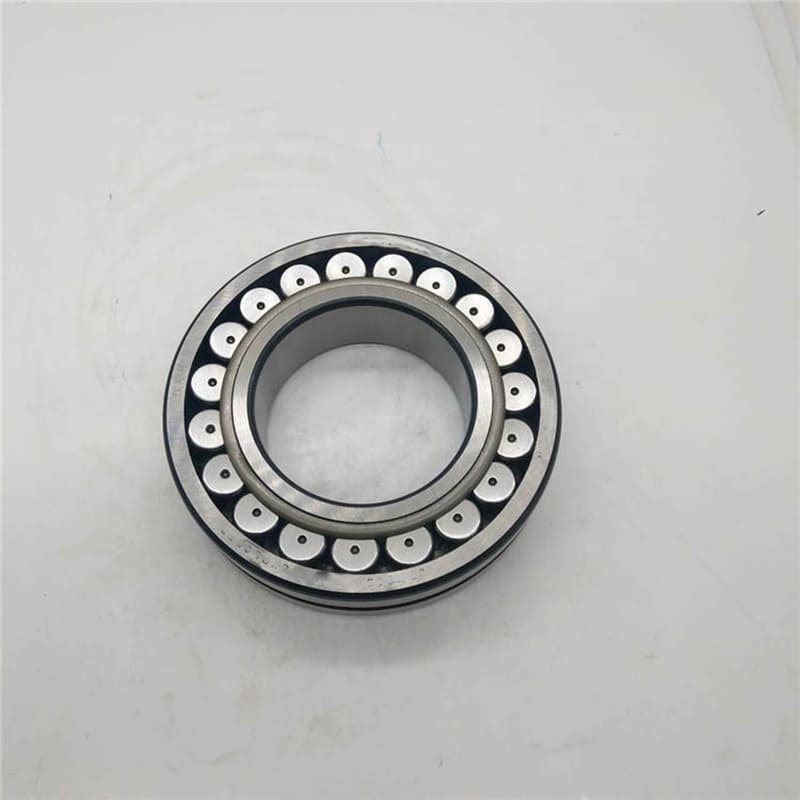
Translating Material Science into Procurement Specifications
Material requirements can be technical, but they are essential for reliability in demanding applications. Your RFQ should reference established industry standards.
1. Ring and Roller Material: The Core of Strength
- Steel Grade: Specify SAE 521001 (US) or GCr15 (China/ISO) equivalent chrome steel. This is the standard for high-quality rolling bearings.
- Steel Cleanliness: This is critical for fatigue life. Require a minimum cleanliness rating per standards like SEP 1921 or ASTM E45. A common requirement is "Material cleanliness2 to meet at least ISO 683-17:2014, with oxide and sulfide inclusions ≤ level 2."
- Heat Treatment3: Specify through-hardening to 58-62 HRC. For extremely heavy shock loads, case-hardened steel (like SAE 8620) might be specified for better toughness.
- Microstructure: The hardened steel should have a fine, uniform martensitic structure with finely dispersed carbides.
2. Cage (Retainer) Material: The Stabilizing Component
The cage holds the rollers. The wrong cage fails first. Your RFQ should specify based on operating conditions:
- Pressed Steel Cage4: Standard, robust, good for most industrial applications with moderate speeds and temperatures.
- Machined Brass Cage5: Better for higher speeds, better heat dissipation, and excellent emergency running properties if lubrication fails.
- Polyamide (PA66-GF) Cage6: Lightweight, good for high speeds, low noise, but has temperature limits (usually <120°C continuous).
3. How to Write Material Clauses in an RFQ
Avoid vague statements. Use references to standards and clear, measurable requirements.
Example RFQ Clauses on Materials:
M1. Rings & Rollers: Shall be manufactured from vacuum-degassed, high-carbon chrome steel equivalent to SAE 521001. Hardness: 59-62 HRC. Material cleanliness2 shall meet the requirements of DIN 50602-K4 (or equivalent SEP 1921 d12 ≤ 15).
M2. Cage: For bearings operating below 120°C and speeds below 2000 rpm, a pressed steel cage is acceptable. For higher speeds or temperatures, a machined brass cage (CuZn39Pb3) is required. Polyamide cages are not permitted for this application.
M3. General: All materials must be free from defects such as cracks, seams, or inclusions that could affect service life. Certificates of Material (CM) must be supplied upon request.
For a manufacturer like FYTZ, these are clear, actionable requirements. We can confirm compliance because we control our steel sourcing and heat treatment processes. For a distributor bidding on a tender, having a manufacturer that can provide these material certifications is a key competitive advantage. It proves you are sourcing quality, not just commodity, products.
Conclusion
A precise RFQ for spherical roller bearings is a blueprint for success. By clearly specifying ISO standards, HS codes, load conditions, and material requirements, you ensure comparable bids, secure fit-for-purpose components, and lay the groundwork for reliable, long-term equipment performance.
-
Explore this link to understand the significance of SAE 52100 steel in bearing applications and its performance benefits. ↩ ↩ ↩ ↩ ↩ ↩ ↩ ↩ ↩
-
Learn about the critical role of material cleanliness in enhancing the fatigue life and reliability of bearings. ↩ ↩ ↩ ↩ ↩ ↩ ↩ ↩ ↩
-
Discover various heat treatment methods and their impact on the performance and durability of bearing materials. ↩ ↩ ↩ ↩ ↩ ↩ ↩
-
Find out why pressed steel cages are preferred in many industrial applications and their benefits for bearing performance. ↩ ↩ ↩ ↩ ↩
-
Explore the advantages of machined brass cages, especially in high-speed applications, and their heat dissipation properties. ↩ ↩ ↩ ↩ ↩ ↩ ↩
-
Learn about the unique properties of Polyamide cages and their suitability for specific bearing applications. ↩ ↩ ↩ ↩ ↩