
Your machine design calls for high speed. You also need to handle heavy loads and strong axial thrust. A deep groove ball bearing might spin fast but can’t take the load. A cylindrical roller bearing can take the load but struggles with thrust. This is where the tapered roller bearing shows its unique strength.
For high-speed applications with significant combined radial and axial loads, tapered roller bearings are an excellent choice. Their conical design manages thrust efficiently, and with proper precision, preload, and lubrication, they can achieve high rotational speeds while offering superior load capacity compared to ball bearings of similar size.

"High speed" is not just a number. It is a set of challenges: centrifugal forces, heat generation, lubrication starvation. Tapered roller bearings, when engineered and applied correctly, solve these challenges in a way other bearings cannot. Let’s break down why they are a go-to solution for demanding drives.
What is the best bearing for high speed application?
There is no single "best" bearing for all high-speed situations. The best choice depends on the load type, precision needs, and cost. For pure high speed with light loads, a deep groove ball bearing1 is king. But when the speed comes with serious load, the answer changes.
The best bearing for a high-speed application balances speed capability with load handling. For pure radial load at very high speeds, deep groove ball bearing1s or angular contact ball bearings2 are optimal. For high-speed applications3 with combined heavy radial and axial loads, precision tapered roller bearing4gs](https://ibtinc.com/why-heavy-machinery-relies-on-tapered-roller-bearings/)[^5] or cylindrical roller bearings5 are often the superior choice.

Defining "High Speed" and Matching the Bearing Architecture
"High speed" means different things for different sized bearings. Engineers use the *speed factor (n dm)* to compare, where ‘n’ is rpm and ‘dm’ is the mean diameter in mm. A small bearing can have a very high ndm even at moderate rpm.
1. The Contenders for the "High-Speed" Crown
-
Deep Groove/Angular Contact Ball Bearings:
- Strength: Lowest friction, point contact allows very high n*dm values. Angular contact types are designed for high-speed spindles.
- Weakness: Load capacity is limited by the small contact area. Thrust capacity is good but not as robust as tapered rollers for very heavy loads.
- Best For: Machine tool spindles, turbochargers, small electric motors.
-
Cylindrical Roller Bearings:
- Strength: Excellent radial load capacity6, low friction (line contact), good for high radial speeds.
- Weakness: Generally cannot handle axial load alone; need a separate thrust bearing.
- Best For: High-speed main shafts in machines where load is primarily radial.
-
Tapered Roller Bearings:
- Strength: Exceptional combined load capacity6. The conical geometry naturally handles axial thrust. Robust design.
- Challenge for Speed: More complex contact mechanics and friction. Requires very careful control of preload and lubrication to achieve high speeds.
- Best For: High-speed gearboxes, pinion shafts, wheel hubs, and applications where both high speed and high load/thrust coexist.
2. Why Tapered Rollers Can Be "Best" in Their Niche
In applications like automotive differentials or industrial gearboxes, the shaft doesn’t just spin fast; it transmits high torque. This creates heavy radial and axial loads simultaneously. A ball bearing would fail from overload. A cylindrical roller bearing would need a separate, bulky thrust bearing. A precision tapered roller bearing4 solves both problems in one compact unit. Modern design, premium steel, and optimized cage designs have pushed their speed limits significantly.
For an equipment designer or a distributor like Rajesh’s company, selection is a matching game. The table below helps guide the choice:
| Application Context | "Best" Bearing Type(s) | Key Reasoning |
|---|---|---|
| Electric Spindle, >10,000 rpm, Light Load | Angular Contact Ball Bearing (P4/P2 Precision) | Minimizes friction and heat; handles moderate thrust. |
| Centrifugal Pump, High Radial Load, Moderate Speed | Cylindrical Roller Bearing (with separate thrust bearing) | Handles pure radial load most efficiently. |
| Gearbox Pinion Shaft, High Torque, High Thrust, High Speed | Precision Tapered Roller Bearing (P5/P4 Class) | Single unit handles all combined loads efficiently. Compact design. |
| Vehicle Wheel Hub, Heavy Load, High Road Speed | Matched Set of Tapered Roller Bearings | Handles vehicle weight (radial) and cornering forces (axial) reliably. |
At FYTZ Bearing, we produce tapered roller bearings7 in both standard and precision grades. For a customer in South Africa’s mining sector needing a high-speed conveyor drive, we can provide the robust load capacity6. For a manufacturer in Turkey building precision gearboxes, we can supply P5-class bearings for smoother high-speed operation. The "best" bearing is the one that fits the specific problem perfectly.
What kind of roller bearing is best for equipment that must run at high speed?
Roller bearings are chosen for load. But which roller type can also keep up when the RPM climbs? Not all rollers are created equal for the speed race. The design of the roller and its cage becomes the deciding factor.
For high-speed equipment, cylindrical roller bearings are generally the best roller bearing type due to their low friction and simple roller guidance. However, for high-speed applications that also involve significant axial thrust, precision tapered roller bearings with advanced cage designs and optimized roller profiles are the preferred choice among roller bearings.
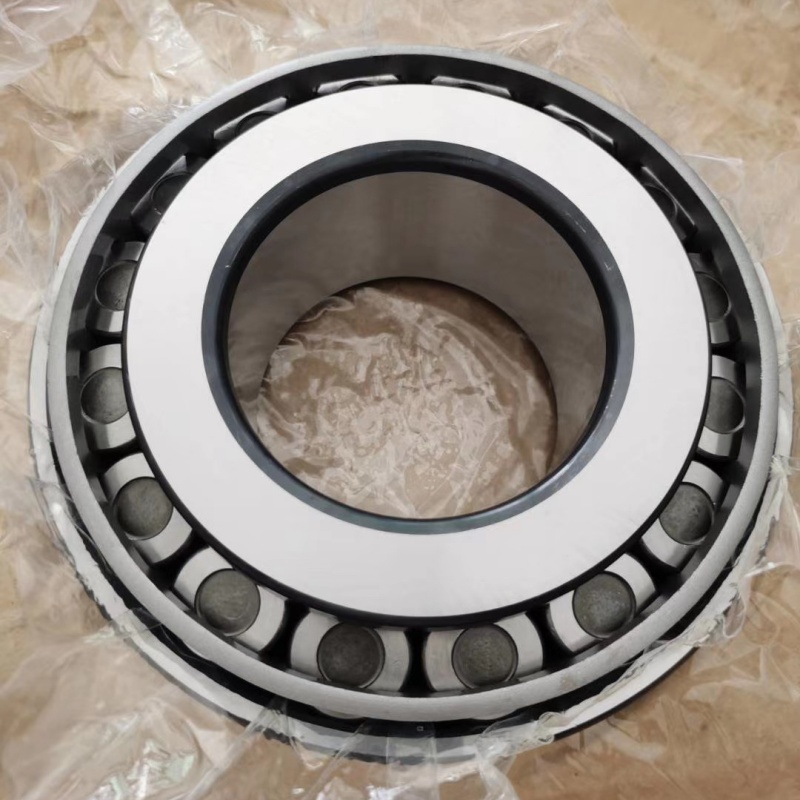
The High-Speed Challenges for Roller Bearings
Roller bearings have line contact, which creates more friction and heat than the point contact of balls. At high speed, this heat must be managed, and the rollers must be kept stable.
1. Cylindrical Roller Bearings1: The Speed Specialists
- Why they are fast: The rollers have a pure rolling motion with minimal sliding. With a simple, lightweight cage (often brass or polymer), they introduce little drag. Designs with no ribs on the inner or outer ring (NU, N types) allow axial displacement, reducing heat from constrained thermal expansion.
- Limitation: They need a separate bearing to handle axial load, complicating the design.
2. Tapered Roller Bearings2: The High-Speed Evolution
Traditional tapered rollers had speed limits. Modern designs have broken through:
- Asymmetric Roller Profile3: The rollers are not perfect cones. They are slightly crowned (the profile is a gentle curve). This prevents stress concentration at the roller ends, reducing heat generation.
- Advanced Cage Design4: High-strength, lightweight cages (machined brass or polymer) keep rollers perfectly spaced and guided, preventing skewing and collision at high speed.
- Precision Manufacturing7: P5 and P4 precision classes ensure minimal runout and vibration, which is critical for smooth high-speed operation.
- Optimized Contact Geometry: The contact angle and roller size are optimized to balance load capacity with lower sliding friction at the roller-rib contact.
3. The Critical Role of Lubrication5
At high speed, oil is usually required over grease. Oil can be circulated to remove heat. A directed oil jet or oil-air (mist) lubrication is common for high-speed tapered roller bearings in gearboxes to ensure each roller is cooled and lubricated.
For an importer supplying to repair shops or OEMs, knowing these subtypes is key. A standard tapered roller bearing for a truck axle is not suitable for a high-speed machining center. When Rajesh’s customer in India asks for a bearing for a high-speed lathe spindle, the correct FYTZ product is a precision-grade, asymmetrically profiled tapered roller bearing designed for oil lubrication, not a general-purpose bearing. Selling the right subtype prevents failures and builds a reputation for technical expertise.
What are tapered roller bearings good for?
This is their home turf. They are not general-purpose bearings; they are specialists. If your application falls into their specialty, they outperform other types. If not, another bearing might be better. Knowing their strengths is key to proper application.
Tapered roller bearings are exceptionally good for applications involving combined radial and axial loads. They are ideal for gearboxes, wheel hubs, rolling mills, crane hooks, and heavy machinery where shafts must resist strong thrust forces in one direction while supporting heavy radial loads.

The Inherent Strengths of the Conical Design
The tapered shape is not an accident. It translates radial load into an axial force component within the bearing. This physics makes them uniquely capable in specific scenarios.
1. Handling Combined Loads Efficiently
This is their superpower. A single tapered roller bearing can support a large radial load and a large axial load acting in one direction. For two-directional axial load, they are used in opposed pairs (back-to-back or face-to-face). This makes the bearing arrangement compact and stiff.
2. Providing Adjustable Clearance/Preload
The conical design allows for precise setting of the internal clearance (or preload) by adjusting the axial position of one ring relative to the other. This is done via shims or a threaded nut. Proper preload eliminates internal play, increases system stiffness (critical for gear mesh accuracy), and can extend bearing life.
3. High Rigidity and Stiffness
The large contact area and the ability to apply preload make tapered roller bearing arrangements very rigid. This minimizes shaft deflection under load, which is vital for maintaining precise gear alignment in transmissions or accurate roller positioning in mills.
4. Robustness and Durability
They are typically made from case-hardened steel, making them tough and resistant to shock loads—a common requirement in mining, construction, and heavy vehicles.
For industries across our export markets, these strengths are vital. A manufacturer in Brazil building agricultural tractors needs wheel hub bearings that can take the weight of the vehicle (radial load) and the forces during turning and braking (axial load). Tapered rollers are the default choice. The table below categorizes their effectiveness:
| Application Sector | Specific Use | Why Tapered Roller Bearings Excel Here |
|---|---|---|
| Automotive & Transport | Wheel Hubs, Differentials, Transmissions | Handle vehicle weight and cornering/braking thrust. Adjustable for precise preload. |
| Industrial Gearboxes | Input/Output Shafts, Pinion Shafts | Manage gear separation forces (axial) and torque (radial). High stiffness keeps gears aligned. |
| Heavy Machinery | Crane Hooks, Rolling Mill Rolls, Mining Drums | Extreme combined loads and shock resistance. Robust design for harsh environments. |
| Aerospace & Racing | Landing Gear, Gearboxes (High-Perf) | High stiffness-to-weight ratio, handles high thrust from propellers or gears. |
At FYTZ, we see consistent demand for these applications. For Rajesh’s company, stocking the right tapered roller bearings for the local market—like common truck hub sizes for India’s logistics industry—is a strategic business decision based on understanding these core strengths.
Which bearings are best suited to very high thrust applications?
When the primary force is axial—pushing or pulling along the shaft—not all bearings are equal. Some can handle a little thrust; others are built for it. For "very high" thrust, the options narrow to specialists designed to carry this load as their main job.
For very high thrust (axial) applications, the best-suited bearings are thrust ball bearings1 (for moderate speeds), cylindrical roller thrust bearings2, and tapered roller thrust bearings3 (for highest load capacity). For combined high thrust and high radial load, a matched set of angular contact ball bearings4 or tapered roller bearings is used.

Choosing a Bearing for an Axial Battle
Thrust loads try to push the shaft out of the machine. The bearing must resist this force over its entire life. Different designs do this in different ways, with trade-offs in speed, load, and complexity.
1. Pure Thrust Bearings (Designed Only for Axial Load)
-
Thrust Ball Bearings:
- Best for: High-speed, moderate thrust loads. Common in machine tool spindles, steering mechanisms.
- Limitation: Lower load capacity than roller types due to point contact.
-
Cylindrical Roller Thrust Bearings:
- Best for: Very high thrust loads at low to moderate speeds. The line contact of rollers provides immense capacity.
- Limitation: Requires perfect alignment and cannot handle any radial load.
-
Tapered Roller Thrust Bearings (Spherical Roller Thrust Bearings):
- Best for: The highest possible thrust loads, often with some misalignment capability (spherical type). Used in heavy vertical pumps, marine propeller shafts, large gearboxes.
- Limitation: Very low speed capability, complex and expensive.
2. Combined Load Bearings (Handling High Thrust + Radial)
This is where tapered roller bearings shine.
- A single tapered roller bearing handles high one-directional thrust along with high radial load.
- For two-directional high thrust, they are used in pairs (duplex sets). These pairs are preloaded by the manufacturer and treated as a single unit. They provide extreme axial rigidity and are the standard for high-precision, high-stiffness applications like machine tool spindles and pinion shafts.
Why Tapered Rollers Excel in High-Thrust/Radial Scenarios:
Compared to using a separate radial bearing and a thrust bearing, a tapered roller bearing (or duplex set) is more compact, stiffer, and often more cost-effective. The thrust capacity is inherent to its design, not an add-on.
For an engineer or a technical distributor, the selection logic is clear:
| Thrust Application Profile | Recommended Bearing Solution | FYTZ Product Relevance |
|---|---|---|
| Very High Pure Thrust, Low Speed (e.g., vertical screw jack) | Cylindrical Roller Thrust Bearing | We can source or produce these for specific client needs. |
| High Thrust + High Radial, High Speed (e.g., gearbox pinion) | Matched Duplex Set of Precision Tapered Roller Bearings | This is a core competency. We supply precision tapered rollers suitable for duplex pairing and preloading. |
| Moderate Thrust, Very High Speed (e.g., main spindle) | Duplex Set of Angular Contact Ball Bearings | We also produce high-precision angular contact ball bearings4 for this niche. |
When a customer from Russia’s oil & gas sector needs a bearing for a high-thrust pump7, Rajesh’s team can engage FYTZ’s engineering support to determine if a pure thrust bearing or a combined load solution is needed. This ability to navigate the high-thrust landscape adds immense value to our B2B partnerships.
Conclusion
Tapered roller bearings are a powerful solution where high speed meets high load. Their ability to manage combined radial and axial forces efficiently, especially in precision configurations, makes them indispensable for demanding applications in transportation, industry, and heavy machinery.
-
Explore this link to understand how thrust ball bearings work and their ideal applications in various industries. ↩ ↩ ↩ ↩
-
Learn about cylindrical roller thrust bearings and their advantages in handling very high thrust loads. ↩ ↩ ↩
-
Discover the benefits of tapered roller thrust bearings for high load capacity and their applications. ↩ ↩ ↩
-
Find out how angular contact ball bearings are used in high-speed applications and their unique features. ↩ ↩ ↩ ↩ ↩
-
Find out why oil lubrication is preferred for high-speed roller bearings and how it helps manage heat. ↩ ↩
-
Learn about the importance of load capacity in choosing the right bearing for high-speed scenarios. ↩ ↩ ↩
-
Explore the best bearing options for high-thrust pumps to ensure optimal performance and reliability. ↩ ↩ ↩
