
You installed new deep groove ball bearings. They ran smoothly for a few months, then noise started. The bearings weren’t worn out; they were starved. The grease inside had simply died of old age, heat, or contamination. This premature death is avoidable.
Proper lubrication of deep groove ball bearings requires selecting the right grease type (base oil viscosity, thickener), applying the correct fill quantity (typically 25-35% of free space), and understanding that grease life is finite. Service life is determined by temperature, speed, load, and environment, not just calendar time.
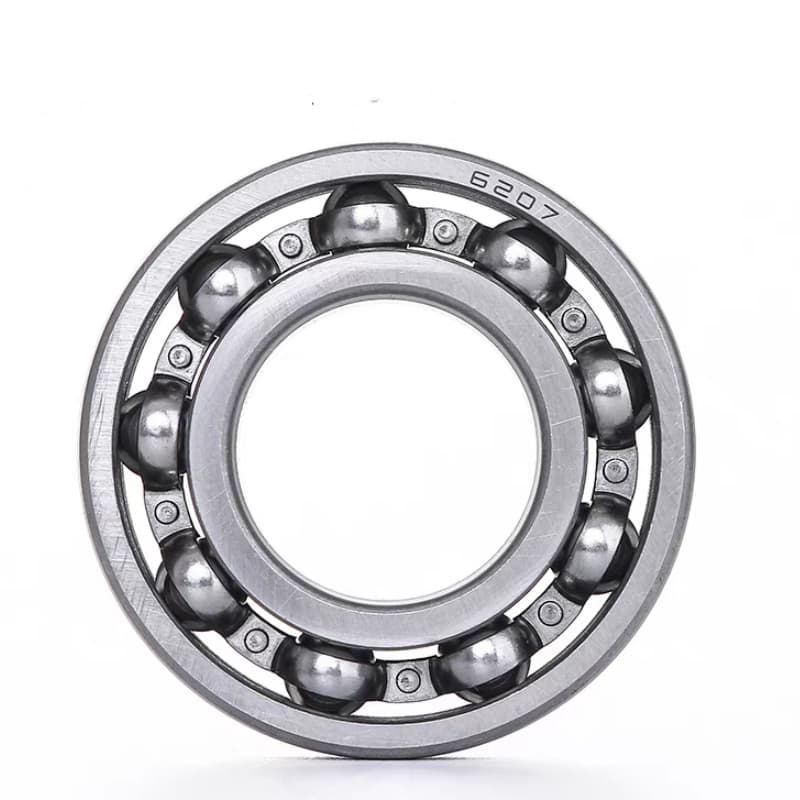
Grease is not a permanent fix. It is a consumable with a predictable lifespan. When it fails, the bearing fails. Learning to manage this lifespan is the most effective way to prevent over 50% of all bearing failures. Let’s move from guesswork to a calculated lubrication strategy.
How long does bearing grease last?
There is no simple answer like "one year." I’ve seen grease break down in weeks inside a hot motor. I’ve also seen it last for years in a slow-turning, cool environment. Asking for a single lifespan number is like asking how long a tank of gas lasts—it depends entirely on how you drive.
Bearing grease life1 is not a fixed time. It is the operating hours until the grease degrades and can no longer lubricate effectively. This lifespan varies widely from under 500 hours in hot, high-speed conditions to over 10,000 hours in ideal, cool, low-speed applications. Temperature is the most critical factor.
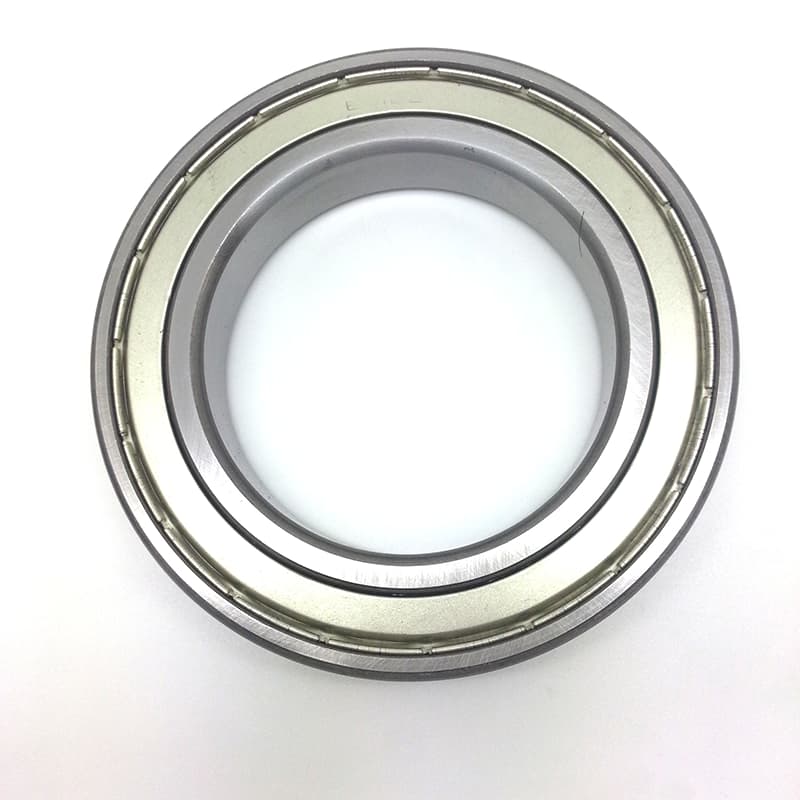
Why Grease "Dies" and What Kills It Faster
Grease is not just oil. It’s a three-part system: base oil, thickener, and additives. Each part has a weakness. Grease life ends when one part fails.
1. The Base Oil: It Evaporates or Oxidizes.
The base oil does the actual lubricating. Over time, especially with heat, two things happen:
- Oxidation: The oil reacts with oxygen in the air. It thickens, forms varnish and sludge, and loses its lubricity. This process doubles with every 10°C rise in temperature (a rough rule of thumb).
- Evaporation/Leakage: Light oil fractions can evaporate at high temps. The oil can also slowly separate from the thickener and leak out past seals.
2. The Thickener: It Breaks Down.
The thickener (like lithium, polyurea, calcium) is a sponge that holds the oil. Under mechanical shear (churning in the bearing) and heat, this sponge structure can collapse. This causes the grease to soften excessively and leak, or harden and crack.
3. Additive Depletion:
Anti-wear (AW) and extreme pressure (EP) additives form protective films on metal. They get used up over time as they sacrificially protect the surfaces.
The Accelerators of Grease Death:
- High Temperature: The #1 killer. Above the grease’s recommended temperature, life plummets.
- High Speed: Centrifugal force throws oil out of the thickener. Churning also generates heat.
- Heavy Load: Squeezes the oil film thin and increases stress on the grease structure.
- Contamination: Water, dust, and chemicals poison the grease, accelerating oxidation and wear.
For maintenance planners, this means you cannot set a single regrease interval2 for your whole plant. A bearing on a hot furnace fan and one on a cool conveyor need completely different schedules. The table below illustrates the dramatic impact:
| Operating Condition | Typical Grease Life Expectancy (Hours) | Practical Interpretation |
|---|---|---|
| Ideal: Cool (<70°C), Clean, Low Speed, Steady Load | 8,000 – 15,000+ | Possibly "lubricated for life" in a sealed bearing. May last years. |
| Standard Industrial: Moderate Temp (70-80°C), Some Vibration | 2,000 – 5,000 | Requires planned relubrication every few months of continuous operation. |
| Severe: Hot (90-100°C), Contaminated, High Load | 500 – 1,500 | Requires frequent relubrication, perhaps monthly or weekly. |
| Extreme: Very Hot (>120°C), Wet, Dirty | < 500 | Standard grease fails quickly. Requires special high-temp grease or different lube method. |
At FYTZ, when we pre-grease our deep groove ball bearings, we use a standard, quality lithium-based grease suitable for general industrial use. But we always advise our distributors, like Rajesh’s team, to check the end-user’s actual conditions. If a customer in a steel mill in Vietnam is burning through bearings, the first question should be about temperature, not bearing quality. Recommending a switch to a high-temperature polyurea grease3 can extend service life dramatically without changing the bearing itself.
How do you calculate bearing grease life1?
You can’t just guess. You need a starting point for your maintenance schedule. While precise life is complex, engineers use established formulas to get a good baseline estimate. This calculation turns lubrication from an art into a managed science.
You can calculate a baseline grease life using empirical formulas2 that consider bearing type, speed (rpm), and operating temperature. A common approach uses the formula: Log L = 6.54 – 2.6 (n dm / 10,000) – (0.025 * T). L is life in hours, n is speed, dm is mean diameter, T is temperature in °C. This gives a theoretical life under test conditions, which must be adjusted for real-world factors.
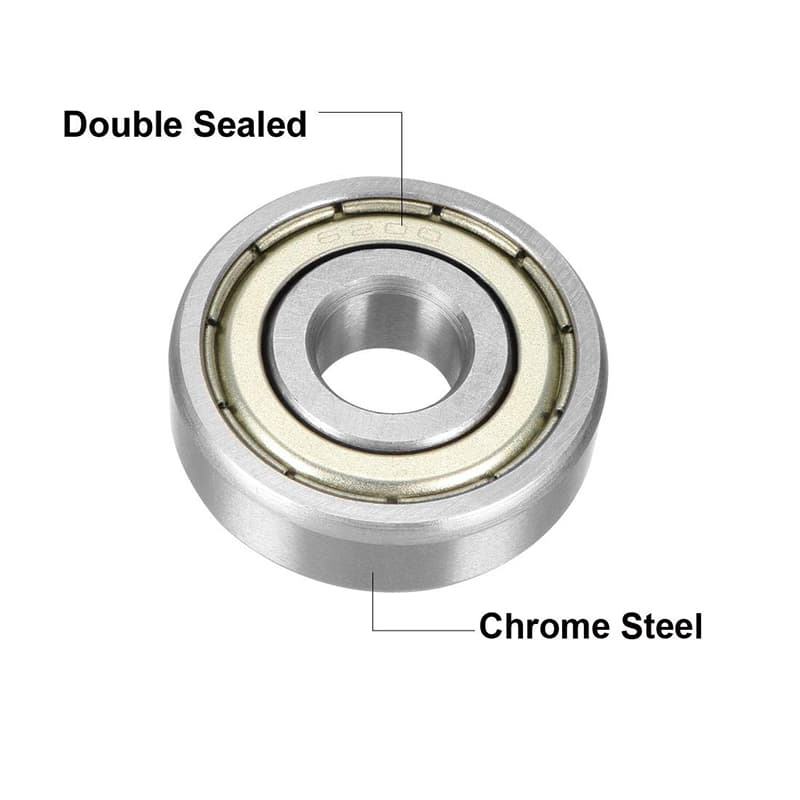
From Theoretical Formula to Practical Maintenance Interval
The formula provides a number, but that number is for a clean, perfectly aligned bearing under steady load. Your machine is not a test lab. The calculation is step one in a two-step process.
1. Understanding the Variables in the Formula
Let’s take the common formula: *Log L = 6.54 – 2.6 (n dm / 10,000) – (0.025 T)**
- L: Grease service life in hours.
- n: Rotational speed in rpm.
- dm: Bearing mean diameter in mm. dm = (Bore + Outside Diameter) / 2.
- T: Bearing operating temperature in degrees Celsius (°C).
Example for a 6205 bearing (25mm bore, 52mm OD) at 3000 rpm, 80°C:
- dm = (25 + 52)/2 = 38.5 mm
- n dm / 10,000 = 3000 38.5 / 10000 = 11.55
- 0.025 T = 0.025 80 = 2
- Log L = 6.54 – 2.6*(11.55) – 2 = 6.54 – 30.03 – 2 = -25.49
- L = 10^(-25.49) … Wait, this seems wrong. This simplified formula often needs a correction factor or is used within specific ranges (typically for n*dm < 500,000). For high-speed small bearings, the result can be very low, highlighting their severe grease life challenge.
A More Practical, Simplified Method:
Many maintenance guides use speed and temperature multipliers from a baseline.
- Start with a baseline life for a specific grease at 70°C and moderate speed (e.g., 2,000 hours).
- Apply a temperature factor3 (fT). For every 15°C above 70°C, halve the life. For 85°C, fT = 0.5. For 100°C, fT = 0.25.
- Apply a speed factor (fn). For very high n*dm values, reduce life further.
2. The Essential Second Step: Applying "Reality Factors"
The calculated life (L) is your starting point. Now you must reduce it based on your harsh reality.
- Adjusted Life = L (from formula) x f1 x f2 x f3…
- f1 (Contamination): 0.1 to 0.5 for dirty, wet environments.
- f2 (Vibration/Shock Load): 0.5 to 0.7.
- f3 (Mounting/Alignment): 0.7 to 1.0.
If your calculated L was 1,500 hours, but you have a dirty, vibrating environment (f1=0.3, f2=0.6), your Adjusted Life = 1500 0.3 0.6 = 270 hours. This is your realistic regrease interval.
For a B2B supplier, providing this logic is a value-added service. When Rajesh’s customer in a Brazilian food processing plant (humid, warm) asks how often to grease their mixer bearings, Rajesh’s team can walk them through this thought process. They might not do the exact math, but they can say: "Your environment is harsh, so you should plan to grease at least twice as often as the machine manual says." This practical advice builds trust and prevents failures.
What is ISO 281 basic rating life1?
Before we worry about grease life2, we need to know the bearing’s potential. ISO 281 tells us that potential. It answers the question: "If everything were perfect, how long would the bearing metal itself last?" Grease life often short-circuits this potential.
ISO 281 basic rating life1 (L10) is a standardized calculation for the fatigue life of bearing steel. It represents the number of hours (or revolutions) at which 90% of a group of identical bearings are expected to survive under a given load and speed. It assumes perfect lubrication, alignment, and cleanliness.
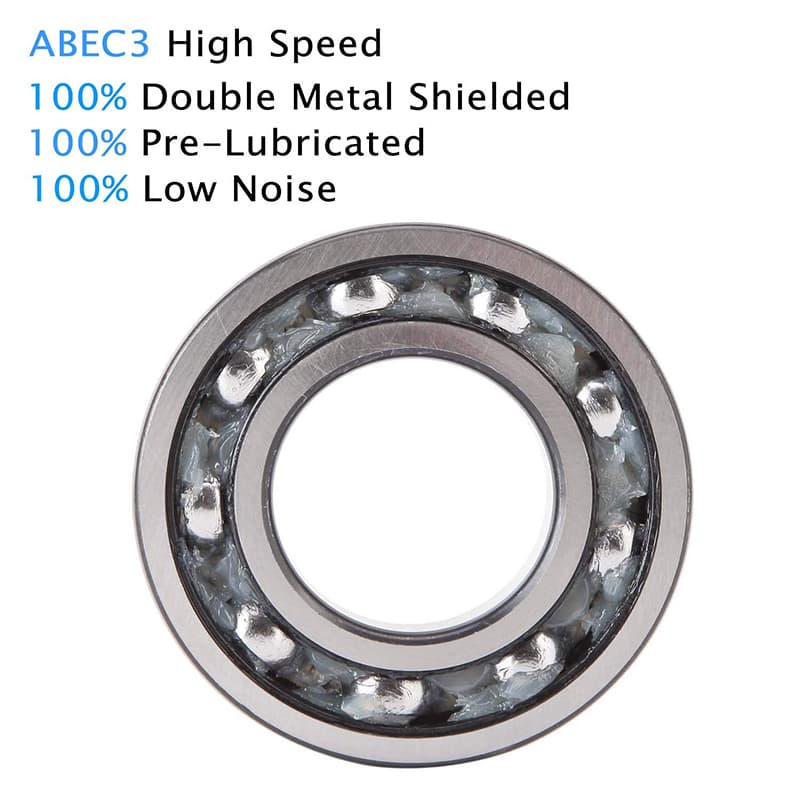
L10 Life: The Theoretical Ceiling Under Ideal Conditions
The L10 life3 is a statistical prediction, not a guarantee for a single bearing. It is calculated using the dynamic load rating4 (C) of the bearing and the equivalent dynamic load (P) it actually experiences.
The Core Formula: L10 = (C/P)^p
- L10: Basic rating life in millions of revolutions. To get hours: L10h = (10^6 / (60 n)) (C/P)^p.
- C: Basic dynamic load rating4 (from bearing catalog). This is the load at which the bearing will achieve an L10 life3 of 1 million revolutions.
- P: Equivalent dynamic bearing load (calculated from actual radial and axial loads).
- p: Exponent. For ball bearings, p = 3.
Example: A 6205 bearing has C ≈ 14 kN. If it carries a pure radial load P = 2 kN.
L10 (millions of rev) = (14/2)^3 = 7^3 = 343 million revolutions.
At 3000 rpm (3000 * 60 = 180,000 rev/hour), L10h = (343,000,000 / 180,000) ≈ 1905 hours.
This means under perfect conditions, 90% of these bearings should run for ~1905 hours before material fatigue causes spalling.
The Critical Limitation: The "Perfect Conditions" Assumption
ISO 281 L10 assumes:
- Perfect Lubrication: A full elastohydrodynamic (EHD) film separates the surfaces.
- Perfect Cleanliness: No contaminants in the lubricant.
- Perfect Alignment: No edge loading.
- No Material Defects.
In reality, these conditions are never met. This is why the modified rating life5 (Lnm) was introduced, which uses life adjustment factors for contamination (ac) and lubrication conditions (ηc). Often, the real life is only 10-50% of the basic L10 life3 due to these factors.
For a bearing manufacturer like FYTZ, the C value is a key metric of our product quality. We test our bearings to ensure they meet or exceed standard dynamic load rating4s. However, we are always honest with our distributors: this theoretical L10 life3 is a starting point. The real-life service life is governed by the weakest link: usually the lubrication (grease life2) or contamination. A bearing with an L10 of 10,000 hours will fail in 1,000 hours if the grease dies at that point. This is why managing grease life2 is often more important than chasing a higher C rating.
What is the grease life of a SKF bearing1?
Customers often cite SKF’s ratings as a benchmark. SKF provides detailed grease life estimates for their bearings because they understand it’s the practical limiter. They use advanced models2 that go beyond the simple formula, but the underlying principles are the same.
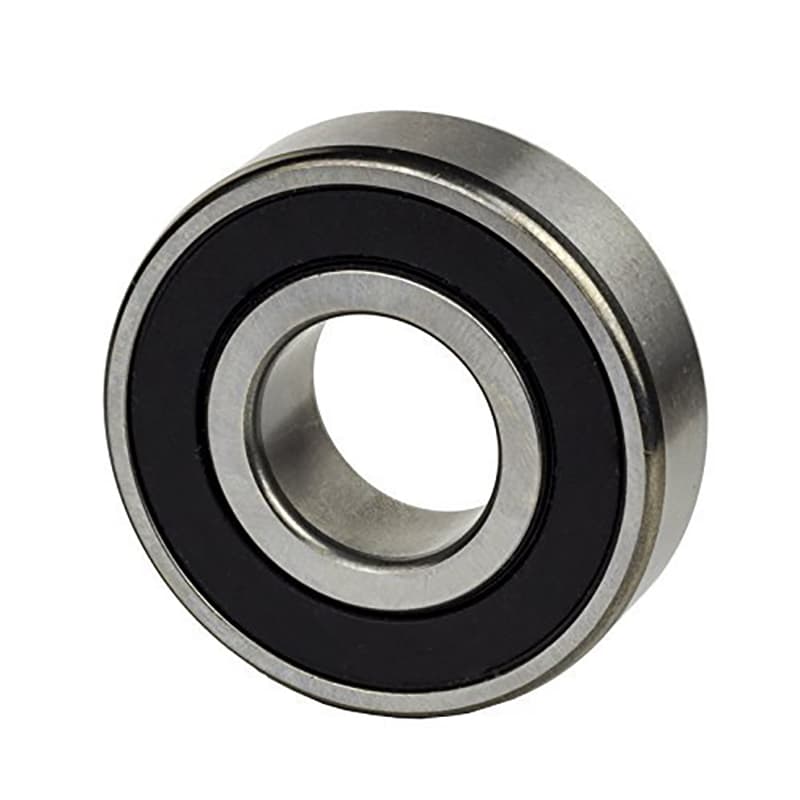
SKF provides grease life ratings3 (in hours) for their bearings based on extensive testing and a sophisticated model that considers speed, temperature, bearing size, and grease type4. These ratings, found in their catalogs or online tools, are for specific SKF greases under defined conditions and must be adjusted for different greases and harsher real-world environments.
Decoding Manufacturer Life Ratings: A Guide, Not a Guarantee
When SKF says a bearing has a grease life of "X hours," they are giving you a high-quality data point. But you must understand what it applies to and, more importantly, what it does not apply to.
1. What the SKF Rating Typically Assumes:
- A Specific SKF Grease: The life is calculated for a particular SKF grease (e.g., LGMT 2, a lithium complex grease). If you use a different grease, the life changes.
- Moderate, Stable Conditions: It assumes reasonable alignment, load within ratings, and a typical industrial environment (not excessively dirty or wet).
- Standard Fill Quantity: The bearing is filled with the correct amount of grease (usually 30-35% of free space).
2. How SKF’s Model is More Advanced:
SKF uses a model that incorporates:
- Grease Bleeding Rate: How well the thickener releases oil.
- Grease Mechanical Stability: How resistant it is to breakdown from churning.
- Oxidation Rates: Based on the grease chemistry.
This results in a more accurate prediction than the simple generic formula.
3. How to Use This Information Practically:
- As a Comparative Tool: You can compare two SKF bearing1 sizes and see which one offers longer grease life for your speed and temperature.
- As a Baseline: It is a good starting point for planning. If SKF says 4,000 hours with their premium grease, and you are using a standard industrial grease, you might estimate 3,000 hours.
- Apply Your Own Derating Factors: You MUST apply the same "harsh reality" factors we discussed. If your environment is dirty, cut the rated life by 50% or more.
The FYTZ Perspective on Grease Life:
As a manufacturer, we conduct similar testing with common greases. When we supply deep groove ball bearings to distributors like Rajesh’s company, we can provide guidance based on our data. For example, we might say: "Our FYTZ 6205 bearing with standard lithium grease, at 3000 rpm and 70°C, has an expected grease life of approximately X hours under clean conditions."
The key message for end-users is universal, whether the bearing is SKF, FYTZ, or another brand: The manufacturer’s grease life rating is your best-case scenario. Your job is to determine how far your reality deviates from that best case and adjust your maintenance schedule5 accordingly. For a price-sensitive market like India or Pakistan, using a reliable FYTZ bearing with a proper, condition-aware greasing schedule often delivers the optimal balance of performance and total cost of ownership.
Conclusion
Grease life, not bearing fatigue life, is often the real limit for deep groove ball bearings. By selecting the right grease, applying the correct fill, and calculating a realistic service interval based on temperature and environment, you can prevent most lubrication-related failures.
-
Explore the advantages of SKF bearings, including reliability and performance, to make informed purchasing decisions. ↩ ↩ ↩ ↩ ↩ ↩
-
Learn about the sophisticated models that improve grease life predictions for better maintenance planning. ↩ ↩ ↩ ↩ ↩ ↩
-
Understanding how grease life ratings are calculated can help you choose the right bearing for your application. ↩ ↩ ↩ ↩ ↩ ↩ ↩
-
Discover how different grease types impact bearing life and performance to optimize your machinery. ↩ ↩ ↩ ↩
-
A well-planned maintenance schedule is crucial for maximizing bearing life and performance; find tips to create one. ↩ ↩