
You touch a bearing housing and it’s too hot to hold. You hear a new, worrying rumble from a machine. These are urgent warnings. As a bearing specialist, I know these symptoms are never normal. They are your machine crying for help.
Diagnose overheating and vibration by checking lubrication first (type, level, contamination), then inspect for misalignment, imbalance, and improper fits. Use infrared thermometers for heat and vibration meters to measure severity. These symptoms point to active damage inside the bearing.
Ignoring these signs is expensive. Heat and vibration don’t just signal a problem; they are the problem, actively destroying your bearing. Learning to diagnose them correctly is the key to preventing sudden failures and costly unplanned downtime. Let’s break down the diagnosis process step by step.
What causes bearings to overheat?
A hot bearing is more than just warm. It’s a sign that energy is being wasted as friction inside the bearing. This friction creates heat. If the heat cannot escape, the temperature rises. I’ve seen this lead to complete seizure in just hours.
Bearings overheat primarily due to insufficient or degraded lubrication1, excessive load2, excessive speed, misalignment3, and incorrect internal clearance (often from a tight fit). Friction from these conditions generates heat faster than it can be dissipated.
Tracing the Heat Back to Its Source
Overheating is a symptom, not a disease itself. The job is to find the source of the excessive friction. Think of the bearing as a system. Every part that rubs, slides, or drags creates heat. In spherical roller bearings, several areas are common trouble spots.
1. Lubrication Breakdown: The Primary Cause
Lubricant has one core job: to keep metal surfaces apart. When it fails, metal touches metal.
- Insufficient Lubricant: There simply isn’t enough oil or grease to form a film.
- Wrong Lubricant Type: A grease that is too thick for the speed, or an oil that is too thin for the load.
- Contaminated Lubricant: Dirt or water in the lubricant acts as an abrasive, increasing friction.
- Degraded/Oxidized Lubricant: High heat or age breaks down the lubricant’s chemistry. It loses its slippery properties and can even form sludge that blocks lubricant flow.
2. Mechanical Conditions Creating Friction
Even with good lubricant, physical problems create drag.
- Misalignment: This forces rollers to skid and scrub against the raceways instead of rolling smoothly.
- Excessive Preload: An incorrect tight fit reduces internal clearance to zero or even creates negative clearance. The rolling elements are under constant compression, creating massive rolling friction.
- Overloading: Loads beyond the bearing’s rating squeeze the lubricant film too thin, leading to metal contact.
- Cage Problems: A damaged or worn cage can cause rollers to rub against each other or against the cage itself.
3. External Factors
Sometimes the problem is outside the bearing.
- Inadequate Heat Dissipation: A dirty housing, lack of cooling fins, or blocked airflow prevents heat from escaping.
- External Heat Source: The bearing is located near a furnace, hot process material, or another hot component.
For maintenance teams and distributors like Rajesh’s company, a systematic check is vital. The table below provides a quick diagnostic guide based on observable conditions:
| If you observe this… | And check this… | The likely cause is… |
|---|---|---|
| Bearing is hot, but lubricant looks fresh. | Fit with feeler gauges or disassemble to check clearance. | Excessive preload from incorrect tight fit. |
| Bearing is hot, lubricant is black/dirty. | Lubricant sample for grit. Check seal condition. | Contamination causing abrasive wear and friction. |
| Bearing is hot only on one side. | Shaft and housing alignment with a dial indicator. | Misalignment causing edge loading and skidding. |
| Bearing and housing are uniformly very hot. | Lubricant level and type against machine specs. | Insufficient lubrication or wrong lubricant type. |
When FYTZ supplies bearings, we know they will perform within their temperature ratings if installed and maintained correctly. Providing this diagnostic logic to our partners helps them support their customers effectively. It turns a complaint about a "hot bearing" into a solvable maintenance action.
How to check bearing vibration?
A new vibration is your machine’s early warning system. It tells you something is out of balance, loose, or worn. Waiting for the vibration to become obvious by touch or ear is waiting for a major failure. Proactive checks save money.
Check bearing vibration using a handheld vibration meter1 or analyzer. Measure vibration velocity2 (in mm/s or in/s) in three directions: horizontal, vertical, and axial. Compare the readings to established ISO standards3 or baseline measurements from when the machine was healthy.
From Simple Checks to Advanced Analysis
Vibration analysis can be as simple or as complex as you need. The goal is to detect problems early. Even basic methods are far better than none.
1. Basic Sensory Checks
- Touch: Place your hand firmly on the bearing housing. Feel for unusual trembling or humming. Compare it to a similar, known-good machine.
- Listen: Use a mechanic’s stethoscope or a long screwdriver (carefully!). Place the tip on the housing and your ear on the handle. Listen for repetitive clicking, grinding, or rumbling sounds.
2. Using a Vibration Meter (The Practical Standard)
For most industrial applications, this is the best balance of cost and insight.
- What to Measure: Vibration Velocity (mm/s) is the most common and useful parameter. It correlates well with the severity of faults like imbalance, misalignment, and looseness.
- Where to Measure: Take readings at the same points each time, directly on the bearing housing. Clean the surface first.
- How to Interpret: Use ISO 10816 charts as a general guide. For a medium-sized industrial motor, for example:
- Below 1.8 mm/s: Good condition.
- 1.8 to 4.5 mm/s: Satisfactory, but monitor.
- 4.5 to 11.2 mm/s: Unsatisfactory. Plan for repair.
- Above 11.2 mm/s: Unacceptable. Immediate risk of failure.
3. Understanding What the Vibration Tells You
The vibration pattern (its frequency) can hint at the specific problem:
- 1x RPM Frequency: Often indicates imbalance (a heavy spot on the rotor).
- 2x RPM Frequency: Strongly suggests misalignment.
- High-Frequency Noise: Can indicate bearing defect frequencies4 (damage to a raceway or roller) or lubrication issues.
- Random Impacts: Suggests looseness or clearance issues.
For a bearing distributor, understanding vibration basics is powerful. When Rajesh’s customer in Indonesia reports a vibrating pump, his team can ask: "Have you taken a vibration reading? What is the velocity?" This immediately elevates the conversation. It shows technical competence. It also helps determine if the issue is truly a bearing problem or something else, like a bent shaft or a bad coupling. By promoting simple predictive maintenance tools5, we help our partners’ customers avoid bigger problems and create more stable, reliable demand for quality replacement bearings.
How would you check for excessive play1 in wheel bearings2?
While "wheel bearings2" often refer to automotive applications, the concept of checking for "play" or "clearance" is absolutely critical for all spherical roller bearings in industrial settings. Excessive play means the bearing is loose, and looseness causes impact loads and destroys itself.
Check for excessive radial play by securing the inner ring and applying force to the outer ring (or vice-versa). Use a dial indicator to measure the total movement. Axial play is checked by shifting the ring back and forth along the shaft. Any play beyond the manufacturer’s specification is excessive.
Internal Clearance: The Critical Dimension You Cannot Ignore
"Play" refers to the bearing’s internal clearance3. This is the tiny space that allows for thermal expansion, lubrication, and smooth operation. Too little clearance (preload) causes overheating. Too much clearance allows harmful movement and impact loads.
1. Why Checking Play is Essential
A bearing that develops excessive play1 is wearing out. The rollers and raceways are being ground down. This wear accelerates because the loose parts can now hammer against each other. Checking for play is a direct measure of bearing wear and fit integrity.
2. Step-by-Step Methods for Checking
-
The Dial Indicator Method4 (Most Accurate):
- Fix the bearing’s inner ring firmly (imagine it’s mounted on a shaft).
- Position the tip of a dial indicator perpendicular to the outer ring.
- Push and pull the outer ring firmly in the radial direction.
- The total movement shown on the dial is the radial play. Compare it to the original clearance specification for that bearing (C3, C4, etc.).
-
The Manual "Rock" Test (Field Check):
This is a rough check for severely loose bearings.- On an installed machine, try to rock a wheel, pulley, or coupling mounted on the bearing.
- Look and feel for any clunk or noticeable movement between the shaft and housing.
- Caution: This method is not precise. It only finds very bad cases.
3. What Causes Excessive Play?
Finding play means you must find its cause:
- Normal Wear: Over a very long life, surfaces wear down, increasing clearance.
- Abrasive Wear: Contamination accelerates this process dramatically.
- Improper Fit: A loose fit on the shaft or in the housing allows the entire bearing to move, which feels like play but is a mounting fault.
- Raceway Damage: Spalling or brinelling removes material, creating gaps.
For industrial applications, the stakes are high. A spherical roller bearing on a large fan or gearbox with too much play will cause vibration, noise, and rapid failure of seals and other components. When FYTZ manufactures bearings, we control the internal clearance3 groups (like C3 for most industrial applications) very precisely. For our distributors, explaining this to customers is key. A bearing that feels "loose" new out of the box might simply have a C4 clearance for a high-temperature application, which is correct. Knowing how to measure and interpret clearance prevents misdiagnosis and ensures the right bearing is used for the job.
What happens if wheel bearings get too hot?
The scenario is the same for a truck wheel bearing or a massive industrial bearing: heat is the enemy. The consequences follow a predictable and destructive chain reaction. I’ve seen bearings that were literally welded together by heat.
If a bearing gets too hot, the lubricant first breaks down, losing its protective film. Metal-to-metal contact increases, generating more heat. This thermal runaway can soften the bearing steel, cause loss of hardness, induce thermal expansion that jams components, and ultimately lead to catastrophic seizure or disintegration.
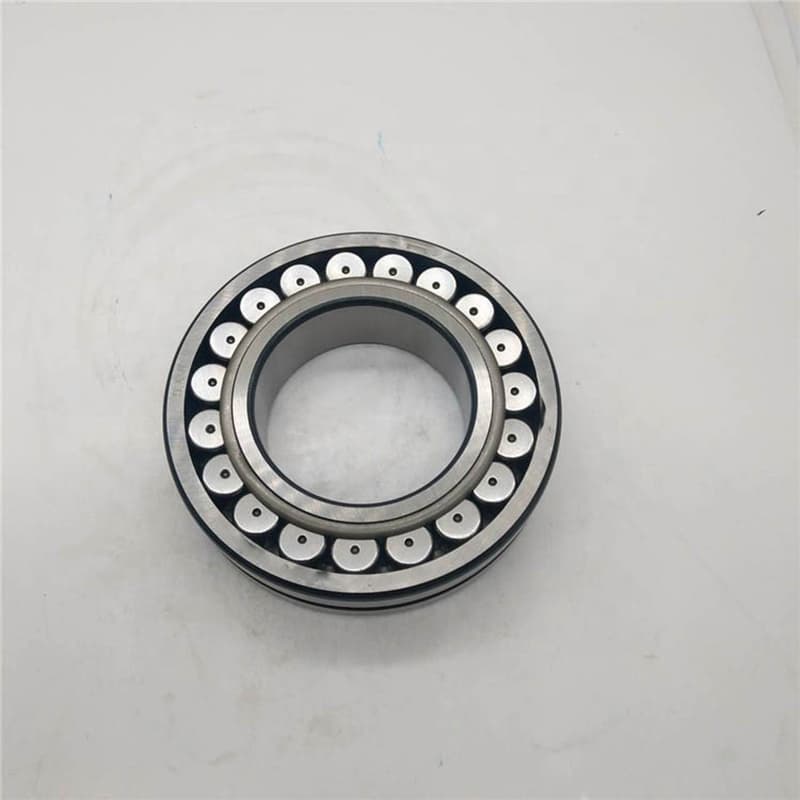
The Thermal Runaway and Its Destructive Stages
Overheating isn’t a single event; it’s a cascade of failures. Each stage makes the next one worse and more inevitable.
Stage 1: Lubricant Breakdown1
The lubricant is the first casualty. Normal grease or oil has a maximum operating temperature (often 120-150°C for standard greases). Above this:
- The oil base separates from the thickener in grease.
- The chemical structure oxidizes and breaks down.
- It loses viscosity and can no longer form a load-bearing film.
- It may carbonize into a hard, abrasive sludge.
Stage 2: Material Degradation and Distortion2
With the lubricant gone, friction skyrockets. Temperatures can exceed 400-500°C.
- Tempering: The hardened bearing steel loses its hardness (it gets "drawn back"). A bearing that was Rockwell C60 might drop to C40 or lower. It becomes soft and susceptible to rapid wear and plastic deformation.
- Thermal Expansion3: All parts expand. The inner ring expands onto the shaft, gripping tighter. The outer ring expands in the housing, possibly becoming loose. Most critically, the internal clearance disappears and turns into a crushing preload.
- Color Change: The steel will discolor—first straw yellow, then blue, then dark purple/blue. This is visual proof of overheating.
Stage 3: Catastrophic Failure4
The final stage is rapid and often violent.
- Seizure5: The expanded, softened, and distorted components weld themselves together. The bearing locks up solid.
- Cage Collapse: The plastic or brass cage melts or distorts, allowing rollers to cluster together and jam.
- Spalling and Fracture: The soft material and extreme stresses cause large pieces of the raceway to break out.
- Bearing Disintegration6: In severe cases, the bearing can break apart, sending fragments through the housing.
The table below summarizes the domino effect:
| Temperature Rise | Consequence | Visible/Measurable Sign |
|---|---|---|
| Above lubricant rating | Lubricant film fails. | Smoke, smell, lubricant leakage. |
| ~200-300°C | Steel begins to temper, losing hardness. | Discoloration (blueing). |
| ~300°C+ | Severe tempering, loss of dimensional stability. | Clearance loss, increased vibration/noise. |
| 400°C+ | Thermal expansion exceeds design limits. | Seizure5, locked rotor, possible shaft damage. |
For anyone in the bearing supply chain, this knowledge is critical for failure analysis. When Rajesh or his customer finds a blue, seized bearing, they now know the story: it overheated. The next question is why it overheated (lubrication? fit? alignment?). This prevents them from simply installing a new bearing into the same conditions, guaranteeing a repeat failure. At FYTZ, we design our bearings to run cool with proper lubrication. Educating the market about the dangers of heat protects our product’s reputation and helps our partners build trust as true technical advisors.
Conclusion
Overheating and vibration are not just symptoms; they are the direct causes of premature bearing death. Learning to diagnose them systematically allows you to intervene early, save the bearing, and avoid the high cost of catastrophic machine failure.
-
Understanding lubricant breakdown is crucial for preventing bearing failure and ensuring longevity. ↩ ↩ ↩ ↩ ↩
-
Explore how material degradation impacts performance to enhance your bearing maintenance strategies. ↩ ↩ ↩ ↩ ↩
-
Learn about thermal expansion to better manage bearing temperatures and prevent failures. ↩ ↩ ↩ ↩ ↩
-
Identifying signs of catastrophic failure can save time and costs in maintenance and repairs. ↩ ↩ ↩
-
Understanding bearing seizure can help in troubleshooting and improving equipment reliability. ↩ ↩ ↩
-
Preventing bearing disintegration is key to maintaining machinery efficiency and safety. ↩