
The performance of a deep groove ball bearing is forged long before assembly. The choice of steel and its transformation through heat treatment determines its load capacity, wear resistance, and fatigue life. Compromising on material is a hidden flaw that leads to premature failure and unpredictable machine performance.
Deep groove ball bearings are predominantly made from high-carbon chromium steel, typically SAE 52100 (ISO 100Cr6), hardened to 58-67 HRC. The 6205 and 6305 bearings differ in size series and thus load capacity, but both use similar high-grade steel. Proper heat treatment (quenching and tempering) of all four major parts (rings, balls, cage) is critical for achieving these properties.
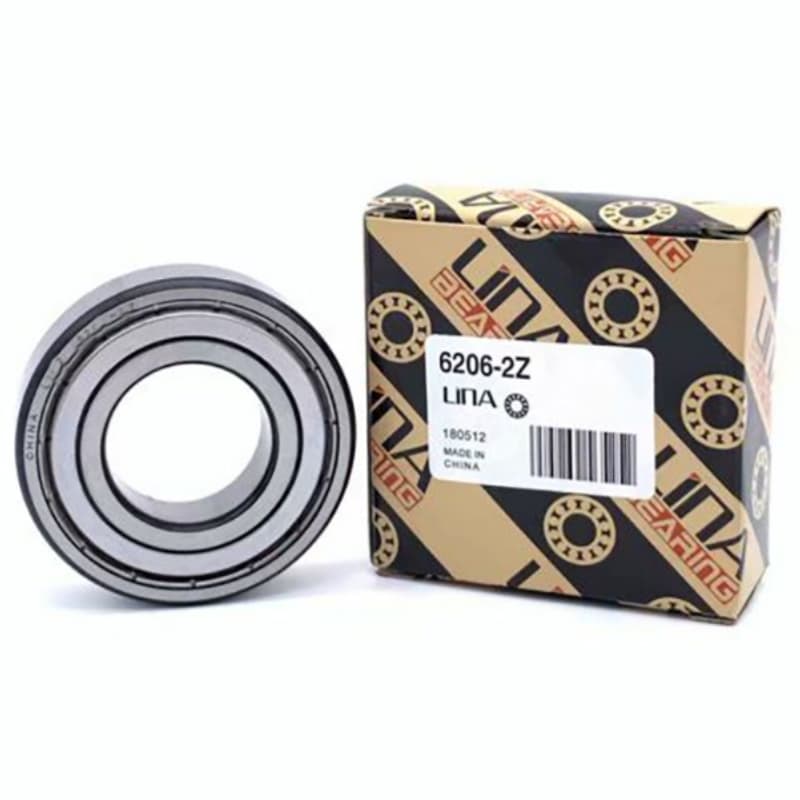
Understanding bearing material is more than just knowing a steel number. It’s about grasping the journey from raw steel to a finished component with specific mechanical properties. This knowledge allows you to assess quality, specify requirements, and understand why two seemingly similar bearings can have vastly different lifespans. Let’s delve into the metallurgy.
What grade of steel is used in ball bearings?
Not all steel is the same. Using a general-purpose structural steel for a bearing would result in rapid wear and failure under load. Bearing steel is a specialized alloy formulated for one primary purpose: to withstand repeated, high-stress rolling contact without deforming or fatiguing.
The standard and most common grade of steel used for ball bearings is high-carbon chromium steel, designated as SAE 521001 in the US or ISO 100Cr6 in Europe. This alloy contains about 1% carbon and 1.5% chromium, which gives it the ability to be hardened to a very high degree and provides good wear resistance and fatigue strength.
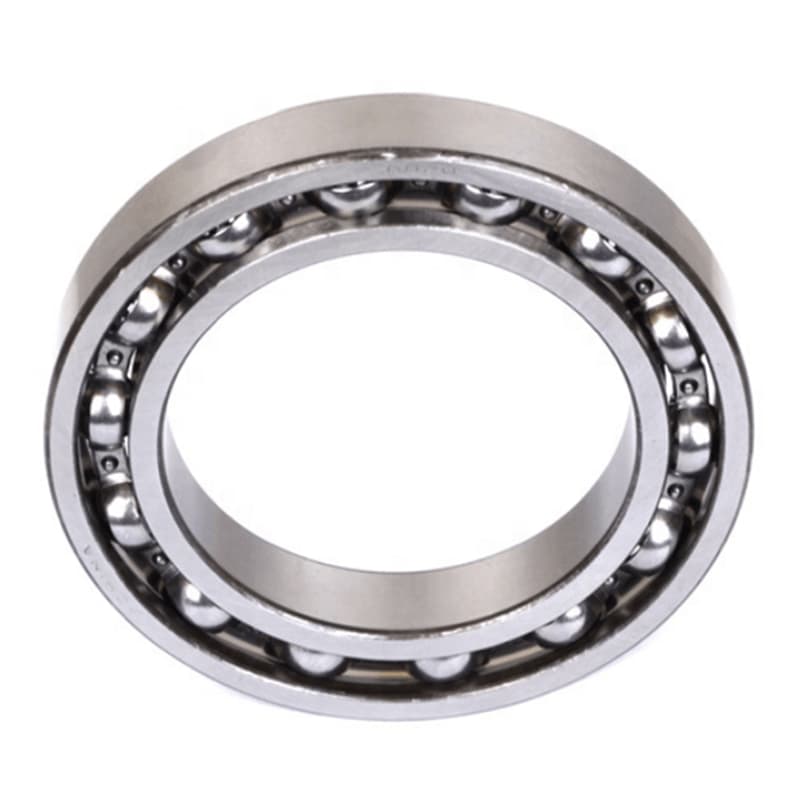
The Metallurgy of Durability: Why 52100 is the Benchmark
SAE 52100 (100Cr6) is not chosen by accident. Its chemical composition is optimized for the unique demands of bearing applications. Let’s break down why each element matters and what alternatives exist for special cases.
Key Elements in 52100 and Their Roles:
- Carbon (~1.0%): This is the primary hardening element. It allows the steel to achieve the high hardness required after heat treatment.
- Chromium (~1.5%): Increases hardenability (the depth to which hardness penetrates), improves wear resistance, and enhances corrosion resistance slightly compared to plain carbon steel. It also helps form hard carbides that contribute to wear resistance.
- Manganese (~0.35%): Aids in hardenability and works as a deoxidizer during steelmaking.
- Silicon (~0.25%): Primarily a deoxidizer and strengthens the ferrite matrix.
The Importance of Steel Cleanliness:
For bearing steel, the absence of impurities2 is as important as the presence of alloying elements. Non-metallic inclusions (like oxides or sulfides) are weak points. Under the cyclic high stress of rolling contact, fatigue cracks can initiate at these inclusions, leading to premature spalling (pitting of the raceway). High-quality bearing steel undergoes processes like vacuum degassing3 to achieve a very clean, homogeneous structure.
Alternative Materials for Specific Needs:
- Case Hardening Steels (e.g., SAE 8620, 4320)4: Used for larger bearings or those requiring high shock resistance. They are carburized to create a hard, wear-resistant surface over a tough, ductile core.
- Stainless Steels (AISI 440C): For corrosion-resistant applications. Contains more chromium (~17%) and carbon (~1%).
- High-Temperature Steels (M50, Cronidur): For applications above 150°C where standard 52100 would soften.
At our FYTZ factory, we source 52100 steel billets from reputable mills. We prioritize steel with certification and known cleanliness levels because we know it directly impacts the fatigue life of the bearings we produce. For an OEM client, requesting a material certificate (mill certificate)5 for the steel used in their bearing order is a standard and wise quality assurance step.
What is the hardness of a steel ball bearing?
Hardness is the most direct measure of a bearing’s ability to resist wear and indentation. A bearing that is too soft will dent under load; one that is too hard may be brittle and crack. Achieving the correct, uniform hardness is a core goal of the heat treatment process.
The hardness of a standard through-hardened1 steel ball bearing (like SAE 52100) is typically in the range of 58 to 67 HRC (Rockwell C scale)2. The inner and outer rings and the balls are all hardened to similar high levels. This extreme hardness is necessary to prevent plastic deformation (brinelling) under heavy loads and to resist abrasive wear.
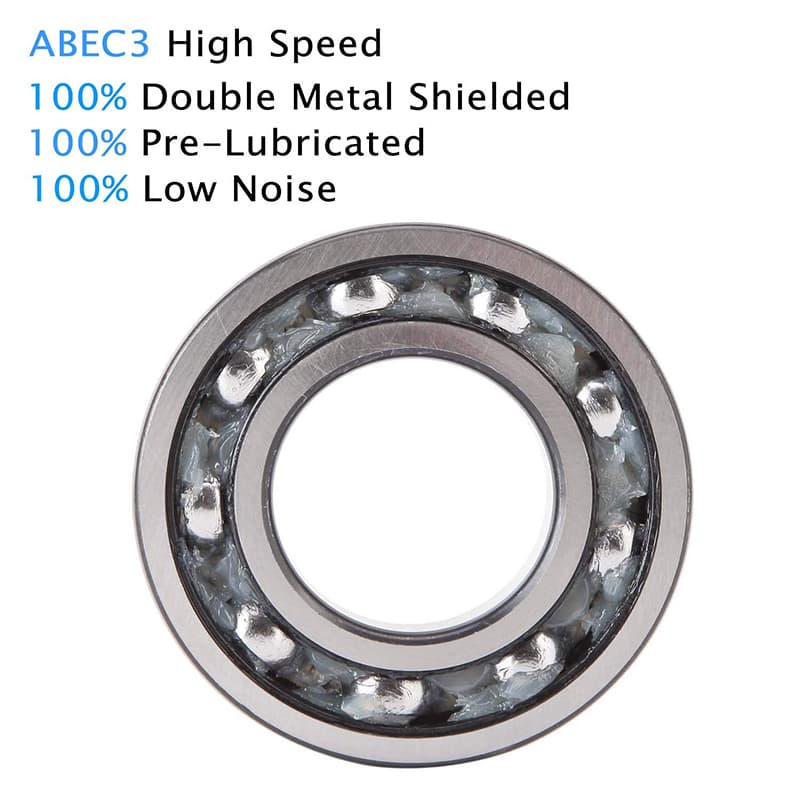
The Science of Hardness: Measurement, Uniformity, and Purpose
Hardness is not just a number; it’s a indicator of the steel’s microstructure and its resulting mechanical properties. The Rockwell C (HRC) scale is the industry standard for measuring bearing hardness.
Why This Hardness Range?
- Below 58 HRC: The steel may be too soft. It would wear quickly and is prone to denting under static or shock loads, leading to increased vibration and early failure.
- 58-62 HRC: The most common range for general-purpose deep groove ball bearings. It provides an excellent balance of wear resistance3 and toughness.
- Above 62 HRC up to 67 HRC: Used for very high-precision or high-load applications. Provides maximum wear resistance3 but requires more careful control to avoid excessive brittleness.
How Hardness is Achieved: Through-Hardening
For standard-sized deep groove ball bearings, the components are through-hardened1. The process is:
- Austenitizing4: Heating the steel to a high temperature (~850°C) to change its microstructure.
- Quenching: Rapidly cooling (usually in oil). This transforms the structure to martensite5, an extremely hard but brittle phase.
- Tempering: Re-heating to a lower temperature (~150-200°C). This relieves internal stresses from quenching, reduces brittleness, and results in the final, tough hardness of 58-67 HRC.
The Challenge: Achieving Uniformity
Hardness must be consistent:
- Across the part: The raceway surface, the core, and the sides should have similar hardness.
- Across the batch: Every bearing in an order should be within the specified range.
Non-uniform hardness can cause distortion during grinding or lead to uneven wear in service. At FYTZ, we use controlled atmosphere heat treatment furnaces and monitor tempering temperatures precisely to ensure batch consistency. We perform regular hardness tests6 on samples from each production run as part of our in-process quality control.
Hardness vs. Other Properties:
Hardness correlates strongly with:
- Yield Strength: The stress at which it begins to deform permanently.
- Wear Resistance: Harder surfaces resist abrasion better.
- Fatigue Strength: Generally increases with hardness, but there is an optimal point where further increases can reduce toughness.
For a buyer or engineer, knowing the expected hardness range allows for a simple verification. A portable Rockwell hardness tester can be used on a non-functional surface (like a side face of the ring) to confirm the bearing is in the correct hardness range, providing a quick check of the heat treatment’s effectiveness.
What is the difference between 62051 and 63052 bearings?
These two bearings are a perfect case study in how size and series affect load capacity3, which is ultimately determined by the amount and configuration of the hardened steel. They use the same grade of steel, but the 63052 uses more of it in a more robust layout.
Both the 62051 and 63052 are deep groove ball bearings4 with a 25mm bore. The key difference is their dimension series. The 62051 is from the "Light" series (62), meaning it has a smaller outer diameter (52mm) and width (15mm). The 63052 is from the "Medium" series (63), with a larger outer diameter (62mm) and width (17mm). This gives the 63052 a significantly higher load capacity3 (approx. 50-60% higher) due to its larger rollers and more massive rings.
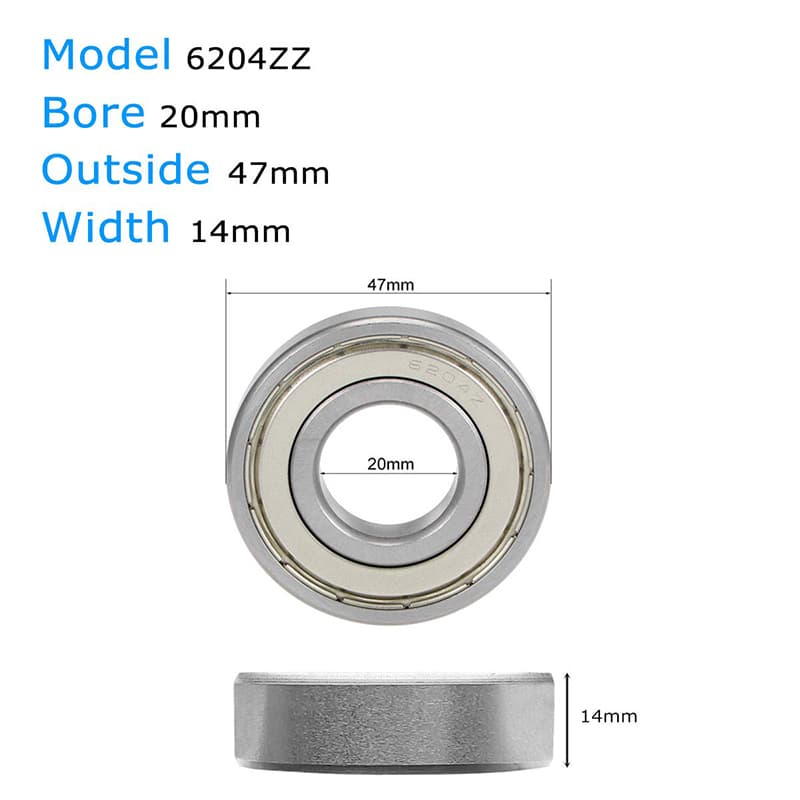
Size, Series, and Load Capacity: A Material Perspective
The series designation (62 vs. 63) dictates the bearing’s cross-sectional proportions. This directly influences how much hardened steel is in the load path and the size of the rolling elements.
Dimensional and Load Comparison:
| Parameter | 62051 Bearing (Light Series) | 63052 Bearing (Medium Series) |
|---|---|---|
| Bore (d) | 25 mm | 25 mm |
| Outer Diameter (D) | 52 mm | 62 mm |
| Width (B) | 15 mm | 17 mm |
| Dynamic Load Rating (C) | ~14.0 kN | ~22.5 kN |
| Static Load Rating (C0) | ~7.8 kN | ~11.6 kN |
| Ball Size & Count | Smaller balls, standard count. | Larger balls, potentially more balls. |
| Material Volume | Less steel in rings. | More steel in rings, providing greater strength and heat dissipation. |
Material and Heat Treatment Implications:
- Same Steel Grade: Both are typically made from SAE 52100 and hardened to the same range (58-62 HRC). The material quality requirements are identical.
- Different Mass: The 63052‘s larger rings and balls have more mass. This means the heat treatment process (quenching) must be carefully controlled to ensure the larger sections harden uniformly throughout. Inadequate quenching could leave a soft core in a 63052, while a 62051 might harden more easily.
- Load Capacity: The 63052‘s higher load ratings (C and C0) are a direct result of its larger contact area (from bigger balls) and the greater volume of hardened steel supporting the load. It can simply withstand more stress before yielding or fatiguing.
Selection Guide:
- Choose a 62051 if: Your housing is designed for a 52mm O.D., loads are moderate, and space/weight are concerns.
- Choose a 63052 if: You need higher load capacity3 and longer life, and your housing can accommodate a 62mm O.D. bearing. It’s a direct upgrade for durability.
At FYTZ, we produce both series. The heat treatment parameters for a 63052 are adjusted compared to a 62051 to account for the greater mass. For an OEM designing a new product, understanding this difference is crucial. They can’t just pick a bore size; they must consider the load and select the appropriate series, which dictates the amount and configuration of the critical bearing material in their design.
What are the 4 major parts of a deep groove ball bearing?
The four components work as a system, and the material properties of each must be harmonized. A bearing with perfectly hardened rings will still fail quickly if the balls are soft or the cage is weak. Material selection and treatment are applied to each part based on its function.
The four major parts of a deep groove ball bearing are: 1. Inner Ring, 2. Outer Ring, 3. Balls, and 4. Cage (Retainer). Each part has a distinct role and specific material and hardness requirements to ensure the bearing functions as a cohesive, durable unit.
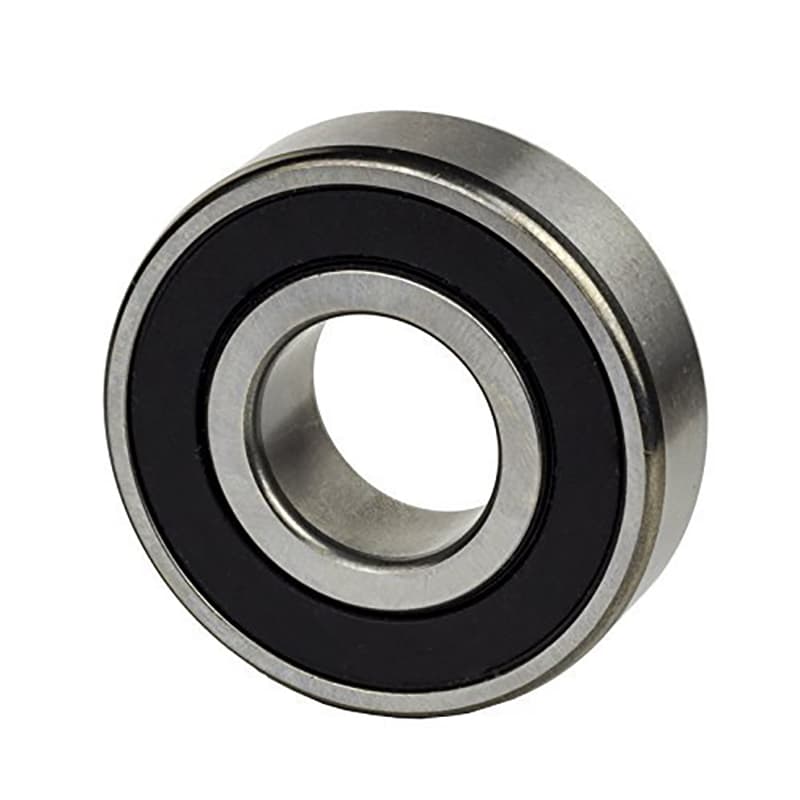
Component-Specific Material Science and Heat Treatment
Quality is built at the component level. Each of the four parts faces different stresses and requires tailored material properties.
1. Inner Ring & Outer Ring (The Raceways)
- Material: SAE 52100 (through-hardened) is standard.
- Hardness: 58-67 HRC (as discussed). Both rings are hardened to the same high level.
- Heat Treatment Process: Through-hardening (austenitize, quench, temper). The key is to achieve this hardness without excessive distortion, as the rings will be precision-ground afterwards. Any distortion from heat treatment increases the amount of material that must be removed in grinding, wasting material and potentially creating thin spots.
2. Balls
- Material: SAE 52100 or sometimes chrome steel of equivalent grade. They must be from the same high-quality, clean steel as the rings.
- Hardness: Slightly higher than the rings, often 61-67 HRC. This is because the balls experience more stress cycles than any point on the raceway.
- Heat Treatment Process: Similar through-hardening, but sphericity and size consistency are paramount. After hardening, they are ground and lapped to a near-perfect sphere with a mirror finish.
3. Cage (Retainer)
- Material & Treatment – This is different: The cage is not hardened to high levels. It must be tough and ductile to absorb impacts and guide the balls without cracking.
- Stamped Steel Cages: Made from low-carbon steel sheet (e.g., SPCC). They are often phosphated or galvanized for corrosion resistance and to aid lubrication.
- Machined Brass Cages: Made from brass (e.g., HPb59-1). Brass is naturally corrosion-resistant, has good sliding properties, and is strong. It is used in high-speed or high-vibration applications.
- Polymer Cages: Made from materials like polyamide (PA66), often with glass fiber reinforcement. They are lightweight, quiet, and require no additional treatment.
Why This Combination Works:
- Rings & Balls (Hard): Resist wear and deformation under load.
- Cage (Softer/Tougher): Withstands impact, guides balls smoothly, and deforms slightly rather than shattering.
Material Defects to Look For:
- In Rings/Balls: Decarburization (a soft surface layer from heat treatment), grinding burns (overheating during finishing), inclusions.
- In Cages: Cracks, sharp burrs, or corrosion on steel cages.
In our manufacturing at FYTZ, each component undergoes its own controlled process. The rings are heat-treated in batch furnaces with temperature profiling. The balls are sourced from specialized suppliers with certified hardness and sphericity. Cages are stamped or machined from qualified materials. This component-level control is what allows us to assemble bearings that deliver consistent performance and long life, which is why our bearings are trusted by OEMs and distributors globally.
Conclusion
Deep groove ball bearing performance hinges on using high-carbon chrome steel (SAE 52100) through-hardened to 58-67 HRC for rings and balls, with a tough cage, ensuring all four components work in harmony to deliver the load capacity and durability expected from different series like 6205 and 6305.
-
Explore this link to understand the specifications and applications of 6205 bearings, which are crucial for selecting the right bearing for your needs. ↩ ↩ ↩ ↩ ↩ ↩ ↩ ↩ ↩ ↩
-
Discover the advantages of 6305 bearings, including their higher load capacity and durability, which can enhance your machinery’s performance. ↩ ↩ ↩ ↩ ↩ ↩ ↩ ↩ ↩ ↩ ↩ ↩ ↩
-
Understanding how load capacity is determined in bearings can help you choose the right one for your specific application. ↩ ↩ ↩ ↩ ↩ ↩
-
Learn about deep groove ball bearings, their design, and applications to make informed decisions for your engineering projects. ↩ ↩ ↩
-
Discovering martensite’s role will enhance your knowledge of steel microstructures and their properties. ↩ ↩
-
Gaining knowledge about hardness testing methods can improve quality control in manufacturing. ↩