
For an OEM, a bearing failure isn’t just a component issue; it’s a product reliability crisis. A faulty batch of bearings built into your machines leads to warranty claims, brand damage, and costly field replacements. Proactive, systematic quality control at the supplier level is your first line of defense.
A comprehensive QC checklist for deep groove ball bearings in OEM projects includes verifying dimensional accuracy (per ISO 15), radial internal clearance, material hardness, surface finish, noise/vibration levels (per ISO 15242), component integrity, and packaging/marking. This ensures consistent performance and validates the calculated L10 bearing life for your application.
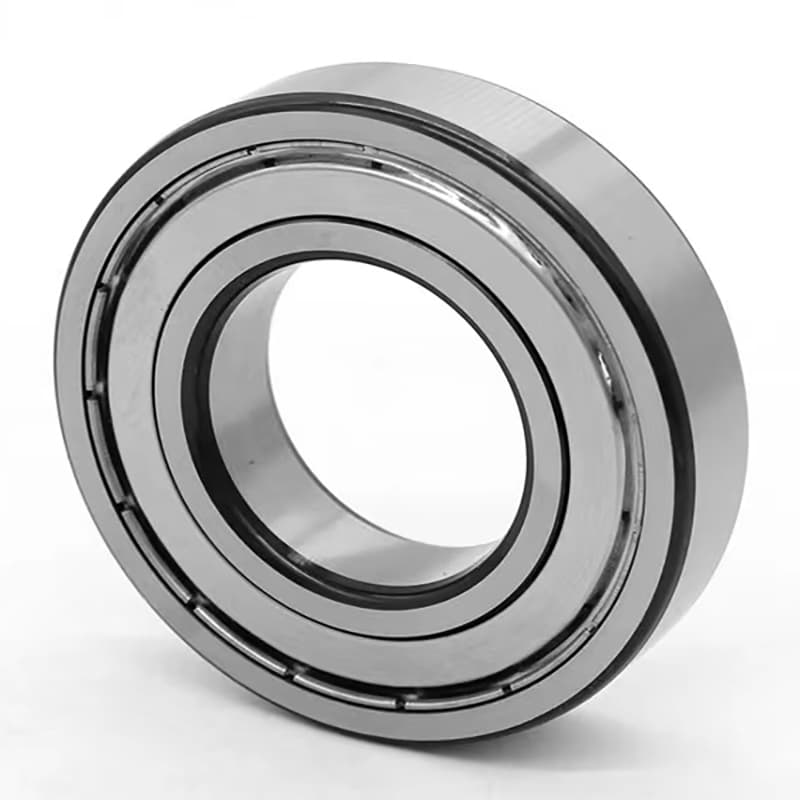
Relying on a supplier’s generic "good quality" claim is risky. As an OEM, you need a concrete, actionable framework to assess and approve bearings. This checklist is built on understanding the bearing’s anatomy, the international standards that define quality, and the performance metrics like L10 life that predict reliability. Let’s construct this essential tool.
How to check the quality of bearings?
Quality checking is not a single test; it’s a multi-stage process that moves from visual inspection to precise measurement and performance testing. Skipping steps means hidden defects can reach your assembly line, causing problems much later.
You check bearing quality through a structured process: 1. Visual Inspection1 for damage and rust. 2. Dimensional Verification2 of bore, OD, and width with calibrated tools. 3. Measurement of Radial Clearance3. 4. Running Tests4 for noise and smoothness. 5. Verification of hardness and material. 6. Review of manufacturer’s test certificates for load ratings and material specs.
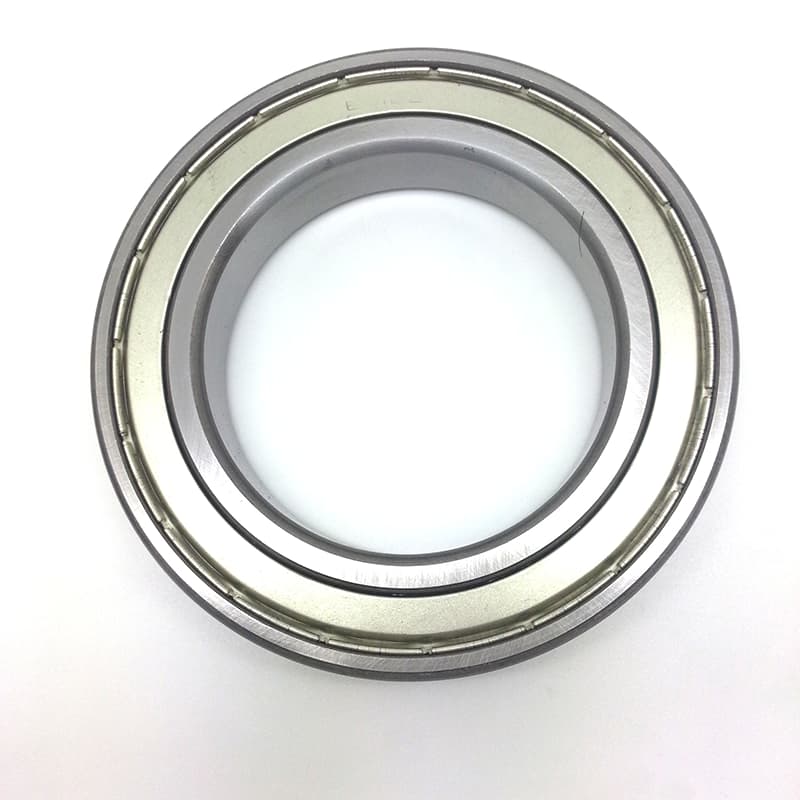
Building a Tiered Inspection Strategy for OEM Assurance
For an OEM, quality checks should be tiered: some performed by the supplier, some witnessed by your team, and some conducted on samples at your facility. This strategy balances oversight with practicality.
Tier 1: Incoming Inspection at Your Facility (Sample-Based)
When a batch arrives, take a statistical sample (e.g., AQL Level II) for inspection.
- Visual & Tactile:
- Look for rust, nicks, cracks, or discoloration (bluing from overheating).
- Check grease condition (if pre-lubricated). It should be clean, not separated or contaminated.
- Feel the surface finish. Raceways and balls should be smooth to the touch, not rough or gritty.
- Dimensional Spot Check:
- Use a micrometer for outer diameter (OD) and width.
- Use a bore gauge or internal micrometer for inner diameter (ID).
- Compare to the tolerance class ordered (e.g., P5 tolerances are tighter than P0).
Tier 2: Performance & Consistency Checks
- Radial Clearance3: Use a dial indicator on a fixture to measure the free movement between inner and outer rings. Ensure it falls within the specified group (e.g., C3).
- Running Noise/Vibration: The most telling test. Mount the bearing on a clean mandrel. Spin it with compressed air or a motor. Listen for smooth, whirring sounds. Grinding, rumbling, or clicking noises indicate contamination, poor finish, or damaged components. For critical applications, demand a vibration test report (to ISO 15242) from the supplier.
- Hardness Check: Use a portable Rockwell hardness tester on a non-functional surface (like a side face) to verify material hardness (~58-64 HRC for standard steel).
Tier 3: Supplier Qualification5 & Documentary Control
This is the most important tier for prevention.
- Audit the Supplier’s Process: Visit the factory. See their heat treatment lines, grinding machines, and assembly areas. Are they clean and organized?
- Review In-Process QC Data: A reputable factory like FYTZ performs 100% inspection on key parameters like noise. Ask for the factory’s internal inspection records for your production lot.
- Material Certificates: Request mill certificates for the bearing steel to verify grade (e.g., SAE 52100).
For an OEM project, defining this process in a Quality Assurance Agreement6 with your bearing supplier is critical. It sets clear expectations. At FYTZ, we welcome this. We provide inspection reports, material certificates, and even facilitate factory audits because our integrated production and inspection lines are built to meet OEM standards. This transparency is what our partners in Europe and North America require.
What are the 4 major parts of a deep groove ball bearing?
Quality issues often originate in a specific component. Knowing the four major parts allows you to target your inspection and understand failure modes. A problem with the cage won’t show up in a diameter check, and a raceway defect might only be found in a noise test.
The four major parts of a deep groove ball bearing are: 1. Inner Ring1 (fits on the shaft), 2. Outer Ring2 (fits in the housing), 3. Balls3 (the rolling elements), and 4. Cage (or Retainer)4 (separates and guides the balls). The quality of each part and their precise assembly determine the bearing’s overall performance and life.
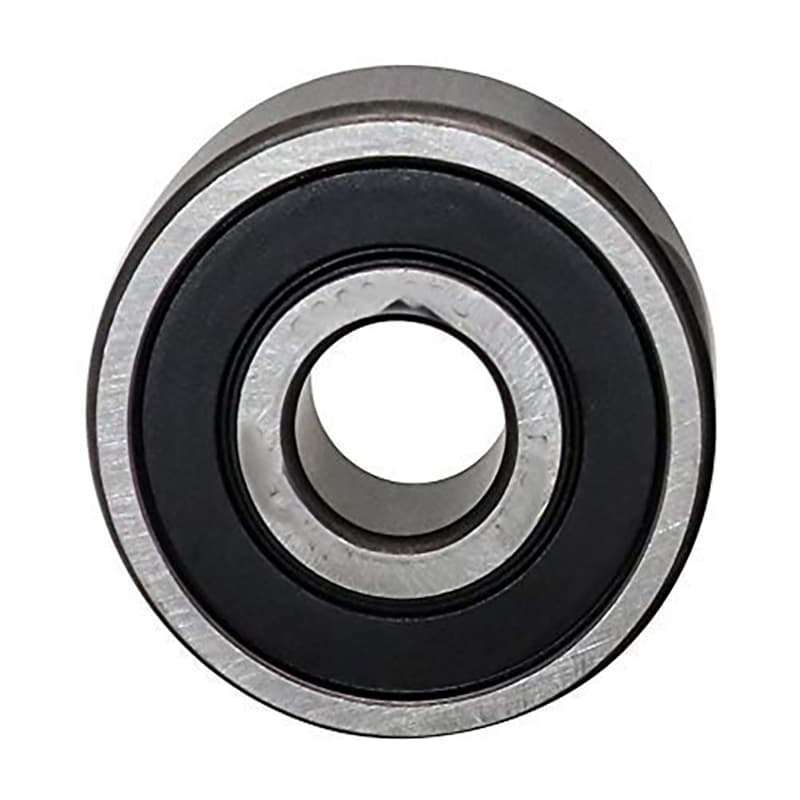
Component-Level Inspection: Where Defects Hide
Each component has a specific function and its own set of potential defects. A thorough QC checklist examines each one.
1. Inner Ring1 & Outer Ring2 (The Raceways)
- Function: Provide the smooth, hard tracks for the balls to roll on. They transfer load between the shaft and housing.
- Key Quality Attributes:
- Dimensional Accuracy5: Critical for proper fit (interference or clearance).
- Geometrical Accuracy: Roundness and parallelism of the raceways.
- Surface Finish: Must be mirror-smooth. Inspect for grinding burns (bluish discoloration), pitting, or scratches. These are stress concentrators that start fatigue cracks.
- Hardness: Must be uniformly high to resist wear and indentation.
- Function: Provide the rolling contact, minimizing friction.
- Key Quality Attributes:
- Size Consistency: All balls in a bearing must be nearly identical in diameter (within a few microns). Variation causes load to be carried by the largest balls, leading to premature failure.
- Surface Finish & Sphericity: Must be perfectly round and smooth.
- Material & Hardness: Same high-quality steel as the rings.
3. Cage (Retainer)
- Function: Keeps the balls evenly spaced, prevents them from touching each other (which would cause friction and wear), and guides them in the raceway.
- Key Quality Attributes:
- Material: Stamped steel (common), machined brass (high-performance), or polymer (quiet, low weight).
- Integrity: No cracks, burrs, or deformations. Must be precisely formed to hold balls without binding.
- Fit: Must sit correctly without rubbing on the rings.
How to Inspect These Parts:
- For Rings & Balls3: Visual inspection under good light is first. Surface finish can be assessed by feel and look. Dimensional checks confirm size. Specialized equipment is needed for sphericity and size grading of balls, which is why supplier process control is key.
- For the Cage: Visually check for damage. Ensure it moves freely when the bearing is partially assembled.
Common Failure Modes Linked to Components:
| Component | Potential Defect | Resulting Failure Mode |
|---|---|---|
| Raceway (Inner/Outer Ring2) | Grinding burn, scratch, inclusion. | Initiates premature fatigue spalling. |
| Balls3 | Size variation, poor sphericity. | Causes uneven load distribution, increased vibration and noise, reduced life. |
| Cage | Crack, improper clearance. | Cage fracture, balls clump together, catastrophic bearing seizure. |
In our FYTZ factory, we control each component. Our balls are sourced from specialized manufacturers with strict size grading. Our rings are ground on precision machines. We visually and dimensionally inspect components before assembly. For an OEM client, we can provide evidence of this component-level control, which is far more reassuring than just testing finished bearings.
What is the ISO standard for bearings?
"Meets ISO standards" is a common claim, but it’s vague. Which ISO standard? For an OEM, you need to specify the exact standards relevant to your critical-to-quality dimensions and performance. This turns subjective quality into objective, measurable criteria.
There is no single "ISO standard for bearings." It is a family of standards. Key ones include: ISO 151 (boundary dimensions), ISO 1992 (tolerances – defines P0, P6, P5 classes), ISO 2813 (dynamic load ratings and life calculation), ISO 764 (static load ratings), and ISO 152425https://cdn.standards.iteh.ai/samples/55216/86a1fc27f90b4fc2a88166106294eb30/ISO-15-2011.pdf)[^1]242 (vibration measurement). Specifying these standards in your drawings and PO ensures the supplier manufactures and tests to globally recognized benchmarks.
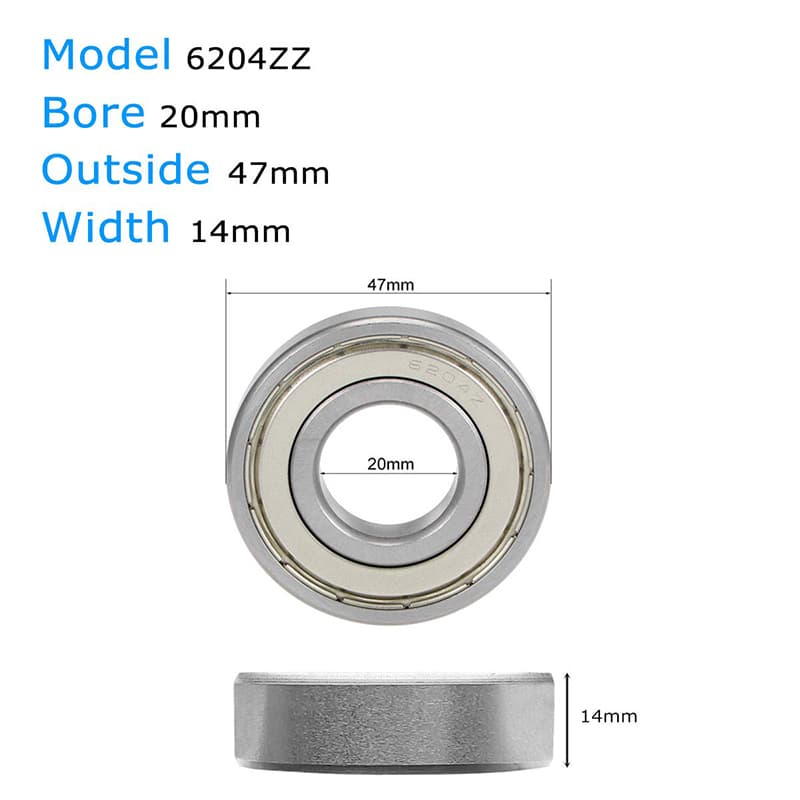
The OEM’s Blueprint: Specifying and Verifying Compliance
ISO standards provide the technical language for your quality requirements. Your engineering drawings should call out these standards, and your inspection should verify them.
Critical ISO Standards for Deep Groove Ball Bearings6:
1. ISO 151:2011 – Boundary Dimensions
- What it covers: The standard tables for bore (d), outside diameter (D), and width (B or C) for all standard metric bearings.
- OEM Application: Your housing and shaft are designed to these dimensions. You must verify the bearing conforms. This is the most basic check.
2. ISO 1992:2014 / ISO 492:2014 – Tolerances
- What it covers: Defines the tolerance classes for dimensions and running accuracy. Common classes:
- Normal (P0): Standard industrial grade.
- P6, P5, P4, P2: Increasingly tighter tolerances (higher precision).
- OEM Application: For a high-speed spindle, you specify "Tolerance class P5 per ISO 1992." Your inspection then uses gauges calibrated to P5 limits. A P5 bearing has less runout (wobble), leading to smoother operation.
3. ISO 2813:2007 – Dynamic Load Ratings and Rating Life
- What it covers: The method for calculating the basic dynamic load rating (C) and the basic rating life (L10). The ‘C’ value is foundational for your machine’s design life calculation.
- OEM Application: You use the ‘C’ rating from this standard in your design calculations. You should request the manufacturer’s calculated C value for the specific bearing. Reputable manufacturers derive this per ISO 2813.
4. ISO 152425https://cdn.standards.iteh.ai/samples/55216/86a1fc27f90b4fc2a88166106294eb30/ISO-15-2011.pdf)[^1]242:2017 – Vibration Measurement
- What it covers: Standardized methods for measuring vibration on rolling bearings.
- OEM Application: For quiet applications (e.g., HVAC fans, office equipment), you can specify a vibration class (e.g., V1, V2, V3 per ISO 152425https://cdn.standards.iteh.ai/samples/55216/86a1fc27f90b4fc2a88166106294eb30/ISO-15-2011.pdf)[^1]242). The supplier must test and certify the bearings meet this class. This is a key performance differentiator.
Implementing Standards in Your QC Checklist:
Your checklist should reference these standards:
- Dimensional Check: "Verify bore, OD, and width per ISO 151 and tolerance class P5 per ISO 1992."
- Performance Check: "Request vibration test report per ISO 152425https://cdn.standards.iteh.ai/samples/55216/86a1fc27f90b4fc2a88166106294eb30/ISO-15-2011.pdf)[^1]242, Class V2."
- Documentation Check: "Supplier to provide documentation confirming dynamic load rating (C) calculated per ISO 2813."
At FYTZ, our production is aligned with these ISO standards. When an OEM gives us a drawing calling for a "6205-2RS, P5 tolerance per ISO 1992, C3 clearance," we know exactly what to produce and how to inspect it. We can provide test reports referencing these standards, giving you objective proof of compliance for your quality records.
What is the L10 life1 of bearings?
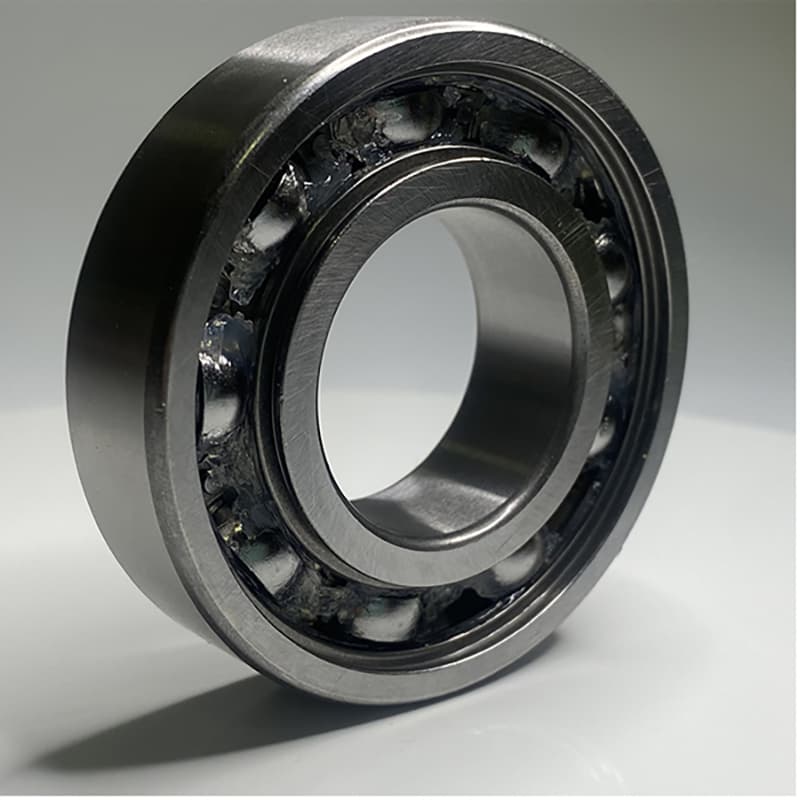
The L10 life1 is not a guarantee; it’s a statistical prediction. However, it is the universal metric for comparing bearing durability2 and designing for reliability. If your machine has a 5-year warranty, the bearings’ L10 life1 at your operating conditions must significantly exceed 5 years.
The L10 life1 is the basic rating life of a rolling bearing. It is the number of revolutions (or hours at a constant speed) that 90% of a group of identical bearings will complete or exceed before the first evidence of material fatigue3 (spalling) appears. It is calculated using the bearing’s dynamic load rating4 (C), the applied load (P), and a formula (L10 = (C/P)^p where p=3 for ball bearings).
From Theory to Practice: Validating Life in Your OEM Project
The L10 life1 is a cornerstone of mechanical design. For an OEM, understanding it is crucial for selecting the correct bearing size and for having informed discussions with your supplier about quality’s impact on actual life.
The Core Calculation:
For ball bearings, the formula is: L10 (revolutions) = (C / P)³
- C: Basic dynamic load rating4 (from the bearing catalog, per ISO 281). This represents the bearing’s inherent strength.
- P: Equivalent dynamic load acting on the bearing (a calculated value combining radial and axial loads).
This shows a cubic relationship. If the load (P) doubles, the life is reduced to 1/8th of its original value. This underscores why accurate load calculation and correct bearing selection are vital.
The Impact of Quality on L10 Life:
The catalog ‘C’ value assumes a bearing made from good quality, clean material with proper heat treatment5 and geometry. Lower quality directly reduces the effective ‘C’ value, leading to a shorter real-world life even if the calculation looks good.
- Poor Material (Inclusions): Fatigue cracks start at inclusions, shortening life.
- Poor Heat Treatment: Low hardness reduces load-carrying capacity.
- Poor Geometry (Runout, Ball Size Variation): Causes uneven load distribution, effectively increasing stress (P) on some rollers.
How to Use L10 in Your QC Process:
- Design Stage: Calculate the required L10 life1 for your application (e.g., 20,000 hours). Select a bearing whose catalog ‘C’ rating gives this life at your calculated load ‘P’.
- Supplier Qualification: Question your supplier on how they ensure their bearings achieve the catalog ‘C’ rating. Do they use vacuum-degassed steel? What is their heat treatment5 process control? At FYTZ, we can explain our material sourcing and process controls that support the published load ratings.
- Incoming Quality Audit: While you cannot test L10 life1 directly (it’s a fatigue test), you can audit the factors that influence it:
- Material Certificates: Verify steel grade and cleanliness.
- Hardness Tests: Confirm proper heat treatment5.
- Vibration Tests: Low vibration indicates good geometry and assembly, which correlates with even load distribution and longer actual life.
Beyond Basic L10: Life Adjustment Factors
The basic L10 is for ideal conditions. ISO 281 also includes life adjustment factors6 (a1 for reliability, aISO for operating conditions). For harsh environments (poor lubrication, contamination), the aISO factor can reduce the effective life to 10-20% of the basic L10. This is why sealing and proper lubrication are critical quality aspects you must also control.
For an OEM, the bearing’s L10 life1 is a key design parameter that hinges on supplier quality. Your QC checklist should include steps to verify the inputs to that life calculation: material quality, dimensional precision, and the supplier’s ability to consistently produce bearings that meet the catalog ‘C’ rating you designed with.
Conclusion
A robust OEM QC checklist for deep groove ball bearings verifies component integrity, dimensional compliance to ISO standards (15, 199), performance metrics like vibration (15242), and supplier processes that ensure the calculated L10 life (per ISO 281) is achievable in your application.
-
Understanding L10 life is crucial for bearing selection and reliability in mechanical design. ↩ ↩ ↩ ↩ ↩ ↩ ↩ ↩ ↩ ↩ ↩ ↩ ↩ ↩
-
Explore methods to measure and enhance bearing durability for better machine reliability. ↩ ↩ ↩ ↩ ↩ ↩ ↩ ↩ ↩ ↩
-
Discover the causes of material fatigue to improve bearing life and performance. ↩ ↩ ↩ ↩ ↩ ↩ ↩ ↩ ↩ ↩ ↩
-
Learn about dynamic load rating to ensure proper bearing selection and enhance machine performance. ↩ ↩ ↩ ↩ ↩
-
Understanding heat treatment can help you select high-quality bearings for your applications. ↩ ↩ ↩ ↩ ↩ ↩ ↩ ↩ ↩
-
Learn about life adjustment factors to accurately predict bearing performance in various conditions. ↩ ↩ ↩
