
Water is the lifeblood of papermaking, but it’s the enemy of most bearings. Combine that with high speeds, and you have a unique reliability challenge.
Spherical roller bearings are used in the pulp and paper industry for heavy-duty, high-speed applications like paper machine dryer rolls, press rolls, and pulp refiners. Their high radial load capacity handles roll weight and felt tension, while their tolerance for misalignment compensates for thermal expansion across wide machines.

A modern paper machine is a marvel of engineering, stretching over 100 meters long. It operates 24/7 at high speeds in a hot, humid, and sometimes corrosive environment. Bearings here cannot afford to fail. They must carry massive loads from heavy rolls, run at thousands of RPMs, and survive constant exposure to steam, water, and paper chemicals. While not every position uses them, spherical roller bearings are the go-to solution for the most demanding sections. Let’s explore why they are chosen, their limitations in this context, and how to specify them correctly.
What are spherical roller bearings used for?
In a paper mill, they aren’t general-purpose bearings. They are strategically deployed where their specific strengths solve critical problems.
Spherical roller bearings are primarily used in the dryer section and press section of paper machines, supporting large-diameter dryer rolls and press rolls. They are also used in pulp mill equipment like refiners, debarkers, and heavy-duty pumps, where high radial loads and shaft misalignment are common.
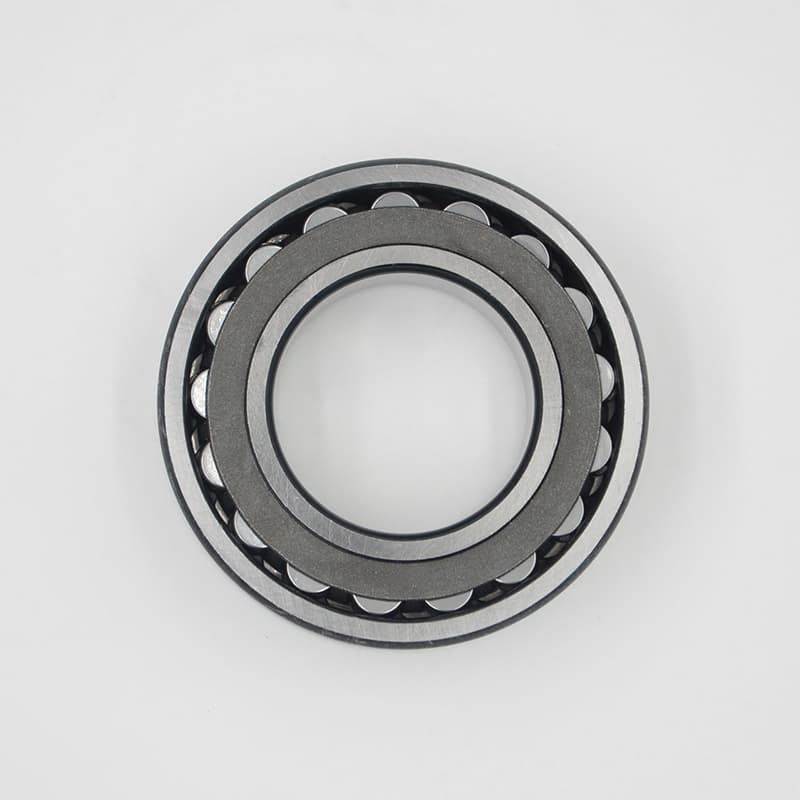
Their application is a direct response to the mechanical and environmental demands of the machinery. Let’s take a walk through the mill.
Critical Applications in Pulp and Paper Processing
1. The Paper Machine Dryer Section: The Prime Application
This is where wet paper sheet passes over a series of steam-heated cylinders to dry it. Each dryer roll is massive.
- Bearing Role: A spherical roller bearing supports each end of a dryer roll.
- Why Spherical Rollers Here?
- High Radial Load: The weight of the cast iron or steel roll itself, which can be many tons.
- Thermal Growth: The roll heats up to 150°C or more from internal steam. The bearing housing stays cooler. This differential expansion causes the shaft to grow relative to the housing. The spherical roller’s self-alignment allows the inner ring to tilt slightly, accommodating this stress without binding.
- Wide Machine Frames: Paper machines are very wide. Maintaining perfect alignment across all bearing positions is nearly impossible. Self-alignment is essential.
- High Speed: Modern machines run at speeds over 2000 meters per minute, translating to high rotational speeds for large diameter rolls. Spherical rollers are selected here for their load capacity, but speed becomes a critical limiting factor (see disadvantages).
2. The Press Section
Here, rolls press water out of the paper sheet using high pressure.
- Bearing Role: Supports the heavy press rolls.
- Why Spherical Rollers Here? Similar reasons: high load from roll weight and nip pressure, need for misalignment tolerance, and exposure to water spray.
3. Pulp Mill Heavy Equipment
- Refiners: These machines use rotating discs to separate wood fibers. They exert huge radial and axial forces. Spherical rollers handle the radial component well, often paired with a thrust bearing for axial loads.
- Debarkers, Chippers, Conveyors: Equipment handling logs and wood chips experiences shock loads and misalignment.
4. Where They Are NOT Typically Used
- Winder/Unwind Stands: These often use specialized tapered roller bearings for precise control of axial thrust during winding.
- High-Speed Calendar Rolls: May use precision cylindrical roller bearings for higher speed and rigidity.
- Small Pumps and Motors: Use deep groove ball bearings for cost and speed.
A Guide for Mill Procurement
For a bearing distributor like Rajesh, understanding this map is key. If a paper mill in Indonesia calls for a dryer section bearing, Rajesh knows to immediately think of spherical roller bearings in the 222 or 223 series, with specific features for paper machines. His value-add comes from knowing the details: the need for C4 clearance for heat, the requirement for seals compatible with steam and condensation, and the importance of a reliable cage design for high-speed operation. He can position himself as a specialist, not just a general bearing supplier.
What are the disadvantages of spherical roller bearings?
For all their strength in the dryer section, spherical rollers are not a perfect fit for every corner of a paper mill. Their inherent trade-offs become apparent under extreme conditions.
In pulp and paper applications, the main disadvantages of spherical roller bearings are their speed limitation (friction and heat at very high RPMs), higher cost compared to cylindrical rollers for some positions, sensitivity to improper lubrication in wet conditions, and the potential for seal friction and wear in high-speed, steamy environments.
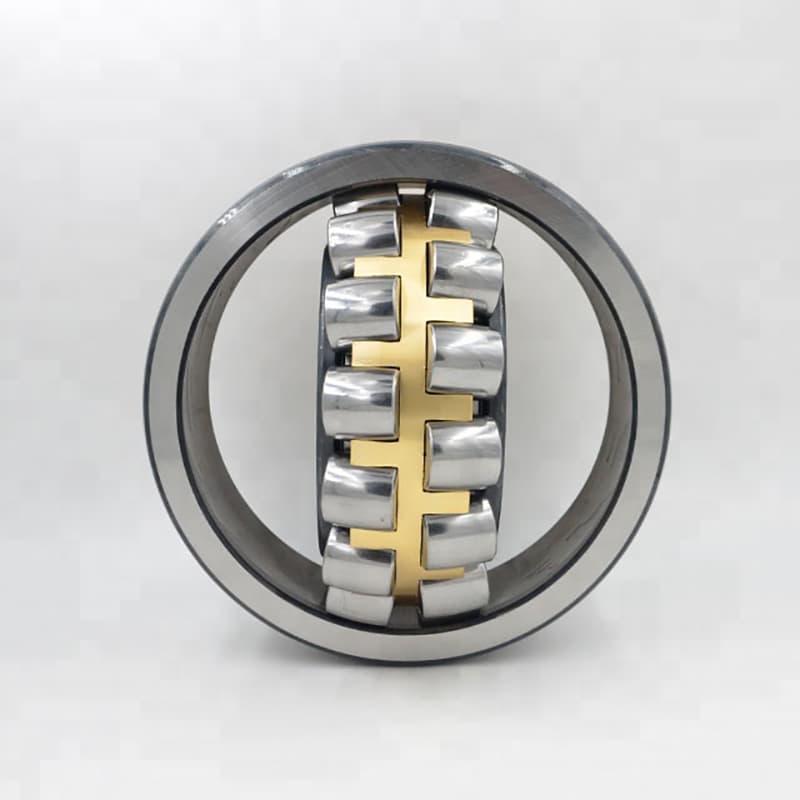
The paper industry pushes bearings to their operational limits. The disadvantages that might be minor in other industries become major points of consideration here.
Analyzing Limitations in the Context of Pulp and Paper
1. The Speed Challenge: Friction and Heat Generation
This is the most critical disadvantage for high-speed paper machines. Spherical rollers have higher internal friction than cylindrical roller bearings.
- Why? Two rows of rollers, roller end/flange contact, and the self-aligning action all contribute.
- Consequence: At the very high speeds of modern dryer sections (roll surface speeds > 2000 m/min), this friction generates significant heat. This heat adds to the heat from the steam-heated roll. Excessive heat can break down the lubricating grease, leading to premature failure.
- Industry Response: For the highest-speed positions, paper machine designers sometimes opt for single-row cylindrical roller bearings paired with spherical roller bearings in a hybrid arrangement, or use specially designed high-speed spherical rollers with optimized cages and lubrication.
2. Lubrication Vulnerability in Wet Conditions
The pulp and paper environment is wet. Water, steam, and acidic or alkaline pulp liquors are everywhere.
- Problem: If water ingresses past the seals, it contaminates the bearing grease. Water causes rust and breaks down the grease’s lubricating film. Spherical rollers, with their complex internal geometry, are particularly sensitive to lubrication failure.
- Mitigation: This disadvantage is addressed with extreme sealing solutions. Triple-labyrinth seals, non-contact isolators, and pressurized grease systems are common. The bearing itself isn’t the weak point; the sealing system is the critical, added component.
3. Cost Considerations
Spherical roller bearings are more expensive than deep groove ball bearings and often more costly than cylindrical roller bearings of similar size. In a large paper machine with dozens or hundreds of roll positions, the total bearing cost is significant. Engineers must justify their use where the load and misalignment capabilities are truly needed.
4. Seal Friction and Wear
To keep water out, robust seals are used. These seals often have contact lips. At high speeds, this contact creates additional friction (drag), which consumes energy and generates more heat. The seals themselves wear over time and require monitoring and replacement.
A Balanced View: Application-Specific Trade-Offs
| Paper Machine Section | Bearing Type Commonly Used | Spherical Roller Disadvantage Here | How It’s Managed |
|---|---|---|---|
| Dryer Section (Main Rolls) | Spherical Roller Bearing | High-speed heat generation. | Use high-speed capable designs (CC series), optimized cages, centralized oil lubrication for cooling. |
| Dryer Section (Small Rolls) | Cylindrical Roller Bearing | Spherical roller may be overkill & higher cost. | Use cylindrical for speed, rely on frame alignment. |
| Press Section | Spherical Roller Bearing | Exposure to water spray, lubrication washout. | Superior sealing (triple labyrinth), water-resistant grease. |
| Pulp Refiner | Spherical Roller Bearing | Very high load, potential for shock. | Use heavy-duty series (223, 230), machined brass cage. |
| High-Speed Pump | Angular Contact Ball Bearing | Speed limitation of spherical roller. | Use bearing type designed for high speed. |
Sourcing Implication for Distributors
When Rajesh talks to a paper mill customer, he needs to understand these trade-offs. If a mill is experiencing frequent bearing failures from overheating in the dryer section, simply supplying a replacement spherical roller may not solve the problem. He should inquire about the operating speed and lubrication method. Perhaps the solution involves recommending a bearing from a series specifically designed for higher speeds (like the CC, CA, or CD designations from some manufacturers) or discussing an upgrade to oil lubrication. This consultative approach builds deep partnerships.
What is the ISO standard for spherical roller bearings?
In a global industry like pulp and paper, where machines are built in one country and operated in another, standards are the bedrock of reliability and interchangeable parts.
The core ISO standard for spherical roller bearings is ISO 15:2011, which defines the boundary dimensions (bore, outer diameter, width) and tolerance classifications. Compliance ensures that a bearing from any manufacturer will fit the same housing and shaft, which is critical for maintenance and machine design in global paper mills.

For a mill engineer in Brazil or a procurement manager like Rajesh in India, ISO standards mean predictability. They can source bearings from different suppliers during a crisis and know they will physically fit.
The Role of ISO Standards in Mill Operations and Procurement
Adherence to ISO is not just about dimensions. It encompasses a system that guarantees performance and enables a functional global supply chain.
Key ISO Standards and Their Mill-Specific Importance
-
ISO 15:2011 – Boundary Dimensions
- This standard gives us the bearing number system. A 22220 bearing has a bore of 20 x 5 = 100mm, a specific OD, and width. Every ISO-compliant 22220 bearing in the world has these same core dimensions.
- Mill Impact: When a dryer roll bearing fails on a Saturday night, the maintenance team can pull a 22220 from any reputable supplier’s local stock and install it. They don’t need to wait for the original machine builder in Europe. This minimizes costly downtime.
-
ISO 76 & ISO 281 – Load Ratings
- ISO 76 defines the Basic Static Load Rating (C0).
- ISO 281 defines the Basic Dynamic Load Rating (C) and the L10 rating life calculation.
- Mill Impact: Paper mill engineers use these standardized ratings to calculate bearing life during machine design and to validate replacement parts. When Rajesh provides a bearing catalog from FYTZ, the engineers can trust that the load ratings are calculated the same way as those from European or American brands, allowing for true comparison.
-
ISO 492:2014 – Tolerances
- Defines precision classes: Normal (P0), P6, P5, etc.
- Mill Impact: For most paper machine rolls, Normal or P6 tolerance is sufficient. However, for high-speed positions or where runout is critical, a P5 class bearing might be specified to ensure smoother operation and reduced vibration.
-
ISO 1132-1:2000 – Internal Clearance
- Defines the clearance groups: C2, CN (Normal), C3, C4, C5.
- Mill Impact: This is extremely important. For paper machine dryer rolls, C4 clearance is almost always specified to accommodate the thermal expansion of the hot roll shaft relative to the cooler bearing housing. Using a CN clearance bearing would likely cause preload, overheating, and failure.
The "Standard" as a Quality Benchmark
Claiming "ISO Standard" is common. The real test is in the product’s consistency.
- A quality manufacturer like FYTZ designs and manufactures to these standards. Our bearings have the correct dimensions, the published load ratings are reliable, and the internal clearance (C4) is consistently within the specified range.
- A low-quality supplier may have bearings that are "close" but not exact. A bore that is a few microns too small can make installation impossible under pressure. An OD that is too large won’t fit the housing.
Procurement Strategy for Distributors
For Rajesh, promoting ISO-compliant bearings is a risk-reduction strategy for his mill customers. He can confidently tell them, "The FYTZ 22220 C4 bearing I supply is manufactured to ISO 15, 76, and 281. It will directly replace your current bearing with no modification." This assurance is worth a premium in an industry where an hour of unscheduled downtime can cost tens of thousands of dollars. It transforms his product from a generic component into a certified, reliable spare part.
What loads can a spherical roller bearing handle?
This is their raison d’être. In the heavy, high-speed world of paper machines, understanding load capacity is non-negotiable for reliability.
Spherical roller bearings can handle very high radial loads and moderate axial loads in both directions. Their radial load capacity is the highest among common roller bearing types, due to two rows of rollers sharing the load. This makes them ideal for supporting the heavy weight of paper machine rolls and withstanding forces from felt and wire tension.
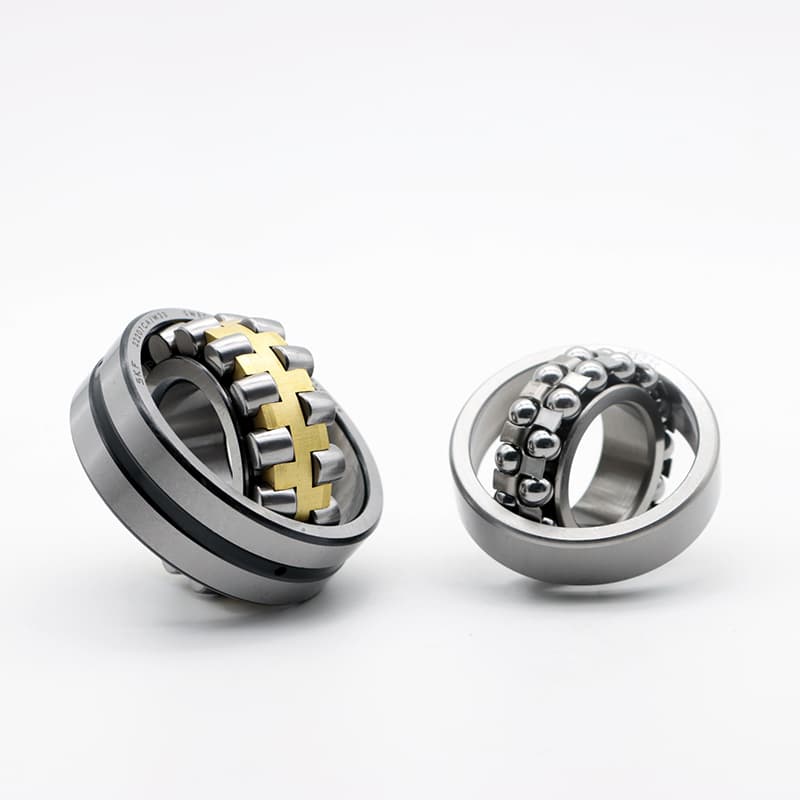
The term "high load" needs quantification. It is defined by standardized ratings that allow engineers to predict bearing life with accuracy.
Quantifying Load Capacity for Paper Machine Design and Maintenance
1. The Basic Dynamic Load Rating (C): The Foundation of Life
This is the single most important number in the catalog for rotating equipment.
- Definition: The constant radial load that a group of identical bearings can endure for 1 million revolutions with a 90% probability of survival.
- Usage: Engineers use
Cand the actual loadPto calculate theL10life:L10 = (C / P)^(10/3). This formula shows that life is extremely sensitive to theC/Pratio. A small increase inC(by choosing a larger bearing) leads to a dramatically longer life. - Paper Machine Example: A large dryer roll bearing might have a
Crating of 1500 kN. If the actual radial load is 200 kN, the life calculation is (1500/200)^(3.33) ≈ 500 times longer than the 1-million-revolution baseline. This demonstrates the massive inherent safety factor and longevity possible.
2. The Basic Static Load Rating (C0): The Safety Limit
- Definition: The load a bearing can support without permanent deformation (brinelling) of the raceways.
- Relevance in Paper Mills: This is critical during start-up and shutdown, or if the machine is stopped under load. It also matters for equipment like pulp refiners that experience severe shock loads. The maximum applied static load must be less than
C0.
3. Axial Load Capacity: The Bonus Feature
Spherical rollers are not thrust bearings, but they can handle axial push/pull. A general rule is their axial capacity is 20-35% of their radial C rating. This is useful because:
- Thermal expansion of rolls can create axial forces.
- Felt and wire guides can impose slight axial loads.
- Gears or drives may introduce axial components.
Factors That Reduce Effective Load Capacity in Paper Mills
The catalog C rating is for ideal conditions. Real-world factors in a mill require derating:
- High Temperature: The bearing material’s strength decreases at elevated temperatures. Dryer section bearings require steel that is heat-stabilized.
- Contamination: Water and pulp ingress is abrasive. Effective sealing is paramount to preserve the load rating.
- Misalignment: Even with self-alignment, excessive misalignment causes uneven load distribution, effectively reducing capacity.
Comparison with Other Bearing Types
To understand their strength, consider a bearing with a 120mm bore:
- Deep Groove Ball Bearing: C ≈ 100 kN
- Cylindrical Roller Bearing: C ≈ 200 kN
- Spherical Roller Bearing (22224): C ≈ 900 kN
The spherical roller’s capacity is in a different league, which is why it’s chosen for the heaviest rolls.
Sourcing for Performance: Beyond the Catalog Number
When Rajesh sources spherical rollers for paper mills, he must look beyond just the size (e.g., 22224). He needs to ensure the bearings are built to deliver their promised load capacity. This involves:
- Material Quality: The steel must be clean, homogenous, and properly heat-treated. At FYTZ, we use vacuum-degassed bearing steel for high dynamic performance.
- Precision Grinding: The raceways and rollers must be ground to precise profiles to achieve the optimal contact pattern (e.g., CBR 80%) for maximum load distribution.
- Cage Integrity: The cage must be robust (machined brass or steel) to keep rollers properly separated under high load and speed.
By providing bearings that reliably meet their ISO load ratings, Rajesh gives his paper mill customers the confidence to run their machines at full production without fear of unexpected bearing-related stops.
Conclusion
Specifying spherical roller bearings for the pulp and paper industry requires a nuanced understanding. They excel under high radial loads and misalignment in wet, high-speed environments like dryer sections, but their speed limits and lubrication sensitivity must be carefully managed through proper selection, sealing, and adherence to ISO standards for reliable, interchangeable performance.