
Woodworking machines break down too often? Dust kills bearings fast. I have a better solution.
Pillow block bearings are critical because they handle heavy loads, misalignment, and harsh dust. They keep saws and panel saws running smoothly with less downtime.
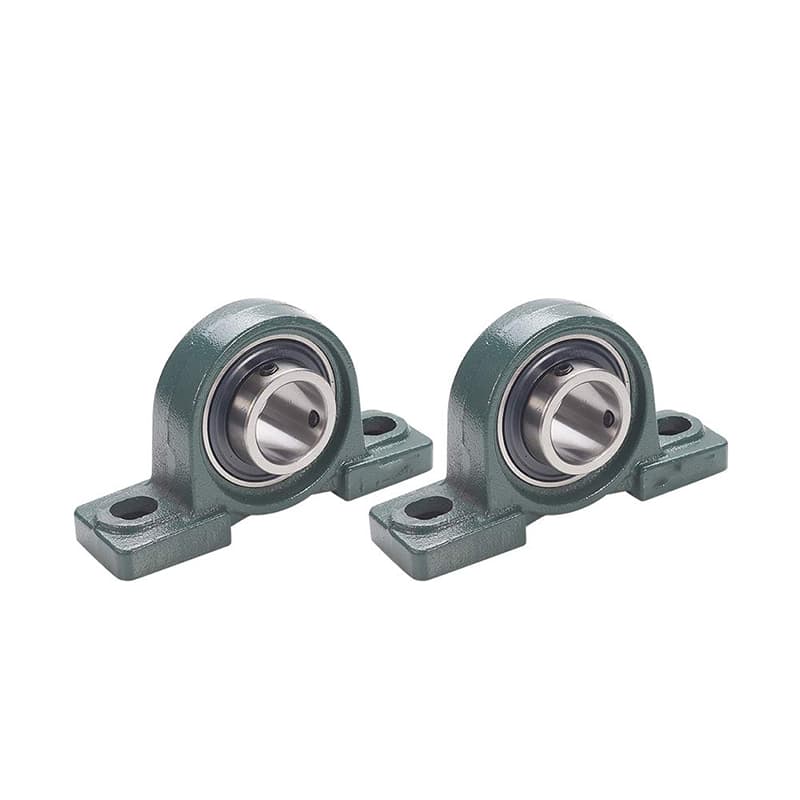
You might think any bearing works. But I learned the hard way that woodworking needs something special. Let me explain. Over the past ten years at FYTZ Bearing, I have seen too many factories lose money because of bearing failures. Wood dust gets everywhere. It mixes with grease. It turns into a grinding paste. That kills standard bearings in weeks. But pillow block bearings are different. They come with sealed housings and strong materials. So they survive much longer. I will walk you through the benefits, selection tips, common types, and installation tricks. My goal is to help you avoid the mistakes I have seen from buyers in India, Turkey, and Brazil.
What are the Key Benefits of Pillow Block Bearings in Woodworking Equipment?
Dust, vibration, and heavy cuts destroy standard bearings. Pillow block bearings solve these three problems at once.
The key benefits include self-alignment for shaft misalignment1, sealed housings to block dust2, high radial load capacity for heavy cutting forces3, and easy replacement without removing the shaft4.
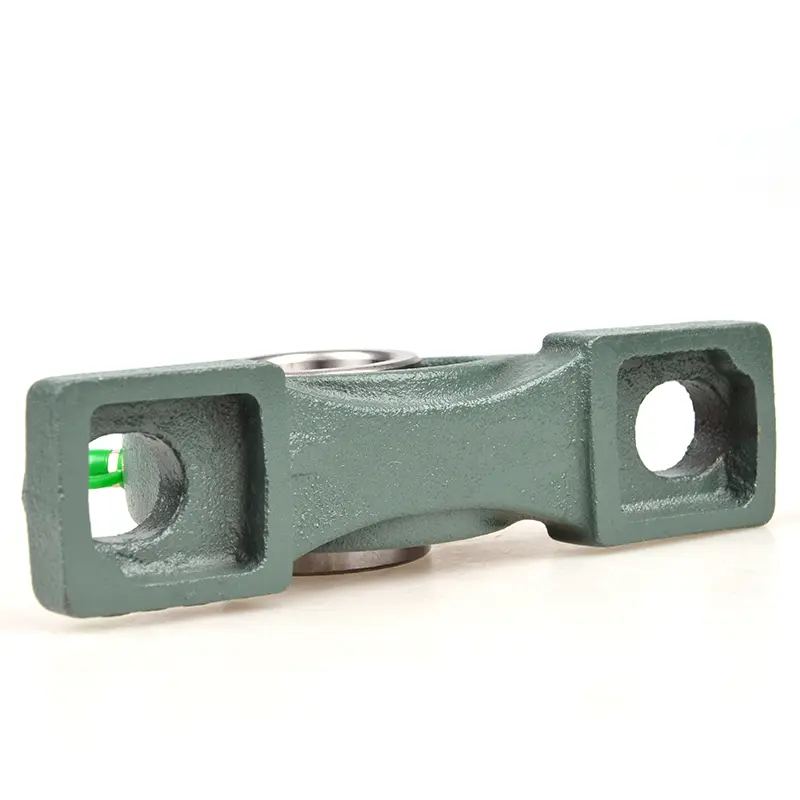
1. Self-Alignment Saves Your Shafts
Woodworking machines often have long shafts. Over time, these shafts bend a little. Or the frame shifts because of vibration. A normal bearing cannot handle that. It will bind and overheat. But pillow block bearings have a spherical outer ring. That design allows the bearing to tilt up to 2 degrees. So even if your shaft is not perfectly straight, the bearing still works. I remember a customer in Vietnam. He made furniture. His panel saw kept failing every month. We switched to self-aligning pillow block bearings. The problem went away.
2. Sealed Housings Block Wood Dust
Wood dust is very fine. It can get past normal rubber seals. Once inside, it mixes with the grease. The grease turns into a dark, sticky paste. Then the bearing runs hot and locks up. Pillow block bearings come with a cast iron housing. That housing covers the bearing completely. On top of that, you can choose different seal types. For woodworking, I always recommend triple-lip contact seals or labyrinth seals5. They create multiple barriers. Dust has to go through three layers before reaching the bearing. Most of the time, it never does.
3. High Load Capacity for Aggressive Cutting
Sawing and panel processing involve strong forces. When you push a large panel through a blade, the bearing takes a big radial load. Some machines also have axial loads from the feed mechanism. Pillow block bearings are made for these conditions. The housing is thick cast iron or cast steel. The bearing inside is usually a deep groove ball bearing or a spherical roller bearing. Both types can handle high loads. I have tested our FYTZ bearings at 150% of rated load. They still ran fine. But do not try that at home. Always stay within the rated capacity.
Comparison Table: Pillow Block vs. Standard Bearings in Woodworking
| Feature | Pillow Block Bearing | Standard Bearing (e.g., 6204) |
|---|---|---|
| Dust protection | Full cast iron housing + multiple seal options | Open or single rubber seal |
| Self-alignment | Yes (spherical outer ring) | No |
| Replacement | Easy – unbolt housing, no shaft removal needed | Hard – needs bearing puller and press |
| Load capacity | High (thick housing distributes load) | Medium |
| Cost | Higher upfront, lower long-term | Lower upfront, higher downtime cost |
So the benefits are clear. Pillow block bearings save you money over time. They reduce unplanned stops. They protect your shafts. And they keep dust out. That is why every serious woodworking shop uses them.
How to Choose the Right Pillow Block Bearing for Sawing Machines?
Wrong bearing choice ruins sawing accuracy. I will show you the three factors that matter most.
To choose the right pillow block bearing1, check the load direction2 (radial vs. axial), shaft speed3 (RPM), and seal type4. For sawing, go with heavy-duty cast iron5 housings and triple-lip seals6.
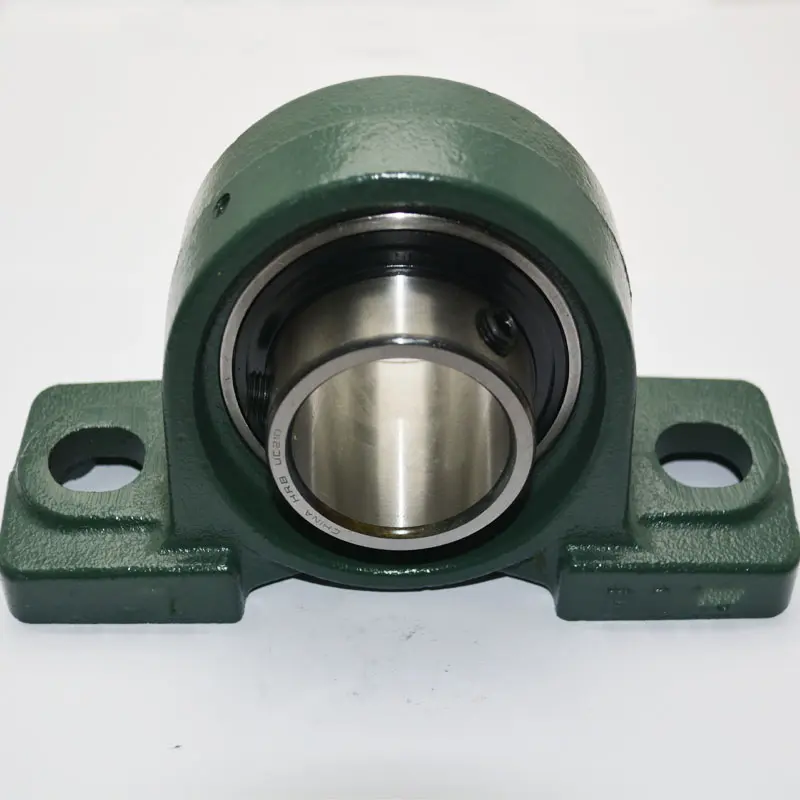
1. Load Type and Magnitude
Sawing machines have two main loads. First, the radial load from the blade cutting into wood. Second, sometimes an axial load if the saw uses a worm gear or a feed screw. You need to measure or estimate both. For most circular saws, radial load is 80% of the total. For band saws, axial load can be higher. I recommend using a load calculation sheet7. Many engineers skip this step. Then they buy bearings that are too small. The bearings fail in three months. Then the saw blade wobbles. That ruins the cut quality. So do not guess. Ask your bearing supplier for help. At FYTZ, we offer free load analysis for bulk buyers.
2. Speed Requirements
Sawing machines run at different speeds. A rip saw might spin at 3,000 RPM. A fine panel saw can go up to 8,000 RPM. High speed creates heat. Heat degrades grease and expands metal. For speeds above 5,000 RPM, you need a pillow block bearing with a steel cage, not a plastic one. Also, use high-speed grease8. Standard lithium grease will melt and leak out. I learned this from a customer in Russia. He made MDF panels. His saws ran at 6,500 RPM. He used cheap bearings with plastic cages. After two weeks, the cages broke into pieces. We sent him FYTZ bearings with brass cages. The problem stopped.
3. Seal and Housing Material
The housing material is often overlooked. For dry woodworking, cast iron is fine. For wet wood or MDF with glue, you need stainless steel or nickel-plated housings. Glue and moisture corrode cast iron. I saw this in a plywood factory in Indonesia. Their pillow block housings turned into rust piles after six months. We replaced them with stainless steel units. They are still running two years later. For seals, use triple-lip nitrile rubber for most sawing. For very fine dust like MDF, use labyrinth seals9. They do not touch the shaft, so they create no friction. But they cost more. You decide based on your dust level.
Selection Decision Table
| Machine Type | Load Level | Speed Range | Recommended Pillow Block |
|---|---|---|---|
| Rip saw (solid wood) | High radial | 3,000 – 4,500 RPM | Cast iron housing, triple-lip seal, steel cage |
| Panel saw (MDF) | Medium radial + axial | 5,000 – 8,000 RPM | Cast iron or stainless housing, labyrinth seal, brass cage |
| Band saw | Low radial, high axial | 500 – 1,500 RPM | Standard cast iron, double-lip seal, steel cage |
| Tenoner (moulder) | Very high radial | 6,000+ RPM | Heavy-duty cast steel, triple-lip seal, high-speed grease |
To sum up, choosing the right pillow block bearing is not hard. Just match load, speed, and seal to your machine. And never buy the cheapest option. Cheap bearings cost more in downtime.
What are the Common Types of Pillow Block Bearings Used in Panel Processing?
Panel processing machines run at high speeds with fine dust. Not every bearing type can survive that.
Common types include set screw locking bearings10, eccentric locking collars11, and tapered bore adapter bearings. For panel saws, set screw type with contact rubber seals is most popular.
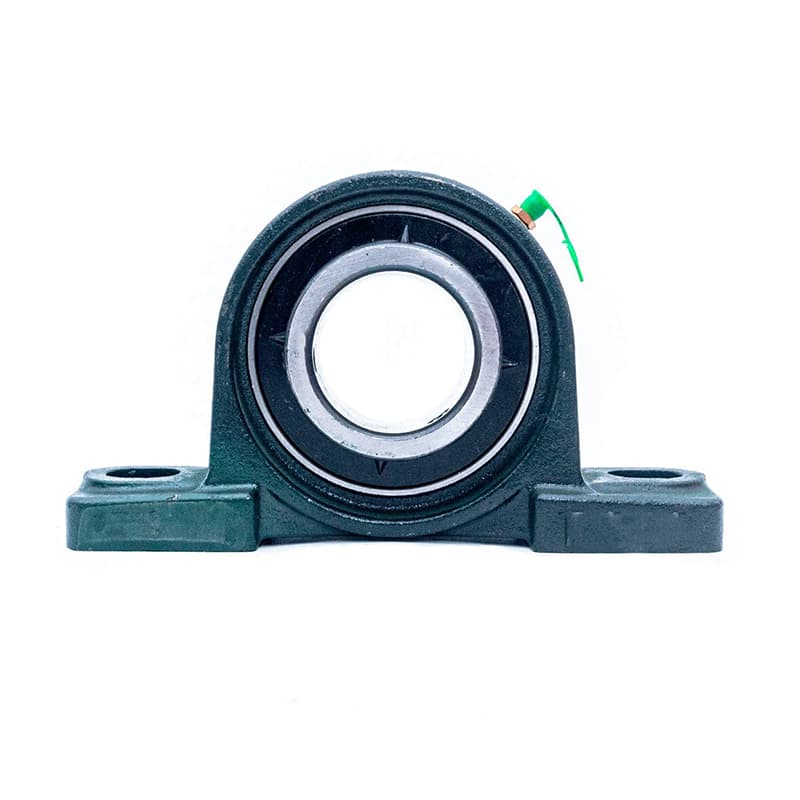
1. Set Screw Locking Bearings
This is the most common type. The bearing inner ring has two set screws. You tighten them onto the shaft. It is simple and cheap. For panel processing, this works well if your shaft is smooth and round. But there is a catch. Set screws can damage the shaft. They create small dents. Over time, those dents make the bearing loose. Then the shaft spins inside the inner ring. That wears down both parts. I have seen this many times in Bangladesh. One customer used set screw bearings on a high-vibration shaper. The shaft got ruined in four months. So use set screw only for light to medium loads. And always use a shaft with a hardness of at least HRC 40.
2. Eccentric Locking Collar Bearings
These bearings use a collar with an off-center groove. You turn the collar to lock it onto the shaft. This method spreads the clamping force more evenly. So it does not damage the shaft like set screws. It also handles vibration better. For panel saws that run for 16 hours a day, I prefer eccentric locking. The downside is installation. It takes more time. You need to turn the collar in the correct direction. If you turn it the wrong way, the bearing will not lock. I trained my customers in Egypt on this. Now they use eccentric collars on all their heavy-duty panel saws.
3. Tapered Adapter Bearings
This type uses a tapered sleeve. You push the sleeve between the shaft and the bearing inner ring. Then you tighten a nut to lock everything together. This gives the strongest hold. It also works on shafts that are not perfectly sized. For example, if your shaft is a few hundredths of a millimeter undersize, the adapter takes up the gap. Tapered adapters are common in large panel processing lines. Think of machines that handle 8-foot by 4-foot sheets all day. The loads are huge. The vibration is constant. Only a tapered adapter can hold. But these bearings cost more and need skilled workers to install. Do not use them for small machines. It is overkill.
Comparison of Locking Methods
| Locking Type | Holding Power | Shaft Damage Risk | Installation Difficulty | Best For |
|---|---|---|---|---|
| Set screw | Medium | High (dents) | Easy | Light duty, small saws |
| Eccentric collar | High | Low | Medium | Medium to heavy duty, panel saws |
| Tapered adapter | Very high | None | Hard | Heavy duty, production lines |
In my experience, most panel processing plants in India and Vietnam start with set screw bearings. Then after a few failures, they switch to eccentric collars. A few large factories go straight to tapered adapters. If you are buying for a new machine line, I suggest you choose eccentric locking. It gives the best balance of cost and performance. And remember, FYTZ makes all three types. We can also customize the housing color or the seal material. Just ask.
What are the Installation Tips for Reliable Bearing Performance in Dusty Environments?
Dust is the silent killer of bearings. A proper installation can extend bearing life by three times.
Key tips: use proper shaft tolerances, pre-lubricate with high-quality grease1, align the housing correctly, and add external dust covers2 or labyrinth seals3 for extreme conditions.
[^4] in dusty environment](https://sdycbearing.com/wp-content/uploads/2025/12/Pillow-Block-Bearing-3.webp)
1. Shaft Preparation and Tolerance
Before you install any pillow block bearing, check the shaft. It must be clean. No rust, no burrs, no old grease. Use fine sandpaper to smooth any rough spots. Then measure the shaft diameter. For a metric shaft, the tolerance should be h6 or j6. That means the shaft is slightly smaller than the bearing bore. For a 30mm bearing, the shaft should be between 29.987mm and 30.000mm. If the shaft is too big, you will crack the inner ring when you tighten it. If it is too small, the bearing will spin on the shaft. I saw this in a furniture factory in Pakistan. They used a worn-out shaft that was 0.2mm undersize. The bearing wobbled and failed in one week. A new shaft fixed the problem.
2. Lubrication Strategy
Most pillow block bearings come pre-greased from the factory. That grease is for storage and short-term use. For heavy woodworking, you must add more grease before running the machine. Use a grease gun with a high-quality lithium complex or polyurea grease. Pump slowly until you see old grease coming out of the seal. Then run the machine for five minutes. Then add a little more. For dusty environments, re-grease every 200 operating hours. Some people say 500 hours. But dust washes away the grease film faster. So 200 hours is safer. I have a customer in Turkey who ignored this. He ran his saws for 800 hours without re-greasing. The bearings seized and damaged the shaft. The repair cost him $2,000. A $10 tube of grease would have prevented it.
3. Sealing Enhancement
Even the best pillow block seal can let some dust through. So add extra protection. The simplest way is to install a rubber or felt washer on the shaft next to the bearing. That acts as a pre-filter. Another way is to use a labyrinth ring. That is a metal ring with a zigzag path. Dust gets trapped in the zigzag before reaching the seal. For extreme dust like sanding operations, you can also use a compressed air purge. A small tube blows air over the seal. The air pushes dust away. I have designed this for a panel processing line in Brazil. It cost $300 per bearing station. But the bearings lasted four years instead of six months. So it paid for itself many times over.
Common Installation Mistakes and Fixes
| Mistake | Consequence | Correct Action |
|---|---|---|
| Shaft too rough | Seal wears out quickly | Polish shaft to Ra 0.8 µm or better |
| Over-tightening set screws | Inner ring cracks | Use torque wrench – follow manufacturer spec |
| Misaligned housings | Uneven load, heat generation | Use alignment laser5 or straight edge |
| Wrong grease type | Grease hardens or leaks | Use polyurea grease for high temp and dust |
| No re-greasing schedule6 | Bearing runs dry | Set a calendar reminder every 200 hours |
I cannot stress this enough. Installation is 70% of bearing life. A cheap bearing installed well will outlast an expensive bearing installed poorly. At FYTZ, we include installation guides with every bulk order. We also offer free training videos for your maintenance team. Just email sales@fytzbearing.com and ask.
Conclusion
Pillow block bearings boost woodworking machine reliability. Choose right, install carefully, and you will cut downtime dramatically.
-
Discover why high-quality grease is crucial for bearing lubrication and how it can prevent costly failures. ↩ ↩ ↩
-
Find out how dust covers can protect bearings from contaminants and extend their operational life. ↩ ↩ ↩
-
Explore the function of labyrinth seals in preventing dust ingress and enhancing bearing longevity. ↩ ↩ ↩
-
Explore this link to learn essential installation practices that can significantly enhance the performance and lifespan of pillow block bearings. ↩ ↩
-
Understand the advantages of using an alignment laser for precise bearing installation and load distribution. ↩ ↩ ↩
-
Learn about the optimal re-greasing schedule to maintain bearing efficiency and prevent breakdowns. ↩ ↩
-
Learn how to create a load calculation sheet to ensure proper bearing selection and avoid failures. ↩
-
Understand the role of high-speed grease in maintaining bearing performance at elevated RPMs. ↩
-
Find out how labyrinth seals provide superior protection against fine dust and debris. ↩
-
Learn about set screw locking bearings and when they are suitable for use. ↩
-
Discover the advantages of eccentric locking collars for better shaft engagement and stability. ↩