
If your machines are eating up power and wearing out too fast, the problem might be hiding in a tiny, overlooked component.
The right bearing choice is a direct path to better efficiency. Tapered roller bearings are designed to handle heavy, combined loads with less friction. By minimizing this internal friction and supporting the shaft with perfect geometry, they allow your machine to run smoother, use less energy, and keep its components aligned for a much longer service life.
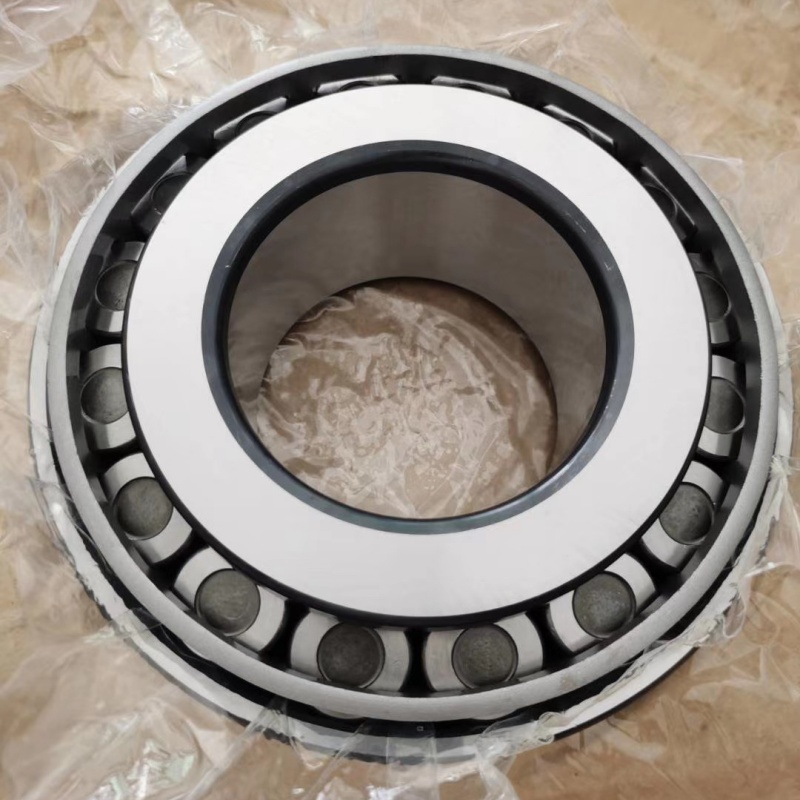
So, how do you get from a worn-out, inefficient machine to a high-performing one? The answer lies not just in choosing the right type of bearing, but in understanding the specifics of its installation, maintenance, and the manufacturer behind it. Let’s break down the critical questions that every procurement manager or engineer needs to ask.
How are tapered roller bearing1s adjusted?
Getting the adjustment wrong is the fastest way to turn a premium bearing into a scrap pile of metal. So, how do you get it right?
Adjusting a tapered roller bearing is all about controlling the internal clearance2 or preload3. This is done by moving the cone (the inner ring) relative to the cup (the outer ring). The goal is to achieve a specific setting—either a slight amount of end play4 (clearance) or a precise preload—depending on the application’s needs.
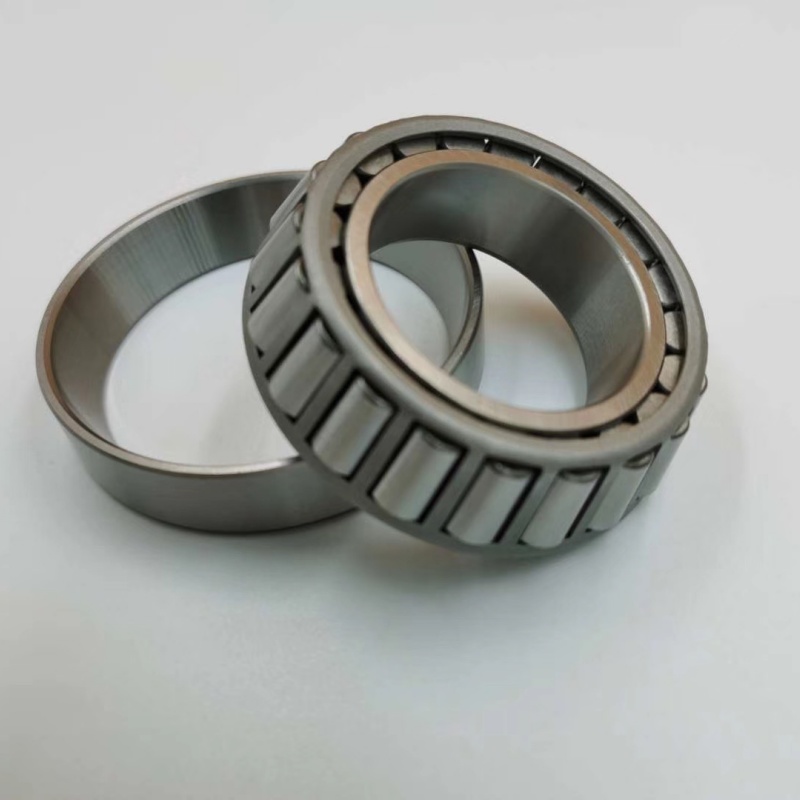
The Art of Setting the Right “Play”
Let’s get a little deeper into this. The term “adjustment” can be misleading. With tapered roller bearings, we aren’t just tightening a nut until it feels right. We are engineering a precise condition. There are two primary states you can achieve through adjustment: preload and end play. Choosing the wrong one is a common, costly mistake.
Preload means the bearings are installed with a constant, light internal force even when no external load is applied. This removes all internal clearance. You might think this would increase friction, and you’d be right. However, the benefits often outweigh this for specific applications. Preload is critical for applications demanding high rigidity and precise shaft positioning. Think of a machine tool spindle. If there’s any play in the spindle, your cutting tool will chatter, resulting in a poor surface finish and reduced tool life. The preload eliminates that axial and radial movement, ensuring every cut is precise.
On the other hand, end play (or clearance) is the deliberate allowance for a small amount of axial movement. This is essential for applications where the shaft will experience significant thermal expansion. A classic example is a car’s front wheel hub. As you drive, the brakes and the road friction generate immense heat. If the wheel bearings were preloaded with no room to expand, the internal stress would skyrocket, leading to rapid overheating, lubrication failure, and bearing seizure. The small amount of end play allows the components to expand safely without destroying themselves.
So, how do we actually measure and set this? It’s not guesswork. Here is a simplified breakdown of the methods:
| Adjustment Method | Description | Best For |
|---|---|---|
| Screw Adjustment5 | A threaded nut is used to lock the cone in place. A dial indicator measures the shaft’s end play. The nut is tightened or loosened until the desired spec is reached. | Applications where precise measurement is easy, like gearboxes or industrial gear drives. |
| Spacer / Shim Method6 | Precision-ground spacers or shims are placed between the bearings or between the bearing and the housing shoulder. The total stack-up of parts determines the preload or clearance. | High-volume production settings, like automotive hubs. It’s faster and more consistent once the correct shim size is calculated. |
| Torque-Based Method | The bearing is tightened to a specified torque value. This method assumes the torque applied to the nut correlates directly to a specific bearing setting. | Simpler assemblies where a dial indicator is impractical to use. It’s less precise than the other methods. |
For our clients at FYTZ Bearing, we often recommend a combined approach. First, use shims or spacers to get within the ballpark. Then, use a dial indicator for final verification. This ensures that the bearings we supply—whether for a heavy truck hub or an industrial gearbox—operate in their ideal environment. Getting this step wrong is a guaranteed path to premature failure, which is why we stress this so much with our partners in places like India and Brazil, where operating conditions can be extreme.
Who makes the best tapered roller bearings1?
With so many options flooding the market, how do you separate the bearing that will run for years from the one that will fail in months?
The “best” manufacturer isn’t just a name; it’s a commitment to metallurgy, precision manufacturing, and quality control. While well-known global brands exist, the real value often comes from specialized manufacturers like us, FYTZ Bearing, who combine industrial-grade production lines with the flexibility to meet specific customer needs without the premium price tag of legacy brands.
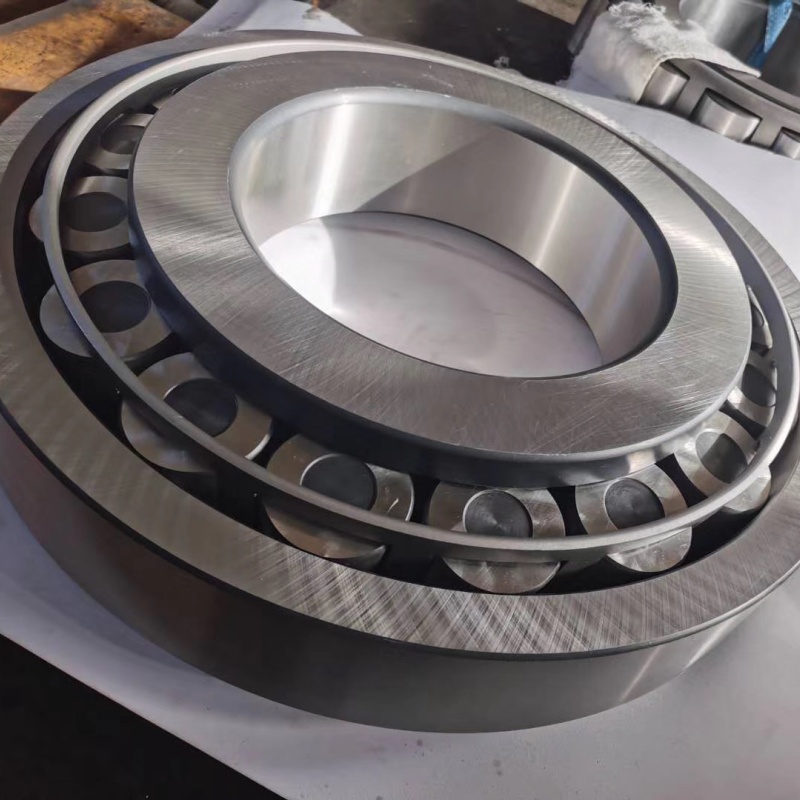
Beyond the Brand: What Defines Quality?
Let’s be honest. In my conversations with procurement managers like Rajesh in Mumbai, the question isn’t just “who is the best?” It’s “who is the best for my business?” A multinational corporation might have the deepest pockets for R&D, but a factory like ours—with integrated production and inspection lines—offers a distinct advantage: control.
We aren’t just assembling parts sourced from third parties. We control the steel composition2, the heat treatment process3, the grinding precision, and the final inspection. This vertical integration is the secret to consistent quality. When a bearing fails, it’s rarely because the design was flawed. It’s almost always a microscopic flaw in the steel, an error in the heat treatment that left the raceway too soft, or a tiny burr left from grinding.
So, when evaluating a manufacturer, I tell my customers to look at three critical things:
-
Material and Heat Treatment: The best bearings start with high-quality, clean steel. But steel alone isn’t enough. The heat treatment process—through-hardening or case-carburizing—determines how the bearing will handle impact loads. For heavy-duty applications like in Russia’s mining trucks or Indonesia’s agricultural equipment, a bearing with a tough core and a hard surface is non-negotiable. We use case-carburized steel for our taper roller bearings, providing the surface hardness to resist wear and the ductile core to absorb shock.
-
Geometric Precision: This is measured by the bearing’s “precision class” (like P0, P6, P5). The lower the number, the tighter the tolerances. While a standard P0 class is fine for many uses, high-speed or high-precision applications demand P5 or P6. At FYTZ, we offer this range because we know a textile machine in Vietnam has vastly different precision requirements than a concrete mixer in Egypt. We don’t believe in a one-size-fits-all approach.
-
Quality Inspection: It’s not enough to make a bearing; you have to prove it’s perfect. We use integrated inspection lines. This means every critical dimension is checked during the manufacturing process, not just at the end. For our distributors in Turkey and Pakistan, this traceability is vital. It means when they sell a bearing, they can be confident it will meet the promised specifications for noise, vibration, and lifespan.
The “best” manufacturer for your business is the one that aligns with your technical requirements, your volume needs, and your budget. For many of our clients, that’s a partner who offers OEM/ODM customization4, not just a standard product from a catalog. We’ve built our brand, FYTZ Bearing, on being that flexible, quality-focused partner.
What is the lifespan of a tapered bearing?
No one wants to hear that a critical machine is down because a bearing failed. So, how long can you realistically expect a tapered roller bearing1 to last?
A tapered roller bearing’s lifespan is not a fixed number. In ideal conditions, with proper installation, lubrication, and sealing, it can easily last for the entire life of the equipment it’s installed in—often 10 to 20 years or more. However, in the real world, its life is directly determined by the operating conditions and the level of maintenance it receives.
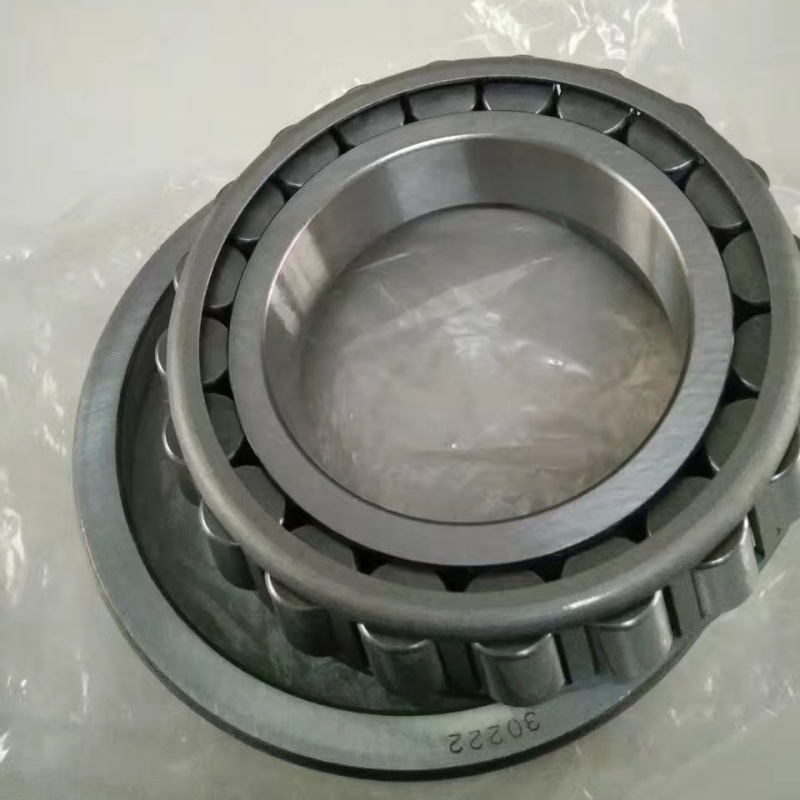
The Realities of Bearing Life Calculation
We often talk about “L10 life2,” which is a calculated number. It tells you the operating hours that 90% of a group of identical bearings will achieve before showing signs of fatigue. But in my experience, this is a theoretical starting point. The real-world lifespan of a bearing is a story written by the application.
Think of it this way. The bearing itself is a perfect machine component when it leaves our factory. It has precise geometry, a clean surface, and a fresh fill of grease. From the moment it’s installed, its lifespan is being affected by factors that have nothing to do with the bearing’s inherent quality.
Let’s break down the common killers of bearing life and how they relate to your operation:
1. Contamination3 (The #1 Killer)
This is the biggest enemy. Dirt, sand, water, and other particles act as an abrasive. They get into the raceway and literally grind away the polished surfaces.
- The Impact: A bearing that should last 10 years might fail in 1 year if operating in a dusty environment with poor seals.
- The Solution: For our clients in dusty regions like Egypt or agricultural zones in India, we always emphasize the importance of high-quality seals4 and proper re-greasing practices to purge out old, contaminated grease.
2. Lubrication Failure5
Grease or oil is the bearing’s lifeblood. Using the wrong viscosity, the wrong type, or not enough of it will lead to metal-to-metal contact.
- The Impact: This causes rapid wear and heat generation. When a bearing runs dry, it can seize in minutes. When it runs with the wrong lubricant, it can fail due to corrosion or excessive wear within months.
- The Solution: We help our customers choose the right lubricant for their operating temperature and speed. A high-speed application, like in an automotive gearbox, needs a different oil than a slow, heavy-load application, like in a construction crane.
3. Improper Installation6 and Misalignment
This goes back to our first point about adjustment. If a bearing is installed with the wrong preload, or if the shaft is bent, the load isn’t distributed evenly across the rollers.
- The Impact: Instead of the load being spread out, it’s concentrated on a small area. This leads to localized stress, fatigue, and spalling (where tiny flakes of metal break off). This can cause failure in a matter of months, not years.
- The Solution: Training and proper tooling. For our distributors in Vietnam and Bangladesh, we provide installation guides to ensure their customers are setting the bearings up for success from day one.
In short, a high-quality bearing from a reliable manufacturer like FYTZ Bearing provides the potential for a long life. But it’s the system around it—the seals, the lubrication, and the skill of the installer—that ultimately determines if you will see that 20-year lifespan or face a costly, unexpected breakdown.
Which is the most preferred use of taper roller bearings?
Given their unique ability to handle heavy loads, where do these bearings truly shine? What is the application that defines them?
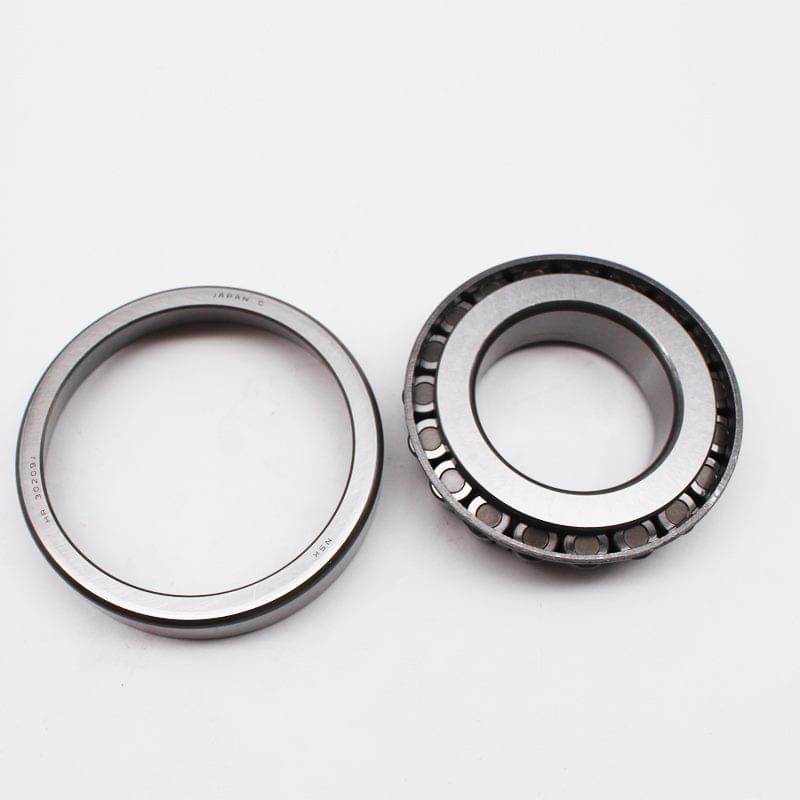
The most preferred use of taper roller bearings is in any application requiring the support of combined loads1—meaning both heavy radial (downward) and axial (thrust) forces—with high rigidity. The classic and most common example is in automotive wheel hubs2, but their use extends to nearly every heavy industry, from gearboxes to mining equipment.
The Backbone of Motion and Industry
Why are they so dominant in wheel hubs? Let’s think about a car going around a corner. The bearing must support the weight of the vehicle (radial load). Simultaneously, the cornering forces are pushing the wheel sideways (axial load). A standard ball bearing would struggle under this combination. But a pair of tapered roller bearings, mounted opposite each other, handle it with ease. Their design allows them to take these combined loads in one compact assembly, providing the precise shaft location necessary for safe handling and even tire wear.
But this is just the tip of the iceberg. When I talk to our clients—the machinery manufacturers and distributors in Turkey, Russia, and Brazil—the “most preferred use” varies by their industry. The common thread is the demand for durability under stress3.
Here’s how we see tapered roller bearings being the “go-to” choice across different sectors:
-
Heavy-Duty Automotive4: This isn’t just cars. It’s the trucks that move goods across the vast landscapes of Russia. It’s the tractors that work the fields in Pakistan. It’s the buses navigating the crowded streets of Egypt. In these applications, the bearings must endure not only massive loads but also shocks from potholes and the constant stress of stop-and-go driving. The tapered roller bearing’s robust construction is simply unmatched here.
-
Industrial Gearboxes5: Inside a gearbox, shafts are spinning at high speeds while transmitting significant power. Tapered roller bearings are preferred here because they provide the necessary rigidity to keep gears perfectly meshed. If the shaft moves under load, the gears can misalign, leading to noise, vibration, and catastrophic gear failure. The bearing’s ability to control shaft position is as important as its load capacity.
-
Mining & Construction6: This is where the “toughness” of a tapered roller bearing is truly tested. Equipment like crushers, conveyors, and excavators operate in some of the harshest environments on earth—think iron ore mines in Brazil or coal mines in Indonesia. Here, bearings face extreme shock loads, vibration, and pervasive contamination. In these cases, we often recommend bearings with enhanced features, like case-carburized rings, to provide a hard surface that resists debris while the core remains tough enough to absorb the brutal impact loads.
So, while the car wheel hub is the most familiar use, the real story is that tapered roller bearings are the hidden workhorses of modern industry. Wherever there is heavy movement—from a printing press to a steel mill—there is a high likelihood that a tapered roller bearing is at the heart of it, ensuring that the machine can do its job efficiently and reliably.
Conclusion
From precise adjustment to selecting a quality manufacturer, tapered roller bearings are the key to unlocking superior machine efficiency and reliability for any heavy-duty application.
-
Understanding combined loads is crucial for selecting the right bearings, ensuring optimal performance in various applications. ↩ ↩ ↩ ↩
-
Explore the reasons behind the preference for tapered roller bearings in automotive wheel hubs for better vehicle performance. ↩ ↩ ↩ ↩
-
Explore the engineering behind tapered roller bearings that allows them to endure extreme conditions and loads. ↩ ↩ ↩ ↩
-
Discover how tapered roller bearings enhance durability and performance in heavy-duty automotive applications. ↩ ↩ ↩ ↩
-
Learn about the critical role of tapered roller bearings in maintaining gearbox efficiency and preventing failures. ↩ ↩ ↩
-
Find out how tapered roller bearings withstand harsh conditions in mining and construction, ensuring reliability. ↩ ↩ ↩