
I see it all the time. A procurement manager sends out a tender for deep groove ball bearings. They list a basic part number and a price target. Then, six months later, they get complaints. The bearings are noisy. They fail early. The production line stops. This is a costly mess.
To set the right technical specifications for deep groove ball bearings in tenders, you must define the precision class (P0, P6, P5), internal clearance (C2, CN, C3, C4), material standards (bearing steel grade), and the required cage type. You should also state the lubrication method and confirm the supplier’s quality control process. This prevents you from receiving a low-cost product that does not fit your application.
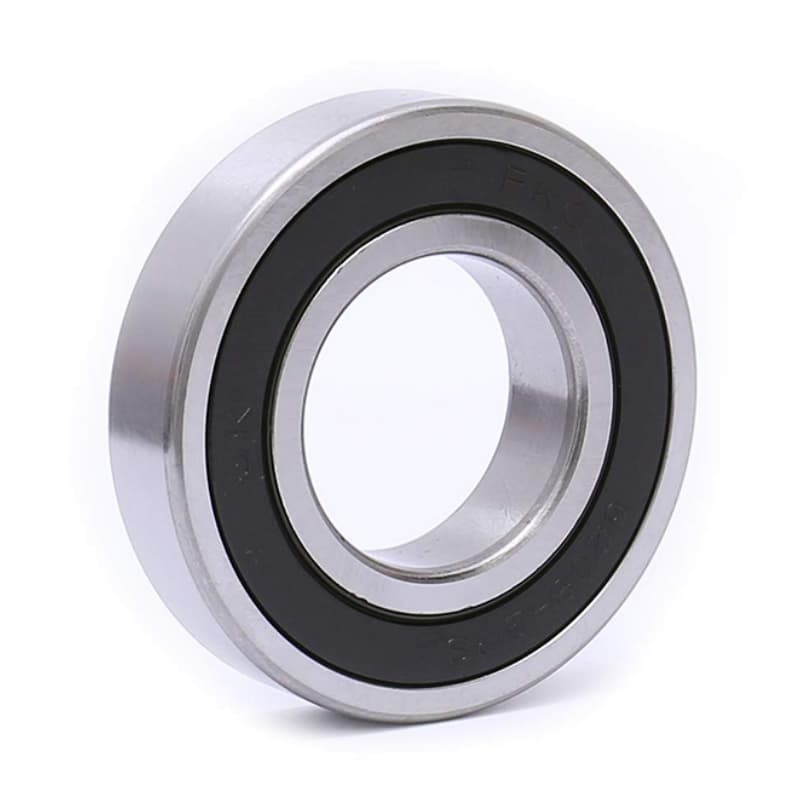
Defining these details might feel like a lot of work. But I promise you, it is the only way to compare offers fairly. A good specification sheet protects your company from unreliable suppliers. Let me walk you through the key questions you need to ask. I will share what I have learned from my own factory floor.
What are the characteristics of deep groove ball bearings1?
Many buyers think all ball bearings are the same. They look at a bearing and see a simple ring of steel. But the wrong choice here can ruin a machine’s performance. I have seen customers pick a bearing that is too weak for their load. The result was a seized motor shaft.
Deep groove ball bearings are the most common type of rolling bearing. They have a simple design. Their main job is to reduce friction between rotating parts. They can handle radial loads (forces from the side) and moderate axial loads (forces from the end). They are made for high speeds and low torque.
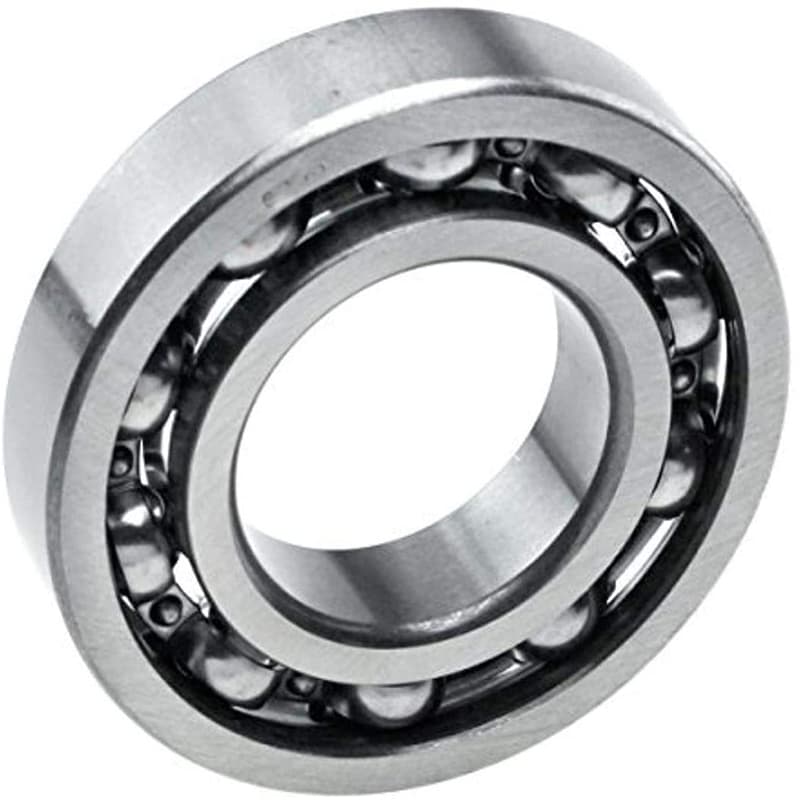
Let us break down what makes this bearing unique. We need to look at three main areas: load handling, speed, and alignment.
Load Handling Capacity
A deep groove ball bearing has a continuous raceway. The grooves are deep. This means the balls have a long contact path with the rings. Because of this, the bearing can support a decent amount of axial load in both directions. It also handles radial load very well.
If your machine has heavy shock loads, you might need a different bearing type. But for most electric motors, pumps, and gearboxes, this design is the standard. I always tell my clients: check the dynamic load rating (C) and static load rating (Co) in the catalog. Do not guess.
Speed Limits
Speed is another critical characteristic. Deep groove ball bearings are designed for high rotational speeds. They generate less heat than other bearing types because of the point contact between the balls and the raceways.
However, the speed limit changes based on the cage material. A steel cage can handle high temperatures. A brass cage is good for heavy loads but may have speed limits2. A polyamide cage is great for high speed and low noise. When you set your tender specs, you should ask for the specific speed rating or the cage material.
Misalignment
Deep groove ball bearings are not forgiving. They cannot handle shaft misalignment3 well. If your shaft is bent or your housing is misaligned, these bearings will fail quickly. The internal clearance gets uneven. The balls jam.
I remember a customer in Turkey who kept buying bearings from us. He complained about noise. We visited his factory. We found that his shaft runout was too high. He was blaming the bearings, but the real issue was his assembly line. So, when you write your technical specs, you must also mention the allowable shaft runout and housing tolerances.
Do deep groove ball bearings1 need preload2?
This question comes up a lot in our emails. A client in Brazil asked me this last month. He was building a precision spindle for a woodworking machine. He was worried about vibration. He wanted to know if he should squeeze the bearings together tightly. I told him to be careful.
Most deep groove ball bearings do not need preload. Preload means applying a constant axial force to remove internal clearance3. It is usually used in applications where accuracy is critical and vibration is not allowed. However, deep groove ball bearings are often used in general machinery where a small amount of internal clearance is required to handle thermal expansion.
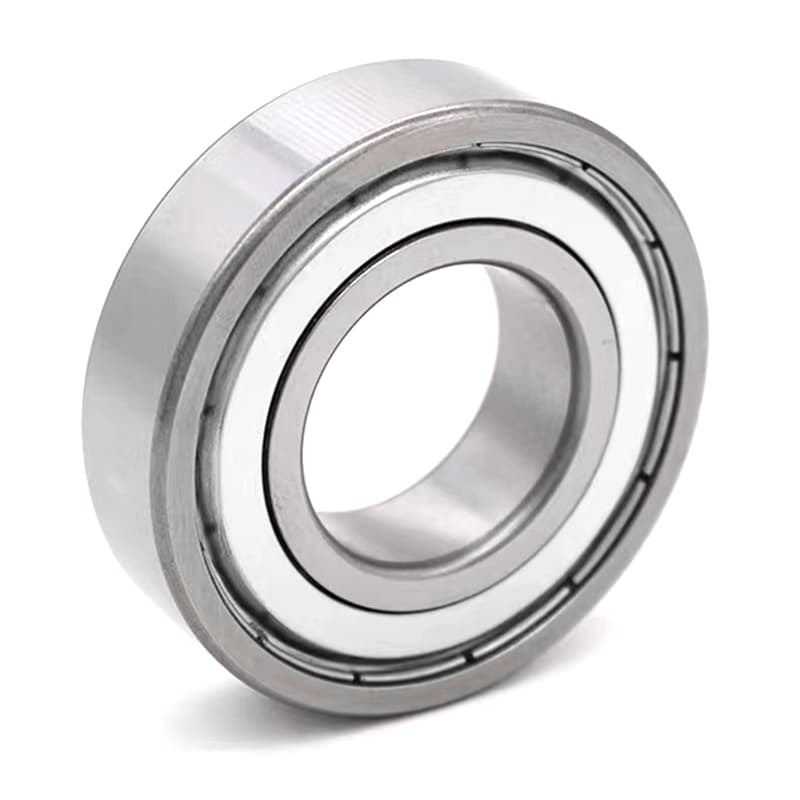
Let me explain this in more detail. Preload is a double-edged sword.
When Preload is Necessary
You should consider preload if your application has very high precision requirements. This includes machine tool spindles, measuring equipment, and high-speed grinders.
In these cases, preload eliminates the clearance. It makes the system rigid. It reduces vibration. But if you choose a deep groove ball bearing for this, you usually need a matched pair. You cannot just tighten the nut too much. If you do, you will overheat the bearing and cause failure.
Why Preload is Usually Bad
For most standard applications—like conveyor rollers, fans, or agricultural machinery—preload is a bad idea. These machines heat up during operation. The shaft expands. The bearing expands. If there is no internal clearance left, the balls will be squashed against the raceways.
This creates high friction. It generates more heat. Eventually, the bearing seizes. I have seen this happen in the field. A factory in Indonesia tried to "fix" a noisy bearing by tightening the lock nut more. Within an hour, the bearing was smoking.
The Better Alternative: Internal Clearance
Instead of asking for preload, you should specify the correct internal clearance in your tender.
| Clearance Code | Definition | Best Use Case |
|---|---|---|
| C2 | Less than normal clearance | Precision applications with minimal temperature change |
| CN (Normal) | Standard clearance | General machinery, low speeds, stable temperatures |
| C3 | Greater than normal | High speeds, high temperatures, press-fit shafts |
| C4 | Extra large clearance | Very high temperatures or heavy press fits |
If you are unsure, C3 is the safest choice for most industrial applications. It allows for thermal expansion. It reduces the risk of early failure.
How to identify a deep groove ball bearing1?
When you receive a shipment, how do you know you got the right part? I have had customers call me angry. They think we sent the wrong item. But often, they just do not know how to read the markings. Identification is simple once you know what to look for.
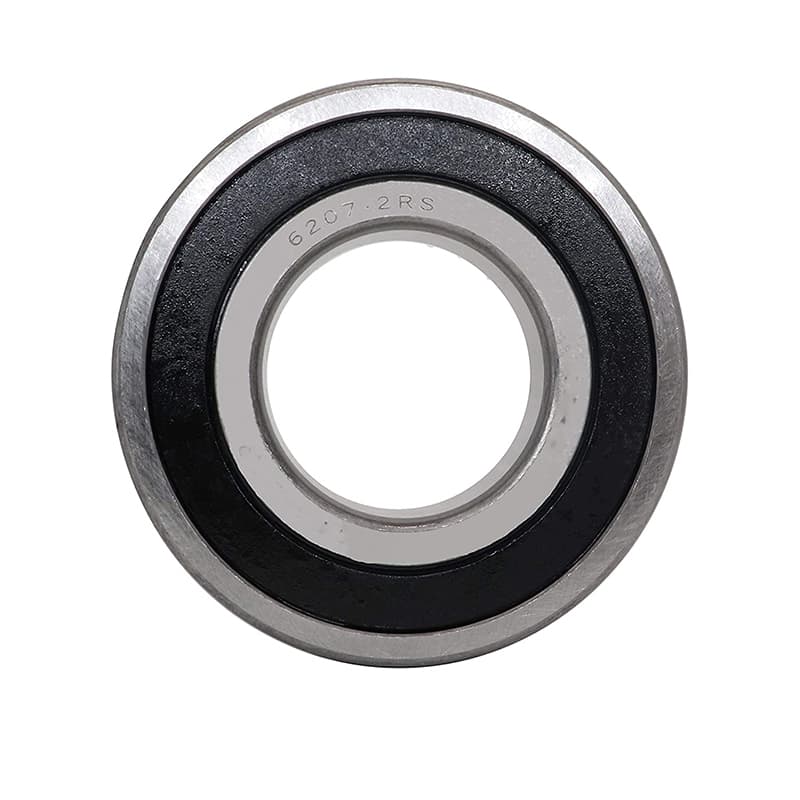
You identify a deep groove ball bearing by checking the marking on the bearing’s face. This marking usually shows the brand, the series, and the bore diameter. You can also measure the inner diameter (ID), outer diameter (OD), and width. The structural feature is the uninterrupted raceway groove2.
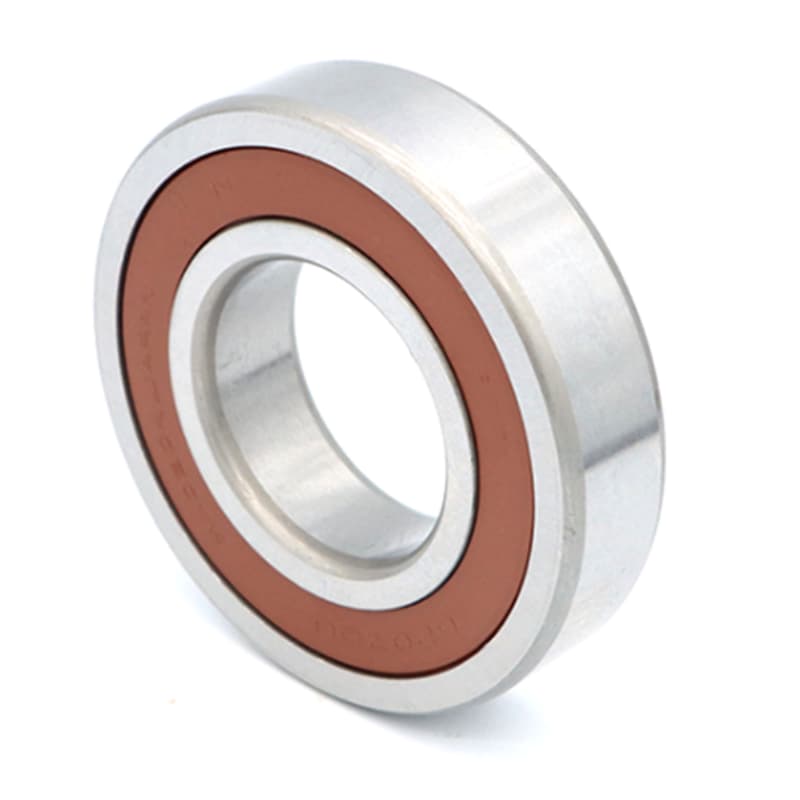
Let me break down the verification process into three easy steps.
Step 1: Read the Bearing Code
Almost every bearing has a code stamped on its side. For deep groove ball bearings, the most common series is 62 and 63.
For example, a bearing marked 6204:
- 62: Series (deep groove, light duty)
- 04: Bore size. You multiply the last two digits by 5 to get the bore diameter. So, 04 x 5 = 20 mm.
If the code is 6308:
- 63: Series (deep groove, medium duty)
- 08: 8 x 5 = 40 mm bore.
If the code has a suffix, it tells you more. ZZ means metal shields. 2RS means rubber seals. C3 means increased internal clearance. When you write your tender, you should demand that the supplier provides these markings clearly.
Step 2: Measure the Dimensions
Sometimes the markings are worn off. Or you might be dealing with a non-standard size. You should use a caliper to measure.
| Bearing Series | Inner Diameter (d) | Outer Diameter (D) | Width (B) |
|---|---|---|---|
| 6204 | 20 mm | 47 mm | 14 mm |
| 6205 | 25 mm | 52 mm | 15 mm |
| 6304 | 20 mm | 52 mm | 15 mm |
| 6305 | 25 mm | 62 mm | 17 mm |
If your measurements match the standard tables, it is a deep groove ball bearing.
Step 3: Check the Raceway
If you look inside the bearing, you will see the raceway. A deep groove ball bearing has a raceway that is deeper than the radius of the ball. This is a structural feature.
If the raceway is flat or shallow, it might be a different type, like a cylindrical roller bearing or a needle roller bearing. If you see angular contact, it is a different category. So, visually inspecting the inner ring groove is a good final check.
What are the 4 major parts of a deep groove ball bearing?
A bearing looks like a single solid object. But it is actually four separate components working together. When I talk to new procurement managers, they often do not know this. They only look at the outer ring. They ignore the parts inside. This is a mistake. The quality of each part determines the life of the bearing.
The four major parts of a deep groove ball bearing are: 1) the Outer Ring1, 2) the Inner Ring, 3) the Rolling Elements (Balls)2, and 4) the Cage (Retainer)3. These four components work together to carry the load and reduce friction.
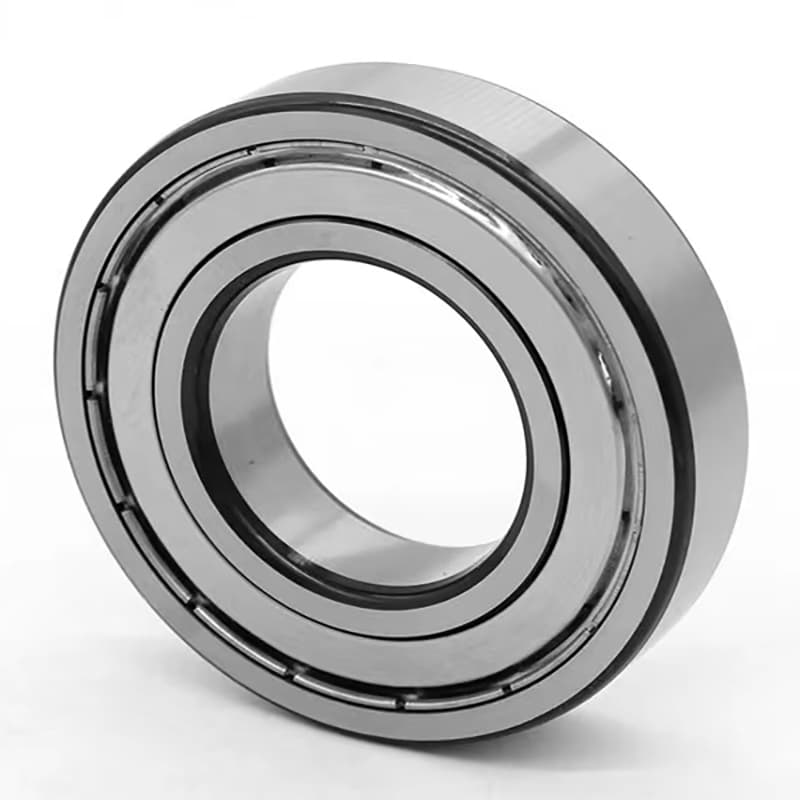
Let me explain why each part matters. When you set technical specifications, you need to think about the material and manufacturing process of these four parts.
1. The Outer Ring
The outer ring is the stationary part. It sits in the housing. It has the outer raceway on its inside surface. This ring usually takes the radial load from the housing.
In a tender, you need to check the material. High-quality bearings use Gcr154 bearing steel. This steel is vacuum degassed. It has few impurities. A cheap bearing might use low-grade steel or even carbon steel. This will deform under load. It will rust faster.
2. The Inner Ring
The inner ring is the rotating part. It fits onto the shaft. It has the inner raceway where the balls roll. The fit between the shaft and the inner ring is critical. If it is too loose, the ring spins on the shaft. This causes wear. If it is too tight, it creates stress in the ring.
When you write your tender, you should specify the tolerance class. P05 is standard. P6 and P5 are higher precision. If you are building a high-speed motor, you need P5 or better. If you are making a farm cart, P0 is fine.
3. Rolling Elements (Balls)
The balls are the load carriers. They are usually made of chrome steel. The precision of the balls matters.
We grade balls by their roundness. Grade 106, Grade 16, Grade 25. The lower the number, the more precise the ball. A Grade 10 ball is extremely round. It makes the bearing run smooth and quiet. A Grade 100 ball is rough. It will cause vibration.
In my factory, we use precision balls for our P6 grade bearings. If you are buying cheap bearings, the supplier might use recycled balls. These have flat spots. They will fail early. So, in your tender, you can ask for the ball grade or the noise standard (V3, V4).
4. The Cage (Retainer)
The cage holds the balls in place. It prevents them from touching each other. This part is often overlooked, but it is crucial.
There are three common types:
| Cage Material | Advantages | Disadvantages |
|---|---|---|
| Pressed Steel | Strong, cheap, high heat resistance | Noisy, higher friction |
| Polyamide (Nylon) | Quiet, low friction, good for high speed | Poor heat resistance above 120°C |
| Brass | Very strong, high precision, corrosion resistant | Expensive, heavy |
If your application is a silent electric fan, you want a polyamide cage. If it is a heavy gearbox running hot, you want a steel cage. If you need maximum durability in a harsh environment, you ask for brass.
Conclusion
Setting clear technical specifications protects your investment. Define the precision, clearance, and component materials. This ensures you get a bearing that fits your machine and your budget.
-
Understanding the role of the Outer Ring can help you choose the right bearing for your application. ↩ ↩ ↩ ↩
-
Explore how the quality of rolling elements influences the efficiency and lifespan of bearings. ↩ ↩ ↩ ↩
-
Understanding cage materials can help you select the best option for your specific application needs. ↩ ↩ ↩
-
Learn about Gcr15 steel to ensure you select high-quality materials for your bearings. ↩
-
Discover the significance of P0 tolerance for standard applications and its impact on performance. ↩
-
Learn why Grade 10 balls are crucial for achieving smooth and quiet bearing operation. ↩