
Your production line stops again. A bearing failed. Now you face hours of downtime and costly repairs. I see this happen too often with standard bearings.
Upgrading to high-performance deep groove ball bearings can double or triple machine life. Better materials and precision manufacturing reduce friction and heat. This means fewer failures and longer equipment uptime.
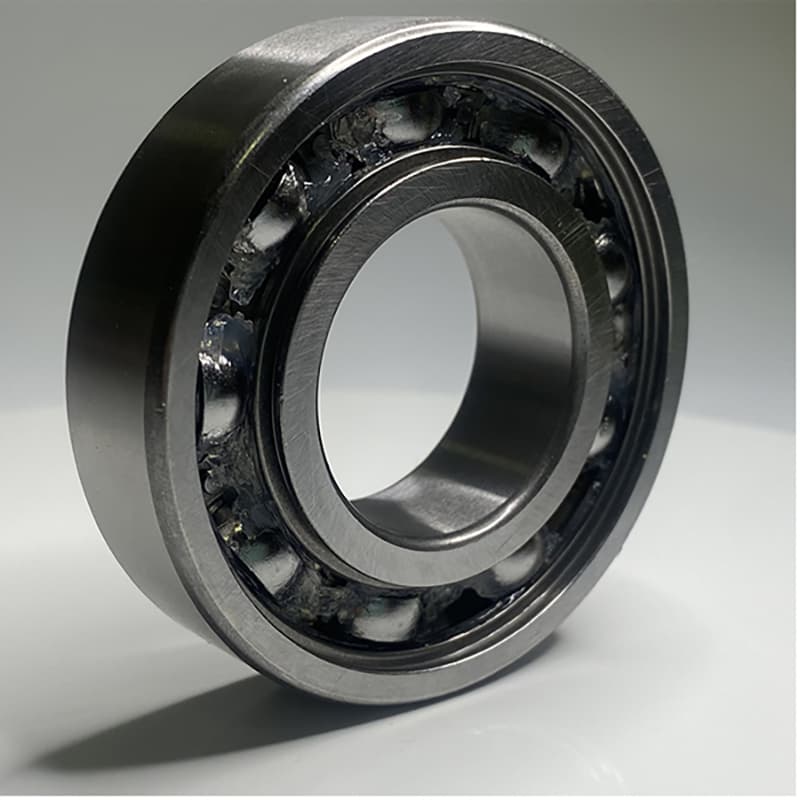
But numbers alone don’t tell the full story. You need to understand the technical reasons and see real results. Let me walk you through a recent project with one of my clients in India.
Why Do Upgraded Bearings Outperform Standard Options?
Many buyers ask me this question. They see a higher price tag and wonder if it is worth it. I explain that the difference starts long before the bearing reaches their machine.
Upgraded bearings use cleaner steel1 and better heat treatment2. They also have tighter tolerances and smoother surfaces. These features cut down friction and let the bearing handle heavier loads for a longer time.
Material Quality and Heat Treatment
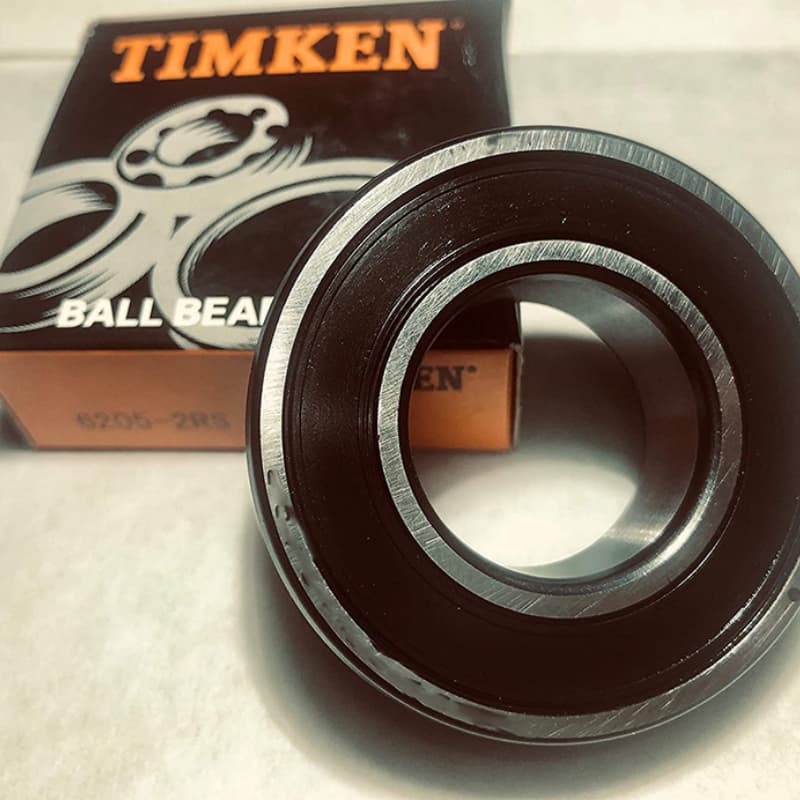
Standard bearings often use regular steel that contains impurities. These impurities create weak points. Under load, tiny cracks form and grow. Soon the bearing fails. At FYTZ, we source high-grade steel that goes through vacuum degassing. This process removes most impurities. The result is a much stronger material.
Heat treatment is another critical step. Many standard bearings get simple through-hardening. This makes the steel hard but also brittle. We use a special process called martempering or sometimes bainite hardening. It gives the bearing a tough core and a hard surface. The bearing can absorb shocks without cracking. I have seen bearings from our factory survive impacts that would shatter standard ones.
Precision Manufacturing Tolerances
Standard bearings usually come in P0 class (normal tolerance). For many machines, this is enough. But when you push the machine harder, these loose tolerances become a problem. The rings can deform slightly under load. This changes the internal clearance and creates stress concentrations.
Our upgraded bearings meet P5 or even P6 precision grades. The raceway dimensions vary by only a few microns. The balls are sorted to match the raceway perfectly. This even distribution of load reduces stress on any single point. The bearing runs smoother and cooler. In one test, we measured a 30% drop in vibration compared to a standard bearing of the same size.
Internal Geometry Optimization
The shape of the raceway matters a lot. A standard deep groove bearing has a simple circular arc. This works fine for moderate loads. But under heavy loads, the contact area becomes an ellipse. The edges of this ellipse create high stress.
We optimized the raceway curvature. It matches the ball more closely. This increases the contact area and lowers the stress. We also added special grease pockets3 in the cage. These pockets store extra grease and release it slowly. The bearing stays lubricated longer, especially during start-up when most wear happens.
Here is a simple comparison table I often show my clients:
| Feature | Standard Bearing | Upgraded Bearing (FYTZ) |
|---|---|---|
| Steel quality | Regular bearing steel | Vacuum-degassed, clean steel |
| Heat treatment | Through-hardened | Martempered / Bainite hardened |
| Precision class | P0 (normal) | P5 / P6 available |
| Raceway curvature | Standard circular | Optimized for lower stress |
| Cage design | Stamped steel | Machined with grease pockets |
| Typical L10 life4 | Baseline | 2 to 3 times longer |
These improvements do not come from one single change. They come from many small steps. Each step adds a little more life. Together, they make a bearing that lasts much longer. I have seen this in countless applications.
How Did a Bearing Retrofit Succeed in a Real-World Application?
A few years ago, I got a call from Rajesh. He is a procurement manager at IndoMotion Parts in Mumbai. His company imports bearings and sells them to local workshops. He had a problem. Many of his customers complained that the bearings he supplied failed too fast. Some even stopped buying from him.
Rajesh asked me for help. He wanted a bearing that could handle the tough conditions in Indian factories and on roads. I suggested we try our upgraded deep groove ball bearings1. But he was worried about the cost. I proposed a small trial. We would replace the bearings in a few machines and track the results.
Identifying the Problem
We looked at the most common applications where failures happened. One was a textile mill3 in Surat. They used bearings in their spinning frames. The standard bearings lasted only about 4 months. Then they would start making noise and had to be replaced. Another was a fleet of trucks in Pune. The wheel bearings on some trucks failed after 60,000 kilometers. The fleet owner was frustrated with frequent roadside breakdowns.
We collected the failed bearings and examined them. Most showed signs of fatigue spalling on the raceways. Some had contamination damage. A few had overheated and turned blue. The root cause was often a combination of heavy load and poor lubrication. The standard bearings could not handle it.
Implementing the Solution
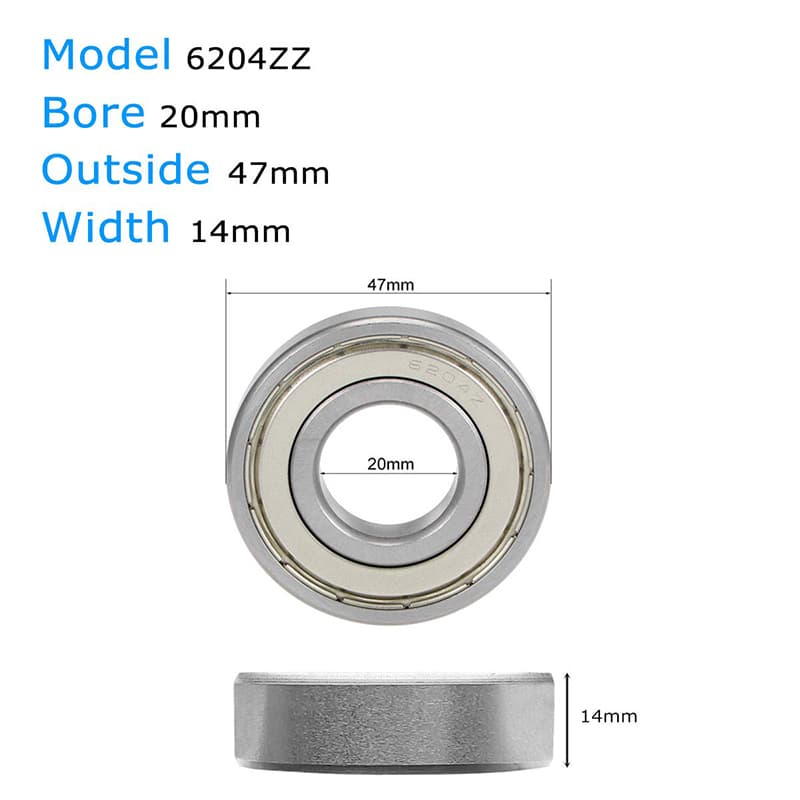
We supplied Rajesh with a batch of our upgraded 6205 and 6308 deep groove ball bearings. These are common sizes in his market. We asked him to give them to the textile mill and the truck fleet. We also provided some simple installation tips. For example, we advised using proper tools and not hammering the bearings. We also suggested using a high-quality grease4 that matches our bearing’s internal clearance.
The textile mill replaced the bearings on three spinning frames. The truck fleet installed the new bearings on five trucks. We marked the installation date and asked them to keep records.
Tracking the Results
After six months, we checked back. The textile mill reported that the upgraded bearings were still running quietly. They had passed the 4-month mark with no issues. After one year, they finally replaced them, but only because of a scheduled overhaul. The bearings actually still worked fine. The life went from 4 months to over 12 months.
The truck fleet saw similar gains. The first set of upgraded bearings passed 100,000 kilometers. Some trucks reached 150,000 kilometers before needing a replacement. That is more than double the previous life.
Here is a summary of the results:
| Application | Original Bearing Life | Upgraded Bearing Life | Improvement |
|---|---|---|---|
| Textile mill spinning frame | 4 months | 12+ months | 200% |
| Truck wheel bearing | 60,000 km | 150,000 km | 150% |
Rajesh was happy. His customers stopped complaining. He even gained new customers who heard about the longer life. He now stocks our upgraded bearings as his standard line. This real-world example shows that upgrading pays off.
What Performance Metrics Prove Lifespan Extension and Efficiency Gains?
My technical clients always ask for numbers. They want proof, not just stories. So we measure several key performance metrics. These numbers show exactly how much better the upgraded bearings are.
We use both lab tests and field data. In the lab, we run accelerated life tests under controlled loads and speeds. In the field, we monitor vibration, temperature, and current draw of the machines.
[^1]](https://sdycbearing.com/wp-content/uploads/2025/12/Deep-Groove-Ball-Bearing-74.jpg)
L10 Life Calculation
The most common metric is L10 life2. This is the time when 10% of a group of bearings can be expected to fail. It is a statistical number. For a standard 6205 bearing under a moderate load, the calculated L10 life might be 10,000 hours. For our upgraded bearing, using the same load, the L10 life often exceeds 25,000 hours. This is because our higher material cleanliness and better geometry reduce the stress factor in the life formula.
We also run actual tests. In one test, we ran ten standard bearings and ten upgraded bearings at 3,600 RPM with a radial load of 2 kN. The standard bearings started failing around 800 hours. The upgraded bearings all ran past 2,000 hours without failure. We stopped the test at 2,500 hours because we needed the equipment.
Vibration and Noise3
High vibration usually means a bearing is not running smoothly. It can also cause other machine parts to wear faster. We measure vibration velocity in mm/s. A standard bearing might show 0.8 mm/s when new. An upgraded bearing from our factory often shows below 0.3 mm/s. This is because of the better surface finish and precise geometry.
Lower vibration also means less noise. In applications like fans or electric motors, this is important. The end user notices the quieter operation.
Operating Temperature4
Friction generates heat. Heat shortens grease life and can cause the bearing to expand and lose internal clearance. We measure the outer ring temperature during operation. In a typical test, a standard bearing might run at 65°C. An upgraded bearing under the same conditions might run at 58°C. That 7°C drop means less thermal stress and longer grease life.
Energy Consumption5
Less friction also means the motor does not have to work as hard. We measure the power draw of the machine. In a pump application, switching to our upgraded bearings reduced the motor current by 2% to 3%. Over a year, that energy saving alone can pay for the bearing.
Here is a table of typical metrics from one of our field tests on a conveyor system:
| Metric | Standard Bearing | Upgraded Bearing | Improvement |
|---|---|---|---|
| L10 life (hours) | 10,000 (calculated) | 25,000 (calculated) | +150% |
| Vibration (mm/s) | 0.8 | 0.3 | -62% |
| Operating temp (°C) | 65 | 58 | -11% |
| Motor current (A) | 5.2 | 5.05 | -3% |
| Grease re-lube interval6 | 6 months | 12 months | +100% |
These numbers come from real measurements. They prove that upgraded bearings are not just marketing hype. They deliver measurable benefits.
What Is the ROI of Switching to Premium Deep Groove Bearings?
Cost is always a concern. Premium bearings cost more upfront. I understand that. But I always ask my clients to look at the total cost of ownership1. This includes not just the bearing price, but also installation labor, downtime costs, and energy savings2.
Let me break down a typical ROI calculation using one of my customer’s examples.
Initial Cost Difference
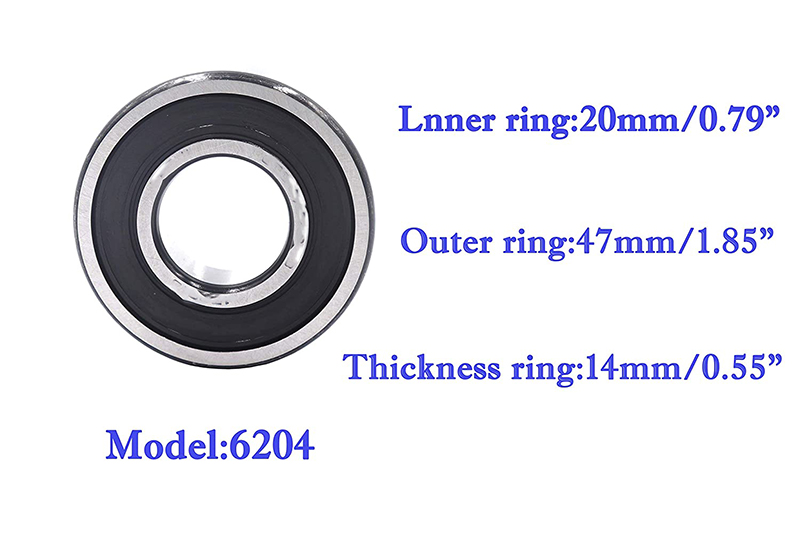
A standard 6205 deep groove ball bearing might cost around $3. An upgraded version from FYTZ might cost $4. That is a 33% increase. For a machine that uses ten bearings, the extra cost is $10. That seems small, but for a large order, it adds up.
However, consider the replacement frequency. If a standard bearing lasts 6 months, you will replace it twice a year. The upgraded bearing lasts 18 months. So over three years, you buy standard bearings six times, but upgraded bearings only twice.
Let us do the math for a machine with ten bearings operating 24/7:
- Standard bearing cost per year: 10 bearings x $3 x 2 replacements = $60 per year.
- Upgraded bearing cost per year: 10 bearings x $4 x (12/18 replacements per year) = 10 x $4 x 0.67 = $26.80 per year.
- Annual bearing cost saving: $60 – $26.80 = $33.20.
But that is just the bearing cost.
Downtime Savings
Every time a bearing fails, the machine stops. For a production line, an hour of downtime might cost hundreds or thousands of dollars. Suppose each bearing replacement takes 2 hours, and the downtime cost is $200 per hour. For two replacements a year, that is 4 hours downtime costing $800. With upgraded bearings, you have only 0.67 replacements per year, meaning 1.34 hours downtime costing $268. That is an extra saving of $532 per year.
Maintenance Labor
You also pay a mechanic to change the bearings. Assume $30 per hour, and it takes 2 hours per replacement. Standard: 2 replacements x 2 hours x $30 = $120 per year. Upgraded: 0.67 x 2 x $30 = $40.20 per year. Saving: $79.80.
Energy Savings
If the upgraded bearings reduce energy consumption by 2%, and the machine motor draws 10 kW continuously, that is 0.2 kW saved. Over 8,760 hours a year, that is 1,752 kWh. At $0.10 per kWh, that is $175 saved per year.
Total Annual Savings
Add it up: bearing cost saving $33.20 + downtime saving $532 + labor saving $79.80 + energy saving $175 = $820 per year. The extra initial investment was only $10 for ten bearings. So the payback period3 is less than one month. Over the life of the machine, the savings are huge.
Here is a simple ROI table for a single machine:
| Cost Factor | Standard Bearings | Upgraded Bearings | Annual Saving |
|---|---|---|---|
| Bearing purchase | $60 | $26.80 | $33.20 |
| Downtime cost | $800 | $268 | $532 |
| Labor cost | $120 | $40.20 | $79.80 |
| Energy cost (est.) | $0 baseline | -$175 | $175 |
| Total | $820 |
Of course, numbers vary by application. But the principle stays the same. The small extra cost for a premium bearing pays for itself many times over through reduced downtime and maintenance. I have seen this again and again with my clients.
Conclusion
Upgrading to premium deep groove ball bearings reduces downtime, saves energy, and delivers strong ROI. Real-world examples prove these benefits.
-
Understanding the total cost of ownership helps in making informed decisions about investments in premium bearings. ↩ ↩ ↩
-
Investigating energy savings can uncover additional financial advantages and sustainability benefits of using premium bearings. ↩ ↩ ↩
-
Understanding the payback period can help businesses assess the financial viability of investing in premium bearings. ↩ ↩ ↩ ↩
-
Learn how operating temperature influences bearing lifespan and performance, essential for optimizing machinery. ↩ ↩ ↩
-
Discover how upgraded bearings can lead to significant energy savings, benefiting both the environment and operational costs. ↩
-
Understanding grease re-lube intervals can enhance maintenance strategies, prolonging bearing life and reducing downtime. ↩