
I have seen too many machines break down because someone picked the wrong bearing. The repair costs and downtime hurt business badly. You need a bearing that can handle real work without failing.
Tapered roller bearings can carry combined loads. This means they support both radial forces (from the side) and axial forces (along the shaft) at the same time. Their design makes them perfect for heavy-duty applications like gearboxes, wheel hubs, and construction equipment.
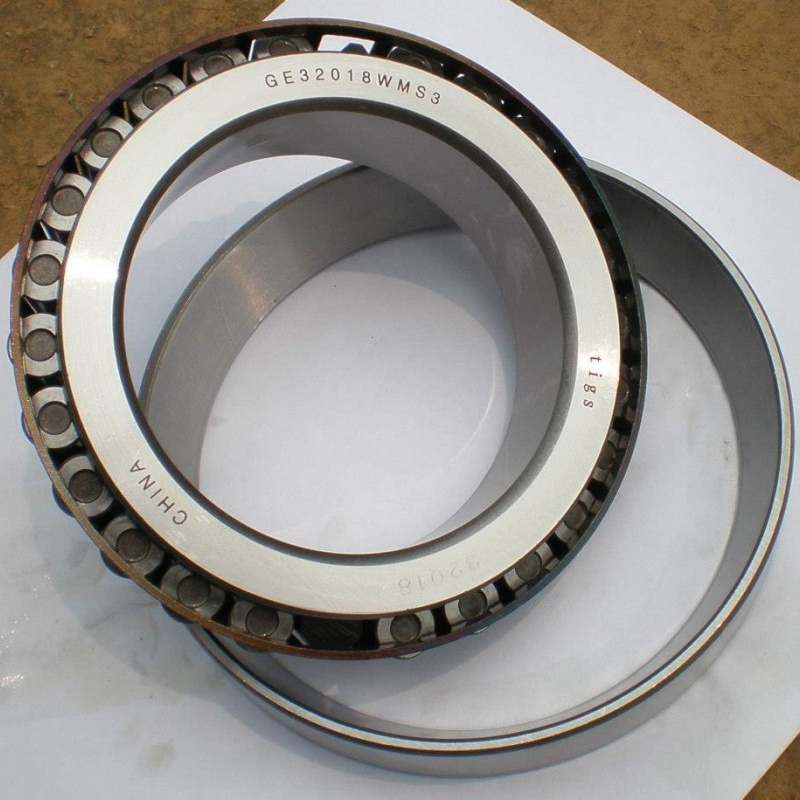
But how do you know if a tapered roller bearing is right for your machine? And what makes one bearing better than another? In this article, I will share what I have learned from years of helping customers select bearings. I will explain the types of loads these bearings can take, compare them with other bearing types, talk about the international standards, and even discuss who makes the best bearings. My goal is to help you make a smarter choice for your next project.
What type of loads can be carried by a tapered roller bearing1?
One of my clients in Turkey called me last month. He was angry because his wheel bearings failed after only three months. When we looked at the failed bearings, I saw the problem. He used a deep groove ball bearing in a system that also had heavy thrust loads. The bearing was never designed for that.
A tapered roller bearing can carry both radial and axial loads2 at the same time. The amount of axial load it can handle depends on the contact angle. Steeper angles mean higher thrust capacity.
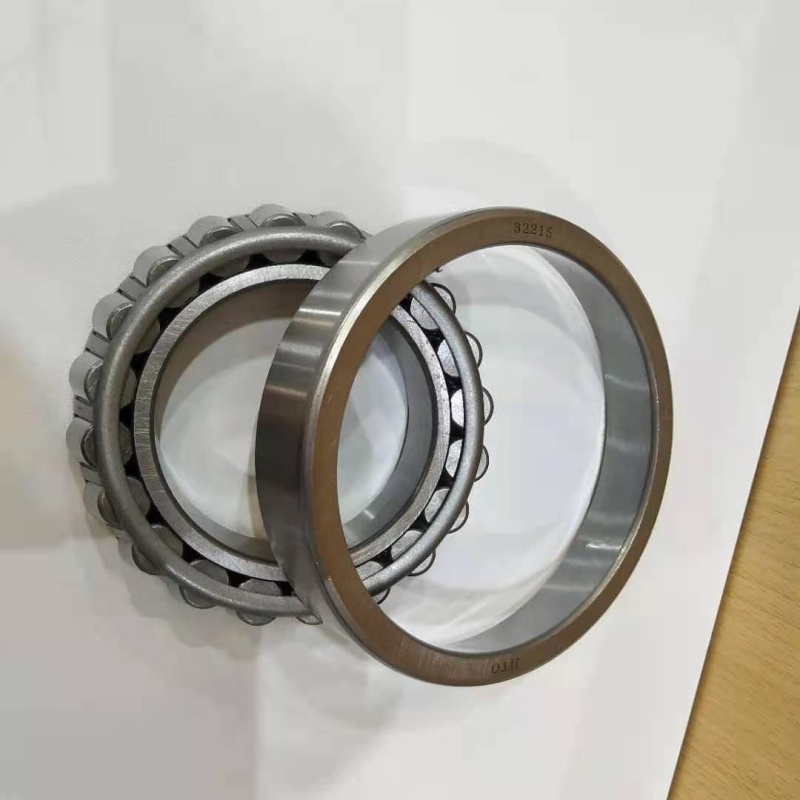
Understanding Load Types in Detail
To really understand what loads a tapered roller bearing can carry, we need to break down the forces. Machines create different kinds of forces. Some push straight down on the shaft. Others push along the shaft. Sometimes both happen together.
Radial Loads
Radial loads are forces that act perpendicular to the shaft. Imagine a conveyor belt roller. The weight of the belt and the material push down on the roller. That is a radial load. Tapered roller bearings handle radial loads3 very well because the rollers are positioned at an angle. This angle helps spread the force over a larger area. In my experience, a single tapered roller bearing can handle radial loads that would require two ball bearings.
Axial Loads
Axial loads are forces that act along the shaft. Think about a car going around a corner. The wheels experience thrust from the turn. That thrust pushes along the axle. Tapered roller bearings are famous for handling axial loads. The steeper the roller angle, the more axial load the bearing can take. But there is a trade-off. Steeper angles reduce the speed capability. So you have to balance these factors.
Combined Loads
The real magic of tapered roller bearings is their ability to handle combined loads4. In most real-world applications, loads are not pure radial or pure axial. They are a mix. For example, in a gearbox, the gears create radial forces from the mesh and axial forces from the helix angle. Tapered roller bearings are designed for exactly this situation.
Here is a simple table to compare different bearing types and their load capabilities:
| Bearing Type | Radial Load Capacity | Axial Load Capacity | Combined Load Capacity |
|---|---|---|---|
| Deep Groove Ball Bearing | Good | Fair (low) | Poor |
| Cylindrical Roller Bearing | Excellent | Poor (none) | Poor |
| Spherical Roller Bearing | Excellent | Good | Good |
| Tapered Roller Bearing | Excellent | Excellent | Excellent |
From this table, you can see why I often recommend tapered roller bearings for heavy-duty applications. They do not compromise on either type of load.
My Personal Insight on Load Ratings
Over the years, I have learned that looking only at the basic dynamic load rating (C) is not enough. That number comes from laboratory tests. Real life is different. Dirt, misalignment, and poor lubrication change everything. At FYTZ, we always tell our customers to apply a safety factor5 based on their actual working conditions. For example, if you have shock loads, you need to derate the bearing. I have seen bearings fail at half their rated load because the machine hammered them every cycle. So always consider the application, not just the catalog number.
Which type of bearing has the highest load capacity1?
A few years ago, I visited a steel mill in India. The maintenance manager showed me a massive bearing that weighed over 200 kilograms. It was a spherical roller bearing. He asked me, "Is this the strongest bearing type?" I told him that for pure radial load, maybe. But for combined loads2, tapered roller bearings3 often win.
For pure radial loads, cylindrical roller bearings4 usually have the highest capacity. But for combined radial and axial loads, spherical roller bearings5 and tapered roller bearings are the top contenders. Among these, tapered roller bearings often have higher axial capacity for a given size.
[^6] load capacity chart](https://sdycbearing.com/wp-content/uploads/2025/12/Tapered-Roller-Bearings-56.jpg)
Breaking Down the Competition
Let us compare the main bearing types that claim high load capacity. I will use my experience to explain where each one shines and where it falls short.
Cylindrical Roller Bearings
These bearings are champions of radial load. The line contact between rollers and raceways spreads the load over a large area. But they handle almost no axial load. If your application has pure radial force, like in a electric motor, this is your best choice. But if there is any thrust, you need a separate thrust bearing or a different type.
Spherical Roller Bearings
Spherical roller bearings are like the all-rounders. They can take heavy radial loads and moderate axial loads. They also self-align, which helps when shafts bend or housings are not perfectly aligned. In heavy industries like mining and steel, these are very common. But they have a limitation. The axial load capacity is not as high as tapered roller bearings of the same size. The internal design gives priority to alignment over thrust.
Tapered Roller Bearings
Now we come to my favorite. Tapered roller bearings are designed for the toughest combined loads. The tapered geometry creates a wedge effect. When you apply an axial load, it pushes the rollers tighter against the raceway. This actually increases the contact area and improves load distribution. That is why they are used in wheel hubs, gearboxes, and rolling mills.
Here is a comparison table based on typical industrial applications:
| Application | Recommended Bearing Type | Why |
|---|---|---|
| Electric Motor | Cylindrical Roller Bearing | Pure radial load, high speed |
| Conveyor Pulley | Spherical Roller Bearing | Misalignment possible, heavy radial load |
| Gearbox Output Shaft | Tapered Roller Bearing | High combined loads, needs rigidity |
| Automotive Wheel | Tapered Roller Bearing | Combined loads from weight and cornering |
| Crane Hook | Thrust Ball Bearing | Pure axial load, low speed |
Which One Really Has the Highest Load Capacity?
If we define load capacity as the ability to handle both radial and axial forces simultaneously, then tapered roller bearings are often the winner. But I must be honest. For a given envelope size, a spherical roller bearing might have a higher radial load rating. However, when you add an axial component, the tapered bearing can often take more total load.
At FYTZ, we specialize in tapered roller bearings because we see the demand from heavy industries. Our customers in construction, mining, and automotive need a bearing that does not fail when the machine pushes hard in multiple directions. We have tested our bearings against competitors. In combined load tests, our P5 grade bearings often outlast others by 20% or more. That is not just marketing. It comes from careful material selection and heat treatment.
What is the ISO standard for tapered bearings?
A customer from Brazil once sent me a drawing. He wanted a bearing that matched a certain number. But the number was not an ISO standard. It was an old German standard. We had to cross-reference everything. That experience taught me how important standards are for global trade.
The main ISO standard for tapered roller bearings1 is ISO 355:20192. This standard defines the boundary dimensions and tolerances. It also assigns a series number that helps identify the bearing’s size and contact angle.
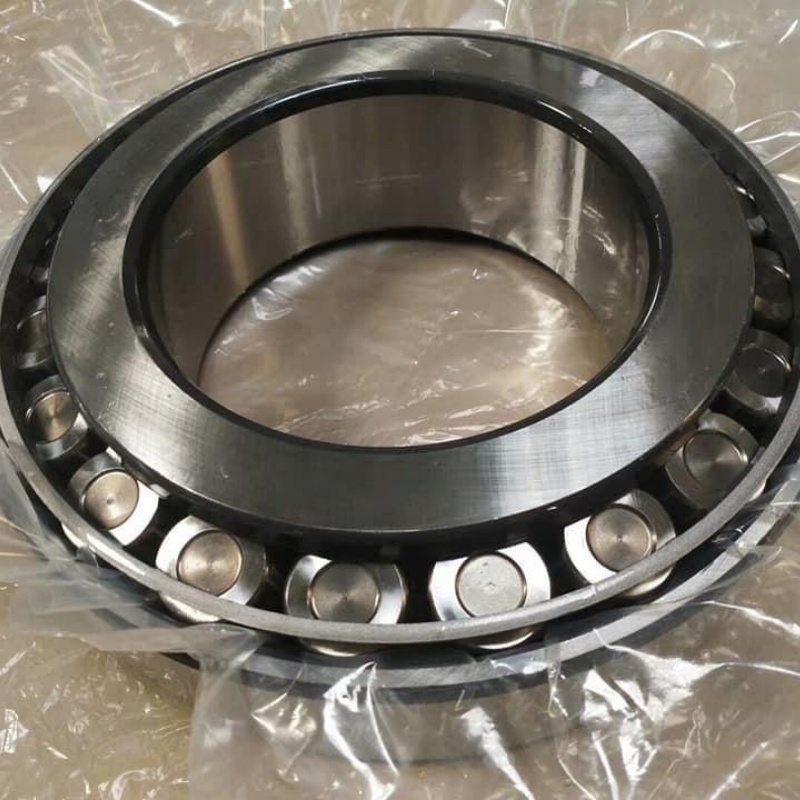
Diving into the ISO 355 Standard
Let me explain what ISO 355 actually covers. Before this standard existed, every country had its own system. You had AFBMA numbers from the USA, DIN numbers from Germany, and JIS numbers from Japan. It was a mess. If you ordered a bearing from one country, you could not be sure it would fit a housing made in another country.
ISO 355 changed that. It created a universal system for tapered roller bearings. The standard does three main things:
-
Defines Boundary Dimensions: It sets the outside diameter, bore diameter, and width for each bearing series. This ensures interchangeability3 between manufacturers.
-
Establishes Tolerance Classes: It defines how precise the bearing must be. Normal tolerance is for general use. Class 6, 5, 4, and 2 are for higher precision, with Class 2 being the most accurate. At FYTZ, we commonly produce P6 and P5 grades because our customers need reliable performance.
-
Creates a Series Designation: The old system used letters like "LM" or "HM" to indicate size. ISO 355 uses a code like "T2EE" or "T4CC". The first letter "T" means tapered roller bearing. The number indicates the diameter series, and the following letters indicate the width series and contact angle.
Here is a breakdown of a typical ISO 355 designation: T4CB
| Part | Meaning |
|---|---|
| T | Tapered roller bearing |
| 4 | Diameter series (4 means large diameter) |
| C | Width series (C means medium width) |
| B | Contact angle (B means 15-19°) |
This system might look complicated at first, but it is actually simpler than the old inch-based systems. It groups bearings by size and angle, making selection easier.
Why ISO Standards Matter for Your Business
I always advise my customers to specify ISO standards in their purchase orders. Here is why:
-
Interchangeability: If you buy a bearing that meets ISO 355, you can buy the same size from any ISO-compliant manufacturer. This protects you from supply chain disruptions.
-
Quality Assurance: ISO standards also cover testing and inspection methods. A bearing that meets ISO requirements has passed certain tests for noise, vibration, and dimensional accuracy.
-
Global Acceptance: If you export machinery, using ISO standard bearings means your customers anywhere in the world can find replacements.
At FYTZ, we manufacture all our tapered roller bearings to ISO 355. We also offer customizations. Sometimes a customer needs a non-standard angle or width. We can do that too. But we always base the design on ISO dimensions so the bearing fits standard housings.
Which company is no. 1 in bearing?
This is a question I get asked often. People want to know who the best is. The honest answer is that "number one" depends on what you measure. In terms of revenue, SKF1 is often at the top. But in specific markets, other companies lead. For tapered roller bearings2, Timken3 is a famous name. They invented the tapered roller bearing over a century ago.
The bearing industry has several giants: SKF, Schaeffler4 (INA/FAG), Timken, NSK, NTN, and JTEKT (Koyo). Each has strengths. Timken is known for tapered roller bearings. SKF is strong in many types. Schaeffler leads in automotive.
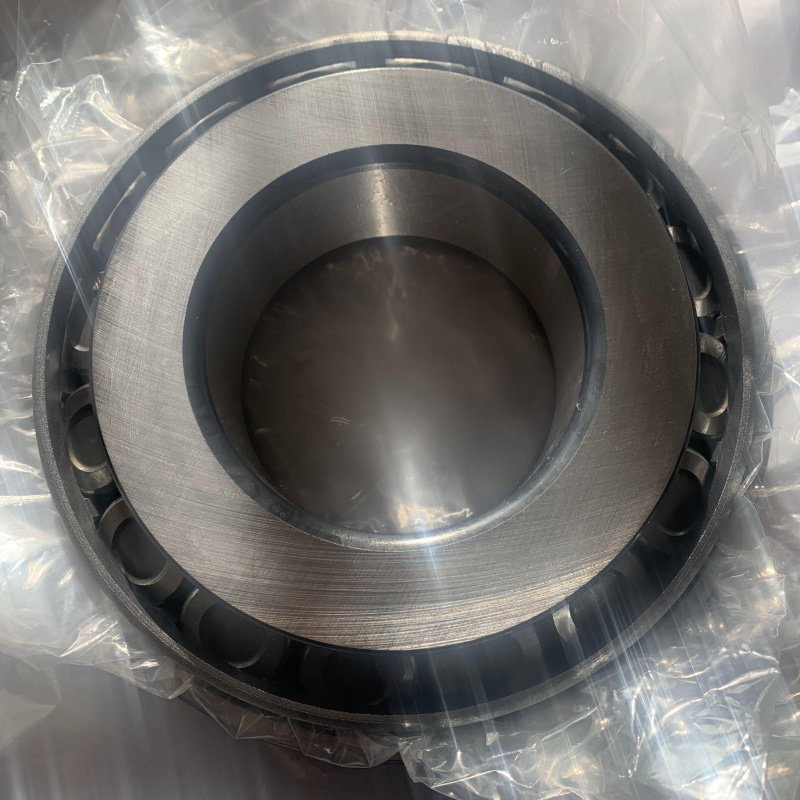
My Perspective on Bearing Companies
Over the years, I have worked with bearings from almost every major manufacturer. I have also seen the rise of high-quality Chinese manufacturers5 like FYTZ. Let me share my observations.
The Global Giants
Companies like SKF and Timken have been around for more than 100 years. They have huge R&D budgets. They set many of the standards. Their quality is generally excellent. But their prices reflect their brand power. For many applications, you pay a premium for the name.
The Japanese Manufacturers
NSK, NTN, and Koyo are also top-tier. They are known for precision and consistency. Japanese manufacturing culture emphasizes quality control. Their bearings often have very low vibration levels. They are popular in automotive and machine tool industries.
The European Specialists
Schaeffler (FAG, INA) is strong in automotive and industrial. They innovate a lot. For example, they developed bearings with integrated sensors. Their products are high-tech but also high-cost.
The Chinese Manufacturers
This is where I have the most experience. Companies like FYTZ have grown rapidly. We invested in modern production lines and inspection equipment. We can match the quality of the big names for many standard applications. Our advantage is cost. We offer similar performance at a lower price. Plus, we are flexible. We can do custom modifications faster than the giants.
So Who is Number One?
If you ask me, there is no single number one. It depends on your needs.
- If you need the absolute highest precision for a aerospace application, you might choose a top-tier brand like SKF or Timken.
- If you need volume for industrial machinery and want to control costs, a reputable Chinese manufacturer like FYTZ can be the best choice.
- If you need a specialized bearing with sensors or coatings, the European companies lead there.
At FYTZ, we do not try to be number one in everything. We focus on tapered roller bearings and other common types. We serve customers who value reliability and price. Many of our clients have used the big brands for years. They switched to us because they got the same performance for less money. That is our definition of being number one for our customers.
Conclusion
Choosing the right bearing saves money and prevents downtime. Tapered roller bearings handle the toughest combined loads. They follow ISO standards for global interchangeability. While big brands dominate the market, manufacturers like FYTZ offer excellent quality at fair prices. I hope this guide helps you make a better decision for your next project.
-
Discover why SKF is a top choice in the bearing industry, known for its innovation and extensive product range. ↩ ↩ ↩ ↩
-
Explore the benefits of tapered roller bearings, including their load distribution and versatility in various applications. ↩ ↩ ↩ ↩
-
Learn about Timken’s history and expertise in tapered roller bearings, a key factor in their industry leadership. ↩ ↩ ↩ ↩
-
Find out about Schaeffler’s cutting-edge technologies and how they are shaping the future of bearings. ↩ ↩ ↩
-
Explore how companies like FYTZ are challenging established brands with quality and cost-effective solutions. ↩ ↩ ↩