
Is your high-speed machinery plagued by bearing failures and unexpected downtime? Overheating and premature wear can halt production lines and inflate maintenance budgets. Advanced tapered roller bearings offer a reliable solution engineered for today’s demanding rotational speeds.
Advanced tapered roller bearings combine optimized internal geometry, premium materials, and precision manufacturing to maintain stability and low friction at high RPMs, extending equipment life and reliability.
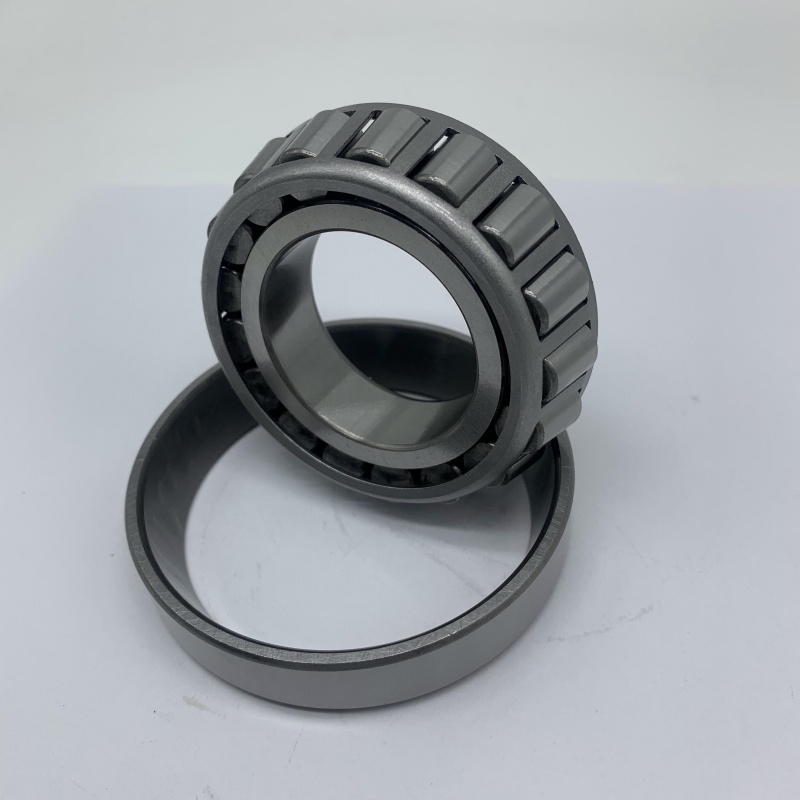
I have spent years in our factory working with these components, and I see how they transform performance. In this post, I will walk you through their design, where they shine, how they compare to older types, and the best ways to keep them running smoothly. Let’s dive into the details.
What Makes the Design and Engineering of High-Speed Tapered Roller Bearings Unique?
Do you ever wonder why some bearings can handle high speeds while others fail quickly? The difference lies in the subtle but critical design choices. Standard bearings often generate too much heat or lose accuracy when pushed hard.
Advanced tapered roller bearings achieve high-speed capability through precise modifications in geometry, cage design, and material treatment that reduce friction and enhance durability.
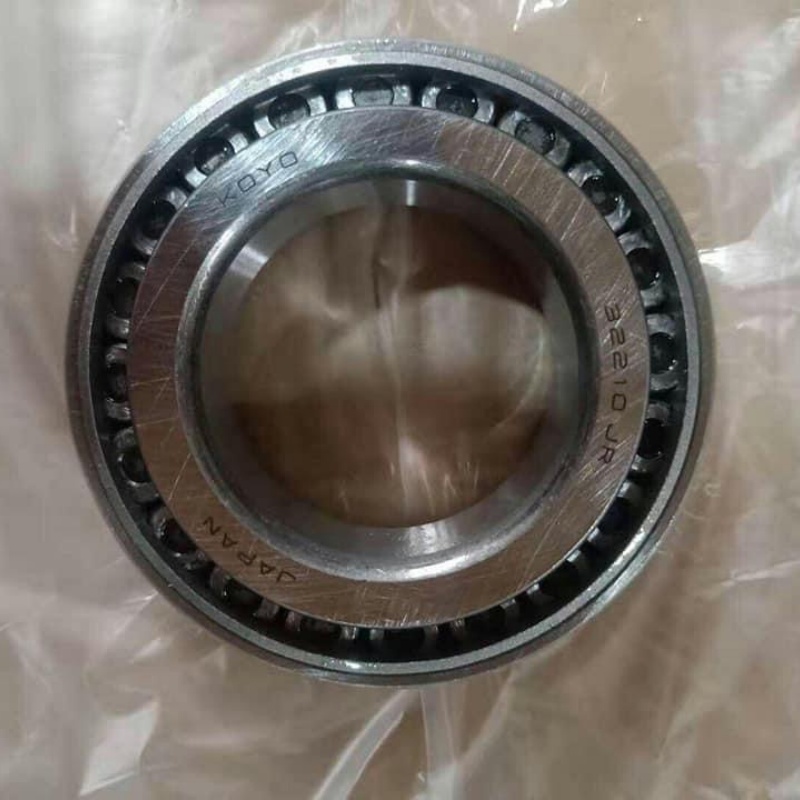
Three Core Design Improvements
I want to break down the engineering behind these bearings. Our team at FYTZ has tested many variations, and we have seen what works. Here are the most impactful areas:
1. Optimized Internal Geometry1
The contact between the roller and raceway determines how smoothly the bearing runs. In high-speed designs, we refine the roller profile and the raceway curvature. This creates an elliptical stress distribution instead of a sharp edge contact. The result is lower friction and less heat.
We also adjust the cone and cup angles. A steeper angle can handle more thrust, but it may increase sliding. For high speeds, we balance the angle to keep sliding minimal. We use computer simulations to model oil film formation. This ensures that even at high RPMs, a thin layer of lubricant separates the metal surfaces.
2. Advanced Cage Materials and Designs2
The cage is not just a separator. It guides the rollers and carries lubricant. In traditional bearings, steel cages can be heavy and cause churning. For high speeds, we use lighter materials like brass or high-strength polymers. These materials reduce inertia and allow the cage to follow the rollers more accurately.
We also design the cage pockets with precision. Each pocket holds a roller with a small clearance. Too tight, and the roller binds. Too loose, and it skids. We use CNC machining3 to achieve the ideal pocket shape. Some designs use a pin-type cage where each roller is held by a pin, reducing mass further.
3. Special Heat Treatment and Surface Finishes4
Material choice is only half the story. We apply case hardening to the rings and rollers. This creates a tough outer layer that resists wear, while the core stays tough to absorb shocks. The depth of the hardened layer is critical. For high speeds, we also superfinish the raceways. A mirror-like finish reduces friction and helps maintain the oil film.
Below is a table that compares traditional features with advanced high-speed features:
| Feature | Traditional Tapered Roller Bearing | Advanced High-Speed Tapered Roller Bearing |
|---|---|---|
| Roller Profile | Straight or simple crowned | Logarithmic profile for optimized stress |
| Cage Material | Pressed steel | Machined brass or polymer |
| Cage Design | Ribbon-type | Pin-type or machined pocket |
| Raceway Finish | Ground finish | Superfinished (Ra < 0.1 µm) |
| Heat Treatment | Through-hardened | Case-hardened with controlled depth |
| Internal Clearance | Standard C3 | Adjusted for thermal expansion at speed |
These improvements are not just theoretical. In our factory, we run tests at speeds above 10,000 RPM. Bearings with these features run cooler and last three times longer than standard versions in the same test rig. That is the kind of reliability our customers need.
Where Do Advanced Tapered Roller Bearings Excel in High-Speed Environments?
Have you ever tried to use a standard bearing in a machine tool spindle, only to see it overheat within hours? Many engineers face this. The wrong bearing choice leads to chatter, poor surface finish, and frequent replacements.
Advanced tapered roller bearings1 excel in applications that demand both high speed2 and high rigidity3, such as machine tool spindles, automotive transmissions, and aerospace gearboxes.
[^4] with high-speed tapered roller bearings](https://sdycbearing.com/wp-content/uploads/2025/12/Tapered-Roller-Bearings-83.jpg)
Real-World Applications
I have visited customers in India, Turkey, and Brazil, and I have seen these bearings in action. Let me highlight a few places where they truly stand out.
Machine Tool Spindles
In a CNC milling machine, the spindle must rotate fast while resisting cutting forces. Tapered roller bearings can handle both radial and axial loads from the cutting tool. Their high stiffness reduces deflection, which improves accuracy. We supply P5 and P4 grade bearings to spindle manufacturers. These bearings run at speeds up to 15,000 RPM with minimal temperature rise.
Automotive Transmissions
Modern cars need compact gearboxes that handle high torque and high RPM. Tapered roller bearings support the gears and shafts. In a manual transmission, the bearings must endure rapid acceleration and deceleration. Advanced designs with polymer cages reduce churning losses, improving fuel efficiency. We work with transmission rebuilders who demand bearings that last beyond 200,000 kilometers.
Aerospace Gearboxes
In helicopters and aircraft, weight and reliability are critical. Tapered roller bearings in the main rotor gearbox must operate at high speeds and under variable loads. They also need to survive loss of lubrication for a short time. Advanced materials like M50 tool steel and special coatings help meet these demands. While we do not supply aerospace directly, the technology trickles down to industrial applications.
Here is a table summarizing key applications and the benefits provided:
| Application | Speed Range | Key Demands | Benefit of Advanced Tapered Roller Bearings |
|---|---|---|---|
| Machine Tool Spindles | 5,000 – 20,000 RPM | High stiffness, precision | Low vibration, excellent surface finish |
| Automotive Transmissions | 3,000 – 12,000 RPM | Compactness, low friction | Reduced drag, better fuel economy |
| Industrial Gearboxes | 1,000 – 8,000 RPM | High load capacity, long life | Handles combined loads, extended service intervals |
| Pump and Compressor | 2,000 – 10,000 RPM | Reliability, low noise | Quiet operation, minimal heat generation |
| Wind Turbine Gearboxes | Variable, up to 2,000 RPM | Shock loads, misalignment | Robust design, tolerance to deflection |
Each environment stresses the bearing differently. In my experience, selecting the right bearing for the application is half the battle. We often help customers match the bearing design to their specific speed and load conditions.
How Do Advanced Tapered Roller Bearings Compare to Traditional Types?
Are you unsure whether to choose a tapered roller bearing, a deep groove ball bearing, or a cylindrical roller bearing for your high-speed application? This confusion is common. Each type has its own strengths, and picking the wrong one leads to premature failure.
Advanced tapered roller bearings1 outperform traditional types in high-speed scenarios by offering a unique combination of load capacity2, stiffness3, and speed capability4 that others cannot match.
[^5]](https://sdycbearing.com/wp-content/uploads/2025/12/Tapered-Roller-Bearings-82.jpg)
Detailed Performance Comparison
I have spent years helping customers choose the right bearing. Let me compare the main contenders side by side. I will focus on factors that matter most at high speeds.
Load Handling
Deep groove ball bearings are great for radial loads and moderate thrust. But at high speeds, the balls generate centrifugal force that pushes against the outer race. This limits their thrust capacity. Cylindrical roller bearings handle heavy radial loads but almost no thrust. Tapered roller bearings, however, take both radial and thrust loads simultaneously. The roller angle allows them to manage combined loads without extra components.
Speed Capability
Ball bearings typically have the highest speed limits because of point contact and low mass. But in many industrial applications, speeds are moderate (under 10,000 RPM). In this range, tapered roller bearings can match ball bearings if designed correctly. The key is reducing roller mass and improving lubrication. Cylindrical roller bearings also run fast, but they need separate thrust bearings, which adds complexity.
Stiffness
Stiffness is how much the bearing deflects under load. For machine tools, stiffness directly affects accuracy. Tapered roller bearings are very stiff because the line contact deforms less than point contact. Ball bearings deflect more, which can lead to chatter. Cylindrical roller bearings are stiff radially but not axially.
Friction and Heat
Friction generates heat, and heat limits speed. Ball bearings have the lowest friction, but they can skid under light loads. Tapered roller bearings have higher friction due to sliding in the flange-roller end contact. However, advanced designs reduce this friction. We use optimized flange angles and superfinished surfaces to cut friction by 30% compared to old designs.
Here is a comparison table:
| Parameter | Advanced Tapered Roller Bearing | Deep Groove Ball Bearing | Cylindrical Roller Bearing |
|---|---|---|---|
| Radial Load Capacity | High | Moderate | Very High |
| Thrust Load Capacity | High (both directions) | Low to Moderate | Negligible (except special types) |
| Speed Limit (relative) | Moderate-High | Very High | High |
| Stiffness | High | Moderate | High (radial only) |
| Friction Level | Low-Medium | Very Low | Low |
| Tolerance to Misalignment | Low | Moderate | Low |
| Typical Applications | Gearboxes, spindles | Electric motors, pumps | Rolling mills, gearboxes |
From my perspective, the choice often comes down to whether you need both radial and thrust capacity. If you do, tapered roller bearings are the natural winner. And with modern design improvements, their speed capability now rivals many ball bearings.
What Lubrication and Cooling Strategies1 Optimize High-Speed Bearing Performance?
Do you think that once you install a high-speed bearing, your job is done? Not at all. I have seen excellent bearings fail in days because of poor lubrication. The best design in the world cannot survive without the right oil and cooling.
Effective lubrication and cooling strategies for high-speed tapered roller bearings include oil-air lubrication, optimized jet placement, and controlled cooling circuits to maintain oil film and dissipate heat.
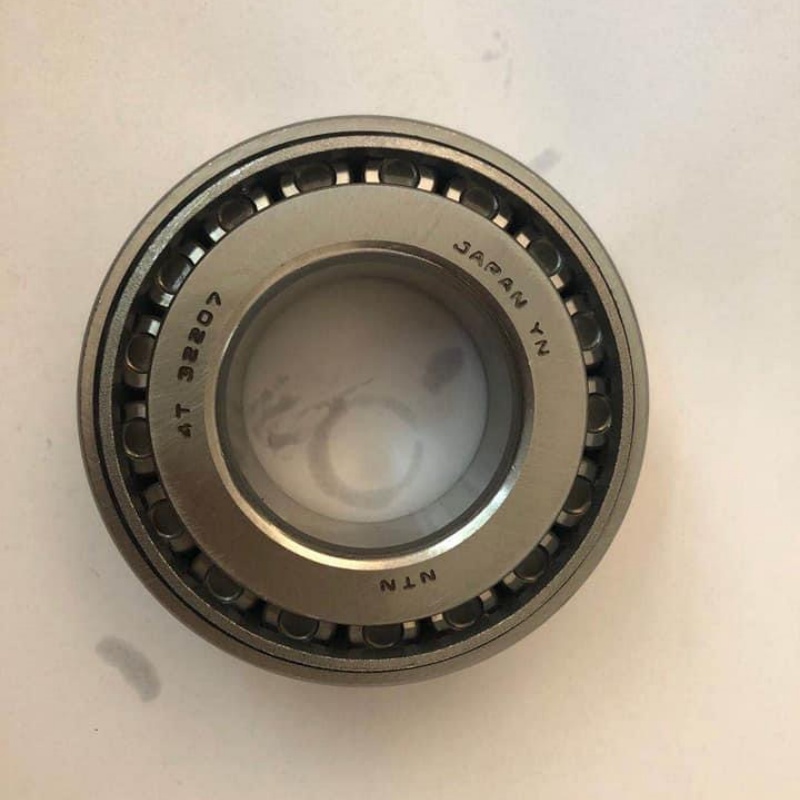
In-Depth Look at Lubrication and Cooling
At our factory, we run tests to see how different methods affect bearing temperature and life. Here is what I have learned.
Lubrication Methods
- Oil Bath: Simple but limited. At high speeds, churning losses increase, and the oil overheats. Suitable only for lower speeds.
- Oil Jet Lubrication2: A nozzle sprays oil directly into the bearing. This works well for moderate speeds. We need to position the jet correctly to hit the inlet side of the bearing. The oil flow rate must be enough to carry away heat.
- Oil-Air Lubrication3: This is the top choice for very high speeds. Small amounts of oil are carried by compressed air into the bearing. The air cools, and the oil lubricates. There is minimal churning. We use this in spindles above 10,000 RPM.
- Grease Lubrication: For sealed-for-life bearings, special high-speed greases work up to a point. But grease can break down at extreme speeds, and relubrication is tricky.
Cooling Strategies
Heat is the enemy of high-speed bearings. Cooling is not just about lubricant; it is about removing heat from the system.
- Circulating Oil Systems4: The oil passes through a heat exchanger before returning to the bearing. This keeps the oil temperature stable.
- Housing Cooling: Some applications use water or oil jackets around the bearing housing. This pulls heat out through the housing walls.
- Chilled Oil: In extreme cases, we chill the oil to below ambient temperature. This can help, but condensation might be an issue.
Selecting the Right Oil
Oil viscosity5 matters a lot. At high speeds, a thinner oil reduces friction, but it must still form a film thick enough to separate surfaces. We use the bearing’s speed factor (n*dm) to choose viscosity. For high speeds, we often use ISO VG 32 or even VG 22 oils with anti-wear additives. Synthetic oils6 are almost mandatory because they resist thermal breakdown.
Here is a quick reference table:
| Speed Factor (n*dm) | Recommended Lubrication Method | Oil Viscosity Grade | Cooling Approach |
|---|---|---|---|
| < 500,000 | Oil bath or grease | VG 68 – 100 | Natural convection |
| 500,000 – 1,000,000 | Oil jet | VG 46 – 68 | Circulating oil |
| 1,000,000 – 1,500,000 | Oil jet or oil-air | VG 32 – 46 | Circulating with cooler |
| > 1,500,000 | Oil-air | VG 22 – 32 | Chilled oil + housing cooling |
In one project with a gearbox manufacturer in Turkey, we switched from oil bath to oil jet lubrication. The bearing temperature dropped by 20°C, and life doubled. That is the kind of improvement you can achieve with the right strategy.
Conclusion
Advanced tapered roller bearings, when designed and maintained properly, deliver unmatched performance in high-speed environments, reducing downtime and boosting efficiency.
-
Discover various Cooling Strategies that can enhance the performance and lifespan of high-speed bearings. ↩ ↩ ↩ ↩
-
Learn how Oil Jet Lubrication can significantly reduce bearing temperatures and extend their life. ↩ ↩ ↩ ↩
-
Explore this link to understand the benefits of Oil-Air Lubrication for high-speed bearings and its efficiency in reducing friction. ↩ ↩ ↩ ↩
-
Find out how Circulating Oil Systems maintain stable oil temperatures and improve bearing efficiency. ↩ ↩ ↩
-
Understand the critical role of oil viscosity in reducing friction and ensuring optimal bearing performance. ↩
-
Explore the benefits of Synthetic oils, including their resistance to thermal breakdown and improved performance. ↩
