
How Can Tapered Roller Bearings Improve Machine Efficiency?
You hear a grinding noise from your gearbox. You feel the housing and it is hot. Your machine is losing energy. That energy is money. You need a bearing that can take the load without wasting power.
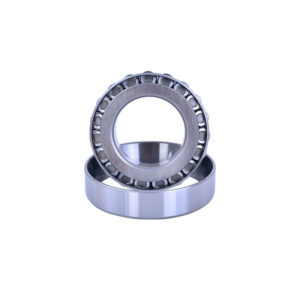
Tapered roller bearings1 improve machine efficiency2 by handling heavy combined loads with less friction. Their unique tapered design makes the rollers roll, not slide. This reduces energy loss. They also manage both radial and thrust forces in one bearing, which simplifies design and saves space.
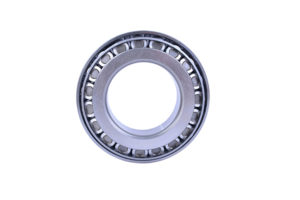
Tapered Roller Bearing True Rolling Motion
Now, you might think this is just a sales pitch. But I see it every day at our factory. Customers come to us with problems. Machines that fail too soon. Energy bills that are too high. When we dig into the issue, we often find the bearings are the root cause. Let me walk you through what I have learned about tapered roller bearings. I will share both the good and the bad. This way, you can decide if they are right for your machines.
What are the advantages of tapered roller bearings?
Your customer runs a fleet of trucks. He calls you, frustrated. The wheel bearings keep failing after just six months. The roads are rough, and the loads are heavy. He needs a bearing that can take the punishment. He needs a solution that lasts.
The main advantage is their ability to handle heavy combined loads. The tapered design creates line contact between the rollers and raceways. This spreads the load over a larger area. This means higher load capacity and longer life compared to ball bearings of the same size.
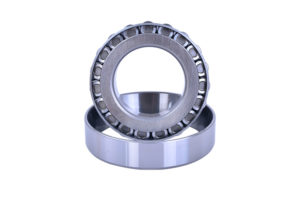
Tapered Roller Bearing Components
Understanding the Real Advantages
When I talk with procurement managers like Rajesh, they want more than just bullet points. They want to know how these advantages actually work in real machines. Let me share what I have learned from years at the factory and from talking to engineers around the world.
True Rolling Motion Reduces Friction
One of the smartest things about the tapered design is how it affects movement. Because both the rollers and the raceways are tapered, the geometry forces the roller to roll without sliding. This is called true rolling motion.
Why does this matter for efficiency?
- Less Heat: When a roller slides instead of rolls, it creates friction. Friction creates heat. Heat is wasted energy that you pay for.
- Better Lubrication: Sliding action can wipe the oil away from the contact surfaces. True rolling motion helps keep the lubricant film in place. This protects the metal surfaces.
- Longer Life: Less friction and good lubrication mean less wear. The bearing lasts longer, especially in tough conditions like in truck axles or gearboxes.
In other bearing types, like cylindrical roller bearings, the rollers might need a minimum load to keep from sliding. If the load is too light, they skid. This is bad. Tapered roller bearings do not have this problem as much. Their geometry keeps them rolling true. This is a huge plus for efficiency.
High Load Capacity in a Compact Package
We talk a lot about load ratings at the factory. It is a key number for our clients. Tapered roller bearings are known for their high dynamic load capacity. They rival spherical roller bearings in this area and are far better than ball bearings.
But you have to be careful when you read the catalogs. I have seen buyers get confused by this. Tapered roller bearings often use a different rating standard (C90) based on 90 million revolutions, while other bearings use a standard (C) based on 1 million revolutions. This makes the tapered roller bearing numbers look smaller at first glance. You have to do the math to compare them correctly. Once you do, you see their true strength.
A recent study I read tested tapered roller bearings against deep groove ball bearings in an electric vehicle gearbox. They wanted to see which was more efficient. The result? When tested under a real-world driving cycle, the power loss was the same for both types. But here is the key: the tapered roller bearing had a smaller size and lower weight for the same load capacity.
Think about what this means for your clients:
- Compact Design: They can design smaller, lighter gearboxes or machines.
- Material Savings: Less material is used in the housing and shafts.
- System Efficiency: A lighter machine often uses less energy to run.
So, the advantage is not just in the bearing itself. It is in how it allows the whole system to be better.
Ability to Handle Combined Loads
In many machines, the shaft experiences both radial loads (from the weight of components) and axial loads (from gears or thrust). In a car wheel, you have the weight of the car pushing down (radial) and cornering forces pushing sideways (axial). Tapered roller bearings are designed to handle both at the same time. This means you can use one bearing where you might need two ball bearings or a more complex arrangement. Fewer parts mean lower cost and simpler assembly.
Adjustable Preload for Precision
Tapered roller bearings are almost always used in pairs. You can adjust them to have zero clearance or even a slight preload. Preload means you push the bearings together so there is no play. This makes the shaft very rigid and precise. This is critical for machine tool spindles or gearboxes where accuracy matters. With ball bearings, achieving this level of precision is often harder and more expensive.
Summary of Key Advantages
To make it clear for you and your customers, here is a table summarizing the main advantages.
| Advantage | How It Works | Impact on Machine Efficiency |
|---|---|---|
| True Rolling Motion | Tapered geometry prevents sliding | Reduces friction, heat, and energy loss. Improves lubrication. |
| High Load Capacity | Line contact spreads stress | Handles heavy loads without failing, reducing downtime. |
| Combined Load Handling | Supports radial and axial forces together | Simplifies design, saves space, and reduces part count. |
| Compact Design | High capacity in a small envelope | Allows for smaller, lighter, and more efficient machine designs. |
| Adjustable Preload | Pair adjustment for zero play | Increases rigidity and precision, critical for machine tools. |
These advantages make tapered roller bearings the go-to choice for gearboxes, truck axles, and heavy machinery. They give you the strength and efficiency you need for the hard jobs.
What are the disadvantages of tapered roller bearings?
You set up a new conveyor line at a mine. The shafts are long, and you know they might bend a little under load. You install standard tapered roller bearings. Within months, they start failing. What went wrong? This is a story I hear too often.
The biggest disadvantage is their poor tolerance for misalignment. Unlike spherical roller bearings, standard tapered roller bearings cannot handle shafts that bend or housings that are not perfectly aligned. This leads to high stress, overheating, and early failure.
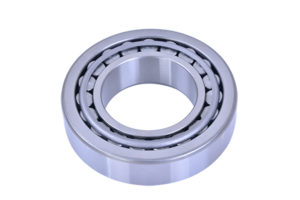
Bearing Misalignment Damage
Understanding the Limitations
You cannot just put a tapered roller bearing in any machine and expect it to work perfectly. You have to know where they struggle. This knowledge helps you and your clients avoid costly mistakes.
Sensitivity to Misalignment
This is the number one issue. The same geometry that gives them high load capacity also makes them rigid. The rollers are designed to run perfectly flat against the raceways. If the shaft is bent or the housing is angled, the rollers get pushed against the edge of the raceway.
This causes a few problems:
- Edge Loading: The load concentrates on a tiny area. This creates massive stress that the bearing was not designed for.
- Heat Generation: The metal grinds against metal, creating heat. You can feel it on the housing.
- Premature Failure: The bearing wears out fast, sometimes in a matter of weeks. I have seen bearings fail in less than a month because of a bent shaft.
We see this a lot in applications with long shafts, like conveyors, or in equipment that operates on uneven ground. The cost of this failure is not just the bearing. It is the labor to replace it and the downtime while the machine is stopped. In some industries, downtime costs thousands of dollars per hour.
There is a solution, though. You can get mounted units or special designs that allow for some misalignment. These units have a spherical outer surface that sits in the housing, acting like a ball joint to absorb the angle. They can handle up to ±4° of misalignment. But these are special products, not the standard bearing. They also cost more.
Speed Limitations
Tapered roller bearings are good, but ball bearings are better when it comes to pure speed. At very high RPMs, ball bearings generate less heat. The line contact of a tapered roller bearing creates more friction than the point contact of a ball bearing.
If your customer has a high-speed spindle or a very fast motor, a tapered roller bearing might not be the best choice. It could run too hot. You need to check the speed ratings carefully. The speed rating depends on the bearing size, the cage material, and the lubrication. We always provide the limiting speed in our catalogs.
Complexity in Adjustment and Installation
Installing a tapered roller bearing is not as simple as dropping in a ball bearing. Because they are almost always used in pairs, you have to set the "preload" or "end play."
- Preload: This means pushing the bearings together slightly to remove all internal clearance. This makes the system very rigid and precise, which is good for machine tools.
- End Play: This means leaving a tiny gap so the shaft can expand when it gets hot without putting too much load on the bearings.
Getting this adjustment right takes skill. If you set it too tight (too much preload), the bearings will overheat and fail. If you set it too loose, the shaft will wobble, and the bearings will wear out unevenly. This is a critical step that requires the right tools and knowledge. In the factory, we use special gauges and procedures. In the field, mechanics need to be trained.
Higher Initial Cost
Compared to deep groove ball bearings, tapered roller bearings usually cost more to manufacture. The design is more complex, and the tolerances are tighter. So the initial purchase price is higher. However, you have to look at the total cost of ownership. If a tapered roller bearing lasts three times longer than a ball bearing in a heavy-load application, the higher upfront cost is worth it. But for light-duty applications, a ball bearing might be more economical.
Comparing the Downsides
Here is a simple table to summarize the disadvantages and how they affect your operation.
| Disadvantage | Why It Happens | Consequence for Your Machine |
|---|---|---|
| Misalignment Sensitivity | Rigid design cannot adapt to shaft bending | Edge loading, overheating, and rapid, unexpected failure. |
| Speed Limits | Line contact creates more friction than point contact | Higher heat generation, not suitable for very high-speed applications. |
| Installation Complexity | Requires precise adjustment of preload or end play | Skilled labor needed; incorrect setup leads to early failure. |
| Higher Initial Cost | More complex to manufacture | Upfront cost is higher, though total cost of ownership may be lower. |
| Requires More Space Axially | Usually used in pairs, which takes up more space along the shaft | May not fit in very compact designs. |
Knowing these disadvantages helps you ask the right questions. Is the shaft perfectly supported? Is it a high-speed job? Do we have the expertise to install it right? If the answer to these is "no," you might need to look at a different bearing or a special self-aligning unit.
What is the efficiency of roller bearings?
A plant manager calls you. He says, "I need to save energy. My electricity bill is too high. Tell me, are my bearings wasting power?" You need to give him a clear answer. You need to explain where the energy goes.
Bearing efficiency is all about friction. An efficient bearing is one that minimizes frictional torque. This torque is the resistance to rotation. It comes from several places: the rolling of the elements, the sliding at the ends of the rollers, and the churning of the lubricant. Engineers work to reduce each one.
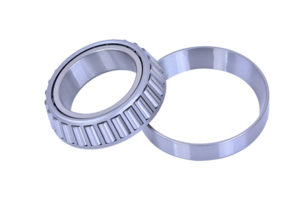
Roller Bearing Friction Sources
Breaking Down the Sources of Friction
To understand efficiency, we have to look at the physics inside the bearing. It is not just one type of friction. There are four main components, and engineers work hard to reduce each one. At FYTZ, we are constantly improving our designs to lower these losses.
1. Rolling Resistance (M1)
This is the friction between the rollers and the raceways as they roll. Even rolling creates resistance. This is mostly due to something called "viscous rolling resistance." It is caused by the oil getting squeezed in the contact zone. Think of it like rolling a heavy tire through mud. The oil film between the metal surfaces creates a tiny drag.
At FYTZ, we look at the surface finish and geometry to reduce this. A smoother surface means less resistance. We use super-finishing processes to make the raceways mirror-smooth. Using the right number of rollers also helps. Studies show that fewer rollers can actually lower this rolling resistance, which improves efficiency. But fewer rollers also means lower load capacity, so we have to find the right balance.
2. Sliding Friction at Roller Ends (M2)
This is a bigger source of energy loss. It happens between the large end of the tapered roller and the guide rib on the inner ring. This rib keeps the rollers aligned. Without it, the rollers would skew and jam. But this contact is a sliding contact, not a rolling one. So it creates friction.
To improve efficiency, we use special surface treatments and coatings. For example, a coating like Diamond-Like Carbon (DLC) can reduce friction in steel-to-steel contact by up to 80%. We also optimize the geometry of the roller ends and the rib to create a better oil film, even at slow speeds. The shape of the roller end is carefully designed to promote hydrodynamic lubrication, where a wedge of oil separates the metal surfaces.
3. Lubricant Churning (M3)
This is the resistance caused by the bearing moving through the oil or grease. Imagine stirring a bucket of thick oil with a spoon. That resistance is "churning loss." The bearing has to push the lubricant out of the way to rotate.
If you put too much grease in a bearing, or if the oil is too thick, the churning losses go up. This wastes energy. Using the right amount of the right lubricant is critical for efficiency. In high-speed applications, sometimes a minimum quantity lubrication system is used, where only a small amount of oil is injected as a mist. This drastically reduces churning losses.
4. Cage Sliding Friction (M4)
The rollers also slide against the cage that holds them apart. The cage keeps the rollers evenly spaced. But as the rollers move, they push against the cage pockets. This creates sliding friction. The material and design of the cage matter. A lightweight polymer cage can reduce this friction compared to a heavy steel cage. But polymer cages may not handle high temperatures as well.
How Efficiency is Measured and Improved
You cannot just guess at efficiency. It is measured as frictional torque. There are formulas engineers use to calculate it. The total friction M is the sum:
This means total friction is the sum of rolling resistance, sliding at the rib, churning, and cage sliding.
To improve efficiency, we work on each part:
- Internal Geometry: Adjusting the number of rollers, their length, and the contact angle. We use computer simulations to find the optimal design.
- Surface Finish: Super-finishing raceways and rollers to make them mirror-smooth. This reduces M1.
- Coatings: Applying low-friction coatings like DLC or black oxide to sliding surfaces to reduce M2 and M4.
- Lubrication: Using low-viscosity oils and optimizing fill quantities. Sometimes we recommend special greases with friction modifiers.
- Seals: Designing seals that keep dirt out but do not create too much drag. A bad seal can double the friction.
By doing all these things, manufacturers have been able to cut bearing friction in half compared to standard designs from just a few years ago. This directly translates to lower energy bills and cooler-running machines. In one case, we helped a gearbox manufacturer reduce their energy loss by 15% just by switching to a low-friction tapered roller bearing design.
Summary of Efficiency Factors
| Friction Component | Description | How to Reduce It |
|---|---|---|
| M1: Rolling Resistance | Resistance as rollers roll on raceways | Smoother surfaces, optimized roller count |
| M2: Roller End Sliding | Sliding of roller ends against the rib | Coatings, optimized rib/roller end geometry |
| M3: Lubricant Churning | Resistance from moving through oil/grease | Right lubricant type and quantity, low-viscosity oils |
| M4: Cage Sliding | Sliding between rollers and cage | Lightweight cage materials, optimized pocket design |
Understanding these factors helps you select the right bearing for energy-sensitive applications. And if you need a custom solution, we can work with you to optimize the design.
Are tapered roller bearings better than ball bearings?
A client sends you an email. He has two quotes for a new gearbox project. One uses deep groove ball bearings. The other uses tapered roller bearings. He asks you, "Which one is better? Which one should I pick?" This is the million-dollar question. I get asked this all the time.
There is no simple "better" answer. The right choice depends entirely on the job. Ball bearings are great for high speeds and light loads. Tapered roller bearings are better when you have heavy loads, shock, or a combination of radial and thrust forces. They are different tools for different jobs.
Ball Bearing vs Tapered Roller Bearing Comparison
A Detailed Comparison
To help you and your clients decide, we need to look at specific performance points. Let us compare them directly.
Load Capacity and Type
- Tapered Roller Bearings: These are the champions of load. Because they have line contact, they can handle much heavier loads than ball bearings of the same size. More importantly, they are designed to handle combined loads. They manage radial and axial forces together, perfectly. This is why they are in every car wheel hub. The wheel has the weight of the car (radial) and the cornering forces (axial) at the same time.
- Ball Bearings: Ball bearings have point contact. This means less friction, but also less load capacity. They are very good at radial loads. Some types, like angular contact ball bearings, can handle axial loads too, but usually not as well as a tapered roller bearing. For pure radial loads, a deep groove ball bearing is very efficient.
Speed Capability
- Ball Bearings: This is where ball bearings win. Their point contact creates very little friction, so they can spin incredibly fast without overheating. In applications like electric motors or high-speed spindles, ball bearings are the standard.
- Tapered Roller Bearings: They are good for high speeds, but they have a limit. The sliding friction at the roller ends and the line contact generate more heat. For very high-speed applications, a ball bearing is usually the better choice. However, with advanced cage materials and coatings, tapered roller bearings can reach impressive speeds. You always need to check the speed ratings.
Friction and Efficiency
For a long time, people thought ball bearings were always more efficient. But new research shows this is not always true. In a 2024 study, engineers found that when you test bearings under real-world driving conditions, not just in a no-load spin test, the difference disappears.
- Under light loads, the ball bearing had less friction.
- Under heavy loads, the tapered roller bearing had less friction.
- When combined to represent a full driving cycle, their efficiency was equal.
So, if your machine operates under varying loads, a tapered roller bearing can be just as efficient as a ball bearing, while also being stronger and more compact. This is a game-changer for many designers.
Tolerance for Misalignment
- Tapered Roller Bearings: This is their weak point. Standard ones are very sensitive to misalignment. If you have a long shaft that may bend, or a housing that might not be perfectly aligned, you need to be careful. Special self-aligning tapered roller bearing units exist, but they are more expensive.
- Ball Bearings: A deep groove ball bearing can tolerate a small amount of misalignment. It is more forgiving than a standard tapered roller bearing. An angular contact ball bearing is also more tolerant of misalignment than a tapered roller bearing, but not as much as a self-aligning ball bearing.
Cost and Availability
- Ball Bearings: They are mass-produced in huge volumes. This makes them inexpensive and widely available. For many common applications, they are the economical choice.
- Tapered Roller Bearings: They are also mass-produced, but the design is more complex. They tend to cost a bit more than a comparable-sized ball bearing. However, in heavy-duty applications, their longer life can offset the higher cost.
Making the Right Choice
Here is a final guide to help you decide.
| Feature | Tapered Roller Bearing | Deep Groove Ball Bearing |
|---|---|---|
| Radial Load Capacity | Very High | Moderate |
| Axial Load Capacity | High (in one direction) | Low to Moderate |
| Combined Load Handling | Excellent (Designed for it) | Poor (Needs separate bearings or angular contact types) |
| Speed Capability | Good | Excellent |
| Friction / Efficiency | Good (Excellent under heavy load) | Good (Excellent under light load) |
| Misalignment Tolerance | Poor (Standard type) | Fair |
| Cost | Moderate to High | Low to Moderate |
| Typical Applications | Gearboxes, Car Wheels, Conveyors, Heavy Machinery | Electric Motors, Fans, Pumps, Light-duty applications |
So, when a client asks you which is better, ask them back: "What is the load? What is the speed? Can you guarantee perfect alignment?" Their answers will tell you which bearing to sell them. In my experience, for applications like truck axles, gearboxes, and heavy industrial equipment, tapered roller bearings are the clear winner. For electric motors and high-speed spindles, ball bearings are the way to go.
Conclusion
Choosing the right bearing is about matching the tool to the job. Tapered roller bearings offer great advantages in load and efficiency, especially in tough conditions. But they need proper alignment and skilled installation. By understanding their strengths and limits, you can help your customers build machines that last longer and run better.