
You have an idea for a better pillow block bearing. Maybe you need a special size, a different material, or your own brand on the product. Working with a Chinese manufacturer can turn that idea into reality. But how do you navigate the process?
To work with a Chinese manufacturer to develop custom pillow block units: 1) Prepare detailed specifications (drawings, dimensions, materials, tolerances). 2) Find a reputable manufacturer with customization capabilities. 3) Communicate clearly about requirements, MOQs, and lead times. 4) Request samples before mass production. 5) Agree on quality standards and inspection procedures. 6) Establish clear payment terms and protect your intellectual property. 7) Build a long-term relationship through regular communication and visits when possible.
In my years of manufacturing bearings for clients worldwide, I’ve helped many distributors like Rajesh develop their own custom products. The process can be smooth with the right approach. Let’s explore what pillow blocks are, how to size them, common problems, and what grease to use—all essential knowledge for developing your custom units.
What is a pillow block?
You’re planning to develop custom pillow block units1. First, you need a solid understanding of what they are. This foundation helps you communicate your requirements clearly.
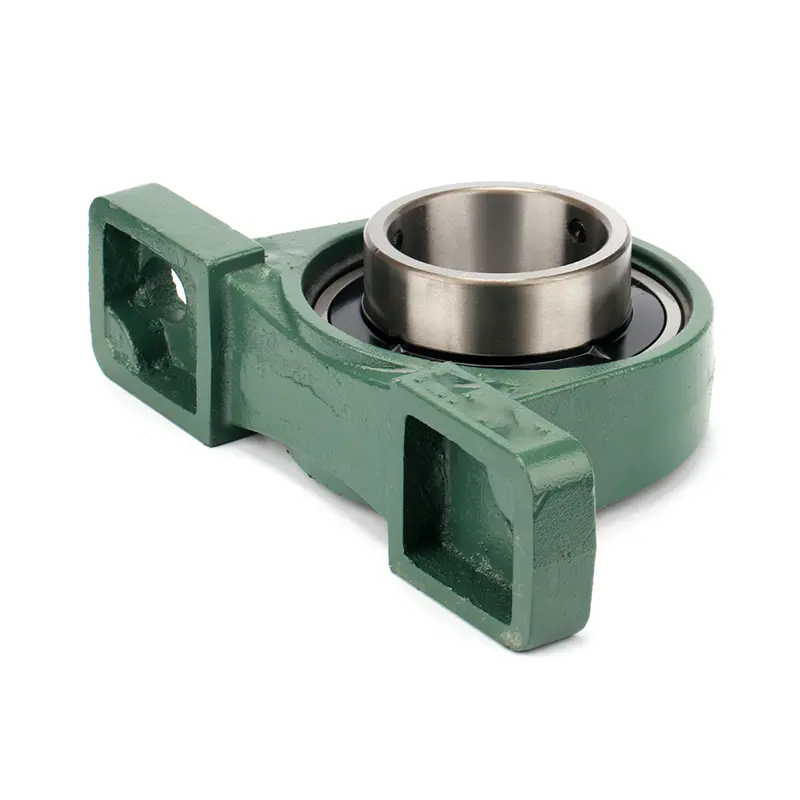
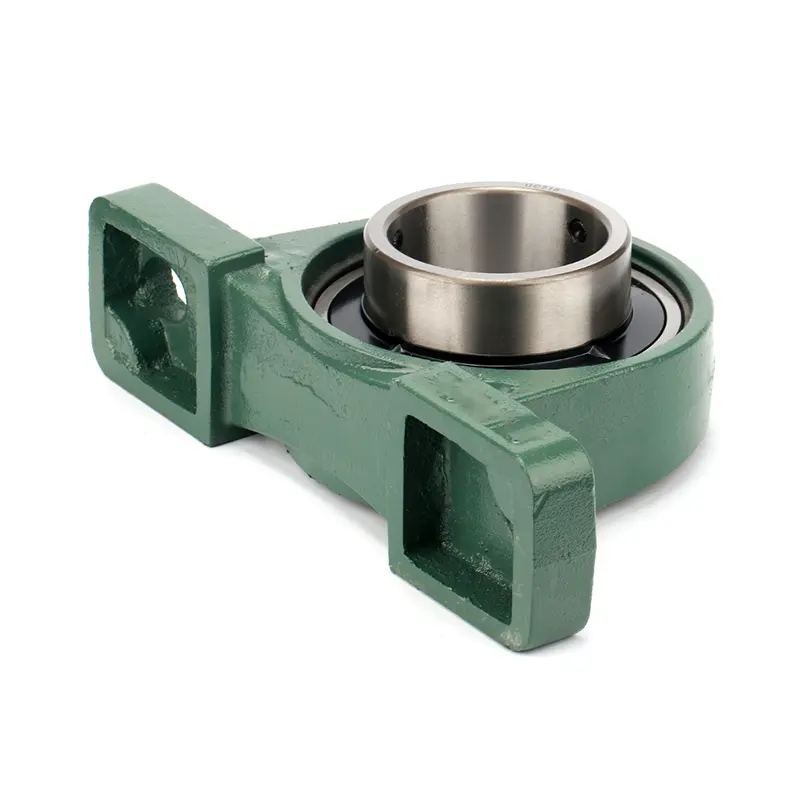
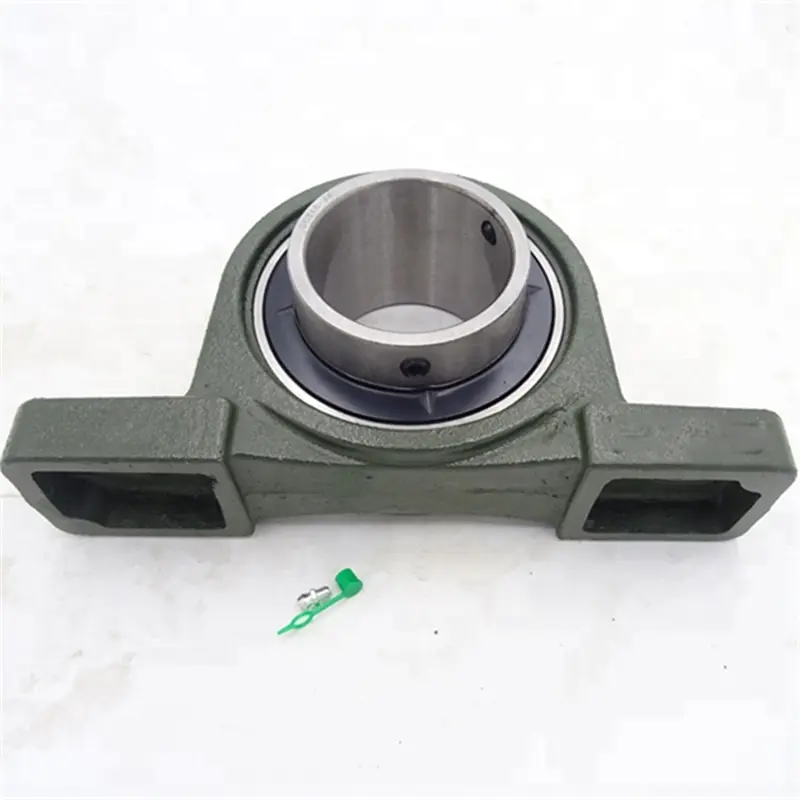
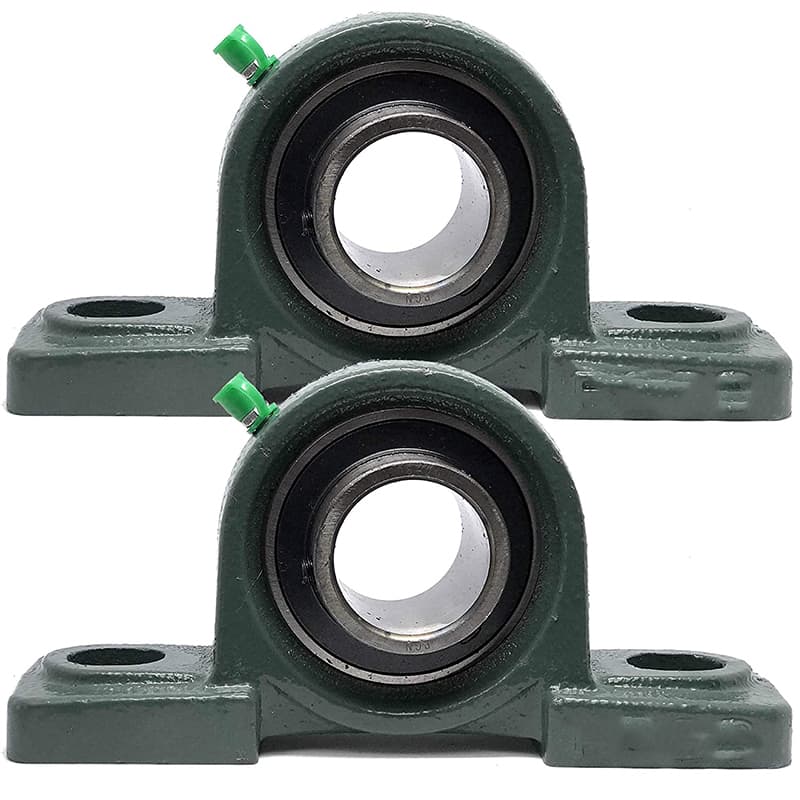
A pillow block bearing2 is a mounted bearing unit3 consisting of a bearing insert4 (usually a deep groove ball bearing with a spherical outer diameter5) housed in a block with a base for mounting. The "pillow" refers to the shape of the housing, which resembles a pillow. The unit provides ready-to-install support for a rotating shaft, with features for lubrication and sealing, simplifying design and maintenance. Common series include UCP (2-bolt pillow block), UCF (4-bolt flange), and UCFL (4-bolt oval flange).

Understanding the components helps you specify customizations.
The Anatomy of a Pillow Block for Custom Development
| 1. Core Components for Customization: | Component | Standard | Custom Options |
|---|---|---|---|
| Housing | Cast iron | Stainless steel, ductile iron, special coatings | |
| Bearing insert | Chrome steel (GCr15) | Stainless steel, high-temperature steel | |
| Seals | Standard rubber | High-temperature, food-grade, heavy-duty | |
| Locking mechanism | Set screws | Eccentric collar, tapered adapter | |
| Grease fitting | Standard zerk | Flush-type, angled, or no fitting | |
| Paint/Finish | Standard gray | Any color, special coatings |
| 2. Key Features for Custom Specifications: | Feature | Standard | Custom Possibilities |
|---|---|---|---|
| Base dimensions | Standard UCP series | Special bolt hole spacing, custom footprint | |
| Height to center | Standard | Modified for specific applications | |
| Housing shape | Standard pillow block | Custom contours for tight spaces | |
| Branding | None or manufacturer’s | Your logo cast or laser-engraved | |
| Packaging | Standard boxes | Custom boxes with your branding |
| 3. Types of Customizations: | Customization Level | Description | Typical MOQ |
|---|---|---|---|
| Branding only | Your logo on standard product | 500-1000 pieces | |
| Cosmetic changes | Custom color, special packaging | 1000+ pieces | |
| Dimensional changes | Modified dimensions | 2000+ pieces | |
| Material changes | Stainless steel, special alloys | 1000+ pieces | |
| Full custom design | Completely new housing design | 3000+ pieces |
| 4. The Spherical Advantage: | Feature | Benefit for Custom Units |
|---|---|---|
| Spherical OD of insert | Self-alignment compensates for minor mounting errors | |
| Same insert fits multiple housings | Flexibility in your product line | |
| Standardized sizes | Interchangeability across brands |
My Insight on Pillow Block Basics:
When a client comes to us with a custom pillow block idea, the first thing we discuss is which components they want to change. Sometimes it’s just branding. Sometimes it’s a completely new housing design. Understanding the basics helps us scope the project and provide accurate quotes. For a distributor like Rajesh, knowing these components allows him to envision exactly what he wants and communicate it clearly to us.
How to size pillow block bearings?
You’re developing a custom pillow block. You need to specify the size correctly. Sizing isn’t just about the shaft—it’s about the entire mounting footprint.
To size pillow block bearings correctly: 1) Measure the shaft diameter1 where the bearing will mount. This determines the insert size (e.g., 40mm shaft = size 208). 2) Check the bolt hole spacing2 on your mounting surface. Standard pillow blocks have specific center distances for each size. 3) Verify the height from base to shaft center3 to ensure alignment with other components. 4) Consider the load4—select a series (light, medium, heavy) that matches your application. 5) Choose the housing style5 (2-bolt pillow block, 4-bolt flange, etc.) based on mounting orientation.
Accurate sizing prevents installation problems.
Step-by-Step Pillow Block Sizing Guide
| Step 1: Determine Shaft Diameter | Shaft Diameter | UCP Size | Bore Code |
|---|---|---|---|
| 20 mm | UCP 204 | 04 | |
| 25 mm | UCP 205 | 05 | |
| 30 mm | UCP 206 | 06 | |
| 35 mm | UCP 207 | 07 | |
| 40 mm | UCP 208 | 08 | |
| 45 mm | UCP 209 | 09 | |
| 50 mm | UCP 210 | 10 |
Formula: For sizes 04 and above, shaft diameter = (last two digits) × 5 mm.
| Step 2: Measure Bolt Hole Spacing | UCP Size | Bolt Hole Center Distance (J) | Typical Bolt Size |
|---|---|---|---|
| UCP 204 | 113 mm | M10 | |
| UCP 205 | 119 mm | M10 | |
| UCP 206 | 134 mm | M12 | |
| UCP 207 | 141 mm | M12 | |
| UCP 208 | 159 mm | M14 | |
| UCP 209 | 159 mm | M14 | |
| UCP 210 | 172 mm | M16 |
Measure the distance between existing mounting holes on your machine. This must match the pillow block’s bolt hole spacing.
| Step 3: Verify Height to Center | UCP Size | Height to Center (H) |
|---|---|---|
| UCP 204 | 33.3 mm | |
| UCP 205 | 36.5 mm | |
| UCP 206 | 42.9 mm | |
| UCP 207 | 47.6 mm | |
| UCP 208 | 49.2 mm | |
| UCP 209 | 54.0 mm | |
| UCP 210 | 57.2 mm |
This dimension ensures your shaft is at the correct height relative to the mounting surface. If replacing an existing unit, measure the old one.
| Step 4: Consider Load Requirements | Load Level | Recommended Series | Example |
|---|---|---|---|
| Light to moderate | UCP 200 series (ball bearing insert) | Conveyors, fans | |
| Heavy or shock loads | SBP series (spherical roller bearing insert) | Crushers, heavy conveyors | |
| Corrosive environment | Stainless steel housing | Food processing, marine |
| Step 5: Choose Housing Style | Style | Application | Example Code |
|---|---|---|---|
| Pillow block (2-bolt) | Base mounting on horizontal surface | UCP | |
| Square flange (4-bolt) | Mounting against vertical surface | UCF | |
| Oval flange (4-bolt) | Where space is limited | UCFL | |
| Take-up unit | Conveyor tensioning | UCT |
| Step 6: Consider Special Features for Custom Units6 | Feature | When to Specify |
|---|---|---|
| C3 clearance | High-temperature applications | |
| Relubrication capability | Where maintenance access is available | |
| Special seals | Dirty or wet environments | |
| Custom paint color | Branding or application-specific | |
| Special material | Corrosive or high-temperature environments |
My Insight on Sizing for Custom Development:
When developing a custom pillow block, you have two paths: modify a standard size or create an entirely new size. Most custom projects start with standard dimensions—they’re proven, interchangeable, and cost-effective. The customization comes in materials, colors, branding, or special features. For a distributor like Rajesh, offering custom units that are dimensionally interchangeable with standard sizes reduces risk for his customers. They can replace his custom units with standard ones if needed. This approach builds confidence in his brand.
What are the common problems with pillow blocks?
You’re developing custom pillow blocks. You want to make them better than the competition. Understanding common problems helps you design solutions into your custom units.
Common problems with pillow blocks include: rust and corrosion1 (from inadequate protection), shaft slippage2 (from loose set screws or incorrect shaft tolerance), seal failure3 (from damage or poor quality), noisy operation4 (from contamination or misalignment), overheating5 (from over-lubrication or incorrect clearance), housing cracks6 (from casting defects or over-tightening), and premature wear7 (from contamination or overloading). Your custom units can address these with better materials, improved seals, and quality manufacturing.
Let’s see how custom design can solve each problem.
Designing Solutions into Custom Pillow Blocks
| 1. Rust and Corrosion: | Problem | Standard Issue | Custom Solution |
|---|---|---|---|
| Rust on housing | Basic paint may chip | Specify better paint, powder coating, or stainless steel | |
| Rust on bearing insert | Standard rust prevention | Enhanced rust-preventive oil, VCI packaging | |
| Corrosion in harsh environments | Standard materials | Stainless steel housing and insert |
| 2. Shaft Slippage (Creep): | Problem | Standard Issue | Custom Solution |
|---|---|---|---|
| Loose set screws | Standard screws may loosen | Upgrade to higher quality set screws, add thread-locking feature | |
| Incorrect shaft tolerance | Not a bearing issue | Provide installation guidelines with your product | |
| Vibration loosening | Standard locking | Specify eccentric collar locking for better grip |
| 3. Seal Failure: | Problem | Standard Issue | Custom Solution |
|---|---|---|---|
| Seal damage during installation | Standard seals | Specify heavy-duty seals (2RSH) | |
| Abrasive contaminants | Standard rubber | Upgrade to fluorocarbon (Viton) for chemical resistance | |
| High temperature | Standard rubber | Specify high-temperature seals (FKM) |
| 4. Noisy Operation: | Problem | Standard Issue | Custom Solution |
|---|---|---|---|
| Contamination noise | Standard seals | Upgrade to better seals, add external shields | |
| Bearing quality | Standard grade | Specify higher precision (P6) for smoother operation | |
| Misalignment noise | Not a bearing issue | Provide alignment instructions |
| 5. Overheating: | Problem | Standard Issue | Custom Solution |
|---|---|---|---|
| Over-lubrication | Not a bearing issue | Include lubrication instructions | |
| Incorrect clearance | Standard CN clearance | Specify C3 clearance for high-temp applications | |
| Inadequate grease | Standard grease | Specify high-temperature, synthetic grease |
| 6. Housing Cracks: | Problem | Standard Issue | Custom Solution |
|---|---|---|---|
| Casting defects | May occur in low-quality castings | Source from quality foundry, specify inspection | |
| Over-tightened bolts | Not a bearing issue | Provide torque specifications | |
| Impact damage | Standard housing | Specify ductile iron for higher impact resistance |
| 7. Premature Wear: | Problem | Standard Issue | Custom Solution |
|---|---|---|---|
| Contamination wear | Standard seals | Upgrade seals, add external protection | |
| Overloading | Standard load rating | Specify higher capacity series or material | |
| Poor lubrication | Not a bearing issue | Provide relubrication instructions, add grease fittings |
| 8. Custom Solutions Checklist: | Feature | Standard | Custom Improvement |
|---|---|---|---|
| Housing material | Cast iron | Stainless steel, ductile iron, special coatings | |
| Bearing steel | GCr15 | Stainless steel, high-temperature steel | |
| Seals | Standard rubber | Heavy-duty, high-temperature, food-grade | |
| Clearance | CN | C3 for high-temp, special for applications | |
| Locking | Set screw | Eccentric collar, tapered adapter | |
| Grease | Standard lithium | Synthetic, high-temperature, food-grade | |
| Packaging | Standard | Enhanced rust protection, custom branding | |
| Documentation | Basic | Installation guides, torque specs, warranty |
My Insight on Problem Prevention:
When a client comes to us for custom pillow blocks, we often start by asking: "What problems are your customers having with standard units?" The answers guide our custom features. If they report rust issues, we recommend stainless steel or better coatings. If they complain about noise, we suggest higher precision grades. Custom development is an opportunity to solve real-world problems, not just change colors. For a distributor like Rajesh, this approach means his custom brand isn’t just different—it’s genuinely better.
What kind of grease do you use for pillow block bearings?
You’re developing custom pillow blocks. You need to specify the grease. What type should you use? The right grease extends bearing life and reduces complaints.
For standard pillow block bearings, use lithium-based grease with NLGI grade 2 consistency1. For most applications, this provides good performance across a wide temperature range. For custom applications, consider: high-temperature grease2 (for kilns, ovens), food-grade grease3 (for food processing), synthetic grease4 (for extreme temperatures or long life), EP (extreme pressure) grease (for heavy loads), or low-temperature grease5 (for cold environments). The grease should fill 30-40% of the bearing’s free space.
Grease selection is a critical part of bearing performance.
Comprehensive Guide to Bearing Grease Selection
| 1. Grease Basics: | Component | Function |
|---|---|---|
| Base oil | Provides lubrication (mineral or synthetic) | |
| Thickener | Holds oil in place (lithium, calcium, etc.) | |
| Additives | Enhance properties (EP, anti-wear, corrosion inhibitors) |
| 2. NLGI Consistency Grades6: | Grade | Description | Application |
|---|---|---|---|
| NLGI 1 | Soft | Low-temperature, long distribution lines | |
| NLGI 2 | Standard | Most bearing applications | |
| NLGI 3 | Firm | High-temperature, vertical shafts |
| 3. Common Grease Types for Bearings: | Type | Characteristics | Applications |
|---|---|---|---|
| Lithium-based | Good all-around, water-resistant | General industrial | |
| Lithium complex | Higher temperature range, better stability | Most applications | |
| Calcium sulfonate | Excellent water resistance, EP properties | Wet environments, steel mills | |
| Polyurea | Long life, wide temperature | Electric motors, sealed-for-life | |
| Synthetic (PAO, ester) | Wide temperature range, long life | Extreme temperatures, long intervals | |
| Food-grade (H1) | NSF certified, safe for incidental contact | Food processing |
| 4. Temperature Ranges: | Grease Type | Continuous Temperature Range | Peak |
|---|---|---|---|
| Standard lithium | -20°C to +120°C | +130°C | |
| Lithium complex | -20°C to +140°C | +150°C | |
| Synthetic | -40°C to +180°C | +200°C | |
| High-temperature | -20°C to +200°C | +220°C |
| 5. Selecting Grease for Custom Applications: | Application | Recommended Grease | Why |
|---|---|---|---|
| General industrial | Lithium complex, NLGI 2 | Good all-around performance | |
| High temperature ( >120°C) | Synthetic, high-temperature | Maintains lubrication at high heat | |
| Low temperature ( < -20°C) | Synthetic, low-temperature | Stays fluid in cold | |
| Wet environments | Calcium sulfonate | Excellent water resistance | |
| Food processing | Food-grade (H1) | Safe for incidental contact | |
| Heavy loads, shock | EP (extreme pressure) grease | Protects against wear | |
| Long life, sealed | Polyurea or synthetic | Extended service intervals |
| 6. Grease Quantity Guidelines: | Bearing Size | Typical Grease Amount |
|---|---|---|
| Small (up to 6205) | 1-3 grams | |
| Medium (6206-6210) | 3-8 grams | |
| Large (6212+) | 8-15 grams | |
| Pillow block housings | 30-50% of free space |
| 7. Relubrication Intervals: | Operating Hours/Day | Recommended Relubrication Interval |
|---|---|---|
| 8 hours, clean | 6-12 months | |
| 24 hours, clean | 3-6 months | |
| Harsh environment | 1-3 months | |
| High temperature | Monthly or more |
My Insight on Grease for Custom Units:
When developing custom pillow blocks, grease selection is an opportunity to add value. Standard units come with standard grease. Your custom units can offer specialized grease for specific industries—food-grade for food processors, high-temp for bakeries, EP for heavy industry. This customization solves real problems for your customers. For a distributor like Rajesh, offering different grease options across his product line allows him to serve niche markets effectively. The right grease in a quality bearing is a combination that builds customer loyalty.
Conclusion
Working with a Chinese manufacturer to develop custom pillow block units is a rewarding process when approached systematically. Understand the product basics, size correctly, learn from common problems to design better solutions, and select the right grease for your target applications. With clear communication, detailed specifications, and a focus on quality, you can create a custom product line that builds your brand and serves your customers’ unique needs.
-
Explore this link to understand why lithium-based grease is the go-to choice for standard pillow block bearings. ↩ ↩ ↩ ↩
-
Learn about high-temperature grease and its critical role in maintaining performance in extreme heat applications. ↩ ↩ ↩ ↩
-
Discover the significance of food-grade grease in food processing and its safety standards. ↩ ↩ ↩ ↩
-
Find out how synthetic grease can enhance performance in extreme temperatures and extend bearing life. ↩ ↩ ↩ ↩
-
Explore the applications of low-temperature grease and its benefits in cold environments. ↩ ↩ ↩ ↩
-
Get insights into NLGI grades to make informed decisions on grease selection for various applications. ↩ ↩ ↩
-
Explore techniques to minimize premature wear in pillow blocks, enhancing their lifespan and performance. ↩
