
A train carries hundreds of passengers at high speed. A metro runs 20 hours a day, every day. Bearing failure is not an option. For railway and metro applications, bearing selection is a safety-critical decision.
For railway and metro applications, deep groove ball bearings must meet stringent requirements for reliability, durability, low noise, and long service life. They are used in traction motors, auxiliary drives, cooling fans, and door systems. Key considerations include: high load ratings for sustained operation, precision grades (P5, P6) for smooth running, C3 or C4 clearance for thermal expansion, effective seals to keep out contaminants, special greases for extended relubrication intervals, and compliance with railway standards (e.g., EN 12080, AAR specifications).
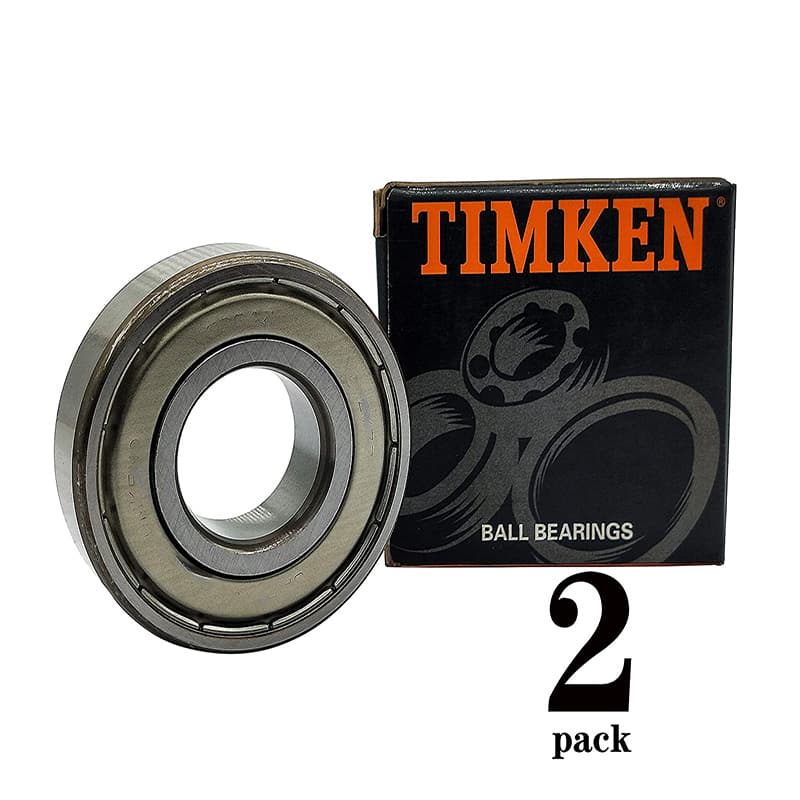
In my years of supplying bearings to railway maintenance companies and OEMs worldwide, I’ve learned that the railway industry demands the highest levels of quality and consistency. For a distributor like Rajesh in India, serving the railway sector means understanding these special requirements. Let’s explore what deep groove bearings are used for, which bearings are used in railways, whether a 6312 is a deep groove bearing, and the disadvantages to consider.
What are deep groove ball bearings used for?
You’re specifying bearings for a railway application. Deep groove ball bearings are common, but where exactly are they used in trains and metros? Understanding their applications helps you select the right ones.
Deep groove ball bearings are used in a wide range of railway and metro applications, primarily in auxiliary systems1 rather than critical axle positions. Common applications include: traction motors2 (supporting the rotor), cooling fans3 for traction equipment, auxiliary drives (compressors, alternators), door operating mechanisms4, ventilation systems5, pumps6 (cooling water, fuel), and conveyors in maintenance facilities. For axlebox positions, tapered roller or cylindrical roller bearings are typically used due to higher load requirements.
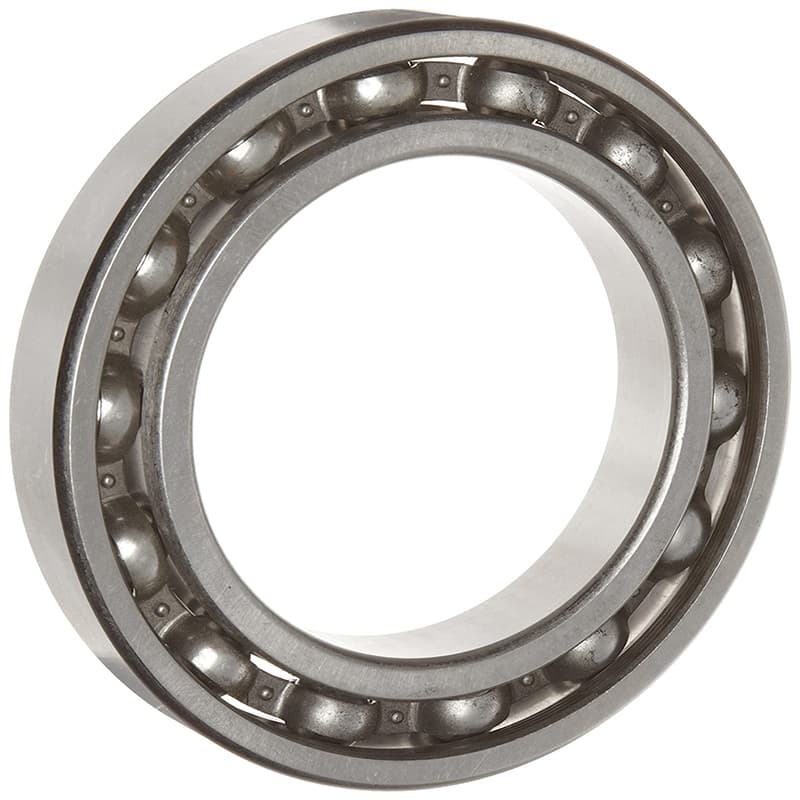
Each application has specific requirements.
Railway Applications and Their Bearing Requirements
| 1. Traction Motors: | Requirement | How Deep Groove Meets It |
|---|---|---|
| High speed | Traction motors run at high RPM. Deep groove bearings have excellent speed capability. | |
| Radial load | Supports rotor weight and magnetic forces. | |
| Moderate axial load | Handles thrust from gearbox or cooling fan. | |
| Long life | Precision grades (P5, P6) ensure durability. | |
| Temperature | C3 clearance accommodates thermal expansion. |
| 2. Cooling Fans: | Requirement | How Deep Groove Meets It |
|---|---|---|
| Continuous operation | Reliable long-term performance. | |
| Low noise | Precision grades ensure quiet operation. | |
| Contamination protection | Sealed versions (2RS) keep out dust. | |
| Easy mounting | Standard sizes simplify replacement. |
| 3. Auxiliary Drives (Compressors, Alternators): | Requirement | How Deep Groove Meets It |
|---|---|---|
| Moderate loads | Within deep groove capacity. | |
| Speed variation | Handles varying RPM. | |
| Compact design | Fits in tight engine compartments. | |
| Serviceability | Widely available for maintenance. |
| 4. Door Operating Mechanisms: | Requirement | How Deep Groove Meets It |
|---|---|---|
| Frequent starts/stops | Durable under cyclic loads. | |
| Smooth operation | Low friction ensures smooth door movement. | |
| Reliability | Critical for passenger safety and comfort. | |
| Quiet operation | Low noise grades available. |
| 5. Ventilation Systems: | Requirement | How Deep Groove Meets It |
|---|---|---|
| Continuous duty | Long service life. | |
| Low maintenance | Sealed bearings need no relubrication. | |
| Wide temperature range | Special greases available. |
| 6. Pumps (Cooling Water, Fuel): | Requirement | How Deep Groove Meets It |
|---|---|---|
| Fluid resistance | Stainless steel options available. | |
| Sealed design | Prevents fluid ingress. | |
| Reliability | Critical for engine cooling. |
| 7. What Deep Groove Bearings Are NOT Used For: | Application | Why Deep Groove Is Not Used | Bearing Type Used |
|---|---|---|---|
| Axlebox (wheel bearings) | Loads too high, need higher axial capacity | Tapered roller or cylindrical roller | |
| Gearbox main shafts | High combined loads | Tapered roller bearings | |
| Suspension components | Specialized requirements | Custom bearings |
My Insight on Railway Applications:
When a railway maintenance customer asks for deep groove bearings, I ask: "For which application?" If it’s for a traction motor, I know they need precision grades and C3 clearance. If it’s for a door mechanism, standard grades with seals may suffice. Understanding the specific application within the railway system allows me to recommend the right bearing. For a distributor like Rajesh, this knowledge helps him serve the railway sector effectively, providing bearings that meet the unique demands of each application.
Which bearing is used in railway?
Railways use many different bearing types. If you’re supplying bearings to the railway industry, you need to know which types are used where. This helps you stock the right inventory and advise customers correctly.
Railways use various bearing types depending on the application: Tapered roller bearings1 and cylindrical roller bearings2 are used in axleboxes (wheel bearings) for their high load capacity. Deep groove ball bearings3 are used in traction motors, auxiliary drives, cooling fans, and door systems. Spherical roller bearings4 are used in some suspension and coupling applications. Angular contact ball bearings may be used in high-speed traction motors. Each type must meet railway-specific standards for quality and reliability.
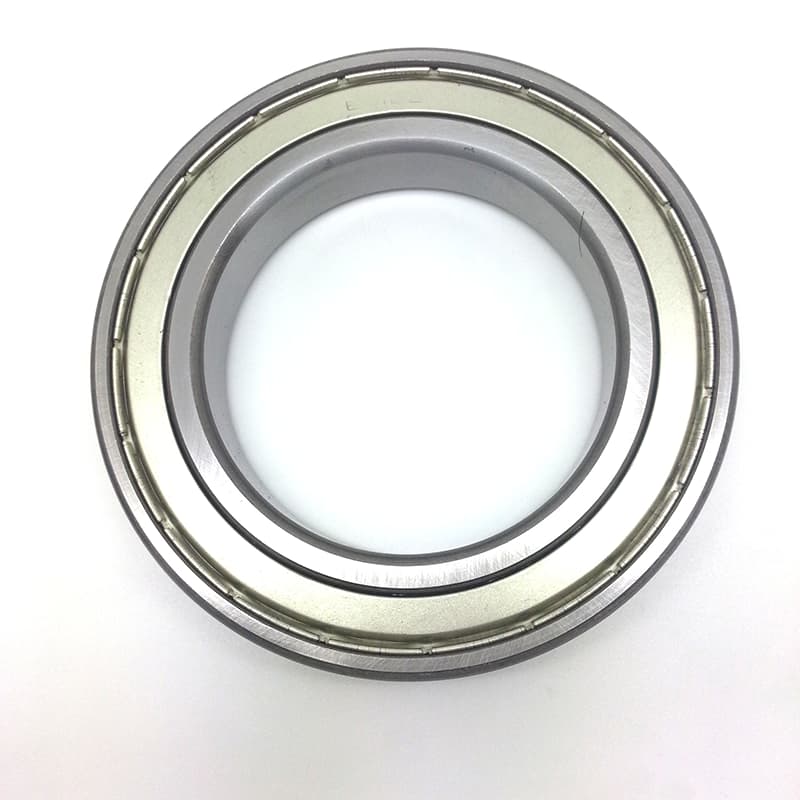
Let’s break down where each type is used.
Railway Bearing Applications by Type
| 1. Axlebox Bearings (Wheel Bearings): | Bearing Type | Why Used | Railway Standard |
|---|---|---|---|
| Tapered roller bearings1 | High combined radial and axial loads from train weight and cornering. Often used in pairs. | AAR (Association of American Railroads) standards, EN 120805 | |
| Cylindrical roller bearings | High radial load capacity, used in some designs with separate thrust bearings. | EN 120805 |
| 2. Traction Motors: | Bearing Type | Why Used | Considerations |
|---|---|---|---|
| Deep groove ball bearings3 | Support rotor, handle radial and moderate axial loads. High-speed capability. | C3 clearance for thermal expansion, P5/P6 precision | |
| Cylindrical roller bearings | Sometimes used on drive end for higher radial capacity. | May be used with deep groove on non-drive end | |
| Angular contact ball bearings6 | Used in high-speed trains for better axial load handling. | Paired mounting, precision grades |
| 3. Gearboxes: | Bearing Type | Why Used |
|---|---|---|
| Tapered roller bearings1 | Handle combined loads from gears, adjustable for optimal mesh. | |
| Cylindrical roller bearings | For radial-only positions. | |
| Deep groove ball bearings3 | For lighter duty positions. |
| 4. Auxiliary Drives (Compressors, Alternators): | Bearing Type | Why Used |
|---|---|---|
| Deep groove ball bearings3 | Versatile, cost-effective, readily available. | |
| Angular contact ball bearings6 | If axial loads are significant. |
| 5. Cooling Fans and Ventilation: | Bearing Type | Why Used |
|---|---|---|
| Deep groove ball bearings3 | Low friction, quiet operation, sealed versions available. |
| 6. Door Systems: | Bearing Type | Why Used |
|---|---|---|
| Deep groove ball bearings3 | Smooth, quiet operation, frequent cycling capability. |
| 7. Suspension and Couplings: | Bearing Type | Why Used |
|---|---|---|
| Spherical roller bearings4 | Accommodate misalignment, handle heavy loads. |
| 8. Railway Standards to Know: | Standard | Scope | Relevance |
|---|---|---|---|
| EN 120805 | Railway applications – Axlebox bearings | Defines quality, testing, and inspection requirements. | |
| AAR M-9347 | North American freight car bearings | Specifications for tapered roller bearings. | |
| ISO 4928 | Bearing tolerances | Precision classes (P0, P6, P5). | |
| ISO 5753 | Internal clearance | Clearance groups (C3, C4). |
My Insight on Railway Bearings:
When supplying bearings to the railway industry, documentation is as important as the product. Railway customers expect material certificates, test reports, and certification that bearings meet relevant standards. For a distributor like Rajesh, understanding which bearing types go where helps him stock appropriately. He knows that axlebox bearings are a specialized, high-value item with strict quality requirements. Traction motor bearings are also critical but more within the scope of his deep groove inventory. This knowledge allows him to serve railway customers with confidence.
Is a 6312 bearing1 a deep groove ball bearing2?
You have a bearing number: 6312. A railway customer asks if this is suitable for their application. First, you need to know what it is. Understanding bearing numbers is essential for proper selection.
Yes, a 6312 bearing1 is a deep groove ball bearing2. The "6" indicates a single-row deep groove ball bearing2. The "3" indicates the width series (medium). The "12" is the bore size code3: for sizes 04 and above, multiply by 5 to get the bore in millimeters. So, 12 x 5 = 60mm bore. A 6312 bearing1 is a medium-series deep groove ball bearing2 with a 60mm bore, widely used in electric motors, pumps, gearboxes, and various railway auxiliary applications.
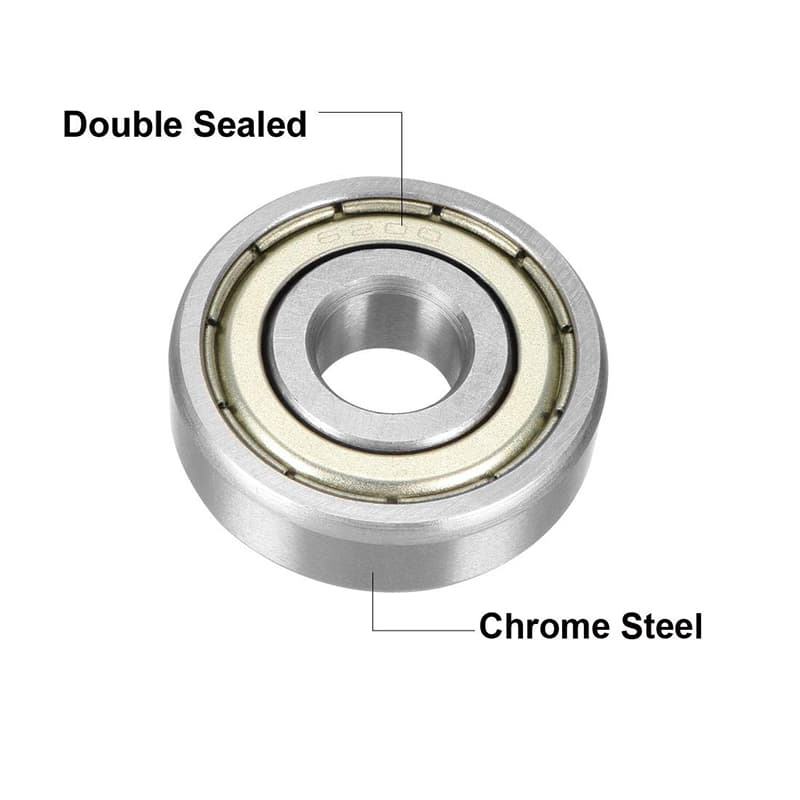
Let’s decode the number and understand its specifications.
Understanding the 6312 Bearing
| 1. Breaking Down the Number 6312: | Digit(s) | Meaning | Explanation |
|---|---|---|---|
| 6 | Bearing type | Single-row deep groove ball bearing2. | |
| 3 | Width series | "3" indicates a medium width series. | |
| 12 | Bore size code | 12 x 5 = 60mm bore. |
| 2. Standard Dimensions of a 6312 Bearing: | Dimension | Value |
|---|---|---|
| Bore (d) | 60 mm | |
| Outside diameter (D) | 130 mm | |
| Width (B) | 31 mm | |
| Dynamic load rating (C) | Approximately 85 kN (varies by manufacturer) | |
| Static load rating (C0) | Approximately 52 kN (varies) |
| 3. Common Variants for Railway Applications: | Suffix | Meaning | Railway Relevance |
|---|---|---|---|
| 6312 C3 | Larger than normal internal clearance | Accommodates temperature rise in traction motors. | |
| 6312 C4 | Even larger clearance | For high-temperature applications. | |
| 6312 2RS | Rubber seals both sides | For contaminated environments (auxiliary drives). | |
| 6312 2Z | Metal shields both sides | Moderate protection, lower friction. | |
| 6312 P5 | Higher precision class | For smoother, quieter operation in traction motors. | |
| 6312 P6 | Medium precision | Good balance of precision and cost. |
| 4. Railway Applications for 6312 Bearings: | Application | Suitability | Considerations |
|---|---|---|---|
| Traction motors | Yes, with C3 clearance4 and P5/P6 precision | Must handle motor speeds and temperatures. | |
| Cooling fans | Yes, with 2RS seals | Sealed version protects against dust. | |
| Auxiliary drives | Yes | Standard or C3 depending on temperature. | |
| Door systems | May be oversized | Smaller bearings usually used. | |
| Axlebox | No | Loads too high, need roller bearings. |
| 5. Comparing 6312 to Other Sizes: | Bearing | Bore | OD | Width | Typical Application |
|---|---|---|---|---|---|
| 6208 | 40 mm | 80 mm | 18 mm | Smaller motors, fans | |
| 6308 | 40 mm | 90 mm | 23 mm | Higher load than 6208 | |
| 6310 | 50 mm | 110 mm | 27 mm | Medium motors | |
| 6312 | 60 mm | 130 mm | 31 mm | Larger motors, traction motors | |
| 6314 | 70 mm | 150 mm | 35 mm | Heavy-duty applications |
My Insight on 6312 Bearings:
The 6312 is a workhorse bearing in railway auxiliary applications. Its size makes it suitable for traction motors on smaller trains or as auxiliary drives on larger ones. When a customer asks for a 6312, I always ask: "Open, shielded, or sealed? What clearance? What precision?" A 6312 C3 P5 2RS5 is a very different product from a basic 6312. For a distributor like Rajesh, stocking the common variants of popular sizes like 6312 allows him to serve railway customers with the exact specifications they need. Understanding the bearing number is just the start; knowing the suffixes is what delivers the right product.
What are the disadvantages of deep groove ball bearings?
You’re considering deep groove ball bearings for a railway application. They have many advantages, but what are their limitations? Understanding disadvantages ensures you don’t use them where they don’t belong.
The main disadvantages of deep groove ball bearings for railway applications are: limited axial load capacity1 (compared to tapered or angular contact bearings), sensitivity to misalignment2 (cannot accommodate shaft deflection), limited radial load capacity3 (compared to roller bearings of same size), potential for skidding under light loads at high speed4, susceptibility to contamination5 without effective seals, and limited ability to handle shock loads6. These limitations mean they are not suitable for axlebox positions or heavily loaded gearboxes.
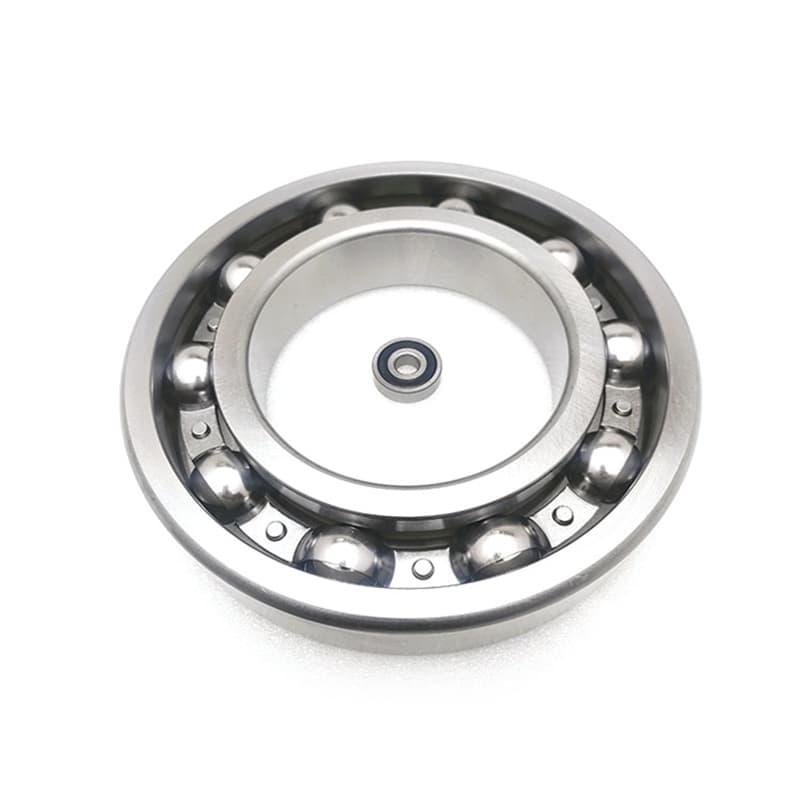
Knowing these limits is essential for safe, reliable railway applications.
Detailed Look at Deep Groove Limitations in Railway
| 1. Limited Axial Load Capacity: | Limitation | Railway Context | Alternative |
|---|---|---|---|
| Can handle only moderate axial loads | Axleboxes experience high axial loads from cornering. | Tapered roller bearings | |
| Bidirectional but limited | Traction motors have moderate thrust; deep groove may suffice. | Within limits for motors |
| 2. Sensitivity to Misalignment: | Limitation | Railway Context | Alternative |
|---|---|---|---|
| Very limited tolerance (2-4 arc-minutes) | Railway axles can deflect under load. | Spherical roller bearings or self-aligning designs | |
| Edge loading causes premature failure | Critical for axlebox applications. | Not used in axleboxes |
| 3. Limited Radial Load Capacity: | Limitation | Railway Context | Alternative |
|---|---|---|---|
| Point contact limits radial capacity | Axlebox loads are very high. | Cylindrical or tapered roller bearings | |
| Larger bearing needed for same load | May not fit in available space. | Roller bearings more compact for given capacity |
| 4. Skidding Under Light Loads at High Speed: | Limitation | Railway Context | Mitigation |
|---|---|---|---|
| Balls may slide instead of roll | Traction motors can experience light loads at high speed. | Use light preload, select appropriate internal design | |
| Causes smearing, wear | Can reduce bearing life. | Ensure minimum load is maintained |
| 5. Contamination Susceptibility: | Limitation | Railway Context | Mitigation |
|---|---|---|---|
| Without seals, vulnerable to dirt | Railway environment has dust, moisture. | Use sealed (2RS) versions | |
| Seals add friction | Trade-off between protection and efficiency. | Select seal type based on application |
| 6. Limited Shock Load Capacity: | Limitation | Railway Context | Alternative |
|---|---|---|---|
| Balls can dent raceways under impact | Track joints, switches create shock. | Roller bearings handle shock better | |
| Brinelling leads to noise, vibration, failure | Not suitable for directly impacted positions. | Use in protected locations (motors, not wheels) |
| 7. Temperature Sensitivity: | Limitation | Railway Context | Mitigation |
|---|---|---|---|
| Clearance must be carefully selected | Wide temperature variations in railways. | Use C3 or C4 clearance | |
| Grease selection critical | Must operate in all climates. | Specify wide-temperature-range greases |
Disadvantage Summary for Railway Applications:
| Disadvantage | Where It Matters | Is Deep Groove Still Suitable? |
|---|---|---|
| Limited axial capacity | Axleboxes | No |
| Misalignment sensitivity | Axleboxes, long shafts | No |
| Limited radial capacity | Axleboxes, gearboxes | No (for high loads) |
| Skidding risk | High-speed, lightly loaded motors | Yes, with proper design |
| Contamination susceptibility | All applications | Yes, with seals |
| Shock load sensitivity | Wheel-adjacent positions | No |
| Temperature sensitivity | All applications | Yes, with C3/C4 and special grease |
My Insight on Railway Disadvantages:
The key to using deep groove bearings7 successfully in railways is knowing their limits. Use them in traction motors, fans, and auxiliary drives—they excel there. Don’t use them in axleboxes or heavily loaded gearboxes—they will fail. For a distributor like Rajesh, this knowledge is power. When a railway customer asks for a bearing for a critical position, he can ask the right questions and recommend the appropriate type. That expertise prevents failures, ensures safety, and builds long-term trust.
Conclusion
Deep groove ball bearings play a vital role in railway and metro applications, particularly in traction motors, auxiliary drives, and support systems. Understanding their applications, limitations, and specifications—such as the 6312 bearing’s characteristics—ensures proper selection. While they are not suitable for axlebox positions, their versatility, reliability, and availability make them essential components throughout railway rolling stock. With careful attention to precision, clearance, sealing, and lubrication, deep groove bearings contribute to safe, efficient railway operations.
-
Understanding this limitation helps in selecting the right bearing for high axial load applications. ↩ ↩ ↩ ↩ ↩ ↩ ↩ ↩
-
Exploring this can prevent premature failures in applications where alignment is critical. ↩ ↩ ↩ ↩ ↩ ↩ ↩ ↩
-
This knowledge is crucial for ensuring the right bearing is used in high-load scenarios. ↩ ↩ ↩ ↩ ↩ ↩ ↩ ↩ ↩
-
Understanding skidding can help in designing systems that maintain bearing life. ↩ ↩ ↩ ↩ ↩
-
Learning about contamination risks can guide the selection of appropriate seals for protection. ↩ ↩ ↩ ↩ ↩ ↩
-
This insight is vital for applications exposed to impacts, ensuring reliability. ↩ ↩ ↩ ↩
-
A comprehensive overview can help in making informed decisions for bearing applications. ↩ ↩
-
Explore the precision classes outlined in ISO 492 and their relevance to railway bearings. ↩