
You’ve found a supplier for deep groove ball bearings. The quality looks good. The price is competitive. But then you see the MOQ: 1000 pieces per size. Your first order is only 200. The negotiation begins. How do you get terms that work for your business?
To negotiate MOQ, lead time, and payment terms for deep groove ball bearings, understand the supplier’s perspective: MOQs cover setup costs, lead times depend on production schedules and raw material availability, and payment terms reflect risk. Build a relationship, start with a trial order at slightly higher pricing, offer to combine sizes toward a container load, accept longer lead times for better payment terms, and demonstrate your reliability as a buyer. Flexibility on your part earns flexibility from the supplier.
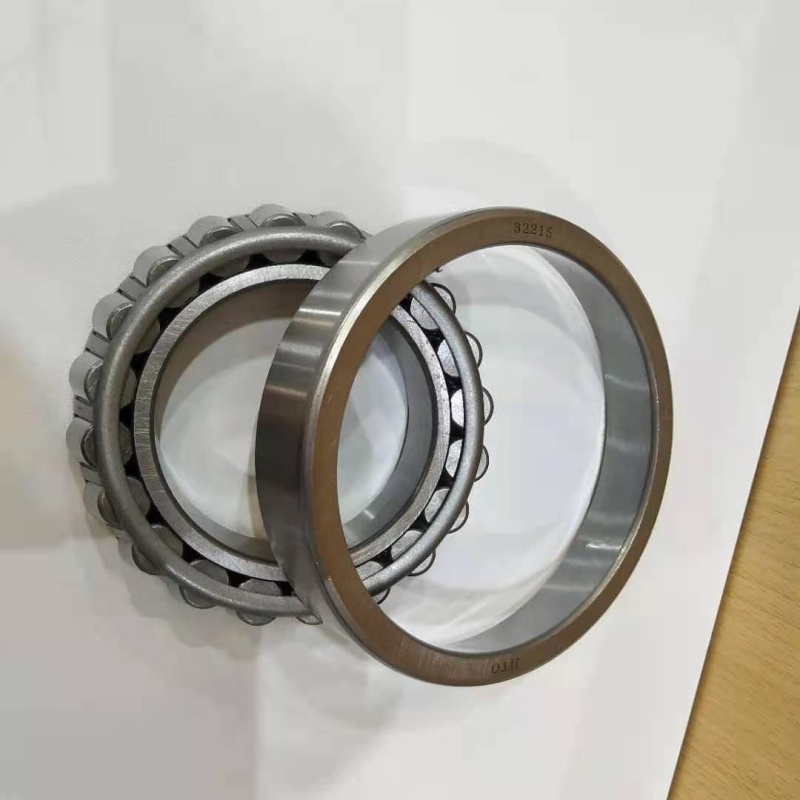
In my years of exporting bearings to distributors worldwide, I’ve sat on both sides of these negotiations. For a client like Rajesh in India, getting favorable terms is essential for his business model. Let’s explore the specifications of deep groove ball bearings, their axial load capacity, how angular contact bearings differ, and the contact angle—all knowledge that helps you negotiate from a position of strength.
What are the specifications of a deep groove ball bearing?
You’re ordering deep groove ball bearings. The supplier asks for specifications. What do you need to provide? A complete specification ensures you get exactly what you need.
The key specifications of a deep groove ball bearing include: dimensions1 (bore diameter d, outside diameter D, width B), bearing series2 (e.g., 62, 63, 64), internal clearance3 (C2, CN, C3, C4), precision class4 (P0, P6, P5), cage type and material5 (pressed steel, machined brass, polyamide), seals or shields6 (open, 2Z, 2RS), lubrication7 (type and quantity of grease), special features8 (snap ring groove, W33 lubrication7 holes), and quality standards (ISO, ABEC). Knowing these specifications allows you to communicate clearly and negotiate effectively.
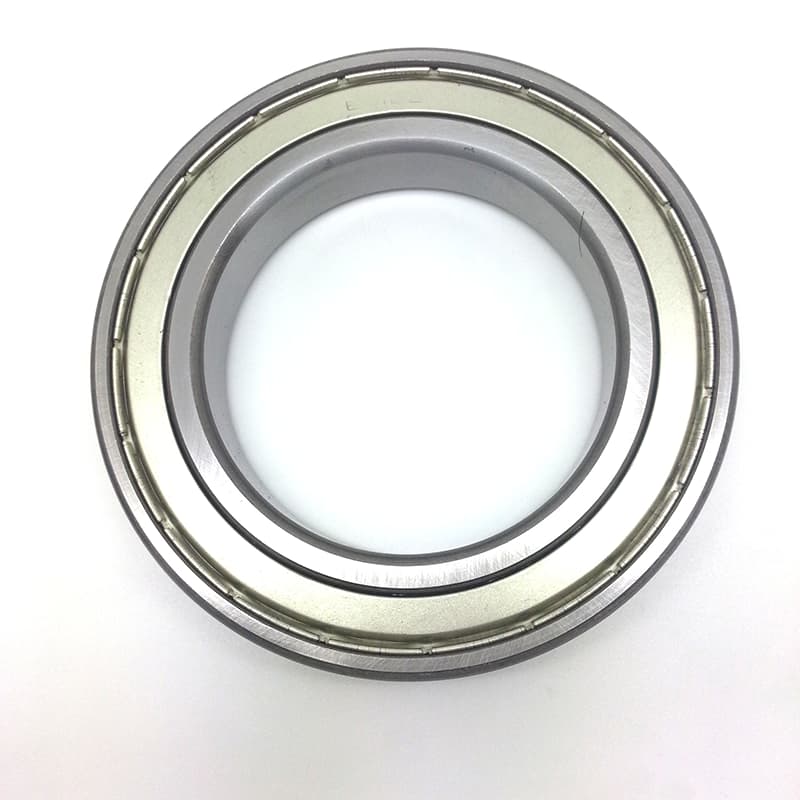
Let’s break down each specification.
Detailed Specification Guide for Deep Groove Ball Bearings
| 1. Dimensions: | Dimension | Description | How to Specify |
|---|---|---|---|
| Bore diameter (d) | The inner diameter that fits on the shaft. | In millimeters. For example, 6208 has 40mm bore. | |
| Outside diameter (D) | The outer diameter that fits in the housing. | In millimeters. | |
| Width (B) | The overall width of the bearing. | In millimeters. |
| 2. Bearing Series: | Series | Characteristics | Typical Applications |
|---|---|---|---|
| 62 series | Light/medium, most common | Electric motors, pumps, general machinery | |
| 63 series | Medium, higher load capacity | Gearboxes, heavy machinery | |
| 64 series | Heavy, highest load capacity | Crushers, heavy industrial | |
| 60 series | Thin section, compact | Space-limited applications | |
| 618, 619 series | Extra thin | Special applications |
| 3. Internal Clearance: | Code | Meaning | Application |
|---|---|---|---|
| C2 | Smaller than normal | Minimal temperature rise | |
| CN | Normal (standard) | General applications | |
| C3 | Larger than normal | Motors, pumps with temperature rise | |
| C4 | Larger than C3 | High temperature, paper machines | |
| C5 | Largest | Special high-temperature |
| 4. Precision Class: | Class | Equivalent | Tolerance Level | Application |
|---|---|---|---|---|
| P0 | ABEC 1 | Standard | General industrial | |
| P6 | ABEC 3 | Higher | Electric motors, machine tools | |
| P5 | ABEC 5 | High | Precision spindles, high-speed | |
| P4 | ABEC 7 | Very high | Ultra-precision machine tools |
| 5. Cage Type and Material: | Cage | Material | Characteristics | Application |
|---|---|---|---|---|
| Pressed steel | Steel sheet | Economical, strong | General purpose | |
| Machined brass | Brass | Strong, low friction | Heavy duty, high speed | |
| Polyamide | Glass-fiber reinforced nylon | Light, quiet, corrosion-resistant | Electric motors, appliances | |
| Stamped brass | Brass sheet | Good balance | General industrial |
| 6. Seals and Shields: | Designation | Type | Protection | Friction |
|---|---|---|---|---|
| Open | No closure | None | Lowest | |
| 2Z | Metal shields both sides | Moderate | Low | |
| 2RS | Rubber seals both sides | High | Moderate | |
| 2RSH | Heavy-duty rubber seals | Very high | Moderate-high |
| 7. Lubrication: | Aspect | Options |
|---|---|---|
| Grease type | Lithium-based, synthetic, high-temperature, food-grade | |
| Grease quantity | Standard fill (30-40% of free space), or special fill | |
| For oil lubrication7 | Specify oil holes/grooves (e.g., W33) |
| 8. Special Features: | Feature | Designation | Purpose |
|---|---|---|---|
| Snap ring groove | N | For axial location in housing | |
| Lubrication groove/holes | W33 | For oil lubrication7 | |
| Tapered bore | K | For mounting on tapered shafts |
My Insight on Specifications:
When a customer sends us a vague inquiry like "I need 6208 bearings," we always ask follow-up questions. "Open or sealed? What clearance? Any special requirements?" The answers prevent costly mistakes. For a distributor like Rajesh, understanding specifications helps him order correctly and advise his customers. A complete specification on the purchase order ensures everyone is on the same page. When negotiating MOQ and lead time, clear specifications also help the supplier plan production efficiently.
How much axial load can a deep groove ball bearing take?
You’re designing a shaft with some thrust load. You want to use deep groove ball bearings because they’re simple and cost-effective. But can they handle the axial force? Understanding their axial load capacity1 is essential.
A deep groove ball bearing can take axial loads, but its capacity is limited. Generally, the permissible axial load is about 25% to 50% of its static radial load rating (C0)2 for occasional loads, and about 10% of its dynamic radial load rating (C)3 for continuous operation. Exceeding these limits causes excessive skidding and wear, leading to rapid failure. For pure axial loads or significant thrust, angular contact bearings4 are a better choice.
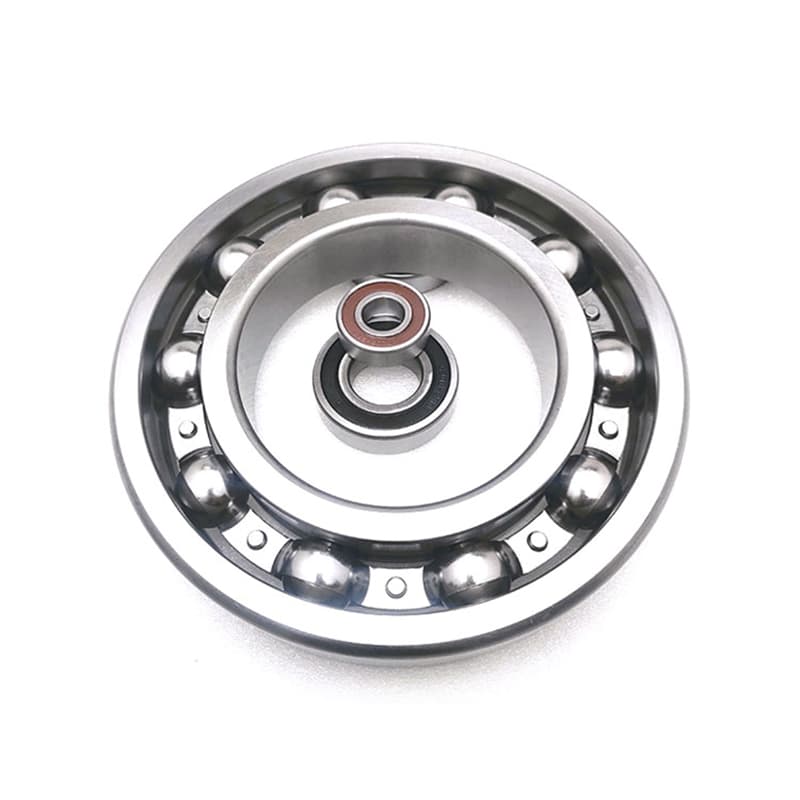
This is a crucial design constraint.
Understanding Axial Load Limits
| 1. The Governing Factors: | Factor | Effect on Axial Capacity |
|---|---|---|
| Bearing size | Larger bearings have higher absolute axial capacity. | |
| Bearing series | 63 series has higher capacity than 62 series for same bore. | |
| Radial load present | A moderate radial load helps keep balls positioned. | |
| Speed | High speed reduces permissible axial load. | |
| Internal clearance | C3 clearance may slightly reduce axial capacity. |
| 2. Practical Guidelines: | Load Type | Maximum Recommended Axial Load |
|---|---|---|
| Occasional or light axial loads | Up to 50% of static radial load rating (C0)2 | |
| Continuous axial load during operation | Up to 10% of dynamic radial load rating (C)3 | |
| Pure axial load (no radial load) | Up to 25% of C0, but expect reduced life |
3. Example Calculation:
For a 6208 bearing with:
- C0 (static load rating) = 19 kN
- C (dynamic load rating) = 36 kN
| Load Scenario | Maximum Axial Load |
|---|---|
| Occasional axial | 0.5 × 19 = 9.5 kN |
| Continuous axial (with radial) | 0.1 × 36 = 3.6 kN |
| Pure axial | 0.25 × 19 = 4.75 kN (but not recommended for continuous use) |
| 4. Effects of Exceeding Limits: | Problem | Cause | Consequence |
|---|---|---|---|
| Skidding | Balls slide instead of roll | Wear, heat, premature failure | |
| Edge loading | Balls contact raceway edges | Stress concentration, fatigue | |
| Cage damage | Excessive forces on cage | Cage fracture, bearing lock-up | |
| Heat generation | Increased friction | Lubricant breakdown, seizure |
| 5. When to Choose a Different Bearing Type: | Axial Load Condition | Recommended Bearing |
|---|---|---|
| Moderate axial, continuous | Deep groove ball bearing (within limits) | |
| High axial, one direction | Angular contact ball bearing | |
| High axial, both directions | Paired angular contact or tapered roller | |
| Very high axial, low speed | Thrust bearing |
| 6. Deep Groove vs. Angular Contact: | Aspect | Deep Groove Ball Bearing | Angular Contact Ball Bearing |
|---|---|---|---|
| Axial capacity | Moderate, both directions | High, one direction (per bearing) | |
| Contact angle | ~0° (nominal) | 15°, 25°, 30°, 40° | |
| Speed capability | Excellent | Excellent | |
| Cost | Lower | Higher |
My Insight on Axial Load:
A common mistake is using deep groove ball bearings where axial loads are significant. The bearing may seem to work at first, but it fails prematurely. In one case, a customer was using 6208 bearings in a small gearbox with helical gears. The bearings failed every few months. We calculated the axial load and found it exceeded the continuous rating. Switching to angular contact bearings4 solved the problem. For a distributor like Rajesh, understanding these limits helps him recommend the right bearing. When a customer describes an application with thrust, he can ask, "How much axial load?" If it’s significant, he knows deep groove may not be enough.
Can angular contact bearing take thrust as well as radial loads?
You have an application with both radial and axial loads. Deep groove ball bearings have limited axial capacity. Tapered roller bearings work but have higher friction. Is there a middle ground? Angular contact ball bearings might be the answer.
Yes, angular contact ball bearings1 are specifically designed to take both thrust (axial) and radial loads2 simultaneously. Their raceways are offset relative to each other, creating a contact angle3 that allows them to support significant axial loads in one direction. They are available in various contact angle3s (15°, 25°, 30°, 40°) with higher angles providing greater axial capacity. For bidirectional thrust, they must be used in pairs (back-to-back or face-to-face arrangements).
Angular contact bearings are the precision choice for combined loads at high speed4s.
Understanding Angular Contact Ball Bearings
| 1. Design Principle: | Feature | Description | Benefit |
|---|---|---|---|
| Offset raceways | Inner and outer ring raceways are offset, creating a contact angle3. | Allows transmission of axial forces. | |
| Contact angle (α) | Angle between line of force and radial plane. | Determines axial load capacity. | |
| One-directional | A single bearing supports axial load in only one direction. | Must be paired for bidirectional thrust. |
| 2. Contact Angle and Load Capacity: | Contact Angle | Axial Capacity | Radial Capacity | Typical Applications |
|---|---|---|---|---|
| 15° (C) | Moderate | Good | High-speed spindles, where axial loads are light. | |
| 25° (AC) | Good | Good | General purpose, moderate axial loads. | |
| 30° (A) | High | Moderate | Machine tools, where axial loads are significant. | |
| 40° (B) | Very high | Moderate | Heavy axial loads, lower speeds. |
| 3. Angular Contact vs. Deep Groove vs. Tapered: | Aspect | Deep Groove | Angular Contact | Tapered Roller |
|---|---|---|---|---|
| Axial capacity | Moderate, both directions | High, one direction | High, one direction | |
| Radial capacity | Good | Good | Very good | |
| Speed capability | Excellent | Excellent | Moderate | |
| Friction | Low | Low | Moderate | |
| Adjustability | No | Limited (via preload) | Yes | |
| Cost | Low | Moderate | Moderate-high |
| 4. Paired Mounting for Bidirectional Thrust: | Arrangement | Description | Application |
|---|---|---|---|
| Back-to-back (DB) | Outer ring backs face outward | High rigidity, moment loads | |
| Face-to-face (DF) | Outer ring faces face inward | Less rigid, accommodates misalignment | |
| Tandem (DT) | Both face same direction | High unidirectional axial load |
| 5. Preload in Angular Contact Bearings: | Preload Type | Method | Benefit |
|---|---|---|---|
| Fixed preload | Matched bearings with built-in preload | Consistent performance | |
| Adjustable preload | By grinding spacers or using adjusting nuts | Tunable for application | |
| Spring preload | Springs apply constant force | Compensates for thermal expansion |
| 6. Applications for Angular Contact Bearings: | Application | Why Angular Contact is Used |
|---|---|---|
| Machine tool spindles | High speed, high precision, combined loads. | |
| Pumps | Handle thrust from impellers. | |
| Gearboxes | Support shafts with helical gears. | |
| Robotics | Precision positioning, combined loads. | |
| Centrifuges | High speed, axial loads. |
My Insight on Angular Contact Bearings:
For a distributor like Rajesh, angular contact bearings represent a step up in precision and capability. They are more expensive than deep groove, but they solve problems that deep groove cannot. When a customer complains of short bearing life in a pump or gearbox, the solution might be switching from deep groove to angular contact. Understanding this allows Rajesh to offer value-added solutions, not just replacements. In negotiations with suppliers, knowing when to specify angular contact helps him order the right inventory for his customers’ needs.
What is the contact angle of a deep groove ball bearing?
You hear about contact angles in bearing discussions. Angular contact bearings have specified contact angles. But what about deep groove ball bearings? Do they have a contact angle, and what is it?
A deep groove ball bearing has a nominal contact angle of 0°1 under pure radial load. However, when an axial load is applied, a contact angle develops as the balls make contact with the raceway shoulders. This effective contact angle2 is typically between 5° and 15°, depending on the internal geometry3 and the magnitude of the axial load. This is why deep groove bearings can handle moderate axial loads, but not as efficiently as angular contact bearings.
The contact angle is dynamic, not fixed.
Understanding Contact Angle in Deep Groove Bearings
| 1. Under Pure Radial Load: | Condition | Contact Angle | Explanation |
|---|---|---|---|
| No axial load | 0° (nominal) | Balls contact raceway at deepest point. |
| 2. Under Combined Load: | Condition | Contact Angle | Explanation |
|---|---|---|---|
| Axial load applied | Develops 5° to 15° | Balls move axially, contact raceway shoulders. |
| 3. Factors Affecting Effective Contact Angle: | Factor | Effect |
|---|---|---|
| Internal clearance | Larger clearance (C3) allows more axial movement, potentially larger contact angle. | |
| Raceway curvature | Deeper grooves limit axial movement. | |
| Axial load magnitude | Higher load pushes balls further, increasing angle. | |
| Bearing size | Larger bearings may have different geometry. |
| 4. Deep Groove vs. Angular Contact: | Aspect | Deep Groove Ball Bearing | Angular Contact Ball Bearing |
|---|---|---|---|
| Contact angle | Variable (0° to ~15°) | Fixed (15°, 25°, 30°, 40°) | |
| Axial capacity | Moderate, limited by variable angle | High, optimized for fixed angle | |
| Speed capability | Excellent | Excellent | |
| Heat generation | Low | Low | |
| Bidirectional axial | Yes (both directions) | No (one direction per bearing) |
| 5. Why Contact Angle Matters: | Aspect | Importance |
|---|---|---|
| Load distribution | Angle determines how load splits between radial and axial components. | |
| Stiffness | Higher angle gives higher axial stiffness. | |
| Speed limit | Higher angles can affect lubricant flow and heat generation. | |
| Bearing selection | Knowing the effective angle helps in calculating equivalent load. |
6. Calculating Equivalent Load:
For deep groove bearings under combined load, the equivalent dynamic load P4 is calculated as:
P = X·Fr + Y·Fa
Where X and Y are factors that depend on the bearing’s geometry and the load ratio. The Y factor (axial load factor) is directly related to the effective contact angle2.
| Load Ratio (Fa/Fr) | Y Factor (approximate) | Effective Contact Angle |
|---|---|---|
| Small | 2-3 | Small (~5°) |
| Moderate | 1.5-2 | Moderate (~10°) |
| Large | 1-1.5 | Large (~15°) |
My Insight on Contact Angle:
When a customer asks, "Can I use a deep groove bearing for this application?" I think about the effective contact angle2. If the axial load is significant enough to create a large contact angle, the bearing may be operating outside its optimal range. The balls will be pressing against the raceway shoulders, increasing stress and reducing life. In such cases, an angular contact bearing with a fixed, optimized angle is a better choice. For a distributor like Rajesh, understanding this nuance helps him have deeper technical conversations with customers. It’s the difference between selling a part and providing engineering insight.
Conclusion
Negotiating MOQ, lead time, and payment terms requires understanding both your needs and the supplier’s constraints. Knowledge of bearing specifications—dimensions, clearance, precision, seals—helps you communicate clearly. Understanding axial load capacity, the role of angular contact bearings, and contact angles positions you as an informed buyer. With this knowledge, you can negotiate from strength and build partnerships that benefit both sides.
-
Understanding the nominal contact angle is crucial for selecting the right bearing for specific applications. ↩ ↩ ↩ ↩
-
Exploring the effective contact angle helps in understanding load distribution and bearing performance. ↩ ↩ ↩ ↩ ↩ ↩ ↩
-
The internal geometry significantly affects bearing performance and load capacity, making it essential to know. ↩ ↩ ↩ ↩ ↩ ↩ ↩
-
Calculating equivalent dynamic load is vital for ensuring the longevity and efficiency of bearings in applications. ↩ ↩ ↩ ↩ ↩
-
Different cage types and materials affect performance; knowing them helps in selecting the right bearing for your application. ↩
-
Choosing the right seals or shields is vital for protecting bearings from contaminants and ensuring longevity. ↩
-
Proper lubrication is key to bearing performance; understanding options helps in maintaining optimal operation. ↩ ↩ ↩ ↩
-
Special features can enhance functionality; knowing them allows for better customization to meet specific needs. ↩