
Your warehouse is full of bearings, but customers always ask for sizes you don’t have. Or worse, you have stock that sits for years, tying up capital. Stock planning for deep groove ball bearings is a balancing act between availability and cost.
For distributors and wholesalers, effective deep groove ball bearing stock planning requires analyzing historical sales data, understanding local market demand, prioritizing common sizes (62xx and 63xx series), stocking variants by seal type (open, 2Z, 2RS) and clearance (C3, CN), establishing reorder points based on lead times, and using ABC analysis to focus on high-turnover items. A well-planned inventory meets customer needs while minimizing capital tied up in slow-moving stock.
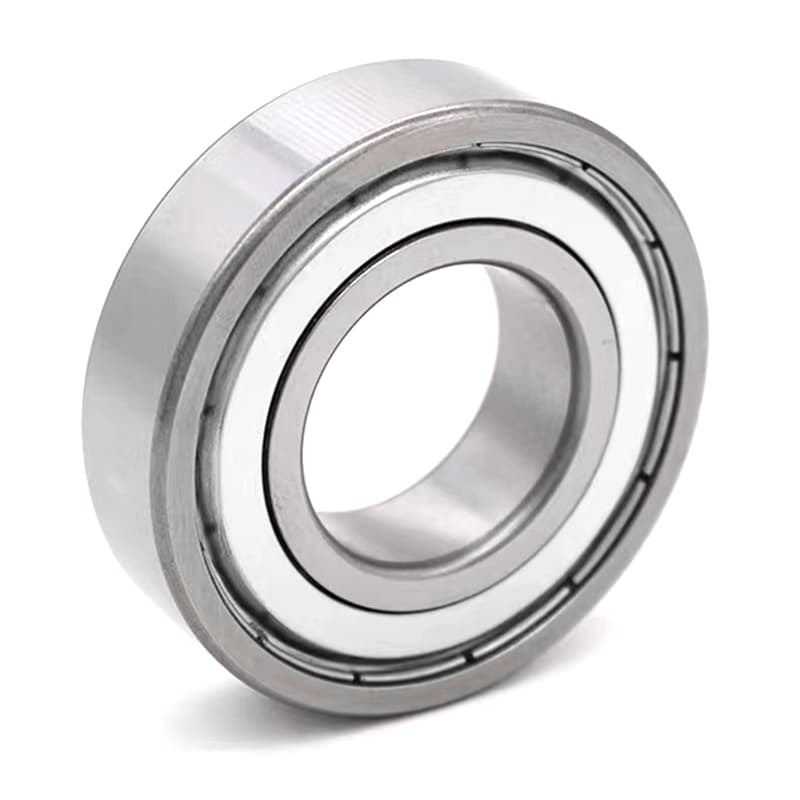
In my years of working with distributors worldwide, I’ve seen that successful inventory management is not about having everything. It’s about having the right things. For a client like Rajesh in India, deep groove ball bearings are the backbone of his business, serving countless applications. Let’s explore what a deep groove is, how it differs from "normal" bearings, the use of UCF bearings, and the advantages of deep groove ball bearings—all essential knowledge for smart stock planning.
What is a deep groove1 in a ball bearing?
You hear the term "deep groove1" constantly in bearing discussions. But what does it actually mean? Understanding this fundamental concept helps you appreciate why these bearings are so versatile.
The "deep groove1" in a ball bearing refers to the raceways2 on the inner and outer rings. These raceways2 are deep, continuous arcs that closely conform to the shape of the balls. This deep, conforming groove allows the bearing to support significant radial loads3 and also accommodate moderate axial loads4 from either direction. The depth of the groove is what distinguishes this bearing type from others with shallower raceways2.
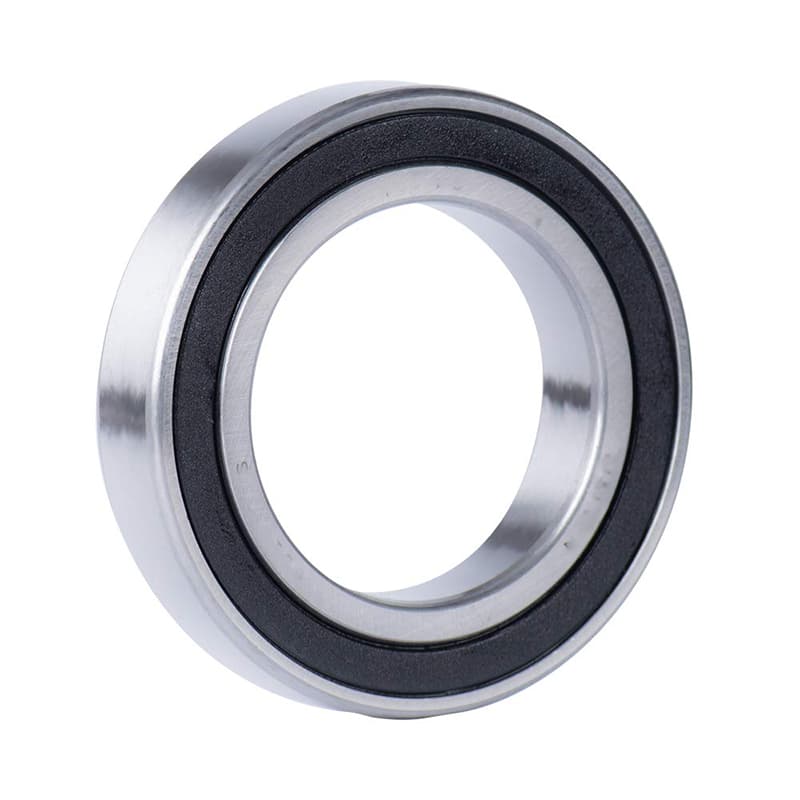
The groove depth is not arbitrary. It’s a carefully engineered feature.
The Engineering Significance of the Deep Groove
| 1. Raceway Geometry: | Feature | Description | Benefit |
|---|---|---|---|
| Deep arcs | Raceways are cut deep into the rings, creating substantial shoulders. | Provides secure ball guidance and axial load capacity. | |
| Close conformity | The groove radius is slightly larger than the ball radius, creating a close fit. | Distributes load over a larger contact area, reducing stress. | |
| Continuous path | The groove runs uninterrupted around the entire circumference. | Ensures smooth, consistent rolling. |
| 2. How Deep Groove Enables Load Handling: | Load Type | How the Deep Groove Helps |
|---|---|---|
| Radial loads | The deep groove1 provides a long, supportive contact path for the balls, spreading the load. | |
| Axial loads (thrust) | The shoulders of the deep groove1 allow the balls to transmit force from one ring to the other without popping out. | |
| Combined loads | The deep groove1 guides the balls even when forces come from multiple directions. |
| 3. Comparison with Other Raceway Designs: | Bearing Type | Raceway Depth | Axial Load Capacity |
|---|---|---|---|
| Deep groove ball bearing | Deep | Moderate, both directions | |
| Angular contact ball bearing | Asymmetric, one high shoulder | High, one direction | |
| Self-aligning ball bearing | Outer raceway spherical | Low | |
| Cylindrical roller bearing | Flat or slightly profiled | None (or very limited) |
| 4. Why "Deep" Matters for Performance: | Performance Aspect | Contribution of Deep Groove |
|---|---|---|
| Smooth rotation | The deep, continuous groove guides balls smoothly. | |
| Quiet operation | Close conformity reduces vibration and noise. | |
| Versatility | Enables the bearing to handle multiple load types. | |
| Speed capability | The groove design allows high-speed operation. |
| 5. Manufacturing Precision: The deep groove1s are not simply cut; they are precision-ground and honed to achieve: |
Feature | Benefit |
|---|---|---|
| Accurate geometry | Consistent load distribution. | |
| Fine surface finish | Low friction, quiet operation. | |
| Tight tolerances | Interchangeability and predictable performance. |
My Insight on the Deep Groove:
When I explain deep groove1 bearings to new distributors, I use a simple analogy: think of a ball in a shallow dish versus a ball in a deep bowl. The shallow dish can’t hold the ball if you tilt it. The deep bowl can. That’s the difference the deep groove1 makes. It gives the bearing the ability to handle forces from the side (axial) as well as from above (radial). For a distributor like Rajesh, understanding this helps him explain to customers why deep groove1 bearings are so versatile and why they are the right choice for so many applications.
What is the difference between a deep groove ball bearing1 and a normal ball bearing2?
Customers often ask for "normal" bearings. Suppliers talk about "deep groove" bearings. Is there a difference? This terminology can be confusing, especially for new buyers.
In common usage, there is no difference between a "deep groove ball bearing1" and a "normal ball bearing2." The term "deep groove" is the technical name for the standard, most common type of ball bearing (Type 6, e.g., 6200 series). When people say "normal ball bearing2," they almost always mean a deep groove ball bearing1. The "deep groove" distinguishes it from other ball bearing types3 like angular contact or self-aligning bearings.
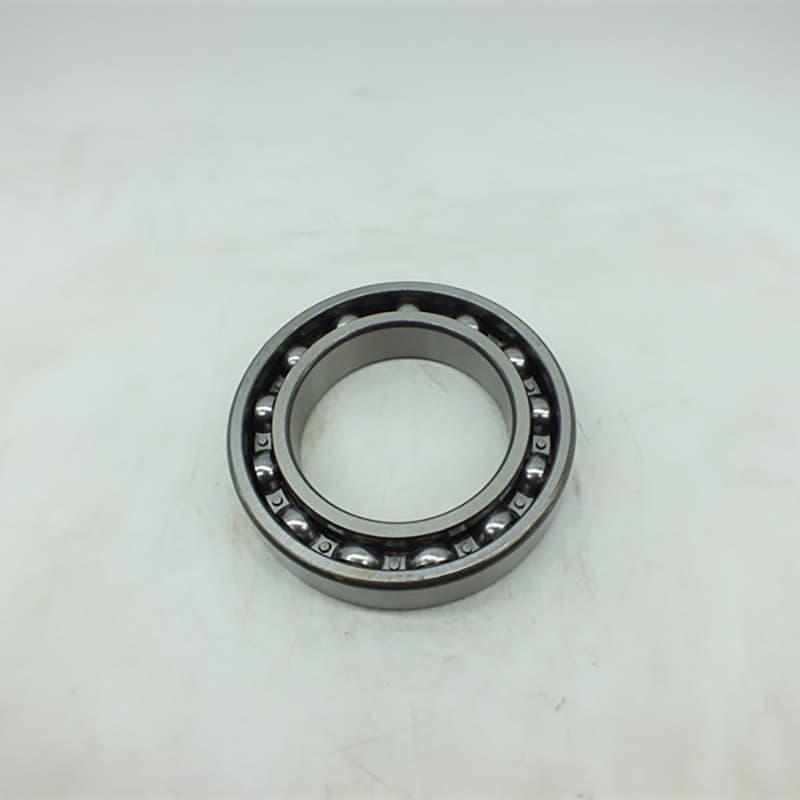
Let’s clarify this once and for all.
Understanding Bearing Terminology
| 1. What "Normal" Usually Means: | Term | Actual Meaning |
|---|---|---|
| "Normal ball bearing" | In everyday conversation, this means a standard deep groove ball bearing1. | |
| "Standard bearing" | Same as above. | |
| "Regular bearing" | Same as above. |
| 2. The Technical Classification: | Bearing Type | ISO Type Code | Common Name |
|---|---|---|---|
| Deep groove ball bearing | 6 | The standard ball bearing | |
| Angular contact ball bearing | 7 | For combined loads, high axial capacity | |
| Self-aligning ball bearing | 1 | For misalignment applications4 | |
| Thrust ball bearing | 5 | For pure axial loads |
3. Why "Deep Groove" is the Correct Term:
The term "deep groove" is not a special feature; it’s the defining characteristic of this bearing type. All bearings of this type have deep grooves. So saying "deep groove ball bearing1" is like saying "four-door sedan"—it’s the specific name for a common category.
| 4. Common Misconceptions: | Misconception | Reality |
|---|---|---|
| "Deep groove bearings are special, I need normal ones." | Deep groove bearings ARE the normal ones. | |
| "Normal bearings are cheaper than deep groove." | They are the same product. | |
| "I need a bearing without the deep groove." | That would be a different bearing type (angular contact, etc.). |
| 5. How to Avoid Confusion: | Situation | Best Practice |
|---|---|---|
| When ordering | Use the full technical name or bearing number5. "Deep groove ball bearing 6208" is clear. | |
| When a customer says "normal" | Confirm: "Do you mean a standard deep groove ball bearing1, like a 6200 series?" | |
| In catalogs | Look for "Deep Groove Ball Bearings" as the category. |
| 6. The Bottom Line: | If you want… | Order… |
|---|---|---|
| The most common ball bearing | Deep groove ball bearing (Type 6) | |
| A bearing for high axial loads | Angular contact ball bearing (Type 7) | |
| A bearing that handles misalignment | Self-aligning ball bearing (Type 1) |
My Insight on Terminology:
In our daily business, we use "deep groove ball bearing1" in all our catalogs and communications. But when a customer says "normal bearing," we know what they mean. The key is to confirm. A simple question: "You mean a 6200 series deep groove ball bearing1?" ensures we’re on the same page. For a distributor like Rajesh, understanding this terminology helps him translate customer requests into accurate orders. It also helps him educate customers who may be confused. "Deep groove" is not a special feature; it’s the standard. Knowing that builds confidence in product knowledge.
What is the use of UCF bearing1?
In your stock planning, you’ll encounter mounted unit2s as well as bare bearings. UCF bearing1s appear in many industrial applications. What are they, and should you stock them?
A UCF bearing1 is a mounted unit2 consisting of a bearing insert (usually a deep groove ball bearing with a spherical outer diameter) housed in a 4-bolt square flange3 housing. The "U" stands for unit, "C" for the bearing insert type (with spherical OD), and "F" for flanged housing. UCF bearing1s are used in applications where the bearing must be mounted against a vertical or horizontal surface, such as in conveyor systems, fans, agricultural machinery, and material handling equipment. They simplify installation and provide self-alignment4 capability.
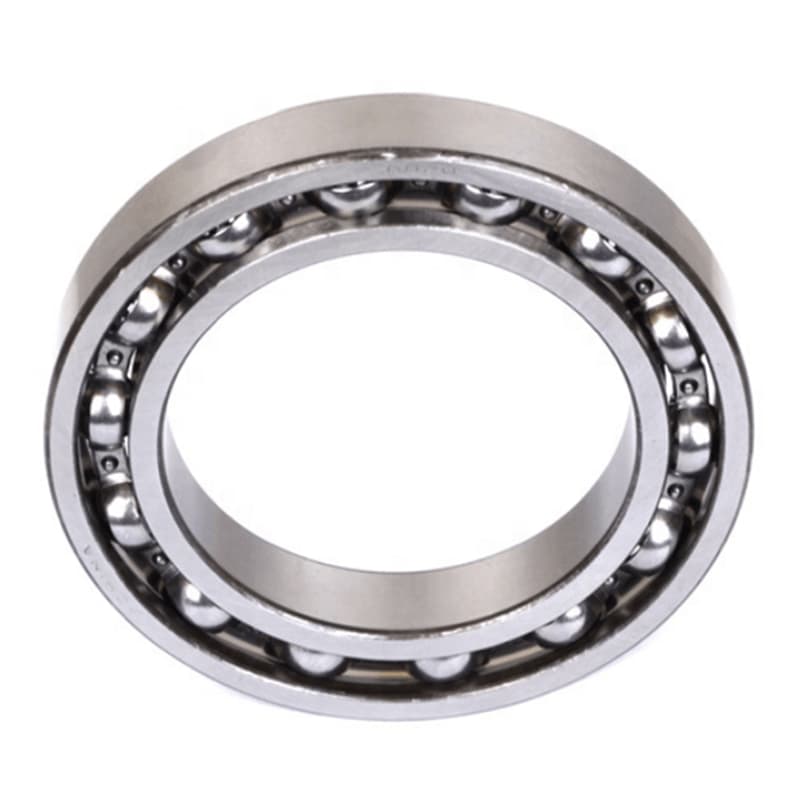
These mounted unit2s are essential for many industrial applications.
UCF Bearings: A Stocking Consideration for Distributors
| 1. Understanding the UCF Designation: | Code | Meaning | Explanation |
|---|---|---|---|
| U | Unit | Complete mounted bearing unit. | |
| C | Insert type | Bearing insert with spherical outer diameter (allows self-alignment4). | |
| F | Flanged | 4-bolt square flange3 housing. | |
| Number | Shaft size code | e.g., UCF 208 fits a 40mm shaft (08 x 5 = 40). |
| 2. Key Features of UCF Bearings: | Feature | Benefit |
|---|---|---|
| Self-alignment | The spherical OD of the insert allows slight misalignment, compensating for mounting imperfections. | |
| Easy mounting | Bolt directly to a surface; no need to machine a separate housing. | |
| Sealed design | Typically supplied with seals, protecting the bearing from dust and moisture. | |
| Relubrication option | Many have grease fittings for maintenance. | |
| Interchangeability | Standardized dimensions ensure easy replacement. |
| 3. Common Applications for UCF Bearings: | Industry | Application | Why UCF is Used |
|---|---|---|---|
| Material handling | Conveyor pulleys, idler rollers | Easy mounting on conveyor frames. | |
| Agriculture | Augers, balers, conveyors | Sealed design withstands dirt. | |
| Food processing | Packaging equipment, conveyors | Easy to clean, stainless options available. | |
| HVAC | Fans, blowers | Mounts directly on fan housings. | |
| Textile machinery | Various rotating shafts | Compact, reliable. |
| 4. UCF vs. Other Mounted Units: | Type | Housing Style | Typical Application |
|---|---|---|---|
| UCP | 2-bolt pillow block | Base mounting on flat surfaces. | |
| UCF | 4-bolt square flange3 | Mounting against vertical surfaces or machine frames. | |
| UCFL | 4-bolt oval flange | Where space is limited. | |
| UCT | 4-bolt round flange (take-up) | Conveyor take-up frames. |
| 5. Stock Planning for UCF Bearings: | Consideration | Recommendation |
|---|---|---|
| Common sizes | UCF 204, 205, 206, 207, 208 are high-volume items. | |
| Seal type | Most applications use contact seals (equivalent to 2RS). | |
| Insert bearing | The insert is a deep groove ball bearing with spherical OD. Stocking the insert separately can be useful for repairs. | |
| Housing material | Cast iron is standard; stainless steel for food/pharma. |
| 6. Advantages of Stocking UCF Bearings: | Advantage | Business Benefit |
|---|---|---|
| Complete solution | Customers get a ready-to-mount unit, not just a bearing. | |
| Higher margin | Mounted units often have better margins than bare bearings. | |
| Customer convenience | Simplifies their maintenance and repair. | |
| Repeat business | Standard sizes are frequently replaced. |
My Insight on UCF Bearings:
For a distributor like Rajesh, stocking UCF bearing1s complements his deep groove ball bearing inventory. When a customer needs a replacement for a conveyor pulley, they often need a complete unit, not just a bare bearing. Having UCF bearing1s in stock means he can say, "Yes, I have it ready to go." That’s a competitive advantage. In our factory, we produce UCF bearing1s alongside deep groove bearings, ensuring consistent quality across both product lines. Understanding the relationship between the insert bearing (deep groove) and the complete unit helps distributors plan inventory that meets real-world customer needs.
What are the advantages of deep groove ball bearings?
You’re deciding which bearings to stock. Deep groove ball bearings will likely be the largest part of your inventory. Why? Because their advantages make them the most widely used bearing type.
The main advantages of deep groove ball bearings are: low friction1 (point contact minimizes resistance), high-speed capability2, ability to handle both radial and moderate axial loads, compact design3, low noise and vibration4 (with precision grades), long service life5, availability in many sizes and configurations, easy mounting6, low maintenance (sealed versions), and cost-effectiveness7. These qualities make them suitable for countless applications from small appliances to large industrial machinery.
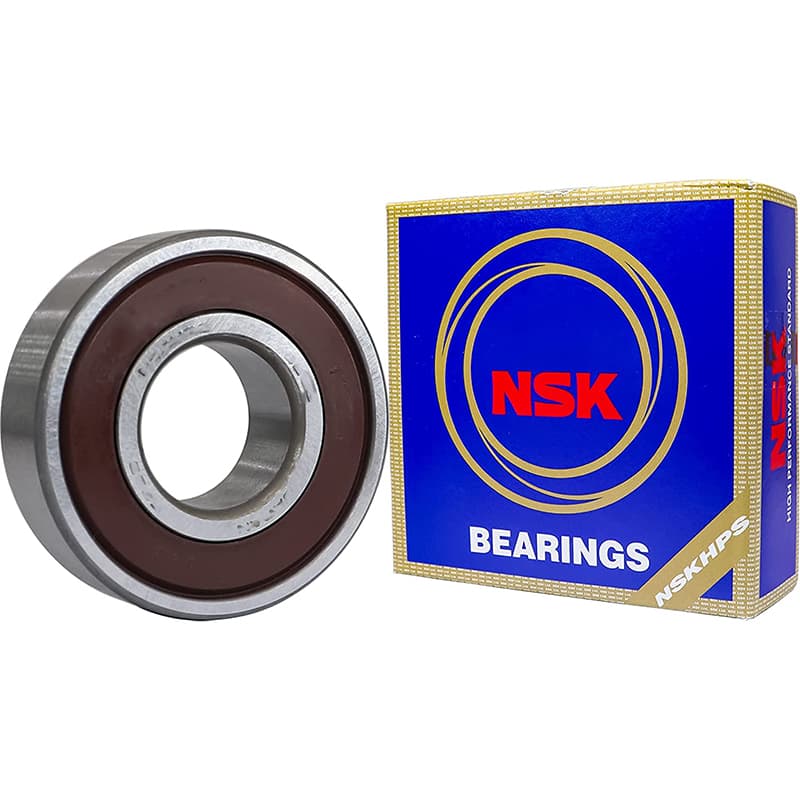
These advantages drive their popularity and, therefore, your stocking decisions.
Detailed Breakdown of Advantages
| 1. Low Friction: | Aspect | Benefit |
|---|---|---|
| Point contact | Minimal rolling resistance, energy efficiency. | |
| Low heat generation | Runs cooler, extends lubricant life. | |
| Smooth operation | Ideal for high-speed applications. |
| 2. High-Speed Capability: | Aspect | Benefit |
|---|---|---|
| Design optimization | Can operate at very high RPMs. | |
| Precision grades | P5, P6 grades for even higher speeds. | |
| Applications | Electric motors, spindles, turbines. |
| 3. Combined Load Handling: | Load Type | Capability |
|---|---|---|
| Radial loads | Excellent primary capability. | |
| Axial loads | Moderate in both directions. | |
| Combined loads | Good within limits. |
| 4. Compact Design: | Aspect | Benefit |
|---|---|---|
| Small cross-section | Fits in tight spaces. | |
| Light weight | Reduces overall machine weight. | |
| Design flexibility | Simplifies machine design. |
| 5. Low Noise and Vibration: | Aspect | Benefit |
|---|---|---|
| Precision manufacturing | Smooth, quiet operation. | |
| Noise grades | Z1, Z2, Z3 available for quiet applications. | |
| Applications | Office equipment, medical devices, fans. |
| 6. Long Service Life: | Aspect | Benefit |
|---|---|---|
| Quality materials | High-grade steel, heat treatment. | |
| Proper lubrication | Sealed versions maintain lubrication. | |
| Predictable life | Reliable performance. |
| 7. Availability and Versatility: | Aspect | Benefit |
|---|---|---|
| Wide size range | From miniature to large industrial. | |
| Many variants | Open, shielded, sealed, with snap rings, etc. | |
| Global standard | Interchangeable worldwide. |
| 8. Easy Mounting: | Aspect | Benefit |
|---|---|---|
| Simple installation | Press onto shaft, into housing. | |
| No adjustment needed | Unlike tapered roller bearings. | |
| Sealed versions | No need for external seals. |
| 9. Low Maintenance: | Aspect | Benefit |
|---|---|---|
| Sealed for life | 2RS bearings need no relubrication. | |
| Minimal attention | Set and forget for many applications. | |
| Cost savings | Reduced maintenance labor. |
| 10. Cost-Effectiveness: | Aspect | Benefit |
|---|---|---|
| Mass production | Economies of scale keep prices low. | |
| Value for money | Excellent performance per dollar. | |
| Wide availability | Competitive pricing from multiple sources. |
Advantage Summary Table:
| Advantage | Impact for End Users | Impact for Distributors |
|---|---|---|
| Low friction | Energy savings | Broad application base |
| High-speed | Enables faster machines | Many industries served |
| Combined load | Versatile | Reduces inventory complexity |
| Compact | Space savings | Fits many applications |
| Low noise | Quiet operation | Premium options available |
| Long life | Customer satisfaction | Repeat business |
| Easy mounting | Quick repairs | Fast turnover |
| Low maintenance | Lower operating costs | Valued by customers |
| Cost-effective | Affordable | Good margins possible |
My Insight on Advantages:
For a distributor like Rajesh, the advantages of deep groove ball bearings translate directly to business benefits. Their versatility means he can serve many industries with a relatively focused inventory. Their popularity means high turnover on common sizes. Their ease of use means satisfied customers who come back. When planning stock, understanding these advantages helps prioritize which sizes and variants to carry. The most common sizes (6204, 6205, 6206, 6304, 6305, 6306) in both open and sealed versions will be your bread and butter. The advantages of deep groove bearings are not just technical—they’re commercial.
Conclusion
Effective stock planning for deep groove ball bearings requires understanding the product’s defining features, terminology, related products like UCF bearings, and the advantages that drive demand. By focusing on common sizes, understanding customer needs, and maintaining balanced inventory of variants (sealed, open, C3 clearance), distributors can meet market demand while optimizing capital use. The deep groove ball bearing’s versatility makes it the cornerstone of any bearing distributor’s inventory.
-
Understanding low friction can help you appreciate energy efficiency and performance in various applications. ↩ ↩ ↩ ↩ ↩ ↩ ↩ ↩ ↩ ↩ ↩ ↩ ↩ ↩ ↩ ↩ ↩ ↩ ↩ ↩ ↩ ↩ ↩ ↩ ↩ ↩
-
Explore how high-speed capability enhances performance in electric motors and turbines. ↩ ↩ ↩ ↩ ↩ ↩ ↩ ↩ ↩ ↩
-
Discover how a compact design can save space and reduce machine weight. ↩ ↩ ↩ ↩ ↩ ↩
-
Find out how low noise levels improve user experience in sensitive applications. ↩ ↩ ↩ ↩ ↩
-
Understanding the factors behind long service life can enhance reliability in your machinery. ↩ ↩
-
Learn about the installation benefits that simplify maintenance and repairs. ↩
-
Explore how cost-effectiveness translates to value for money in various applications. ↩