
Your factory’s electric bill keeps rising. Motors run hot. Machines consume power, but you’re not sure where it’s going. The hidden culprit might be something as small as a bearing. Friction adds up, and every watt lost to heat is money wasted.
Better deep groove ball bearings save power by reducing frictional losses through optimized internal geometry, superior surface finishes, precision manufacturing, and advanced lubrication. Low-friction bearings run cooler, require less energy to rotate, and maintain their efficiency over longer periods. In high-volume applications like electric motors, pumps, and fans, this translates to significant energy savings over the machine’s life.
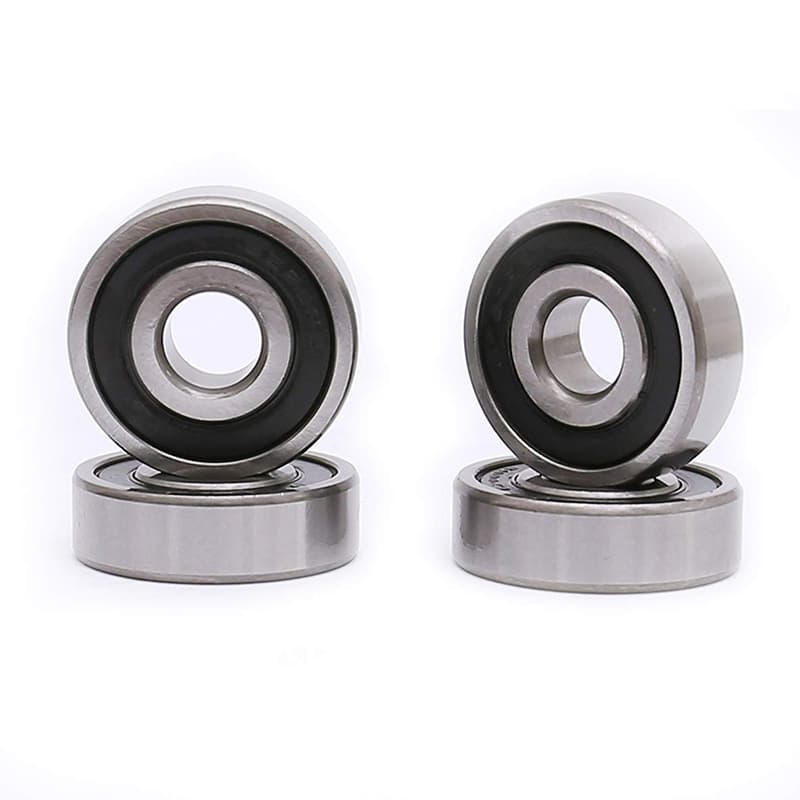
In my years of supplying bearings to industries worldwide, I’ve seen a growing focus on energy efficiency. For a distributor like Rajesh in India, helping customers save power is not just good for the environment—it’s good for business. Let’s explore the advantages of deep groove ball bearings, how to make bearings more efficient, their disadvantages, and the difference between "deep groove" and "normal" bearings.
What are the advantages of deep groove ball bearings?
You need a simple, reliable bearing for a wide range of applications. Deep groove ball bearings are often the first choice. Why are they so popular? What makes them the workhorse of the bearing world?
The main advantages of deep groove ball bearings are: low friction1 (point contact minimizes resistance), high-speed capability2, ability to handle both radial and moderate axial loads, compact design3, low noise and vibration4 (with precision grades), long service life5, availability in many sizes and configurations6, and cost-effectiveness7. These qualities make them suitable for countless applications from small appliances to large industrial machinery.
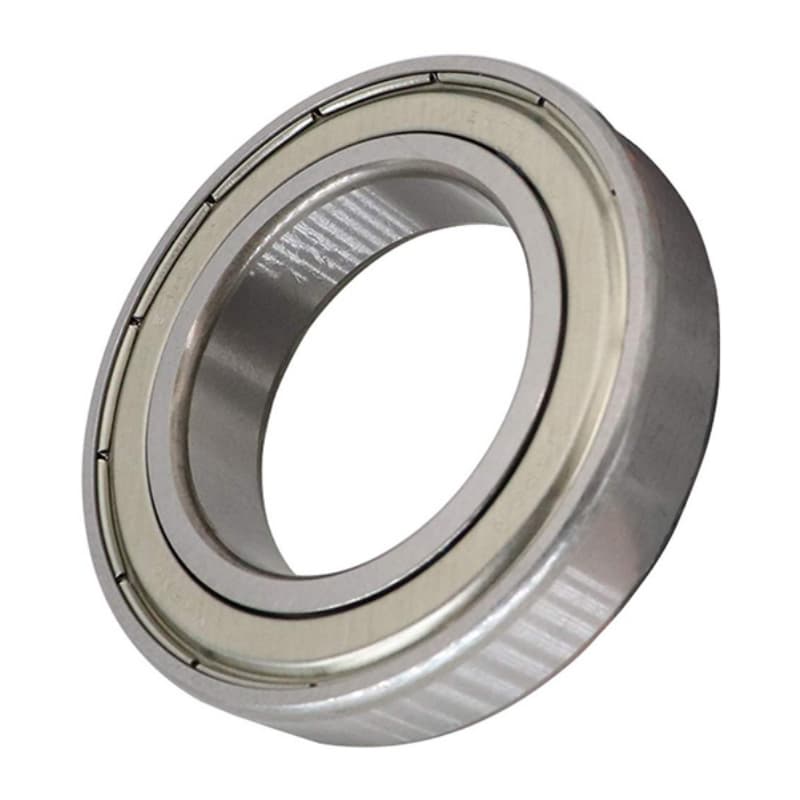
Their versatility is unmatched. But each advantage also contributes to energy efficiency.
How Each Advantage Contributes to Energy Efficiency
1. Low Friction:
- The Advantage: Point contact between balls and raceways creates minimal rolling resistance.
- Efficiency Impact: Less energy is required to overcome friction. In an electric motor, this means more electrical power converted to mechanical power, less wasted as heat. Low friction also means cooler operation, reducing cooling requirements.
2. High-Speed Capability:
- The Advantage: Designed for high rotational speeds with minimal heat generation.
- Efficiency Impact: Enables machines to run faster, increasing productivity without proportionally increasing energy consumption. Higher speeds often mean more output per unit of energy.
3. Combined Load Handling:
- The Advantage: Can handle radial loads (primary) and moderate axial loads in both directions.
- Efficiency Impact: Eliminates the need for separate thrust bearings in many applications. Fewer bearings mean less total friction and simpler, more efficient machine designs.
4. Compact Design:
- The Advantage: Relatively small cross-section for the load capacity.
- Efficiency Impact: Allows for smaller, lighter machines. Lower weight reduces inertia, meaning less energy needed for acceleration and deceleration. Compact designs also use less material.
5. Low Noise and Vibration:
- The Advantage: Precision grades (P5, P6) run extremely smoothly.
- Efficiency Impact: Less vibration means less energy dissipated as mechanical noise. Smooth operation also reduces wear on other components, maintaining overall system efficiency.
6. Long Service Life:
- The Advantage: Properly selected and maintained bearings can last for years.
- Efficiency Impact: Fewer replacements mean less energy and resources spent on manufacturing and installing new bearings. The machine maintains its efficiency over a longer period.
7. Availability and Cost-Effectiveness:
- The Advantage: Mass production makes them affordable and readily available.
- Efficiency Impact: Low cost encourages their use in appropriate applications, ensuring that machines are designed with efficient bearings from the start.
Advantage-to-Efficiency Summary Table:
| Advantage | Direct Efficiency Contribution | Application Example |
|---|---|---|
| Low friction | Reduced energy loss to heat | Electric motors, fans |
| High-speed capability | Higher productivity per energy unit | Machine tool spindles |
| Combined load handling | Simpler designs, fewer bearings | Small pumps, gearboxes |
| Compact design | Lower inertia, less material | Hand tools, appliances |
| Low noise/vibration | Less energy wasted as vibration | Office equipment, medical devices |
| Long service life | Sustained efficiency over time | HVAC systems, conveyors |
| Cost-effectiveness | Enables widespread efficient design | General industrial machinery |
My Insight on Advantages:
When a customer asks for a bearing recommendation, deep groove ball bearings are often the starting point. Their advantages are so broad that they fit 80% of applications. For a distributor like Rajesh, understanding these advantages helps him serve a wide customer base. But the key is knowing when they are the right choice—and when another bearing type might be better. The advantage of low friction1 is perfect for a fan motor. But for a heavy truck wheel hub, that same low friction1 becomes a disadvantage because the load capacity is insufficient. Knowing the advantages is the first step. Knowing their limits is the second.
How to make bearings more efficient?
You have a machine with deep groove ball bearings1. Can you improve its efficiency without redesigning everything? Yes, through careful attention to selection, lubrication, mounting, and maintenance. Efficiency is not just about the bearing itself; it’s about the whole system.
To make bearings more efficient: 1) Select the right bearing type and size for the load and speed. 2) Choose higher precision grades2 (P5, P6) for reduced friction and vibration. 3) Optimize internal clearance3 (C3 for thermal conditions). 4) Use high-quality lubricants4 with correct viscosity and fill quantity. 5) Ensure proper mounting5 with correct fits and alignment. 6) Maintain effectively with condition monitoring6 and timely relubrication. 7) Consider advanced seals7 to reduce friction while keeping contaminants out.
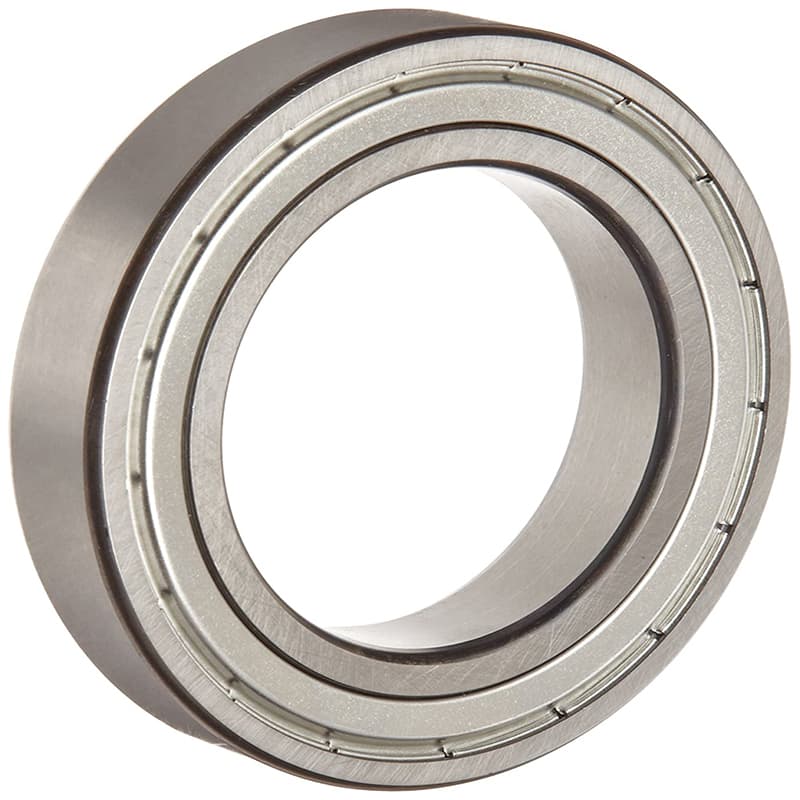
Efficiency is a holistic goal. Every step matters.
A Practical Guide to Bearing Efficiency Improvement
1. Selection Efficiency:
Choosing the right bearing for the job is the first and most important step.
| Selection Factor | Efficiency Impact |
|---|---|
| Correct bearing type | Deep groove ball bearings are efficient for moderate loads and high speeds. Using them where they belong maximizes efficiency. |
| Optimal size | Oversized bearings have higher friction and weight. Undersized bearings fail prematurely. Right-sizing maximizes efficiency. |
| Precision class (P5, P6) | Higher precision reduces runout and vibration, improving efficiency in high-speed applications. Lower friction, less heat. |
| Internal clearance (C3) | Correct clearance prevents preload from thermal expansion, reducing friction and heat. |
2. Lubrication Efficiency:
Lubrication is the single most important operational factor for bearing efficiency.
| Lubrication Aspect | Best Practice | Efficiency Gain |
|---|---|---|
| Viscosity selection | Choose oil/grease with viscosity that creates a full film under operating conditions. | Minimizes metal-to-metal contact and friction. |
| Grease fill quantity | Fill bearing cavity 30-50% only. Over-greasing causes churning losses. | Reduces parasitic drag from excess grease. |
| Relubrication interval | Follow manufacturer recommendations. Too frequent wastes lubricant; too infrequent increases friction. | Maintains optimal lubrication film. |
| Lubricant type | Use synthetic oils or greases for high-temperature or high-speed applications. | Lower friction, longer life, better efficiency. |
3. Mounting and Alignment Efficiency:
How you install the bearing directly affects its running efficiency.
| Mounting Factor | Best Practice | Efficiency Impact |
|---|---|---|
| Shaft and housing fits | Correct interference (j6, k6) for rotating rings prevents creep and fretting. | Maintains proper internal geometry, reducing friction. |
| Alignment | Use precision alignment tools for shafts and housings. | Prevents edge loading and extra friction. |
| Mounting method | Use bearing heaters or presses. Never hammer. | Avoids damage that would increase friction. |
| Cleanliness | Work in clean area. Contamination increases friction dramatically. | Protects smooth surfaces, maintains low friction. |
4. Sealing Efficiency:
Seals protect bearings but also add friction. Balancing protection and friction is key.
| Seal Type | Friction Level | Protection Level | Best Application |
|---|---|---|---|
| Non-contact shield (2Z) | Very low | Moderate | Clean environments, high speed |
| Light contact seal (2RS) | Low to moderate | Good | General industrial, some dirt |
| Heavy contact seal | High | Excellent | Extreme contamination |
5. Maintenance Efficiency:
Good maintenance keeps bearings running efficiently throughout their life.
| Maintenance Activity | Efficiency Benefit |
|---|---|
| Condition monitoring (temperature, vibration) | Detects problems early before they increase friction and cause failure. |
| Regular relubrication | Maintains optimal lubrication film, minimizing friction. |
| Contamination control | Keeps abrasive particles out, preventing wear that increases friction. |
| Proper storage | Protects bearings from rust and damage before installation. |
My Insight on Efficiency Improvements:
A textile mill client in Turkey had hundreds of fans running 24/7. They were using standard bearings and over-greasing them. We helped them switch to P6 precision bearings with C3 clearance and implemented an automatic lubrication system8 with correct grease quantity. The result was a 5% reduction in fan motor power consumption. Over a year, that saved thousands of dollars. Efficiency improvements don’t always require new machines. Often, better bearings and better practices yield significant savings. For a distributor like Rajesh, offering this kind of technical advice alongside bearing sales adds tremendous value. He becomes a partner in efficiency, not just a supplier.
What are the disadvantages of deep groove ball bearings?
You love deep groove ball bearings for their versatility. But every bearing type has limitations. Knowing them helps you avoid using them where they don’t belong.
The main disadvantages of deep groove ball bearings are: limited load capacity1 compared to roller bearings, sensitivity to misalignment2 (limited tolerance), poor performance under pure axial loads3 (especially high thrust), limited shock load capacity4, higher noise at very high speeds5 without precision grades, and susceptibility to contamination6 without effective seals. They are also not suitable for applications requiring extremely high rigidity7.
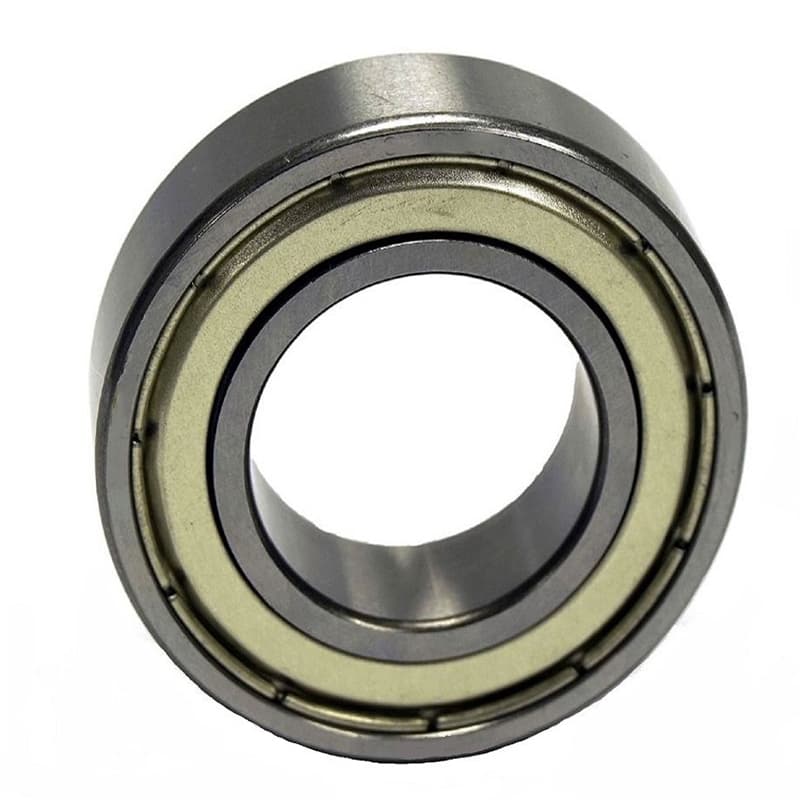
Understanding these limitations ensures you use deep groove bearings where they excel and choose other types where they don’t.
Detailed Look at Deep Groove Ball Bearing Limitations
| 1. Load Capacity Limitations: | Limitation | Explanation | Consequence |
|---|---|---|---|
| Point contact | Balls contact raceways at single points, limiting load area. | Lower load capacity than roller bearings of same size. | |
| Axial load capacity | Can handle moderate axial loads, but not designed for high thrust. | In high-thrust applications, they fail prematurely. | |
| Shock loads | Balls can dent (brinell) raceways under impact. | Not suitable for crushers, hammers, etc. |
2. Misalignment Sensitivity:
- The Problem: Deep groove ball bearings have very limited tolerance for angular misalignment (typically 2-4 arc-minutes).
- Consequence: Even slight misalignment causes edge loading, increased friction, heat, and premature failure.
- Mitigation: Ensure precise alignment. Use self-aligning ball bearings8 or spherical roller bearings if misalignment is unavoidable.
| 3. Speed and Noise Limitations: | Condition | Limitation | Mitigation |
|---|---|---|---|
| Very high speeds | Standard bearings may overheat or become noisy. | Use precision grades (P5, P4) with special cages and lubrication. | |
| Low-noise requirements | Standard bearings may generate audible noise. | Use low-noise grades (Z1, Z2, Z3) with improved surface finishes. |
4. Contamination Susceptibility:
- The Problem: Without seals, bearings are vulnerable to dirt and moisture.
- Consequence: Contamination acts as abrasive, wearing surfaces and increasing friction.
- Mitigation: Use sealed (2RS) or shielded (2Z) versions. Ensure proper housing seals.
5. Rigidity Limitations:
- The Problem: Point contact makes deep groove ball bearings less rigid than roller bearings.
- Consequence: Shaft deflection under load may be higher, affecting precision in machine tools.
- Mitigation: Use larger bearings, preload, or switch to roller bearings for high-rigidity applications.
Disadvantage Summary Table:
| Disadvantage | When It Matters Most | Alternative to Consider |
|---|---|---|
| Limited load capacity | Heavy radial loads | Cylindrical roller bearings |
| Limited axial capacity | High thrust loads | Angular contact ball bearings, tapered roller bearings |
| Shock load sensitivity | Crushers, hammers | Spherical roller bearings |
| Misalignment sensitivity | Long shafts, flexible structures | Self-aligning ball bearings, spherical roller bearings |
| Speed/noise issues | Ultra-high-speed spindles | Precision angular contact ball bearings |
| Contamination susceptibility | Dirty environments | Sealed bearings, improved housing seals |
| Limited rigidity | Machine tool spindles | Tapered roller bearings, cylindrical roller bearings |
My Insight on Disadvantages:
A client in Bangladesh was using deep groove ball bearings in a rice mill fan. The bearings failed every few months. The problem? The fan shaft was slightly misaligned, and the bearings couldn’t handle it. We suggested switching to self-aligning ball bearings8. The failures stopped. The lesson: deep groove ball bearings are wonderful, but they have limits. For a distributor like Rajesh, understanding these limitations helps him guide customers to the right product. When a customer describes an application with heavy loads or misalignment, he can say, "Deep groove might not be your best choice. Let me show you a better option." That’s expertise that builds trust.
What is the difference between deep groove and normal bearing1s?
You hear "deep groove ball bearing2" and "normal bearing1." Is there a difference? Or are they the same thing? This terminology can be confusing, especially for new buyers.
In common usage, "deep groove ball bearing2" refers to the standard, most common type of ball bearing (Type 6, e.g., 6200 series). "Normal bearing" is not a technical term; it usually means the same thing—a standard deep groove ball bearing2. However, "deep groove" specifically describes the raceway geometry3: the grooves on the inner and outer rings are deep and continuous, allowing the bearing to handle axial loads4 in both directions. This distinguishes them from "shallow groove" or other bearing types5.
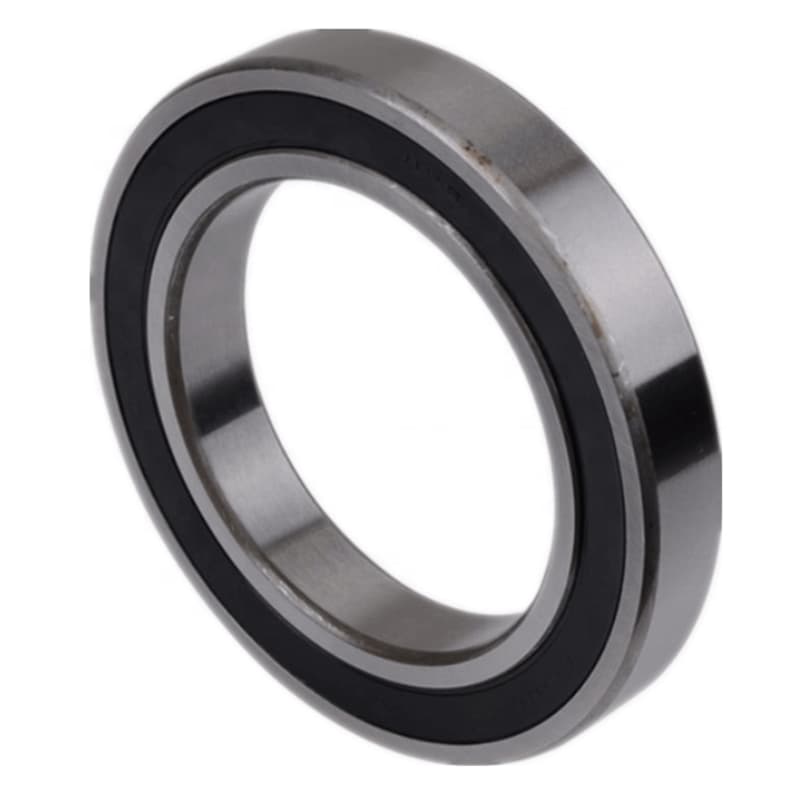
Let’s clarify this terminology.
Understanding "Deep Groove" in Context
1. What "Deep Groove" Means:
The term "deep groove" refers to the raceways on the inner and outer rings.
- Deep and Continuous: The grooves are deep arcs that closely match the ball diameter.
- Function: This depth allows the balls to be guided securely and enables the bearing to handle axial loads4 in both directions. The balls can transmit force from one ring’s shoulder to the other without popping out.
2. "Normal Bearing" – What It Usually Means:
In everyday conversation, "normal bearing1" typically means the standard deep groove ball bearing2. It’s the default, the one most people think of when they say "ball bearing."
3. Comparison with Other Bearing Types:
| Bearing Type | Raceway Geometry | Load Capability |
|---|---|---|
| Deep Groove Ball Bearing | Deep, continuous grooves | Radial + moderate axial (both directions) |
| Angular Contact Ball Bearing | Asymmetric grooves, one high shoulder | Radial + high axial (one direction) |
| Self-Aligning Ball Bearing | Outer ring raceway is spherical | Radial + low axial, accommodates misalignment |
| Cylindrical Roller Bearing | Flat or slightly profiled raceways | Very high radial only (or very low axial) |
4. Why "Deep Groove" Matters:
The depth of the groove is not just a design detail. It’s what gives the bearing its versatility.
| Feature | Benefit of Deep Groove |
|---|---|
| Axial load capacity | Can handle thrust from either direction. |
| Ball guidance | Keeps balls aligned, reducing friction and noise. |
| High-speed capability | Smooth ball path enables high speeds. |
| Versatility | Suitable for radial, axial, and combined loads within limits. |
| 5. Common Misconceptions: | Misconception | Reality |
|---|---|---|
| "Normal bearings are cheaper than deep groove." | They are the same thing. All standard ball bearings are deep groove. | |
| "Deep groove bearings are special." | They are the standard. The term "deep groove" distinguishes them from other types, not from a "normal" version. | |
| "I need a ‘normal’ bearing, not deep groove." | You likely need a deep groove ball bearing2. |
My Insight on Terminology:
When a customer says, "I need a normal bearing1," I know they mean a deep groove ball bearing2. But I always confirm: "Do you mean a 6200 series ball bearing?" This ensures we’re on the same page. Clear communication prevents ordering errors. For a distributor like Rajesh, understanding these terms helps him translate customer requests into accurate orders. It also helps him educate customers who may be confused by terminology. "Deep groove" is not a special feature; it’s the standard. Knowing that builds confidence in product knowledge.
Conclusion
Deep groove ball bearings contribute to energy efficiency through low friction, high-speed capability, and versatile load handling. Their advantages make them ideal for countless applications. To maximize efficiency, select the right bearing, optimize lubrication and mounting, and maintain properly. Understand their disadvantages to avoid misapplication. And remember: "deep groove" is the standard, not a special option. With the right approach, these bearings save power and money.
-
This resource clarifies the term ‘normal bearing’ and its common usage in the context of ball bearings. ↩ ↩ ↩ ↩ ↩ ↩ ↩ ↩ ↩
-
Explore this link to understand the applications and benefits of deep groove ball bearings in various industries. ↩ ↩ ↩ ↩ ↩ ↩ ↩ ↩ ↩
-
Learn how raceway geometry impacts the performance and load capacity of different bearing types. ↩ ↩ ↩ ↩
-
Understanding axial loads is crucial for selecting the right bearing for your application; this link provides detailed insights. ↩ ↩ ↩ ↩ ↩
-
This resource offers a comprehensive overview of various bearing types, helping you choose the right one for your needs. ↩ ↩ ↩ ↩
-
Learn about contamination risks to protect your bearings and enhance their lifespan. ↩ ↩ ↩
-
Understanding rigidity limitations can guide you in selecting the right bearing for precision applications. ↩ ↩ ↩
-
Explore the benefits of self-aligning bearings to improve performance in misaligned applications. ↩ ↩ ↩
