
Your machine struggles under heavy combined loads. Bearings fail prematurely. Production stops. You’ve tried different brands, but the problem persists. Maybe the issue isn’t quality—it’s the bearing type itself.
For better performance under high combined loads, choose tapered roller bearings. Their unique design with angled rollers and raceways allows them to simultaneously support heavy radial and axial forces. This makes them ideal for applications like wheel hubs, gearboxes, and rolling mills where loads come from multiple directions and stability is critical.
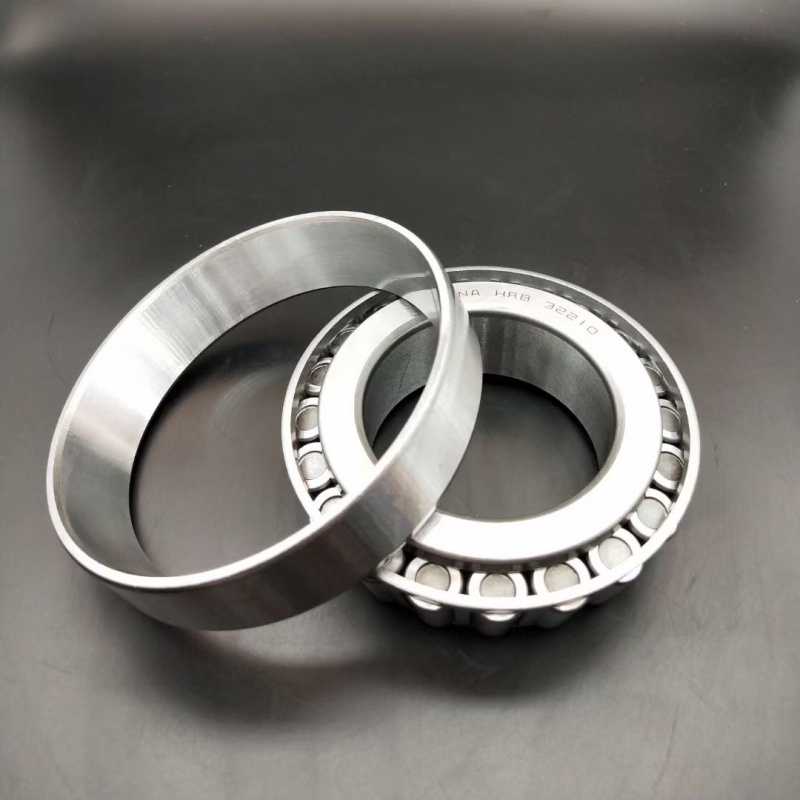
The choice of bearing type is the most fundamental decision in machine design. In my years of supplying bearings to heavy industries worldwide, I’ve seen how tapered rollers solve problems that other bearings cannot. Let’s explore what a tapered roller is, the advantages of these bearings, who manufactures them, and what load types they handle best.
What is a tapered roller?
You look at a bearing and see rollers that are not straight cylinders. They are shaped like a traffic cone. This shape is not accidental. It’s the result of careful engineering to solve a specific problem.
A tapered roller is a frustum of a cone—a cone-shaped rolling element used in tapered roller bearings1. Its tapered geometry, with a larger diameter at one end and smaller at the other, allows it to roll smoothly between tapered raceways on the inner and outer rings. This design ensures that all points on the roller surface travel at different speeds, matching the varying speeds of the raceways, which is essential for pure rolling motion2 and handling combined loads.
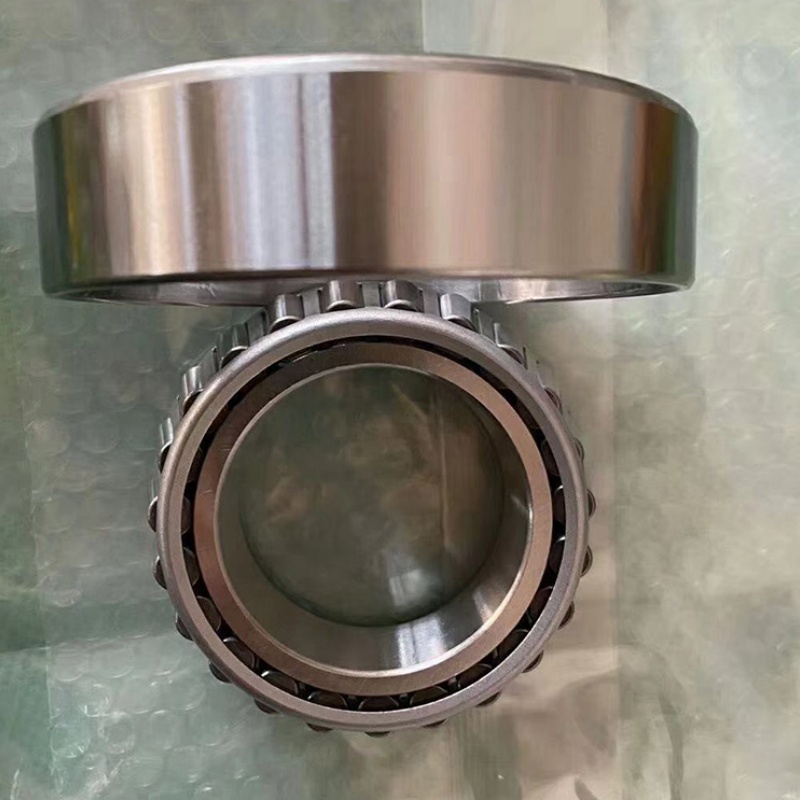
The tapered shape is not just for show. It’s a mathematical solution to a complex kinematic problem.
The Geometry and Function of a Tapered Roller
1. The Key Principle: Convergence
If you extend the lines of the tapered roller’s surface and the tapered raceways of the inner and outer rings, they all meet at a common point on the bearing’s centerline. This is the fundamental principle of tapered roller bearing design.
| 2. Why This Matters: | Aspect | Explanation |
|---|---|---|
| Pure Rolling Motion | Because the roller and raceways are all angled to meet at one point, the roller rolls without sliding. This minimizes friction and heat. | |
| Load Distribution | The line contact between roller and raceway spreads the load over a larger area than point contact in ball bearings, allowing for higher load capacity. | |
| Combined Load Handling | The angle of the roller means it can transmit both radial and axial forces simultaneously. The axial load is carried through the roller ends to the guiding flange. |
3. Roller Profile:
Modern tapered rollers are not perfect straight cones. They have a slight crowning (a very slight curve along their length). This prevents edge loading under misalignment or deflection, distributing stress more evenly and extending bearing life.
4. The Guiding Flange:
The inner ring (cone) has a large rib or flange. The large end of the tapered roller contacts this flange. This contact guides the roller and also transmits a significant portion of the axial load. The interface between the roller end and the flange is a critical area that must be properly lubricated.
5. Manufacturing Precision:
Tapered rollers are manufactured to extremely tight tolerances. Their diameter, angle, and surface finish are all controlled to microns. This ensures that every roller in a bearing shares the load equally.
My Insight on Roller Quality:
In our factory, we inspect tapered rollers rigorously. The angle must be perfect. If one roller has a slightly different angle, it will carry more load than its neighbors and fail early. When a client like Rajesh in India orders tapered roller bearings1 for truck wheel hubs, he’s relying on the precision of millions of these tiny cones. They are simple in concept but complex in execution. The tapered roller is the heart of the bearing, and its quality determines the bearing’s performance and life.
What are the advantages of tapered roller bearings?
You have a choice of bearing types for your application. Why pick tapered? What do they offer that ball bearings or cylindrical rollers don’t? The answer lies in their unique combination of capabilities.
The main advantages of tapered roller bearings are: high combined load capacity1 (handling both radial and axial forces simultaneously), adjustability2 (internal clearance can be set during installation), rigidity3 (providing stable shaft support), separability4 (easing mounting and inspection), and long service life5 in demanding applications due to their robust design.
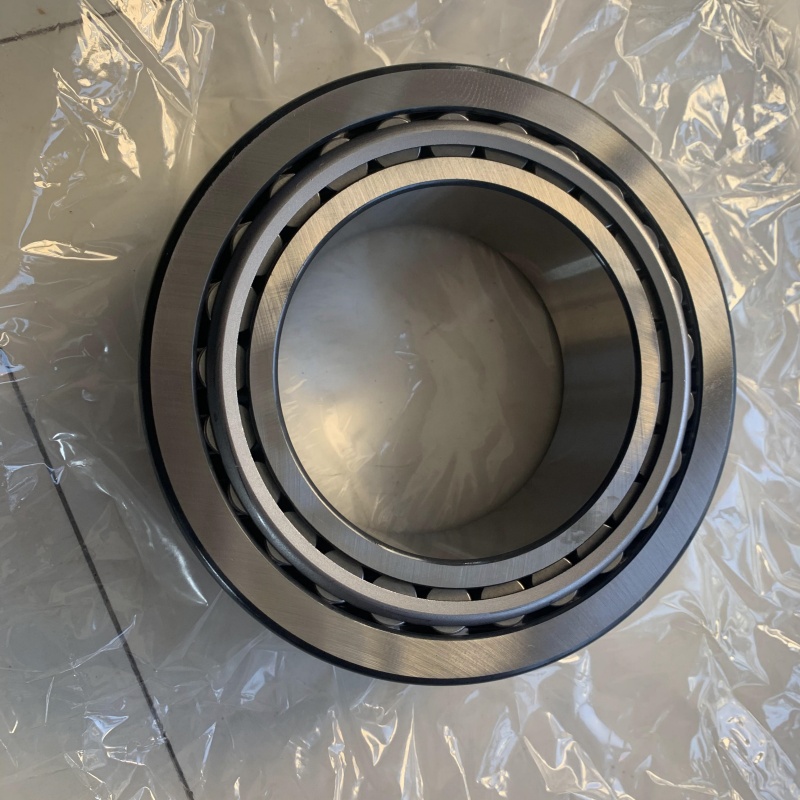
These advantages make them the bearing of choice for critical applications where failure is not an option.
Detailed Breakdown of Tapered Roller Bearing Advantages
1. High Combined Load Capacity:
This is their defining feature. Unlike cylindrical roller bearings (radial only) or thrust bearings (axial only), tapered rollers handle both.
- How it works: The angled rollers convert axial force into a radial component that is distributed along the line contact6. The large rib on the cone guides the rollers and carries the axial thrust.
- Result: One tapered roller bearing can replace a combination of a radial bearing and a separate thrust bearing, simplifying design and saving space.
2. Adjustability:
This is a unique and powerful advantage.
- What it means: During installation, you can adjust the axial position of the cone relative to the cup (by tightening a nut on the shaft) to set the desired internal clearance or preload7.
- Why it matters:
- Result: You can "tune" the bearing to the exact requirements of your application.
3. Rigidity and Stability:
- Line Contact: The rollers make line contact6 with the raceways, not point contact like ball bearings. This creates a much stiffer support.
- Preload Capability: By applying a preload7, you can make the bearing assembly extremely rigid, resisting deflection under load. This is critical for gear meshes and precision machining.
4. Separability:
- Design: The cone (inner ring with rollers and cage) is a separate assembly from the cup (outer ring).
- Advantages:
- Easy Mounting: You can mount the cone on the shaft and the cup in the housing separately. This is a huge benefit for large, heavy bearings.
- Inspection: You can easily inspect the rollers and raceways.
- Interchangeability: Cones and cups are matched sets, but they can be handled separately during assembly.
5. Long Service Life in Demanding Applications:
- Robust Design: The tapered shape and line contact6 distribute stress, reducing fatigue.
- Material Quality: Typically made from high-quality case-hardened steel, providing a tough core and hard, wear-resistant surface.
- Proven Track Record: Used for decades in the most demanding applications—truck wheels, rolling mills, mining equipment—proving their reliability.
Advantage Summary Table:
| Advantage | What It Means for Your Machine | Example Application |
|---|---|---|
| Combined Load Capacity | One bearing handles both radial and axial forces. | Wheel hub (weight + cornering). |
| Adjustability | You can set the exact clearance or preload7. | Pinion bearing (preload7 for gear mesh). |
| Rigidity | Shaft stays stable under load. | Machine tool spindle (precision). |
| Separability | Easy to mount and inspect. | Large rolling mill bearings. |
| Long Life | Reliable operation in tough conditions. | Mining conveyor, crusher. |
My Insight on Why Customers Choose Tapered:
When a client comes to us with a bearing failure problem, we often ask: "What type of bearing were you using?" If it was a ball bearing in a high-load, high-thrust application, the answer is clear: switch to tapered. I’ve seen this transformation countless times. A manufacturer in Brazil making agricultural equipment was using deep groove ball bearings in a gearbox. Failures were frequent. We helped them redesign with tapered roller bearings. The failures stopped. The advantages of tapered rollers—combined load capacity, adjustability2, rigidity3—are not theoretical. They are practical solutions to real-world problems. For a distributor like Rajesh, understanding these advantages allows him to recommend the right bearing for the job, building trust with his customers.
Who makes tapered roller bearings?
You need a reliable source for tapered roller bearings. The market has many players, from global giants to specialized manufacturers. Knowing who makes them helps you choose the right supplier for your needs.
Many companies manufacture tapered roller bearings worldwide. The most recognized global leaders include The Timken Company1 (USA), SKF2 (Sweden), Schaeffler Group3 (FAG/INA, Germany), NSK4 (Japan), NTN5 (Japan), and JTEKT6 (KOYO, Japan). Additionally, numerous high-quality manufacturers in China, India, and Eastern Europe, such as FYTZ Bearing7, produce excellent tapered roller bearings for global markets, offering a balance of quality and value.
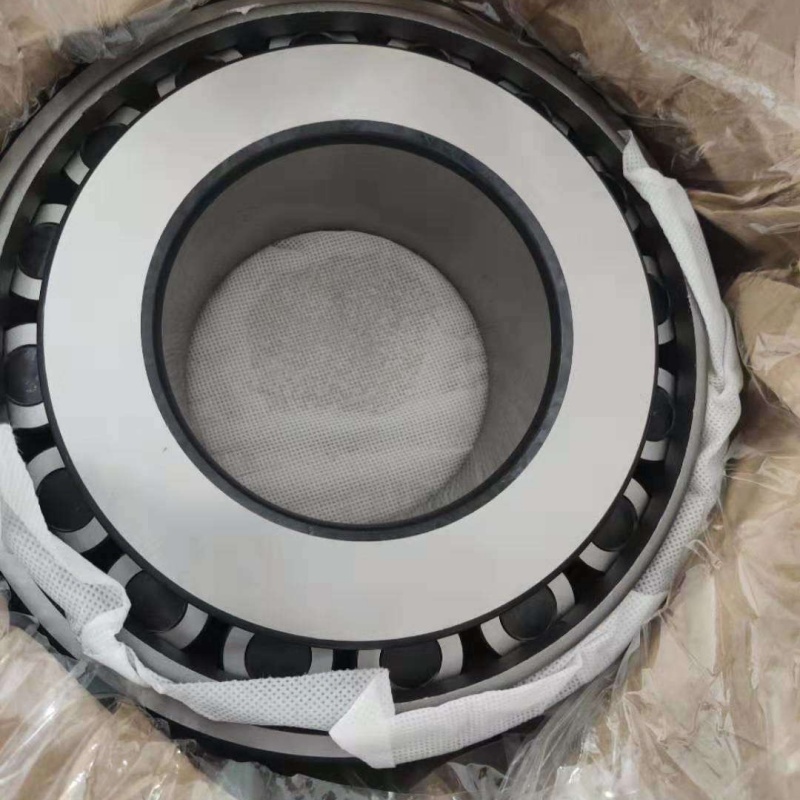
The choice of manufacturer depends on your application, budget, and supply chain needs.
A Landscape of Tapered Roller Bearing Manufacturers
1. The Pioneer and Specialist: The Timken Company1
- History: Invented the tapered roller bearing in 1899. This is their core product.
- Reputation: Widely regarded as the gold standard for tapered roller bearings, especially in heavy industrial and automotive applications.
- Strengths: Deep metallurgical expertise, extensive engineering support, strong brand recognition.
- Considerations: Premium pricing. Their focus is on this product category.
2. The Full-Line Giants: SKF2, Schaeffler (FAG/INA), NSK4, NTN5
- Scope: These companies manufacture all types of bearings, including world-class tapered roller bearings.
- Strengths:
- Global Presence: Extensive distribution and technical support networks worldwide.
- R&D Investment: Continuous innovation in materials, seals, and lubrication.
- Breadth of Offering: Can supply all bearing needs for a large project.
- Considerations: Also premium-priced. May have longer lead times for some sizes.
3. The Japanese Precision Specialists: NSK4, NTN5, JTEKT6 (KOYO)
- Reputation: Known for exceptional precision, quality consistency, and strong presence in automotive OEM.
- Strengths: Excellent manufacturing discipline, reliable performance.
- Considerations: Strong in Asia and globally, but also at a premium price point.
4. The Value-Added Quality Manufacturers: FYTZ Bearing7 and Others
- Our Position: We are a factory with integrated production and inspection lines, serving B2B clients worldwide.
- Strengths:
- Quality at Competitive Price: We produce tapered roller bearings to ISO standards, with precision classes P5/P6 available. We use quality steel and modern equipment.
- Customization: We offer OEM/ODM services8, customizing bearings to specific client needs.
- Direct Factory Relationship: Clients work directly with the manufacturer, ensuring clear communication and competitive pricing.
- Market Focus: We understand the needs of emerging industrial markets like India, Brazil, Turkey, and South Africa.
- Considerations: May not have the same brand recognition as the global giants, but for value-conscious buyers, we represent the best balance of quality and cost.
5. Other Regional Manufacturers:
Many countries have their own bearing manufacturers serving local markets. These can be good options for specific regions but may not have global distribution.
Comparison Table for Buyers:
| Manufacturer Category | Examples | Price Level | Quality Reputation | Best For |
|---|---|---|---|---|
| Global Premium | Timken, SKF2, NSK4 | High | Excellent (Top Tier) | Critical applications, OEMs with global warranty, where price is secondary. |
| Global Full-Line | NTN5, Schaeffler | High | Excellent | Same as above. |
| Value-Driven Quality | FYTZ Bearing7 | Competitive | High (ISO, P5/P6) | Distributors, MRO buyers, cost-conscious OEMs needing reliable quality. |
| Regional/Local | Various | Low to Medium | Variable | Local markets with limited requirements. |
My Insight on Choosing a Manufacturer:
For a client like Rajesh in India, the choice often comes down to a balance. For some premium customers who insist on a specific global brand, he may source from them. But for the majority of his business, he needs a reliable, quality product at a price that allows him to compete. That’s where we fit. We provide him with tapered roller bearings that meet international standards, with consistent quality, at a value that works for his market. The "best" manufacturer is not the same for everyone. It’s the one that meets your specific needs for quality, price, delivery, and support. We’ve built our business on being that partner for thousands of clients worldwide.
What load types is a tapered roller bearing suitable for?
You are designing a machine. Forces come from different directions. You need a bearing that can handle them all without failing. Understanding what loads a tapered roller bearing can and cannot handle is essential for correct selection.
Tapered roller bearings are suitable for combined loads1—simultaneous radial loads2 (perpendicular to the shaft) and axial loads3 (parallel to the shaft). They excel in applications where these loads are significant and often fluctuating. They can handle pure radial loads2 very well, but for pure axial loads3, other bearing types (like thrust bearings) may be more efficient. They are not suitable for applications requiring high-speed operation or where misalignment4 is significant without compensation.
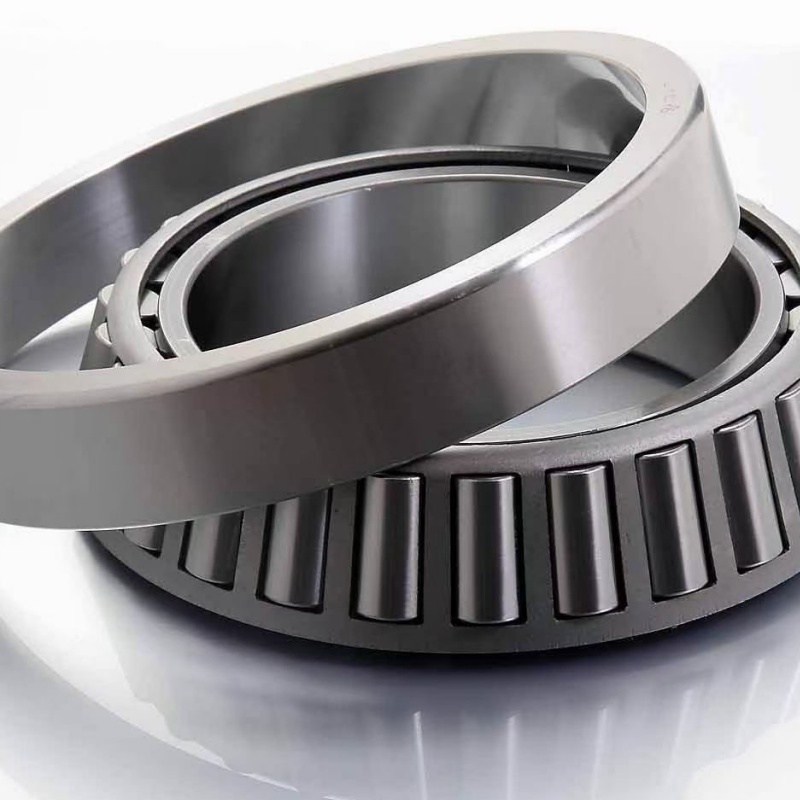
Knowing the load type is the first step in bearing selection. Let’s break it down.
Load Capabilities and Limitations of Tapered Roller Bearings
1. Radial Loads:
- Capability: Excellent. The line contact between rollers and raceways distributes radial forces over a large area.
- How it works: Radial load is carried directly through the rollers to the cup.
- Consideration: Even under pure radial load, a tapered bearing generates an internal axial force that must be accommodated (usually by a second bearing).
2. Axial Loads:
- Capability: Very good, but only in one direction for a single bearing.
- How it works: Axial load is transmitted through the roller ends to the large rib (flange) on the cone. This is a sliding contact that requires good lubrication.
- One-Directional Nature: A single tapered roller bearing can only support axial load in one direction (towards the large end of the rollers). To handle axial loads3 in both directions or to locate a shaft, they must be used in pairs (face-to-face or back-to-back arrangement).
3. Combined Loads (The Sweet Spot):
- Capability: This is where tapered roller bearings truly shine. They are specifically designed to handle any combination of radial and axial loads3.
- How it works: The tapered geometry converts a portion of the radial load into an internal axial force, and vice versa, allowing the bearing to carry both simultaneously.
- Load Ratio: The ratio of axial to radial load affects the bearing’s internal load distribution and life. Manufacturers provide calculation methods to determine the equivalent dynamic load.
4. Moment Loads:
- Capability: When used in pairs, tapered roller bearings can resist moment (tilting) loads very effectively. This is why they are used in pinion supports and wheel hubs.
| 5. Load Limitations: | Limitation | Explanation | Mitigation |
|---|---|---|---|
| Pure Axial Load (without radial) | A single tapered bearing under pure axial load will try to separate the cone and cup, causing the rollers to skew. Not ideal. | Use a pair, or use a dedicated thrust bearing. | |
| High Speed | The sliding contact at the roller/flange interface generates heat. Speed limits are lower than for ball bearings. | Use precision grades, special lubrication, and cooling. | |
| Misalignment | Tapered bearings are sensitive to misalignment4. Even small angles cause edge loading. | Ensure precise mounting. Use spherical roller bearings if misalignment4 is unavoidable. | |
| Shock Loads | Can handle shock, but cage and lubrication must be appropriate. | Use brass cages, C4 clearance, and EP lubricants. |
Load Suitability Guide:
| Application Load Characteristic | Is Tapered Roller Bearing Suitable? | Notes |
|---|---|---|
| Heavy combined loads1 (radial + axial) | Yes, ideal | Their primary strength. |
| Pure radial load | Yes | Works well, but a cylindrical roller bearing might be more efficient. |
| Pure axial load, one direction | Yes, but caution | Works, but not optimal. A thrust bearing is better. |
| Pure axial load, both directions | No, must be used in a pair | Use two bearings mounted opposite. |
| High speed | Limited | Consider angular contact ball bearings. |
| Misalignment present | No | Use spherical roller bearings. |
| Shock loads | Yes, with appropriate design | Specify brass cages, C4 clearance. |
My Insight on Load Selection:
The most common mistake I see is using a tapered roller bearing where the axial load is very high but the radial load is very low. The bearing may overheat because the roller ends are pressing hard against the flange without enough radial load to stabilize the rollers. In such cases, a thrust bearing or a different arrangement is better. For a distributor like Rajesh, understanding these nuances helps him advise customers correctly. When a customer says, "I need a bearing for a thrust load," the right question is, "Is there also a radial load?" The answer determines whether a tapered roller is the right choice. Matching the bearing to the load type is the foundation of reliable performance.
Conclusion
For better performance under high combined loads, tapered roller bearings are the superior choice. Their unique tapered geometry enables them to handle radial and axial forces simultaneously, with advantages in adjustability, rigidity, and separability. Understanding these capabilities, along with who manufactures them and what loads they suit, ensures you select the right bearing for your demanding application.
-
Understanding combined loads is crucial for selecting the right bearing for your application. ↩ ↩ ↩ ↩ ↩ ↩ ↩
-
Explore how radial loads impact bearing performance and longevity. ↩ ↩ ↩ ↩ ↩ ↩ ↩ ↩
-
Learn about axial loads to ensure proper bearing selection for your machinery. ↩ ↩ ↩ ↩ ↩ ↩ ↩ ↩
-
Learn about the effects of misalignment to avoid premature bearing failure. ↩ ↩ ↩ ↩ ↩ ↩ ↩ ↩
-
Explore the benefits of NTN tapered roller bearings and their strong reputation for reliability and performance. ↩ ↩ ↩ ↩ ↩
-
Learn about JTEKT’s contributions to the tapered roller bearing industry and their product offerings. ↩ ↩ ↩ ↩ ↩
-
Discover how FYTZ Bearing offers competitive pricing and quality for tapered roller bearings tailored to client needs. ↩ ↩ ↩ ↩ ↩ ↩ ↩ ↩
-
Understand the significance of OEM/ODM services in customizing tapered roller bearings to meet specific client requirements. ↩