
You place a large order for pillow block bearings. The shipment arrives, but you wonder: are these bearings really made to the specifications you paid for? Without proper documentation, you are taking a risk on quality, safety, and compliance.
Buyers of pillow block bearings should request key documents including the Mill Test Certificate (MTC) for raw material verification, Inspection Report for dimensional accuracy and clearance, ISO 9001 certification for quality management, and packing list and commercial invoice for shipping. For specific applications, material certificates (EN 10204 3.1 or 3.2) and test reports for hardness, noise, or vibration may also be required.
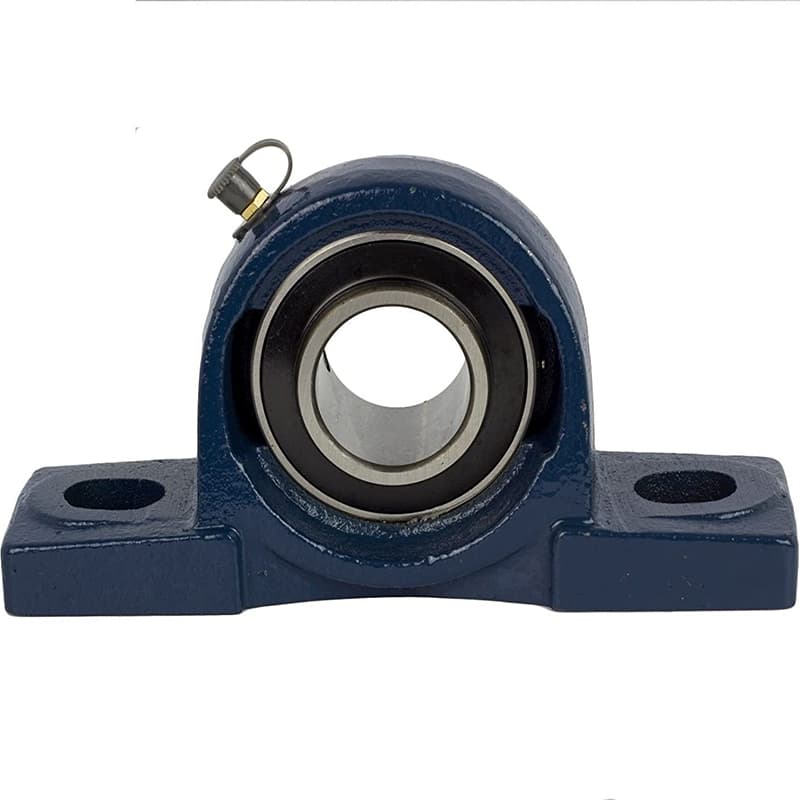
In my years of exporting bearings to over 20 countries, I have learned that documentation is as important as the product itself. It builds trust, ensures compliance, and protects both buyer and seller. Let’s explore what pillow blocks are, clarify terminology, understand bearing types, decode UCP codes, and most importantly, identify the documents you must request to guarantee you get what you paid for.
What are pillow block bearings?
You see a metal housing bolted to a frame, with a shaft running through it. This simple assembly is everywhere in factories, farms, and mines. But its simplicity hides important engineering that makes it a complete, ready-to-use solution.
Pillow block bearings1 are mounted bearing units consisting of a bearing insert2 (usually a ball or roller bearing) pre-assembled into a housing with a base for mounting. They provide support for rotating shafts, simplify installation by eliminating the need for separate housings, and often include features like seals, lubrication fittings, and shaft-locking mechanisms.
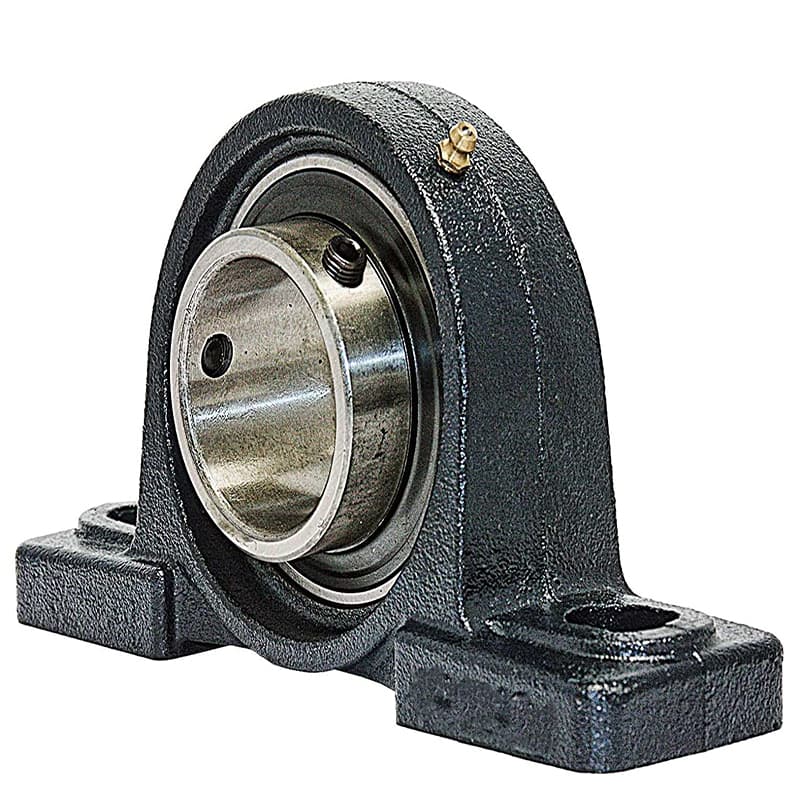
The beauty of a pillow block is its "plug-and-play" nature. You don’t need to design a custom housing or press a bearing into place. It comes ready to bolt on.
The Anatomy and Advantages of Pillow Blocks
Understanding the parts helps you understand why they are so popular and what documentation you need for each component.
1. Core Components:
- Bearing Insert: The heart of the unit. Common types are deep groove ball bearings (for lighter loads) or spherical roller bearings (for heavy loads and misalignment). The insert has a spherical outer diameter that allows for self-alignment3 within the housing.
- Housing: Typically made of cast iron, stamped steel, or sometimes stainless steel or composite materials. It has a machined bore that matches the spherical OD of the insert, a flat base with bolt holes, and often a grease fitting.
- Sealing System: Rubber or felt seals on both sides protect the bearing from contaminants and retain lubricant.
- Locking Mechanism: This secures the bearing insert2 to the shaft. Common types are set screws (the most common) or eccentric locking collars.
2. Why They Are So Widely Used:
- Ease of Installation: Just slide onto the shaft and bolt down. No special tools or skills required.
- Self-Alignment: The spherical interface between the insert and housing compensates for minor mounting errors.
- Protected Design: Integral seals mean no need for separate sealing arrangements.
- Simplified Maintenance: Grease fittings allow for easy relubrication without disassembly.
- Interchangeability: Standardized dimensions (e.g., UCP series) mean units from different manufacturers are interchangeable.
3. Common Applications:
- Conveyor systems (idler rollers, head and tail pulleys)
- Agricultural machinery (augers, balers, conveyors)
- Material handling equipment
- Fans and blowers
- Food processing equipment (with special housings)
- Textile machinery
My Insight from Global Supply:
Pillow blocks are among our highest-volume export products. A client like Rajesh in India stocks dozens of sizes because his customers—from small repair shops to large factories—constantly need replacements. The popularity of pillow blocks comes down to one word: simplicity. They solve a common problem (supporting a shaft) in the simplest possible way. But that simplicity means buyers often overlook the need for proper documentation. They assume all pillow blocks are the same. They are not. The quality of the casting, the precision of the bearing insert2, the effectiveness of the seals—all vary. Test reports and certificates are the only way to verify that the simple product you bought meets the standards you expect.
What is the difference between plummer and pillow block1 bearings?
You hear both terms used for similar-looking units. In a tender document, one term is used. In a catalog, another appears. You wonder if they are the same thing or if ordering the wrong one could cause a problem.
In modern industrial usage, there is no functional difference between "plummer block2" and "pillow block1." They are interchangeable terms describing the same product: a housed bearing unit with a base for mounting on a flat surface. "Plummer block" is the older, traditional term, still common in British English and in some regions like India and the UK. "Pillow block" is more widely used in American English and in global trade.
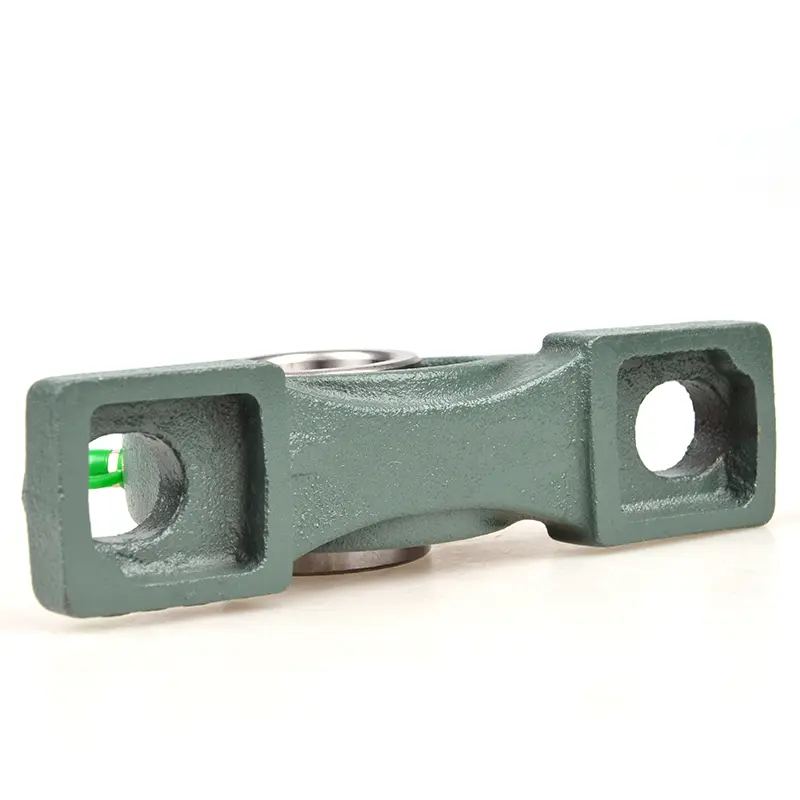
The key is not the name, but the specifications. A UCP 208 is the same product whether you call it a plummer block2 or a pillow block1.
Navigating Terminology in a Global Market
1. Historical Context:
- "Plummer Block": This term dates back to the 19th century. It is derived from the word "plumber" or "plummer," possibly referring to the casting process or the lead (plumbum) used in bearings. It has been used in engineering literature for over 150 years.
- "Pillow Block": This term became popular later, possibly because the housing shape resembles a pillow. It is now the dominant term in catalogs, e-commerce, and international trade.
| 2. Regional Preferences: | Region | Commonly Used Term | Notes |
|---|---|---|---|
| United Kingdom | Plummer Block | Traditional term, still widely used in engineering drawings and textbooks. | |
| India | Plummer Block | Due to British colonial influence, this term is common in older specifications. | |
| United States | Pillow Block | The standard term in American industry. | |
| Europe (non-UK) | Pillow Block (or local translation) | English term "pillow block1" is widely understood. | |
| Middle East, Africa, SE Asia | Pillow Block (increasingly) | Global trade has standardized on "pillow block1." |
3. Potential for Confusion and How to Avoid It:
The interchangeable use rarely causes a problem because the context makes it clear. However, in a written specification, it’s best to be explicit.
| Scenario | Potential Issue | Best Practice |
|---|---|---|
| A buyer in India uses "plummer block2" in an RFQ. | The supplier might be unsure if it’s the same as a pillow block1. | The supplier should recognize the term, but can clarify by asking for the series and dimensions (e.g., UCP 2083). |
| An engineer in the UK specifies "plummer block2" on a drawing. | A procurement team in China might search for "pillow block1." | The drawing should include the standard series designation4 (e.g., "Plummer Block, UCP 2083, ISO 113/1995"). This is unambiguous. |
| Searching for products online. | Search results may vary based on the term used. | Use both terms as keywords, but rely on the technical specifications5 and product images to confirm the correct style. |
4. What Really Matters: The Series Designation
The confusion disappears when you use standardized codes. The most common pillow block1 series are:
- UCP: Standard 2-bolt pillow block1 (North American/global standard)
- UKP: British standard plummer block2 (similar to UCP but may have different dimensions)
- SNL, SNH, etc.: Other housing series from European manufacturers.
My Insight on Terminology in Documentation:
When we prepare export documents6 for a shipment to India, we often include both terms: "Pillow Block (Plummer Block) Bearings." This ensures clarity for customs and for the end-user. For a client like Rajesh, who operates in a market where both terms are used, we ensure our catalogs and packing lists are bilingual in this sense. The most important document is the one that specifies the exact series and dimensions, not the generic name. When you request test reports and certificates, always include the full product designation (e.g., "UCP 2083 C3") so there is no ambiguity about what was tested and shipped.
What are the four types of bearings?
You are new to the bearing industry. You see hundreds of different numbers and types. It’s overwhelming. But most bearings fall into a few basic categories based on their design and the type of load they handle. Knowing these four types gives you a solid foundation.
The four main types of bearings, classified by the shape of the rolling element and their load-carrying capability, are: Ball Bearings1 (point contact, good for high speeds, moderate loads), Cylindrical Roller Bearings2 (line contact, very high radial loads), Tapered Roller Bearings3 (line contact, combined radial and axial loads), and Spherical Roller Bearings4 (line contact, very high radial loads, misalignment capability). Each type has multiple sub-variants.

Understanding these four families helps you understand what kind of bearing insert is inside a pillow block and what documentation you need for each.
The Four Families and Their Pillow Block5 Applications
1. Ball Bearings1:
- Design: Rolling elements are spheres (balls). They make point contact with the raceways.
- Load Capability6: Good for radial loads, moderate for axial loads in both directions. The most versatile type.
- Speed Capability7: Excellent for high speeds due to low friction.
- In Pillow Block5s: The most common insert for general-purpose pillow blocks (e.g., UCP 200 series). They are cost-effective and suitable for moderate loads and speeds in applications like conveyors and fans.
- Documentation Needed8: Dimensional accuracy9 (bore, OD, width), radial clearance (C3, CN), noise/vibration grade.
2. Cylindrical Roller Bearings2:
- Design: Rolling elements are cylinders. They make line contact with the raceways.
- Load Capability6: Very high radial load capacity. Negligible axial load capacity (some designs can handle minor axial loads).
- Speed Capability7: Good, but generally lower than ball bearings.
- In Pillow Block5s: Less common in standard pillow blocks, but used in heavy-duty applications where radial loads are extreme and axial loads are minimal.
- Documentation Needed8: Dimensional accuracy9, radial internal clearance, roller set accuracy.
- Design: Rolling elements are truncated cones. They make line contact and are arranged at an angle.
- Load Capability6: Excellent for combined radial and axial loads. Can handle very high axial loads in one direction.
- Speed Capability7: Moderate; limited by sliding friction at the roller ends.
- In Pillow Block5s: Used in specialized mounted units for applications like truck wheels or heavy-duty gearboxes, often as a pair.
- Documentation Needed8: Dimensional accuracy9, cup and cone matching, axial play measurement.
4. Spherical Roller Bearings4:
- Design: Rolling elements are barrel-shaped (spherical). The outer ring raceway is also spherical.
- Load Capability6: Very high radial load capacity, moderate axial load capacity. Excellent for heavy shock loads.
- Speed Capability7: Moderate.
- In Pillow Block5s: Used in heavy-duty pillow blocks (e.g., 22200 series) for applications like mining conveyors, crushers, and vibrating screens where misalignment and heavy loads are present.
- Documentation Needed8: Dimensional accuracy9, radial internal clearance (often C3 or C4), cage material certification (brass, steel), hardness test reports.
Selection Guide Based on Bearing Type in Pillow Block5s:
| Bearing Type Inside Pillow Block5 | Best For | Common Pillow Block5 Series | Key Document to Request |
|---|---|---|---|
| Ball Bearing | General purpose, moderate loads, high speed. | UCP 200, UCP 300 | Radial clearance10 report (C3/CN). |
| Spherical Roller Bearing | Heavy loads, shock, misalignment. | SBP, SDAF, 22200 series | Cage material cert, clearance report (C4). |
| Tapered Roller Bearing | Combined loads, axial thrust. | Specialized truck/equipment units | Axial play measurement, cup/cone matching report. |
| Cylindrical Roller Bearing | Very high pure radial loads. | Specialized heavy industrial units | Radial internal clearance report. |
My Insight on Documentation by Type:
The type of bearing inside the pillow block determines which documents are most critical. For a standard ball bearing pillow block, the dimensional report and clearance verification are usually sufficient. For a spherical roller bearing pillow block destined for a mining application in South Africa, we know the client will need a material certificate for the brass cage and a detailed clearance report (C4). The documents must match the application’s criticality. When you order, always specify the bearing type and request the corresponding test reports. This ensures the product meets the performance requirements of your specific application.
What is a ucp pillow block?
You see "UCP 208" in a catalog. You know it’s a pillow block, but you don’t know what the letters and numbers mean. This code is a universal language that tells you exactly what you are getting.
A UCP pillow block1 is a specific type of mounted bearing unit2 following a standardized designation3. U stands for "Unit" (mounted bearing unit2), C stands for "Insert bearing with spherical OD4" (the specific bearing type inside), and P stands for "Pillow block5" (the housing style). The number following indicates the shaft size: for example, UCP 208 fits a 40mm shaft (08 x 5 = 40mm). It is the most common general-purpose pillow block worldwide.

Understanding this code is essential for ordering correctly and for interpreting test reports and certificates.
Decoding the UCP System for Confident Ordering
1. Breaking Down the Code:
- U = Unit: Indicates it’s a complete mounted bearing unit2, not just a bearing or a housing separately.
- C = Insert Type: In the UCP system, "C" typically refers to a specific series of bearing inserts with a spherical outer diameter, designed to fit into the housing’s spherical bore. Common insert series are 204, 205, 206, etc.
- P = Housing Style: "P" stands for pillow block (a 2-bolt base-mounted housing). Other letters indicate different styles:
- UCF: 4-bolt square flange.
- UCFL: 4-bolt oval flange.
- UCT: 4-bolt round flange (or take-up unit, depending on context).
2. The Number: Shaft Size Code:
The number following the letters (e.g., 208) is a code for the shaft diameter.
- For numbers 04 and above, multiply by 5 to get the shaft diameter in millimeters.
- UCP 204 = 04 x 5 = 20mm shaft.
- UCP 208 = 08 x 5 = 40mm shaft.
- UCP 210 = 10 x 5 = 50mm shaft.
- For numbers 03 and below, special codes apply:
- UCP 203 = 17mm shaft.
- UCP 202 = 15mm shaft.
- UCP 201 = 12mm shaft.
3. What the UCP Designation Implies:
When you order a UCP 208 C3, you are specifying:
- Housing: A standard 2-bolt pillow block housing with dimensions matching the UCP 208 standard (certain bolt hole spacing, height, etc.).
- Insert: A 208-series bearing insert (typically a deep groove ball bearing with a spherical OD) with a 40mm bore.
- Clearance: C3 internal clearance6 (larger than normal).
- Locking: Usually set screw locking (the most common type for UCP).
4. Why Standardization Matters:
The UCP series7 is standardized internationally. A UCP 208 from FYTZ, from SKF, from NSK, or from any major manufacturer will have the same critical mounting dimensions (bolt hole spacing, height to center). This allows for interchangeability. Your machine designed for a UCP 208 can accept a UCP 208 from any compliant source.
UCP Series Quick Reference Table:
| UCP Size | Shaft Diameter (mm) | Typical Bolt Hole Spacing (J) | Typical Height to Center (H) |
|---|---|---|---|
| UCP 204 | 20 | 113 mm | 33.3 mm |
| UCP 205 | 25 | 119 mm | 36.5 mm |
| UCP 206 | 30 | 134 mm | 42.9 mm |
| UCP 207 | 35 | 141 mm | 47.6 mm |
| UCP 208 | 40 | 159 mm | 49.2 mm |
| UCP 209 | 45 | 159 mm | 54.0 mm |
| UCP 210 | 50 | 172 mm | 57.2 mm |
My Insight on UCP Documentation:
When a client orders UCP 208 C3 bearings, the test report we provide should explicitly confirm:
- Housing dimensions match UCP 208 standard.
- Insert bore is 40mm within tolerance.
- Clearance is measured and falls within the C3 range.
- Locking mechanism (set screws) is functional.
For a distributor like Rajesh, understanding the UCP code means he can quickly verify that the goods match the order. He can spot a mislabeled product before it reaches his customer. This simple knowledge, combined with the right documentation, ensures that the product he sells will fit and perform as expected. The UCP code is not just a name; it is a specification. The documents should prove that specification was met.
Conclusion
Requesting proper test reports and certificates—from material certifications to dimensional inspection reports—is essential for pillow block bearing buyers. These documents verify quality, ensure compliance with specifications like UCP standards, and build trust between supplier and customer. Always ask for the paperwork that proves your product is exactly what you ordered.
-
Explore this link to gain a comprehensive understanding of UCP pillow blocks and their applications. ↩ ↩ ↩ ↩ ↩ ↩ ↩ ↩ ↩ ↩ ↩ ↩ ↩
-
Learn about mounted bearing units and their significance in various mechanical applications. ↩ ↩ ↩ ↩ ↩ ↩ ↩ ↩ ↩ ↩ ↩ ↩ ↩
-
Learn how standardized designations ensure compatibility and reliability in bearing systems. ↩ ↩ ↩ ↩ ↩ ↩ ↩
-
Discover the features and benefits of insert bearings with spherical outer diameters. ↩ ↩ ↩ ↩
-
Find out more about pillow blocks and their role in supporting rotating shafts. ↩ ↩ ↩ ↩ ↩ ↩ ↩ ↩ ↩ ↩
-
Explore the importance of internal clearance in bearing performance and selection. ↩ ↩ ↩ ↩ ↩ ↩
-
Get detailed insights into the UCP series and its specifications for better ordering. ↩ ↩ ↩ ↩ ↩
-
Find out the necessary documentation for various bearings to ensure compliance and performance in specific applications. ↩ ↩ ↩ ↩
-
Discover the significance of Dimensional accuracy in ensuring proper fit and function of bearings in applications. ↩ ↩ ↩ ↩
-
Understand the importance of Radial clearance in bearing performance and longevity, essential for optimal operation. ↩