
A bearing fails on your high-speed bottling line at 3 AM. Production stops, orders are delayed. In packaging, reliability and smooth operation are everything. The right bearing keeps your line moving.
Deep groove ball bearings are essential in packaging and filling machines for their low noise, high-speed capability, and ability to handle moderate radial and axial loads. They are used in conveyor rollers, rotary indexing tables, filling heads, and motorized spindles, often requiring specific seals (2RS) and precision grades (P6) for reliable, clean operation.
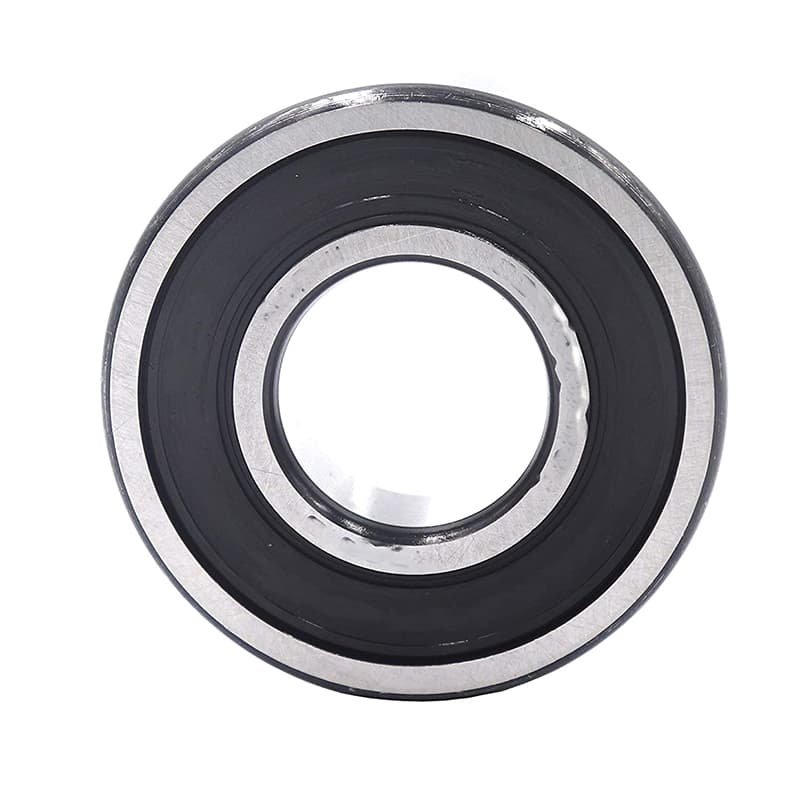
Packaging machines demand precision, cleanliness, and uptime. Selecting the correct bearing involves understanding its role, common sizes like the 6203, when to use housed units, and the critical decision between seal types. Let’s unpack the requirements.
What are deep groove ball bearings1 used for?
In a packaging plant, bearings are everywhere—in motors, guides, and moving parts. Their job is to enable smooth, precise, and reliable motion with minimal fuss. Deep groove ball bearings are the default choice for most of these rotating points.
In packaging and filling machines, deep groove ball bearings1 are used to support shafts in electric drive motors, conveyor rollers, cam followers, rotary filling valves, and indexing mechanisms. Their versatility, low friction2, and availability in sealed versions make them ideal for the varied speed and load requirements of automated packaging lines.
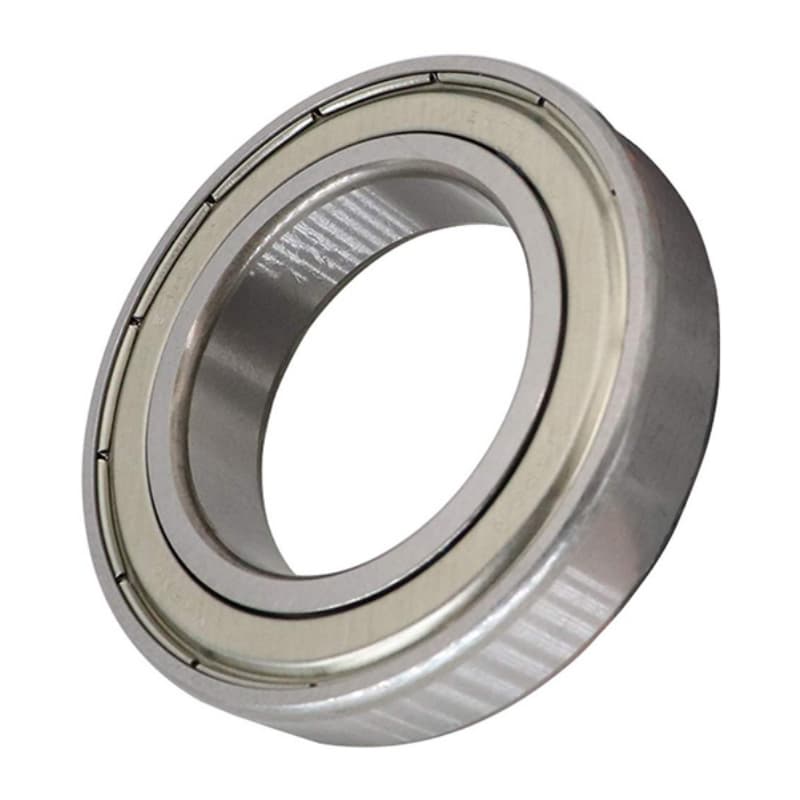
Their use is defined by a balance of performance characteristics that match the needs of packaging machinery: not the highest load, but excellent speed, precision, and cleanliness.
Specific Roles in Packaging Machine Subsystems
Let’s map the bearing type to specific machine functions to understand why it’s chosen.
1. Conveyor Systems (The Backbone):
- Function: Support idle rollers and drive rollers that move products (bottles, boxes, pouches).
- Why Deep Groove Ball Bearings: They handle the radial load of the product weight and belt tension. Sealed versions (2RS) keep out dust and debris from the factory floor. They allow for relatively high speeds.
2. Rotary Indexing Tables & Cam Drives:
- Function: Provide precise start-stop rotational motion to position containers under filling heads.
- Why Deep Groove Ball Bearings: They offer low friction2 for smooth acceleration/deceleration. When used in higher precision grades (P6)3, they minimize runout, ensuring accurate positioning.
3. Filling & Capping Heads:
- Function: Rotate nozzles or chucks that dispense product or screw on caps.
- Why Deep Groove Ball Bearings: They often face combined loads4—radial from off-center weight and axial from the downward pressure of the filling or capping action. The deep groove design accommodates this.
4. Electric Motors & Gearboxes (The Power Source):
- Function: Provide driving torque for all moving parts.
- Why Deep Groove Ball Bearings: Standard in most small to medium AC/DC motors. They run quietly and efficiently at high motor speeds (e.g., 1400-2800 RPM).
| Key Requirements for Packaging Use: | Machine Demand | Bearing Specification Implication |
|---|---|---|
| Cleanliness (Food, Pharma) | Stainless Steel (440C) bearings, Food-grade grease. | |
| Low Noise | High precision (P6) grades, smooth raceway finish. | |
| High-Speed Operation | C3 clearance often specified to handle motor heat, high-quality grease. | |
| Resistance to Washdown | Robust sealing (2RS with FKM/Viton rubber). |
My insight: I worked with a dairy company in Egypt on their yogurt cup filling line. They had issues with bearings on the rotary piston fillers. The standard bearings were corroding from milk acid and cleaning chemicals, and they were not precise enough, causing fill weight variation. We switched them to stainless steel 440C deep groove bearings with P6 precision and chemical-resistant FKM seals. This solved the corrosion issue, and the improved precision reduced product giveaway. The bearing’s use (supporting the filler piston shaft) didn’t change, but the material and precision specification made it suitable for the specific harsh and precise environment of food packaging.
What is a 6203 bearing used for?
Walk through any packaging plant, and you will find hundreds of 6203 bearings1. It’s one of the most common bearing sizes in the world, and for good reason. It fits a huge range of light to medium-duty applications perfectly.
A 6203 bearing is a standard deep groove ball bearing2 with a 17mm bore, 40mm outer diameter, and 12mm width. In packaging machines, it is extensively used in small conveyor rollers, pulley idlers, fan motors, sensor arms, and as the insert bearing in small-sized pillow block units (UCP 203) for auxiliary equipment.
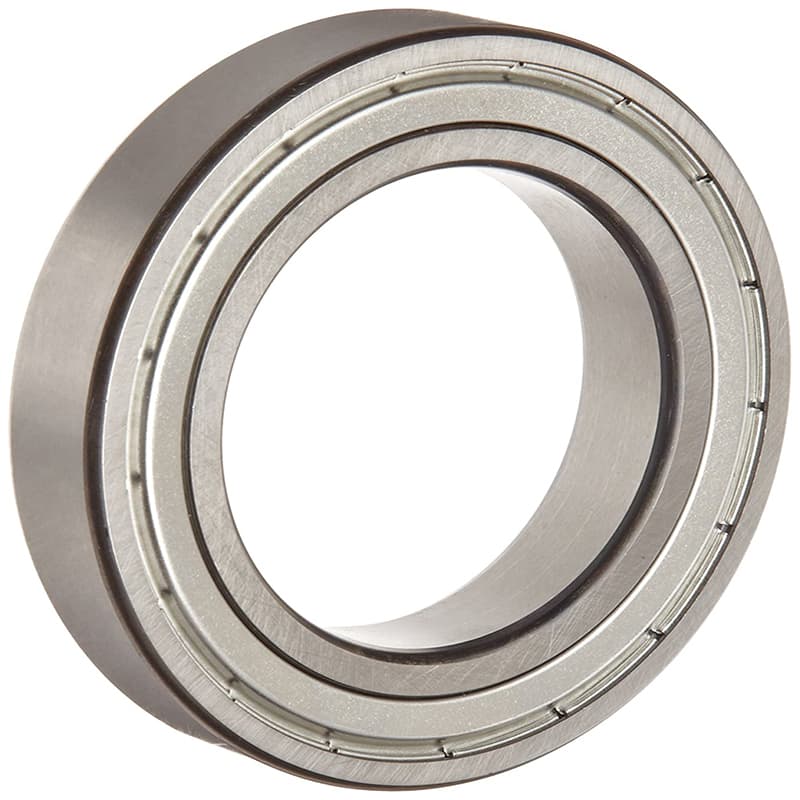
Its popularity stems from its ideal size for many mechanical components and its cost-effectiveness due to mass production.
The Ubiquitous 6203: A Packaging Plant Workhorse
Understanding where this specific size fits helps with maintenance planning and bulk purchasing.
1. Technical Specifications:
- Bore: 17mm (fits a very common shaft size).
- OD: 40mm.
- Width: 12mm.
- Dynamic Load Rating (C)3: ~9.5 kN. This means it can handle a significant radial load for its size.
2. Common Packaging Machine Applications:
- Guide Rollers: On the sides of conveyors to keep bottles or boxes aligned.
- Idler Pulleys: For timing belts driving various mechanisms.
- Small Gearmotor Output Shafts: Many small reduction gearboxes use this size.
- Blower Fans: For cooling electrical cabinets or creating air jets.
- Bearing Insert in UCP 203 Pillow Blocks4: Used to mount short shafts for sensor brackets or guide rails.
3. Selecting the Right 6203 for Packaging:
Not all 6203 bearings1 are equal. For packaging, you must specify the correct variant:
| Application Need | Correct 6203 Specification | Reason |
|---|---|---|
| General use, some dust | 6203-2RS5 (Double rubber seal) | Keeps grease in and contaminants out. |
| Very high speed (small spindle) | 6203-ZZ (Double metal shield) or 6203 (open) with oil lubrication. | Lower friction than rubber seals. |
| Food zone, washdown | 6203-2RS5, Stainless Steel (440C), Food-grade grease. | Corrosion resistance and compliance. |
| Precise positioning | 6203 P6 (Higher precision grade) | Reduces vibration and runout. |
Inventory Tip: For a packaging plant maintenance stock, keeping 6203-2RS5 and 6203-ZZ on hand covers the majority of replacement needs for small components.
My insight: A contract packaging company in Turkey for cosmetics had a simple but costly problem: the hundreds of small guide rollers on their cartoning machine used 6203-ZZ bearings. The ZZ shields did not prevent fine cardboard dust from entering. The dust mixed with the grease, creating a grinding paste. Bearings failed every few months, requiring hours of labor to replace many small units. We recommended a bulk switch to 6203-2RS5 bearings for all guide rollers. The rubber seals kept the dust out. The bearing failure rate6 on those rollers dropped by over 80%. The part number (6203) was the same, but the seal suffix (2RS vs ZZ) made all the difference in that dusty environment. Knowing the application context is key to selecting the right variant of a common bearing.
What is the use of UCF bearing1?
Not every bearing mounts directly into a machined housing. For supports, frames, and easy-replacement points, a UCF bearing1—a housed unit—is the practical solution. It’s the "plug-and-play" bearing for packaging machinery frames.
A UCF bearing1 is a pillow block housed unit2 with a four-bolt flange. Its use in packaging machines is to provide easy, secure, and aligned mounting of bearings onto machine frames for components like extended shafts, tension rollers, or as support for motorized rollers where a custom housing is not practical.
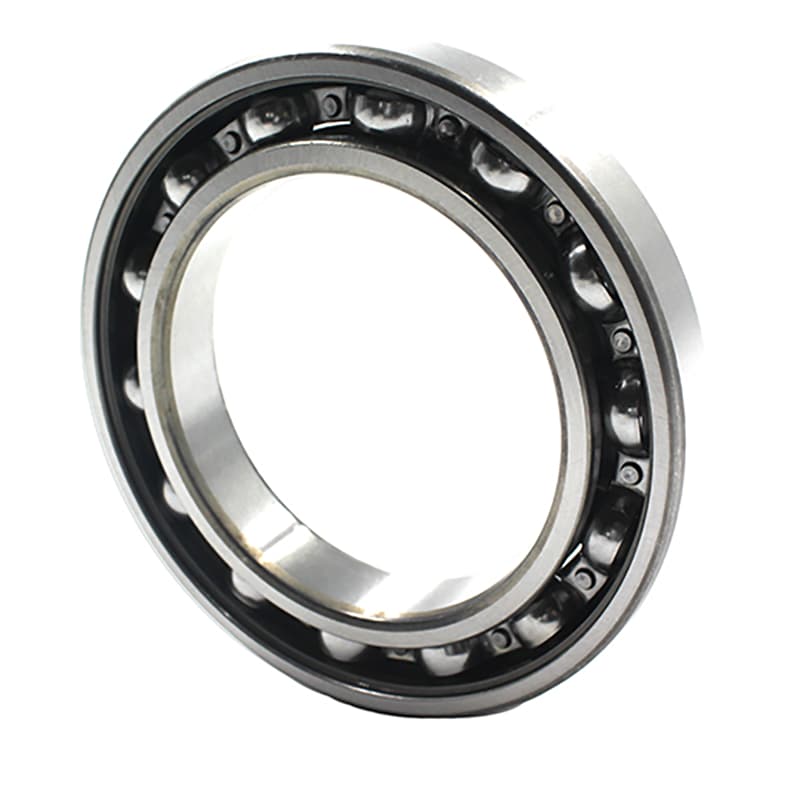
It combines a bearing insert (often a deep groove ball bearing) with a robust housing and sealing, simplifying design and maintenance.
Why UCF Units are Practical in Packaging Machinery
Packaging machine builders value speed of assembly and ease of service. UCF units deliver on both.
1. Components and Advantages:
- Housing: Cast iron body with a flange and four bolt holes for solid mounting to vertical or horizontal surfaces.
- Insert Bearing: Typically a "UC" series bearing with an extended inner ring3 and set screw locking for easy attachment to a shaft.
- Sealing: The unit comes with integral seals to protect the insert.
- Advantages:
- No Machining Needed: The builder drills four holes in the frame and bolts it on.
- Self-Aligning Capability: Many units have a spherical outer surface on the insert, allowing for minor misalignment compensation.
- Easy Replacement: If the bearing fails, you loosen the set screws, unbolt the housing, and replace the entire unit—no pressing required.
2. Typical Applications in Packaging:
- Tension Rollers: For film or foil unwinding stations, where the shaft needs to be adjustable.
- Support for Long Shafts: Supporting the non-drive end of a shaft driven by a motor at the other end.
- Hinged or Pivoting Arms: Where a component needs to rotate on a fixed shaft.
- Simple Conveyor Supports: For light-duty conveyor sections.
3. Selection for Packaging Environments:
The standard UCF insert is often an open or lightly shielded bearing. For packaging, you often need to upgrade:
- Request UCF units with 2RS sealed inserts4. This is crucial to prevent contamination from dust, paper fibers, or liquid spills.
- For food environments, specify stainless steel inserts5 and food-grade grease.
Important Note: "UCF" specifies a flanged housing with a specific bolt circle. The number after it indicates the insert size. For example, UCF 204 contains a bearing insert with a 20mm bore (6204 size).
My insight: A manufacturer of liquid bag filling machines in Vietnam used custom-machined blocks to hold support bearings. Assembly was slow, and alignment was often off, causing bearing noise. We suggested using UCF 205 units for the support rollers. This allowed the frame to be made from simple welded steel without precise machining. The spherical seating of the insert compensated for weld distortion. During maintenance, their technicians could swap a unit in minutes instead of hours. The "use" of the UCF bearing1 was to reduce manufacturing cost, speed assembly, and simplify service—key concerns for competitive packaging machine builders.
Which is better, 2RS or ZZ bearing?
This is one of the most frequent and critical questions in packaging machinery maintenance. The wrong choice directly leads to premature failure. "Better" depends entirely on the operating environment and speed of the application.
For most packaging machine applications, 2RS (rubber contact seal) bearings1 are better than ZZ (metal shield) bearings2. 2RS seals provide superior protection against dust3, moisture, and product debris, which are common in packaging environments4. ZZ shields are only suitable for clean, high-speed applications5 where keeping grease in is the main goal.
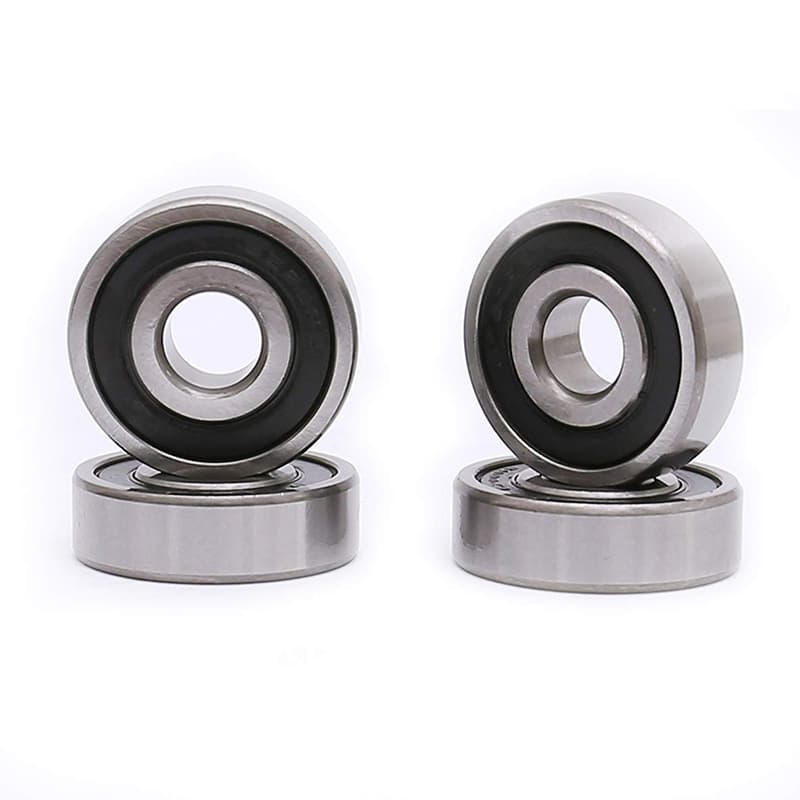
This is a fundamental trade-off: protection level versus speed and friction.
A Detailed Comparison for Informed Selection
Let’s break down the design, performance, and ideal use case for each to build a clear decision rule.
| Feature | ZZ Bearing (Metal Shield) | 2RS Bearing (Rubber Contact Seal) | Winner for Packaging? |
|---|---|---|---|
| Seal Type | Two thin steel shields pressed into the outer ring. A small gap exists between shield and inner ring. | Two rubber (usually Nitrile) seals molded into the outer ring. The lip contacts the inner ring. | — |
| Protection Level | Keeps large debris out and grease in. Fine dust and moisture can pass through the gap. | Provides a much better barrier against fine dust, fibers, and liquid splash. Excellent grease retention6. | 2RS for most packaging environments4. |
| Friction & Speed | Very low friction (non-contact). Suitable for very high speeds. | Higher friction due to lip contact. Has a lower maximum speed rating. | ZZ for very high-speed spindles only. |
| Temperature | Limited by bearing steel and grease. Shield material is not a constraint. | Limited by rubber material. Standard nitrile (NBR) is good to ~100-120°C. | Comparable for most uses. |
| Cost | Slightly lower. | Slightly higher. | Marginal difference. |
Decision Matrix for Packaging Applications:
| Application in Packaging Machine | Recommended Seal | Reasoning |
|---|---|---|
| Main Drive Motor (inside motor casing) | ZZ or Open | Clean, high-speed environment inside a sealed motor. |
| Conveyor Roller Bearings | 2RS | Exposed to dust, cardboard fibers, and potential spills. |
| Filling Head Rotating Assembly | 2RS | Protection from product splash and cleaning fluids. |
| High-Speed Spindle (e.g., labeler) | ZZ or specialized low-friction seals (LLU). | Speed is critical; environment may be controlled. |
| Bearings inside a Gearbox | Open or ZZ (if gearbox is sealed). | Lubricated by gear oil; internal cleanliness maintained. |
The Reality in Packaging Plants:
Packaging environments are rarely perfectly clean. There is paper dust, product powder (flour, sugar), occasional liquid spills, and frequent washdowns in food plants. A ZZ bearing’s gap is an open invitation for these contaminants. Once inside, they destroy the grease and wear the raceways.
Upgrade Option: For the best balance in dirty, moderate-speed applications, non-contact labyrinth seals (LLU type)7 are excellent but more expensive. They offer near-contact seal protection with lower friction.
My insight: A snack food plant in Indonesia had a persistent problem with bearings on their seasoning drum. They used ZZ bearings. The fine spice powder penetrated the shield gap, caked the grease, and seized the bearings weekly. They switched to 2RS, but the high friction at their drum speed caused overheating. The solution was labyrinth sealed (LLU) bearings. The complex grease-filled maze kept the spice powder out completely, while the non-contact design allowed the drum to rotate freely without overheating. The "better" seal was neither ZZ nor 2RS, but a third option designed for that specific challenge. However, for 90% of general packaging applications, 2RS is the default, safer choice over ZZ.
Conclusion
Selecting deep groove ball bearings for packaging requires matching the bearing’s role to the machine function, choosing common sizes like the 6203 correctly, utilizing housed units (UCF) for practicality, and overwhelmingly preferring 2RS seals over ZZ for environmental protection.
-
Explore the benefits of 2RS bearings for better protection in packaging applications. ↩ ↩ ↩ ↩ ↩ ↩ ↩ ↩ ↩
-
Learn about ZZ bearings and their suitability for high-speed, clean environments. ↩ ↩ ↩ ↩ ↩
-
Understand how different bearing seals protect against dust and debris. ↩ ↩ ↩ ↩
-
Explore the unique challenges bearings face in packaging environments and solutions. ↩ ↩ ↩ ↩ ↩
-
Find out which bearings excel in high-speed scenarios and why. ↩ ↩ ↩ ↩ ↩ ↩
-
Discover the importance of grease retention in bearing longevity and efficiency. ↩ ↩
-
Learn about LLU seals and how they balance protection and friction in challenging environments. ↩
