
Your vibratory equipment shakes itself to pieces. Bearings fail every few months, causing expensive downtime. The vibration that moves your material is also the primary killer of standard bearings.
Spherical roller bearings are the preferred choice for vibratory feeders and compactors due to their self-aligning capability and high radial load capacity, which withstands the punishing shock loads. Key specifications for longevity include robust cage design (brass or steel), C4/C5 clearance, and specialized internal geometry to handle continuous, high-amplitude vibration.
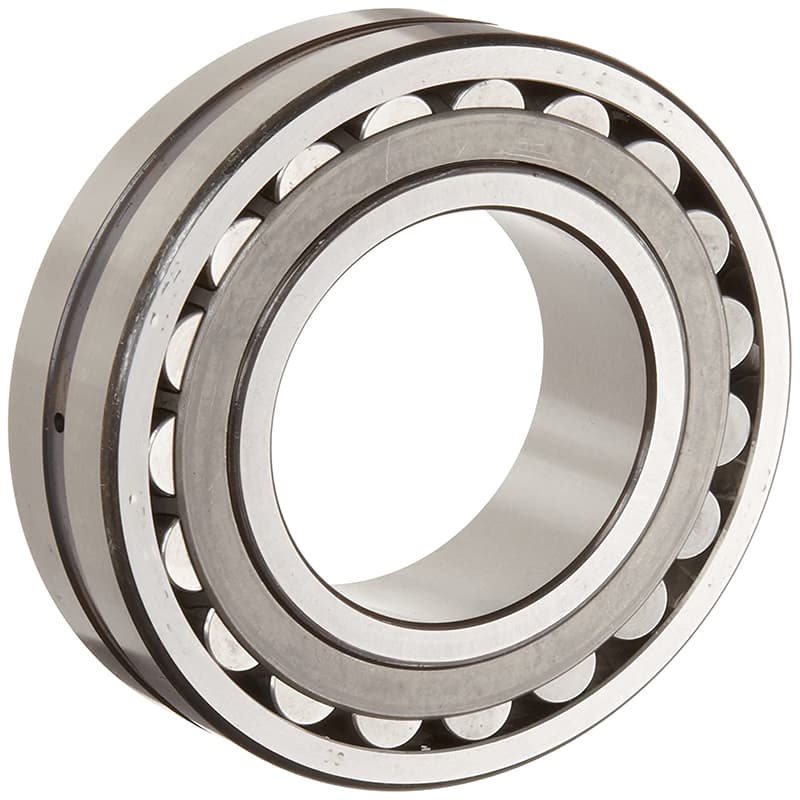
Choosing the right bearing for vibration isn’t just about picking a type; it’s about specifying the exact construction that can survive the unique stress. Let’s explore why spherical rollers are chosen, their trade-offs, how they differ from other options, and what a specific model like the 22226 brings to the table.
What is a Spherical Roller Bearing used for?
A bearing that can’t align with a bending shaft will fail quickly. Spherical roller bearings1 are the problem-solvers for misalignment and heavy loads, making them indispensable in tough applications beyond just vibratory equipment.
Spherical roller bearings1 are primarily used in applications with very high radial loads, moderate axial loads, and where shaft misalignment or deflection is present. Common uses include vibratory screens and feeders, rolling mill stands, large gearboxes, mining crushers, and paper mill rollers.
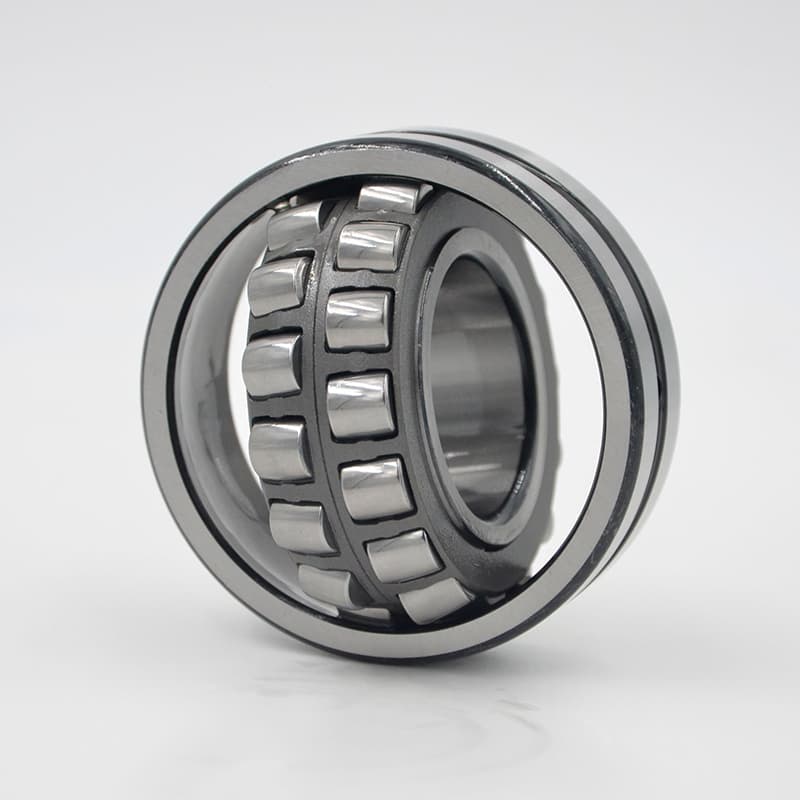
Their unique design gives them a specific set of superpowers. Understanding these tells you exactly when to recommend them.
The Engineering Superpowers of Spherical Roller Bearings
The "spherical" name comes from the shape of the outer ring raceway. This single feature enables its key advantages.
1. Self-Alignment: The Defining Feature
The outer ring has a spherical raceway ground into its inside surface. The barrel-shaped rollers and the cage align themselves to this spherical path. This allows the bearing to tolerate misalignment between the shaft and the housing2.
- Why it matters for vibratory equipment: The violent shaking can cause frame distortion and shaft deflection. A rigid bearing would bind and overheat. A spherical roller bearing accommodates this movement, preventing edge loading and premature failure.
- Typical allowable misalignment: Up to 1.5 to 3 degrees, depending on the series and size.
2. Exceptional Radial Load Capacity3:
The barrel-shaped rollers have a large contact area with the raceways. They are also typically arranged in two rows. This design allows them to carry extremely high radial loads, higher than same-sized ball bearings or cylindrical roller bearings in many cases.
- Why it matters for compactors: Compactors apply massive downward forces. The bearings must support the weight of the drum and the compacting force without deforming.
3. Moderate Axial Load Capacity4:
While not their primary strength like a tapered roller bearing, spherical rollers can handle considerable axial (thrust) loads in both directions, especially at lower speeds.
- Why it matters for feeders: Some feeder designs may induce axial forces alongside the primary radial vibration loads.
| Application Matching Table: | If your application has… | Then consider a spherical roller bearing because… |
|---|---|---|
| Heavy, punishing radial loads | Its roller design offers the highest radial capacity. | |
| Shaft deflection or housing misalignment | Its self-aligning design prevents binding. | |
| Moderate axial loads combined with radial loads | It can handle both without needing a separate thrust bearing. | |
| Shock and vibration | Its robust construction and alignment tolerance handle dynamic stresses. |
My insight: A client in South Africa operated a large vibratory screen for mining aggregates. They used a competitor’s spherical roller bearing, but failures were frequent. The bearing type was correct, but the internal specification was wrong for vibration. We provided bearings with a reinforced, guided brass cage5 and optimized internal clearance. The cage prevented roller skewing under violent direction changes, and the proper clearance prevented preload from shock-induced ring distortion. The bearing type (spherical) solved the alignment and load problem, but the specific construction solved the vibration life problem. The "use" is defined by the core design, but the successful use is defined by the detailed engineering within that design.
What are the disadvantages of spherical roller bearings?
No bearing is perfect for every job. Knowing the disadvantages of spherical rollers prevents you from using them where they are weak, saving you from costly misapplications and customer complaints.
The main disadvantages of spherical roller bearings include higher friction1 and lower speed capability2 compared to ball bearings, greater sensitivity to improper lubrication3, typically larger physical dimensions4 for a given shaft size, and higher cost5 compared to deep groove ball or cylindrical roller bearings.
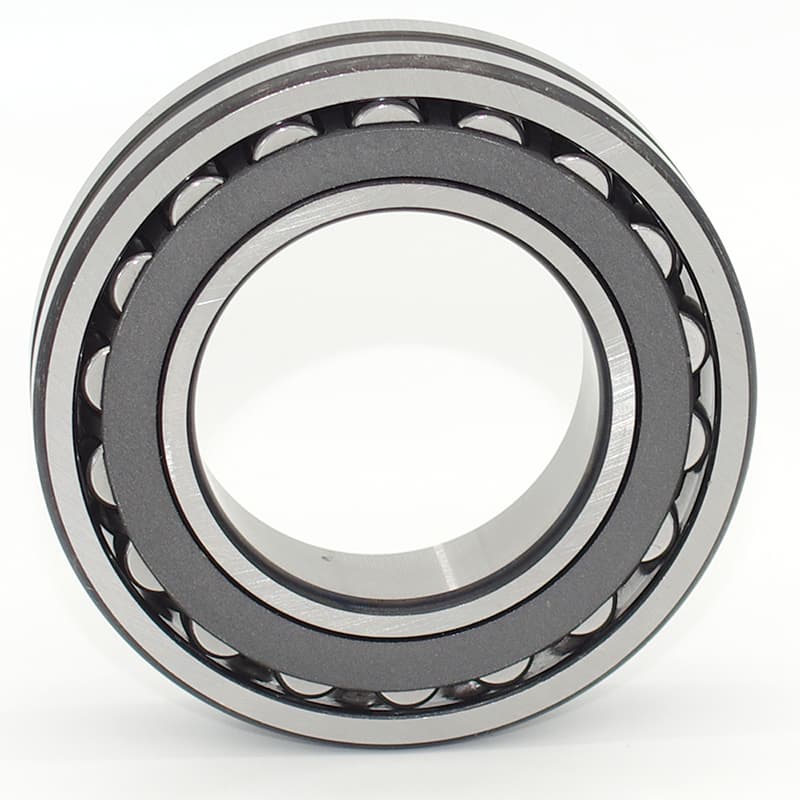
A balanced view is crucial. Their strengths in heavy, misaligned applications come with trade-offs that make them unsuitable for other common situations.
Understanding the Trade-offs and Application Limits
Let’s break down each disadvantage and its practical implication for an equipment designer or parts supplier.
1. Speed Limitation:
- Cause: Higher friction from the large contact area between rollers and raceways generates more heat. The complex internal geometry also creates more windage (air resistance).
- Implication: Spherical roller bearings are not suitable for very high-speed applications like machine tool spindles or turbochargers. Ball bearings or cylindrical roller bearings are better there. For vibratory feeders, speeds are usually low to moderate (up to a few hundred RPM), so this is not a constraint.
2. Friction and Power Loss:
- Cause: The same large contact area that gives high load capacity6 also increases rolling resistance.
- Implication: They consume slightly more energy. In a high-efficiency motor, this would be a problem. In a massive vibratory compactor, the power loss is negligible compared to the work being done.
3. Lubrication Demands:
- Cause: The internal geometry is complex. Lubricant must flow effectively to both rows of rollers and the guiding surfaces. They also generate more heat, which can break down grease faster.
- Implication: They require robust and continuous lubrication7. A failed lubrication system will destroy a spherical roller bearing faster than a simpler deep groove ball bearing. Proper grease selection and re-lubrication intervals are critical.
4. Size and Cost:
- Cause: To achieve high load capacity6 and self-alignment8, the design is inherently larger and uses more material. Manufacturing is also more complex.
- Implication: They take up more space and are more expensive than a deep groove ball bearing of the same bore size. You cannot directly replace a ball bearing with a spherical roller in the same housing.
Decision Matrix: When NOT to Use Spherical Roller Bearings:
| Application Characteristic | Better Bearing Choice | Reason |
|---|---|---|
| Very High Speed, Light Load | Deep Groove Ball Bearing or Cylindrical Roller Bearing | Lower friction, designed for speed. |
| Precise, Rigid Positioning (No Misalignment) | Tapered Roller Bearing or Angular Contact Ball Bearing | Provide precise axial and radial location without "float." |
| Extremely High Axial Load, Low Radial Load | Thrust Ball or Roller Bearing | Specifically designed for pure thrust. |
| Extreme Miniaturization or Cost Sensitivity | Deep Groove Ball Bearing | Smaller, cheaper, and sufficient for many light loads. |
My insight: A manufacturer of industrial fans in Egypt wanted to upgrade their fan shaft bearings to handle heavier impellers. They tried to replace deep groove ball bearings with spherical rollers of similar bore size. The spherical rollers overheated and failed. The problem was speed. The fan ran at 2900 RPM—too fast for the spherical rollers, and the self-alignment8 wasn’t needed as the shaft was well-supported. The disadvantage (speed limit) made them the wrong choice. We helped them select a cylindrical roller bearing which provided the high radial capacity they needed while handling the high speed. Knowing the disadvantages helps you avoid selling the right bearing type for the wrong job.
What is the difference between spherical roller bearings1 and cylindrical roller bearings2?
Both are "roller bearings" for heavy loads, but they are as different as a truck and a sports car. Confusing them leads to catastrophic machine failure. As an importer, you must know which one to pull from your inventory for a given request.
The key difference is that spherical roller bearings1 are self-aligning3 and can handle combined radial and axial loads with misalignment, while cylindrical roller bearings2 are non-self-aligning3, have the highest pure radial load capacity, but generally cannot handle axial loads (unless specially designed with flanges).
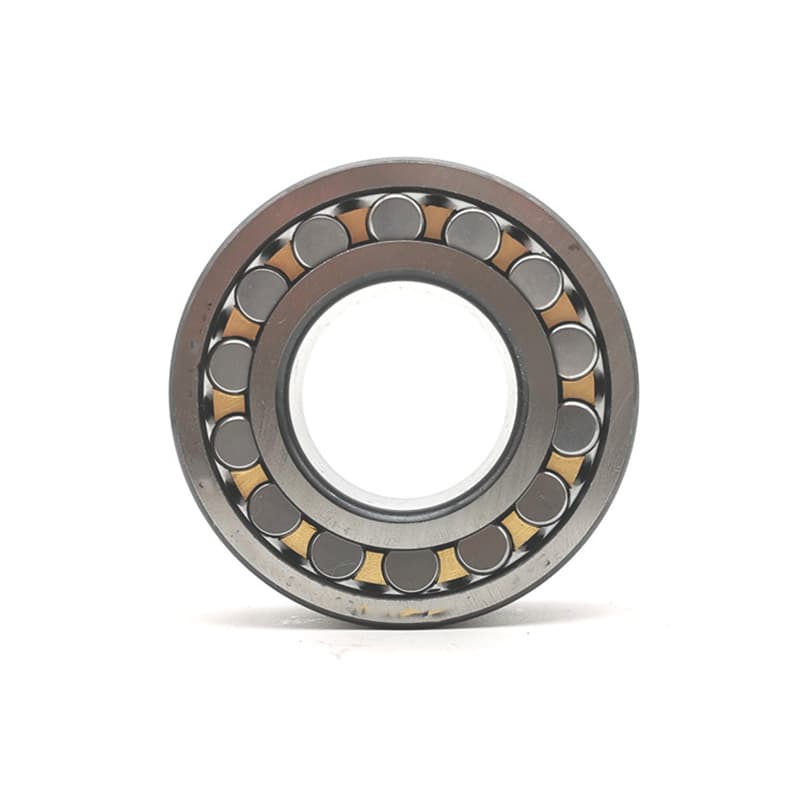
This is a fundamental distinction in heavy-duty engineering. Choosing correctly depends entirely on the nature of the load and the alignment conditions.
A Head-to-Head Comparison for Informed Selection
Let’s put them side-by-side across the key decision factors. This table is your quick-reference guide.
| Feature | Spherical Roller Bearing | Cylindrical Roller Bearing |
|---|---|---|
| Load Type | Excellent for heavy radial + moderate axial loads. | Superior for extremely heavy pure radial loads. Generally cannot take axial load (except NJ, NF types). |
| Self-Alignment | YES. Tolerates shaft deflection and housing misalignment (1.5-3°). | NO. Requires precise alignment of shaft and housing. Misalignment causes edge loading and rapid failure. |
| Internal Friction | Higher due to roller/raceway contact geometry. | Lower than spherical, allowing for higher speed capabilities. |
| Internal Design | Two rows of barrel-shaped rollers, spherical outer ring raceway. | One or more rows of cylindrical rollers, straight raceways. |
| Typical Applications | Vibratory equipment, rolling mills, mining crushers, where alignment is imperfect. | Electric motor shafts, machine tool spindles, large pumps, gearboxes where alignment is precise. |
| Best For Vibration? | YES. Self-alignment handles frame flex, and robust design handles shock. | NO. Lack of alignment tolerance makes them vulnerable to failure in vibrating frames. |
Why This Matters for Vibratory Feeders and Compactors:
- Alignment: The violent shaking of a feeder will inevitably cause some frame distortion and shaft bending over time. A cylindrical roller bearing, requiring near-perfect alignment, will develop high edge stresses and fail quickly. The spherical roller bearing’s self-alignment is non-negotiable here.
- Load Type: While the primary load is radial (weight and vibration force), there can be unpredictable axial components. The spherical roller’s ability to handle some axial load in any direction provides a safety margin.
The Exception: Some cylindrical roller bearing types (like NJ with a single flange, or NF) can handle limited axial loads by using the flanges on the rings as thrust faces. However, they still cannot self-align. They are used where axial location is needed but alignment is guaranteed, like in precise gearboxes.
My insight: A concrete compactor OEM in Turkey was using double-row cylindrical roller bearings2. They had a high failure rate in the field. Our analysis showed the failures were due to misalignment-induced edge loading4, not overloading. The rigid frame of the compactor was twisting slightly under operation. We recommended a switch to spherical roller bearings1 of equivalent load rating. The failures stopped. The cylindrical bearings had a higher theoretical radial load rating on paper, but in the real-world misaligned condition, the spherical bearings’ effective load capacity was much higher because the load was distributed evenly. The difference isn’t just in the catalog specs; it’s in how they behave in a non-perfect, dynamic world.
What is a Spherical Roller Bearing 222261?
A customer calls with a failed bearing. They read the number "22226" stamped on it. This is not a random code; it’s a precise language that tells you everything about the bearing’s size, series, and type. Decoding it is your first step in providing a correct replacement.
*A Spherical Roller Bearing 222261 is a specific bearing from the 22200 series. The ‘2’ indicates a spherical roller bearing, the ’22’ is the dimension series (medium width and OD), and ’26’ is the bore code (265 = 130mm bore). It is a common size for heavy-duty applications like large vibratory feeders2, compactors, and industrial fans.**
Knowing how to read this number empowers you to source equivalents, cross-reference brands, and understand the bearing’s physical and performance characteristics.
Decoding 22226 and Its Practical Implications
The number follows an international standard (ISO 15). Let’s break it down and see what it means for sourcing and application.
1. Breaking the Code: 2 – 22 – 26
- First Digit ‘2’: Bearing Type. ‘2’ = Spherical Roller Bearing.
- Second & Third Digits ’22’: Dimension Series. This defines the proportions.
- First digit ‘2’: Width Series. ‘2’ is a medium width.
- Second digit ‘2’: Diameter Series. ‘2’ is a medium outer diameter relative to the bore.
- Together, ’22’ indicates a bearing with robust, medium proportions, good for heavy loads with some space constraints.
- Last Two Digits ’26’: Bore Code. For bore codes 04 and above, multiply by 5.
- *26 5 = 130 mm.** This is the bore diameter, the size of the shaft it fits.
2. Key Specifications of a 22226 Bearing:
- Bore (d): 130 mm
- Outer Diameter (D): Approximately 230 mm (specific to the 22 series).
- Width (B): Approximately 64 mm (specific to the 22 series).
- Dynamic Load Rating (C): ~ 655 kN (approx. 66,800 kg-force). This is its radial load capacity for a theoretical 1-million-revolution life.
- Static Load Rating (C0): ~ 815 kN (approx. 83,100 kg-force). This is its static load capacity.
3. What This Means for Vibratory Equipment:
A 22226 is a large, heavy-duty bearing. Its high load rating makes it suitable for:
- Large, high-capacity vibratory feeders2 in mining or bulk material handling.
- Heavy road compactors and soil compactors.
- The main drums of large industrial washing machines or dryers.
- Large fan and blower shafts in heavy industry.
4. Your Sourcing Checklist for a 22226 Replacement:
When a customer needs this bearing, don’t just send a 22226. Specify the full requirement to ensure it performs:
- Clearance: For vibration, specify C4 or C5.
- Cage: For shock loads, specify Brass Cage (MA designation) or Steel Cage.
- Sealing: If the environment is dirty, specify bearings with labyrinth seals3 (W type suffix common) or supplied in a housed unit with seals.
- Lubrication: Verify the factory grease is suitable for the application’s temperature and load.
My insight: A mining company in Chile needed urgent replacements for 22226 bearings on their primary vibratory feeder. A local supplier had 22226 bearings in stock, but they were standard CN clearance with polyamide cages. They failed within a week under the shock loads. We air-freighted 22226 bearings with C5 clearance and machined brass cages. The replacement bearings lasted for years. The part number was the same, but the internal specification was critical. As an importer, you should stock or be able to quickly source the correct specification of common numbers like 22226, not just the basic size. This turns you from a parts seller into a solutions provider.
Conclusion
Selecting spherical roller bearings for vibratory applications requires understanding their self-aligning advantage, acknowledging their speed limits, differentiating them from cylindrical rollers, and specifying key details like clearance and cage material for the specific model.
-
Explore this link to understand the specific applications and benefits of the Spherical Roller Bearing 22226 in various industries. ↩ ↩ ↩ ↩ ↩ ↩ ↩ ↩
-
Discover how vibratory feeders operate and their importance in material handling and processing. ↩ ↩ ↩ ↩ ↩ ↩ ↩
-
Explore the role of labyrinth seals in extending bearing life, especially in harsh environments. ↩ ↩ ↩ ↩ ↩
-
Learn about misalignment-induced edge loading, its effects on bearing performance, and how to prevent it in machinery. ↩ ↩ ↩
-
Understanding cost factors can aid in budget planning for projects. ↩ ↩
-
Learn how load capacity influences bearing choice for heavy applications. ↩ ↩
-
Find out how proper lubrication extends bearing life and performance. ↩
-
Understanding self-alignment can help in selecting the right bearing for misaligned applications. ↩ ↩