
Your customer returns a bearing because it sounds like a coffee grinder. This hurts your reputation. Noisy bearings mean hidden quality problems. You need clear acceptance criteria to screen them out before they reach your market.
Acceptable bearing noise and vibration levels depend on the application’s precision class (e.g., P0, P6, P5). Importers should define criteria based on radial clearance limits, vibration velocity (mm/s) measured on a tester, and visual/tactile checks for smooth, silent rotation, rejecting units with harshness or irregular sounds.
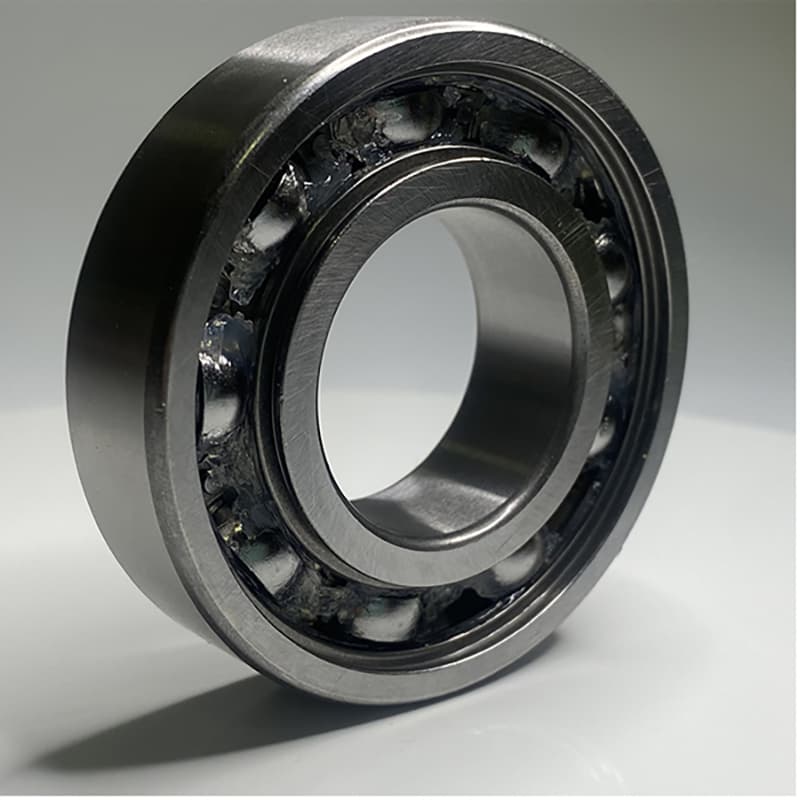
Noise is a symptom, not the disease. To set effective acceptance criteria, you must understand the root causes: clearance, precision, and manufacturing quality. Let’s build a practical framework for your quality checks.
How much bearing clearance1 is acceptable?
Clearance is the space inside the bearing. Too much causes noise and wobble. Too little causes heat and seizure. It is the most critical setting for bearing performance, and it is not one universal number.
Acceptable radial clearance for deep groove ball bearings is defined by ISO standards2 in groups like C2, CN (Normal), C3, C4, C5. For most general industrial applications, the CN or C3 group is standard. C3 clearance3 (slightly larger than CN) is often used to accommodate heat expansion in electric motors and similar machinery.
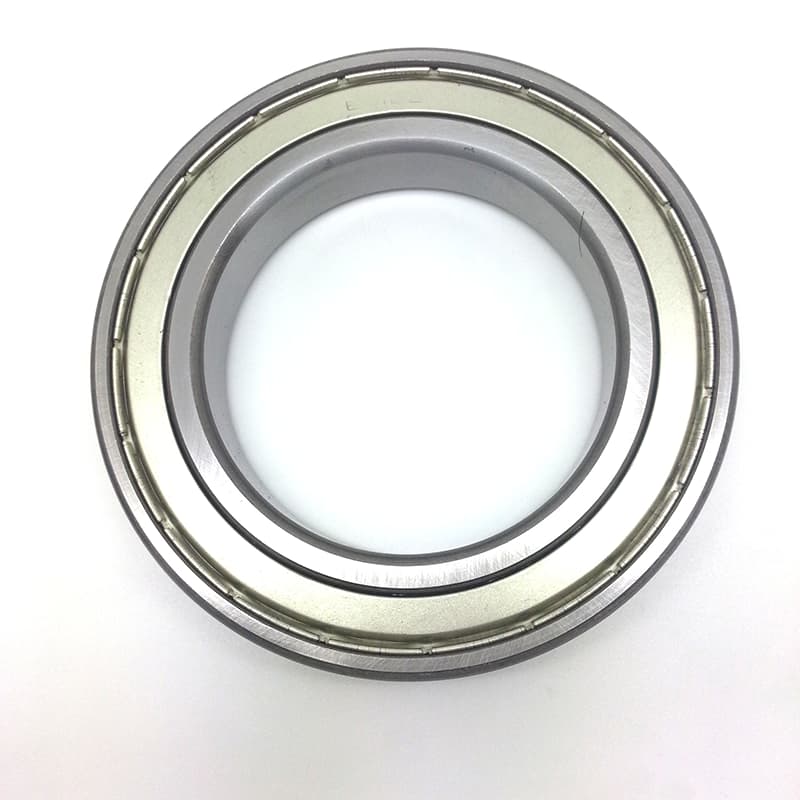
Clearance is a deliberate design choice, not a manufacturing error. Picking the right group prevents problems in the application.
Understanding Clearance Groups and Practical Inspection
The clearance group tells you the range of internal space inside the bearing. This range is carefully controlled during manufacturing.
1. The Purpose of Different Clearance Groups:
- C2: Very little clearance. Used for applications requiring high positional accuracy with minimal shaft growth from heat, like precision machine tools. Risk of overheating if misapplied.
- CN (Normal): The standard clearance for most general-purpose applications. It is the default if no clearance group is specified.
- C3: Slightly more clearance than CN. This is the most common "preferred" group for electric motors, pumps, and gearboxes. The extra space compensates for the inner ring expanding more than the outer ring when the shaft gets hot.
- C4/C5: Progressively larger clearances. Used for applications where significant thermal expansion is expected, or where heavy interference fits on both rings will reduce the operational clearance4.
2. Setting Your Acceptance Criteria for Clearance:
You need to verify the bearing matches the marked group. Here is a practical guide:
| Clearance Group (Marked on Bearing) | Typical Application | How to Check (Sample Method) | Your Acceptance Action |
|---|---|---|---|
| CN (or unmarked) | General machinery, light loads, stable temperatures. | Use a dial indicator. Fix the outer ring, lift the inner ring radially, measure the total play. | Measured value must fall within the ISO range for CN for that bearing size. |
| C3 | Electric motors, fans, pumps (most common for importers). | Same method. The measured play will be larger than for a CN bearing of the same size. | Verify it is within the wider C3 range. This is often a key check for motor bearing samples. |
| C2 | Precision spindles, high-accuracy applications. | Requires very precise measurement. The play is very small. | Confirm with supplier certificate. For high-value orders, consider lab testing. |
Important: The clearance you measure on a sample at room temperature is the initial clearance. The operational clearance4 when running is smaller due to interference fits and thermal expansion. A C3 bearing often ends up with a CN-like clearance in operation, which is ideal.
My insight: An importer in Turkey had a major issue with bearings for domestic washing machines. The bearings were noisy after a few months. They were using CN clearance bearings. We analyzed the failure and found the shaft design caused significant heating. The CN clearance, once installed, became zero or even preloaded (negative clearance) when hot. This caused grinding noise. We recommended a switch to C3 clearance3 bearings for their specific motor-shaft combination. The noise complaints stopped. The "acceptable" clearance is the one that results in the correct operational clearance. Never accept a sample without verifying its marked clearance group matches your application’s thermal reality.
Do ball bearings reduce vibration?
This is a common misconception. A bearing does not actively "reduce" vibration like a shock absorber. A high-quality, precisely made ball bearing minimizes the generation1 of vibration. A poor-quality bearing becomes a source of vibration.
Properly manufactured deep groove ball bearings2 do not reduce external vibration; they are designed to rotate with minimal internal vibration generation. Their smooth operation prevents them from adding excess vibration to a system. However, they cannot dampen or absorb significant vibration coming from other sources like imbalance or misalignment.
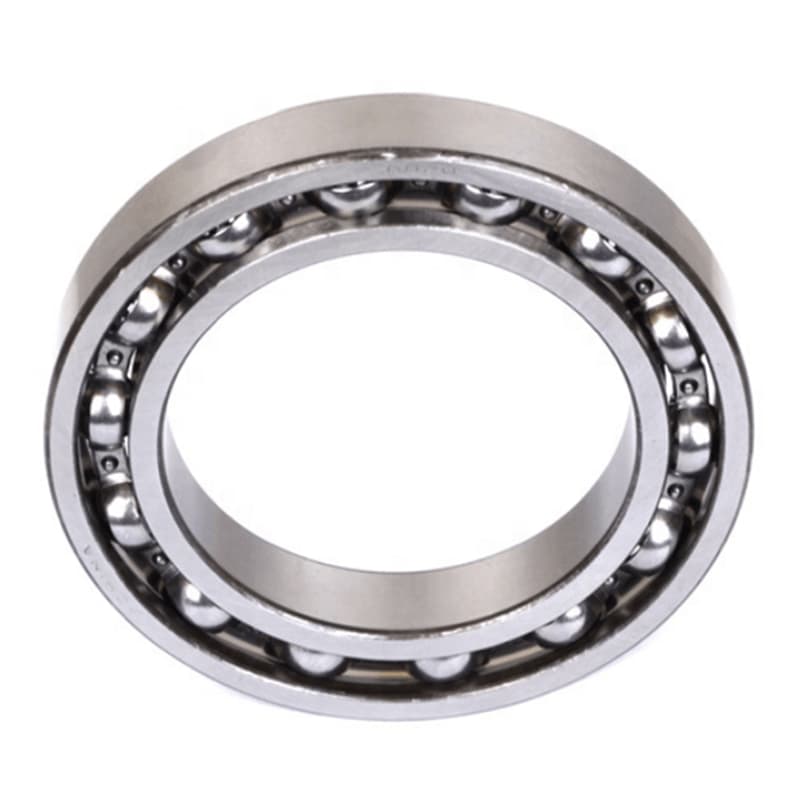
Think of a bearing as a heart. A healthy heart beats smoothly and doesn’t cause trouble. A sick heart causes tremors throughout the body. Your goal is to source "healthy" bearings.
How Bearings Generate (or Minimize) Vibration
Vibration in a bearing comes from internal imperfections. Each imperfection creates a tiny impact as the balls roll over it. These impacts combine to form measurable vibration.
Sources of Bearing-Generated Vibration:
- Surface Finish: A rough raceway or balls create a constant series of tiny bumps. This is like driving on a cobblestone road.
- Geometric Errors: If the raceway is not perfectly round, or the balls are not perfectly spherical/sized, the distance between the rings changes during rotation. This causes a "wow-wow" vibration, often at a frequency related to shaft speed.
- Contamination: A single hard dust particle inside the bearing acts like a rock stuck in your shoe. It creates a periodic, sharp impact every time a ball rolls over it.
- Damage: A dent in the raceway (brinelling) from improper handling creates a regular "thump" with each revolution.
Your Acceptance Criteria for Vibration:
For importers, formal vibration testing3 with an instrument is best. But you can also use simple, effective methods.
| Vibration Check Method | Procedure | What to Listen/Feel For | Accept/Reject Indicator |
|---|---|---|---|
| Manual Spin & Listen | Hold the bearing outer ring. Spin the inner ring quickly by hand near your ear. | A smooth, quiet, whirring sound that decays evenly. | Accept: Uniform, low hum. Reject: Grinding, gritty, irregular, or knocking sounds. |
| Axial Rock Test | Place bearing on a flat, hard surface. Press down on the inner ring and rock it side-to-side axially. | Feel for smooth movement with no catching or roughness. | Accept: Smooth rocking feel. Reject: Any catch, notch, or gritty feeling during the rock. |
| Instrument Test (Best Practice) | Use a portable bearing vibration tester (vibration velocity meter4 in mm/s). | Measures overall vibration velocity. Compare to industry grades (Z, Z1, Z2, Z3, Z4 with Z4 being quietest). | Define a limit. E.g., "Accept samples with vibration level ≤ Z2 group for standard bearings." Request test reports from supplier. |
My insight: We supplied bearings to a fan manufacturer in Vietnam. They had a simple but effective final test: they mounted the bearing on a mandrel and ran it at high speed with a microphone nearby. They rejected any bearing that produced a certain pitch or irregular sound pattern. This was their "noise fingerprint" test. When we started working with them, we adjusted our final superfinishing process to match their desired sound profile. The bearing doesn’t reduce the fan blade’s imbalance vibration, but by being internally quiet, it doesn’t make the total system noise worse. Your acceptance criteria for vibration should be: "Does this bearing add unacceptable noise to my customer’s product?" Start with the manual tests; they can catch many bad bearings immediately.
What is P4 tolerance1?
You see terms like P0, P6, P5, P4. These are precision classes. They define how tightly the bearing’s dimensions are controlled. Tolerance is about geometric accuracy, not smoothness or clearance. A P4 bearing is for very special applications.
P4 tolerance1 is a high-precision grade2 for ball bearings, defined by ISO standards3. It specifies extremely tight limits on bore diameter, outer diameter, width, and runout (wobble). P4 bearings are used in high-speed machine tool spindles, precision medical equipment, and aerospace applications where minimal deflection is critical.
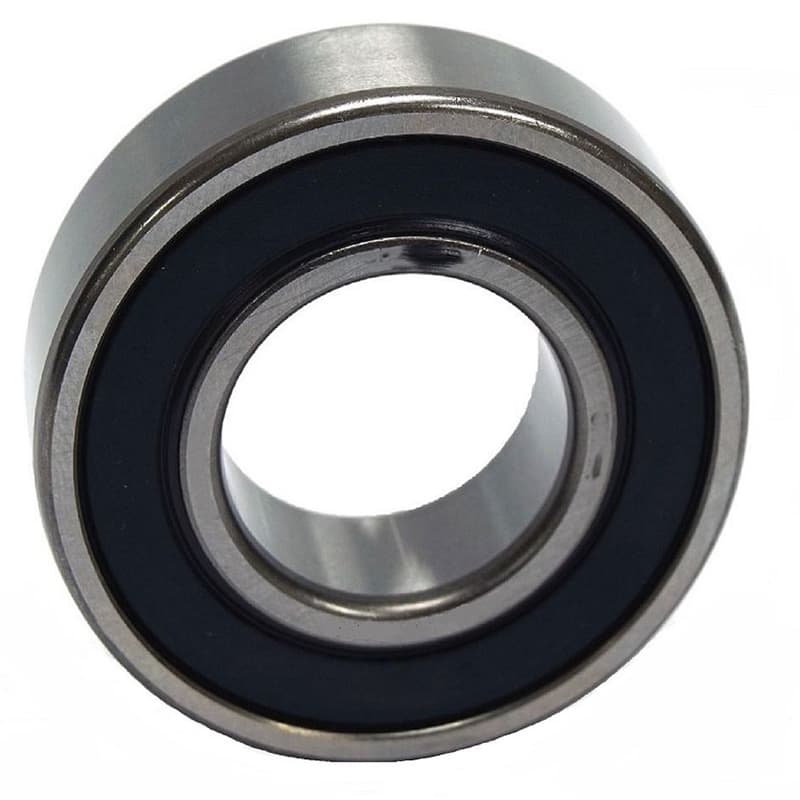
For most importers distributing for general industry, P6 or P5 is the relevant high grade. P4 is specialist territory. Knowing the difference protects you from overpaying or underspecifying.
Precision Class Hierarchy and Their Real-World Use
Precision classes form a ladder. Each step up costs more but offers diminishing returns for general applications. The table below clarifies this:
| Precision Class (ISO) | Common Abbreviation | Tightness Level | Typical Applications for Importers | Cost Impact |
|---|---|---|---|---|
| P0 | Normal, ABEC1 | Standard industrial tolerance. | The vast majority of applications: general machinery, pulleys, simple gearboxes. | Base price. |
| P6 | ABEC3 | Higher than P0. | Electric motors (common requirement), pumps, automotive components, household appliance motors. | Moderate increase (common for importers). |
| P5 | ABEC5 | Higher than P6. | Machine tool accessories, high-speed motors, precision industrial fans, some automotive transmissions. | Significant increase. |
| P4 | ABEC7 | Very High Precision. | High-frequency machine tool spindles, high-speed precision equipment. Rarely needed in standard distribution. | Very high increase. |
| P2 / P3 | ABEC9 / ABEC9+ | Ultra Precision. | Semiconductor manufacturing equipment, advanced aerospace. Specialist market. | Extremely high. |
Your Acceptance Criteria for Precision Class:
If a bearing is sold as P6 or P5, you must verify it. This requires measurement, not just trust.
- Dimensional Tolerance: Use a high-quality micrometer and snap gauge. Measure the bore (inner diameter) and outside diameter at multiple points and cross-sections. Compare the variations to the ISO tables for the claimed class. A P6 bearing will have much smaller allowable variation than a P0 bearing of the same size.
- Runout Tolerance: This is critical. It measures how much the raceway "wobbles" relative to the bore or outside diameter. You need a dial indicator on a precision V-block or mandrel. Fix the ring on one surface and rotate it, measuring the runout of the other surface. The allowable runout for P5/P6 is very small.
- Supplier Documentation: A reputable factory should provide a test certificate for batches of P5/P6 bearings, showing actual measured values for key dimensions and runouts.
My insight: A distributor in India for textile machinery was buying "P6" bearings from a source at a surprisingly low price. His customers complained about inconsistent spindle life. We measured his samples. The bore and OD were within P6 limits, but the radial runout was far outside the P6 specification—it was at the P0 level. The bearing was dimensionally okay but geometrically poor. This runout caused imbalance and vibration at high spindle speeds. The supplier was only checking simple dimensions, not the full precision grade. True P6 means all specified tolerances are met. For importers, specifying and verifying P6 is often the sweet spot for quality and value. Be wary of prices that seem too good for a stated high precision class.
What are the advantages of deep groove ball bearings?
Why is this the most common bearing type in the world? Knowing its strengths helps you recommend it correctly and avoid using it where it’s weak. Its advantages explain its universal popularity in your product catalog.
Deep groove ball bearings1 offer simple design, low friction for high speeds2, minimal maintenance, ability to handle combined radial and axial loads3, and availability in many sizes and seals4. They are cost-effective5, versatile workhorses suitable for a vast range of light to moderate load applications.
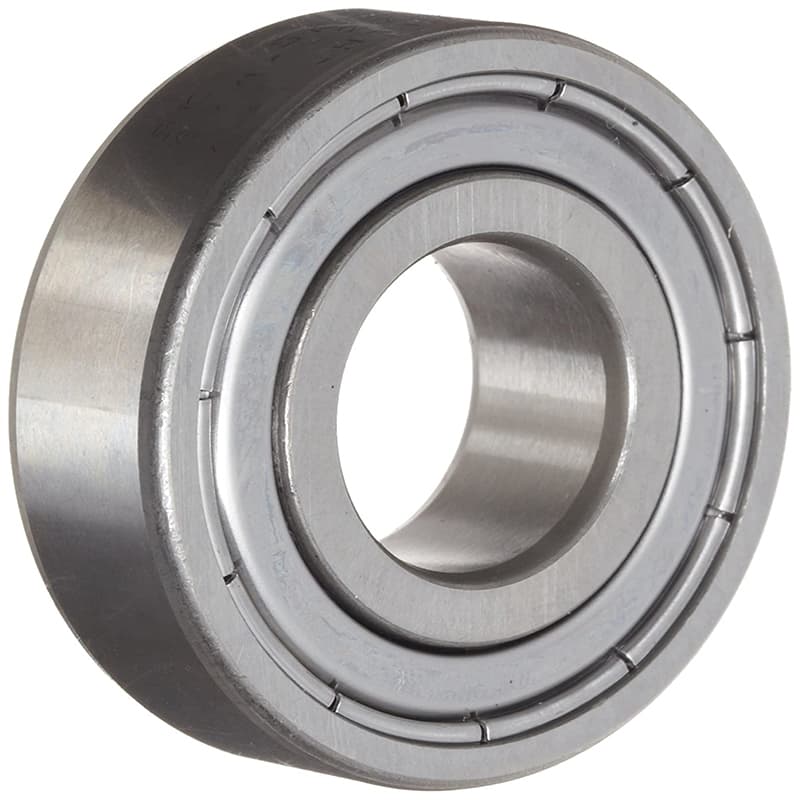
These advantages are real, but they have boundaries. A smart importer understands both the strengths and the limits to avoid application failures.
A Balanced View: Core Advantages and Their Limits
Let’s structure the advantages and link them directly to what they mean for your business and your customers.
| Key Advantage | What It Means in Practice | Typical Applications for Distributors | Important Limitations to Know |
|---|---|---|---|
| Versatility (Radial & Axial Loads) | One bearing can handle pushes from the side (radial) and pushes along the shaft (axial) in both directions. Simplifies design. | Electric motors (axial magnetic pull), gearboxes, household appliances, automotive accessories. | Axial load capacity is moderate. For very high axial loads, use a dedicated thrust bearing or tapered rollers. |
| Low Friction & High-Speed Capability | Point contact between balls and raceways minimizes rolling resistance. Allows very high rotational speeds with less heat generation. | High-speed spindles, turbochargers, dental drills, machine tools, small fans. | Requires high precision and good lubrication. Poor quality or contamination destroys this advantage. |
| Simple Design & Ease of Maintenance | Simple construction makes them easy to install and, in open or shielded designs, re-lubricate. Low cost to manufacture and replace. | Agricultural equipment, conveyor idlers, industrial fans, general machinery maintenance kits. | Sealed-for-life (DDU) versions cannot be re-greased. Their life is limited by the initial grease quantity and quality. |
| Availability and Standardization | Global standards (ISO) mean sizes and specifications are interchangeable. Massive production scale ensures easy sourcing and low cost. | Your entire inventory business. You can source from multiple qualified factories. | The downside of standardization is intense price competition. Quality differentiation becomes your key selling point. |
| Low Noise and Vibration (when well-made) | With high geometric accuracy and smooth surfaces, they operate very quietly, which is critical for consumer and office equipment. | Washing machines, air conditioners, computer fans, office equipment, power tools. | As discussed earlier, this is a function of manufacturing quality, not a guaranteed trait of all deep groove bearings. |
My insight: I have a client in Brazil who distributes bearings for the automotive aftermarket. He stocks vast quantities of deep groove ball bearings for alternators, water pumps, and tensioner pulleys. For him, the advantages are clear: they are cheap, readily available, and fit a huge number of car models. However, he learned a hard lesson when he tried to use a standard deep groove bearing in a high-performance car’s supercharger idler pulley. The axial load from the belt was too high, and the bearing failed quickly. We switched him to an angular contact ball bearing for that specific part. The advantage of "handling axial loads" has a limit. Your value as a distributor grows when you know not just what to sell, but where the deep groove bearing is the perfect, cost-effective5 choice and where it is not.
Conclusion
Setting clear acceptance criteria for noise, vibration, clearance, and precision is essential for importers. It protects your brand, ensures customer satisfaction, and builds a reputation for supplying reliable, high-quality components.
-
Explore this link to understand the versatility and applications of deep groove ball bearings in various industries. ↩ ↩ ↩ ↩ ↩
-
Learn how low friction enhances performance in high-speed applications, ensuring efficiency and longevity. ↩ ↩ ↩ ↩
-
Discover the significance of combined load handling in bearings and its impact on design and application. ↩ ↩ ↩ ↩ ↩
-
Explore the variety of sizes and seals available, ensuring you choose the right bearing for your needs. ↩ ↩ ↩ ↩
-
Find out why deep groove ball bearings are a budget-friendly choice for many applications, maximizing value. ↩ ↩
