
Your machinery is only as strong as its weakest part. In heavy-duty work, a bearing failure means expensive downtime. You need a bearing built to endure, not just function.
Premium tapered roller bearings for heavy-duty work are engineered with high-grade steel, precise P5/P6 tolerances, and robust design. They handle combined radial and axial loads in tough applications like mining, construction, and heavy manufacturing, ensuring reliability and long service life from a trusted factory source.
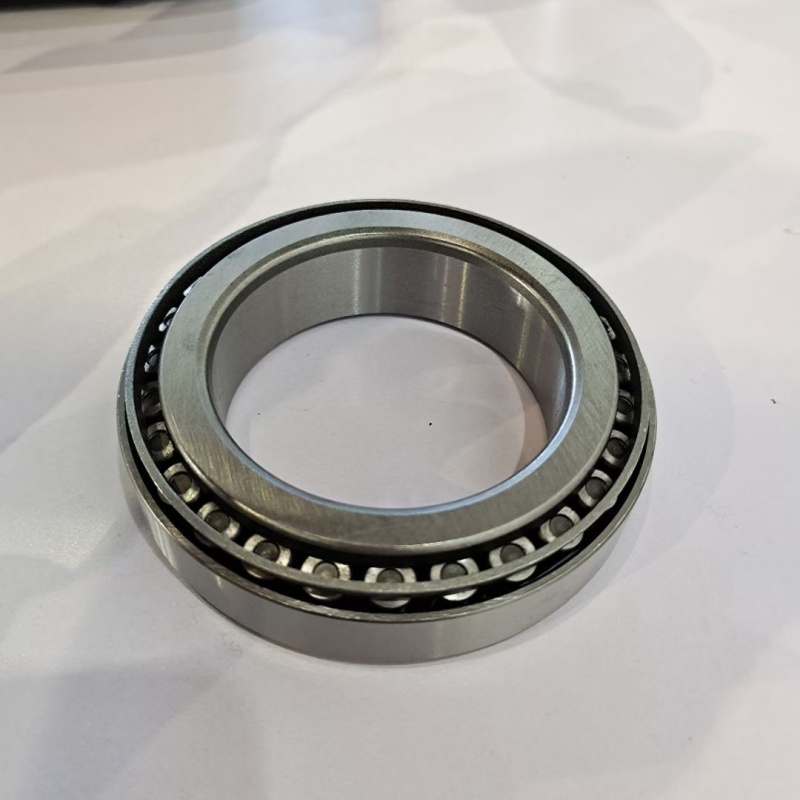
What makes a bearing truly "premium" for the hardest jobs? It’s more than a label. It’s a result of specific manufacturing choices and a deep understanding of real-world stress. Let’s explore the key questions to separate marketing claims from genuine heavy-duty performance.
Who makes the best tapered roller bearings1?
Everyone claims to be the best. But for a procurement manager like Rajesh, "best" means reliable supply, consistent quality, and value that protects his profit margin. It’s not just about a famous name; it’s about a dependable partner.
The best tapered roller bearings1 come from manufacturers with integrated control over production and inspection. Factories like FYTZ, which specialize in OEM/ODM2 and maintain strict quality from steel to shipment, offer the optimal balance of performance, customization, and cost-effectiveness for B2B wholesalers.
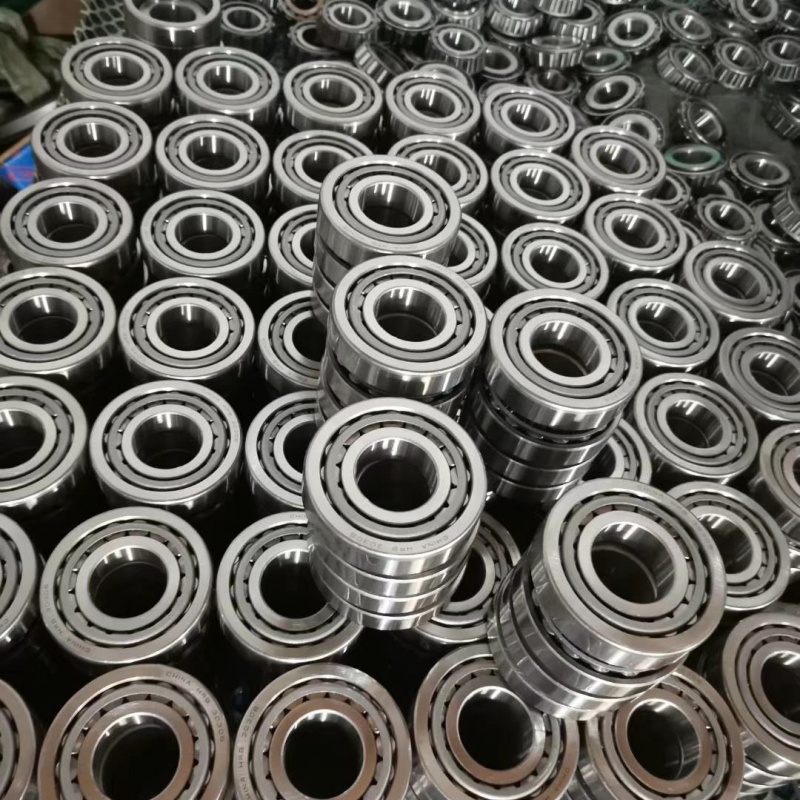
The search for the best manufacturer requires a practical checklist. You must look at their capabilities beyond the sales brochure.
A Practical Checklist for Evaluating Manufacturers
For a business that depends on bearing performance, choosing a supplier is a strategic decision. Here is a breakdown of critical factors:
| Evaluation Factor | Why It Matters for Heavy-Duty Bearings | Questions to Ask a Supplier |
|---|---|---|
| Factory Status vs. Trader | Integrated factories control material quality, heat treatment, and assembly. Traders add cost and layers, often losing technical traceability. | "Can I tour your production line3? Do you perform heat treatment in-house?" |
| Quality Certifications & Testing | Certifications (like ISO 9001) show a system. But actual testing reports (hardness, dimensional accuracy) prove the product. | "Can you provide test certificates for hardness and material composition for specific batches?" |
| Precision Grade Capability | Heavy-duty applications often need P5 or P6 precision for even load distribution and long life. | "Do you produce P5/P6 grade bearings as standard or on request? What is the cost difference?" |
| OEM/ODM2 Flexibility | Standard bearings might not fit perfectly. Custom seals, greases, or dimensions solve application-specific problems. | "Have you customized bearings for similar heavy-load applications? What was the process?" |
| Technical Support & Communication | When a problem occurs, you need direct answers from engineers, not just a salesperson. | "Who will be my technical point of contact if my customer has an installation or failure analysis question?" |
My insight: I’ve seen many distributors switch from well-known brands to specialized factories. One of our clients in Indonesia used to import European brands for conveyor systems in palm oil mills. The bearings were good, but lead times were long and prices were high. After a trial order of our P6 precision tapered rollers, they found the performance was equal in their application. More importantly, when they needed a special clearance for a high-temperature zone, we could adjust and deliver in half the time. The "best" maker solves your specific business challenges, not just sells you a box. For a wholesaler, a reliable factory partner is your strongest asset.
What bearings are best for heavy loads?
A "heavy load" is not one thing. The force on a wheel hub is different from the force inside a crusher. Choosing the wrong type for the load is a guaranteed path to premature failure and unhappy customers.
For most industrial heavy loads involving both radial (weight) and axial (thrust) forces, tapered roller bearings are the best all-around choice. Their conical design manages both forces effectively. For pure, extreme radial loads, spherical roller bearings are superior, while cylindrical rollers excel in very high-speed radial applications.

To select correctly, you must first diagnose the load profile. Let’s break down the primary bearing types and their ideal heavy-load scenarios.
Matching the Bearing to the Load Profile1
Think of load as a direction and magnitude. The table below helps match the bearing’s inherent strength to the job.
| Primary Load Type | Best Bearing Type(s) | How It Works | Common Heavy-Duty Applications2 |
|---|---|---|---|
| Combined Radial & Axial Loads | Tapered Roller Bearing3 | The tapered rollers and raceways create contact angles that resolve forces into both radial and axial components. The bearing is often used in matched pairs. | Vehicle wheel hubs, gearboxes, rolling mill stands, construction equipment axles. |
| Very High Radial Loads (with possible misalignment) | Spherical Roller Bearing4 | The barrel-shaped rollers align themselves with the spherical outer ring raceway. This allows them to handle misalignment and carry immense radial loads. | Vibrating screens, mining crushers, large fans, paper mill rollers. |
| Very High Radial Loads (precision, high-speed) | Cylindrical Roller Bearing5 | The line contact of cylindrical rollers provides the highest theoretical radial capacity. Some designs allow free axial movement of the shaft. | Machine tool main spindles, large electric motor shafts, pump shafts. |
| Extreme Axial (Thrust) Loads | Tapered Roller Thrust Bearing / Spherical Roller Thrust Bearing | These are designed specifically to handle force parallel to the shaft axis. They are typically combined with a radial bearing. | Vertical pumps, screw presses, crane hooks, marine propeller shafts. |
My insight: A distributor in South Africa once sent us a failed bearing from a mining winch. It was a spherical roller bearing that had cracked. Our initial thought was a material defect. However, upon discussing the application, we learned the winch experienced severe shock loads and some axial pull during braking. A spherical roller bearing handles radial shock well, but axial shock is not its primary strength. We recommended a customized tapered roller bearing set with a higher axial load rating and a toughened cage. The solution worked. The "best" bearing is the one engineered for the specific mix of forces in the application. Asking your customer about the nature of the load is the first step in providing a superior solution.
Which type of bearing is designed for the heaviest loads and can last for years?
Demanding "years of service" under the heaviest loads requires more than a standard catalog part. It requires a bearing system engineered for endurance, where every component is optimized for extreme stress over time.
For the absolute heaviest radial loads and harsh environments, spherical roller bearings1 are specifically designed to last for years. When manufactured to high precision (P5)2 with premium clean steel3 and advanced heat treatment, they provide unmatched durability in applications like mining and heavy processing.
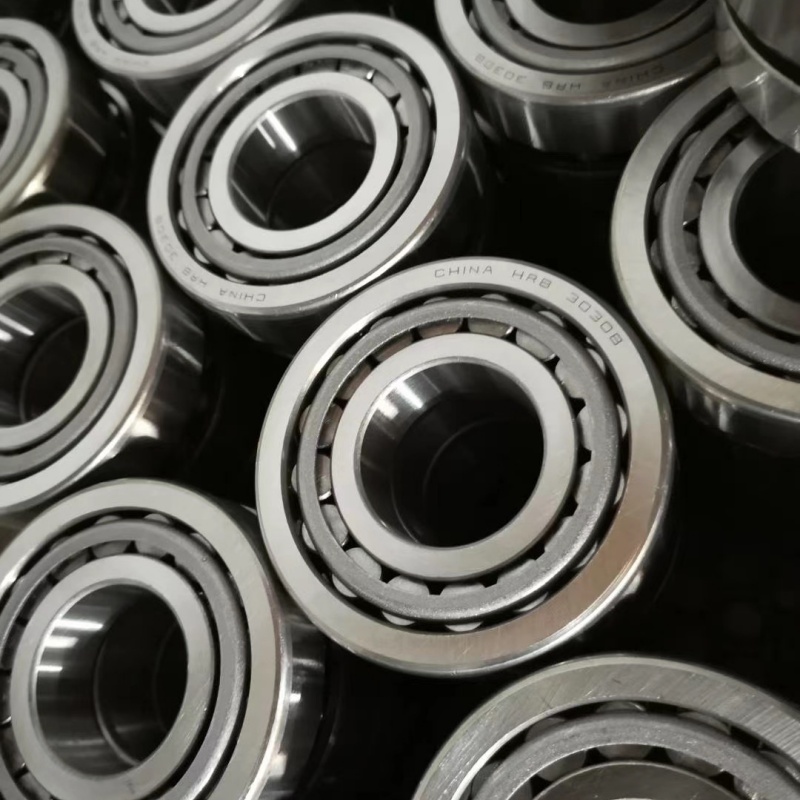
Long-term survival under maximum load is a multi-layered engineering challenge. It involves design, material science, and precision working together.
The Engineering Layers of an Ultra-Durable Bearing
A bearing that lasts for years under peak load is built like a fortress. Each layer contributes to its overall strength and longevity.
1. Foundational Design: Load Distribution and Self-Alignment
The spherical roller bearing’s design is its first advantage. The two rows of rollers share the radial load over a wide area. The spherical raceway of the outer ring allows the bearing to tolerate shaft deflection and housing misalignment. This self-alignment feature4 prevents edge-loading, a common cause of early failure in other bearing types under misaligned conditions. This inherent forgiveness is critical in heavy machinery where perfect alignment is difficult to maintain.
2. Core Material Integrity: Steel Quality and Heat Treatment
The bearing’s soul is its steel. For heaviest-load bearings, using vacuum-degassed, clean steel with minimal impurities (like oxides and sulfides) is essential. These impurities act as stress concentration points where cracks can start. The heat treatment process5 is equally vital. Processes like through-hardening or case carburizing create a hard, wear-resistant surface. The core remains tough to absorb shock loads. The goal is to prevent sub-surface fatigue6, which is the primary failure mode for heavily loaded rollers.
3. Precision Manufacturing for Even Stress Sharing
Imagine a team carrying a heavy beam. If one person is taller, they carry more weight. It’s the same with bearing rollers. If the rollers are not identical in size and the raceways are not perfectly shaped, one roller will carry a disproportionate share of the load. This overloaded roller will fail quickly. Manufacturing to P5 or even P4 precision tolerances ensures all rolling elements share the load equally. This even distribution is non-negotiable for achieving the calculated L10 life rating.
4. Protection System: Seals and Lubrication
A perfectly made bearing will die quickly if contaminated. In mining or cement plants, dust and moisture are everywhere. Premium seals—labyrinth designs7, triple-lip contact seals, or even hybrid designs—are part of the bearing system. Likewise, the initial grease must be high-temperature, high-load type, and the bearing should often be designed for re-lubrication to purge contaminants and replenish grease over its long service life.
My insight: We supplied spherical roller bearings1 to a cement plant in Egypt for their kiln support rollers. The previous supplier’s bearings lasted about 12-18 months. The plant manager was frustrated with the downtime. We didn’t just send a replacement. We analyzed the operating temperature, load cycles, and contamination. We provided a bearing with a P5 precision grade, a special high-temperature stabilizing heat treatment, and a reinforced steel cage. We also specified a dedicated high-temperature grease8. The result was a bearing that exceeded 3 years of continuous service. The bearing designed for the heaviest loads is a complete system tailored to its operating hell. Selling this deep understanding is what makes you a trusted supplier, not just a parts vendor.
How long do roller bearings last?
"Tell me the lifespan." This is a fair question from every buyer, but the answer is never a single number. Giving one can set wrong expectations and lead to disputes. Bearing life is a calculation of probability under defined conditions, not a guarantee.
Roller bearing lifespan1 is predicted by the L10 life rating2: the hours at which 90% of a tested bearing group should still be working. Actual life can range from under 10,000 to over 100,000 hours, drastically influenced by applied load, speed, lubrication quality, installation accuracy, and environmental cleanliness.
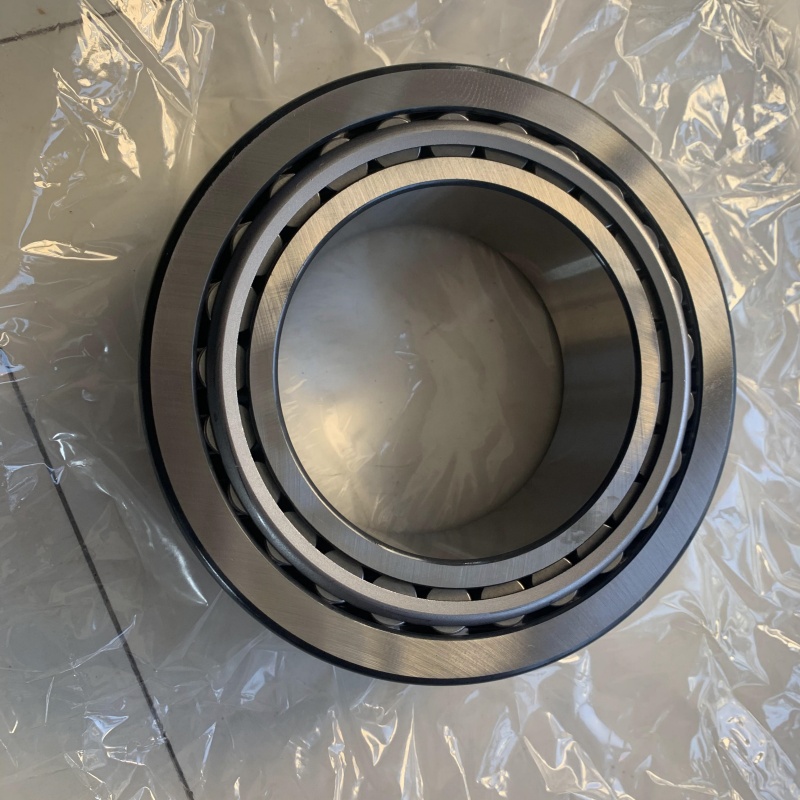
To move from a theoretical number to a realistic expectation, you must understand the powerful levers that shorten or extend bearing life.
The Real-World Levers of Bearing Lifespan
The catalog L10 life is a reference point under ideal lab conditions. In reality, several factors act as levers, multiplying or dividing that theoretical life. Understanding these gives you the power to advise customers and improve outcomes.
1. The Load-Life Relationship3 (The Most Powerful Lever)
The formula is L10 = (C/P)^(10/3). ‘C’ is the bearing’s load rating. ‘P’ is the actual load. The exponent (10/3 for roller bearings) creates a dramatic effect. This means if you double the actual load (P), the theoretical life is reduced to about (1/2)^(10/3) ≈ 1/10 of its original value. Conversely, selecting a bearing with a 20% higher load rating (C) can more than double the expected life. This is why for heavy-duty work, never "just match" the load; always consider a margin of safety.
2. The Installation Multiplier4
Poor installation is perhaps the leading cause of early "infant mortality" failure. Key errors include:
- Using a Hammer Incorrectly: Striking the bearing directly or applying force through the wrong ring causes brinelling (permanent dents in the raceway).
- Improper Fit: An inner ring fit that is too tight creates excessive preload and heat. A fit that is too loose allows the ring to creep and wear on the shaft.
- Contamination During Assembly: Putting a clean bearing into a dirty housing introduces abrasive particles from the start.
- Misalignment: Forcing a bearing onto a misaligned shaft bends the rings and creates immediate internal stress points.
3. The Lubrication Factor5
Lubrication fails in three ways: not enough, too much, or the wrong kind. Insufficient lubrication causes metal-to-metal contact and rapid wear. Over-greasing, especially in high-speed applications, causes churning and overheating, which breaks down the grease. The wrong grease type might not withstand the operating temperature, either melting away or hardening.
4. The Environmental Aggressor6
The operating environment acts as an aggressor. Dust wears down surfaces. Water causes rust and washes away grease. Chemical vapors can corrode metals. Even electrical currents from stray welding can cause pitting (electro-erosion). The bearing’s sealing solution must be chosen to combat the specific environmental threats.
My insight: A customer in Pakistan distributing bearings for agricultural tractors had constant complaints about short bearing life in water pump applications. The bearings themselves were fine. The problem was that farmers were power-washing their tractors, forcing water past simple seals into the bearing housing. We switched him to supplying our tapered roller bearings with integrated, high-contact lip seals (RS type) for that specific application. The complaint rate dropped by over 70%. The bearing’s lifespan was not a manufacturing issue; it was an application mismatch. By understanding the real-world levers, we turned a problem into a satisfied customer base for him. Your knowledge of these factors adds immense value to your service.
Conclusion
Premium heavy-duty tapered roller bearings deliver longevity through precise engineering, quality materials, and correct application. Choosing the right factory partner ensures you get this performance consistently.
-
Understanding the average lifespan helps in setting realistic expectations for maintenance and replacement. ↩ ↩ ↩ ↩ ↩ ↩
-
The L10 life rating is crucial for predicting bearing performance under specific conditions. ↩ ↩ ↩ ↩ ↩
-
This relationship is key to understanding how load impacts the longevity of roller bearings. ↩ ↩ ↩ ↩
-
Learn how installation quality can drastically affect bearing performance and longevity. ↩ ↩ ↩
-
Proper lubrication is essential for preventing wear and ensuring optimal bearing function. ↩ ↩ ↩
-
Understanding environmental threats can help in selecting the right bearings for specific applications. ↩ ↩
-
Explore how labyrinth designs protect bearings from contamination and extend their life. ↩
-
Find out why high-temperature grease is crucial for the performance of bearings in extreme conditions. ↩