
Receiving a sample box from a new supplier is exciting but risky. A bad bearing sample means future headaches, returns, and lost customers. You need a clear method to test quality before you commit to a large order.
To properly evaluate deep groove ball bearing samples, conduct systematic checks on dimensional accuracy, radial clearance, rotation smoothness, noise level, material hardness, and sealing integrity. Compare these results against standard specifications and your current supplier’s benchmarks to make an informed sourcing decision.
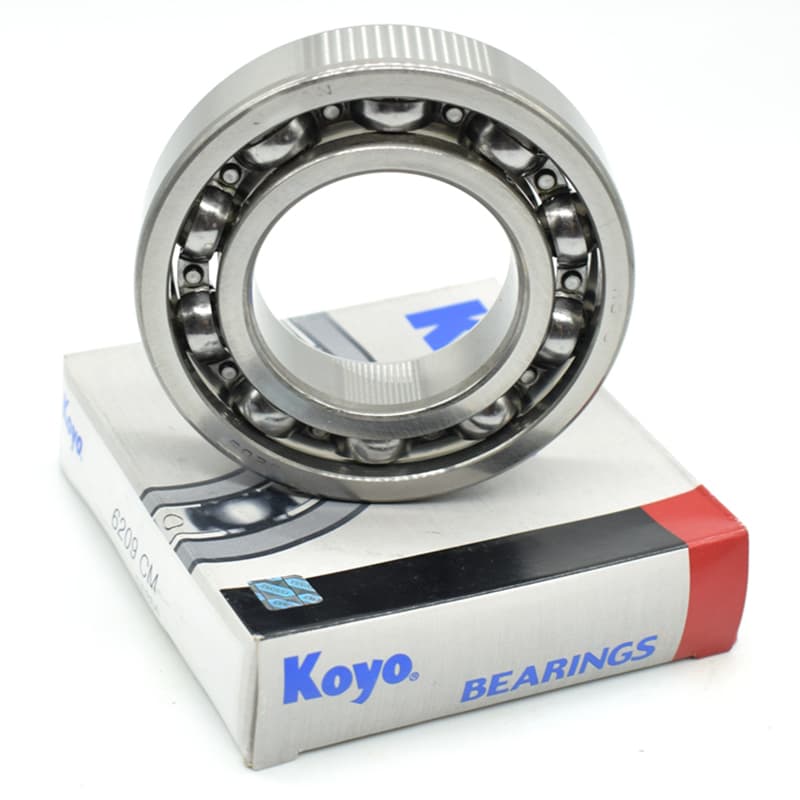
A sample tells a story about the factory’s capabilities and attention to detail. But you need to know what chapters to read. Let’s break down a practical evaluation process and clarify some common bearing terms you will encounter.
What is a deep groove1 in a ball bearing?
You see the name on every catalog. But what does the "deep groove1" actually do? It’s not just a shape; it’s the core feature that defines this bearing’s versatility and limits. A poorly machined groove leads to poor performance.
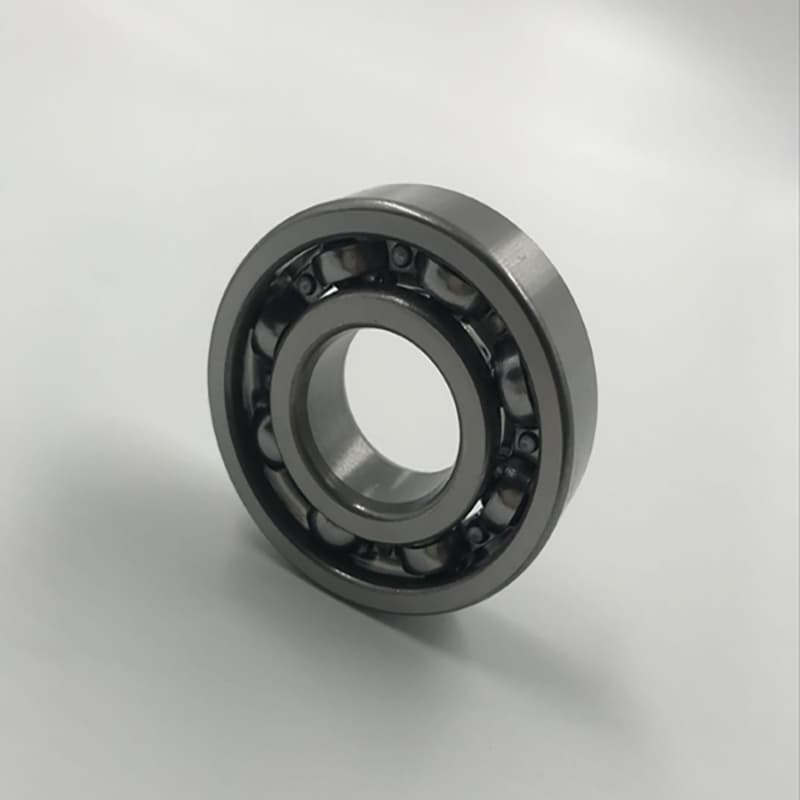
The deep groove1 is the continuous, deep raceway on both the inner and outer rings of the bearing. Its primary function is to securely guide the balls, enabling the bearing to handle significant radial loads and moderate axial loads from both directions, unlike other bearing types.
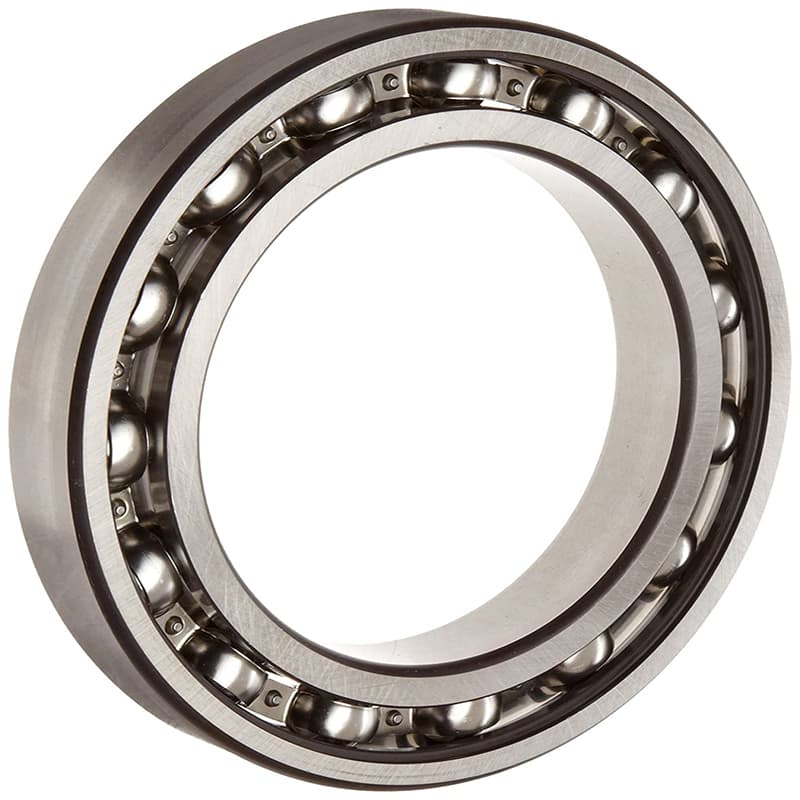
Understanding the groove’s role is the first step in evaluating if a bearing is well-made. Its geometry directly impacts load capacity, speed, and life.
The Critical Role of Groove Geometry and Quality
The groove’s design is a precise engineering compromise. Its depth, curvature, and surface finish2 are not arbitrary. They determine how the bearing interacts with the balls under load.
1. Groove Geometry: The Load Path
The groove’s curvature radius is slightly larger than the ball’s radius. This creates a small contact area, minimizing friction for high-speed operation. The depth of the groove serves two key purposes:
- Radial Load Support: It provides a secure path for the balls to carry weight perpendicular to the shaft.
- Axial Load Capacity: The depth allows the balls to climb slightly up the groove walls when an axial (thrust) force is applied. This gives deep groove1 bearings their unique ability to handle two-way axial loads, unlike angular contact bearings designed for one direction only.
2. Manufacturing Quality: What to Inspect in a Sample
When you hold a sample, the groove tells you about the factory’s machining skill. Here are key inspection points:
| Inspection Point | How to Check (Visual/Tool) | What a Good Result Indicates | What a Bad Result Means |
|---|---|---|---|
| Surface Finish (Raceway) | Use a magnifying glass or feel with a clean fingertip. | A smooth, mirror-like finish with no visible tool marks. | Roughness creates vibration, increases wear, and generates heat and noise. |
| Groove Contour Consistency | Compare inner and outer ring grooves under bright light. | Identical, symmetrical curvature on both rings. | Inconsistent contour causes uneven stress on balls, leading to premature fatigue and reduced load capacity. |
| Absence of Defects | Visual inspection for nicks, dents, or discoloration. | A pristine, uniform surface. | Nicks or dents act as stress risers, starting cracks. Discoloration may indicate improper heat treatment. |
| Transition Radii | Look at where the groove meets the ring shoulders. | Smooth, blended transitions. | Sharp corners create stress concentrations that can cause ring fracture under heavy load. |
My insight: I once worked with an importer in Brazil who complained about inconsistent bearing life in small electric motors. He sent us his current supplier’s samples and ours. Under a microscope, the difference was clear. His old supplier’s bearings had visible, circular machining marks in the groove. Our bearings had a super-finished raceway. Those tiny marks created points of increased friction and heat. By simply switching to a bearing with a better-finished groove, his customer’s motor failure rate dropped. The "deep groove1" is where the bearing does its work. Its quality is the foundation of everything else.
What does DDU1 mean on a bearing?
You see abbreviations like "DDU1" or "ZZ" stamped on bearings. They are not random letters. They are a universal code telling you about the bearing’s protective shields or seals. Choosing the wrong type for the application is a common mistake.
"DDU1" is a suffix code indicating a bearing is sealed on both sides with Contact Rubber Seals2. "DD" means double-sided seals. The "U" specifies the seal is made of rubber (usually Nitrile) and is in contact with the inner ring, providing better protection against dust and moisture but with slightly higher friction than non-contact shields.
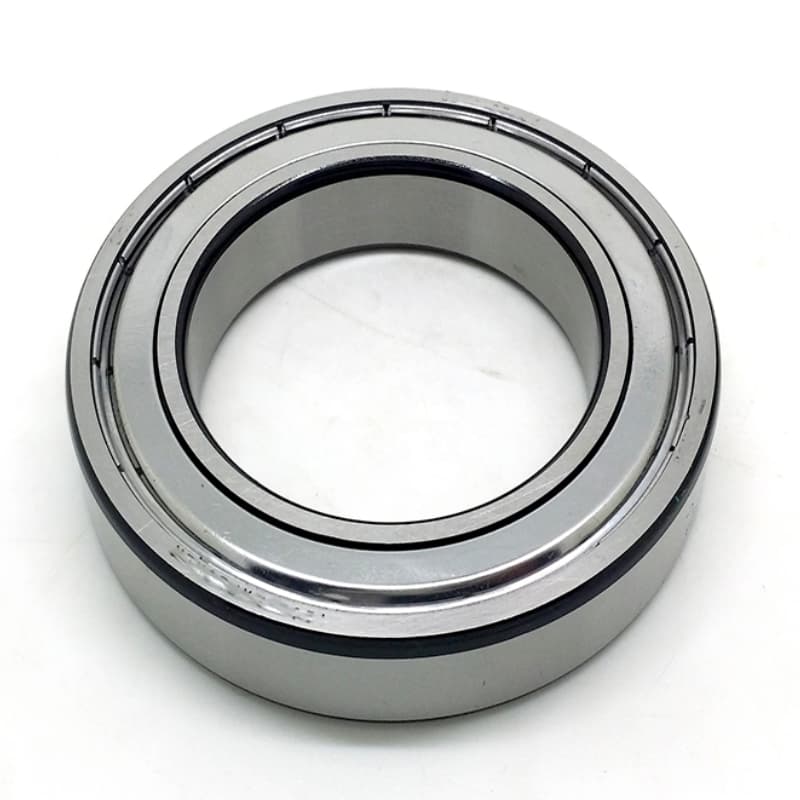
Sealing type directly affects bearing life, speed capability, and maintenance needs. Understanding these codes helps you match the bearing to the environment.
Decoding Bearing Sealing and Shielding Suffixes
The suffix tells a story about protection level and application suitability. Here is a breakdown of common sealing/shielding codes for deep groove ball bearings3:
| Suffix Code | Protection Type | Seal/Shield Material | Contact with Inner Ring? | Best For | Avoid In |
|---|---|---|---|---|---|
| Open | No seal or shield. | N/A | N/A | Clean, high-speed applications where grease can be replenished. | Dirty, wet, or dusty environments. |
| ZZ | Metal Shields on both sides. | Steel | No, there is a small gap. | Keeping grease in and large debris out. Moderate speed. | Wet or fine dust environments (dust can pass through gap). |
| 2RS / RS | Rubber Seals on both sides (RS) or one side. | Nitrile Rubber4 (NBR) | Yes, light contact. | General industrial use with dust or moisture. Most common sealed type. | Very high-speed applications (friction generates heat). |
| DDU1 / 2RU | Rubber Seals with improved lip design. | Nitrile Rubber4 (NBR) | Yes, firm contact. | Harsh environments with heavy dust, moisture, or occasional water splash. | The highest speed applications. Good all-purpose industrial seal. |
| LLU / 2LU | Non-Contact Labyrinth Seals. | Combination (metal + rubber) | No, a complex gap exists. | Very high speeds in moderately dirty conditions. Excellent grease retention. | Submerged or high-pressure washdown applications. |
Evaluating Seals in a Sample: When you get a DDU1 sample, don’t just look at it. Test it. Press the rubber seal lightly with a plastic tool. It should be flexible but spring back firmly. The seal lip should sit evenly around the entire inner ring with no gaps or deformities. A crooked or torn seal will fail quickly in the field. Also, ask the supplier about the grease packed inside. A DDU1 bearing is typically lubricated for life, so the grease quality is locked in.
My insight: A distributor in Egypt supplying bearings for agricultural irrigation pumps kept facing failures. He was using ZZ (metal shield) bearings. The problem was fine sand and water. The ZZ shield’s gap let in abrasive slurry. We suggested he test a batch of our DDU1 bearings. The firm rubber seal kept the contaminants out much more effectively. His return rate on that application fell sharply. The code on the bearing is a crucial spec. Misunderstanding "DDU1" versus "ZZ" can be the difference between a successful product and a failed one. Always verify the sealing matches the actual operating environment.
What is a deep groove?
This seems like a repeat, but it’s a fundamental question. In machining, a "deep groove" is a specific challenge. It refers to creating a deep, narrow, and precise channel in a metal part. For bearings, this process defines performance.
In machining and bearing context, a "deep groove" is a deep, continuous channel cut into a ring’s inner diameter (ID) or outer diameter (OD). In bearings, it’s the raceway for balls. Its precise depth and curvature, achieved through grinding and honing, are critical for load distribution and smooth operation.
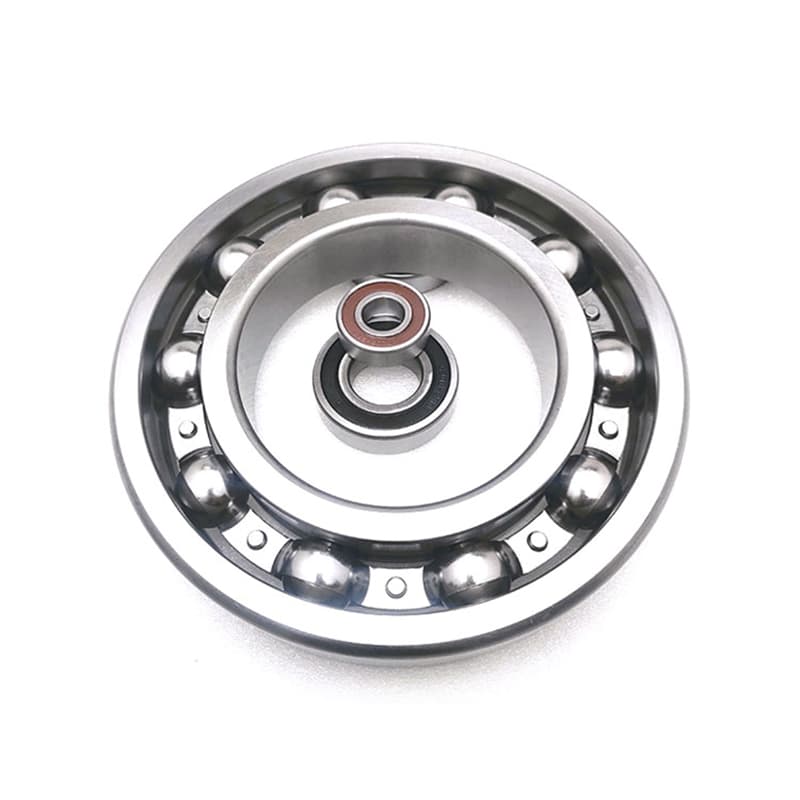
Creating a perfect deep groove is a test of a factory’s machining skill and quality control. It involves multiple steps with tight tolerances.
The Machining Journey of a Bearing Raceway
The groove does not start perfect. It is shaped from rough steel through a series of precise operations. Each step adds accuracy and improves surface integrity.
1. The Process Steps: From Turning to Honing
- Turning/Forging: The ring starts as a rough shape. The approximate groove location is formed.
- Heat Treatment: The rings are hardened to the required core and surface hardness. This step is critical for wear resistance but can cause slight distortion.
- Grinding: This is the key precision step. Diamond or CBN grinding wheels, guided by precision CNC machines, cut the hardened steel to form the exact groove geometry. Both the inner and outer ring grooves are ground to tolerances within microns (0.001mm).
- Honing/ Superfinishing: After grinding, the raceway may undergo honing. This is a fine polishing process using abrasive stones. It removes the tiny peaks left by grinding, creating an ultra-smooth, mirror-like surface that reduces friction, noise, and heat generation.
2. Evaluating Machining Quality in Your Sample
You can assess the outcome of this process. Here’s what to look for and measure:
| Quality Aspect | Evaluation Method | Tool Needed | Acceptable Standard |
|---|---|---|---|
| Dimensional Accuracy | Measure groove diameter (raceway O.D. for inner ring, raceway I.D. for outer ring) at multiple points. | Internal/External Micrometer (精度 0.001mm). | Must conform to ABEC/ISO tolerance class (e.g., P0, P6). Values should be consistent. |
| Roundness (Circularity) | Measure the raceway diameter while slowly rotating the ring. Note the maximum and minimum reading. | Dial Indicator on a V-block or precision spindle. | The variation (out-of-roundness) should be within a few microns. A high variation causes vibration. |
| Surface Roughness (Ra Value) | Quantitatively measure the fine peaks and valleys on the raceway surface. | Surface Roughness Tester. | For a good quality bearing, Ra should be ≤ 0.2 μm (micrometers). A lower Ra is better for high-speed, low-noise applications. |
| Visual Finish | Inspect under bright, oblique light. | Magnifying Lens (10x). | No visible grinding swirls, burns (bluish discoloration from overheating), or chatter marks (wavy patterns). |
My insight: We had a potential client from Vietnam who was very technical. He visited our factory not to talk price, but to see our grinding machines and our in-process inspection logs. He took one of our sample bearings and one from his current supplier to a local metrology lab. The lab report showed our bearing had a raceway roundness error of 1.2 microns and a surface roughness (Ra) of 0.15 μm. His current supplier’s sample showed 3.5 microns and 0.4 μm. The numbers told the whole story. His current bearings were causing vibration in his precision machinery. The "deep groove" is the heart of the bearing, and its quality is measured in microns. A supplier that controls these microns controls the bearing’s fate.
What is the use of UCF bearing1?
A bearing alone cannot mount itself. "UCF" refers to a complete, ready-to-mount unit. It solves the problem of complex housing design and alignment for distributors and end-users. It’s a plug-and-play solution.
A UCF bearing1 is a housed bearing unit consisting of a "UCP" pillow block (a specific housing type) mounted with a "UC" insert bearing (usually a deep groove ball bearing with an extended inner ring and set screw locking). Its primary use is to provide easy and secure mounting of a bearing onto a straight shaft in various industrial applications.
Understanding housed units like UCF is crucial because they represent a high-value, complete product for your customers. Evaluating them involves checking both the housing and the bearing insert.
Understanding and Evaluating Pillow Block2 Bearing Units
The "UCF" code follows a standardized system (like the American "U" series). Breaking it down helps in specification and inspection.
1. Decoding the "UCF" Designation:
- U: Indicates a Bearing Unit (as per the series).
- C: Specifies the Housing Type3. "C" means a Pillow Block2 (also called Plummer Block) with a two-bolt base. There are other types: "A" for 4-bolt, "F" for flanged, etc.
- F: Indicates the Insert Bearing Type4. "F" typically means the insert bearing has a cylindrical outer surface and is secured in the housing by a tight fit and sometimes a locking device. The insert itself is often a "UC" series deep groove ball bearing.
2. Key Components to Evaluate in a UCF Sample:
A UCF unit has more parts to check than a bare bearing. Your evaluation must be comprehensive.
| Component | Key Inspection Points | Why It Matters |
|---|---|---|
| Housing (Pillow Block2) | Material: Should be gray cast iron (GG25) or ductile iron, not cheap plastic or soft steel. Tap it; it should have a solid, dense sound. Machining: The base mounting surface should be flat. The bolt holes should align correctly. Fit with Insert: The bearing insert should fit snugly into the housing bore without excessive play. It should not be loose. |
A weak housing cracks under load. Poor machining causes misalignment when bolted down. A loose fit lets the insert spin, damaging both parts. |
| Insert Bearing (UC) | Inner Ring Extension: The inner ring is longer on one side. This is for set screw locking. Set Screws: There should be two, made of hardened steel. Check they are not stripped. Sealing: The insert usually has rubber seals (like RS or DDU) to protect it inside the housing. |
The extended ring and set screws provide positive locking to the shaft. Soft set screws will wear and slip. Good seals are vital as housed units are often in dirty locations. |
| Overall Assembly | Pre-lubrication5: The unit should be adequately greased. Shaft Fit: Try the unit on a standard diameter shaft. It should slide on smoothly, and the set screws should lock it securely without cocking the unit. |
Ready-to-use convenience is a selling point. Easy installation reduces your customer’s labor time. |
My insight: For distributors like Rajesh, housed units are popular sellers because they are easy to inventory and install. However, we once had a batch return from a customer in Bangladesh. The UCF units were failing quickly on conveyor systems. Upon inspection, we found the issue wasn’t the bearing insert, but the housing. The supplier had used a sub-standard cast iron that was porous. Under load, the housing itself was deforming, misaligning the bearing inside. We fixed this by sourcing our own high-quality castings and controlling the entire assembly. When you evaluate a UCF sample, you are evaluating a system. Check every link in that chain—housing, insert, locking, and sealing. A failure in any one part makes the whole unit worthless.
Conclusion
Evaluating bearing samples requires a methodical approach, examining dimensions, finish, seals, and assembly. Understanding key terms like deep groove, DDU, and UCF empowers you to make smarter, more confident sourcing decisions.
-
Explore this link to understand the significance and applications of UCF bearings in various industries. ↩ ↩ ↩ ↩ ↩ ↩ ↩ ↩ ↩ ↩ ↩ ↩ ↩ ↩ ↩
-
Learn about Pillow Block bearings, their design, and how they facilitate easy mounting in machinery. ↩ ↩ ↩ ↩ ↩
-
Understanding different housing types can help you choose the right bearing unit for your needs. ↩ ↩
-
Discover the various types of insert bearings and their specific uses in industrial applications. ↩ ↩ ↩
-
Learn about the importance of pre-lubrication in ensuring the longevity and efficiency of bearing units. ↩