
Your spherical roller bearing fails, but the rollers and raceways look fine. The cage is cracked or worn out. This small, often overlooked component just caused a major breakdown. The cage material choice matters more than you think.
The cage (or retainer) in a spherical roller bearing, made from pressed steel, machined brass, or injection-molded polyamide, plays a critical role in guiding rollers, retaining lubricant, and ensuring smooth operation. The "best" material depends on the application: steel for high-speed and high-temperature robustness, brass for excellent lubrication and shock resistance, and polyamide for low weight, corrosion resistance, and quiet operation at moderate temperatures.
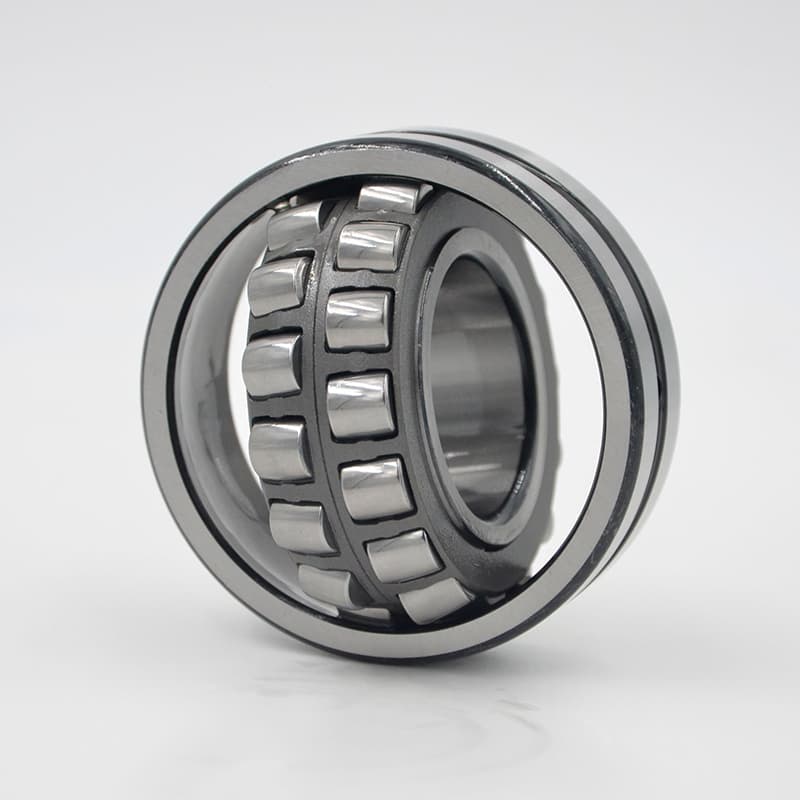
The bearing cage is the unsung hero. It doesn’t carry load, but it manages the load carriers. Choosing the wrong cage material is like having a strong engine with a weak transmission. Based on feedback from heavy industry clients worldwide, I’ve seen how cage failures dictate bearing life in harsh conditions. Let’s compare these materials, explore other cage options, understand bearing types, and define what "best" really means.
Which is better brass cage1 or steel cage2 bearings?
You are ordering bearings for a vibrating screen or a hot gearbox. The supplier offers both brass and steel cage2s. The price is different. You need to know which one will last longer in your specific machine.
There is no universal "better" choice between brass and steel cage2s. A brass cage1 (machined solid brass) is generally better for applications with poor lubrication, high shock loads, or where corrosion resistance3 is needed. A steel cage2 (typically pressed or stamped from sheet steel) is better for very high-speed applications, very high temperatures, and is usually more cost-effective for standard conditions.
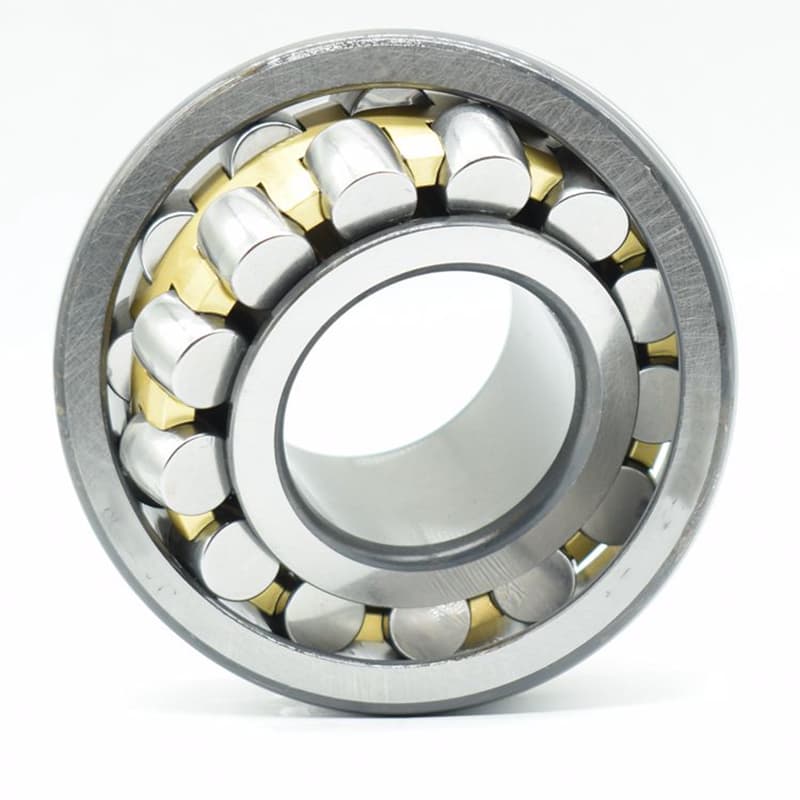
The choice is an engineering trade-off between performance, environment, and cost. Let’s examine the trade-offs in detail.
A Detailed Comparison for Informed Selection
The cage material influences bearing behavior in several key areas.
1. Performance Under Lubrication Stress:
- Brass Cage Advantage: Solid brass has excellent "emergency running" properties. If lubrication momentarily fails, brass has a lower tendency to gall or weld to the rolling elements compared to steel. It also distributes lubricant well due to its material properties. This makes it a favorite in applications where lubrication is marginal or contaminated, common in mining (South Africa, Chile) and quarrying.
- Steel Cage Consideration: Pressed steel cage2s rely more on a consistent lubricant film. Under poor lubrication, the risk of friction and wear at the contact points with rollers is higher.
2. Response to Shock and Vibration:
- Brass Cage Advantage: Machined brass is tougher and more ductile. It can absorb impact energy and deform slightly without cracking, which is crucial in applications like vibratory feeders, crushers, and rolling mills where shock loads are frequent.
- Steel Cage Consideration: Pressed steel cage2s are strong but more rigid. Under extreme shock, they are more prone to permanent deformation or fracture.
3. Temperature and Speed Capability:
- Steel Cage Advantage: Steel retains its strength at higher temperatures. For applications like dryer bearings, kiln cars, or high-speed gearboxes where temperatures exceed 120°C, a steel cage2 is mandatory. Polyamide cages would melt, and brass would soften.
- Brass Cage Limit: Brass begins to lose significant strength above 150-200°C. It is not suitable for very high-temperature environments.
4. Corrosion and Chemical Resistance:
- Brass Cage Advantage: Brass offers better resistance to corrosion from water and some chemicals compared to standard steel. This is valuable in paper mills, marine applications, or food processing where moisture is present.
- Steel Cage Consideration: Standard steel cage2s require a coating (like zinc or manganese phosphate) for corrosion resistance3. Stainless steel cage2s are an option but are more expensive.
5. Cost and Manufacturing:
- Steel Cage Advantage: Pressed steel is the most economical to produce. This makes steel-caged bearings the standard, default choice for most general industrial applications.
- Brass Cage Disadvantage: Machining solid brass is more material-intensive and involves more processing steps, making brass-caged bearings 15-30% more expensive.
Selection Guide Based on Application:
| Your Application’s Primary Challenge | Recommended Cage Material | Why It’s Better Here |
|---|---|---|
| Heavy shock loads, vibrating machinery | Machined Brass | Ductility absorbs impact without cracking. |
| High temperature (>120°C) | Pressed or Machined Steel | Maintains strength and shape. |
| Marginal or contaminated lubrication | Machined Brass | Better emergency running properties. |
| High-speed operation | Pressed Steel (low mass) | Lower centrifugal forces, more stable. |
| Corrosive environment (moisture) | Machined Brass or Coated Steel | Better inherent corrosion resistance3. |
| General purpose, cost-sensitive | Pressed Steel | Provides reliable performance at the best price. |
My Insight from the Market:
Our sales data shows clear patterns. For clients in the mining sectors of Australia and Russia, brass-caged spherical roller bearings (series 22300, 22200) are the top sellers. They trust brass for the brutal, shock-filled, poorly lubricated environment inside a crusher. Conversely, for clients in the cement industry in Turkey or Vietnam, who need bearings for hot kiln hoods, steel cage2s are non-negotiable. For our distributor clients like Rajesh in India, stocking both is key. He knows that for a high-value customer with a critical vibrating screen, recommending a brass cage1 bearing justifies the higher price by promising longer life and less downtime. The "better" cage is the one that solves the dominant problem in your specific application.
What materials are used in bearing cages?
Beyond brass and steel, you see bearings with black plastic cages or even ones made from exotic alloys. The cage material palette is broader than many realize. Each material brings a unique set of properties to the table.
Common materials used in bearing cages include pressed or machined low-carbon steel1, stainless steel2, machined brass3 or bronze, polyamide (PA66, often glass-fiber reinforced), and, for special applications, light alloys4 like aluminum or high-performance polymers5 such as PEEK. The choice balances strength, speed, temperature, weight, and corrosion resistance.
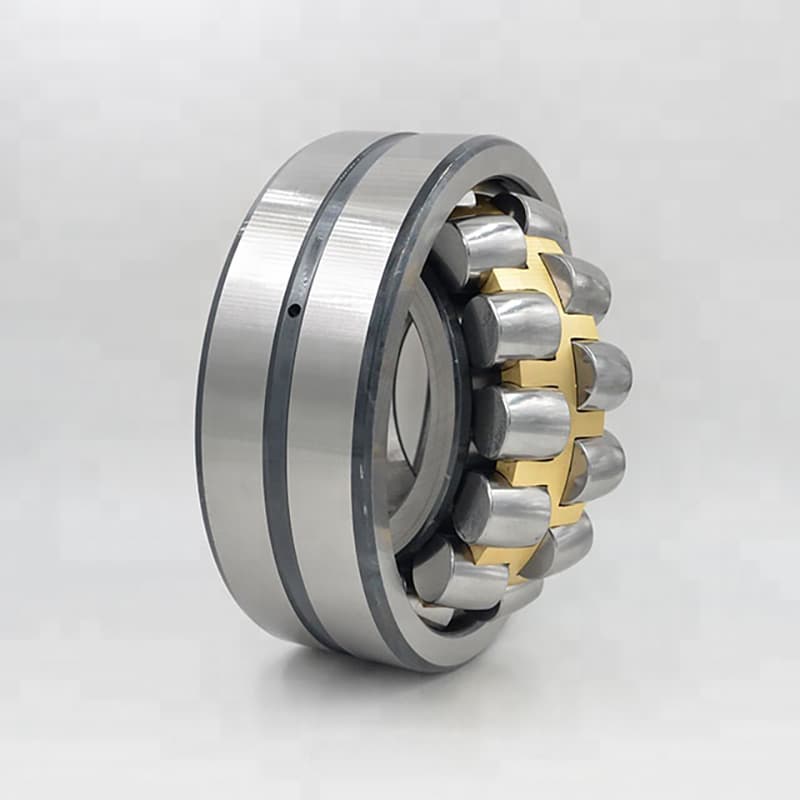
The cage is a component where material science meets practical engineering. Let’s explore this wider material landscape.
The Full Spectrum of Cage Materials and Their Niches
Each material family serves specific application demands.
1. Steel Cages (The Industrial Workhorse):
- Pressed Steel (Sheet Steel): The most common. Low cost, good strength-to-weight ratio, suitable for high speeds. Used in the vast majority of ball bearings and many roller bearings. Often coated for corrosion protection.
- Machined Steel (From tube or solid): Used for larger bearings or complex cage designs where pressed steel isn’t strong or precise enough. Common in large spherical roller bearings and tapered roller bearings.
- Stainless Steel: Used in corrosive environments (chemical, food, marine) or where high cleanliness is required (pharmaceutical). Offers excellent corrosion resistance but at a higher cost.
2. Non-Ferrous Metal Cages (The Performance Enhancers):
- Machined Brass/Bronze: As discussed, valued for ductility, emergency running, and corrosion resistance. The go-to for heavy-duty, shock-prone applications.
- Light Alloys (Aluminum, Titanium): Used in aerospace and high-speed machine tools where minimizing rotating mass is critical to reduce centrifugal forces and heat generation. Not common in general industrial spherical roller bearings due to cost.
3. Polymer Cages (The Modern Specialists):
- Polyamide 66 (PA66), often with glass fiber (PA66-GF25): This is the common "polyamide" or "nylon" cage.
- Advantages: Very light weight (reduces centrifugal force), inherently corrosion-proof, excellent damping (reduces noise and vibration), and good lubricant retention.
- Disadvantages: Limited temperature range6 (typically -40°C to +120°C continuous). Can be sensitive to certain chemicals and hydrolysis (degradation by water at high temps).
- High-Performance Polymers (PEEK, PI): For extreme conditions.
- PEEK (Polyetheretherketone): Can withstand temperatures over 250°C, is chemically resistant, and has good mechanical strength. Used in severe applications like downhole drilling tools.
- PI (Polyimide): Exceptional high-temperature stability (over 300°C).
Material Selection Matrix for Spherical Roller Bearings:
| Material | Key Properties | Ideal Application For Spherical Roller Bearings | Temperature Limit (Continuous) |
|---|---|---|---|
| Pressed Steel | Cost-effective, high-speed capable, strong. | General industry, conveyors, fans, gearboxes. | Up to 150°C (with proper heat treatment). |
| Machined Steel | High strength, precise, robust. | Large heavy-duty machinery, mining equipment. | Up to 200°C. |
| Machined Brass | Ductile, good emergency running, corrosion resistant. | Vibrating screens, crushers, paper mills, marine. | Up to 150-200°C. |
| Polyamide (PA66-GF) | Light, quiet, corrosion-proof, good lubricant retention. | Electric motors, food processing, textile machinery, where noise is a concern. | Up to 120°C. |
| Stainless Steel | Excellent corrosion resistance. | Chemical industry, food & beverage, washdown environments. | Up to 150°C. |
My Insight on the Evolving Material Landscape:
Ten years ago, the choice was mostly steel vs. brass. Today, polyamide cages are increasingly requested, especially for our exports to Europe and North America for electric motor bearings. Clients value the lower noise and energy savings from reduced friction. However, we are very cautious with polyamide in hot, humid climates like Indonesia or the Middle East. We always ask about the operating temperature. A polyamide cage in a sun-exposed conveyor pulley bearing in Egypt will fail quickly. For special industries, we have sourced PEEK cages for clients in the oil and gas sector. The key is that there is no single "best" material. There is only the "most suitable" material for the operating envelope. As a manufacturer, offering a range of cage options allows us to tailor the bearing to the client’s precise needs, moving from a commodity to a customized solution.
What are the different types of spherical roller bearings1?
You need a spherical roller bearing for misalignment. You search and find many codes: 222, 223, 230, 231, 232, 239. They look similar but have different size proportions and capacities. Knowing the differences is crucial for correct selection.
The main types of spherical roller bearings1 are distinguished by their series design2, which relates to their cross-sectional dimensions and internal design. Common series include the 22200 series3 (light/medium), 22300 series4 (heavy duty), 23000/23100/23200 series5 (asymmetric rollers6, higher capacity), and 23900 series7 (for very heavy radial loads). These types differ in load rating, speed capability, and suitability for specific applications like vibrating machinery or steady radial loads.
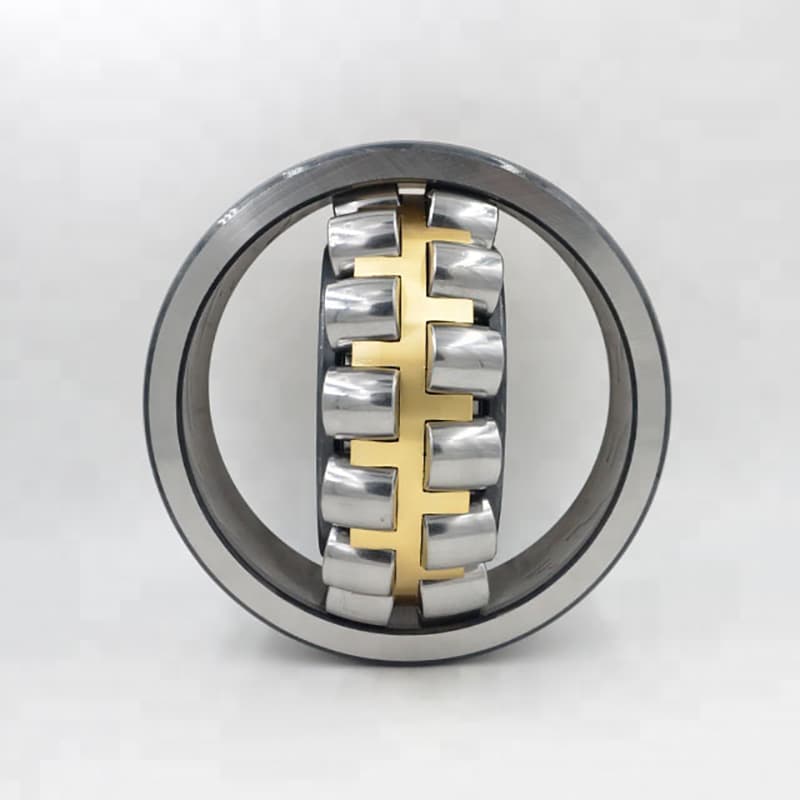
The series number tells an experienced engineer about the bearing’s proportions and intended use before even seeing the dimensions.
Decoding Spherical Roller Bearing Series for Optimal Use
The internal geometry, not just the size, defines the bearing’s personality.
1. Standard Symmetric Roller Designs (22200, 22300 Series):
These have barrel-shaped rollers that are symmetrical.
- 22200 Series: Characterized by a wide inner ring with a fixed center flange and two guide flanges on the outer ring. The rollers are guided by the inner ring flange. This design provides high radial load capacity and good misalignment capability (2-3°). It is very common and versatile.
- 22300 Series: Similar to the 222 series but heavier and wider for a given bore size. It has an even higher radial load capacity and is used for extremely heavy loads, often in mining and heavy machinery.
2. CC, CA, and MB Designs – Asymmetric Rollers (23000, 23100, 23200 Series):
This is a significant evolution. The rollers are asymmetrical (shaped like a barrel but with one end larger).
- Design Concept: The asymmetric shape, combined with a floating center guide ring (not a fixed flange), allows for more and longer rollers to be fitted into the same space. This dramatically increases the load rating.
- Common Series:
- 23000 Series (CC design): The classic asymmetric design for very high radial load capacity.
- 23100 Series (CA design): An enhanced design with improved roller guidance and cage, offering higher speed capability.
- 23200 Series: Even larger cross-section for maximum capacity.
- Advantage: For the same bore and outside diameter, an asymmetric roller bearing (e.g., 23130) can have a 20-30% higher load rating than a symmetric one (e.g., 22230).
3. 23900 Series (Cylindrical Bore, High Capacity):
This series is designed specifically for very heavy pure radial loads with minimal axial load. It has a large cross-section and is often used in rolling mill applications.
Choosing the Right Type: A Comparative Guide
| Bearing Type (Series Example) | Internal Design | Key Strength | Typical Application |
|---|---|---|---|
| 22230 E | Symmetric rollers, fixed inner ring flange. | Good all-rounder, high radial load, handles misalignment. | General heavy machinery, conveyor pulleys, fans. |
| 22330 E | Symmetric rollers, heavier/wider than 222 series. | Extreme radial load capacity, robust. | Large crushers, mining shovels, heavy gearboxes. |
| 23130 CC/W33 | Asymmetric rollers, floating guide ring. | Highest radial load capacity for its size. Also good for axial load. | Vibrating screens, industrial fans, pumps, where space is limited but load is high. |
| 23930 | Designed for pure radial load. | Maximum radial capacity in its size range. | Rolling mill roll necks, where axial load is minimal. |
The Cage’s Role Across Different Types:
The cage design8 is often tied to the bearing series. The high-capacity 23100 CA series often uses a robust machined brass or steel window-type cage to precisely guide the asymmetric rollers6. The 22200 series3 might use a pressed steel or polyamide cage. The cage must be engineered to match the roller dynamics of that specific bearing type.
My Business Perspective on Bearing Types:
In our product lineup, the 222/223 series are our volume sellers for general heavy industry. The 231 series (asymmetric) is our premium, high-performance offering. When a client from the steel industry in Brazil has a space constraint on a roller table but needs more load capacity, we recommend upgrading from a 222 to a 231 series bearing. The cost is higher, but the increased life and reliability justify it. For our distributors, understanding these types allows them to provide better technical support. If a customer’s 22224 bearing keeps failing, maybe the load is too high, and a 22324 or a 23124 is the real solution. Knowing the different types transforms a parts seller into a problem-solving partner.
What is the best material for bearings?
You want the longest-lasting, strongest bearing possible. You ask for the "best" material, expecting a simple answer like "ceramic" or "special steel." However, in engineering, "best" is always relative to the requirements and constraints.
There is no single "best" material for all bearings. The optimal material is a system: high-carbon chromium steel (like AISI 52100)1 is the industry standard for rings and rollers, offering an excellent balance of hardness, toughness, and cost. For cages, the best material depends on the application (steel, brass, or polyamide). For extreme conditions, specialty steels (like M50 for high temps), stainless steel, or ceramics are used.
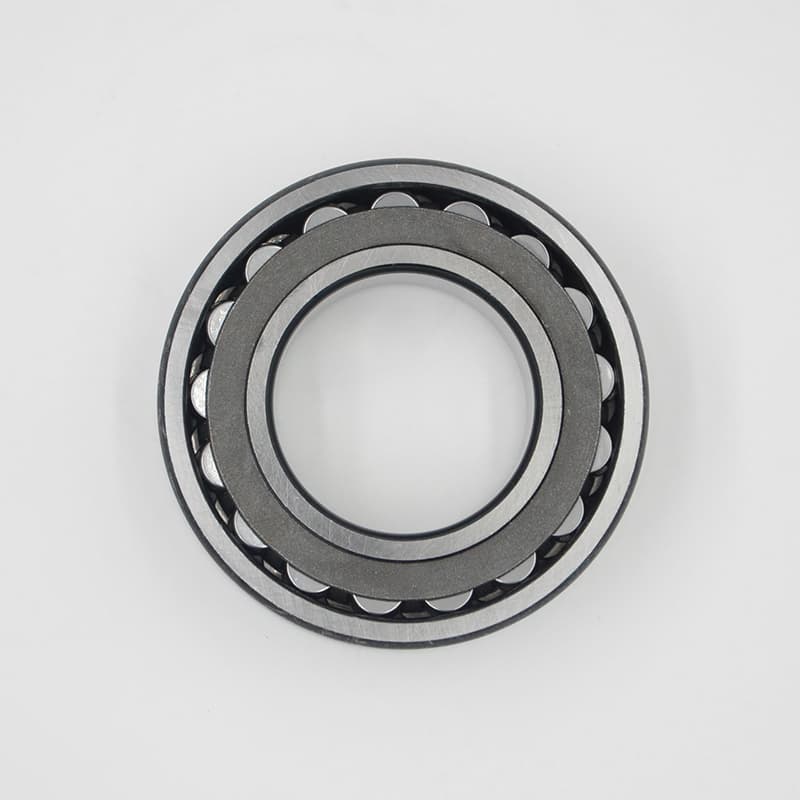
The quest for the "best" material is really a quest for the right material for the job. It’s a compromise between performance, environment, and economics.
Defining "Best" in the Context of Bearing Components
A bearing is not a monolithic piece. We must evaluate materials for each part: rings/rollers, cage, and seals.
1. For Rings and Rolling Elements (The Load-Path):
- Standard Champion: Through-Hardened AISI 52100 (SUJ2/100Cr6): This is the workhorse steel for over 95% of industrial bearings. It is hardened to 58-65 HRC, providing excellent resistance to rolling contact fatigue. It is cost-effective and reliable for most temperatures (up to 120°C).
- For High Temperatures: Case-Hardened Steels (e.g., AISI 8620, 4320)2: Used in applications like aerospace or where temperatures exceed 150°C. They retain a tough core while having a hard surface.
- For Corrosion Resistance: Stainless Steel (AISI 440C)3: Used in food, chemical, and marine applications. Its hardness and corrosion resistance are good, but its fatigue life is generally lower than 52100.
- The "Exotic" Option: Silicon Nitride (Si3N4) Ceramic4: Used for hybrid bearings (ceramic balls with steel rings). Advantages: extremely hard, lightweight, corrosion-proof, and electrically insulating. Disadvantages: very high cost, brittle. Used in high-speed machine tools, aerospace, and applications where electrical arcing is a risk.
2. For Cages (The Guide):
As previously detailed, the "best" is application-defined.
- High-speed, high-temp: Steel.
- Shock, poor lubrication: Brass.
- Low noise, corrosion, moderate conditions: Polyamide5.
3. The Concept of "Fitness for Purpose":
The best material is the one that meets all requirements at the lowest total cost of ownership6.
| Application Scenario | "Best" Material System | Reasoning |
|---|---|---|
| Standard Industrial Gearbox | 52100 Steel rings/rollers7, Pressed Steel cage. | Provides the required life at the lowest cost. The "best" value. |
| Food Processing Conveyor | Stainless Steel (440C) rings/rollers, Polyamide5 or Stainless Steel cage. | Meets hygiene and corrosion resistance requirements. The "best" for the environment. |
| High-Speed CNC Spindle | 52100 or high-temp steel rings, Silicon Nitride balls, Polyamide5 or bronze cage. | Minimizes centrifugal force, reduces heat, allows high precision. The "best" for performance. |
| Mining Vibrating Screen | 52100 Steel rings/rollers7, Machined Brass cage. | Withstands shock and marginal lubrication. The "best" for durability in harsh conditions. |
My Final Insight on the "Best Material" Question:
When a client asks me for the "best" bearing, I ask them questions about their application. A client in the cement industry in Vietnam needs bearings that can handle heat and dust—so "best" means high-temperature steel with robust seals. A client making electric vehicles in Europe needs quiet, efficient bearings—so "best" might mean polyamide cages and refined grease. For our distributor Rajesh, the "best" bearing to stock for his general Indian market is the one with 52100 steel and a pressed steel cage8—it offers the right balance of performance and price that his customers need. The "best" material is not a fixed point; it’s a moving target defined by the intersection of technical needs and economic reality. Our job as a manufacturer is to offer a range of material options and guide the customer to the optimal choice for their specific "best."
Conclusion
The cage material—steel, brass, or polyamide—significantly impacts spherical roller bearing performance in shock, temperature, speed, and corrosion resistance. There is no universal best; the optimal choice depends on the specific application demands, just as the bearing type and base material must be matched to the load and environment for reliable, long-lasting operation.
-
Explore the advantages of AISI 52100 steel, the industry standard for bearings, known for its hardness and toughness. ↩ ↩ ↩ ↩ ↩ ↩ ↩
-
Learn how case-hardened steels enhance performance in high-temperature applications, crucial for aerospace and more. ↩ ↩ ↩ ↩ ↩ ↩ ↩ ↩ ↩ ↩ ↩ ↩ ↩
-
Discover why AISI 440C is favored for its corrosion resistance in food and chemical industries. ↩ ↩ ↩ ↩ ↩ ↩ ↩
-
Find out how Si3N4 ceramic offers unique benefits for high-speed and high-performance applications. ↩ ↩ ↩
-
Explore how polyamide cages provide low noise and corrosion resistance in various applications. ↩ ↩ ↩ ↩ ↩
-
Discover how evaluating total cost of ownership can lead to better material choices for bearings. ↩ ↩ ↩ ↩
-
Learn why 52100 steel is the go-to choice for over 95% of industrial bearings due to its reliability. ↩ ↩ ↩
-
Understand the role of pressed steel cages in enhancing the durability and performance of bearings. ↩ ↩