
A vertical pump fails repeatedly. A crane’s slewing ring shows cracks. The bearings were the right size, but the wrong type. Vertical applications with heavy thrust demand specialized solutions, not standard horizontal bearings.
For vertical shafts with heavy thrust loads, spherical roller thrust bearings (SRBT) or a combination of spherical roller radial bearings with separate thrust bearings are often best. They handle very high axial loads, accommodate shaft misalignment, and are designed for vertical orientation, making them ideal for applications like vertical pumps, marine thrusters, and crane slewing rings.
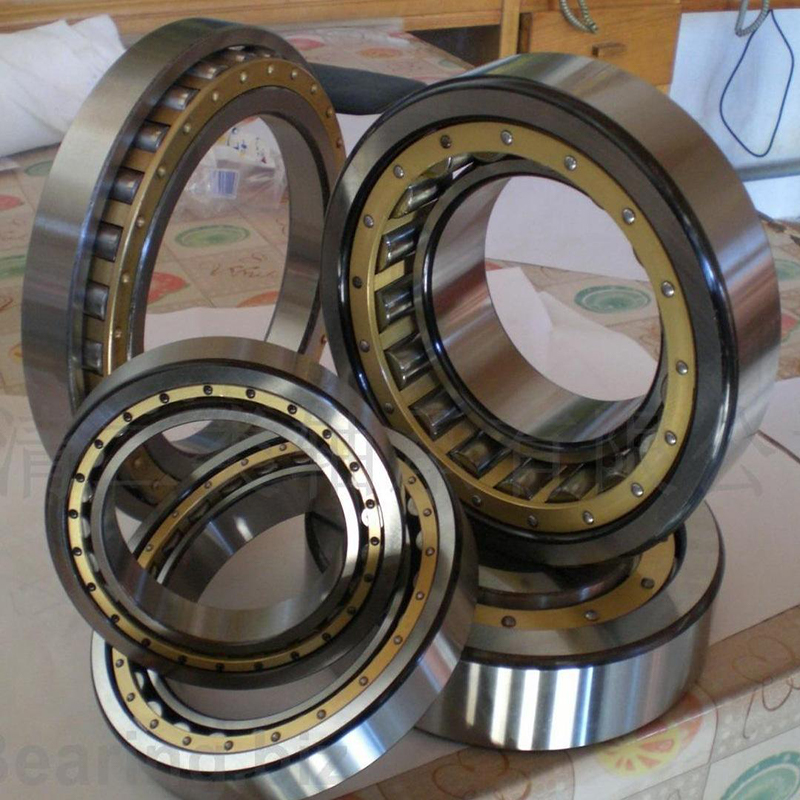
Choosing bearings for vertical shafts is a different challenge. Gravity, alignment, and lubrication all work against you. From supplying heavy industry clients worldwide, I’ve learned that success depends on matching the bearing’s unique capabilities to the harsh realities of vertical operation. Let’s explore the best bearing types, understand their load capacity, and walk through a practical selection process.
What bearings are best for vertical shafts?
You need to support a shaft that stands upright. It carries heavy weight and may have side forces. A standard horizontal bearing arrangement will fail quickly due to uneven load distribution and lubrication problems.
The best bearings for vertical shafts are those designed for the orientation. Spherical roller thrust bearings (SRBT) are excellent for high axial loads. Tapered roller bearings in a face-to-face arrangement work for combined loads. For pure radial guidance with some thrust, deep groove ball bearings or cylindrical roller bearings can be used, but they often need a separate thrust bearing. The key is ensuring proper lubrication and load direction.
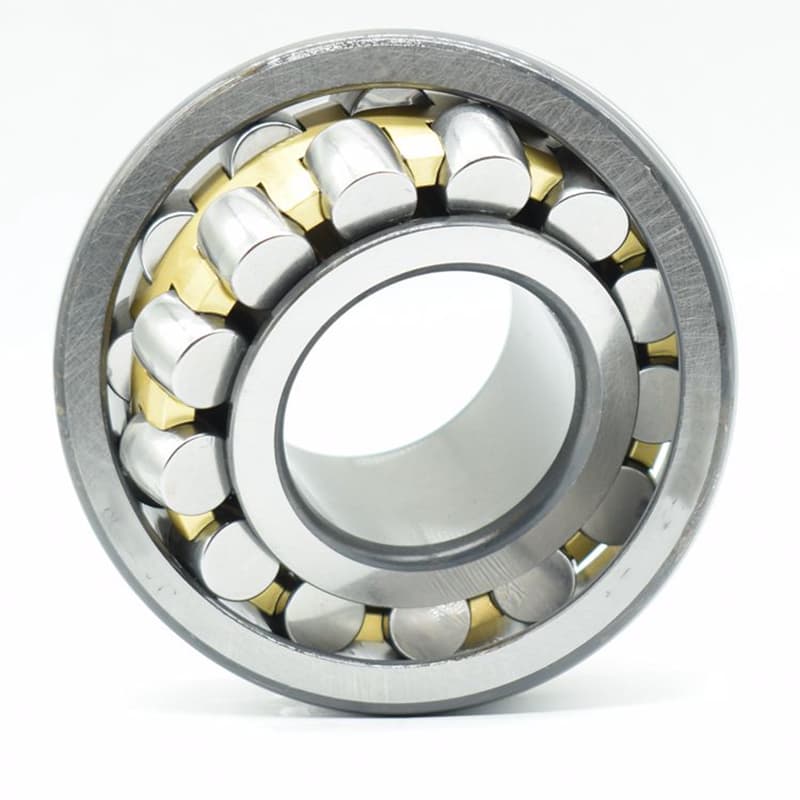
Vertical mounting changes everything. Lubrication doesn’t pool around the bearing. Loads are primarily axial. The bearing must be installed correctly to perform.
Navigating the Challenges of Vertical Orientation
Vertical applications present three core challenges that dictate bearing choice.
1. The Axial Load Dominance1:
In a vertical shaft, the primary load is axial (thrust), from the weight of the rotor, impeller, or gear, plus any operational forces. The bearing must be designed to carry this as its main load, not as a secondary capability.
2. The Lubrication Challenge2:
Gravity pulls lubricant away from the bearing. Standard grease may slump or oil may drain.
- Solutions: Use specially formulated grease with high adhesion, or forced oil circulation systems. Some bearing designs have built-in lubrication pockets or guides.
3. Alignment and Housing Considerations3:
It is difficult to achieve perfect perpendicularity between the shaft and base. The bearing or housing must accommodate some misalignment to prevent edge loading.
Bearing Type Options for Vertical Shafts:
| Bearing Type | Best For in Vertical Applications4 | Advantages | Limitations & Considerations |
|---|---|---|---|
| Spherical Roller Thrust Bearing (SRBT)5 | Very high axial loads, moderate radial loads. Applications: Vertical pumps, marine propellers, crane center pivots. | High axial capacity, self-aligning, handles some radial load. | Requires careful lubrication system design. The housing must support the high thrust. |
| Tapered Roller Bearing6 (in pair) | Combined axial and radial loads. Applications: Vertical gearboxes, winches. | High combined load capacity, adjustable. | More complex installation and preload setting. Requires precise alignment. |
| Deep Groove Ball Bearing7 | Light to moderate axial loads with radial support. Often used as a guide bearing in conjunction with a main thrust bearing. | Simple, handles some misalignment, good for high speeds. | Low axial thrust capacity alone. Often just for radial location in vertical sets. |
| Cylindrical Roller Bearing8 | Pure radial load support in vertical sets. Used to guide the shaft radially while a separate thrust bearing takes the axial load. | Very high radial capacity, allows axial shaft movement (free end). | No axial load capacity. Used in combination with other bearings. |
My Insight from Industry Applications:
The choice often depends on industry standards. In the mining and mineral processing industry in South Africa and Chile, vertical slurry pumps almost universally use spherical roller thrust bearings. They are the workhorse for that brutal environment. In contrast, for vertical turbine pumps in the Middle East’s water industry, a combination of a cylindrical roller bearing (for radial guidance) and a Kingsbury-type hydrodynamic thrust bearing might be used for extremely high loads. For our general industrial clients, like those served by Rajesh in India, a common request is for vertical motor bearings. Here, we often recommend a deep groove ball bearing at the top (light radial load) and an angular contact ball bearing pair at the bottom to handle the thrust. Understanding the industry’s "usual practice" is a great starting point for selecting the best bearing.
Which bearing is best for vertical shaft with axial load?
Your vertical shaft has a significant pushing force from an impeller or a weight. You need a bearing whose primary job is to resist that downward (or upward) force. Not all bearings are built to do this as their main function.
For a vertical shaft where the axial (thrust) load is the dominant force, a Spherical Roller Thrust Bearing (SRBT)1 is often the best choice. It is specifically designed to accommodate very high axial loads2, can also support moderate radial loads, and has self-aligning capability3 to compensate for mounting inaccuracies or shaft deflection.
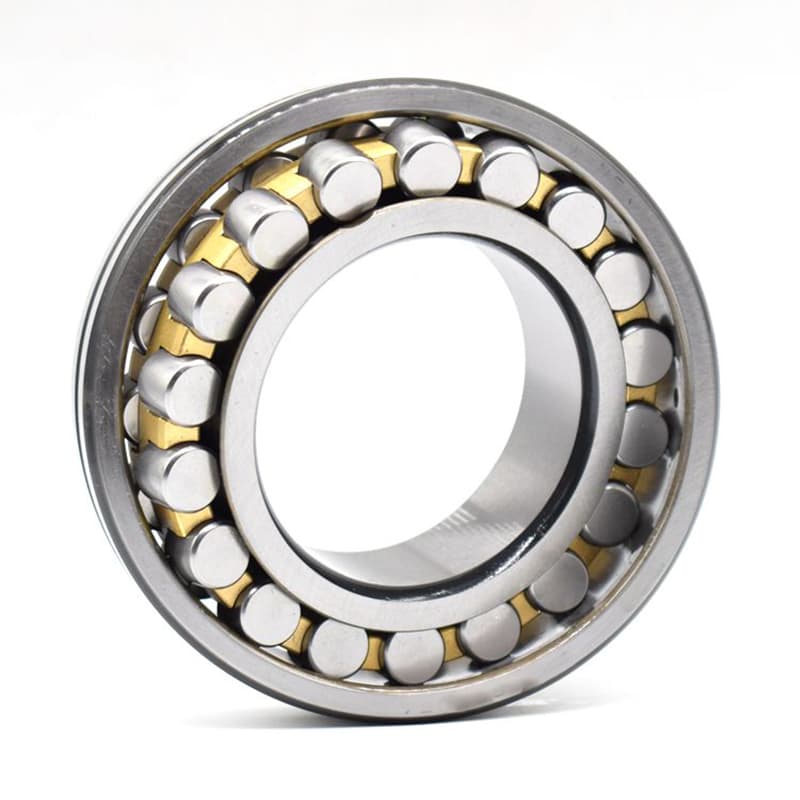
This bearing type is a specialist. It looks different from a standard radial bearing because its geometry is optimized for a different force direction.
The Anatomy of a Thrust Specialist
Understanding why the SRBT is so effective requires looking at its design.
Design Features for High Axial Load:
- Asymmetric Rollers4: The rollers are barrel-shaped (spherical) and are oriented at an angle to the bearing axis. This geometry creates a large contact area between the rollers and the raceways when axial force is applied.
- Raceway Design5: The washers (raceways) have sphered (concave) grooves that match the rollers. This allows the rollers to align themselves correctly under load.
- Self-Alignment: The housing washer (the one that sits against the housing) has a spherical back. It can pivot within a matching spherical seat in the housing. This accommodates up to 2-3 degrees of misalignment, which is critical in large vertical installations.
Comparison with Other Thrust-Capable Bearings:
Let’s see how it stacks up against other options for high axial thrust.
| Bearing for High Axial Load | Axial Load Capacity | Radial Load Capacity | Self-Alignment | Typical Use Case in Vertical Shafts |
|---|---|---|---|---|
| Spherical Roller Thrust Bearing (SRBT)1 | Very High | Moderate | Yes (2-3°) | Heavy vertical pump6s, wind turbine yaw drives, crane slewing rings. |
| Tapered Roller Thrust Bearing | High | Low (needs separate radial bearing) | No | Applications where pure thrust is needed and alignment is perfect. |
| Cylindrical Roller Thrust Bearing7 | High | Very Low / None | No | Simple, very high thrust in one direction with no radial load. |
| Angular Contact Ball Bearing (in pairs) | High (but less than SRBT) | Good | No (requires precise alignment) | High-speed vertical spindles, machine tools. |
| Hydrodynamic Thrust Bearing8 | Extremely High | None | Through design | Very large vertical turbines, hydroelectric generators. |
Application Spotlight: The Vertical Pump
This is a classic SRBT application. The pump impeller creates a strong downward thrust. The shaft is long and can deflect. The SRBT is installed at the bottom of the pump bowl assembly.
- Why SRBT Wins Here: It takes the massive thrust, handles the radial load from the impeller’s imbalance, and self-aligns with the shaft to prevent binding. Its robust construction handles the often-contaminated fluid environment (with proper seals).
My Business Perspective on SRBT Selection:
When clients from the mining or wastewater sector in Indonesia or Brazil inquire about pump bearings, the conversation quickly turns to SRBTs. They don’t ask for a generic "thrust bearing"; they ask by series: "We need a 29438 bearing." This specificity is key. For our distributors, stocking common SRBT sizes is essential for serving heavy industry. However, we emphasize that selling an SRBT is not like selling a deep groove ball bearing. It requires advising on proper housing design (with a spherical seat) and lubrication (often oil bath or circulation). The bearing is best for the job, but only if the surrounding system is also designed correctly. This makes the SRBT a high-value, solution-oriented product in our portfolio.
What type of loads can spherical roller thrust bearings support?
You see a spherical roller thrust bearing. It looks robust. You know it’s for thrust, but you wonder if it can handle any side loads or shock. Understanding its full capacity prevents under-utilization or overloading.
Spherical roller thrust bearings (SRBT) are primarily designed to support very high axial (thrust) loads1 in one direction. Additionally, they can simultaneously support substantial radial loads2, typically up to 55-60% of their axial load capacity. They can also accommodate moment loads3 (tilting forces) and are well-suited for applications involving shock and vibration4 due to their robust construction and line contact.
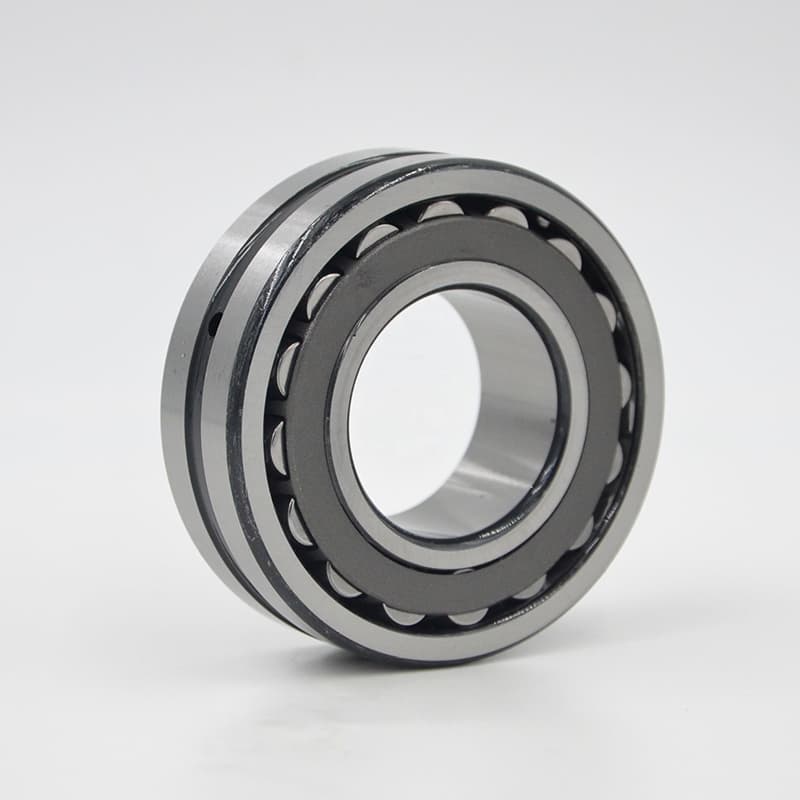
This combination of capabilities is what makes them unique. They are not one-dimensional.
Decomposing the Load Capacity of an SRBT
The ability to handle combined loads comes from its internal geometry. Let’s break it down.
1. Primary Load: Unidirectional Axial Thrust
- This is the bearing’s reason for being. The axial load rating is very high because the rollers are angled to directly oppose force along the shaft axis. The load is transferred through the rollers between the two washers (shaft washer and housing washer).
2. Significant Secondary Load: Radial Force
- Unlike a simple flat thrust washer, the SRBT has guided rollers in a cage. The angled, spherical contact between the rollers and the sphered raceways allows them to transmit radial forces. The manufacturer’s catalog provides a specific "radial load factor5" (usually denoted as ‘Y’). The permissible radial load is calculated as a fraction of the axial load present.
3. Moment Load Capability:
- A moment load tries to tilt the shaft. Because the SRBT is self-aligning6, the housing washer can pivot in its seat. This allows it to distribute the moment load across the bearing’s footprint, preventing edge loading. This is crucial in applications like crane slewing rings where the load is off-center.
4. Performance Under Shock and Vibration:
- The line contact of the rollers (compared to point contact in ball bearings) provides a larger contact area. This distributes impact forces over a greater area, making them more resistant to brinelling7 and fatigue from shock loads.
- The inherent internal clearance and self-alignment also help absorb vibrations.
Practical Load Scenarios in Applications:
| Machine | Primary Load | Secondary Loads Present | How SRBT Handles It |
|---|---|---|---|
| Vertical Centrifugal Pump | Downward axial thrust from impeller. | Radial load from impeller imbalance; hydraulic forces. | Axial load is primary. Radial load is within its capacity. Self-alignment compensates for shaft deflection. |
| Crane Slewing Ring | Axial load from the crane’s weight and lifted load. | Large moment load from off-center lifting; some radial load. | Self-aligning feature handles the moment. Robust rollers handle shock from lifting operations. |
| Marine Thruster | Axial thrust from propeller. | Radial loads from sea currents and hull forces; shock from waves. | High axial capacity for propulsion. Handles unpredictable radial and shock loads. |
| Vertical Mixer/Agitator | Axial load from weight of agitator. | Radial loads from fluid forces; vibration from mixing. | Combines thrust support with ability to handle variable radial forces and vibration. |
A Critical Note on Load Direction:
SRBTs are designed for one-directional axial load. The shaft washer and housing washer are not interchangeable. Installing it backwards (to take thrust in the opposite direction) will cause immediate failure because the rollers will not be properly guided. For applications with reversing thrust, a different solution (like two SRBTs back-to-back or a special design) is needed.
My Insight on Communicating Load Requirements:
When clients ask for an SRBT quote, the most important technical question we ask is: "What is the axial load in kilonewtons (kN)?" Many engineers know the thrust in kilograms-force, which we can convert. The next question is: "Is there a significant radial load or moment?" This informs us if the selected bearing size needs a safety margin. For example, a client in Russia designing a new ore crusher needed an SRBT for the vertical shaft. They provided detailed load spectra including shock peaks. Based on that, we recommended a specific series (29300 series for extra heavy load) and a C4 clearance group8 to accommodate thermal expansion and shock. Knowing the full load profile allows us to move from selling a part to engineering a component into a system. The SRBT’s versatility in load handling is its strength, but it must be matched to the actual application forces.
How to select a bearing for a shaft?
You have a shaft diameter and a rough idea of the loads. You need to choose a specific bearing number. The process seems complex, with many options. A structured approach turns confusion into a clear specification.
Selecting a bearing for a shaft is a systematic process: 1) Determine the shaft diameter. 2) Identify the type and magnitude of loads (radial, axial, moment). 3) Consider the speed of rotation. 4) Evaluate the operating environment (temperature, contamination). 5) Choose a bearing type that matches these conditions. 6) Select a specific size from that type’s catalog based on load ratings and life requirements.
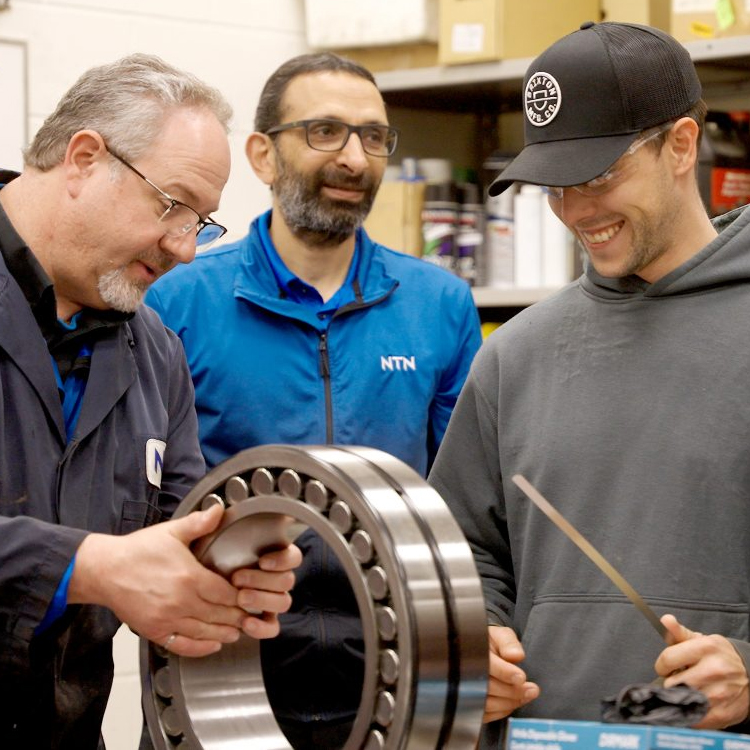
This process applies to any application, but for vertical shafts with thrust, steps 2 and 5 become critically focused on axial capacity and orientation.
A Practical Selection Workflow for Vertical Thrust Applications
Let’s apply the general process to the specific case of a vertical shaft, using a vertical pump as our example.
Step 1: Gather Application Data.
This is the information-gathering phase. You need:
- Shaft Diameter: Measured or designed (e.g., 100mm).
- Loads:
- Axial Load (Fa): Weight of rotor + hydraulic thrust from impeller (e.g., 120 kN downward).
- Radial Load (Fr): From imbalance or hydraulic forces (e.g., 15 kN).
- Moment Load (M): If any (may be negligible for a centered impeller).
- Speed (n): Shaft rotation speed in RPM (e.g., 1450 RPM).
- Environment: Wet, abrasive slurry. Temperature: 80°C max.
Step 2: Choose the Bearing Type.
Based on the dominant axial load and vertical orientation, a Spherical Roller Thrust Bearing (SRBT)1 is the prime candidate. Its self-alignment2 is also beneficial for long shafts.
Step 3: Preliminary Sizing from Load and Life.
- Required Basic Dynamic Load Rating (C): Use bearing life equations3. For an SRBT, the life calculation is based on the equivalent axial load (Pa)4. Pa = Fa + 1.2*Fr (a simplified formula, the exact one uses factors from the catalog).
- Pa = 120 kN + (1.2 * 15 kN) = 138 kN.
- Desired Life (L10): For industrial pumps, 30,000 hours is a common target.
- Catalog Selection: You look in an SRBT catalog (e.g., SKF, FYTZ). You find bearings for a 100mm shaft. You check their basic dynamic axial load rating (Ca). You need a bearing where Ca is sufficiently greater than your calculated Pa to achieve the desired life. For example, a bearing with Ca = 400 kN would be suitable.
Step 4: Check Other Factors and Finalize.
- Speed Limit: Ensure the selected bearing’s speed rating is above 1450 RPM.
- Lubrication: For a wet, hot environment, specify an oil lubrication system5 and appropriate seals. The bearing design must be compatible (e.g., with oil holes and grooves).
- Clearance: For a hot application (80°C), select a larger clearance group, likely C4.
- Mounting: Ensure the housing design includes a spherical seat for self-alignment2.
Selection Decision Table for Our Example:
| Parameter | Value | Bearing Selection Implication |
|---|---|---|
| Shaft Diameter | 100 mm | Limits bore size to 100mm. |
| Dominant Load | 120 kN Axial, 15 kN Radial | Bearing Type: SRBT. Must have high Ca rating. |
| Speed | 1450 RPM | Standard SRBT speed limit is fine. |
| Environment | Hot, Wet, Abrasive | Requires robust seals (labyrinth or V-ring) and oil lubrication. |
| Resulting Spec | Spherical Roller Thrust Bearing, 100mm bore, C4 clearance6, with oil lubrication features and seals. (e.g., a 29420 E bearing with C4 clearance6). |
Step 5: Verify with Supplier/Software.
For critical applications, use the manufacturer’s online selection tools or consult their engineers. They can verify calculations and recommend optimal seals and lubrication.
My Insight on Bridging the Gap Between Theory and Purchase Order:
Most of our B2B distributor clients are not performing these calculations for every sale. They rely on cross-reference and application experience. However, for new designs or serious failures, this process is essential. We have technical support to help with this. For instance, a client in Egypt had a recurring failure in a sugar mill vertical drive. We walked them through this process. We discovered they were using a tapered roller bearing sized for radial load, but the axial thrust was much higher than estimated. We re-specified an SRBT. The failures stopped. The process empowers buyers. Instead of saying, "I need a bearing for a 100mm shaft," they can say, "I need an SRBT for 120 kN axial load, 15 kN radial, at 1450 RPM, in a hot, wet environment." That level of detail allows us to provide the perfect bearing solution immediately, saving time and ensuring success.
Conclusion
Choosing spherical roller bearings for vertical shafts requires focusing on axial load capacity, self-alignment, and lubrication. Spherical roller thrust bearings excel here, handling high thrust, radial loads, and misalignment. A systematic selection process ensures the bearing matches the real-world demands of the application.
-
Explore this link to understand the benefits and applications of SRBTs, crucial for selecting the right bearing. ↩ ↩ ↩ ↩ ↩
-
Explore the advantages of self-alignment in bearings, particularly for vertical applications. ↩ ↩ ↩ ↩ ↩
-
Gain insights into bearing life calculations to ensure longevity and reliability in your applications. ↩ ↩ ↩ ↩
-
Understanding Pa is essential for accurate bearing selection; this resource will clarify the calculation process. ↩ ↩ ↩ ↩
-
Discover effective lubrication solutions to enhance bearing life and performance in challenging conditions. ↩ ↩ ↩ ↩
-
This link will explain C4 clearance and its importance in accommodating thermal expansion in bearings. ↩ ↩ ↩ ↩ ↩
-
Learn about brinelling to prevent premature bearing failure in your machinery. ↩ ↩ ↩
-
Explore the significance of C4 clearance in accommodating thermal expansion and ensuring bearing longevity. ↩ ↩ ↩