
Your new pillow block is installed on a freshly machined shaft. Weeks later, it fails with strange wear marks. The bearing was correct, but the shaft preparation was wrong. This invisible mistake costs you time and money.
Shaft tolerance and surface finish are critical for pillow block bearing performance. The correct tolerance (like h6 or g6) ensures a proper interference or clearance fit, securing the bearing without distorting it. An appropriate surface finish (typically Ra 0.8 to 1.6 μm) minimizes friction, prevents fretting wear, and allows for effective sealing, directly impacting bearing life and reliability.
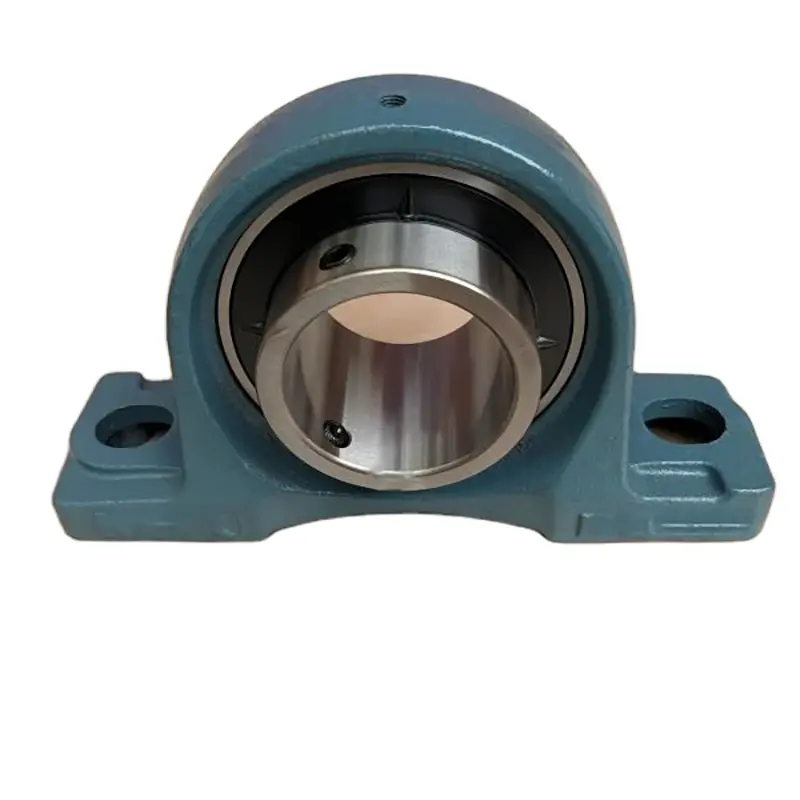
Many maintenance teams focus only on the bearing itself. They ignore the shaft it sits on. This is a fundamental error I encounter globally. The pillow block is just a housing; the real interface is between the bearing’s inner ring and the shaft. Let’s explore what a pillow block is, the problems caused by poor shaft conditions, how to adjust them, and clarify common naming confusion.
What is a pillow block?
You see a metal housing with a bearing inside, bolted to a frame, supporting a rotating shaft. This simple assembly is everywhere in industry. But its simplicity hides important design details that affect its function.
A pillow block is a mounted bearing unit. It consists of a bearing (usually a ball bearing or spherical roller bearing) pre-assembled into a housing (the "block") with a base for bolting to a flat surface. It provides ready-to-install support for a rotating shaft, with features for lubrication and sealing, simplifying design and maintenance.
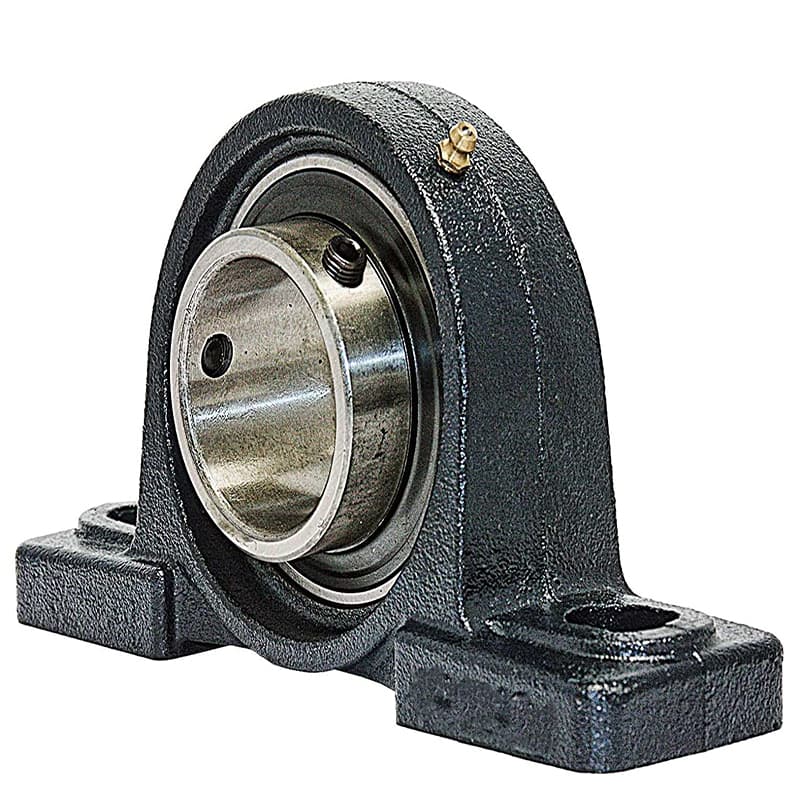
Think of it as a complete "bearing module." You don’t need to press the bearing into a separate housing. It comes as one piece.
The Anatomy and Function of a Pillow Block
Understanding its parts helps you understand its requirements.
1. Core Components:
- Bearing Insert1: The heart of the unit. Common types are deep groove ball bearings (for lighter loads) or spherical roller bearings (for heavy loads and misalignment). The insert is often a "Y" or "YE" series bearing with a tapered bore or set screws for shaft locking.
- Housing: Typically made of cast iron or stamped steel. It has a cylindrical bore to hold the bearing insert and a flat base with bolt holes.
- Sealing System2: Rubber or felt seals on both sides keep lubricant in and contaminants out. This is a key advantage over bare bearings.
- Lubrication Fitting3: A grease nipple (zerk fitting) allows for easy re-lubrication without disassembly.
2. How It Connects to the Shaft:
This is where shaft tolerance and finish become critical. The bearing insert is secured to the shaft, usually by one of two methods:
- Set Screws (Most Common): Two set screws lock the bearing’s inner ring onto the shaft. The shaft must have a smooth, hard surface for the screws to bite into without damaging it.
- Eccentric Locking Collar4: A collar is fitted around the bearing’s inner ring. Turning the collar creates a tight grip on the shaft. This method requires a very specific shaft tolerance (usually h6 or g6) for effective locking.
3. Why Pillow Blocks are So Popular:
- Easy Installation: They are "unitized." You just slide them onto the shaft and bolt them down.
- Self-Alignment Capability5: Many designs, especially those with spherical roller inserts, allow the bearing to align itself with the shaft, compensating for minor mounting errors.
- Protected Design: The housing and seals offer good protection in dusty or wet environments.
- Simplified Inventory: You stock a complete unit, not separate bearings and housings.
My Insight from Global Supply:
Pillow block6s are among our top-selling products to emerging industrial markets. A client like Rajesh in India stocks common sizes like UCP 205, 207, 210. Why? Because they are the universal solution for conveyor systems, fan shafts, and agricultural equipment in his region. Their popularity tells a story: they solve the problem of quick, reliable shaft support. However, their ease of installation can be deceptive. Mechanics think, "Just slide it on and tighten the set screws." They don’t consider if the shaft diameter is correct or if the surface is rough. This leads directly to the common problems we see in the field. The pillow block is only as good as the shaft it’s mounted on.
What are the common problems with pillow blocks?
Your conveyor stops. The pillow block is hot and screeching. You replaced it recently. The problem seems to repeat. The issue is often not the pillow block unit itself, but factors related to its installation and environment.
Common problems with pillow blocks include premature bearing failure1 due to improper shaft fit (too loose or too tight), contamination from failed seals2, over-lubrication or under-lubrication3, misalignment causing excessive load4, and loose set screws or locking collars leading to shaft fretting and slippage.
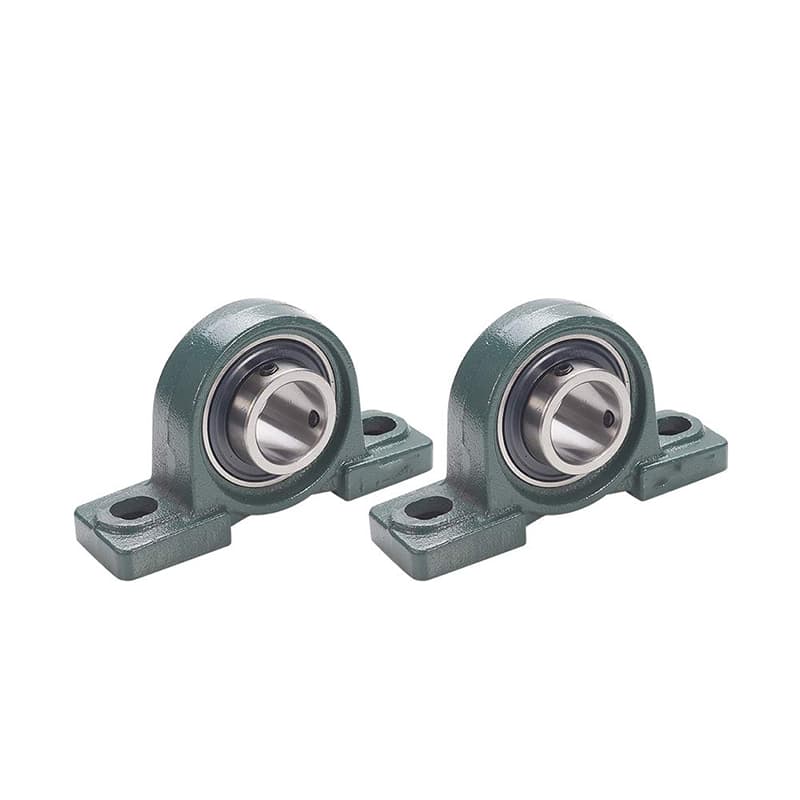
These problems usually have clear causes. Identifying them is the first step to a lasting fix.
Root Cause Analysis of Frequent Failures
Let’s link each common problem back to its origin, often related to shaft condition or installation practice.
1. Bearing Insert Failure (Noise, Heat, Seizure):
- Root Cause: Often stems from internal issues aggravated by external factors.
- Contamination: Worn or damaged seals allow dirt and water to enter. This is the number one cause of abrasive wear. A poor shaft finish can also damage seals during installation.
- Lubrication Failure: Too much grease churns and overheats. Too little grease leads to metal-on-metal contact. Using the wrong grease type for the temperature is also common.
- Overloading: Using a pillow block with a ball bearing insert for a heavy, misaligned load it wasn’t designed for.
2. Slippage or Fretting Wear on the Shaft:
- This is a direct shaft-related problem.
- Shaft Too Loose (Incorrect Tolerance)5: If the shaft is under-sized relative to the bearing bore, even tight set screws cannot hold it. The bearing will creep and rotate on the shaft, causing severe fretting wear (a rusty, pitted appearance on the shaft).
- Poor Surface Finish: A rough or grooved shaft surface prevents the set screws or locking collar from getting a solid grip. It also accelerates seal wear.
- Loose Set Screws: Vibration can loosen them if not properly tightened and secured.
3. Housing or Mounting Issues:
- Misalignment: If two pillow blocks supporting a shaft are not aligned on the same centerline, they impose bending forces on the bearings. Even self-aligning types have limits.
- Soft Foot6: The pillow block base is not sitting flat on the frame. Tightening the bolts twists the housing, distorting the bearing.
- Corroded or Damaged Bolt Holes: Makes proper mounting impossible, leading to vibration.
A Problem-Symptom-Cause Table:
| Symptom | Possible Cause | Likely Link to Shaft/Mounting |
|---|---|---|
| Bearing overheats quickly | Over-lubrication, severe misalignment, excessive load. | Misalignment from poor mounting or bent shaft. |
| Regular clicking or rumbling noise | Dented raceways from contamination or shock loads. | Contamination entering due to seal damage from rough shaft finish. |
| Shaft is worn under the bearing | Fretting wear from bearing rotating on shaft. | Shaft diameter too small (wrong tolerance) or loose set screws. |
| Grease leaking from seals | Seal damage, over-greasing, high internal pressure. | Seal lips cut during installation over a sharp shaft edge or burr. |
| Pillow block "walks" on frame | Loose mounting bolts, vibration. | Soft foot condition, frame not flat. |
My Insight from Customer Returns and Feedback:
When we receive a failed pillow block from a client for analysis, our inspection follows a checklist. We look at the bearing insert, but we also examine the shaft contact area on the inner ring. Signs of fretting or scoring tell us the fit was wrong. We ask for photos of the shaft. Very often, we see a shiny, polished ring on the shaft where the bearing sat—a classic sign of slippage due to incorrect shaft diameter. In markets like South Africa or Indonesia with harsh conditions, seal failure from dust ingress is a top complaint. This often traces back to a shaft with a poor surface finish that wore out the seal lip prematurely. Understanding these common problems allows our distributors to provide better guidance. They don’t just sell a replacement unit; they ask, "What did the old shaft look like?" This question can save the customer from a repeat failure.
How to adjust a pillow block1?
The shaft seems to have a little play. The bearing isn’t running perfectly centered. You think the pillow block1 needs "adjustment." However, unlike a tapered roller bearing, a standard pillow block1 has very limited internal adjustment. Its adjustment is about correct installation and setup.
You do not typically "adjust" the internal clearance of a standard pillow block1 bearing like you would a tapered roller bearing. Adjustment refers to the proper installation steps2: ensuring correct shaft fit, aligning the housing on the frame, setting the locking device (set screws or collar) properly, and establishing the correct axial float3 for the shaft within a pair of pillow block1s.
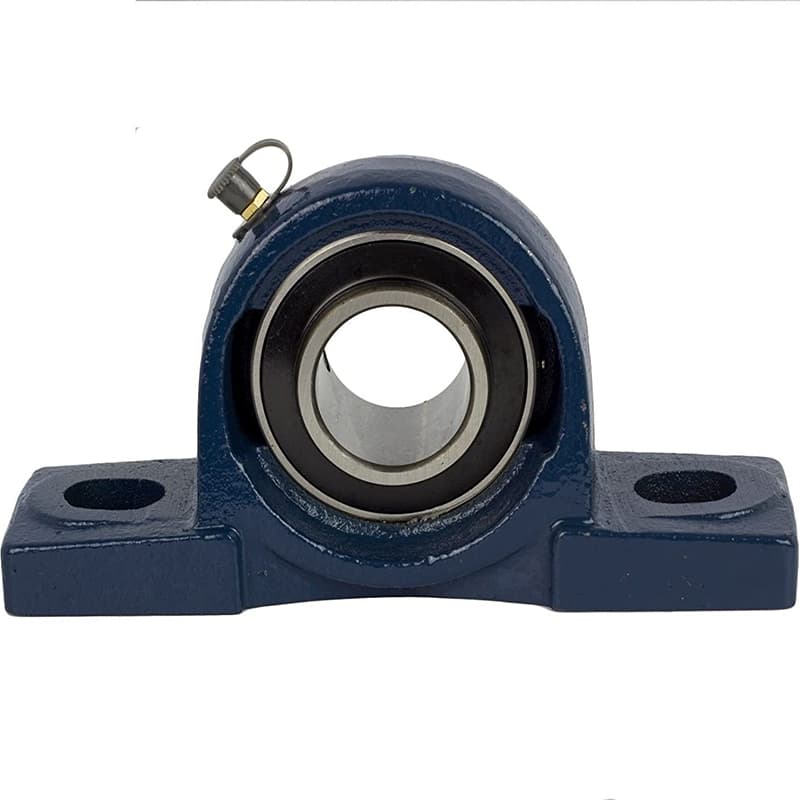
The "adjustment" is done once, during installation, to create the right conditions for the bearing to operate correctly throughout its life.
The Correct Installation and Setup Procedure
Let’s walk through the critical steps that constitute the "adjustment" of a pillow block1 system.
1. Pre-Installation: Shaft Preparation (The Most Important Adjustment)
This is where you "adjust" the shaft to match the bearing.
- Check Shaft Diameter: Measure the shaft with a micrometer. It must conform to the required tolerance (e.g., h6 for an eccentric locking collar4). If it’s worn or undersized, it must be repaired or replaced—this is not adjustable.
- Check Surface Finish: The shaft should be smooth (Ra 0.8-1.6 μm). If rough, it may need to be polished or turned.
- Check for Burrs and Sharp Edges: File or sand any sharp edges at the ends of the shaft seat. These can cut the bearing seals during installation.
2. Mounting and Alignment Adjustment:
- Positioning on the Shaft: Slide the pillow block1 onto the shaft. For a pair of blocks supporting one shaft, they must be aligned with each other.
- Aligning the Housings: This is a critical adjustment. Use a straightedge or a laser aligner across the bases of both pillow block1s to ensure they are in a straight line. Misalignment causes binding and early failure.
- Securing the Base: Bolt the pillow block1 down, but check for "soft foot." Use a feeler gauge to ensure the base sits flat on the frame before fully tightening the bolts. Shim if necessary.
3. Securing the Bearing to the Shaft (The Key Locking Adjustment):
- For Set Screw Types: Tighten the set screws securely in the dimples on the bearing inner ring. Use a hex key of the correct size. A common practice is to tighten one screw, then rotate the shaft slightly to seat the bearing, then tighten the second screw. Do not overtighten, as this can distort the inner ring.
- For Eccentric Locking Collar Types: This is the main adjustment feature.
- Slide the collar onto the shaft behind the bearing.
- Rotate the collar in the direction of shaft rotation (usually marked with an arrow) until it is tight against the bearing.
- Tighten the collar’s set screw to lock it in place.
4. Adjusting for Thermal Expansion (Axial Float):
In many applications, the shaft will expand when hot. You cannot have both pillow block1s rigidly fixed axially.
- Fixed and Floating Arrangement: One pillow block1 is the "fixed" point (its bearing is locked axially to the shaft). The other pillow block1 is the "floating" end. The bearing in the floating block must be able to slide axially within its housing.
- How to Create Float: For a standard pillow block1, you achieve this by leaving a small axial gap (e.g., 0.1-0.2 mm) between the bearing outer ring and the housing end caps, or by using a bearing type (like a spherical roller) that allows internal axial movement. This is a design choice, not a field adjustment on a standard unit.
My Practical Advice for Mechanics and Buyers:
The term "adjustment" creates confusion. I instruct our distributors to clarify this for their customers. When a mechanic says, "I need to adjust the bearing," he might mean he needs to take up play. With a pillow block1, if there is excessive play, the cause is usually wear or an incorrect shaft fit. You cannot "tighten" it like a nut. The only true adjustment is during initial installation. For our clients in the agriculture sector (e.g., in Brazil or Pakistan), where equipment is often repaired in the field, this knowledge is crucial. They learn that properly preparing the shaft and aligning the blocks is 90% of the job. The pillow block1 itself is a sealed, pre-assembled unit designed to work correctly if the foundation (shaft and frame) is right. Teaching this "adjustment" philosophy prevents the common error of trying to fix a hardware problem with a software solution.
What is the difference between pillow block and plummer block1?
You hear both terms used for similar-looking units. You wonder if they are interchangeable. Your supplier uses one term, your customer uses another. Understanding the difference prevents specification errors.
There is no major functional difference in modern usage; "pillow block" and "plummer block1" are often used interchangeably to describe a housed bearing unit with a base. Historically, "plummer block1" might refer to a heavier, cast iron construction for more demanding applications, while "pillow block" could imply a lighter design. However, in today’s global bearing industry, the terms are largely synonymous, with specific model numbers (like UCP2, UCF3) defining the type.

The difference is more about regional language and historical context than technical specification.
Navigating Terminology in a Global Market
As an exporter, I encounter these terms daily. Their usage varies by country and industry.
1. Historical and Regional Preferences:
- "Plummer Block": This term is older and is still preferred in British-influenced engineering circles, including the UK, India, Australia, and South Africa. It is derived from the word "plumber" or "plummer," referring to a lead worker, possibly relating to the casting process.
- "Pillow Block": This term is more common in American English and has become widely used globally, especially in product catalogs and e-commerce.
- In Practice: A client in India (like Rajesh) might receive an inquiry for a "plummer block1," while a client in Vietnam might ask for a "pillow block." They are often asking for the same thing: a UCP2 208 unit.
2. Technical Implications (or Lack Thereof):
The critical information is not in the generic name but in the series code and specifications.
- UCP2: The most common type. A 2-bolt pillow/plummer block1 with a cylindrical housing.
- UCF3: A 4-bolt flanged unit (square flange).
- UCF3L: A 4-bolt flanged unit (oval flange).
- UCT: A 4-bolt flanged unit (triangular flange).
These codes (UCP2, UCF3, etc.) are standardized across manufacturers and are far more important than the general term "pillow" or "plummer."
3. Potential for Confusion and How to Avoid It:
The interchangeable use can cause minor confusion in communication.
| Scenario | Potential Confusion | How to Clarify |
|---|---|---|
| A buyer uses "plummer block1" in an RFQ. | The supplier might assume a heavier duty unit. | The buyer should specify the series (UCP2, UCF3), bore size, and insert type (e.g., with ball bearing or spherical roller bearing). |
| An engineer specifies a "pillow block" on a drawing. | The machinist might select any housed unit. | The drawing should call out the exact part number or standard (e.g., "Pillow Block, UCP2 208 C3"). |
| Searching for products online. | Search results may vary. | Use both terms as keywords, but rely on the technical specifications4 and product images to confirm it’s the correct style. |
4. What Truly Matters: The Specifications Behind the Name
Instead of worrying about the name, focus on these defining characteristics:
| Characteristic | What to Specify | Example |
|---|---|---|
| Housing Style | Base-mounted (2-bolt) or Flanged (4-bolt). | UCP2 (2-bolt base) or UCF3 (4-bolt flange). |
| Shaft Size (Bore) | The diameter of your shaft in millimeters. | 40 mm. |
| Bearing Insert Type | Determines load capacity and misalignment capability. | Deep Groove Ball Bearing (e.g., 208) or Spherical Roller Bearing (e.g., 22208). |
| Clearance | Based on operating temperature (see earlier section). | C3 for warm applications. |
| Material & Seals | Cast iron or stamped steel? Standard seals or heavy-duty? | CI Housing, Nitrile Rubber Seals. |
My Insight as an International Supplier:
Our product catalog and website use "Pillow Block Bearing" as the primary category because it is the most globally recognized term. However, our product data sheets and packing lists include both terms in the keywords. When we communicate with a long-standing client in South Africa, we might use "plummer block1" because that’s their familiar term. The key is to never assume. When we receive an inquiry for "plummer block1s," our sales team’s first response is to ask for the required series and bore size or to share our dimension chart. This cuts through the terminology fog and gets to the exact technical need. In the end, whether you call it a pillow block or a plummer block1, its performance will be determined by the shaft tolerance, surface finish, and correct installation—not by its name.
Conclusion
Pillow block performance is inseparable from shaft preparation. Correct tolerance and surface finish prevent slippage and wear, while understanding common problems, proper installation "adjustment," and precise terminology ensures you select and maintain the right unit for reliable, long-lasting operation.
-
Learn about plummer blocks, their historical context, and how they differ from pillow blocks. ↩ ↩ ↩ ↩ ↩ ↩ ↩ ↩ ↩ ↩ ↩ ↩ ↩ ↩ ↩ ↩ ↩ ↩ ↩ ↩ ↩ ↩ ↩ ↩ ↩ ↩
-
Discover the significance of UCP in bearing specifications and its common applications. ↩ ↩ ↩ ↩ ↩ ↩ ↩ ↩ ↩ ↩
-
Find out about UCF bearing units, their design, and how they are used in various applications. ↩ ↩ ↩ ↩ ↩ ↩ ↩ ↩ ↩
-
Learn why focusing on technical specifications is crucial for selecting the right bearing for your needs. ↩ ↩ ↩ ↩
-
Recognizing the importance of correct shaft tolerances can prevent significant operational issues and failures. ↩ ↩
-
Understanding soft foot conditions can lead to better mounting practices and reduce vibration-related failures. ↩ ↩