
You install a brand new bearing. The machine starts, but it makes a grinding noise immediately. You suspect a defective part. But the truth is, the damage likely happened in your hands during installation.
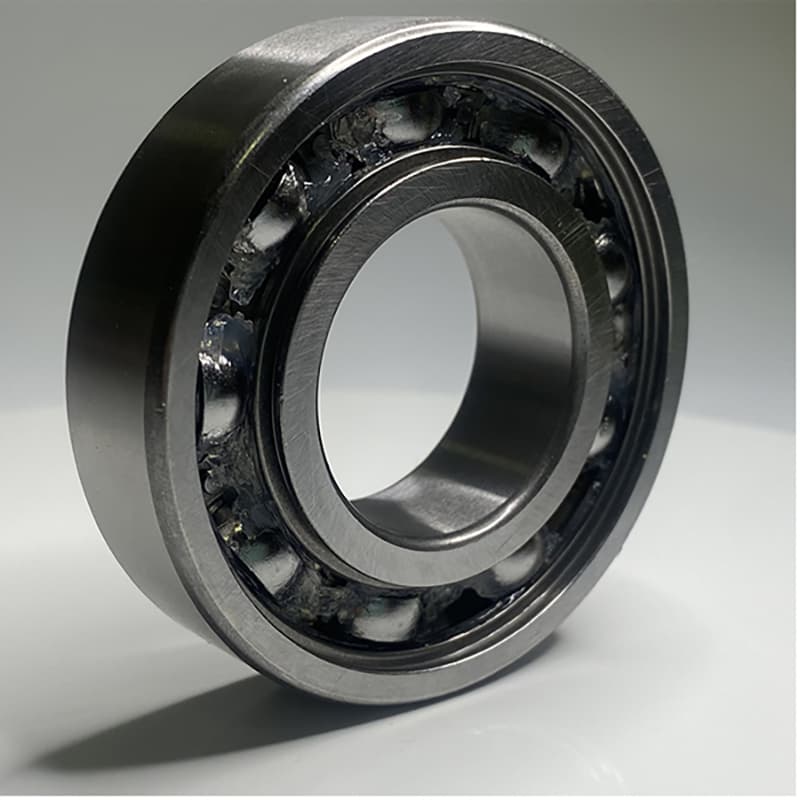
The most common installation errors that damage new deep groove ball bearings include hammering directly on the rings, forcing misalignment, contaminating with dirt, using incorrect fits, and improper handling that causes brinelling (dents). These errors create immediate defects that lead to premature noise, vibration, and failure, often blamed on bearing quality.
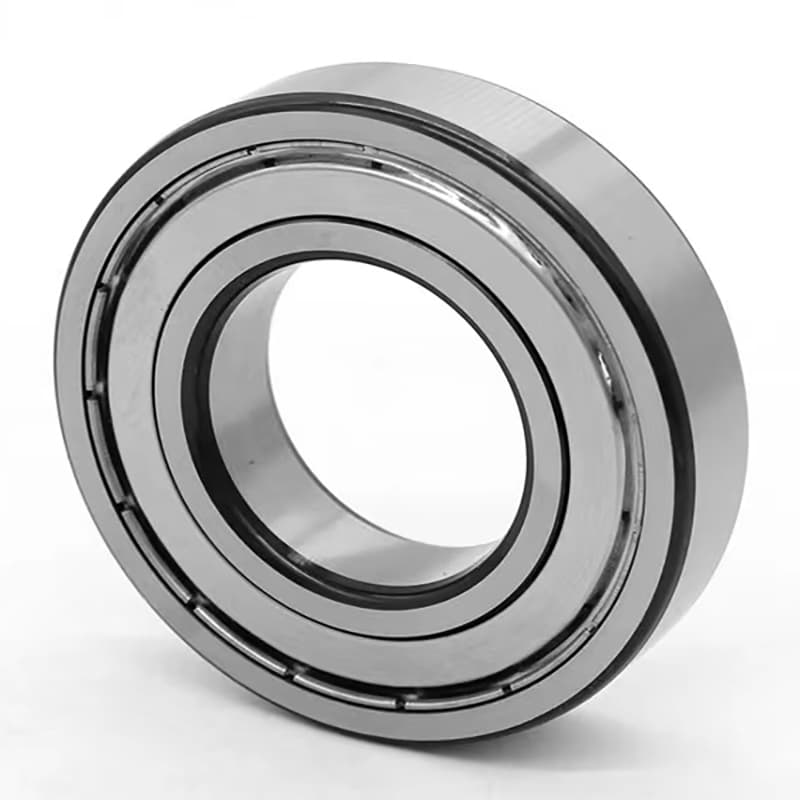
I have seen this story repeat across continents. A client complains about a "bad batch" of bearings. We investigate and find telltale hammer marks or dirt ingress. The bearing was fine when it left our factory. Installation is the most critical, and most often overlooked, step. Let’s examine these errors in detail, understand the bearing’s design, learn to spot damage, and discuss what can and cannot be fixed.
How to fix dent in hat?
You drop a bearing or hit it with a tool. Now there is a small dent on the outer ring. It looks minor. You think you can just smooth it out and use it. This is a dangerous thought that compromises the entire machine’s reliability.
You cannot reliably "fix" a dent (brinell mark) on a bearing ring. The hardened steel is permanently deformed. Attempts to grind or file it will alter the critical raceway geometry and introduce contamination. The only safe solution is to replace the damaged bearing. Prevention through proper handling is the only true fix.
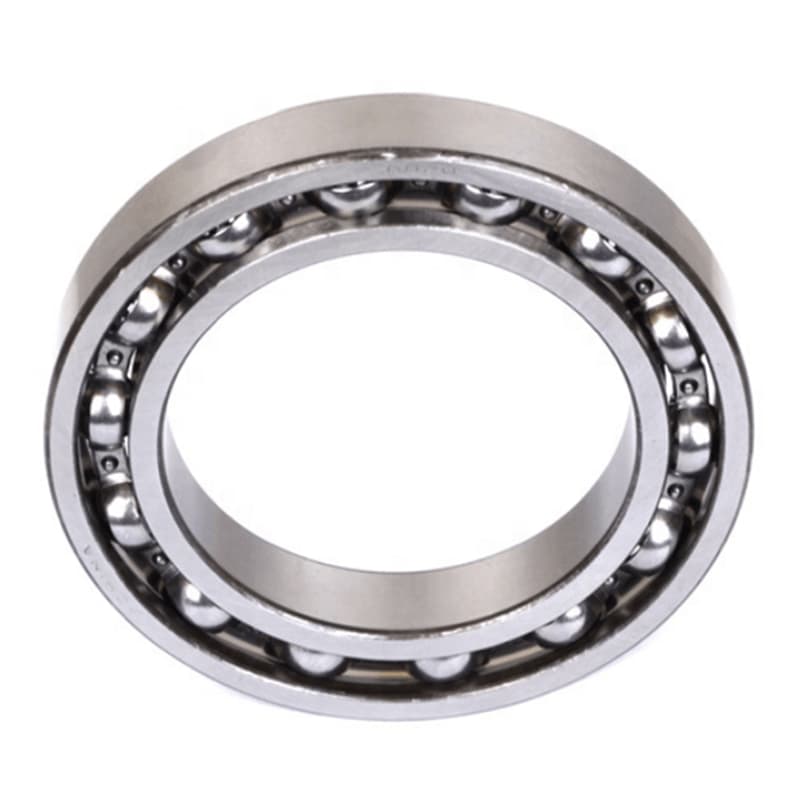
A dent is not a cosmetic issue. It is a structural failure point that propagates stress and leads to early fatigue.
Understanding Brinelling and Its Consequences
The term "brinelling" comes from the Brinell hardness test, where a ball is pressed into metal. A bearing dent is essentially the same thing.
1. How Dents Happen During Installation:
- Direct Hammer Blows1: The most common cause. Using a hammer and a regular punch or chisel to drive the bearing onto a shaft. The force is concentrated on a small area of the ring.
- Dropping the Bearing: Dropping it on a hard floor can create a dent where it impacts.
- Pressing on the Wrong Ring: When pressing a bearing into a housing, force must be applied only to the outer ring. If force is applied to the inner ring while the outer ring is constrained, the balls act as hammers, denting the raceways. This is called "false brinelling2" during installation.
2. Why a Dent Cannot Be Fixed:
- Material Integrity3: The bearing steel is hardened to around 60 HRC. This hardness gives it wear resistance, but it also makes it brittle. The dent is a permanent plastic deformation. You cannot "massage" it back into shape.
- Geometric Precision4: The raceway is ground and polished to micron-level accuracy. Any attempt to remove the dent by grinding will destroy this precision. The raceway will no longer be perfectly round or smooth.
- Stress Concentration5: The edges of the dent are sharp. Under load, these become focal points for crack initiation. Fatigue failure will start here much sooner.
- Vibration and Noise6: Every time a ball rolls over the dent, it causes a tiny impact. This creates a distinctive noise (often a regular clicking or rumbling) and increases vibration.
3. The High Cost of "Fixing" vs. Replacing:
Let’s compare the two paths after a dent is discovered:
| Action | Process | Likely Outcome | True Cost |
|---|---|---|---|
| Attempt to "Fix" the Dent | File or grind the high spot. Clean up. Install the bearing. | Altered raceway geometry. Residual abrasive particles. The bearing runs noisy and hot. It fails prematurely, damaging possibly the shaft or housing. | Cost of new bearing + Labor for re-repair + Cost of potential secondary damage + Machine downtime. |
| Replace the Bearing | Discard the dented bearing. Use proper tools to install a new one. | Correct installation. Smooth, quiet operation. Full design life achieved. | Cost of one new bearing only. |
My Insight from the Supply Chain:
Our distributors sometimes receive returns for bearings with obvious installation damage. My team’s first question is: "How was it installed?" In many workshops, especially in fast-paced environments like those served by our client Rajesh in India, mechanics are under time pressure. They use the fastest method—a hammer. We educate our distributors to educate their customers. We provide simple pictorial guides showing the wrong way (hammer) and the right way (using a bearing driver set or an induction heater). The message is clear: the cost of a proper bearing driver tool7 is less than the cost of one failed machine repair caused by a hammer-dented bearing. A dent is a point of no return. Recognizing that is the first step toward professional maintenance.
What does deep groove1 mean on a bearing?
You look at different ball bearings. Some are called "deep groove1," others are "angular contact." The difference seems subtle. But this groove depth is the key feature that defines the bearing’s capabilities and limits.
"Deep groove" refers to the design of the raceways on both the inner and outer rings of the bearing. These raceways are deep, continuous arcs that are shaped to closely match the balls. This deep, conforming groove is what allows the bearing to support significant radial loads and also accommodate moderate axial (thrust) loads from either direction.
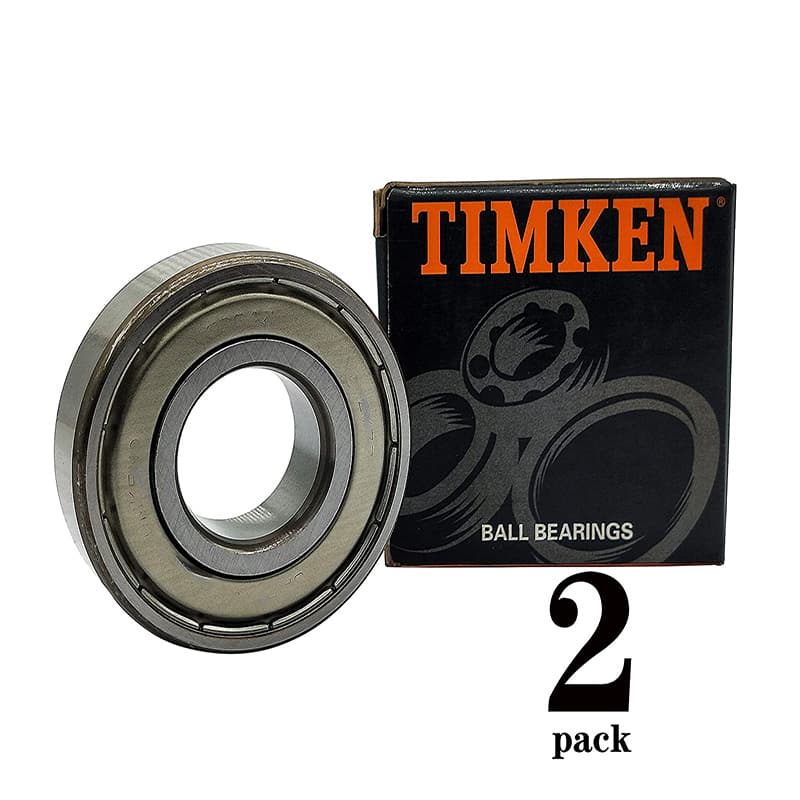
The depth of the groove is not arbitrary. It is a calculated geometry that balances load capacity, speed, and friction.
The Engineering Significance of the Deep Groove
This design feature has several direct implications for installation, use, and what can go wrong.
1. Load Handling Characteristics:
- Radial Loads: The deep groove1 provides a long, supportive contact path for the balls. This spreads the load over a larger area, allowing the bearing to carry higher radial loads than a shallower design.
- Axial Loads: Because the groove is deep and continuous, the balls are securely guided. When an axial force is applied, the balls can transmit that force from one ring’s shoulder to the other without popping out. However, the contact angle is not optimized for axial load, so capacity is limited.
2. Implications for Installation and Damage:
The deep groove1 design makes the bearing relatively forgiving of minor installation errors2 compared to some other types, but it has its own sensitivities.
- Misalignment Sensitivity: While the deep groove1 can accommodate a tiny amount of angular misalignment (a few minutes of arc), it is still quite sensitive. Forcing a misaligned bearing damages the groove edges.
- Raceway Conformity: The close match between the ball and the groove means any dent, scratch, or contamination particle trapped in the groove will be forced into repeated, high-stress contact with the balls. This accelerates wear dramatically.
3. Contrast with Other Bearing Designs:
Understanding what "deep groove1" is helps you understand what it is not.
| Bearing Type | Raceway Design | Primary Load Capacity | Key Difference from Deep Groove |
|---|---|---|---|
| Deep Groove Ball Bearing | Deep, continuous grooves on both rings. | Radial + Moderate bidirectional axial. | The standard, versatile design. |
| Angular Contact Ball Bearing | Asymmetric grooves. One side has a higher shoulder. | Combined loads, optimized for high axial load in one direction. | Designed specifically for high axial thrust. Must be used in pairs for bidirectional thrust or preload. |
| Cylindrical Roller Bearing | No deep groove1. Flat or slightly profiled raceways. | Very high radial load only. | No axial load capacity. The rollers are guided by flanges, not by a deep groove1. |
My Insight on Design and Application:
As a manufacturer, we machine these deep groove1s with extreme precision. The grinding and honing process is critical. The smoothness and correct curvature of the groove directly affect the bearing’s noise level and friction. When clients ask for "low noise" bearings for electric motors (common in Turkey and Europe), we supply deep groove1 bearings with P5 or P6 precision class3. This means the groove geometry and surface finish are held to even tighter tolerances. The "deep groove1" is not just a name; it is the heart of the bearing’s function. During installation, you must protect this precision surface. Any tool that contacts the raceway, any piece of dirt that gets pressed into it, permanently degrades the performance that the deep groove1 was designed to deliver. Respecting this design means handling the bearing by the rings only, never letting the balls and raceways touch anything but clean air or lubricant.
How to find bearing damage1?
A machine is running, but something doesn’t sound right. You suspect a bearing, but you are not sure. Waiting for it to fail completely is risky. You need methods to find damage early, before it causes a breakdown.
You can find bearing damage1 through sensory checks (listening for unusual noises, feeling for excessive heat or vibration), visual inspection2 after disassembly (looking for dents, cracks, wear patterns, discoloration), and using tools like vibration analyzers3 or thermal cameras4 to detect early-stage defects without stopping the machine.
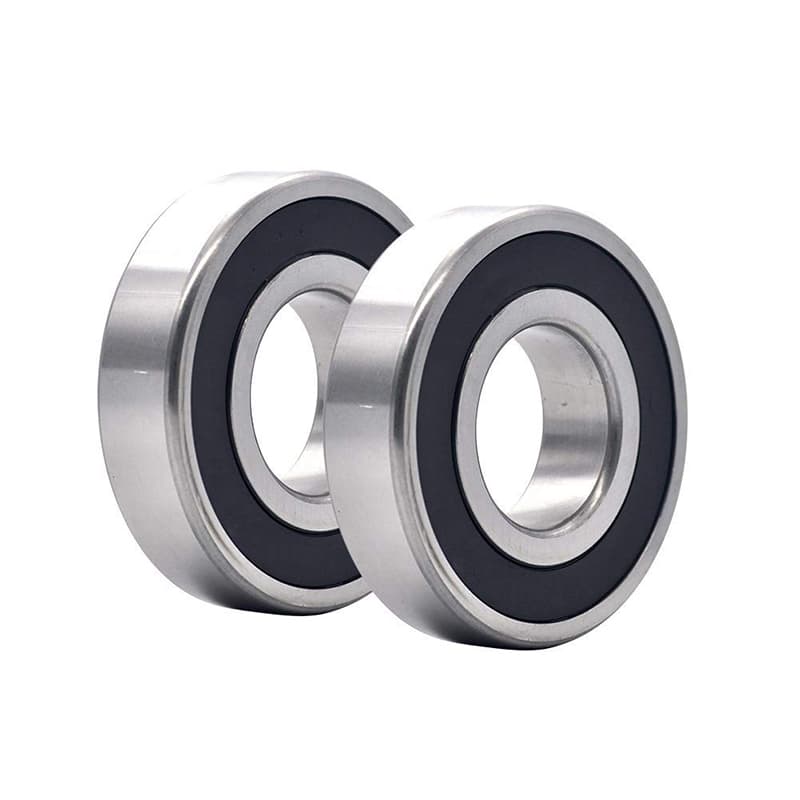
Damage detection is a skill. It combines simple observation with structured analysis. Catching damage early saves the cost of a major failure.
A Systematic Approach to Damage Detection
Think of detection in three phases: operational monitoring, disassembly inspection, and failure analysis.
Phase 1: In-Service Monitoring (No Disassembly Needed)
These are your first-line defenses.
-
Listening (Acoustic Monitoring):
- Clicking or Crunching: Often indicates a dented raceway (brinelling) or a damaged ball.
- High-Pitched Whining or Screeching: Suggests lubrication failure or excessive preload.
- Rumbling or Roaring: Often points to general wear, contamination, or loss of clearance.
- Tip: Use a mechanic’s stethoscope or a long screwdriver pressed against the housing near the bearing to isolate the sound.
-
Feeling (Tactile and Temperature Checks):
- Vibration: Place your hand on the bearing housing. Excessive vibration is a clear sign of trouble. Simple vibration pens can give a basic reading.
- Temperature: Bearings run warm, but not hot. A general rule: if you cannot keep your hand on the housing comfortably (above 70°C/160°F), it is too hot. Use an infrared thermometer5 for accuracy.
-
Simple Tools:
- Vibration Meter: Even a basic meter can track increasing vibration trends over time, which is more telling than a single reading.
- Infrared Thermometer: Allows safe, quick temperature checks from a distance.
Phase 2: Visual Inspection After Disassembly
This is where you become a detective. Clean the bearing thoroughly first.
| Damage Type | Visual Signs on the Bearing | Common Cause & Link to Installation Error |
|---|---|---|
| Brinelling (Dents) | Indentations on the raceways, perfectly spaced like the balls. | Installation Error: Hammer blows, dropping. |
| Abrasive Wear | Dull, scratched, or grey appearance on raceways and balls. Loss of polished finish. | Installation Error: Contamination from a dirty work environment or damaged seals during handling. |
| Fatigue Spalling | Flaking or pitting of the metal surface. Looks like small craters or peeling. | End of normal service life, or accelerated by overloading or poor installation (misalignment). |
| Cage Damage | Bent, cracked, or worn cage. Discolored or melted sections. | Installation Error: Severe misalignment, incorrect tool use damaging the cage during mounting. |
| Discoloration (Blue/Brown) | Blue or brown tint on rings, balls, or cage. | Installation Error: Excessive heat from incorrect clearance (too tight), lack of lubrication, or severe misalignment. |
| Cracks | Fractures in the inner or outer ring. | Installation Error: Using extreme force (hydraulic press with misalignment) or hammer blows. |
Phase 3: Advanced and Predictive Methods
For critical machinery, more advanced methods are used:
- Vibration Analysis: Specialists use spectrum analyzers to identify specific frequencies linked to bearing defects (ball pass frequency, cage frequency). This can pinpoint damage months in advance.
- Ultrasound Detection: Ultrasonic sensors can hear the high-frequency sounds of early-stage pitting or lubrication issues.
My Business Perspective on Damage Finding:
For our distributor clients who supply repair shops, teaching basic damage detection is a value-added service. When a shop mechanic calls Rajesh with a complaint, Rajesh can ask: "What does it sound like? Is it hot?" This helps diagnose the problem over the phone. It also helps determine if the failure was a material defect (rare) or an installation/application error (common). We provide our partners with simple inspection guides. Finding damage is not about blaming someone. It is about learning. Every damaged bearing tells a story. Reading that story correctly prevents the same error from happening again, saving time and money on the next repair. The goal is to move from reactive repair to predictive maintenance6.
How to restore a cap shape?
You have a bearing cap1 or a housing that is warped or dented. Installing a new bearing into a damaged housing2 is pointless. The bearing will be forced out of shape. You need to restore the mounting surface to its correct geometry.
You cannot effectively "restore" a severely bent or warped bearing cap1 or housing to its original precision shape in a typical workshop. The safe and reliable method is to replace the damaged component. For minor surface imperfections, skilled machining (boring, grinding) on a machine tool can recreate the correct diameter and squareness, but this requires expertise and proper equipment.
The cap or housing is the foundation for the bearing. A faulty foundation guarantees bearing failure, no matter how good the bearing is.
The Critical Role of the Housing and Realistic Repair Options
The bearing outer ring fits into the housing bore. The cap holds it axially. Any distortion here is transmitted directly to the bearing.
1. Why a Damaged Cap/Housing is a Problem:
- Misalignment: A bent cap will not sit square on the housing. When you tighten the bolts, it pinches the bearing outer ring, causing internal distortion (out-of-roundness).
- Incorrect Fit: A dented or out-of-round housing bore3 changes the fit with the bearing’s outside diameter. It can create a tight spot (causing preload) or a loose spot (allowing creep and fretting).
- Stress Concentration: A deformed part has internal stresses4. These can lead to cracks under operating loads.
2. Assessment: When is "Restoration" Possible?
Not all damage is equal. You must assess the severity.
| Type of Damage | Assessment & Action |
|---|---|
| Light scratches or burrs on the sealing surface | Can be restored. Use a fine file or stone to carefully remove the high spots. Ensure the surface is flat. |
| Minor dent on a non-critical face | May be acceptable. If the dent does not affect the bore, the seating face, or the bolt hole alignment, it might be safe to use. |
| Warped or bent cap | Very difficult to restore. The metal has been stressed. Attempting to bend it back rarely works accurately. Replacement is recommended. |
| Out-of-round or scored housing bore | Can be machined. This requires a boring bar or honing machine to accurately resize the bore. Afterwards, a bearing with a special outside diameter tolerance may be needed to achieve the correct fit. |
3. The Professional Repair Process (When Machining is Justified):
For a valuable housing on a large machine, repair in a machine shop is an option. The steps are:
- Inspect: Measure the bore for size, roundness, and taper. Check the face for squareness to the bore.
- Machine: The housing is set up on a boring mill or lathe. A light cut is taken to clean up the bore and the face, making them concentric and square again.
- Re-measure and Fit: After machining, the new dimensions are measured. The fit with the new bearing is calculated. Sometimes, the bore becomes slightly larger. You may need to use a bearing with a "standard" outside diameter and accept a slightly looser fit, or apply a retaining compound (like Loctite) to secure it.
4. The More Common and Practical Solution: Replacement
For most medium and small-sized equipment, especially in general industry, replacement5 is faster and more reliable.
- Cost of Repair vs. Replacement: The labor and machine time for a skilled machinist often exceeds the cost of a new housing or cap.
- Guarantee of Geometry: A new OEM part guarantees the correct geometry.
- Downtime: Sourcing a new part might be quicker than scheduling and performing a repair.
My Insight from Field Experience:
We often see secondary damage. A bearing fails because it was hammered. The hammering also damages the soft metal of the housing shoulder or cap. The mechanic replaces the bearing but not the cap. The new bearing fails in the same way. This cycle frustrates our customers. Our advice to distributors is to remind their customers: Always inspect the mating parts. Look for burrs, dents, or wear on the shaft and in the housing. A simple bearing driver tool set often includes adapters that protect both the bearing and the housing during installation. For clients in regions with limited machining facilities, like some areas in Africa or Southeast Asia, keeping common housing spares in stock is a smart business move. "Restoring" a cap is usually a compromise. In precision engineering6, compromises lead to early failures. The best practice is to protect these components during bearing installation in the first place.
Conclusion
Installation errors like hammering, misalignment, and contamination are the leading causes of premature deep groove ball bearing failure. Understanding the bearing’s design, learning to spot damage early, and knowing that dents and warped parts cannot be reliably fixed are key to achieving long, trouble-free service life.
-
Understanding the role of a bearing cap can help you appreciate its critical function in machinery performance. ↩ ↩ ↩ ↩ ↩ ↩ ↩ ↩ ↩ ↩ ↩ ↩ ↩ ↩ ↩ ↩ ↩
-
Learn how to assess and repair damaged housing to ensure machinery operates efficiently and safely. ↩ ↩ ↩ ↩
-
Find effective methods to correct out-of-round housing bores to maintain proper fit and function. ↩ ↩ ↩ ↩
-
Understanding internal stresses can help you prevent failures and extend the life of your machinery. ↩ ↩ ↩
-
Discover the benefits of replacement over repair to save time and ensure reliability in machinery. ↩ ↩ ↩
-
Gain insights into precision engineering to enhance your understanding of quality and accuracy in manufacturing processes. ↩ ↩ ↩
-
Discover the benefits of using a bearing driver tool for proper installation and to avoid costly repairs. ↩