
Your machinery shakes and groans under load. You hear grinding noises that signal trouble. You replace bearings often, but the problem always returns. The real issue might be the bearing type, not just its quality.
Smooth-running tapered roller bearings are precision components engineered for durability under heavy stress. They are best suited for applications demanding long life under combined radial and axial loads, such as vehicle wheel hubs, gearboxes, and heavy industrial machinery, where their design minimizes friction and wear.
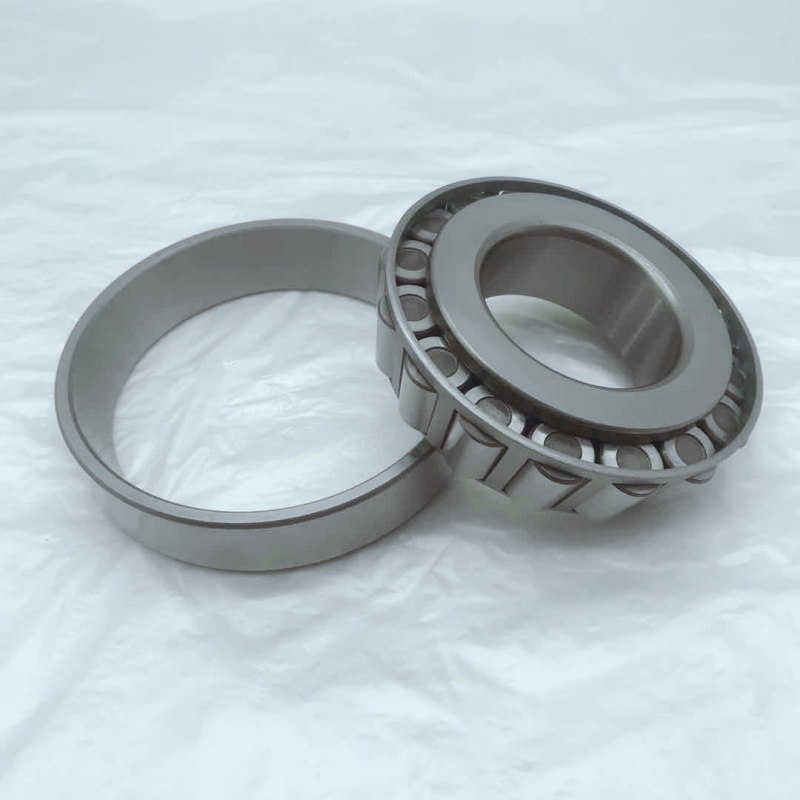
Many people think all bearings are the same. They choose based on price or size alone. This is a mistake I see often in my work. The right tapered roller bearing, selected and installed correctly, can transform your machine’s performance. Let’s explore what makes these bearings unique, where they shine, and where you need to be careful. This knowledge will help you achieve the smooth, long-lasting operation you need.
What are tapered roller bearings best suited for?
You need a bearing for a car axle. A standard ball bearing fails quickly. The load is too complex for a simple design. You need a bearing built for a specific, demanding job.
Tapered roller bearings1 are best suited for applications that experience heavy combined loads2—meaning significant force from the side (radial) and from the end (axial) at the same time. Their classic, unbeatable application is in automotive wheel hubs3, where they manage the vehicle’s weight and steering forces for thousands of miles.
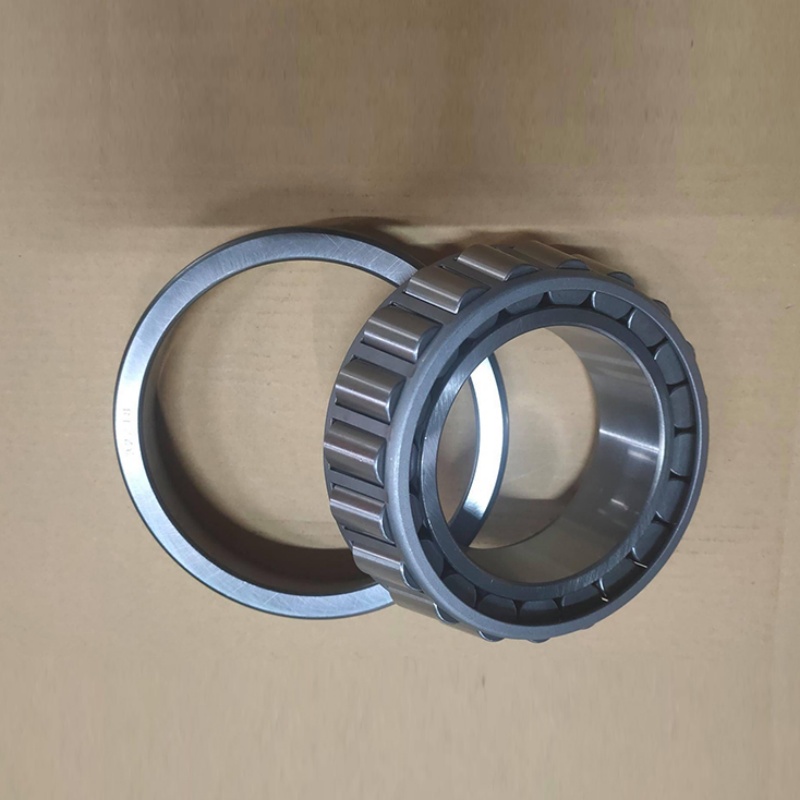
The suitability comes from their cone-shaped design. This shape is not an accident. It is a direct solution to a common engineering challenge.
The Niche of Combined Load Applications
To understand where tapered roller bearings excel, we must look at the forces in different machines. Not every application needs them. But for the ones that do, they are irreplaceable.
Core Application Areas:
-
Automotive and Transportation: This is the largest market.
- Wheel Hubs: This is the perfect example. The bearing carries the car’s radial weight. It also handles strong axial forces during cornering and braking.
- Transmissions and Gearboxes: Especially in pinion gear supports. Gears create both radial and axial thrust forces.
- Truck Differentials and Axles: Extreme loads from weight and torque.
-
Heavy Industrial Machinery:
- Rolling Mills: The massive rollers need support for huge radial loads and some axial guidance.
- Mining and Construction Equipment: Excavators, conveyor head pulleys. They face shock loads and dirt.
- Large Gearboxes for Pumps and Fans: Where gear forces are complex.
-
Agriculture:
- Tractor Final Drives and Implement Connections: High torque and muddy, harsh conditions.
Why Other Bearings Fail in These Roles:
Let’s compare with a simple table:
| Bearing Type | Load Handling | Why It Fails in a Wheel Hub | Why Tapered Succeeds |
|---|---|---|---|
| Deep Groove Ball Bearing | Good radial, moderate axial. | Cannot handle the high, constant axial thrust from cornering. Fatigue fails quickly. | The tapered rollers are angled to directly absorb axial force as a component of the radial load. |
| Cylindrical Roller Bearing | Excellent radial, very low axial. | Has no capacity for axial load. The car would not be able to steer stably; the bearing would destroy itself. | The cone angle is designed specifically to carry axial load proportionally to the radial load. |
| Spherical Roller Bearing | Good combined load, handles misalignment. | More expensive, less rigid, and often over-specified for the precise alignment of a wheel hub. | Provides a more rigid, cost-effective solution for a well-aligned, high-load application. |
My Insight from the Supply Chain:
In my daily business, the demand for tapered roller bearings is very predictable. Our distributor in India, Rajesh, knows that before the monsoon season, orders for tractor bearings will spike. Workshops are preparing equipment. In Brazil, orders are steady for truck and bus wheel bearings because the freight industry never stops. This tells me one thing: tapered roller bearings are mission-critical components4. They are used in applications where failure is not an option because it leads to safety risks or massive downtime. When a client asks me, "Is this the right bearing?", I first ask about the forces involved. If axial load is present and significant, the answer almost always points to a tapered roller bearing. Their design is a timeless solution to a fundamental mechanical problem.
Can taper roller bearings handle axial loads?
Your machine has a shaft that pushes forward under power. A standard bearing overheats and seizes. You think you need a special, expensive thrust bearing. But a common tapered roller bearing might be the simpler answer.
Yes, tapered roller bearings1 are specifically designed to handle axial (thrust) loads. In fact, their ability to manage axial loads in combination with radial loads is their primary advantage. The axial load capacity2 is directly related to the contact angle of the rollers; a steeper angle allows for greater axial load carrying capability.
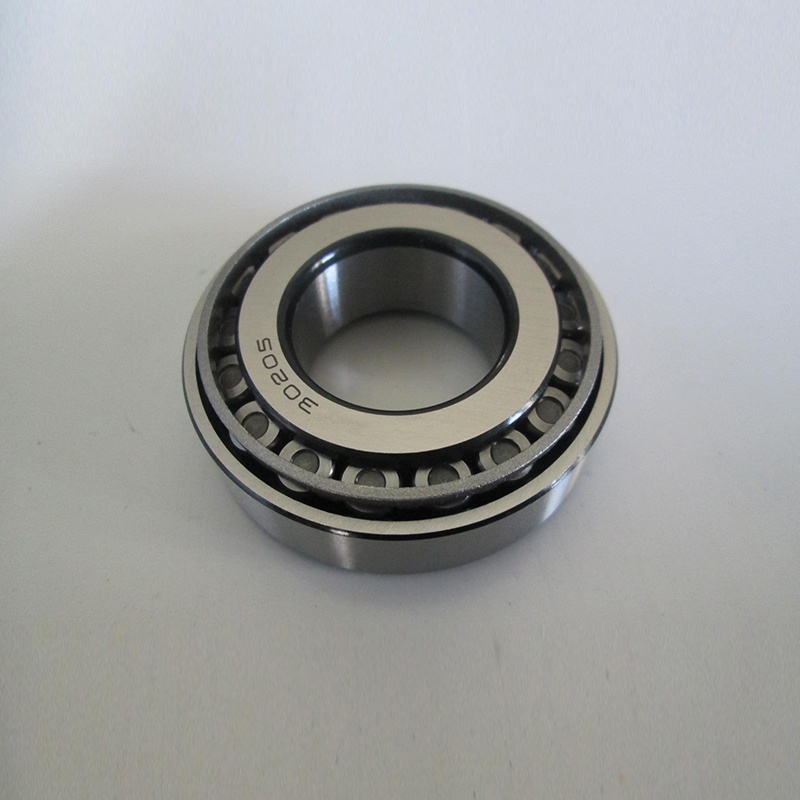
This is not a secondary feature. It is the core reason for their existence. Understanding how they do this is key to using them correctly.
The Mechanics of Axial Load Handling
The magic is in the geometry. Imagine a wedge being driven under a heavy object. The tapered roller works on a similar principle.
How It Works:
The inner ring (cone), outer ring (cup), and rollers all have tapered surfaces. These surfaces are set at an angle to the bearing axis. When an axial force pushes the cone along the shaft, it tries to move between the rollers and the cup. Because of the angle, this axial force is transferred into a radial force component that presses the rollers tightly against the cup’s raceway. The load is distributed over a large contact area, preventing excessive stress.
Key Factors Affecting Axial Capacity:
-
Contact Angle (α)3: This is the most important factor.
- Small Contact Angle (e.g., 10°-15°): Better for higher radial loads with some axial load. Common in general series.
- Large Contact Angle (e.g., 25°-30°): Much higher axial load capacity2. Used in specific applications like pinion gear supports where thrust is dominant.
-
Bearing Series4: Manufacturers offer different series.
- Light/Medium Series: Generally have smaller contact angles, optimized for combined loads with a radial emphasis.
- Heavy Duty Series: Often have larger contact angles for greater thrust capacity.
Practical Guidance for Application:
You cannot use just any tapered bearing for any axial load. You must check the specifications.
| Application Scenario | Axial Load Characteristic | Bearing Selection Consideration | Our Factory’s Common Solution |
|---|---|---|---|
| Wheel Bearing | Moderate, intermittent axial load from steering. | Standard contact angle (e.g., Series 30200, 30300) is perfect. | We supply large volumes of P5 precision class 32207, 32310 bearings to automotive distributors. Smooth running is critical here. |
| Bevel Gear Pinion Support | Very high, constant axial thrust from gear mesh. | Requires a bearing with a large contact angle (e.g., Series 31300, 32200). | For clients making gearboxes for Pakistan’s textile industry, we often recommend and supply 31311 or 32311 bearings for the pinion shaft. |
| Industrial Pump | Moderate axial thrust from impeller. | A standard series tapered bearing is often used in a back-to-back pair to lock the shaft in position. | We advise using C3 clearance5 in these applications because pump shafts get hot, and the preload must be set correctly. |
A Critical Point on Mounting:
The axial load capacity2 is only realized if the bearing is properly mounted and adjusted. Tapered roller bearings are typically used in pairs (face-to-face or back-to-back). By adjusting the nut on the shaft, you set the internal clearance or preload. Too loose, and the bearing will have play, causing noise and impact damage under axial load. Too tight, and it will overheat from excessive preload. Getting this adjustment right is as important as choosing the right bearing.
My insight from troubleshooting is this: When a client reports rapid failure of a tapered bearing under axial load, the problem is rarely the bearing’s capacity. It is usually one of three things: incorrect clearance adjustment, using a single bearing where a pair was needed, or contamination that damaged the raceways. The bearing’s inherent design is robust. The application must support that design.
What are the disadvantages of tapered roller bearings?
You see the advantages of tapered roller bearings. You want to use them everywhere. But then you face problems with high-speed noise or mounting complexity. No component is perfect for every job.
The main disadvantages of tapered roller bearings are their limited maximum speed compared to ball bearings, their sensitivity to misalignment, and their more complex installation and adjustment requirements. They also generally have higher friction at very high speeds due to sliding contact between the roller ends and the guide flange.

Knowing the weaknesses is not about avoiding these bearings. It is about using them where they are strong and avoiding them where they are weak. This is the mark of a smart engineer or buyer.
Understanding the Trade-offs to Make Better Choices
Every engineering choice is a balance. Let’s break down the disadvantages so you can decide when a tapered roller bearing is not the right choice.
Disadvantage 1: Speed Limitation1
- The Cause: Tapered rollers have a sliding motion against the large rib on the inner ring (the guide flange). This sliding friction generates more heat at high rotational speeds than the pure rolling friction in a ball bearing or cylindrical roller bearing.
- The Practical Limit: While specific limits depend on size and lubrication, tapered roller bearings are generally not the first choice for very high-speed spindles (e.g., in machine tools over 10,000 RPM) or turbochargers. For these, angular contact ball bearings are superior.
- My Factory View: We produce both types. When a client from Turkey asks for bearings for a high-speed grinder spindle, we steer them toward our P4-class angular contact ball bearings, not tapered rollers. It’s about using the right tool.
Disadvantage 2: Sensitivity to Misalignment2
- The Cause: The tapered design requires precise alignment between the cone and cup. If the shaft deflects or the housing is misaligned, the rollers will not make even contact along their full length. This leads to edge loading, stress concentration, and early fatigue.
- The Comparison: This is where spherical roller bearings excel. They are specifically designed to accommodate misalignment. In a vibrating screen or a poorly aligned conveyor, a spherical bearing will outlive a tapered bearing every time.
- Client Story: A mining client in South Africa had repeated failures on a crusher bearing. They were using a tapered bearing. Our engineer suggested checking the housing alignment. It was off by several millimeters. The real solution was to realign the housing. The cheaper, temporary fix was to switch to a spherical roller bearing that could tolerate the misalignment.
Disadvantage 3: Complex Installation and Adjustment3
- The Cause: They are not "drop-in and forget" components. Mounting requires care to avoid damaging the separable cup and cone. Most critically, they require precise adjustment of internal clearance (preload) after installation.
- The Risk: Incorrect adjustment leads to either premature wear (if too loose) or catastrophic overheating (if too tight). This requires skilled labor, proper tools (like dial indicators), and time.
- Our Solution for Distributors: For our B2B clients who supply repair shops, we provide simple adjustment guides and even training videos. We tell them, "Selling this bearing means selling the knowledge to install it." This adds value to their service.
Summary Table: When to Think Twice About Tapered Roller Bearings
| Application Characteristic | Is a Tapered Bearing a Good Fit? | Better Alternative | Reason |
|---|---|---|---|
| Very High Rotational Speed | No. Likely to overheat. | Angular Contact Ball Bearing or Cylindrical Roller Bearing. | Lower friction, designed for high speeds. |
| Significant Shaft Deflection or Misalignment | No. Will cause edge loading and failure. | Spherical Roller Bearing. | Self-aligning capability. |
| Requires Simple, Fast Replacement | Maybe, but caution needed. | A pre-adjusted unit (like a pillow block) or a deep groove ball bearing. | Tapered bearings need skill and time to adjust correctly. |
| Extremely Pure Radial Load4, No Axial Load | Acceptable, but not optimal. | Cylindrical Roller Bearing. | A cylindrical bearing will have higher radial capacity and lower friction for the same size. |
My final insight here is about honesty. As a manufacturer, my goal is to have a satisfied, long-term customer. If I sell a tapered roller bearing for an application where it will fail quickly due to misalignment, I lose that customer. So, we always ask detailed questions. Understanding the disadvantages helps us protect our clients from making expensive mistakes. It builds trust.
What type of load can be applied to a tapered roller bearing?
You look at a bearing catalog. It shows many load ratings: dynamic, static, radial, axial. The information is confusing. You need to know what force your bearing can actually take in real use.
A tapered roller bearing can be applied with radial loads (perpendicular to the shaft), axial loads (parallel to the shaft), and most importantly, combined loads which are a mixture of both acting simultaneously. The unique design allows it to support these combined loads efficiently, which is its defining characteristic.
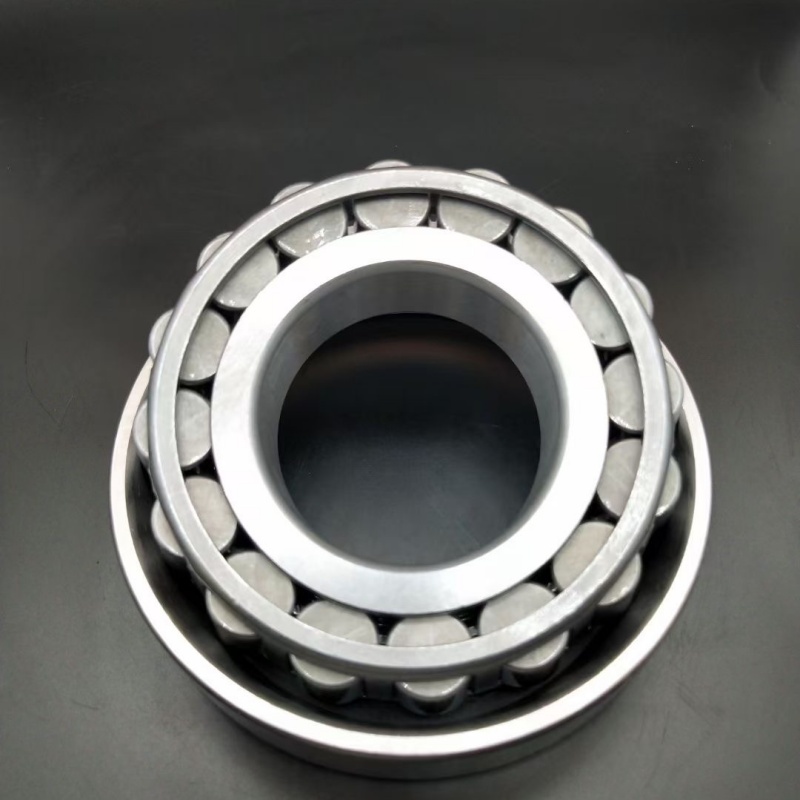
The word "load" is general. In engineering, we break it down into specific types. Each type affects the bearing in a different way. Knowing this helps you read catalogs and make safe choices.
Breaking Down Load Types for Practical Selection
Let’s move from textbook definitions to real-world implications. This will help you communicate with suppliers and understand bearing specifications.
- Definition: A force acting perpendicular to the shaft’s axis. Imagine the weight of a car pressing down on a wheel hub.
- How the Bearing Handles It: The radial load is carried by the rollers pressing against the raceways. The conical shape spreads the force over a relatively large contact area.
- Consideration: Even under pure radial load, a tapered bearing generates some internal axial force due to its angle. This force must be countered by another bearing or a shoulder.
2. Axial Load (Fa)2:
- Definition: A force acting parallel to the shaft’s axis, also called thrust load. Imagine the force pushing a car’s wheel sideways during a turn.
- How the Bearing Handles It: This is its specialty. The axial load is transferred through the roller ends to the large rib on the inner ring. The conical geometry converts part of this force into a radial component.
- Critical Rule: A single tapered roller bearing can only handle axial load in one direction (towards the large end of the rollers). To handle axial load in both directions or to locate a shaft, you must use them in pairs (usually back-to-back or face-to-face).
- Definition: This is the most common real-world scenario. Both radial and axial forces act on the bearing at the same time.
- How the Bearing Handles It: The bearing’s performance is calculated using an equivalent dynamic load (P)4. This is a theoretical single load that combines the effects of the actual radial and axial loads for life calculation. The formula is
P = X*Fr + Y*Fa, where X and Y are factors from the bearing catalog based on the contact angle and load ratio.
Making This Practical: A Load Analysis Table5
Here is how to think about loads in common applications:
| Machine Component | Primary Radial Load Source | Primary Axial Load Source | Load Type | Bearing Setup Needed |
|---|---|---|---|---|
| Passenger Car Wheel Hub | Vehicle weight. | Cornering forces, braking. | Combined, intermittent axial. | A pair of tapered bearings (often in a unitized hub). |
| Gearbox Input Shaft | Gear tooth forces. | Usually minimal, from gear helix. | Mostly Radial. | Possibly a cylindrical roller bearing for radial load and a ball bearing for light axial location. |
| Bevel Gear Pinion Shaft | Gear tooth forces. | Very high thrust from gear mesh. | Combined, Axial-dominated. | A matched pair of tapered bearings with large contact angle, adjusted for precise preload. |
| Conveyor Roller | Weight of material and belt. | Usually negligible if aligned. | Mostly Pure Radial. | A spherical roller bearing (to handle misalignment) or a deep groove ball bearing. |
My Insight on Load and Life Calculation:
Many of our medium-sized distributor clients do not do complex load calculations. They rely on cross-reference or OEM numbers. This is fine for replacement. But for new designs or upgrades, understanding load is power. We have an engineering team6 that helps clients with this. For example, a client in Indonesia was building a new cane crusher. They gave us estimates of the radial and axial forces. We used our bearing software7 to calculate the equivalent load, then recommended a specific tapered bearing size and series (like 32926) with a C4 clearance8 to handle shock loads. We provided the estimated service life under those conditions. This transformed their buying process from a guess to a confident engineering decision. They knew the bearing would last.
The key takeaway is this: Do not be intimidated by load types. Start by asking simple questions about your machine: What is pushing down? What is pushing sideways? The answers will point you directly to the right bearing type and how to configure it.
Conclusion
Tapered roller bearings are powerful tools for heavy, combined loads, offering long life and smooth operation. Choose them for their strength in wheel hubs and gearboxes, but understand their limits with speed and misalignment. The right application ensures reliability.
-
Understanding Radial Load (Fr) is crucial for selecting the right bearing for your application. ↩ ↩ ↩ ↩
-
Learn about Axial Load (Fa) to ensure your bearing can handle thrust forces effectively. ↩ ↩ ↩ ↩ ↩ ↩
-
Explore Combined Load (Fr + Fa) to understand how both forces impact bearing performance. ↩ ↩ ↩ ↩
-
Discover how equivalent dynamic load (P) simplifies load calculations for better bearing selection. ↩ ↩ ↩ ↩
-
A Load Analysis Table helps visualize load types and their implications for bearing setups. ↩ ↩
-
An engineering team can provide expert guidance for selecting the right bearing based on load requirements. ↩
-
Learn how bearing software can optimize your bearing selection process based on load analysis. ↩
-
Understanding C4 clearance is essential for ensuring your bearing can handle shock loads effectively. ↩