
Your maintenance budget is shrinking. Downtime costs are rising. You replace bearings often, but the cycle never stops. The problem might not be your maintenance team, but the bearings they are using.
Tapered roller bearings can significantly reduce your maintenance costs by offering longer service life under heavy loads, reducing the frequency of replacements, and minimizing unplanned downtime. Their robust design handles combined loads efficiently, leading to less wear, fewer failures, and lower overall cost of ownership.
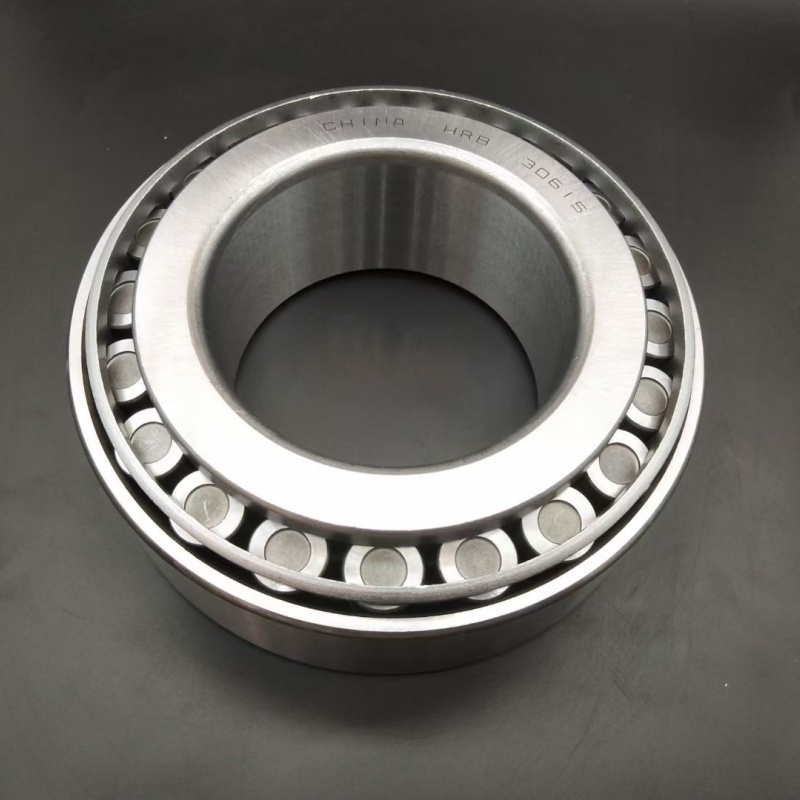
Many managers see bearings as simple commodities. They buy the cheapest option. This is a short-term view that leads to long-term pain. In my years of supplying bearings to industries worldwide, I have seen a clear pattern. The right tapered roller bearing, chosen for its advantages and maintained properly, is a strategic investment. It pays for itself many times over. Let’s explore how these bearings save money, how to care for them, and when they are the best choice over alternatives like ball bearings.
What are the advantages of tapered roller bearings?
You need a bearing for a heavy gearbox. A standard bearing fails every six months. Production stops. You lose money on parts and labor. You need a bearing that lasts longer and handles the real-world forces.
The key advantages of tapered roller bearings are their high load-carrying capacity1 for both radial and axial forces, their long operational life2 under heavy stress, their adjustable internal clearance3 for optimal performance, and their overall cost-effectiveness4 in demanding applications where other bearings would fail quickly.
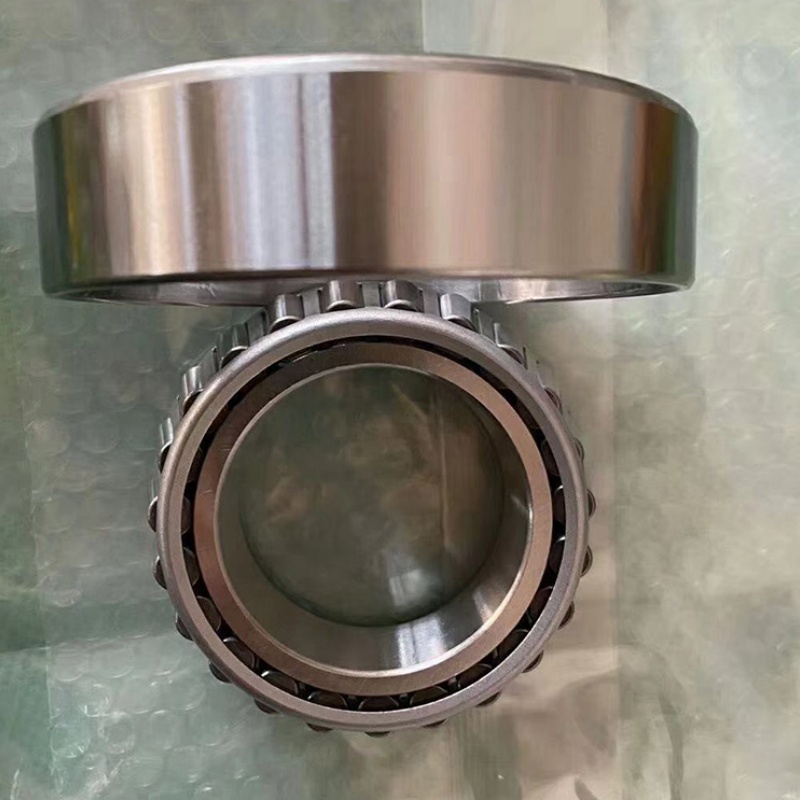
These advantages are not just technical terms. They translate directly into money saved on your balance sheet. Let’s break down each advantage into real cost savings.
From Technical Advantages to Financial Savings
Every feature of a tapered roller bearing has a direct link to reducing your operating expenses.
1. High Combined Load Capacity = Fewer Bearing Failures.
- The Advantage: They manage heavy loads from all directions in one unit.
- The Cost Saving: You avoid using multiple bearings (like a radial bearing plus a thrust washer). This simplifies design and inventory. More importantly, the bearing does not fail prematurely from unexpected axial thrust, which is a common cause of failure in incorrect bearing types. Fewer failures mean fewer emergency purchases, less labor for replacement, and less production loss.
2. Long Service Life = Reduced Replacement Frequency.
- The Advantage: Their robust design and large contact area distribute stress, delaying metal fatigue.
- The Cost Saving: Imagine a bearing that lasts 20,000 hours instead of 10,000. You cut your bearing purchase and replacement labor costs in half over the life of the machine. For a client like Rajesh in India, selling longer-life bearings means his repair shop customers have happier end-users and place more repeat orders.
3. Adjustable Clearance = Optimized Performance and Extended Life.
- The Advantage: You can set the internal play or preload during installation.
- The Cost Saving: Proper clearance prevents two expensive problems:
- Too Loose: Causes vibration, noise, and impact damage. This wastes energy and damages other machine parts.
- Too Tight: Causes overheating and rapid wear from excessive friction. This can lead to seizure and catastrophic failure.
By getting the clearance right, you maximize the bearing’s designed life. This adjustment is a one-time task that prevents many future costs.
4. Cost-Effectiveness = Lower Total Cost of Ownership5 (TCO).
- The Advantage: They provide high performance for a reasonable price per unit.
- The Cost Saving: This is the most important point. Do not look at the unit price alone. Look at the Total Cost of Ownership5.
| Cost Factor | Cheap, Unsuitable Bearing | Correct Tapered Roller Bearing | Financial Impact |
|---|---|---|---|
| Purchase Price | Low | Slightly Higher | Minor upfront cost difference. |
| Replacement Frequency | High (fails often) | Low (lasts long) | Major saving. Fewer parts to buy. |
| Labor Cost for Replacement | High (frequent work) | Low (infrequent work) | Major saving. Frees up maintenance staff. |
| Cost of Unplanned Downtime | Very High (frequent stops) | Low (reliable operation) | The biggest saving. Production keeps running. |
| Energy Cost | May be higher due to friction | Optimized for efficiency | Potential saving on power bills. |
My Insight from the Factory and Market:
We export to countries with tough conditions like Russia, South Africa, and Indonesia. In these markets, equipment downtime is extremely costly. Our clients there are not interested in the cheapest bearing. They want the bearing with the lowest cost-per-operating-hour. They understand that the true advantage of a tapered roller bearing is not on the price tag, but in the uninterrupted operation of their crushers, tractors, and trucks. When they explain this value to their own customers, they build loyalty and grow their business. The advantage is not just mechanical; it is financial and relational.
What are the maintenance tips for bearings?
You installed a great bearing, but it still failed early. You feel frustrated. The bearing was good, but something around it caused the problem. Proper maintenance is what protects your investment.
Key maintenance tips for tapered roller bearings1 include ensuring perfect cleanliness during installation2, using the correct tools to avoid damage, applying the right type and amount of lubricant, setting the internal clearance3 precisely, and regularly monitoring for changes in temperature, noise, and vibration to catch problems early.
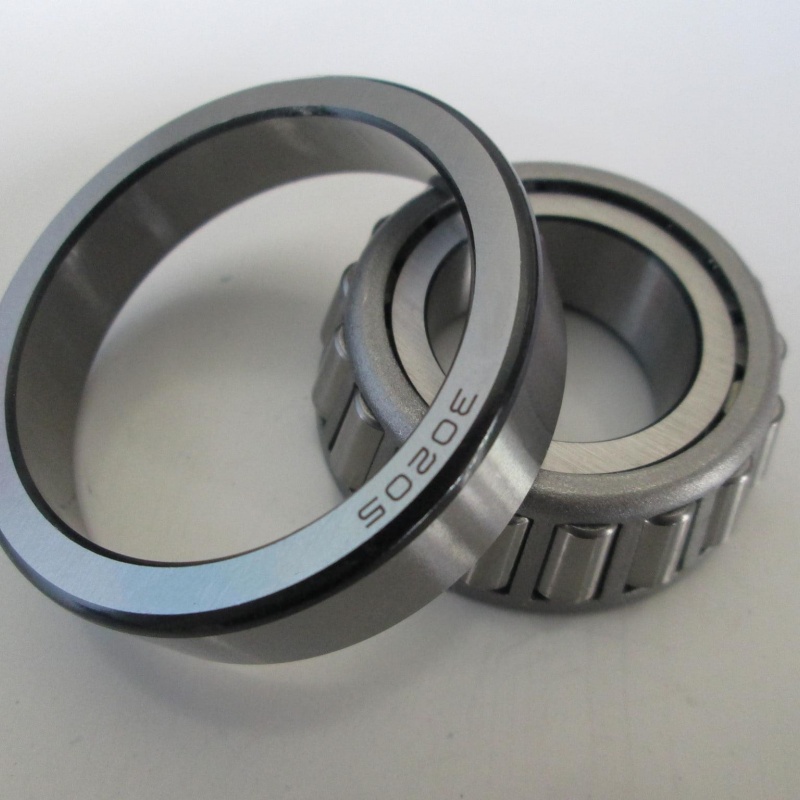
Maintenance is not a mystery. It is a series of deliberate, correct actions. Skipping any step can waste the potential of a high-quality bearing. Let’s turn these tips into a clear action plan.
A Proactive Maintenance Protocol for Cost Reduction
Reactive maintenance (fixing after failure) is expensive. Proactive maintenance (preventing failure) saves money. Here is how to be proactive.
Phase 1: The Critical Installation Process (Where Most Failures Start)
This phase sets the stage for the entire bearing life.
| Maintenance Tip | Correct Action | Common Mistake & Cost Consequence |
|---|---|---|
| Cleanliness | Clean the shaft, housing, and surrounding area. Use clean tools and gloves. Keep the new bearing in its package until the last moment. | Installing a bearing in a dirty environment. Cost: Abrasive particles cause immediate wear, shortening life by 80% or more. |
| Handling & Mounting | Use a bearing heater to thermally expand the inner ring for a smooth fit on the shaft. Use proper sleeves and presses. Never hammer directly on the rings. | Hammering the bearing. Cost: Damages raceways and cages, creating stress points that lead to early fatigue failure. |
| Lubrication | Apply the manufacturer-recommended grease. Fill the bearing cavity about 30-50%. Fill the housing cavity about 30-60% as per guide. | Over-packing with grease. Cost: Causes churning, overheating, and grease breakdown. The bearing fails from heat, not wear. |
| Clearance Adjustment | For tapered bearings, use a dial indicator or feeler gauge to set the specified axial end-play or preload. Follow the machine manual. | Guessing the adjustment by feel. Cost: Too loose causes vibration and wear; too tight causes overheating and seizure. Both lead to rapid, costly failure. |
Phase 2: In-Service Monitoring (Catching Problems Before They Stop Production)
Once running, you must watch and listen.
- Temperature Monitoring: Use a simple infrared thermometer. Check bearing housings regularly. A sudden or steady rise in temperature (e.g., more than 70°C above ambient) is a red flag. It signals lack of lubrication4, overloading, or incorrect clearance.
- Vibration and Noise: Train your ears and hands. A change in sound (new grinding, whining) or an increase in vibration is an early warning. For critical machines, use a basic vibration meter.
- Lubrication Replenishment: Follow the machine’s lube schedule. But also check grease condition. If grease is black, watery, or full of metal particles, change it immediately.
Phase 3: The "Post-Mortem" Analysis
When a bearing does fail, do not just throw it away. Examine it. The failure pattern tells a story and helps prevent the next one.
- Fatigue Spalling: Flaking on raceways. This is normal end-of-life. It means you got the full service life.
- Brinelling: Indentations on raceways. Caused by shock loads or improper installation. Improve handling.
- Abrasive Wear: Dull, scratched surfaces. Caused by contamination. Improve seals and cleanliness.
- Discoloration (Blue/Brown): Caused by overheating. Check lubrication4, load, and clearance.
My Insight on Building a Maintenance Culture:
For our distributor clients, selling maintenance knowledge is as important as selling bearings. We provide simple checklists and guides. A maintenance tip is only useful if it is followed. I advise clients like Rajesh: "When you sell a box of bearings to a repair shop, give them a one-page maintenance reminder. It makes you a partner, not just a vendor." This reduces costly comebacks and builds trust. The goal is to move the customer from a cycle of failure and replacement to a cycle of prevention and long life. That is where the real cost savings are captured.
Are tapered roller bearings1 serviceable2?
A bearing fails in a large, expensive gearbox. Replacing the whole unit costs a fortune. You wonder if you can just repair the bearing. The answer depends on the bearing type and the level of damage.
Yes, tapered roller bearings1 are inherently serviceable2 due to their separable design. The outer ring (cup) and the inner ring assembly (cone with rollers and cage) can be separated, cleaned, inspected, re-lubricated, and reassembled. This allows for maintenance, repair, and clearance adjustment, unlike many permanently sealed bearing types.

This serviceability is a major cost-saving feature. It turns a bearing from a disposable item into a maintainable component. But you need to know when servicing makes sense and when replacement is better.
The Economics of Servicing vs. Replacing
Serviceability gives you options. The right choice depends on cost, time, and risk.
What "Serviceable" Enables You to Do:
- Preventive Maintenance: You can disassemble, clean, inspect, and re-grease a bearing during a planned machine overhaul. This can extend its life significantly, especially in dirty environments.
- Damage Assessment: After a failure event (like a seal leak), you can open the bearing to see if it is salvageable or needs full replacement.
- Clearance Re-adjustment: Over time, wear increases internal clearance. In some precision applications, you can take up this wear by adjusting the nut to restore proper preload, extending useful life.
- Partial Replacement: If only the cup or the cone is damaged (a rare event), you can theoretically replace just that part. However, cups and cones are precision-matched as sets at the factory. Mixing components from different batches is not recommended as it can drastically reduce performance and life.
When Does Servicing Make Financial Sense?
Consider these scenarios:
| Scenario | Action: Service or Replace? | Financial Reasoning & My Insight |
|---|---|---|
| Planned Overhaul of a Large Gearbox | Service. Clean, inspect, re-grease all bearings. | The cost of new bearings for a large gearbox is high. The labor to open the gearbox is already scheduled. Servicing the existing bearings (if in good condition) saves thousands in parts. |
| A bearing ran dry but was caught early. | Possibly Service. Clean, inspect for minor damage, re-lube. | If no visible scoring or discoloration exists, servicing can salvage the bearing. This is a judgment call for an experienced mechanic. |
| A bearing shows minor wear but the machine is old. | Replace. | For a common bearing in a standard machine, the cost of a new bearing is low. The risk of a serviced bearing failing soon is not worth the small savings. Replacement is safer. |
| Contamination entered, but the bearing is large and special. | Service. Thorough cleaning and re-lubrication. | Large, custom-made bearings are very expensive and have long lead times. Servicing is the only economical choice if damage is minimal. |
The Practical Limits of Servicing:
- Fatigue Damage is Final: Once rolling surfaces show signs of spalling (flaking metal), the bearing has reached its fatigue life. Servicing (cleaning and greasing) will not fix this. The bearing must be replaced.
- Skill and Tools Required: Proper servicing requires skill, clean workspace, and the right tools. A poorly serviced bearing will fail faster than a worn one.
- Time vs. Cost: In a high-production environment, downtime is more expensive than a new bearing. It is often faster to replace with a new unit than to service the old one.
Our Role in Supporting Serviceability:
As a manufacturer, we design our tapered roller bearings1 to be serviceable2. We also provide detailed dimensional charts so customers can accurately identify and order replacement cups or cones if needed. However, we always advise our B2B clients3: for 95% of common applications, selling a complete new bearing set is the best solution for the end-user. It guarantees performance and comes with a predictable lifespan. Servicing is a valuable option for large, custom, or critical applications where the cost of a new bearing is prohibitive. Understanding this distinction helps our distributors guide their customers to the most cost-effective decision.
Are tapered roller bearings better than ball bearings1?
You are designing a new machine. You must choose between a tapered roller bearing and a ball bearing. Both fit the space. The price is different. Choosing the wrong one will haunt you for years with maintenance issues.
Tapered roller bearings2 are not universally "better" than ball bearings1. They are different tools for different jobs. Tapered roller bearings2 are better for applications with heavy combined radial and axial loads, where rigidity and long life under stress are critical. Ball bearings are better for high-speed applications with moderate loads, where low friction and cost are priorities.
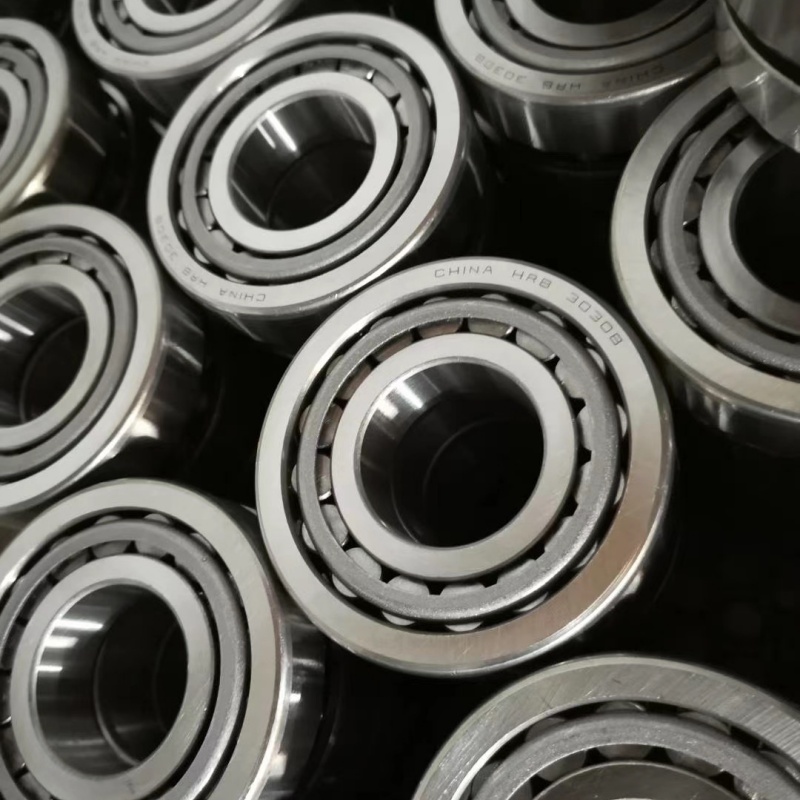
The question is not about which is superior. The question is: Which is right for your specific application? Let’s compare them feature by feature to build a clear decision framework.
A Feature-by-Feature Comparison for Smart Selection
Making the right choice prevents future maintenance costs and performance problems.
1. Load Capacity:
- Tapered Roller Bearing: Excellent for heavy combined loads3. They can handle high radial and high axial forces simultaneously.
- Ball Bearing: Good for moderate radial and light-to-moderate axial loads. A deep groove ball bearing can handle some axial load in both directions, but its capacity is much lower than a tapered roller bearing of similar size.
- Verdict: For heavy loads, especially with strong axial thrust, the tapered roller bearing is the clear winner.
2. Speed Capability:
- Tapered Roller Bearing: Limited by sliding friction at the roller ends. Best for low to moderate speeds.
- Ball Bearing: Excellent for high and very high speed4s. Pure rolling motion creates less heat.
- Verdict: For spindles, turbines, or small electric motors, the ball bearing is the better choice.
3. Rigidity and Precision:
- Tapered Roller Bearing: Very rigid due to line contact and adjustable preload. Excellent for applications requiring minimal shaft deflection (e.g., gear meshes).
- Ball Bearing: Less rigid due to point contact. However, precision-grade ball bearings1 (P4, P2) are unsurpassed for ultra-high rotational accuracy.
- Verdict: For rigidity under load, choose tapered. For ultimate rotational accuracy at high speed, choose precision ball bearings1.
4. Friction and Efficiency:
- Tapered Roller Bearing: Higher friction at high speeds due to sliding contact. This can affect energy efficiency in some applications.
- Ball Bearing: Lower starting and running friction. More energy-efficient for high-speed, continuous operation.
- Verdict: Where energy consumption is a major concern (e.g., in high-volume fan motors), ball bearings1 have an advantage.
5. Cost and Complexity:
- Tapered Roller Bearing: Generally higher unit cost. More complex installation requiring adjustment.
- Ball Bearing: Often lower unit cost. Simpler "drop-in" installation, especially with sealed units.
- Verdict: For simple, low-load, high-volume applications, ball bearings1 are more cost-effective.
Decision Matrix: Which Bearing to Choose?
| Your Application’s Primary Need | Recommended Bearing Type | Real-World Example & Business Insight |
|---|---|---|
| Heavy load + axial thrust | Tapered Roller Bearing | Truck wheel hub, rolling mill stand. Our sales to the automotive aftermarket in Brazil and India are dominated by tapered bearings for this reason. |
| Very high speed | Ball Bearing (especially Angular Contact) | Machine tool spindle, turbocharger. We supply P5-class angular contact ball bearings1 to clients in Turkey for this purpose. |
| Moderate load, low cost, simple | Deep Groove Ball Bearing | Electric fan motor, conveyor idler. This is a high-volume product for us, shipped worldwide in large quantities. |
| Heavy radial load only, no thrust | Cylindrical Roller Bearing | Large electric motor rotor. Another product in our lineup that serves a specific niche. |
| Need for rigidity and adjustment5 | Tapered Roller Bearing | Bevel gear pinion support. The adjustable preload is critical for proper gear backlash. |
My Final Insight on the "Better" Question:
In our factory, we produce both types on different production lines. We do not think one is better. We think they are different tools in a toolbox. A good procurement manager, like Rajesh, stocks both. He asks his customers questions: "How fast does it spin? Is there a pushing force? Is cost or long life more important?" The answers guide him to the right product. The biggest cost saving comes from using the correct bearing for the job. Using a ball bearing where a tapered roller is needed leads to frequent, costly failures. Using a tapered roller where a ball bearing would suffice wastes money on over-engineering and may limit performance. The "better" bearing is the one that solves your specific problem at the lowest total cost.
Conclusion
Tapered roller bearings reduce maintenance costs by lasting longer under heavy loads and allowing for serviceability. Their advantages shine when matched to the right application, and proper maintenance maximizes their value. Choose wisely based on load, speed, and your total cost goals.
-
Learn how ball bearings excel in high-speed scenarios and their cost-effectiveness. ↩ ↩ ↩ ↩ ↩ ↩ ↩ ↩ ↩ ↩ ↩ ↩
-
Explore the benefits of tapered roller bearings for heavy loads and axial thrust applications. ↩ ↩ ↩ ↩ ↩ ↩ ↩
-
Discover how tapered roller bearings manage heavy loads effectively for various applications. ↩ ↩ ↩ ↩
-
Discover which bearings are best suited for very high-speed applications and why. ↩ ↩ ↩ ↩
-
Understand the importance of rigidity and adjustability in tapered roller bearings for machinery. ↩ ↩ ↩