
Gearboxes hum and whir on your factory floor. A sudden high-pitched screech stops production. A failed bearing inside the reducer has caused hours of costly downtime. Choosing the right bearing for this critical location is not a trivial task.
Deep groove ball bearings are widely used in industrial gearboxes and reducers to support shafts under moderate to high radial loads and moderate axial loads. They offer high-speed capability, low friction, and reliable performance in a compact design, making them a versatile and cost-effective choice for power transmission components.
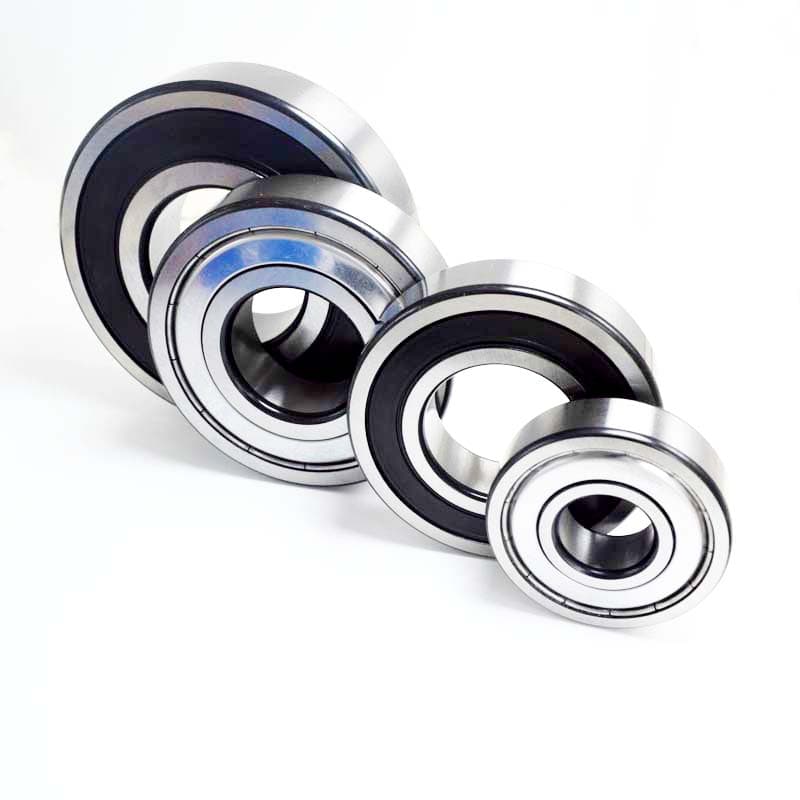
Many people think any bearing of the right size will work in a gearbox. This is a dangerous assumption. The bearing must handle specific loads, speeds, and environmental conditions. Through years of supplying bearings to gearbox manufacturers and repair shops worldwide, I have learned the key factors for success. Let’s explore the role of deep groove bearings, look at two common sizes, and understand their axial load limits to make better selection decisions.
What is a deep groove ball bearing1 used for?
You have a rotating shaft that needs support. It spins fast and carries a significant sideways load. You need a bearing that is simple, reliable, and can handle some push from the ends. The deep groove ball bearing1 is often the first choice.
A deep groove ball bearing1 is a versatile bearing type used to support rotating shafts primarily under radial loads2. It can also accommodate moderate axial (thrust) loads in both directions. Its common applications include electric motors, industrial gearboxes, automotive components, pumps, fans, and household appliances where reliability and quiet operation are needed.
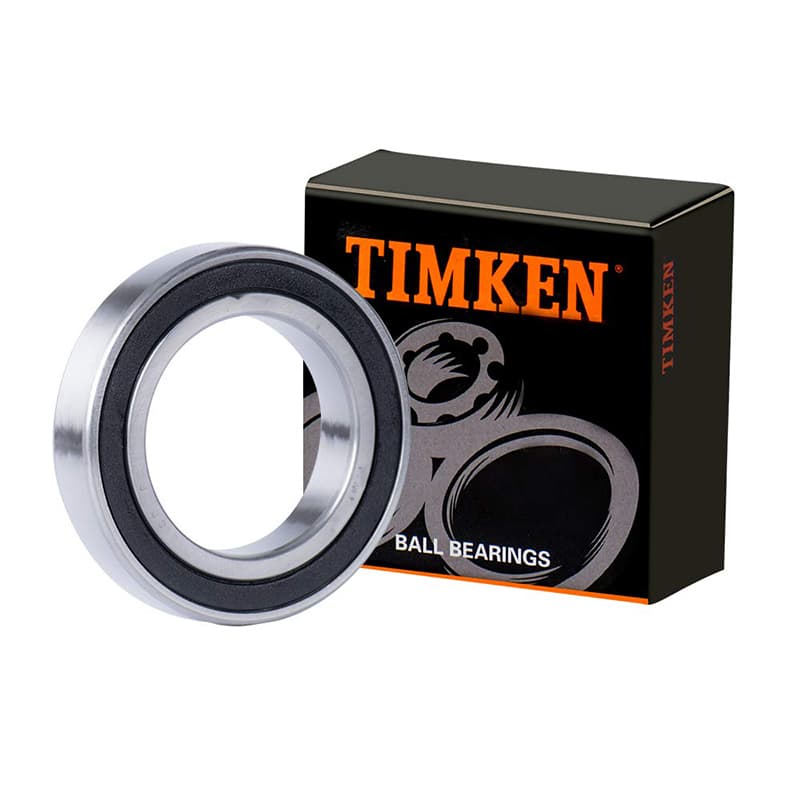
Its name comes from the deep, continuous grooves in both the inner and outer rings. This deep groove design is what allows it to manage axial loads, unlike some other bearing types.
The Workhorse of Industry: Versatility in Action
The deep groove ball bearing1 is the most produced bearing type in the world. Its popularity comes from its balanced performance across many requirements.
Why It’s the "Go-To" Bearing:
- Radial Load Champion: It is primarily designed for radial loads2. The deep grooves provide a long contact path for the balls, distributing the load effectively.
- Bidirectional Axial Capacity: Unlike tapered roller bearings, it can handle axial thrust from either direction without needing a pair. This simplifies design.
- High-Speed Capability: With low friction and the option for cage designs, it can run at very high speeds, making it ideal for motors and spindles.
- Low Maintenance: Especially in sealed or shielded versions (
-2RS,-2Z), they are pre-lubricated and protected, requiring minimal attention. - Cost-Effective: Mass production and simple design make it an economical choice.
Specific Roles in Gearboxes and Reducers:
In a gearbox, bearings have specific jobs. The deep groove ball bearing1 often plays these roles:
| Location in Gearbox | Typical Bearing Function | Why Deep Groove Ball Bearings Are Suitable Here |
|---|---|---|
| Input/Output Shaft Supports | Support the shaft and gears, carrying radial loads2 from gear mesh and belt/pulley forces. | They handle the high radial loads2 efficiently. They can also manage the light axial thrust from helical gears. |
| Intermediate Shafts | Support between gears, mainly under radial load. | Their compact design fits in tight spaces between gears. They are cost-effective3 for multiple bearing points. |
| Locating Bearings | One bearing on a shaft is often fixed to control axial position (locate the shaft). | Their ability to take axial load in both directions makes them perfect for this "locating" role, often paired with a "floating" bearing. |
| High-Speed Stages | Support shafts in the high-speed section of a reducer. | Their low friction and high-speed capability4 prevent overheating and power loss. |
My Insight from Supplying Gearbox Manufacturers:
We work with gearbox OEMs in countries like Italy, Turkey, and India. Their designs often use deep groove ball bearing1s for the high-speed shafts and tapered roller bearings for the low-speed, high-torque shafts. The choice depends on the load profile. For a client in Brazil making agricultural gearboxes, we supply large quantities of 62 and 63 series bearings. They value the consistent quality because a bearing failure in a tractor gearbox during harvest means huge losses for the farmer. The deep groove ball bearing1 is not just a component; it is a reliability decision. Its widespread use tells you one thing: it is a proven, trusted solution for countless applications where radial load is dominant and some axial flexibility is needed.
What is a 6203 bearing1 used for?
You open a small electric motor or a gear reducer. Inside, you find a small, common bearing. The number stamped on it is 6203. This tiny component is a hero in the world of light machinery.
A 6203 bearing1 is a specific deep groove ball bearing2 with a 17mm bore, 40mm outside diameter, and 12mm width. It is commonly used in small electric motors (fans, power tools), light gearboxes, pumps, conveyors, and agricultural equipment where compact size3, moderate load capacity, and reliable performance are required.
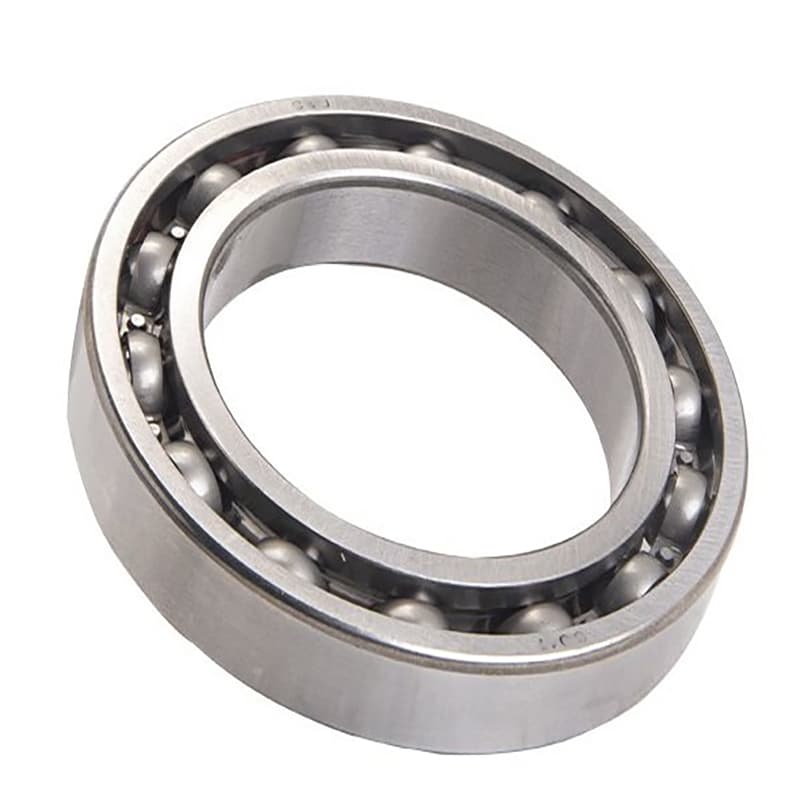
The 6203 is part of the 62 series, known as the "light series." Its dimensions make it a standard building block for designers.
The Ubiquitous 6203: A Closer Look at a Standard Part
Understanding one specific bearing helps you understand the whole system of sizing and application.
Decoding the Number 6203:
6: Indicates it’s a single-row deep groove ball bearing2.2: The width series code (relating to the 12mm width).03: The bore size code. For codes04and above, multiply by 5 to get the bore in mm. For03, it’s a special case: bore = 17mm.
Typical Load Ratings and Performance:
- Dynamic Load Rating (C): ~10.0 kN. This is the load it can carry for 1 million revolutions with 90% reliability.
- Static Load Rating (Co): ~5.1 kN. This is the maximum static load it can bear without permanent deformation.
- Speed Limit: With grease lubrication, it can typically run at speeds of 15,000 RPM or more, depending on the cage and precision class.
A Snapshot of Common 6203 Bearing Applications:
| Industry / Machine | Specific Use Case | Why the 6203 is a Fit | Our Business Perspective |
|---|---|---|---|
| Electric Motors (Single Phase) | Support for the rotor shaft at both ends. | Handles radial loads from the rotor and minor axial loads. Its size fits standard motor frames. | This is a high-volume product. We ship pallets of 6203-2RS (sealed) bearings to motor manufacturers in Vietnam and Egypt. |
| Small Gearboxes & Reducers | Support for the high-speed pinion shaft. | Compact, handles the moderate loads at high input speeds. | For clients assembling small worm gear reducers, the 6203 is often on their BOM. We supply them in bulk with P6 precision for smoother operation. |
| Agricultural Equipment | Tensioner pulleys, small implement drives. | Robust enough for moderate shock loads, sealed versions keep out dust and moisture. | Our distributor in India, Rajesh, stocks 6203 bearing1s for the local tractor repair market. They are a fast-moving item. |
| Conveyor Systems | Support for idler rollers in light-duty conveyors. | Cost-effective for many bearing points, reliable under constant radial load. | For packaging plants in Indonesia, we supply these bearings in large quantities for conveyor maintenance kits. |
| Pumps & Compressors | Shaft support in small centrifugal pumps. | Handles radial load from the impeller and some axial thrust. | Clients in the Middle East often order these with C3 clearance for pumps because the shafts run hot. |
My Insight on Standardization:
The power of a bearing like the 6203 is its universality. A designer in Pakistan, a maintenance mechanic in South Africa, and a procurement manager in Russia all know this number. It means the same thing everywhere. This allows for global supply chains. When we manufacture the 6203, we follow international (ISO) standards strictly. This ensures that a bearing from our factory in China fits perfectly in a machine originally designed in Europe. For our B2B clients, stocking standard items like the 6203 is low-risk because demand is constant. It is the backbone of their bearing business, supporting countless small machines that keep industries running.
What is a 6307 bearing1 used for?
You look at a medium-sized industrial gearbox or a heavy-duty pump. The bearings are larger, built for more punishment. A common number you will find here is 6307, a bigger brother to the 6203.
A 6307 bearing1 is a deep groove ball bearing2 from the "medium series" with a 35mm bore, 80mm outside diameter, and 21mm width. It is used in applications requiring higher load capacity, such as industrial gearboxes3, heavy-duty electric motors4, pulleys, pumps, and agricultural machinery5 main drives, where its robust construction handles significant radial and moderate axial forces.
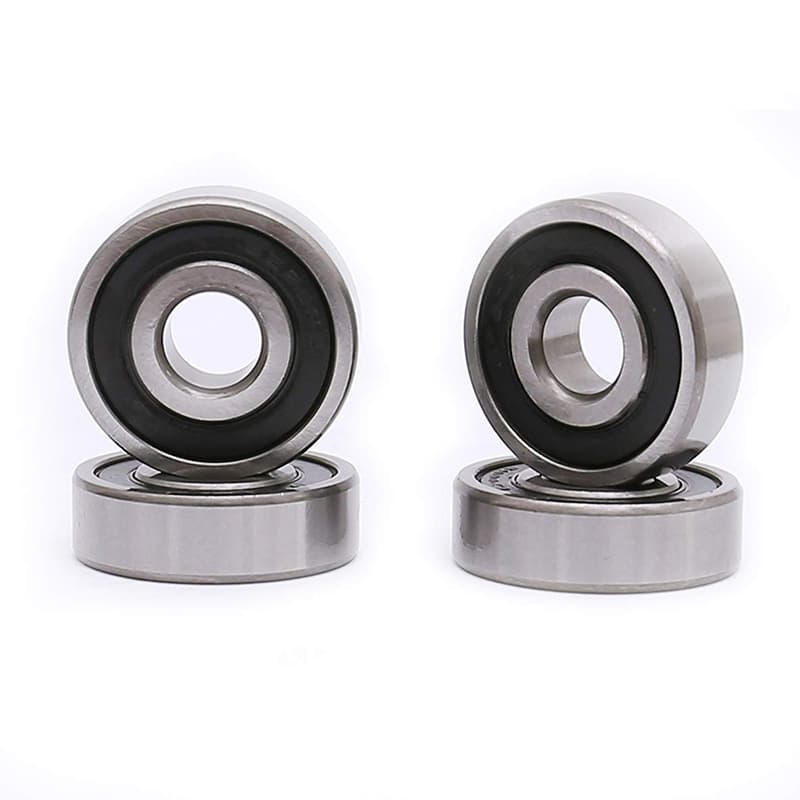
The 63 series signifies a wider and larger bearing for its bore size compared to the 62 series. This gives it a much higher load rating.
The Heavy-Duty Performer: Where the 6307 Shines
When loads increase, you need more material to carry them. The 6307 provides that capacity in a deep groove ball bearing2 format.
Decoding the Number 6307:
6: Single-row deep groove ball bearing2.3: The width series code (relating to the 21mm width – a "medium" series).07: The bore size code. 07 x 5 = 35mm bore.
Load and Performance Profile:
- Dynamic Load Rating (C): ~33.5 kN. This is over three times the capacity of a 6203 bearing.
- Static Load Rating (Co): ~19.0 kN.
- Speed Limit: Lower than the 6203 due to its larger size and mass, but still capable of moderate speeds suitable for most industrial gearboxes3.
Primary Application Areas for the 6307 Bearing:
| Industry / Machine | Specific Use Case | Why the 6307 is Required | From Our Order Desk |
|---|---|---|---|
| Industrial Gearboxes / Reducers | Support for intermediate or output shafts carrying larger gears. | The higher radial load from gear forces requires the 63 series capacity. Its width provides stability. | This is a core product for us. Gearbox makers in Turkey and Russia regularly order 6307 bearing1s, often in P6 precision class for better gear alignment. |
| Large Electric Motors (5-50 HP) | Main shaft bearings. | Handles the weight and magnetic pull of the rotor. Can accommodate thermal expansion with C3 clearance. | We supply these to motor rewind shops and OEMs across Southeast Asia. The demand is steady with industrial growth. |
| Pumps & Fans (Medium Duty) | Shaft support for larger impellers or fans. | Handles radial load from the rotating mass and hydraulic/air forces. | For the water and wastewater industry in Bangladesh and Egypt, 6307 bearing1s are common spare parts for vertical pump motors. |
| Material Handling | Drive rollers, pulley bearings for conveyors. | Robust enough for shock loads and continuous operation in demanding environments. | Our clients in mining regions of South Africa order these with heavy-duty seals (-2RSH) for extra protection against dust. |
| Agricultural Main Drives | PTO (Power Take-Off) shafts, gearbox input on larger tractors. | High torque and shock loads from the field demand this higher capacity. | Before planting season, we see order spikes from distributors in Brazil and Pakistan for bearings like the 6307. |
Comparing 6203 vs. 6307: A Design Choice
A designer choosing between these two for a 35mm shaft would pick the 6307 for higher load capacity and longer life. They might choose a 6203 only if space was extremely limited and loads were proven to be very light. The 6307 represents a step up into more serious industrial territory.
My Insight on Bearing Series Selection:
The existence of different series (62, 63, 64 for even heavier) gives engineers a powerful tool. They can keep the same shaft size (bore) but increase the bearing’s load capacity and life by selecting a larger series. This is a common upgrade path. For example, if a machine with a 35mm shaft and a standard 6207 bearing is failing early, upgrading to a 6307 bearing1 (same bore, larger OD and width) might solve the problem without redesigning the shaft. We often have this conversation with clients looking to improve machine reliability. Understanding the 63 series, embodied by the 6307, means understanding how to tackle higher load challenges with a familiar and versatile bearing type.
How much axial load1 can a deep groove ball bearing2 take?
You are designing a shaft with helical gears. The gears create an axial pushing force. You plan to use deep groove ball bearing2s. A critical question arises: can they handle the thrust, or do you need a different bearing type?
A deep groove ball bearing2 can take axial load1s, but its capacity is limited. Generally, the permissible axial load1 is about 25% to 50% of its static radial load rating3 (C0), and only about 10% of its dynamic radial load rating4 (C) for continuous operation. Exceeding these limits causes excessive skidding and wear, leading to rapid failure.
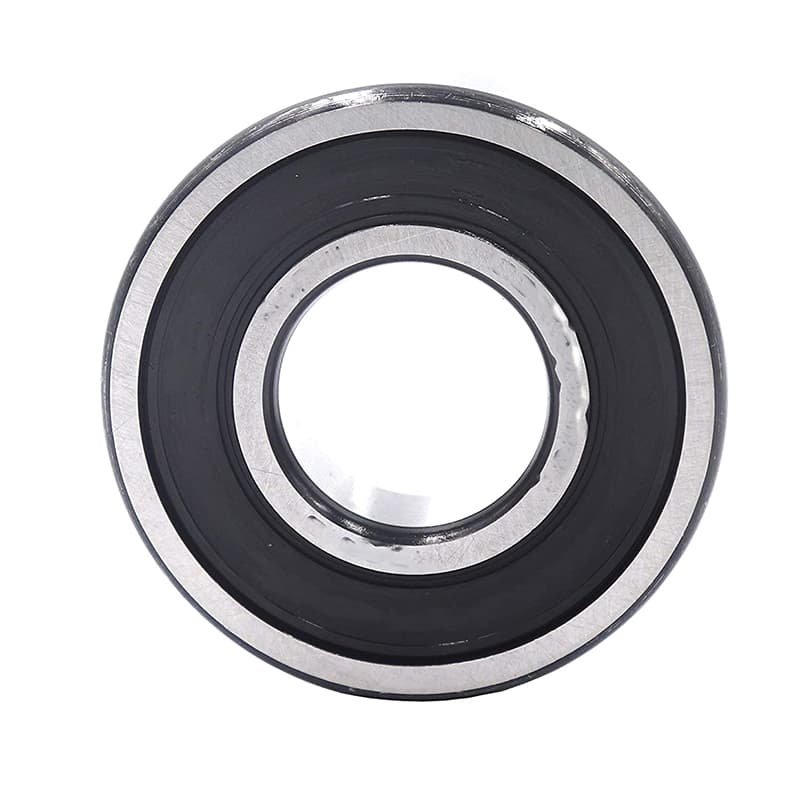
This is a crucial design constraint. The deep groove is versatile, but it is not a thrust bearing. Pushing it beyond its axial limits is a common engineering mistake.
Navigating the Axial Load Limit for Reliable Design
The axial capacity is not a fixed number. It depends on several factors. Understanding these factors helps you use the bearing safely.
1. The Governing Factors:
- Bearing Size and Series: Larger bearings and those in the
63or64series have higher absolute axial capacity because their static load rating (C0) is higher. - Radial Load Present: The bearing handles combined load better than pure axial load1. A moderate radial load helps keep the balls in position on the raceway.
- Speed: High speed reduces the permissible axial load1. At very high speeds, even a small axial force can cause skidding and overheating.
- Internal Clearance: Bearings with greater internal clearance5 (like C3 group) have slightly reduced axial load1 capacity because the balls have more room to skew.
2. Practical Guidelines and Rules of Thumb:
For rough estimation during initial design, these rules are useful:
- For occasional or light axial load1s: The bearing can handle up to 50% of its static radial load rating3 (C0) without permanent damage.
- For continuous axial load1 during operation: The axial load1 should not exceed 10% of the dynamic radial load rating4 (C) to ensure a reasonable service life.
- For pure axial load1 (no radial load): This is the worst-case scenario. Use the 25% of C0 rule as an absolute maximum, and expect reduced life. A proper thrust bearing6 is usually a better choice.
3. Application Scenarios and Recommendations:
Let’s see how this works in real gearbox and reducer situations:
| Scenario in a Gearbox | Axial Load Source & Magnitude | Is a Deep Groove Bearing OK? | Recommended Action |
|---|---|---|---|
| Helical Gears (small helix angle) | Light, constant thrust from gear mesh. | Yes, usually. The axial force is often a small fraction of the radial gear load. | Calculate the axial force. Ensure it is <10% of the bearing’s dynamic load rating C. Use a locating/floating bearing7 arrangement. |
| Spur Gears | Ideally zero axial load1. | Yes, perfect. Pure radial load is ideal for deep groove bearings. | N/A. |
| Shaft thermal expansion | Forces from constrained expansion. | Maybe. This can generate high forces. | Use a C3 clearance bearing in the "floating" position to allow the shaft to expand without creating high axial load1 on the bearing. |
| V-Belt or Chain Drive tension | Can induce minor axial components. | Yes. Usually within safe limits. | Ensure proper alignment to minimize this. |
| High axial thrust from a pump impeller | Can be significant and continuous. | Likely No. This often exceeds the 10% of C rule. | Consider a dedicated thrust bearing6 (like a 51100 series) or an angular contact ball bearing8 pair to handle the primary axial load1. |
4. The Importance of Bearing Arrangement:
In gearboxes, engineers rarely use a single bearing to handle all loads. They use arrangements:
- Locating (Fixed) Bearing: One bearing (often a deep groove type) is axially fixed to locate the shaft. It handles all axial load1s.
- Floating Bearing: The other bearing allows axial movement (e.g., a cylindrical roller bearing or a deep groove bearing in a loose housing fit). This accommodates thermal expansion.
This arrangement protects the deep groove bearing from excessive combined stress.
My Insight from Troubleshooting:
We receive many failed deep groove bearings from pump and gearbox applications. A frequent finding is "skid marks" or wear on one side of the raceway. This is the classic sign of excessive axial load1. The balls are being pushed to one side and sliding instead of rolling. When we discuss this with the client, we calculate the actual axial force. Often, it was underestimated in the design. Our advice is either to select a larger deep groove bearing (with a higher C0 rating) or to switch to a bearing type designed for axial load1, like angular contact ball bearing8s. For our distributor clients, this knowledge helps them advise their customers correctly. Selling the right bearing for the axial load1 prevents comebacks and builds a reputation for expertise. The axial capacity of a deep groove ball bearing2 is its balancing point between versatility and specialization. Respecting this limit is key to long, reliable service in gearboxes.
Conclusion
Deep groove ball bearings are versatile, reliable components for gearboxes, handling radial loads and moderate axial thrust. Understanding specific sizes like the 6203 and 6307, along with their axial load limits, enables precise selection for long-lasting, cost-effective power transmission.
-
Learn about axial load and its significance in bearing applications to ensure proper design and functionality. ↩ ↩ ↩ ↩ ↩ ↩ ↩ ↩ ↩ ↩ ↩ ↩ ↩ ↩ ↩ ↩ ↩ ↩ ↩ ↩ ↩ ↩ ↩ ↩ ↩ ↩ ↩ ↩ ↩ ↩ ↩ ↩
-
Explore this link to understand the versatility and applications of deep groove ball bearings in various engineering designs. ↩ ↩ ↩ ↩ ↩ ↩ ↩ ↩ ↩ ↩ ↩ ↩ ↩
-
Discover the importance of static radial load rating in selecting the right bearing for your application. ↩ ↩ ↩ ↩ ↩ ↩
-
Understanding dynamic radial load rating is crucial for ensuring the longevity and reliability of bearings under load. ↩ ↩ ↩ ↩
-
Explore the role of internal clearance in bearing performance and how it affects load capacity. ↩ ↩
-
Learn about thrust bearings and their specific applications to ensure optimal performance in your designs. ↩ ↩
-
Explore the concept of floating bearings and their role in accommodating thermal expansion in machinery. ↩
-
Discover the advantages of angular contact ball bearings for handling axial loads effectively. ↩ ↩